

Key takeaways
- Strategy is decisions, not a calendar. Make, distribute, then convert. Every video should have a job.
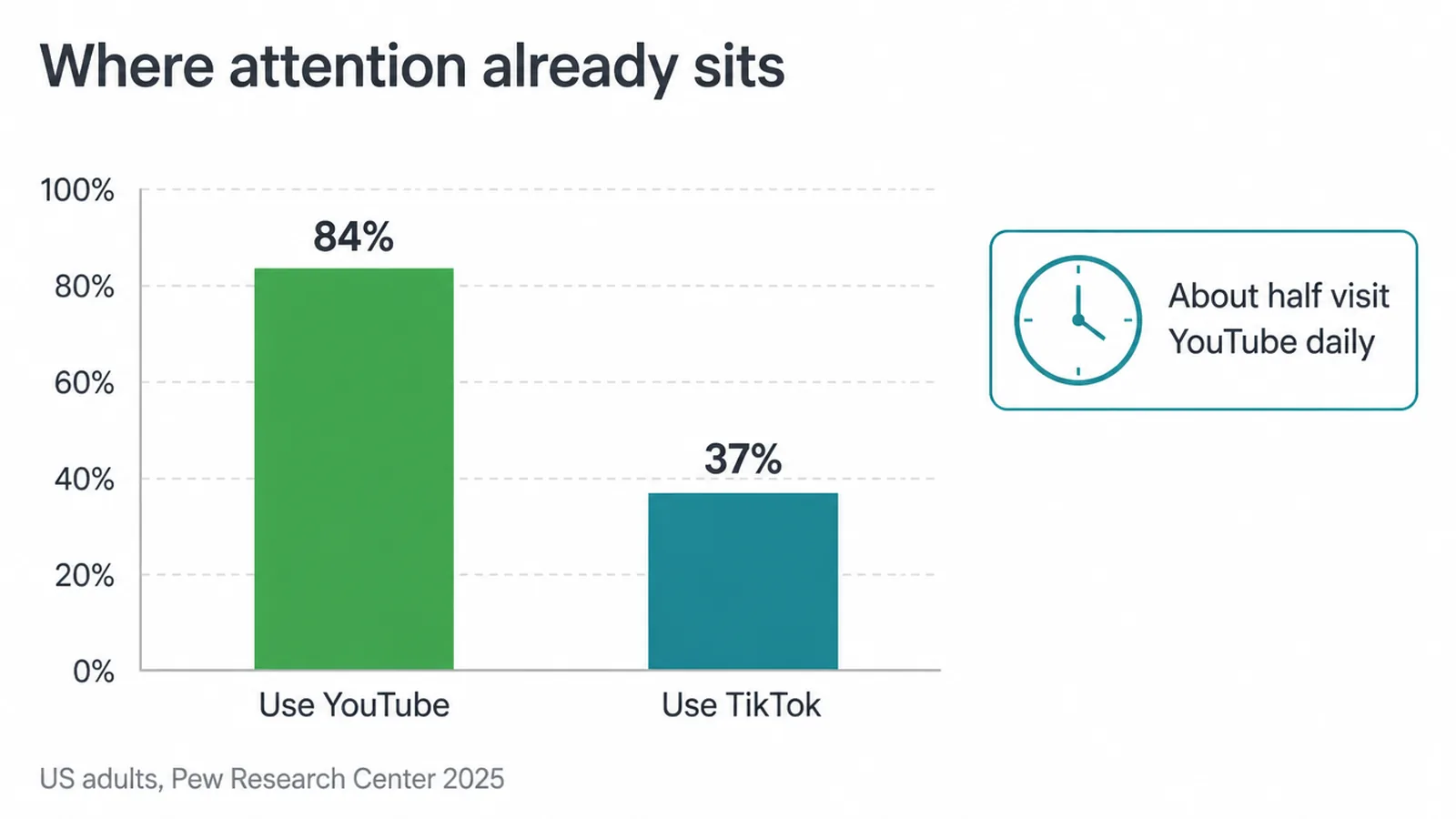
- Attention is already there. 84% of U.S. adults say they use YouTube, and about half visit it daily (Pew Research Center, 2025).
- One shoot, many homes. A single filming session can feed short-form social, YouTube, your website, paid ads, and email.
- Cheap gear is fine. A recent phone, one light, a clip-on mic, and a quiet room beat an expensive camera with muddy sound.
- Views only count when they lead somewhere. End with one clear next step and put convert-videos where the buying decision happens.
1. What is a video marketing strategy?
A video marketing strategy is the set of decisions behind your videos, not the videos themselves. It answers three plain questions: what will you film, where will it go, and what should each video make someone do next. Without those answers you get busy work, a pile of clips that look nice and change nothing.
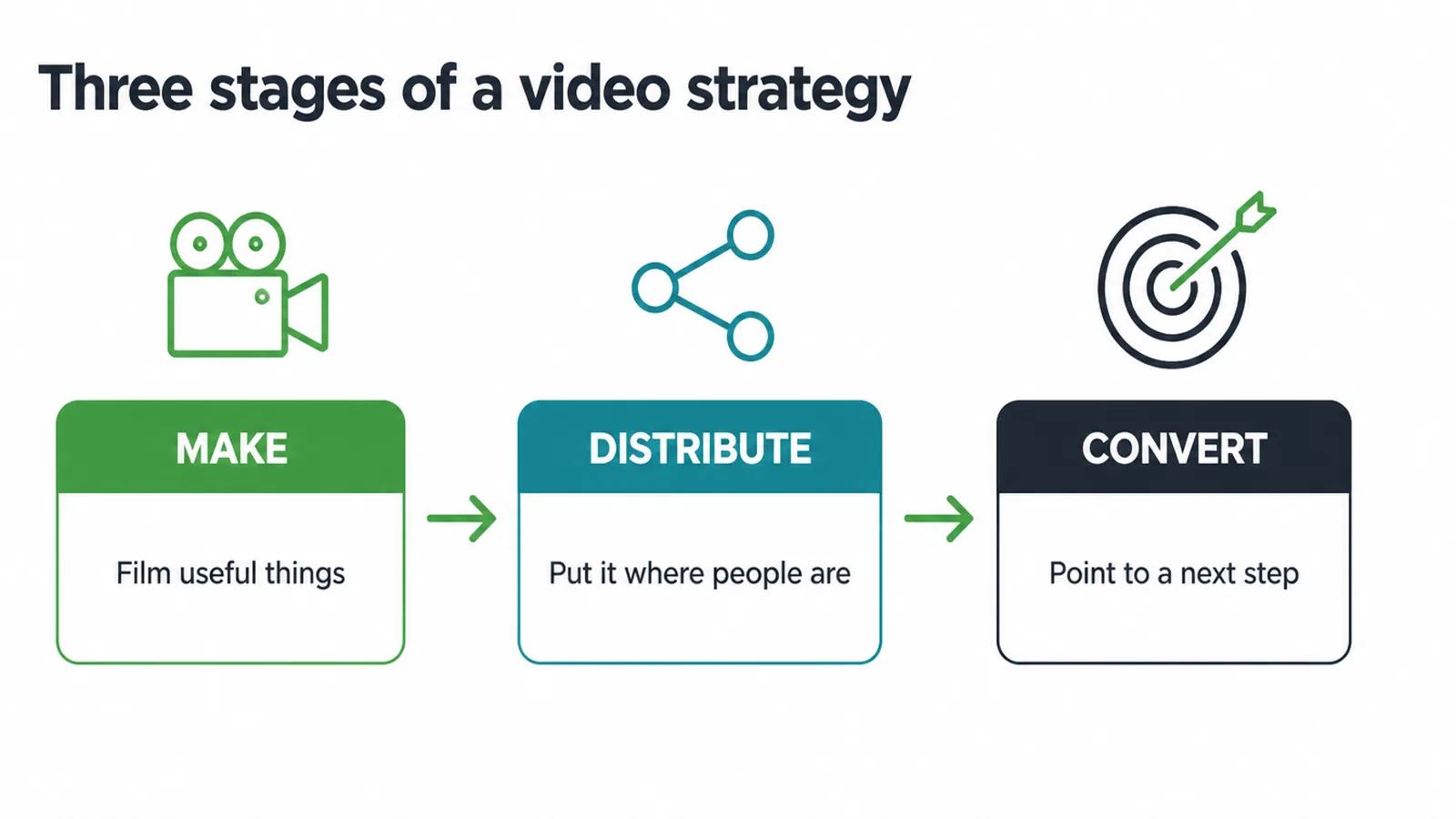
Think of it as three stages: make, distribute, convert. Make means filming useful things people actually care about. Distribute means putting each video where the right people already spend time. Convert means guiding a viewer toward a next step, like visiting a page, replying, or booking.
Most small businesses do the first stage and skip the other two, which is why their videos feel like a hobby instead of marketing. Get all three working and video starts pulling its weight.
2. Why video is worth it (the honest version)
Video is worth it mostly because that is where attention already sits. About half of U.S. adults visit YouTube daily, and roughly 37% use TikTok, per Pew Research Center's 2025 report on social media use.
You do not have to convince people to watch video. They are already doing it, every day, on the platforms you can reach for free.
Here is the honest counterweight. Video only pays off if you can make it repeatable and cheap. One clip that does well proves nothing on its own.
A pace you can hold for months is what builds trust and pulls in leads. Chasing a single viral moment usually ends with a burst of effort and then silence.
One more reason to plan for more than one platform: video is not a small-screen medium anymore.
YouTube reports that TV has passed mobile as the primary device for watching in the US, with over a billion hours watched on TVs daily (YouTube Official Blog, 2025). People watch on phones, laptops, and living-room screens, so your strategy should not live in one app.
3. Where video lives
The biggest waste in video marketing is filming for one platform only. A single shoot can feed several homes at once, and each home does a different job.
A tip you record for short-form social can become a longer YouTube video, a clip on a product page, an ad, and a line in your email. Same effort, far more reach.
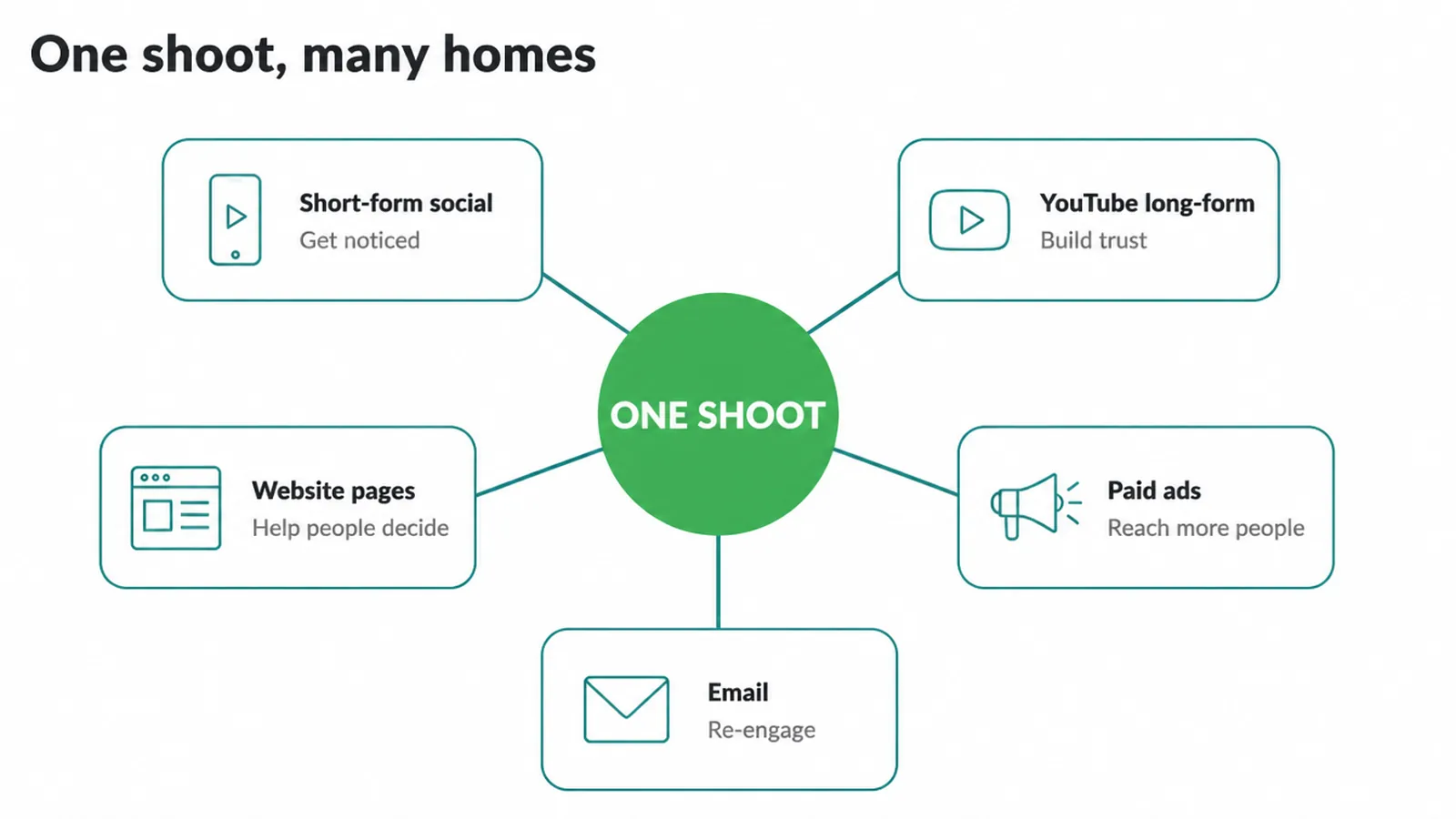
| Where it lives | Best format and length | Job it does | Deeper guide |
|---|---|---|---|
| Short-form social | Vertical clips, 15 to 60 seconds | Get noticed by new people | Instagram strategy |
| YouTube long-form | How-to and explainer, a few minutes | Build trust and answer questions | YouTube strategy |
| Website and landing pages | Demo or explainer, under 2 minutes | Help people decide to buy | Web design |
| Paid ads | Short hook-first clips | Reach a wider, targeted audience | Performance marketing |
| Embedded or linked clip, short | Re-engage people you already have | Content examples |
You do not need to be everywhere on day one. Pick the two or three homes closest to your customers, film once, and place the same core video in each spot with a small tweak. That is the multi-platform habit that makes video sustainable.
4. What videos to make, by goal
Match every video to one goal. When you know the goal, the format and length pick themselves, and you stop making clips with no purpose. Most small businesses need videos across three goals.
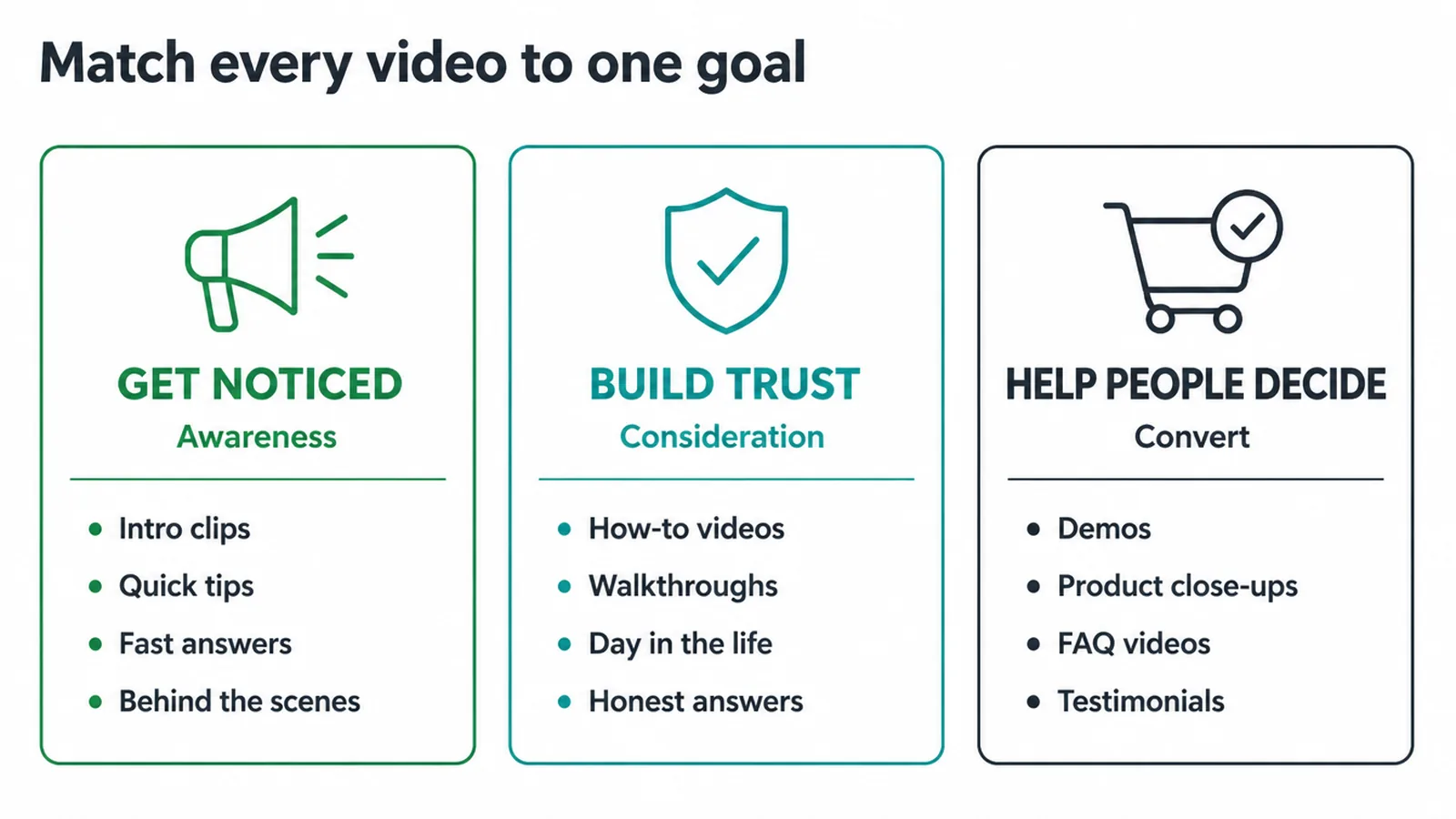
Get noticed (awareness). Short intro clips, quick tips, a fast answer to a common question, a behind-the-scenes peek. These are made for short-form social, where the job is to catch new people who have never heard of you. Keep them tight and lead with the point in the first few seconds.
Build trust (consideration). How-to videos, walkthroughs, day-in-the-life clips, and honest answers to the questions people ask before buying. These fit YouTube and your website. They show you know your stuff and that a real human is behind the business. For more formats you can borrow, see these content marketing examples.
Help people decide (convert). Demos, product close-ups, FAQ videos, and customer testimonials. These belong where a buying decision happens: a product page, a landing page, a sales reply. They remove the last doubt and point to a clear next step. Skip this goal and your other videos never turn into leads.
5. A low-budget setup you can keep going
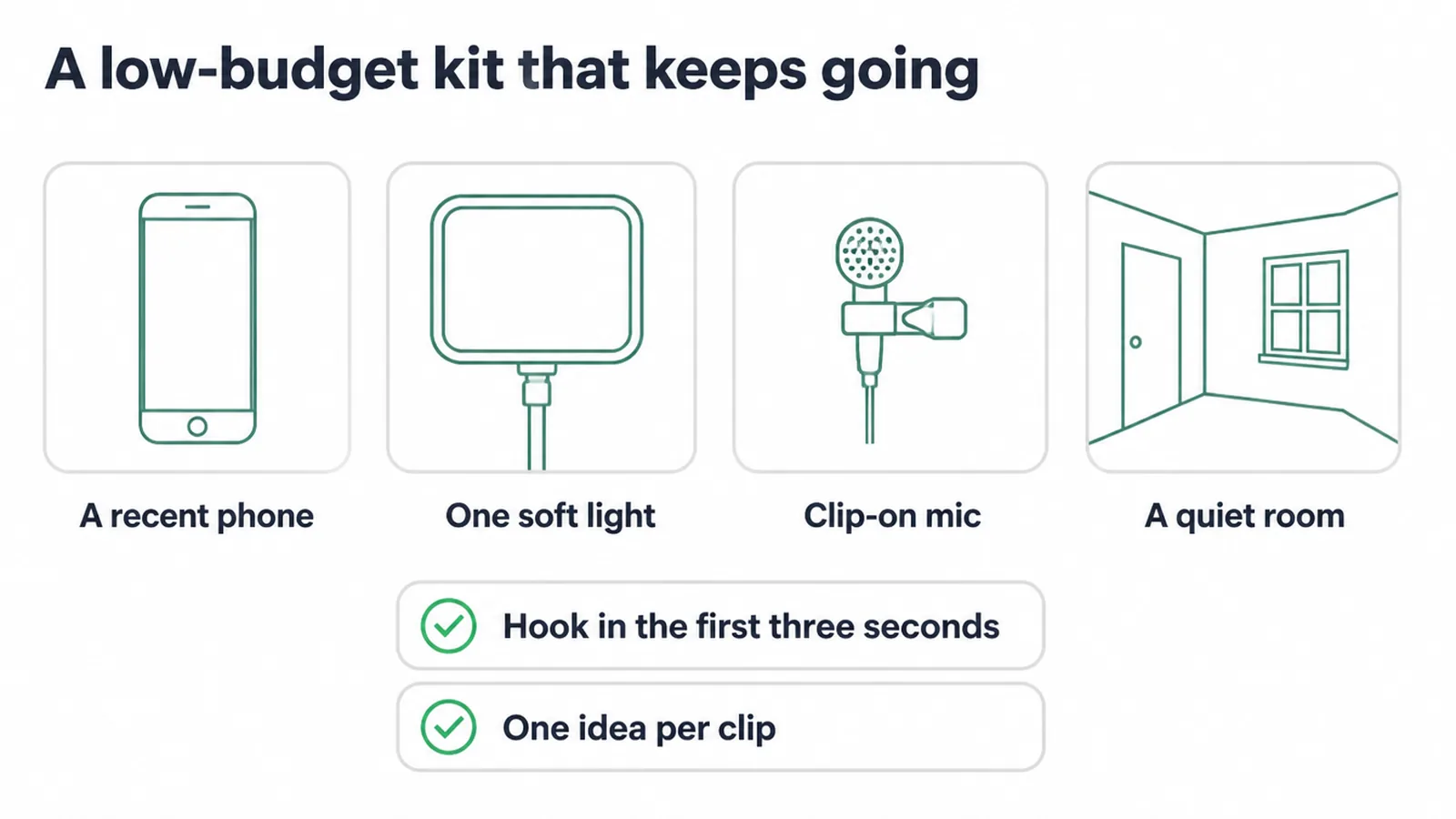
You do not need expensive equipment. A recent phone, one soft light or a window, a cheap clip-on mic, and a quiet room cover almost everything.
Clear sound and a useful point are what keep people watching. Viewers forgive a plain shot. They will not sit through bad audio or a video that wastes their time.
The real trick is batch filming. Instead of filming one clip at a time, block off a few hours, dress once, set up once, and record several videos back to back.
Batching turns video from a daily chore into a monthly session. Line up five or six ideas before you start so you are not thinking on camera.
Two rules keep clips watchable. First, hook people in the first three seconds. Say what the video gives them right away, no long intro. Second, one idea per clip. If you have two points, that is two videos. Trying to cram everything in loses people fast.
Then set a pace you can actually hold. A pace you can keep for months beats a burst you abandon. If posting daily will burn you out, post twice a week. Consistency over time is what builds an audience, and batching plus repurposing is how small teams keep it up without filming every day.
6. Turn one shoot into a week of content
Repurposing is where a small budget stretches. One longer recording is a source you can cut into many pieces, so you get weeks of posts from a single session. This is the habit that makes the "one shoot, many homes" idea real.
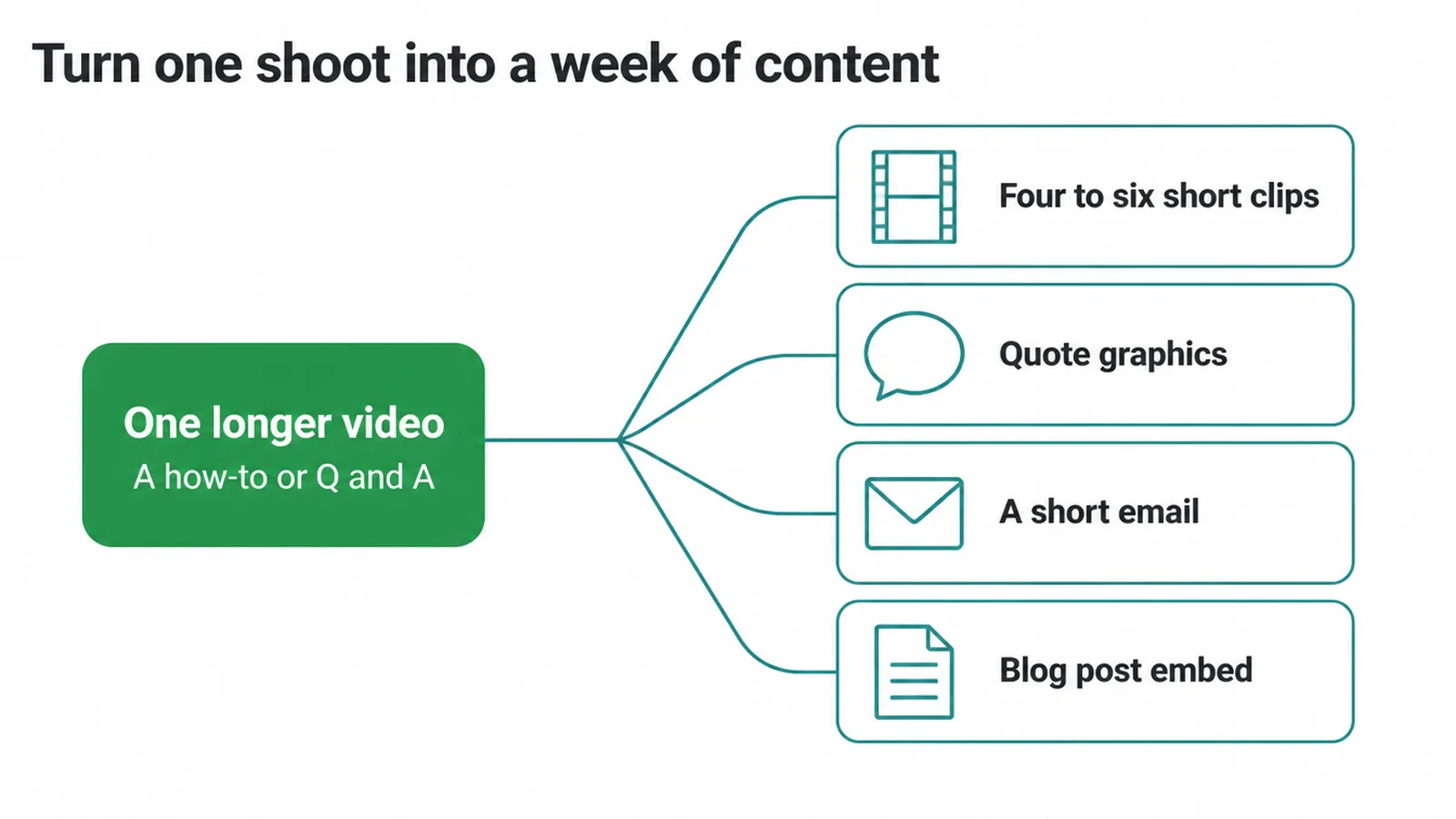
Here is a simple flow. Film one longer video, say a how-to or a Q&A. Cut it into four to six short clips for social media, each built around one point. Pull the best lines as captions and quote graphics.
Write a short email around the same topic and link the video. Embed the full video in a blog post so it also helps you get found in search. One filming session, six or seven pieces of content across every home in your table.
To keep the posting side light, you can schedule the clips ahead so they go out on their own. See how to automate Instagram posts for a way to line up a week of short-form in one sitting. The point is the same as batching: do the work once, let it run.
7. Turning views into customers
This is the part almost everyone skips. Views feel like progress, but a big view count with no next step just sits there. To make video pull in leads, three things have to be true.
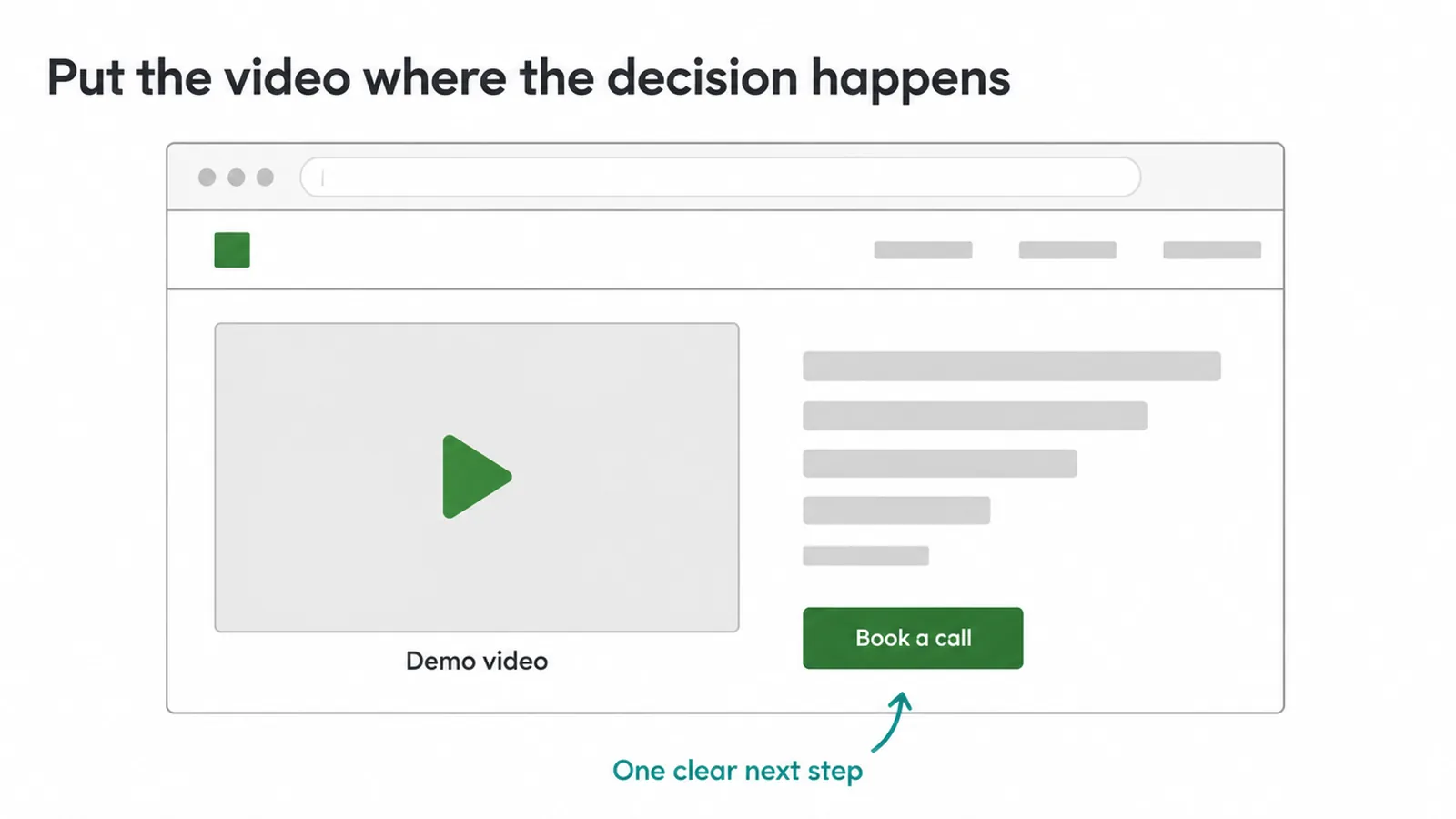
First, every video ends with one clear next step. Not three. One. Visit this page, reply with a word, book a call, grab the guide. When you ask for one thing, more people do it. Second, put your convert-videos where the buying decision happens.
A demo belongs on the product page, an explainer on the landing page, a testimonial in the sales reply, not buried in a feed. Third, follow up. When someone raises a hand, a fast reply beats a perfect one.
Track the thing that matters, which is leads and replies, not views alone. A clip with fewer views that sends five people to your contact page beats a clip with more views that sends none.
And be honest with yourself: video helps, but no video guarantees a result. What you can control is filming useful stuff, placing it well, and always pointing to a next step. Do that steadily and the numbers that matter tend to follow.
8. How to start this week
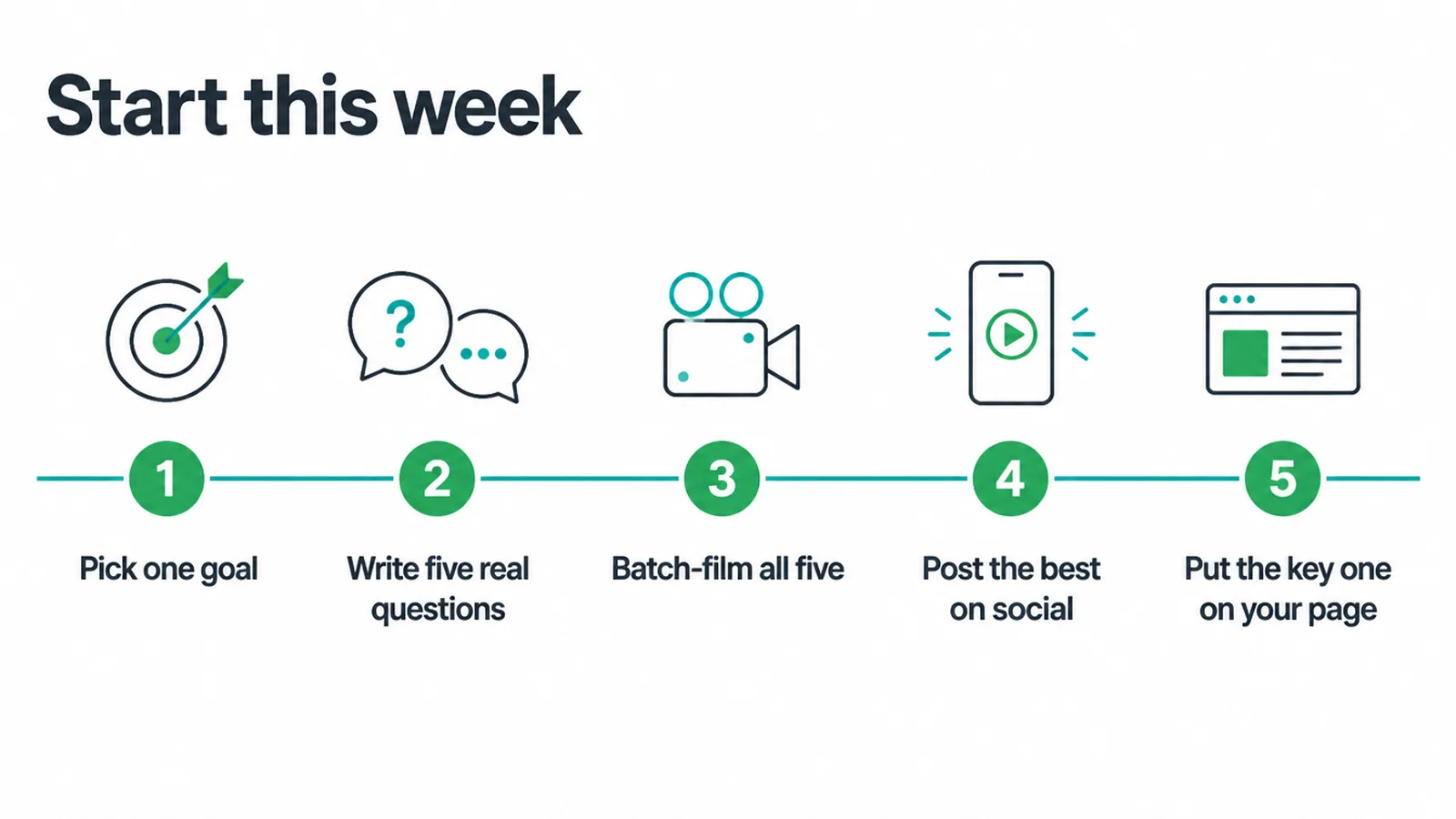
Keep the first move tiny so you actually do it. Pick one goal, probably build-trust, since it is the easiest to film and the most useful. Write down five real questions your customers ask before they buy.
Batch-film short answers to all five in one sitting with your phone. Post the best on social, put the most important one on the page where people decide, and cut the rest into clips. That is a full loop, made, distributed, and aimed at converting, done in an afternoon.
If you would rather have someone build the strategy and the pages that turn those videos into leads, get in touch with our team. We help small businesses plan content that actually points somewhere.
Frequently asked questions
1. What is a video marketing strategy?
A video marketing strategy is a simple plan for what videos to make, where to post them, and how each one moves someone toward becoming a customer, instead of filming random clips and hoping.
2. Is video marketing worth it for a small business?
Usually yes, because video is where attention already sits, with 84% of U.S. adults using YouTube and about half visiting it daily. It is worth it when you have a repeatable, low-cost way to make videos, not as a one-off burst.
3. What kind of videos should a small business make?
Match the video to a goal: short intro or tip clips to get noticed, how-to and behind-the-scenes to build trust, and FAQ, demo, or testimonial videos to help people decide to buy.
4. Do I need expensive equipment for video marketing?
No. A recent phone, one soft light or a window, a cheap clip-on mic, and a quiet room cover it. Clear sound and a useful point are what keep people watching.
5. Where should I post my marketing videos?
Spread one shoot across a few homes: short clips on social, longer versions on YouTube, key videos on your website and landing pages, plus ads and email where it fits.
6. How long should marketing videos be?
As long as it takes to make the point and no longer. Social clips often run 15 to 60 seconds, how-to and explainer videos a few minutes, and a sales or landing-page video usually under 2 minutes.
7. How do I turn video views into customers?
End with one clear next step, put the video where a buying decision happens like a product page, landing page, or reply message, and follow up. Views only matter when they lead somewhere.
8. How often should I post videos?
A pace you can keep for months beats a burst you abandon. Batch-filming once and repurposing lets many small businesses post several times a week without filming every day.
About the author
Gregory Yeoh is the founder of Seed Light, a web design and digital marketing agency that has helped small businesses get found online since 2017. He helps small businesses plan content and build the pages that turn attention into leads. He favours simple, repeatable systems over hype, and he is upfront that tactics help but never guarantee a result. If you want a hand mapping your video plan to real next steps, talk to us.