How to Show Up in Near Me Searches

Near me searches are answered by relevance, distance and prominence rather than by the phrase itself. Seed Light makes the profile accurate, states the service area plainly and keeps the hours current, because the searcher is really asking who is close, open and clearly able to help.
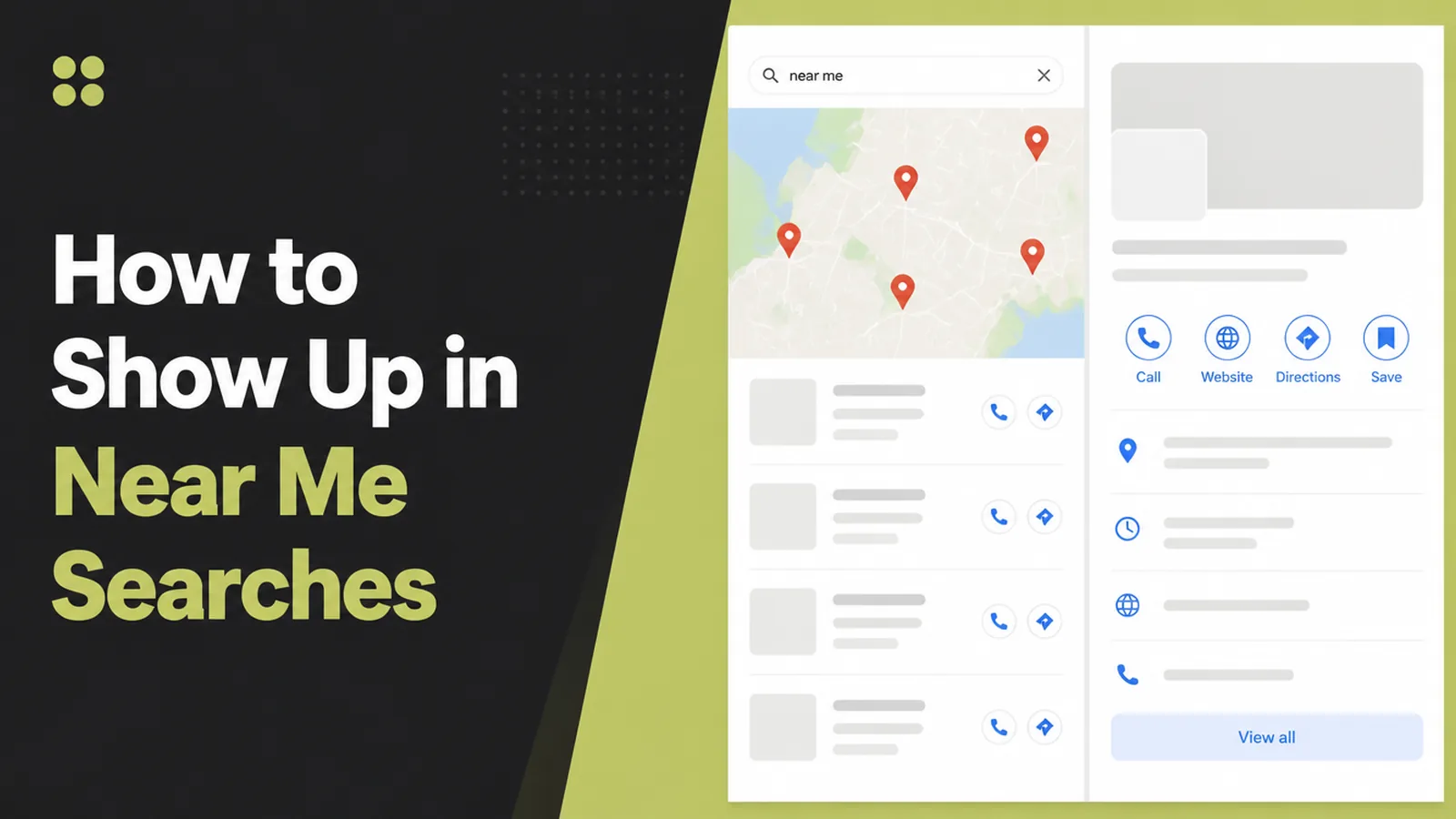
Businesses still ask how to rank for the phrase near me, as though those two words were a keyword to be inserted somewhere.
They are not. They are a signal that the person searching wants somebody close, open now, and obviously able to do the job.
This guide covers what a near me search really asks, why chasing the phrase achieves nothing, and the three things that actually decide whether you appear.
Key Takeaways
- The phrase is not a target. It tells you the intent, not the wording to copy.
- Three questions behind it. Who is close, who is open, who can do this.
- Distance moves with the searcher. Two people nearby see different results.
- Hours decide more than you think. Especially on holidays and weekends.
- State your areas plainly. On the profile and on the website.
This is one of the places where good advice is unglamorous. The winners are usually the businesses whose details are simply correct.
That is good news for a small business, because the work is cheap and almost nobody does it properly.
What A Near Me Search Really Asks
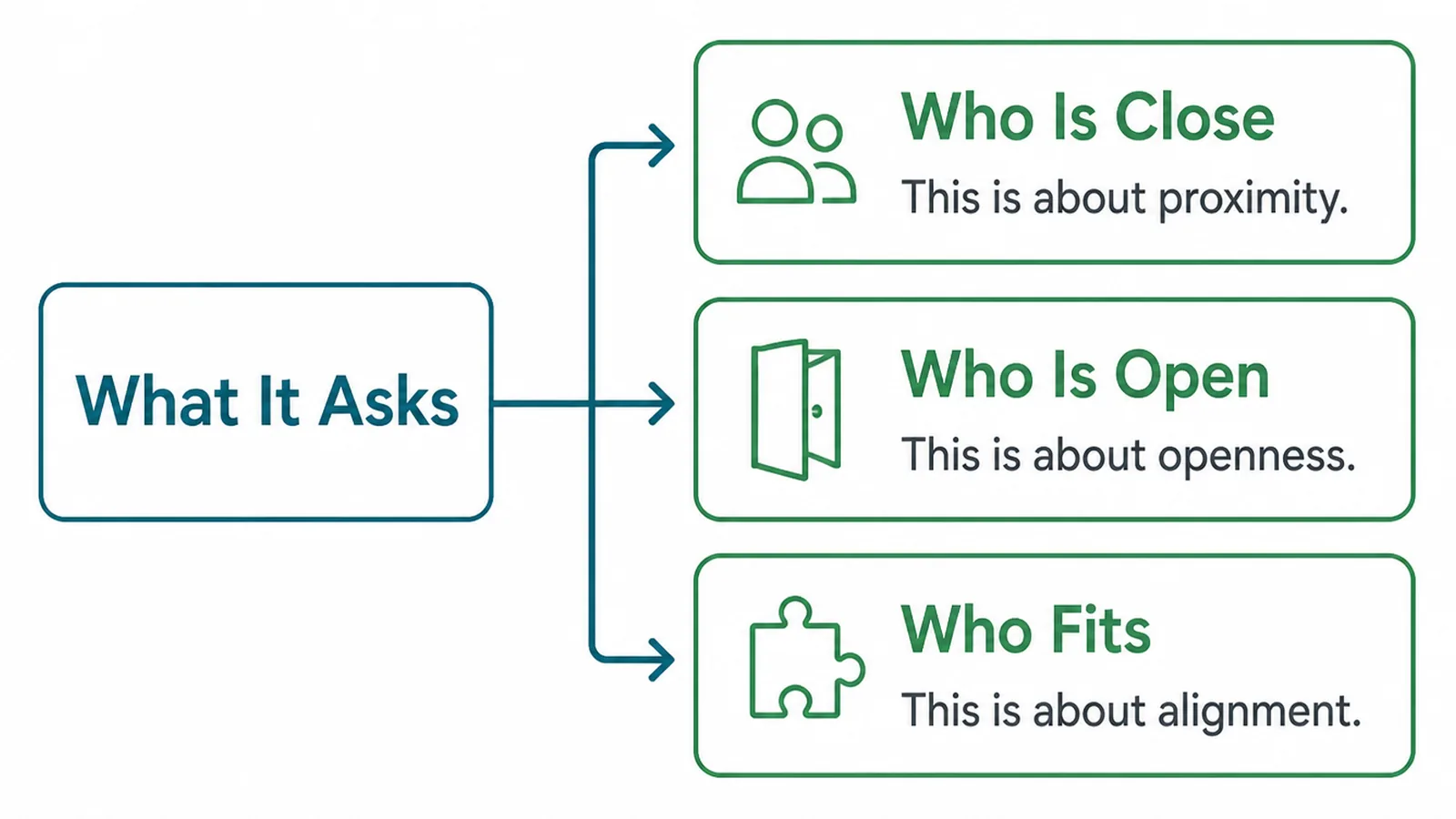
Somebody typing those words is rarely browsing. They have a problem and they want it handled today.
- Who is close. Near enough to come out, or near enough to drive to.
- Who is open. Right now, or at the time they are planning to go.
- Who can do this. Obviously, from the listing, without a phone call to check.
All three are answered by your listing rather than by your website. That is where the hours, the services and the location live.
The third question is the one businesses underestimate. A listing that names its services plainly removes a reason to call somebody else.
Local intent is what the phrase signals, and it is also present without it. Somebody searching for a plumber from a phone is making the same request with fewer words.
Which means the work is the same whether or not anyone types those two words at all.
Treat near me searches as shorthand for every local, urgent, ready-to-buy search. That is the audience, and they are the easiest to convert and the least patient.
Why The Phrase Itself Is Not The Target
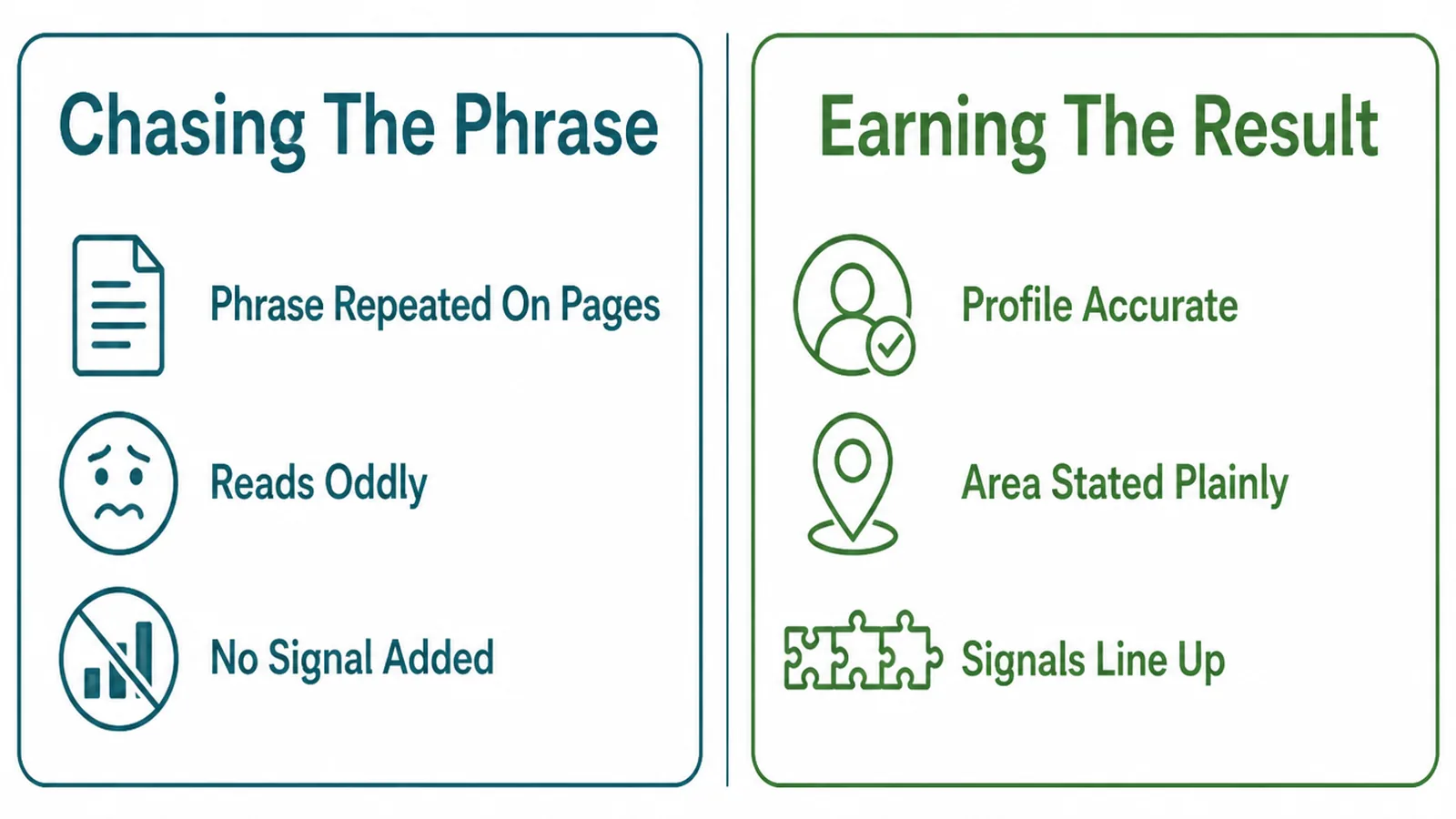
Putting near me into a page title does nothing useful. It reads badly to a human and misunderstands what the words are doing.
The search engine is not matching your page to a phrase here so much as answering a question about place. The inputs are the ones behind every local result: relevance, distance and prominence.
Pages built around the phrase tend to be thin, repetitive and awkward to read. They also age badly, because the wording is a habit of searchers rather than a fixed thing.
Write for the question instead. Name the places you serve, say what you do, and make it obvious when you are available.
There is one honest exception. Where your own customers genuinely use a phrase, use their words naturally in a sentence, once, because they are your customers' words.
That is a long way from a page headed with the phrase repeated six times.
Spend the same hour on your hours and services instead. It will do more for the same searches and will not make your site read oddly.
How To Show Up In Near Me Searches, Step By Step
Three steps, and none of them involve the phrase itself.
1. Make The Basics Match Everywhere
The least interesting work here is also the most reliable.
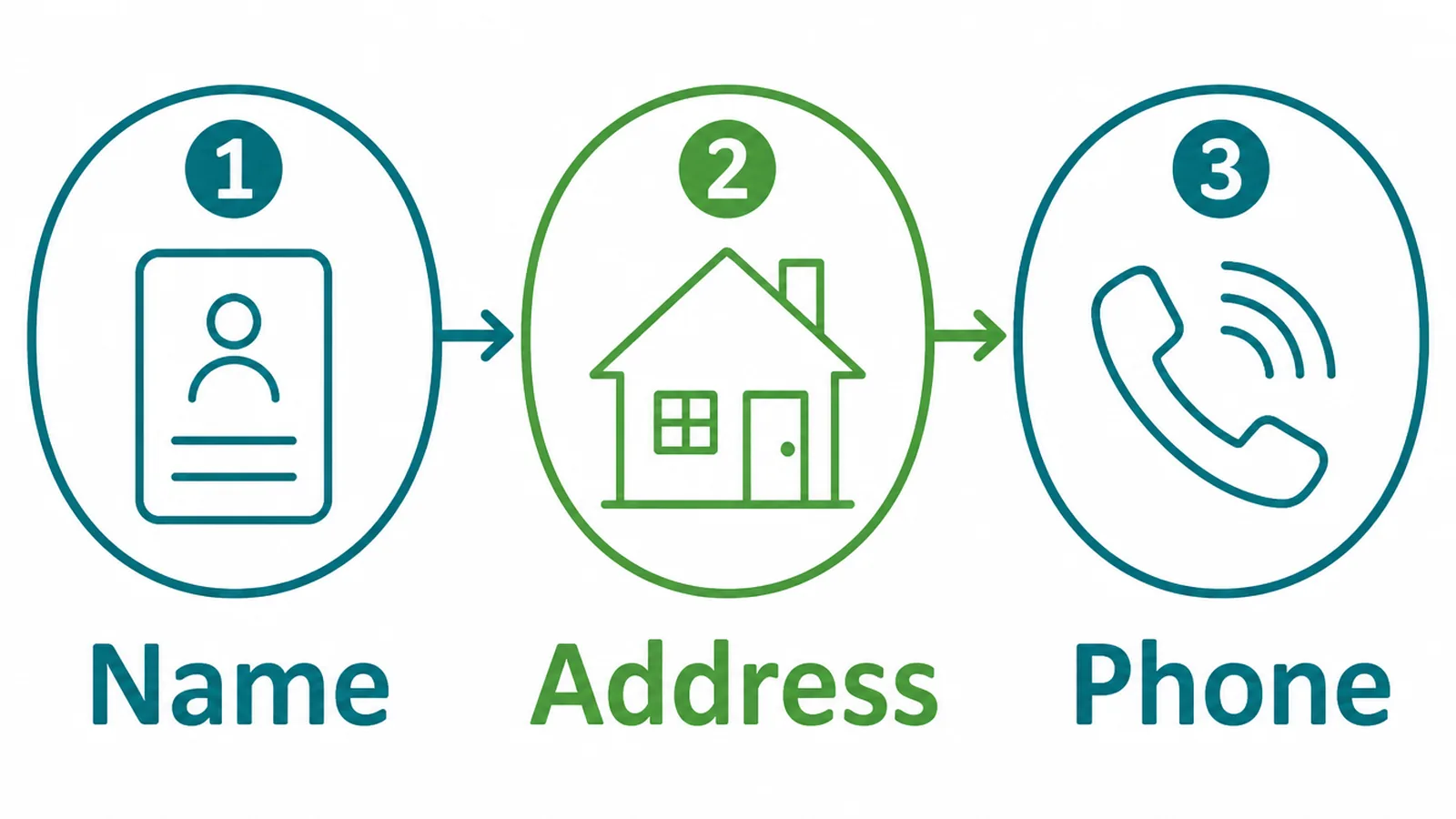
- Name. One spelling everywhere, matching the signage and the paperwork.
- Address. One format, or none at all if customers never visit you.
- Phone. One number, tappable on a phone, answered during the hours you publish.
Write the canonical version down and work through the places it appears: the profile, the website, directories, social accounts, invoices.
It is tedious and it is finite. Most small businesses have a dozen places to fix and never need to do it again until something changes.
Do it in one sitting with the list in front of you. Spread over weeks, it never quite finishes and nobody remembers which entries were corrected.
The phone number deserves its own check. A number that is an image, or that does not dial on a tap, loses the calls this whole exercise is for.
2. State The Area On The Page
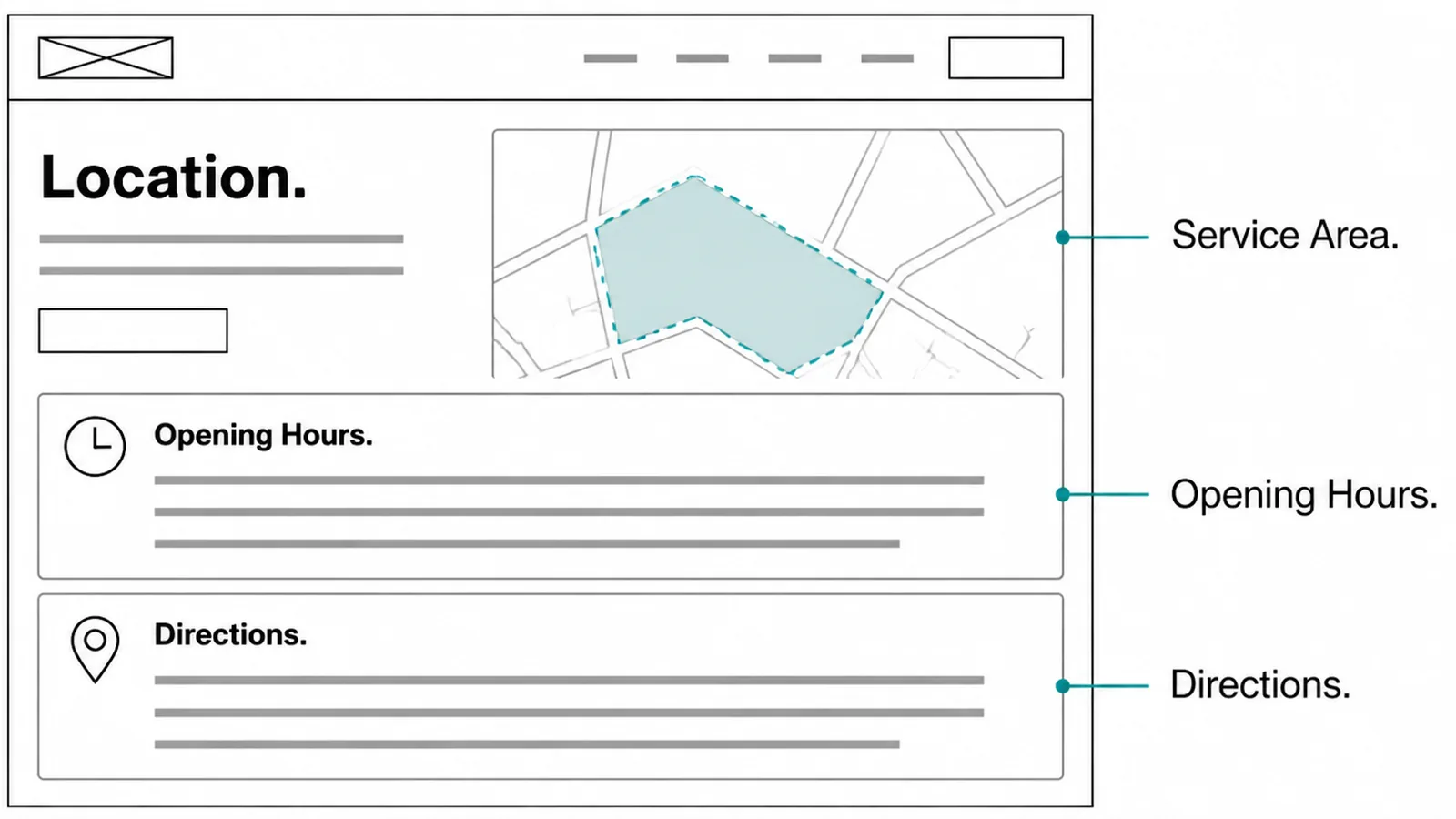
Your website cannot change the distance between you and a searcher, and it can answer the question they ask next.
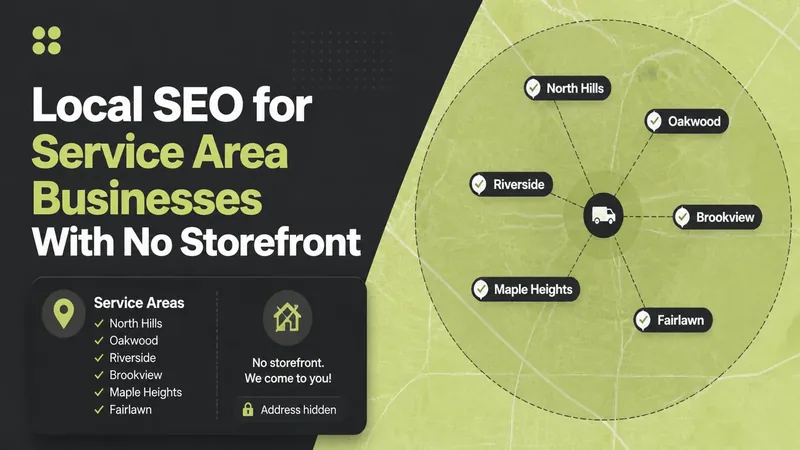
- Service area. The towns and districts you cover, written as a plain list.
- Opening hours. On the page as well as the listing, including the exceptions.
- Directions. Where to park, which entrance, and a link to a map.
A short paragraph naming real places beats a list of fifty towns. The long list reads as a trick and tells a reader nothing about whether you really work there.
Where a place genuinely matters to the business, give it a page with something real on it: jobs you have done there, how long it takes you to get there, anything specific to the area.
A page that only swaps the town name is worse than not having one at all.
Keep the contact details on every page rather than only on the contact page, since somebody arriving from a map result may never see your home page.
Put the hours there too. A visitor who has found the right business still has to decide whether to set off now.
3. Keep The Profile Current
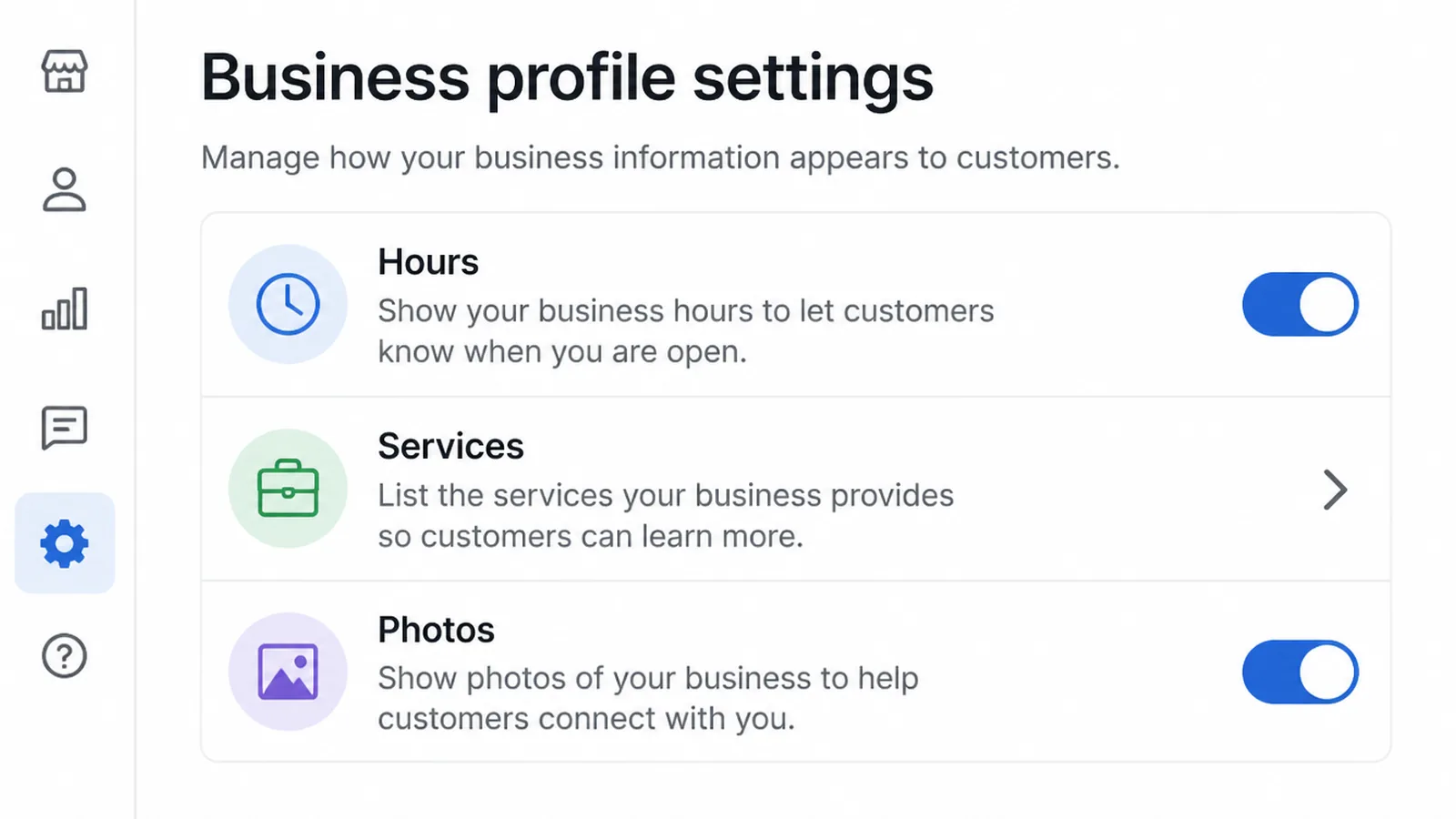
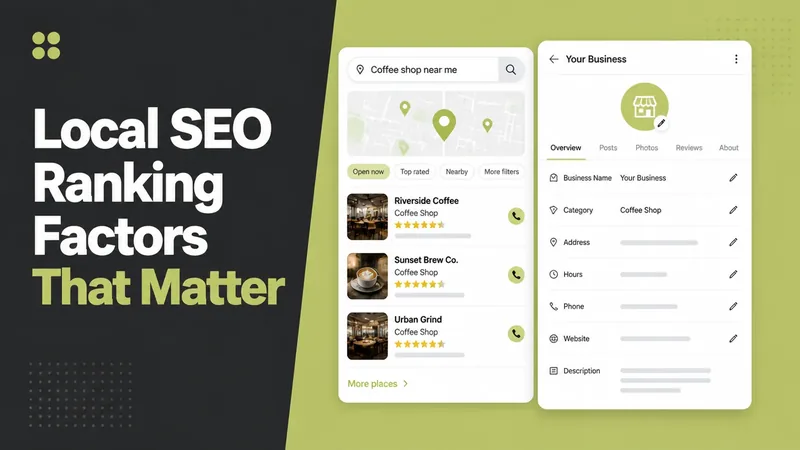
Most near me searches end at a listing, so the listing has to be right on the day.
- Hours. Including public holidays, set in advance for the year if you can.
- Services. Everything you actually offer, named the way customers say it.
- Photos. Current, real, and showing the place somebody is about to drive to.
Wrong hours are the expensive mistake here. Somebody who turns up to a closed door is lost, and occasionally they leave a review about it.
Set the holiday hours months ahead. It is a ten minute job in a quiet week and it prevents the busiest wasted journeys of the year.
Services are the quiet one. A listing that says what you do answers the third question before anybody calls, and most profiles leave the field half empty.
Set a quarterly reminder to look at all three. Ten minutes, four times a year, keeps the listing honest.
Check it from a phone, signed out, the way a customer would. The owner's view of a listing is not the one being judged.
What Helps Most
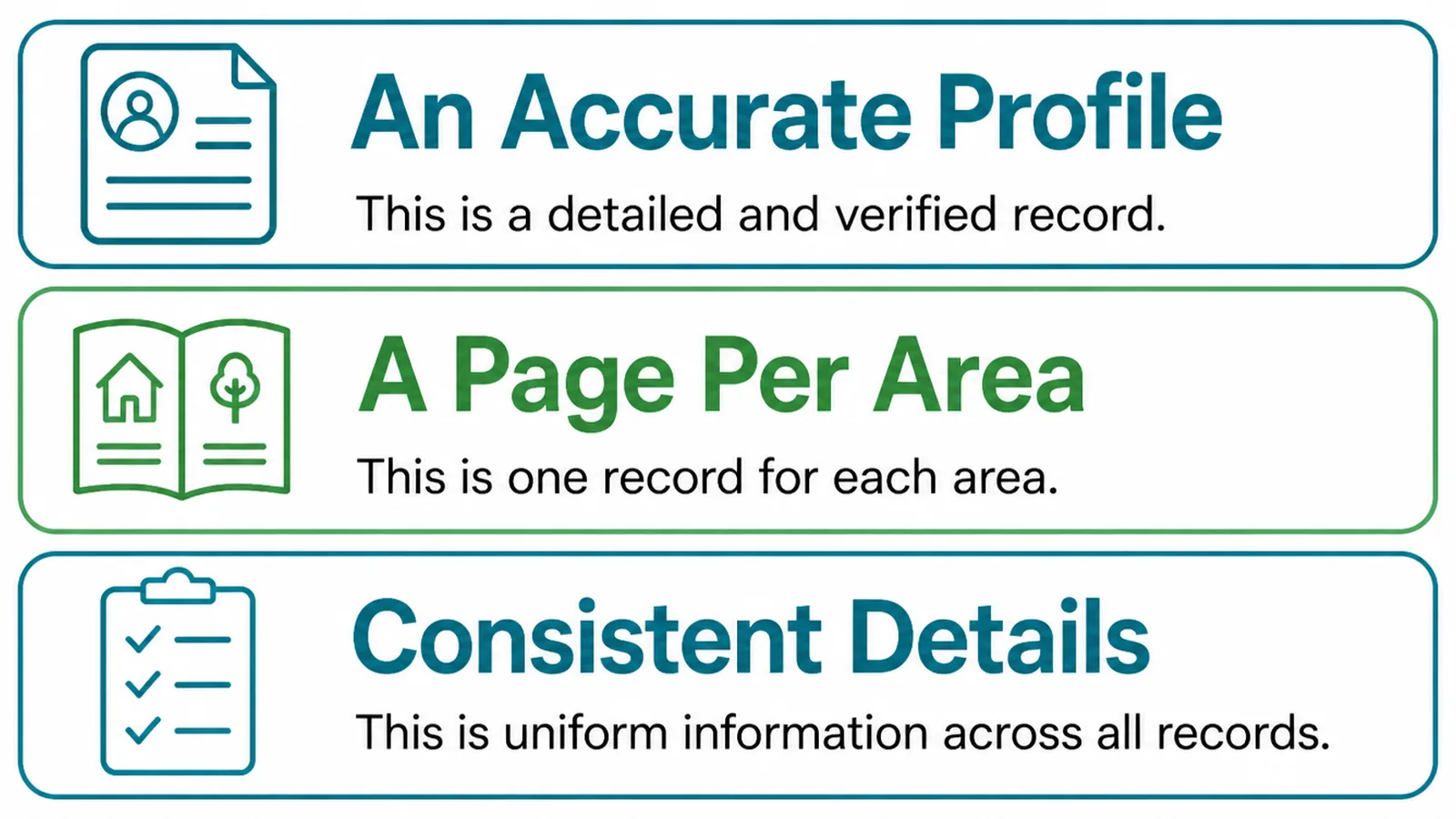
If you only do three things, do these.
- A complete, accurate profile. Category, services, hours, area, photographs.
- Steady reviews. Asked for honestly after every job, never bought or incentivised.
- A site that confirms it. Same details, areas named, contact obvious on every page.
Reviews do double duty in these searches. They feed the prominence side of local results, and they are also what a stranger reads before choosing between two businesses on the same street.
Replying to them matters as much as collecting them. A business that answers reads as one that will answer the phone.
Nothing on this list is a trick, and that is the point. The businesses that do well in local results tend to be the ones somebody is clearly looking after.
That is also why the advantage holds. Anybody can copy a tactic, and few competitors will keep a listing tidy for two years running.
Local Tools
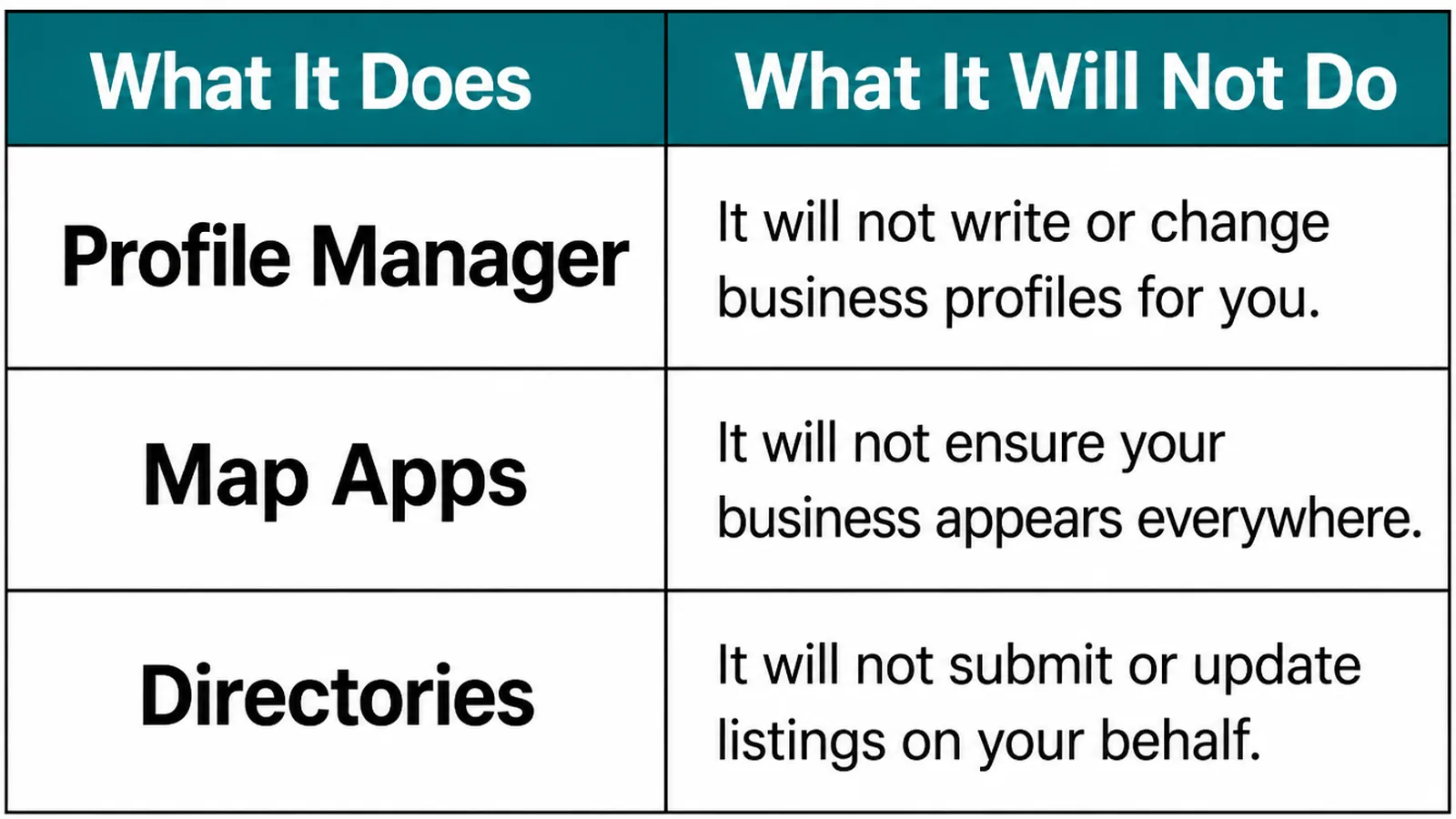
| What it does | What it leaves to you |
|---|---|
| Map rank tools sample results from points across an area | Reading them knowing distance moves every single result |
| Profile insights show calls, direction requests and clicks | Acting on a drop rather than noting it |
| Listing managers keep details consistent across directories | Deciding the canonical details before pushing them anywhere |
Direction requests are the most under-read number in that middle row. For a business with premises, they are about as close to intent as a free report gets.
Watch the trend over months rather than weeks, and look at what you changed just before any movement.
Keep a one-line log of changes somewhere. It is the only way to connect a profile edit to a difference that shows up six weeks later.
Common Mistakes
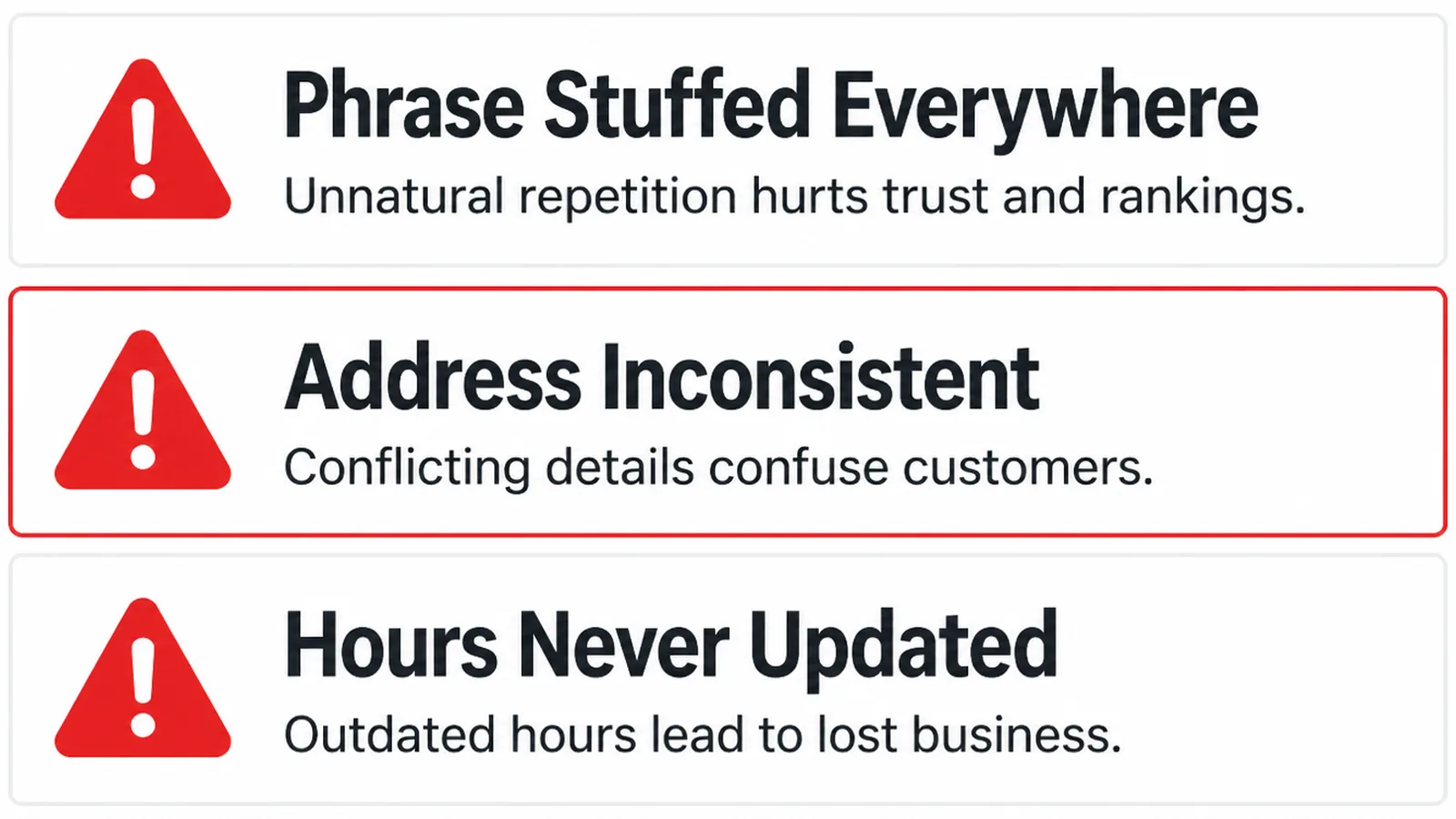
- Optimising for the phrase. Pages and headings built around two words nobody needs to read.
- Listing fifty towns. A coverage list that convinces nobody and dilutes the real ones.
- Stale hours. Open on the listing, closed in reality, on the busiest holiday of the year.
A fourth is expecting to appear everywhere. Distance is part of the result, so a business on one side of a city will not show up on the other side, whatever anybody promises.
Judge yourself on the area you can realistically serve, and spend the effort on being the obvious choice inside it.
If you want the underlying model, the three factors Google names explains why these three steps are the ones that matter.
FAQs
Should I put near me on my website?
No. Writing the phrase into headings reads badly and answers nothing a searcher is asking. The words are a signal about intent, so the useful response is to name your actual areas, keep the profile accurate and make the contact details easy to find.
Why do I appear for some people and not others?
Because distance is part of how local results are decided, and it changes with where the searcher stands. Two people a few streets apart can see different businesses for the same words. That is how a local result is meant to behave.
Does my website matter for near me searches?
Yes, as support rather than as the main event. The listing usually carries the result, and the site confirms the areas you cover, the services you offer and that the business is real. Those are the things somebody checks before calling.
What is the quickest improvement?
Fix the opening hours, including the holidays, and make sure the phone number is tappable everywhere it appears on a phone. Most near me searches come from somebody wanting help today, and being obviously open and reachable beats any amount of clever wording.
Conclusion
Near me searches are answered by being close, open and obviously able to help, in that order.
Make the name, address and phone identical everywhere, state your areas and hours plainly on your own pages, and keep the listing current. The phrase itself needs no attention at all.
If your listing is not showing where it should, see how we approach local SEO, or get in touch and we will check it from where your customers actually search.