Local SEO Ranking Factors That Matter

The local SEO ranking factors Google names are relevance, distance and prominence. Seed Light works on the two you can change, making the profile accurate and the business better known, because distance is set by where the searcher is standing and no amount of work moves it.
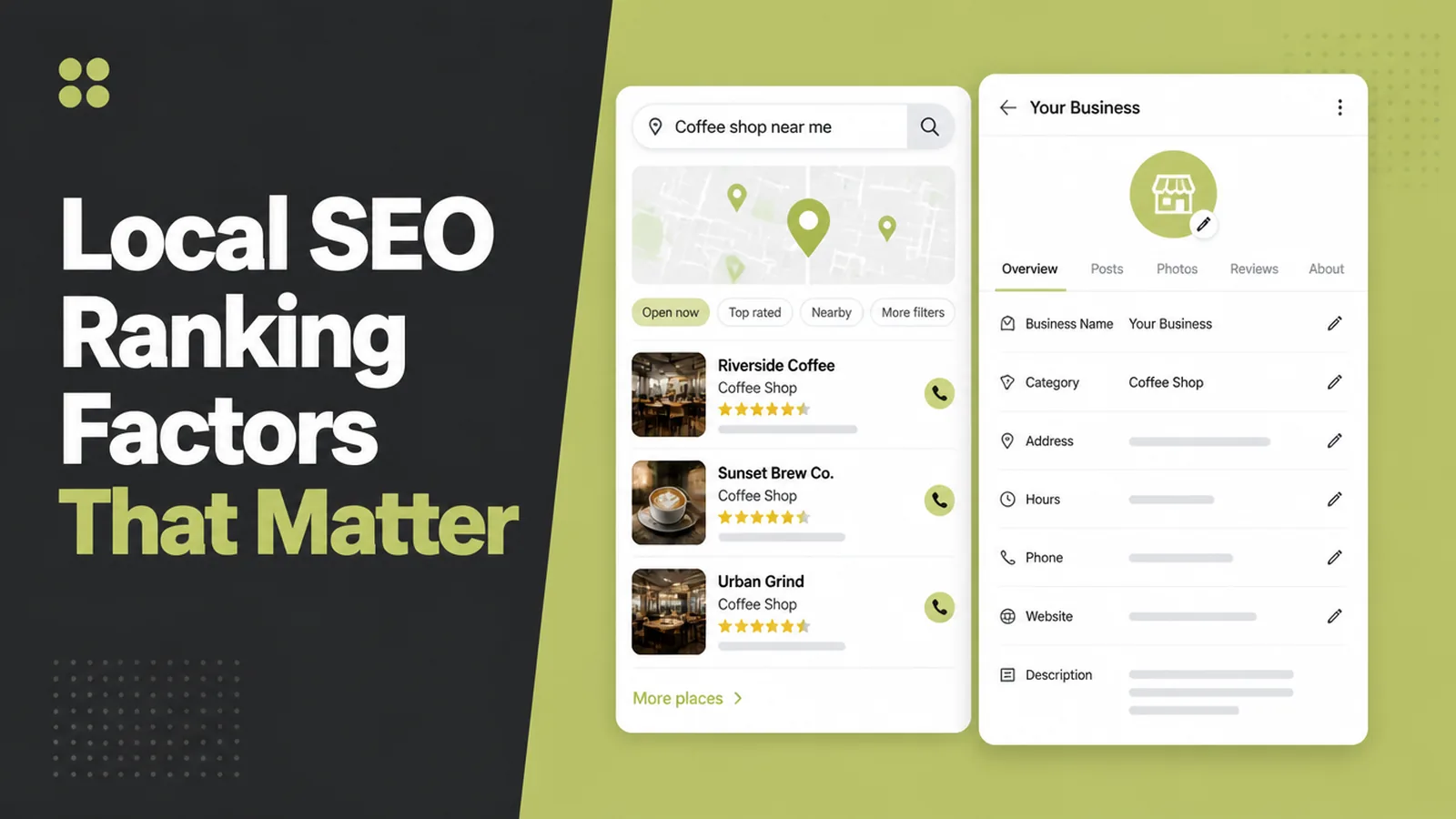
Most local SEO advice arrives as a checklist of ninety things, none of which says why it is on the list.
Google publishes the short version itself, and it runs to three words. Everything worth doing connects to one of them, and plenty of popular advice connects to none.
This guide covers the three factors, which of them you can actually move, and what to do first.
Key Takeaways
- Three factors. Google says local results are mainly based on relevance, distance and prominence.
- Distance is not yours to change. It depends on where the searcher is.
- Relevance is the quick win. A complete, accurate profile that matches real searches.
- Prominence is the slow one. Being known, which takes months rather than days.
- You cannot pay for position. Google says so in plain words.
The useful thing about having three named factors is that it sorts advice. If a task does not move relevance or prominence, it is housekeeping.
Housekeeping still matters. It simply should not be mistaken for the work that changes where you appear.
Your Google Business Profile is where most of this lands. It is the listing being ranked, so it is the thing to fix before anything on the website.
Local SEO Ranking Factors: What Google Names
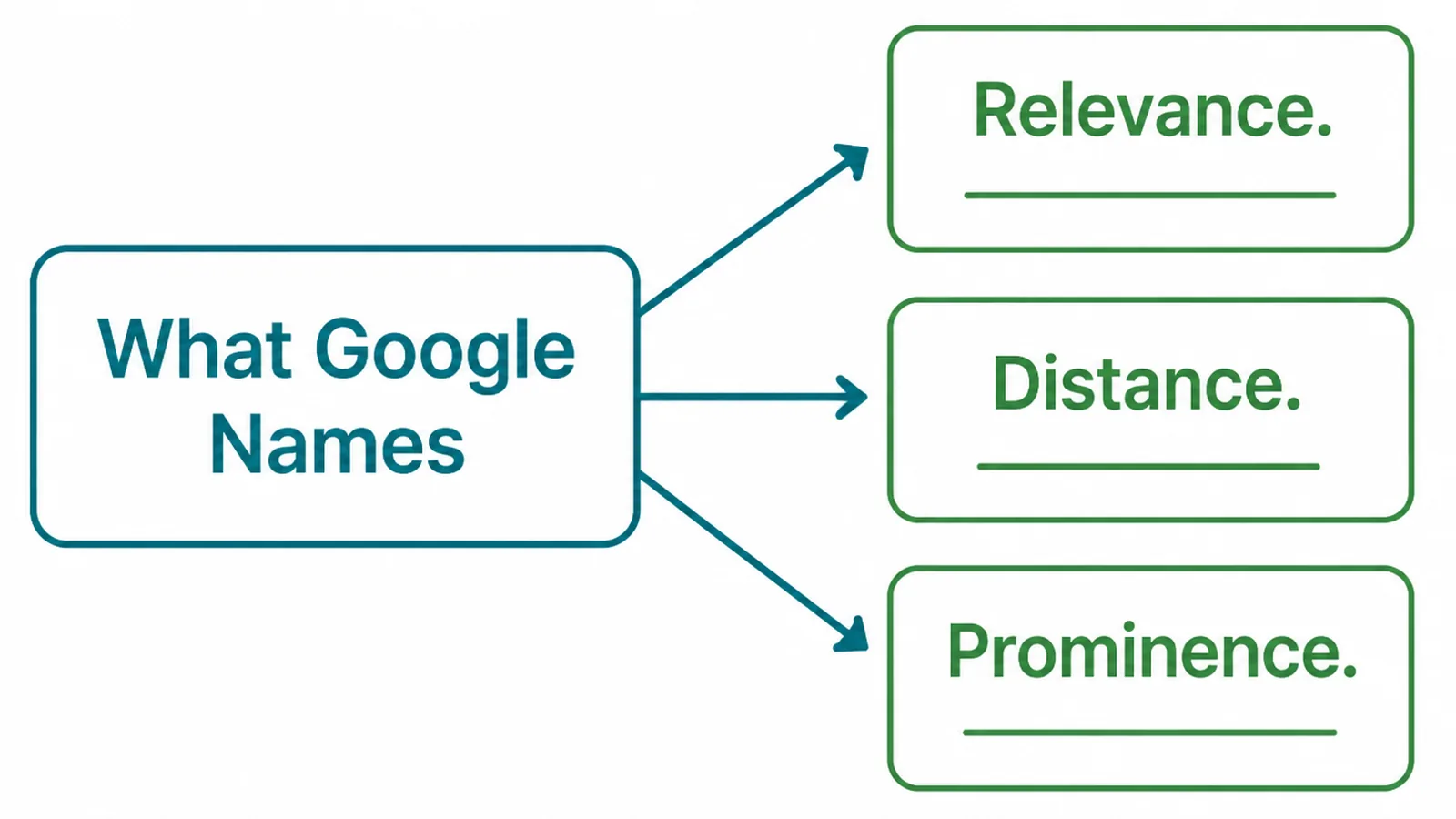
Google's own page on improving local ranking is unusually direct. It says local results are mainly based on relevance, distance, and popularity.
- Relevance. How well a Business Profile matches what somebody is searching for.
- Distance. How far each business is from the customer who is searching.
- Prominence. How well known a business is, which Google links to things like links and reviews.
Distance is the one that ends most arguments. A business four streets further away can lose to a weaker competitor simply because of where somebody is standing.
That is not a flaw to be worked around. It is the whole point of a local result, and it means your realistic target is the area around you rather than a city.
It also explains why the local pack looks different to you than to a customer across town. Two people searching the same words at the same moment see different businesses.
Check yours from where your customers actually are rather than from your own desk. The view from the premises is the least representative one available.
The same page adds that there is no way to request or pay for a better local ranking on Google, which disposes of a whole category of sales calls.
Why A Checklist Is Not A Lever
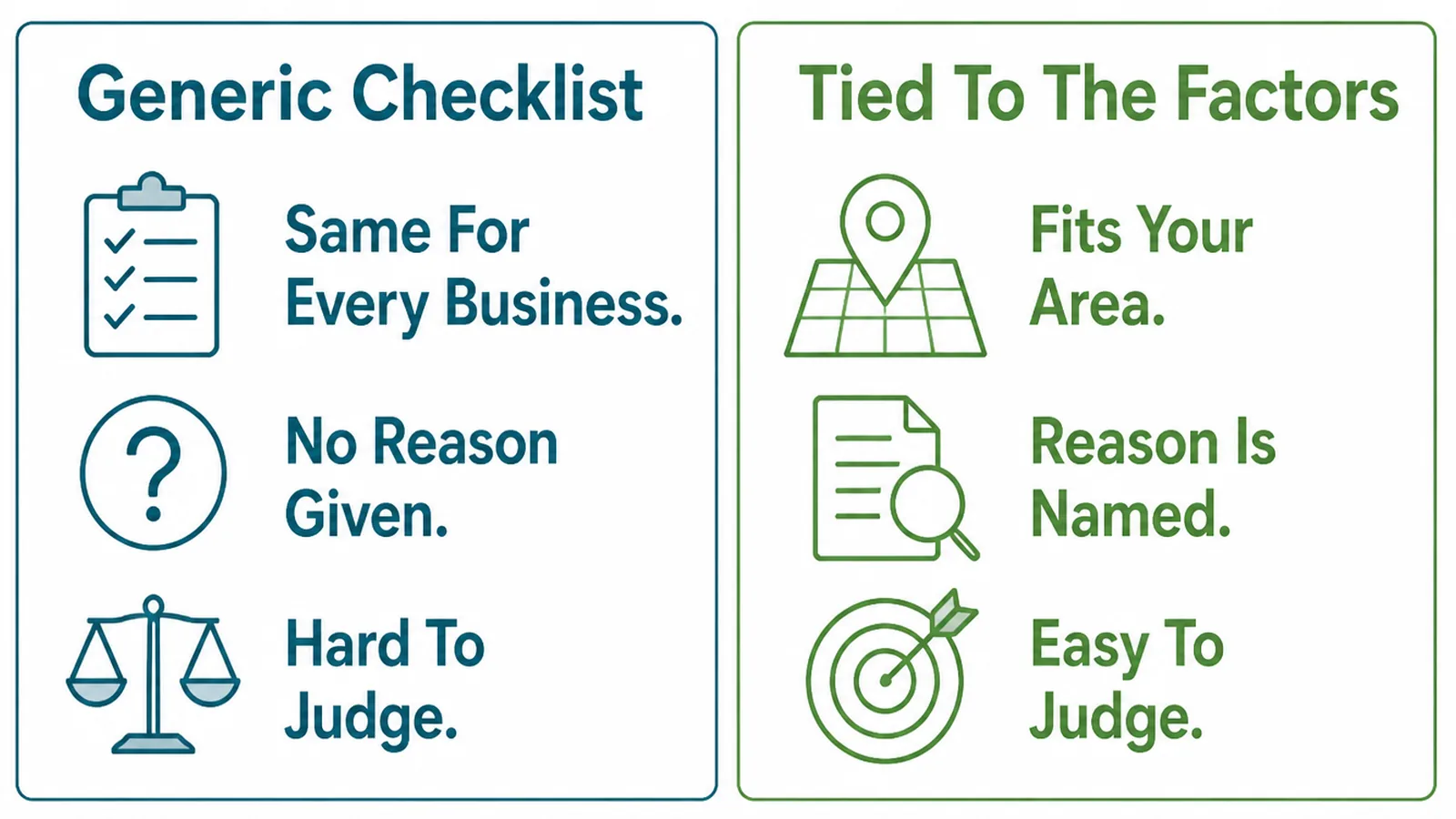
A long checklist feels like progress because things get ticked. It rarely says which factor each item is supposed to move.
So businesses end up posting weekly, filling in attributes nobody reads, and adding keywords to a description, while the category is wrong and the opening hours are two years old.
None of those tasks is wrong in itself. They are simply the wrong order, and the order is what a checklist cannot tell you.
Sort the list instead. Put every task under relevance, prominence or neither, and the neither column is usually the longest.
Work the relevance column first, because it is fast and it is entirely yours. Nobody else decides whether your profile is accurate.
Then work prominence steadily, knowing it moves slowly. Reviews, mentions and links accumulate over months, and nothing honest makes that quicker.
Keep a note of what you changed and when. Local work is slow enough that without a record nobody can tell which change preceded the improvement.
How To Work The Local SEO Ranking Factors, Step By Step
Three steps. The first two take an afternoon and the third is a habit.
1. Make The Profile Accurate
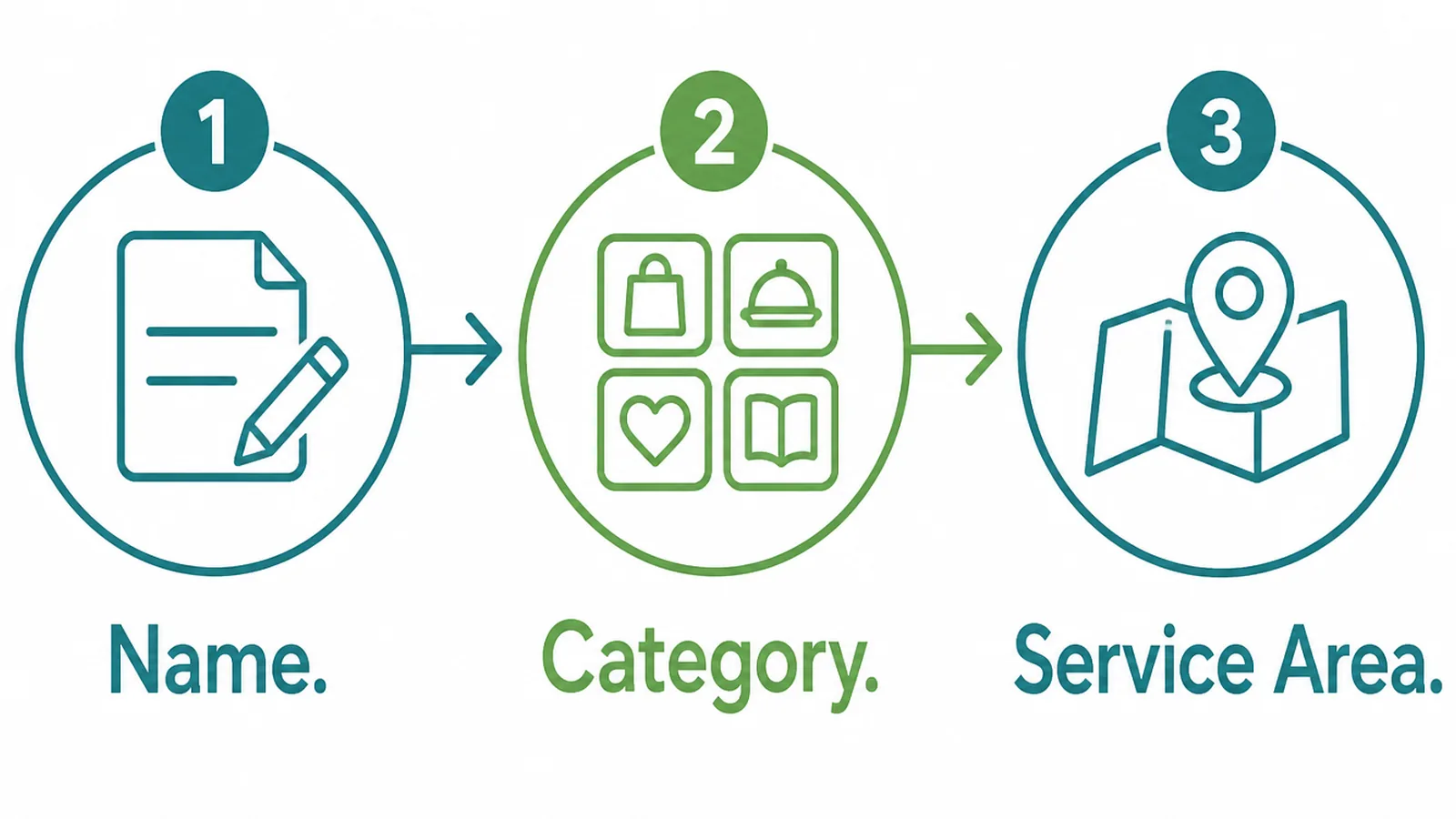
Relevance starts with the fields that say what the business is and where it works.
- Name. The real one, as it appears on your signage and your invoices.
- Category. The most specific honest match, which also decides what features you get.
- Service area. Where you actually travel, if customers do not come to you.
Get these three right and most of the relevance work is done. Everything else on the profile is detail hanging off them.
Match them to how customers actually ask. If people say aircon and your category says air conditioning contractor, the profile can carry both without any invention.
Fill in the rest of the fields properly while you are there: services, attributes, opening hours and the description. An empty field cannot match anything.
Finish it in one sitting rather than returning to it. Half-filled profiles tend to stay half filled, because nobody can remember which half was done.
If you are unsure about the category, choosing it properly is worth the extra twenty minutes, since it decides which fields even appear.
2. Keep The Details Consistent
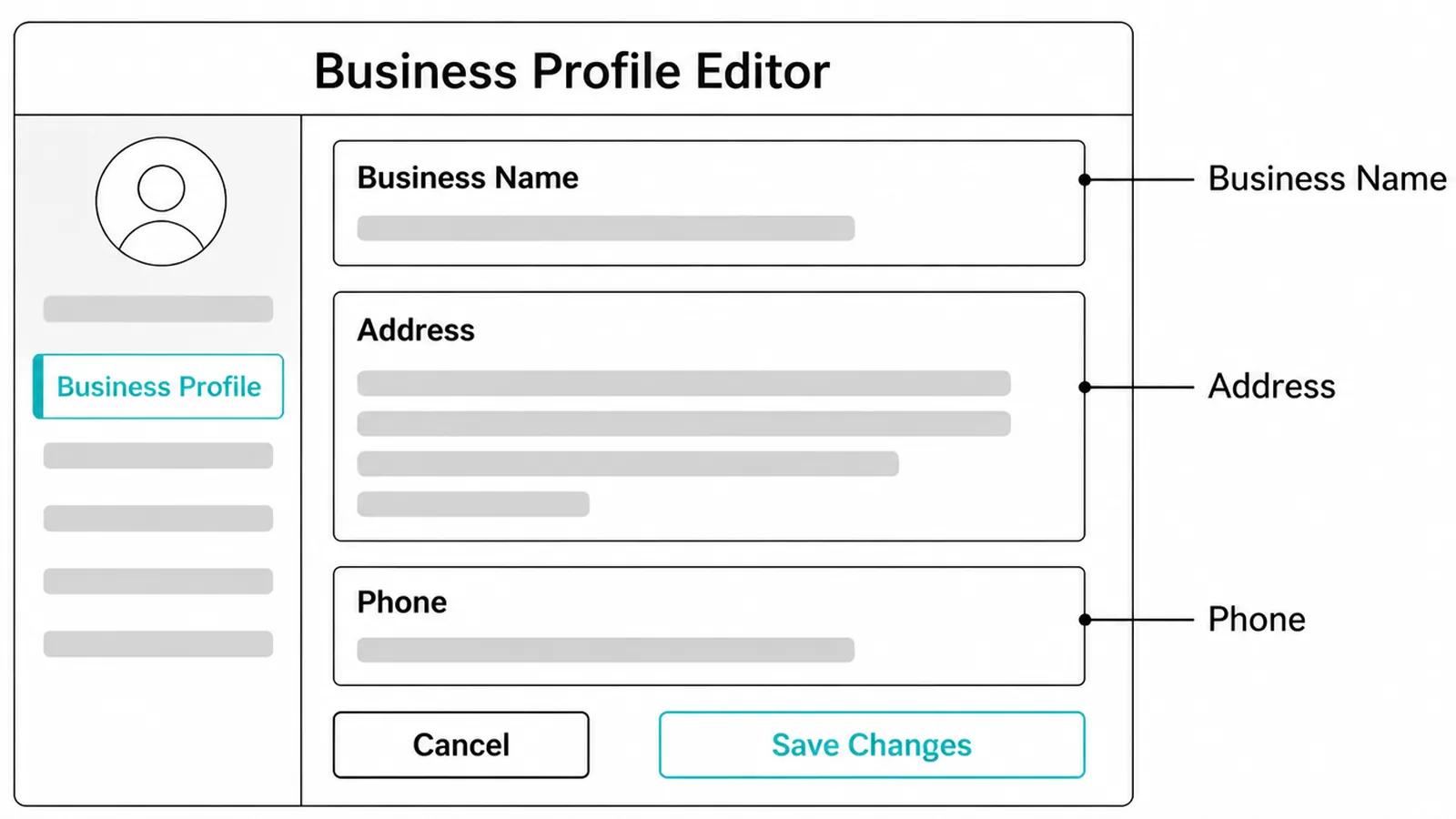
The same three details appear in dozens of places, and they drift.
- Business name. One spelling, including whether it carries a suffix like Enterprise or Sdn Bhd.
- Address. One format, including how the unit number and the road are written.
- Phone. One number, in one format, answered by somebody.
Write the canonical version down once, then use it everywhere: the profile, the website footer, invoices, directories and social accounts.
Put that note where a new staff member would find it. Most drift starts with somebody typing the address from memory.
Inconsistency is rarely dramatic and it is genuinely untidy. It makes you harder to match and harder for a customer to confirm.
Fix the website first, since it is the one you control completely, then work outwards through the listings you can edit.
Keep a list of every place your details appear as you go. The list is more useful than the corrections, because it is what you check after the next move or phone change.
3. Keep It Current
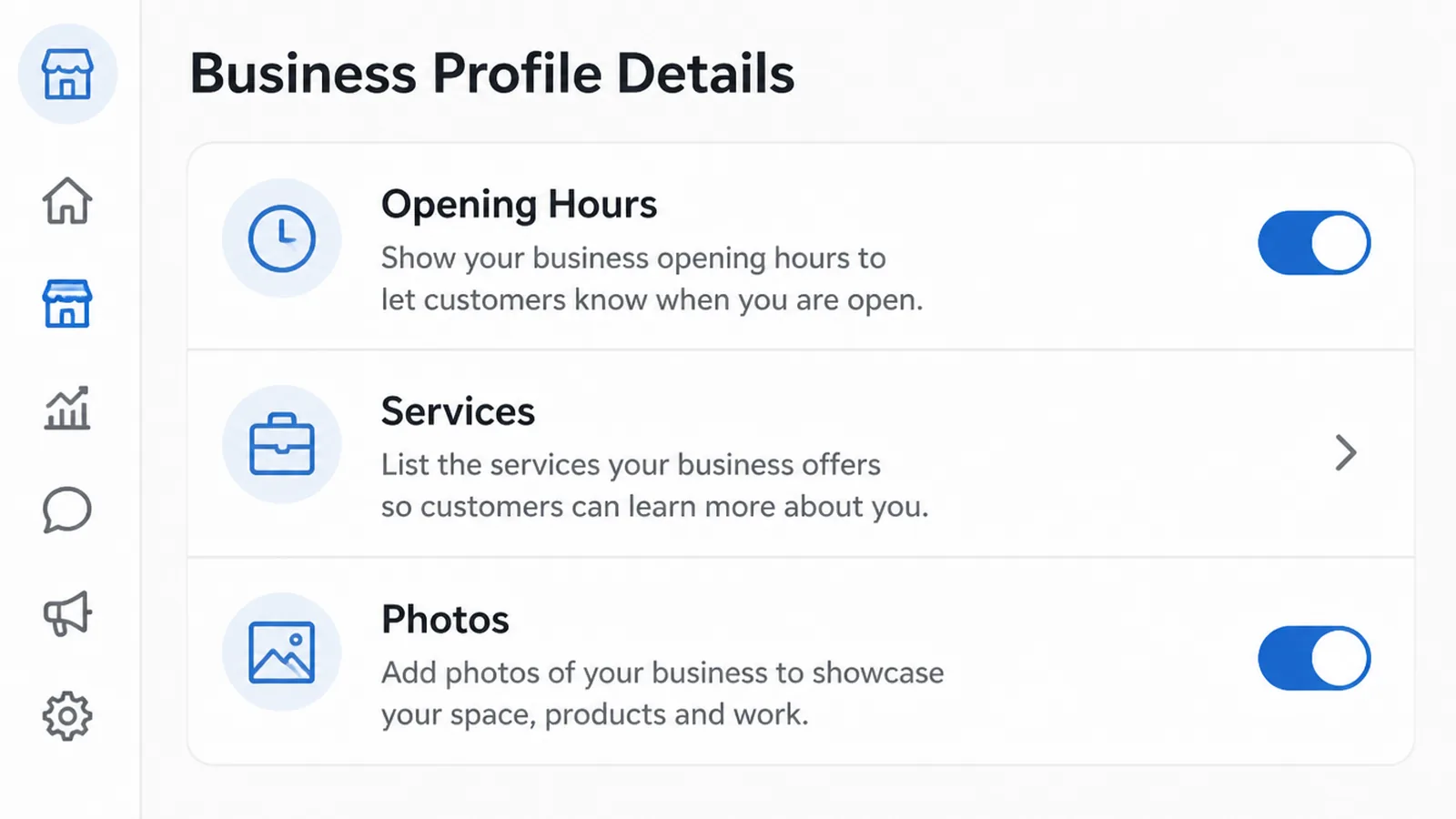
A profile is not a form you complete. It describes a business that keeps changing.
- Opening hours. Including holidays, the detail customers notice fastest.
- Services. Added when you start something, removed when you stop.
- Photos. Current premises, current vehicles, current work.
Set a reminder every quarter and give it ten minutes. Most listings have at least one thing that is no longer true.
Tie it to something you already do, like the end of a quarter or a stock count. A reminder attached to an existing habit survives; a standalone one does not.
Wrong hours cost you more than any ranking position. Somebody who drives to a closed shop is lost twice over.
Holiday hours are worth setting in advance for the whole year. It takes a few minutes once and prevents the wasted journeys that produce unfair reviews.
What Is Worth Your Time
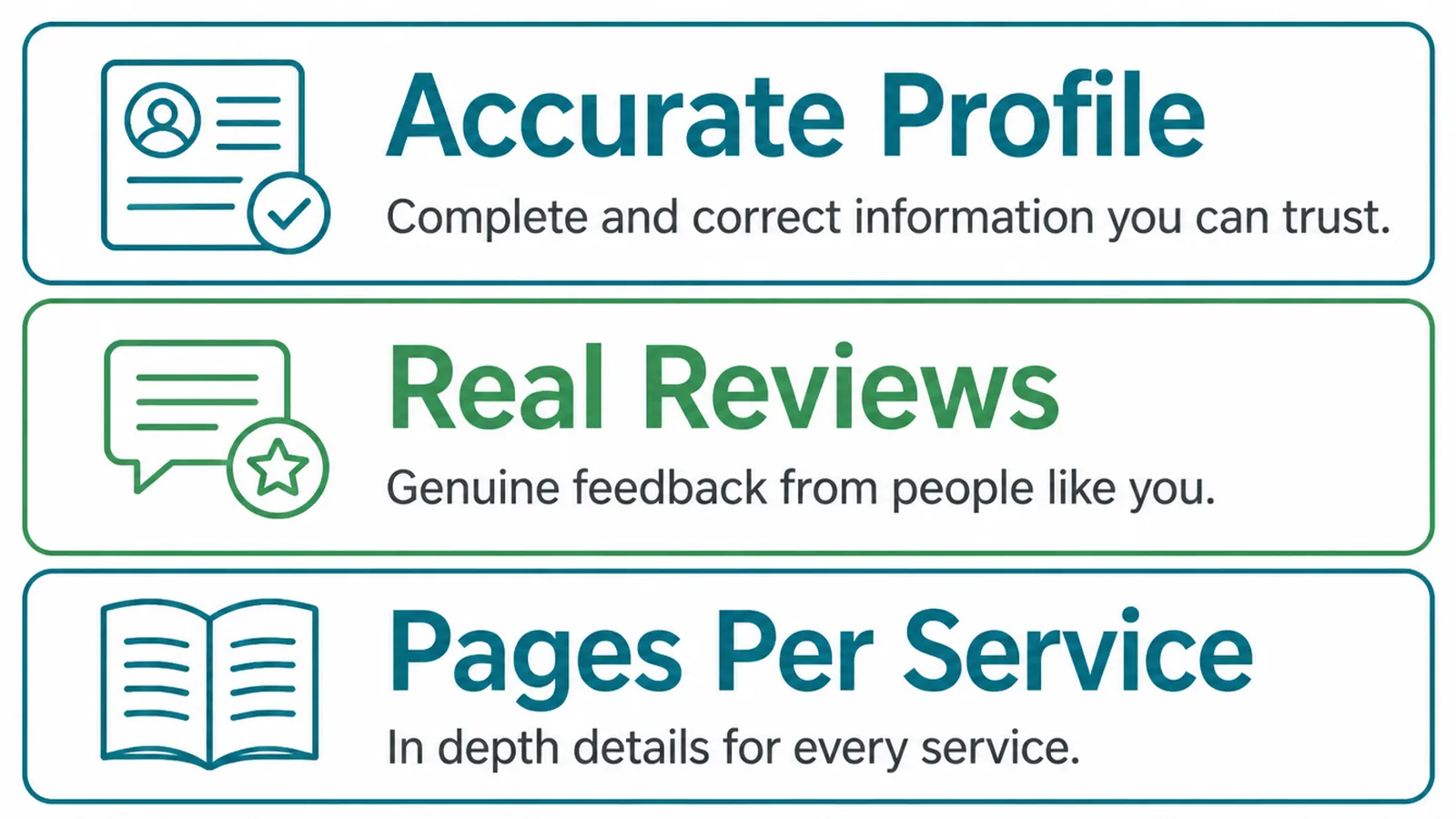
If you have an afternoon a month, spend it on these three.
- The profile. Accurate, complete and current, which covers most of relevance.
- Reviews. Asked for honestly, every job, since Google ties prominence to them.
- Local mentions. Being named and linked by real local organisations.
Reviews deserve a note of caution. Google names review count and score as part of prominence, and it also prohibits buying them or offering rewards for them.
Ask everybody, every time, and let the pattern build. Asking for reviews properly covers the mechanics of doing that.
Local mentions are slower again, and they come from being part of the place: a supplier page, a club you sponsor, a local news piece about something you actually did.
Local SEO Tools
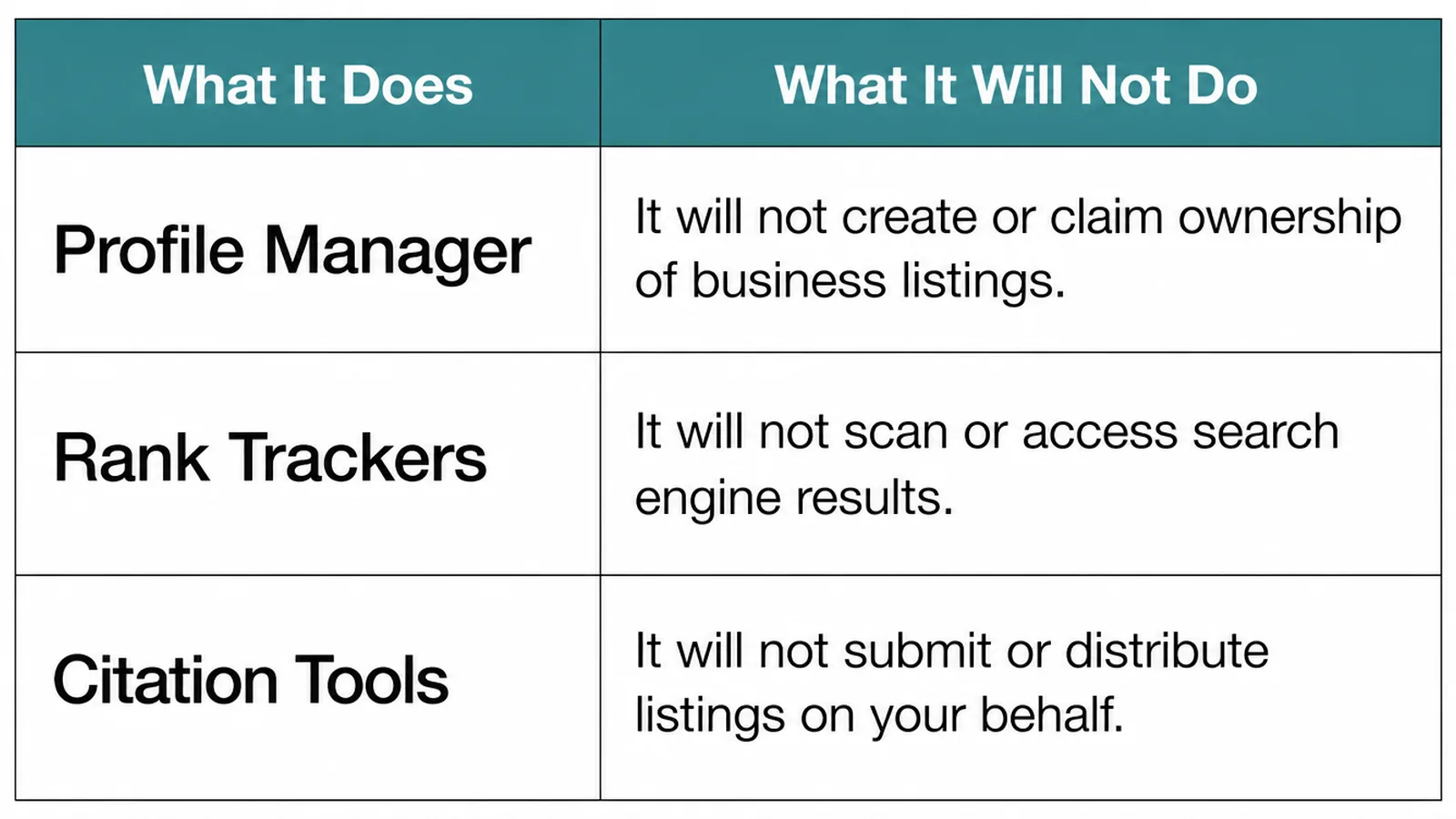
| What it does | What it leaves to you |
|---|---|
| Rank trackers show where you appear from different points on a map | Remembering that distance moves the answer |
| Listing managers push your details to directories at once | Deciding the canonical name, address and phone first |
| Profile insights report how people found and used the listing | Acting on it rather than reading it monthly |
Rank trackers are useful and easy to over-read. A local result depends on where the searcher is, so a single position number is a simplification of something that varies street by street.
Listing managers are worth it once you are on more than a handful of directories. Below that, editing by hand is quicker than learning the tool.
Use them for direction rather than precision. Up over three months across several points is a real signal; a position changing day to day usually is not.
Pair the tracker with what the profile itself reports. Calls, direction requests and website clicks describe local search behaviour better than a position number does.
Common Local SEO Mistakes

- A stale profile. Hours, services and photographs describing a business from three years ago.
- Chasing the whole city. Expecting to appear everywhere when distance says otherwise.
- Paying for position. Buying something Google says cannot be bought.
A fourth is doing the easy work forever. Posting weekly is pleasant and it does not fix a wrong category or a missing service area.
The same goes for buying citations in bulk. A hundred directory entries nobody visits is a long invoice rather than prominence.
Ask what any task is supposed to move before doing it for a year. If the answer is not relevance or prominence, it is optional.
FAQs
Can I pay to rank higher locally?
No. Google states plainly that there is no way to request or pay for a better local ranking. You can pay for advertising, which appears as a separate labelled placement above or around the results rather than as a better position in them.
Which factor can I actually change?
Relevance and prominence. Relevance comes from a complete, accurate profile that matches what people search for, and prominence from being well known, which Google ties to things like links and reviews. Distance is set by where the searcher happens to be.
Do reviews affect local ranking?
Google names review count and score as part of how it works out prominence. That is a reason to ask every customer honestly rather than to chase a number, since buying reviews or offering rewards for them breaks the content policy outright.
How long does local SEO take?
Longer than fixing the profile and shorter than most site-wide work. Profile corrections can show within days, while the prominence side builds over months, because it depends on other people linking to you and leaving reviews in their own time.
Conclusion
The local SEO ranking factors are relevance, distance and prominence, and only two of them are yours to work on.
Make the profile accurate, keep the name, address and phone consistent everywhere, then build prominence slowly through reviews and real local mentions. Sort every other task against those three.
If you would like somebody to do the sorting with you, see how we approach local SEO, or get in touch and we will start with the profile.