Retargeting Ads Explained

Retargeting ads are shown only to people who already visited your website, using a list built from a tracking tag. Seed Light treats it as a reminder rather than an introduction, because the audience already knows who you are and the ad only has to bring them back.
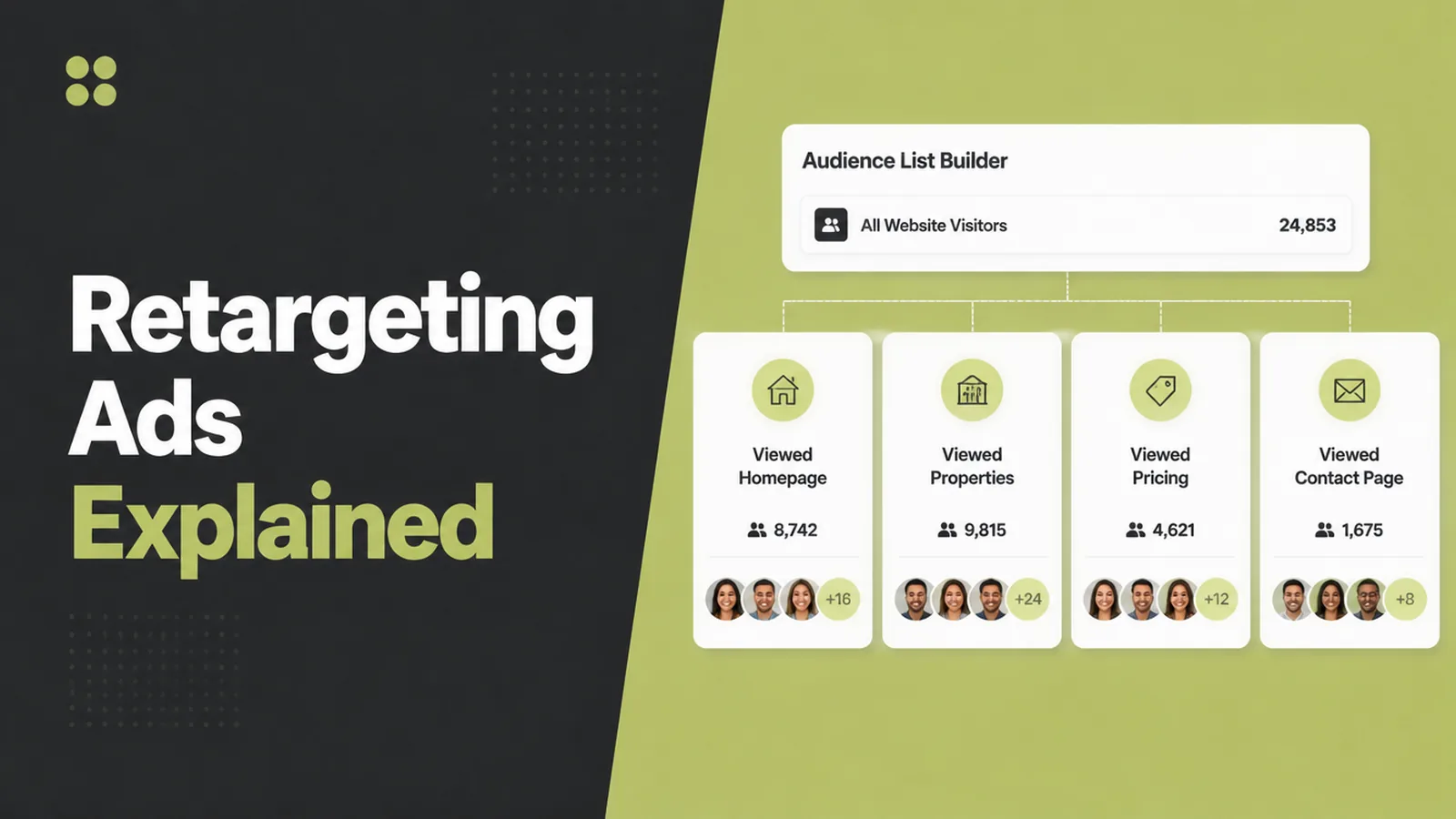
Somebody reads your service page, gets interrupted, and never comes back. That is most of your traffic, on most days.
This guide covers what retargeting is, how the audience list is actually built, and the settings that decide whether it reads as a useful reminder or as being followed around the internet.
By the end you will know who is worth following, for how long, and who to take off the list.
Key Takeaways
- Retargeting advertises to people who already arrived. The ad reminds rather than introduces, so it can be much shorter.
- The list is built by a tag on your site. No tag, no audience, and nothing to advertise to.
- Google needs 100 active users in 30 days. Below that the list will not serve on Display or Search.
- Membership has a window. Thirty days by default, 540 at most, and the right number comes from your own sales cycle.
- Exclusions matter as much as inclusions. People who already bought should stop seeing the advert that asks them to.
Retargeting is the one piece of paid advertising where the audience already knows who you are. That changes what the ad has to do, and it changes what counts as too much.
What Retargeting Ads Actually Are
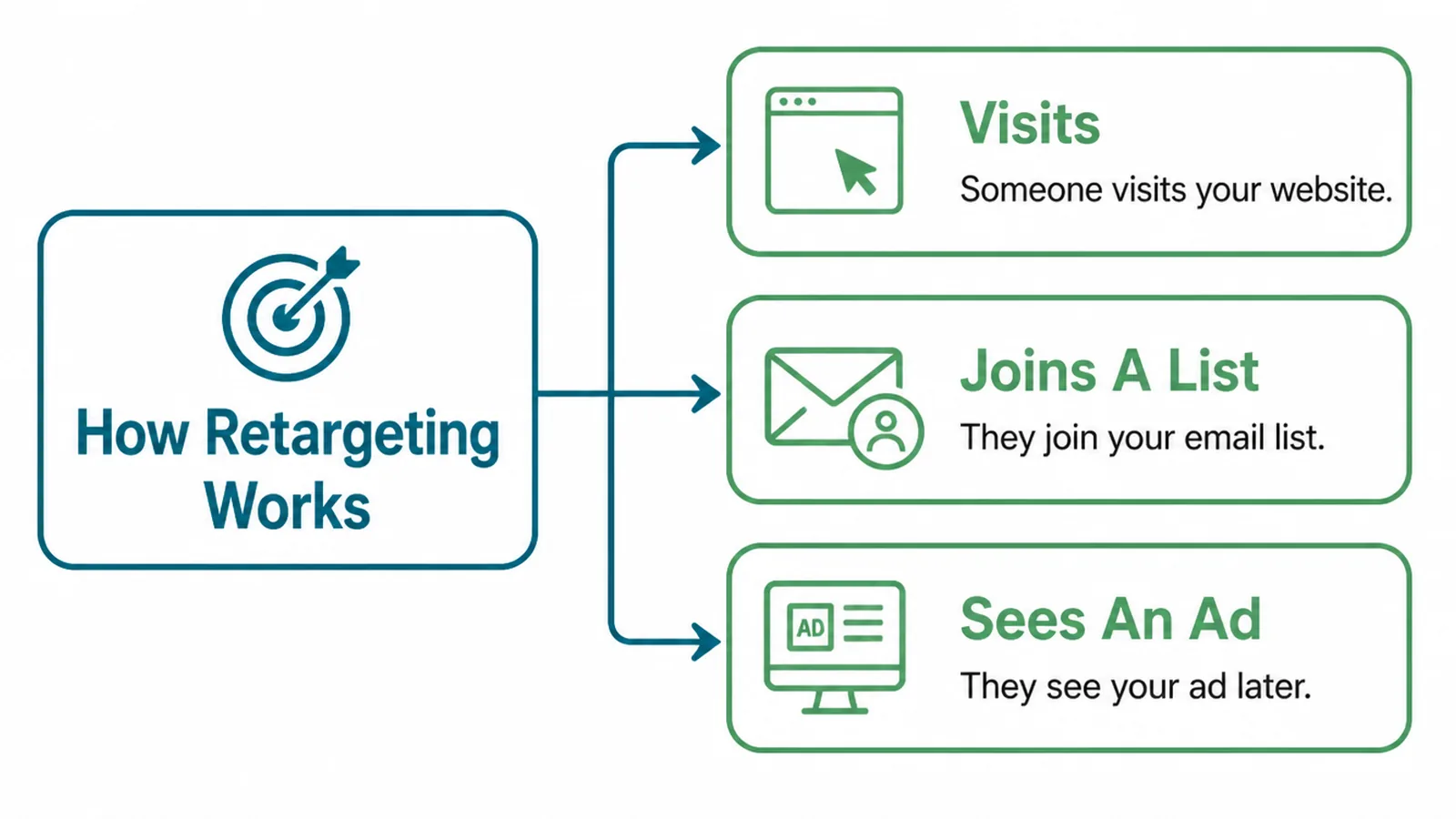
Someone visits your site. A small piece of code adds them to a list. Later, that list is used as the audience for an advert.
That is all retargeting ads are. The mechanism is ordinary; the judgement is in who you put on the list.
That is the whole mechanism. The platform never tells you who they are, only how many of them there are and whether the list is big enough to use.
Two things follow from it. You cannot retarget before you have traffic, and you cannot retarget visits that happened before the tag went on.
Google calls the feature remarketing in its own documentation. Most advertisers say retargeting. They are the same thing, and nothing in this guide changes depending on which word you use.
The list has a minimum size before it will do anything. Google asks for at least 100 active users in the last thirty days, and until the list reaches that the campaign sits there not serving.
That catches people out more than any other part of this. A business with forty visitors a week is not ready to retarget yet, and no setting in the account will change that.
Why It Feels Different To Cold Ads
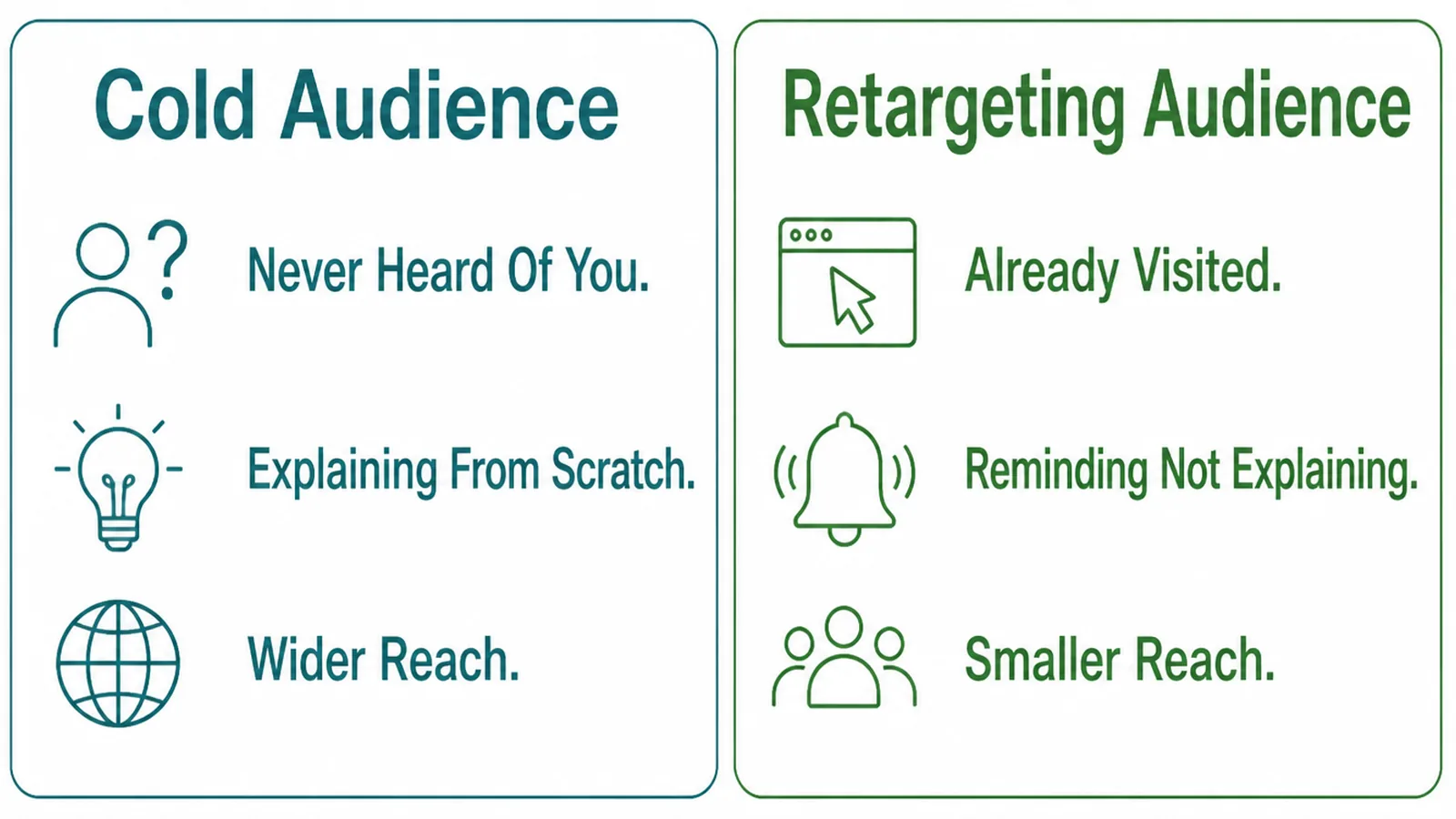
A cold advert has to explain who you are before it asks for anything. A retargeting advert does not.
That is why retargeting copy is usually shorter. The reader has already seen your service page, so repeating it wastes the space.
The reach is smaller too, by definition. You are advertising to a few hundred people rather than a few hundred thousand, so the numbers in the report will look small next to a cold campaign.
Judge retargeting on enquiries, not on reach. A list of 300 people that produces four calls is doing its job, and no impression count will tell you that.
It also changes what the advert should point at. A cold ad usually sends people to the home page, because they need to work out what you do.
A retargeting ad should send them back to the page they were already reading. Sending them to the front door again asks them to repeat a journey they abandoned once.
And it changes the tone. The reader has met you, so the copy can be plain about what happens next instead of selling the idea from scratch.
How To Set Up A Retargeting Campaign
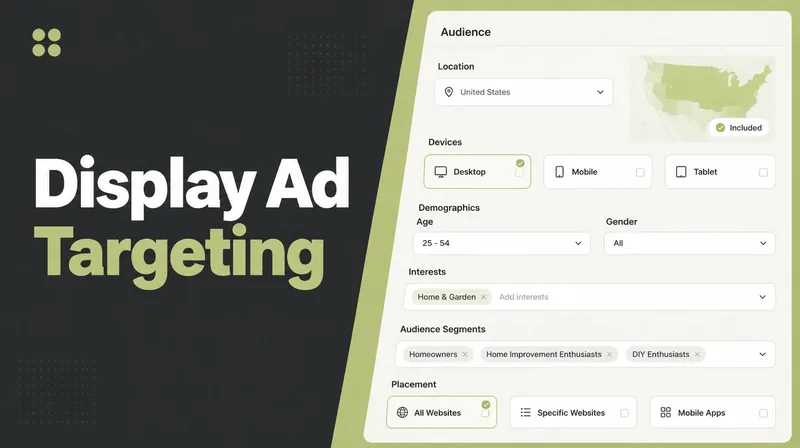
Three decisions do most of the work. Who you follow, how you define them, and how often they see you.
1. Decide Who To Follow
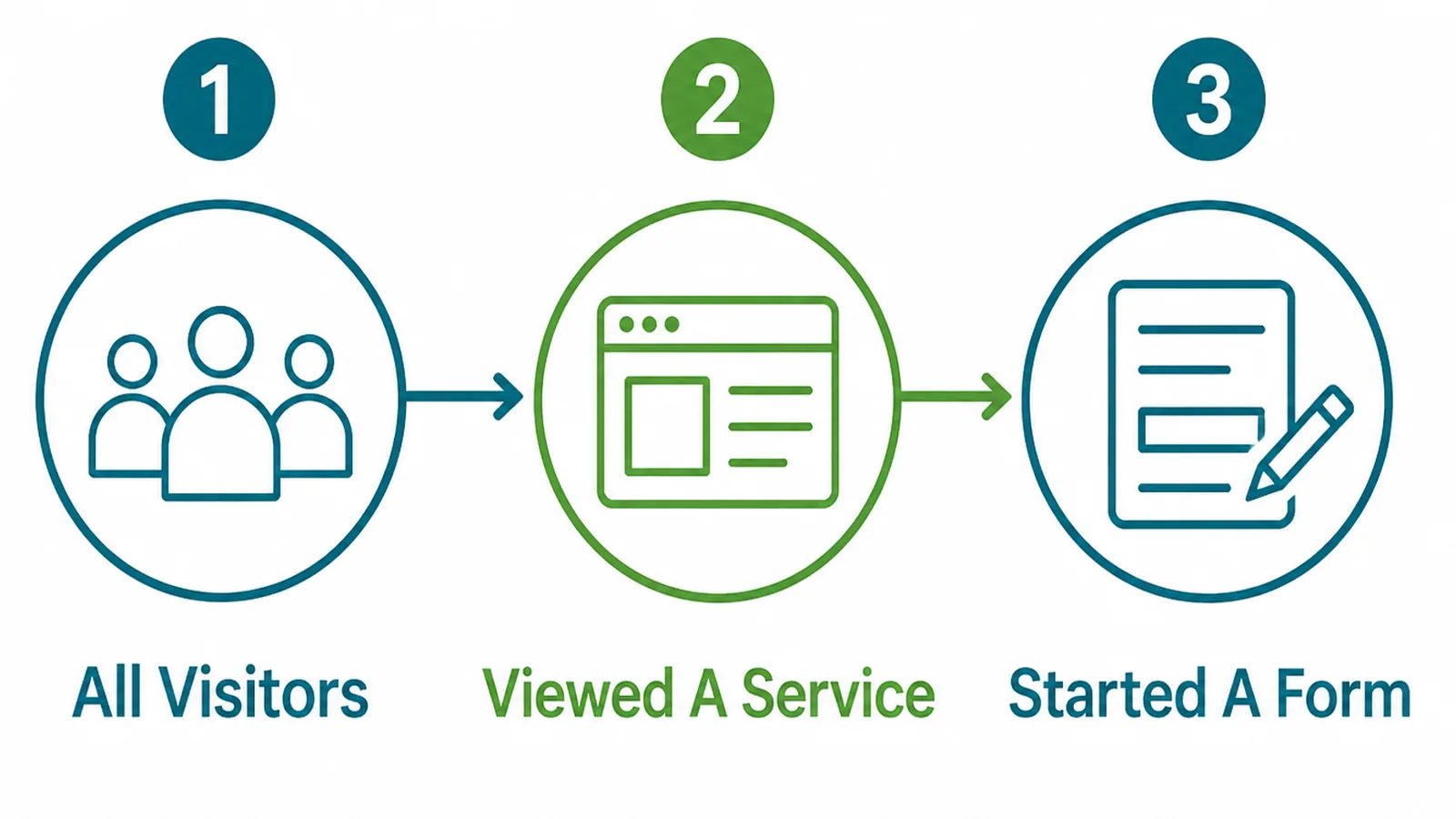
Not every visitor is worth paying to reach again. Someone who read one blog post is not the same as someone who opened your pricing page twice.
Start by writing down three groups:
- Everyone who visited. The widest list, and usually the weakest, because it includes people who landed by accident.
- People who viewed a service. They looked at the thing you sell. That is a much stronger signal than a visit alone.
- People who started an enquiry. They began the form and stopped. Nobody gets closer without finishing.
If your traffic is small, start with everyone and split later. Splitting a list that is already thin just leaves you with three lists too small to run.
There is a fourth group worth naming, and it is the one people forget. Anyone who already became a customer belongs on a list you exclude rather than target.
Write that one down at the same time as the others. It is far easier to build while you are in the account than to remember three months later when the complaint arrives.
2. Build The Audience List
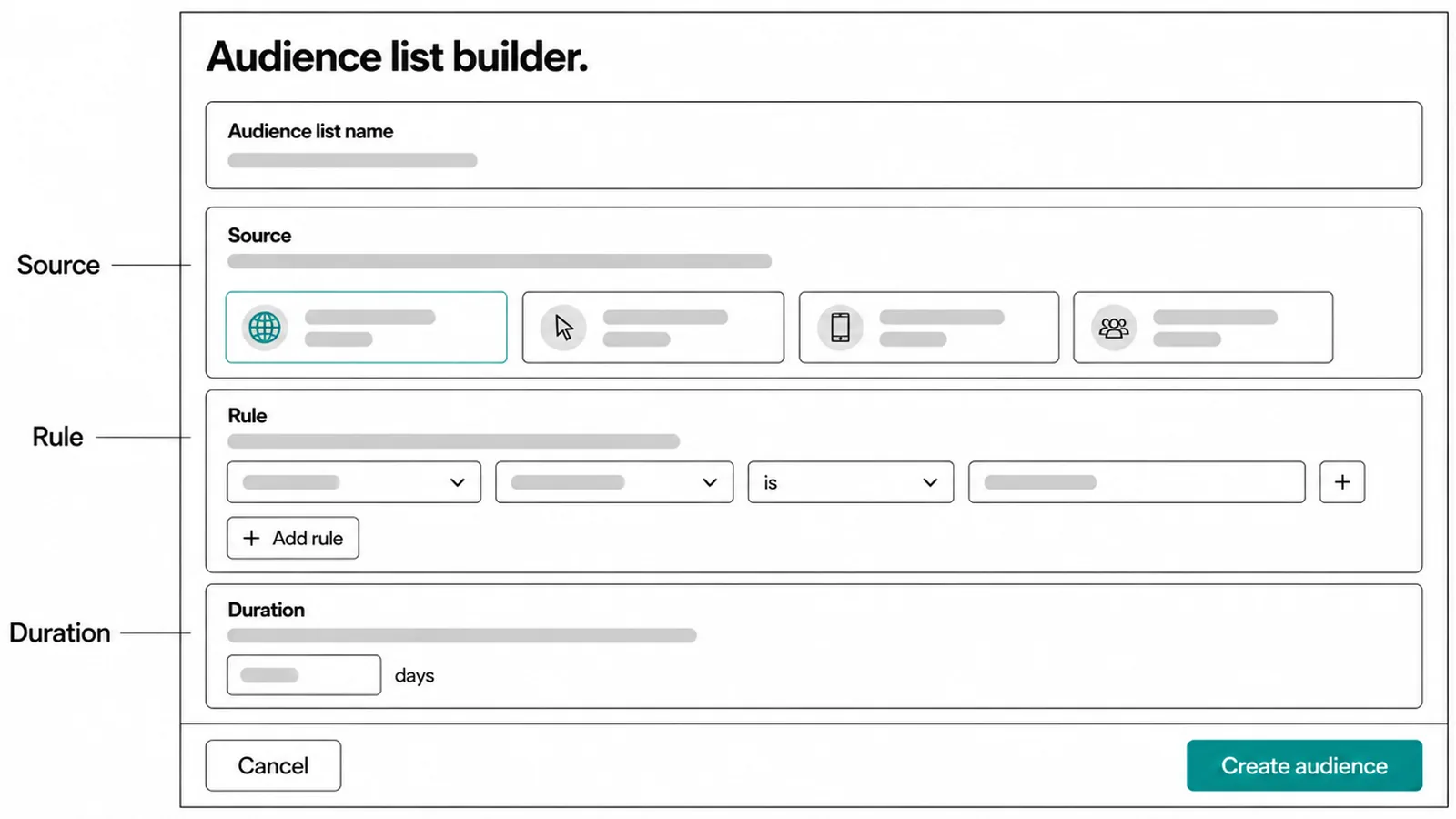
In the ads account, a list is three choices. Where the data comes from, which visitors qualify, and how long they stay.
The rule is usually a URL. Anyone who saw a page whose address contains your service name goes in.
The duration is the one people leave on the default. Google uses thirty days and allows up to 540, and the right number is the time your own enquiries usually take to decide.
A roof repair is decided in days. A website is often decided over a season. Set the window from your own records rather than from the maximum.
Look at your last twenty enquiries and find the gap between the first contact and the yes. That number is your window, and it is usually shorter than people guess.
One more thing about the rule. Match on the part of the address that will not change, because a URL that gets tidied later quietly empties the list.
3. Cap How Often It Shows
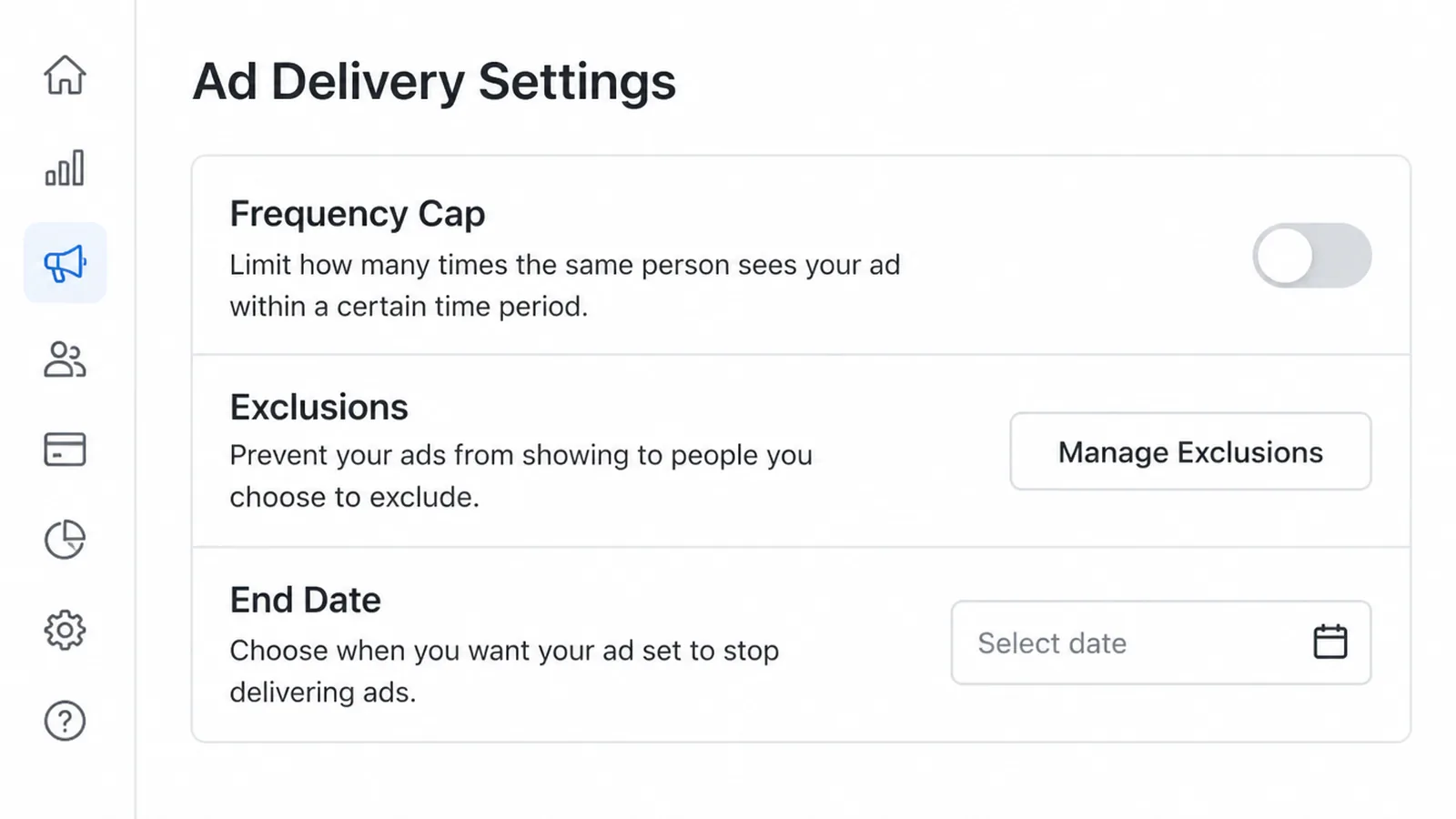
A small audience and a daily budget is how people end up seeing the same advert all week. The budget has nowhere else to go.
Three settings fix it:
- A frequency cap. A limit on how many times one person sees the ad in a day or a week.
- An exclusion list. People who already enquired or bought, removed so they stop being sold to.
- An end date. A point where the campaign stops on its own rather than running until somebody notices.
None of these are advanced. They are the difference between a campaign that reminds people and one that follows them.
The end date is the one that gets skipped. A retargeting campaign with no finish keeps spending long after the offer it was built around has gone.
Put a review date in your calendar on the day you launch it. Half an hour every month is enough to catch a list that has gone stale.
Retargeting Ads Ideas That Work Right Now
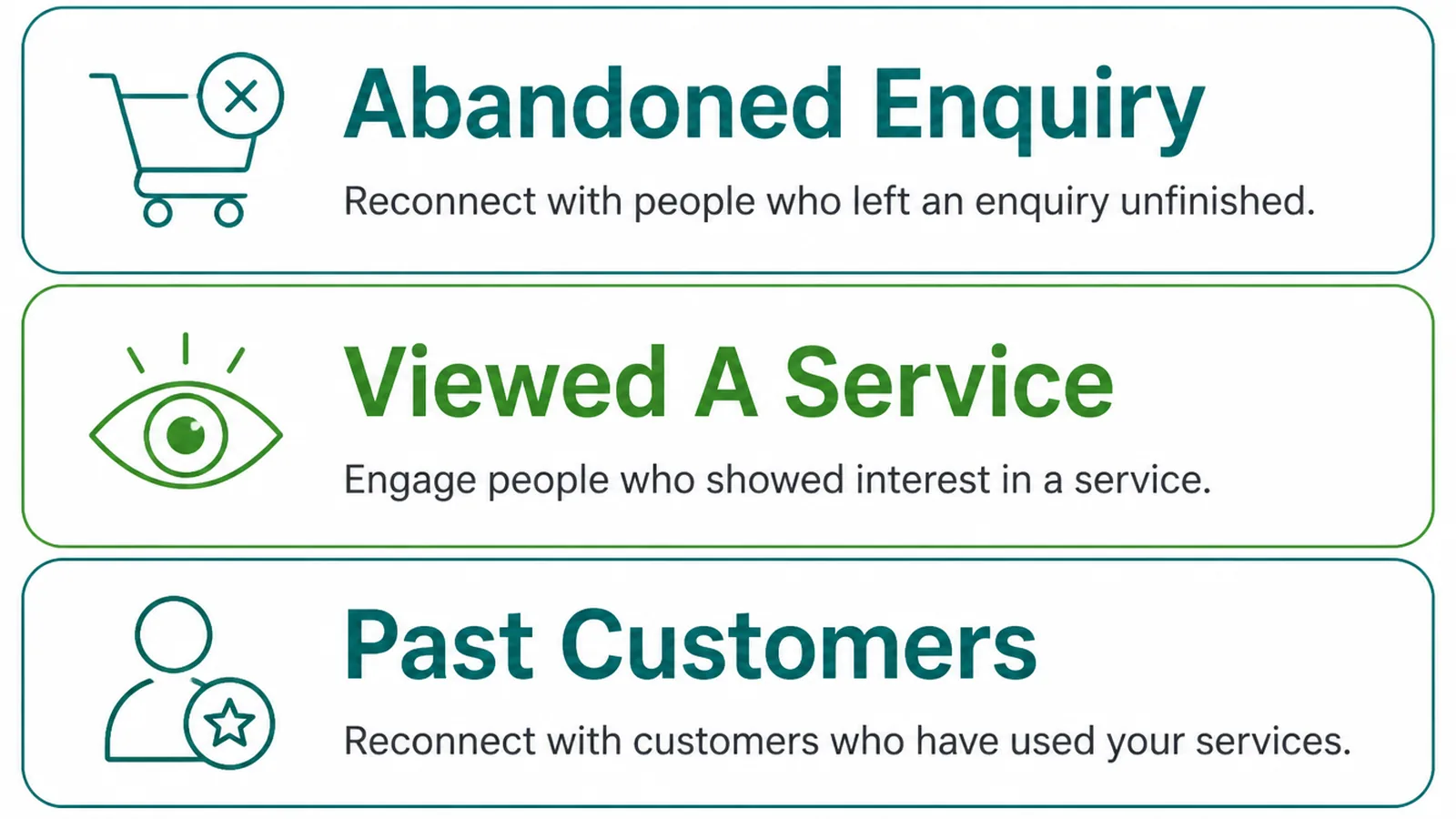
- Abandoned enquiry. People who opened the form and did not send it. Point the ad at the same service, not at your home page.
- Viewed a service. One list per service, so a kitchen enquiry never sees a bathroom advert.
- Past customers. A separate list for work that repeats, such as servicing or seasonal jobs, with a longer window.
The common thread is that each list has an obvious thing to say to it. If you cannot write the advert in one line, the audience is probably too broad.
Start with one. Three audiences means three sets of copy to write and three budgets to watch, and most small accounts do not have the traffic to feed them.
The abandoned enquiry list is usually the one to pick. It is the smallest, it is the warmest, and the advert almost writes itself because you know exactly what they were doing.
Retargeting Ads Tools
| Tool | What it will not do |
|---|---|
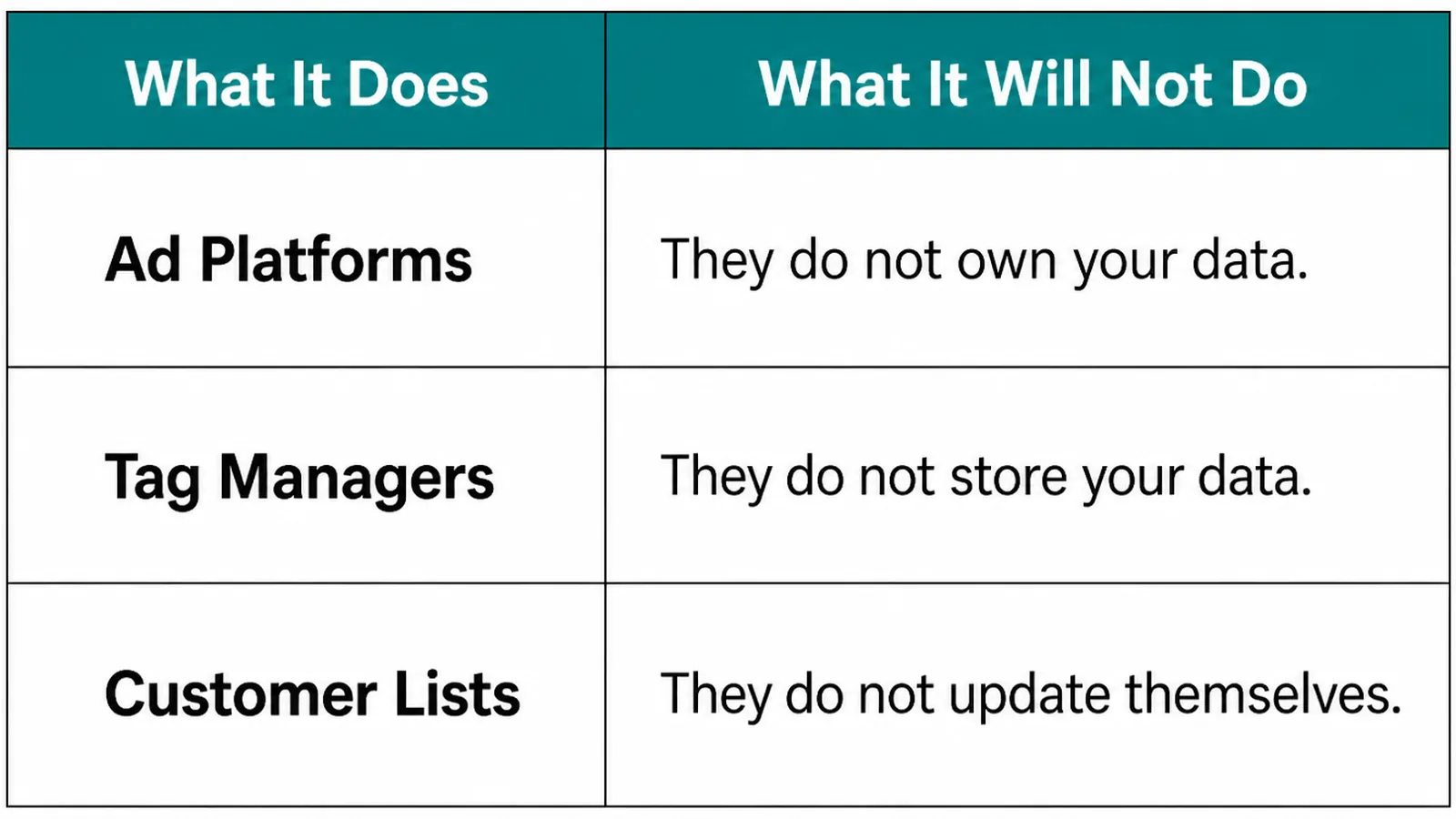
| Ad platforms | They will not own your data or tell you who is on a list. |
| Tag managers | They will not decide which pages matter or write the rules for you. |
| Customer lists | They will not update themselves when somebody buys or cancels. |
The tooling is the easy part. Every one of these waits for a decision that only you can make: who is worth following, and for how long.
Common Retargeting Ads Mistakes
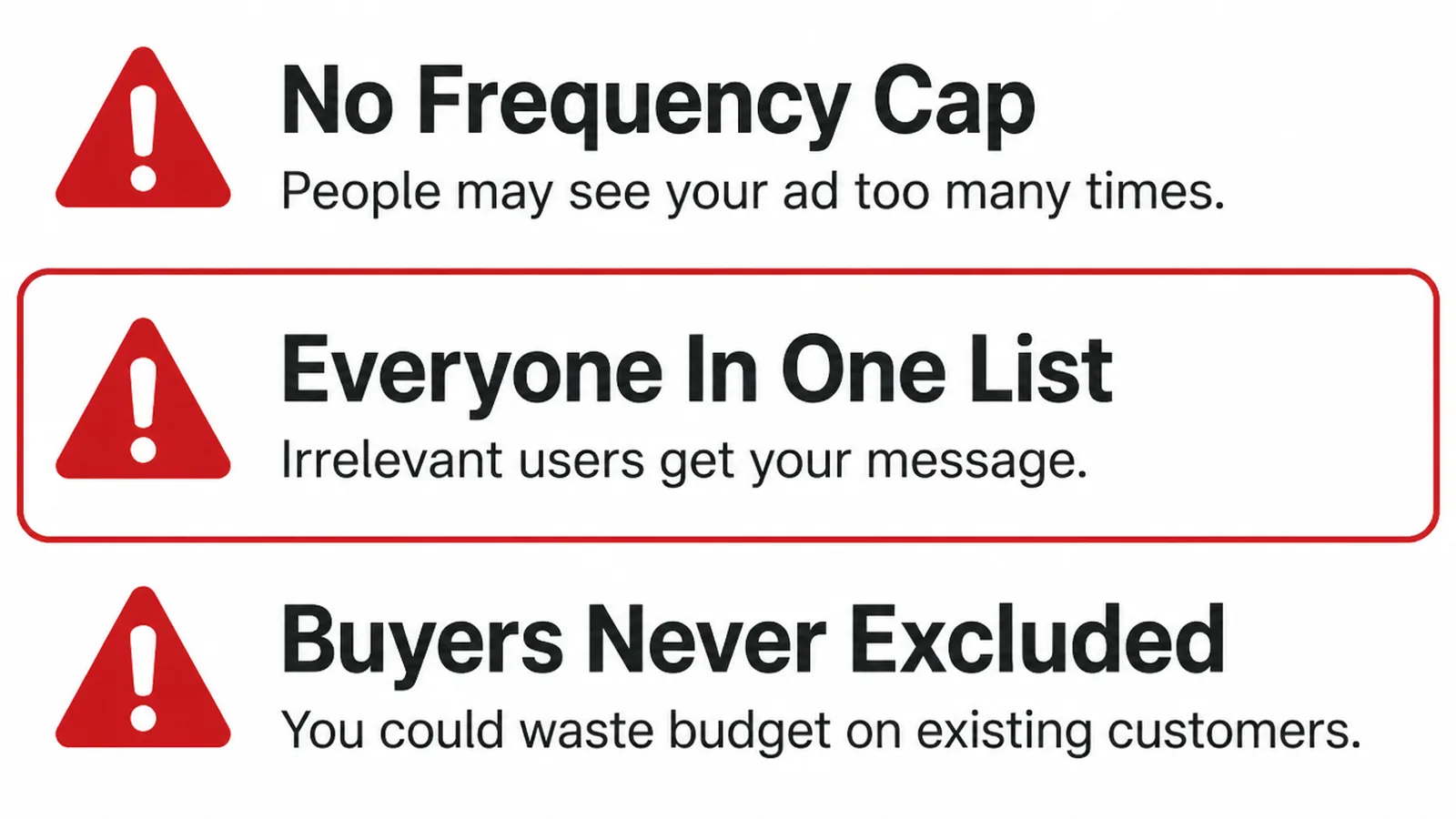
- No frequency cap. A small list and a fixed daily budget means the same person sees the advert again and again.
- Everyone in one list. A blog reader and an abandoned enquiry get the same advert, so it has to be vague enough to suit both.
- Buyers never excluded. Somebody who paid last week keeps being asked to enquire, which costs money and reads badly.
All three come from the same habit. The campaign gets built once and then nobody goes back to it.
FAQs
What is the difference between retargeting and remarketing?
In everyday use they mean the same thing. Google calls the feature remarketing in its own help pages, while most advertisers say retargeting. Both describe showing ads to people who already visited your site or gave you their details, rather than to people meeting you for the first time.
How many visitors do I need before retargeting works?
Google requires at least 100 active users in the last thirty days before a list can serve on Display or Search. Below that the campaign simply will not run. A quiet site may need to collect visitors for several weeks before there is an audience to advertise to.
How long should someone stay on a retargeting list?
Google defaults to thirty days and allows up to 540. Shorter suits a decision made quickly, such as a haircut or a takeaway. Longer suits work people research for months. Pick the window from how long your own enquiries usually take, not from the maximum allowed.
Is retargeting annoying for customers?
It becomes annoying when nothing caps it. The same advert eight times in a day reads as pursuit rather than a reminder. Set a frequency cap, end the campaign on a date, and remove people once they have bought, and most of that complaint disappears.
Do I need a cookie banner to run retargeting?
You need consent handling appropriate to where your visitors are, and retargeting tags are exactly the kind of tracking most rules cover. Check what applies to your market before you install anything, because the obligation sits with you rather than with the advertising platform.
Conclusion
Retargeting is not a clever tactic. It is a list, a window and a cap, and most of the value is in getting those three right.
Follow the people who showed real interest, keep the window honest to your own sales cycle, and take buyers off the list.
If you would rather not build it yourself, see how we run paid campaigns, or get in touch and we will tell you whether your traffic is big enough to retarget yet.