Marketing a Cafe

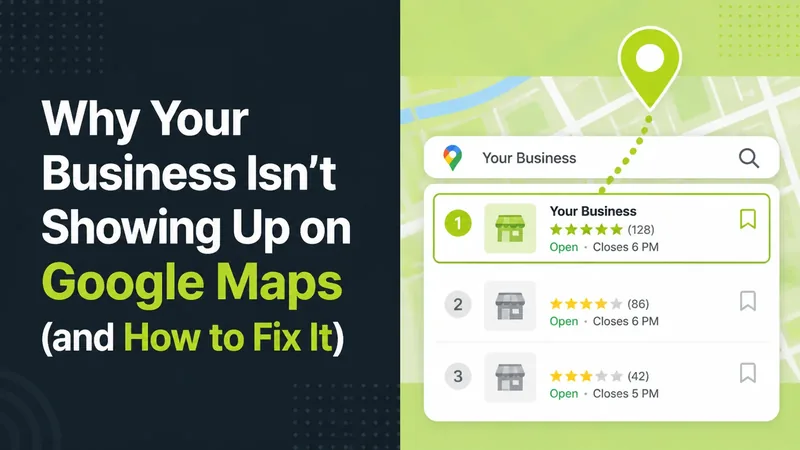
Marketing for cafes starts on the map, not the website, because most people find a cafe through a map listing. Seed Light starts with the hours, the menu and the address, because those three answer what a hungry person is actually checking before they walk over.
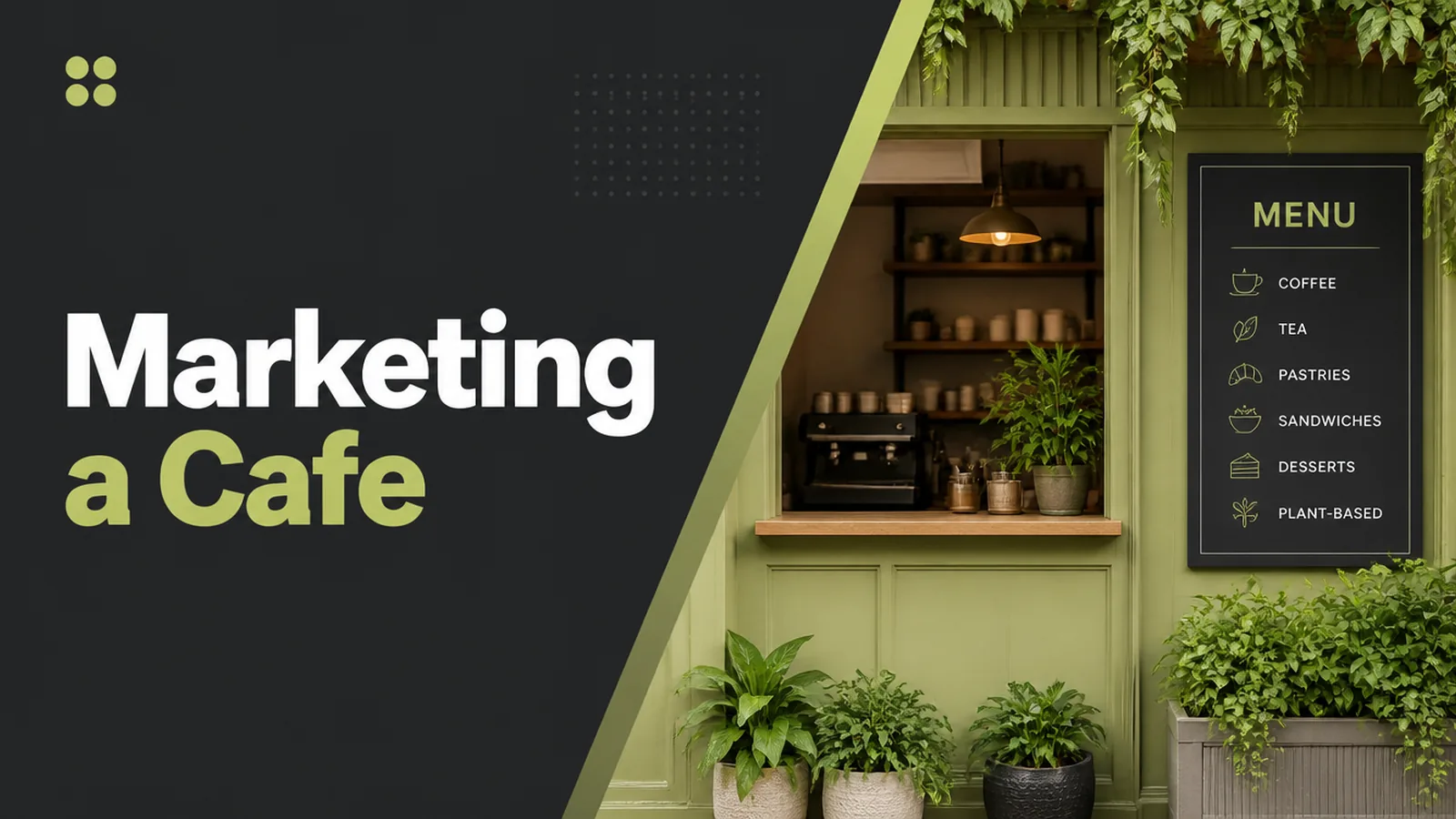
Somebody a street away is deciding where to get coffee. They are not reading a blog, or browsing a website. They are looking at a map on a phone.
This guide covers the marketing that decides that moment. The listing, the menu, the opening hours, and the photographs that make somebody walk the extra two minutes.
By the end you will know what to fix first, and what is not worth your time at all.
Key Takeaways
- The map listing is the shopfront. It is answering questions long before anybody sees your website.
- Hours are the highest stakes detail. Wrong hours send people to a locked door, and that is the review you get.
- A photographed menu is not a menu. It cannot be read comfortably on a phone and nothing can search it.
- Google has a menu editor for food and drink. Edits can take 24 to 48 hours to appear.
- Photograph what you actually serve. Stock coffee pictures tell a chooser nothing about your cafe.
Marketing for cafes gets sold as social media. Most of the work that moves people through the door is duller than that, and it is done once rather than daily.
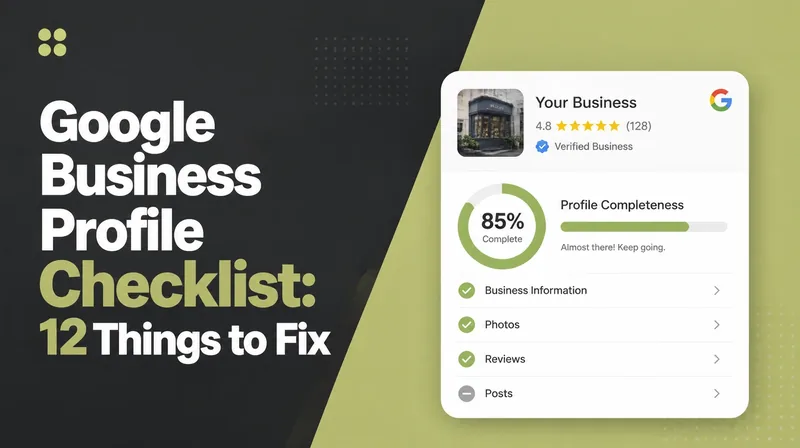
Where People Look First: Your Cafe Google Business Profile
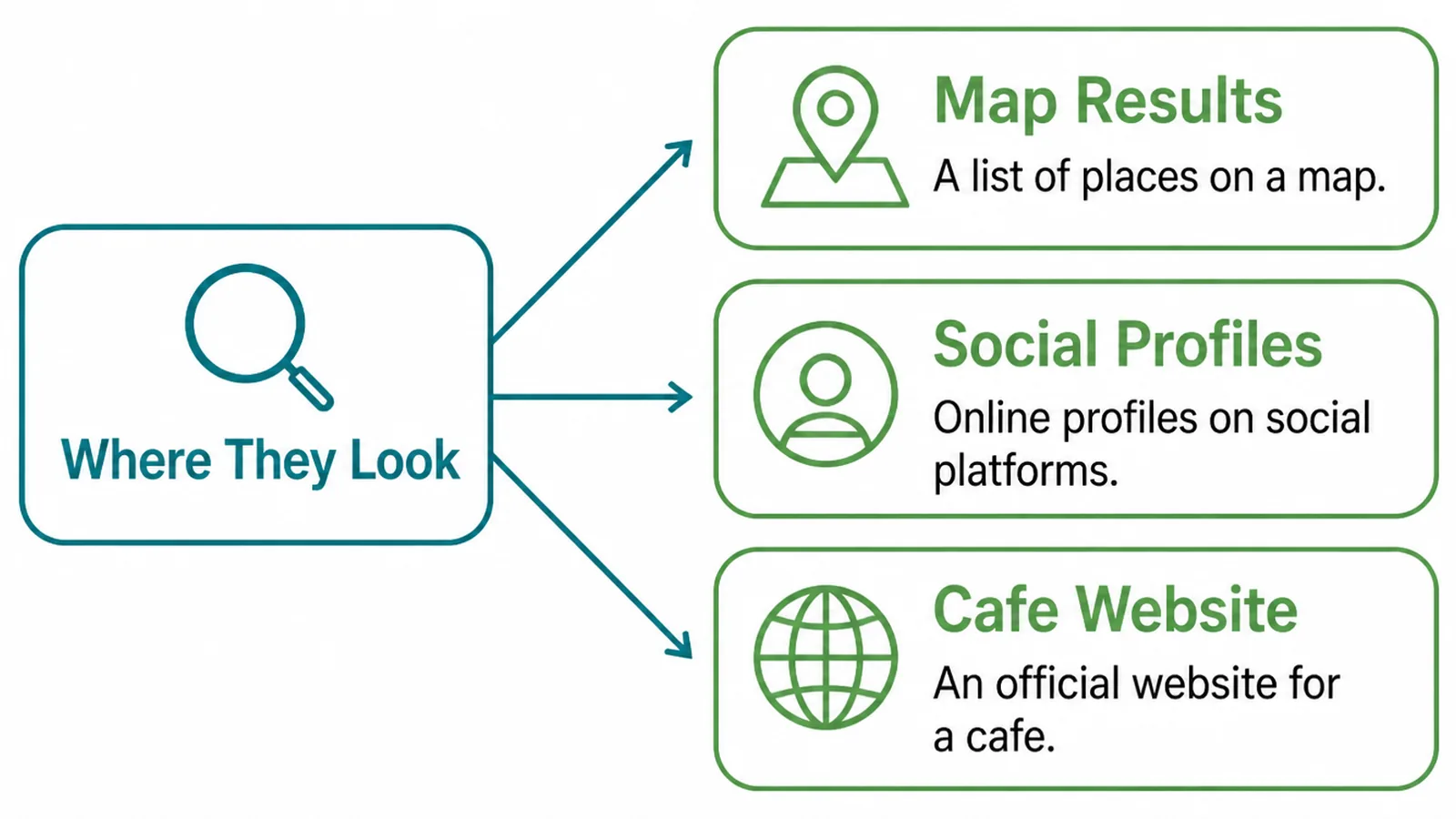
Three surfaces carry almost all of it.
The map listing comes first, because the search is usually "coffee near me" and the answer is a list of pins. The social profile comes second, because people check whether you look open and alive.
The website comes third, and often not at all. That is not an argument against having one, but it does tell you where the first hour of work belongs.
Everything a chooser wants is a fact rather than a sentence. Are you open, where are you, what do you serve, and does it look any good.
Notice how little of that is persuasion. Nobody is being convinced to want coffee, they already want coffee, and the decision is only about which door to walk through.
That is what makes cafe marketing different from most of what gets written about marketing. The demand exists. You are competing on being easy to choose.
So the test for any piece of work is simple. Does it answer one of those four questions faster than before, or does it just add something to look at.
What Usually Goes Wrong
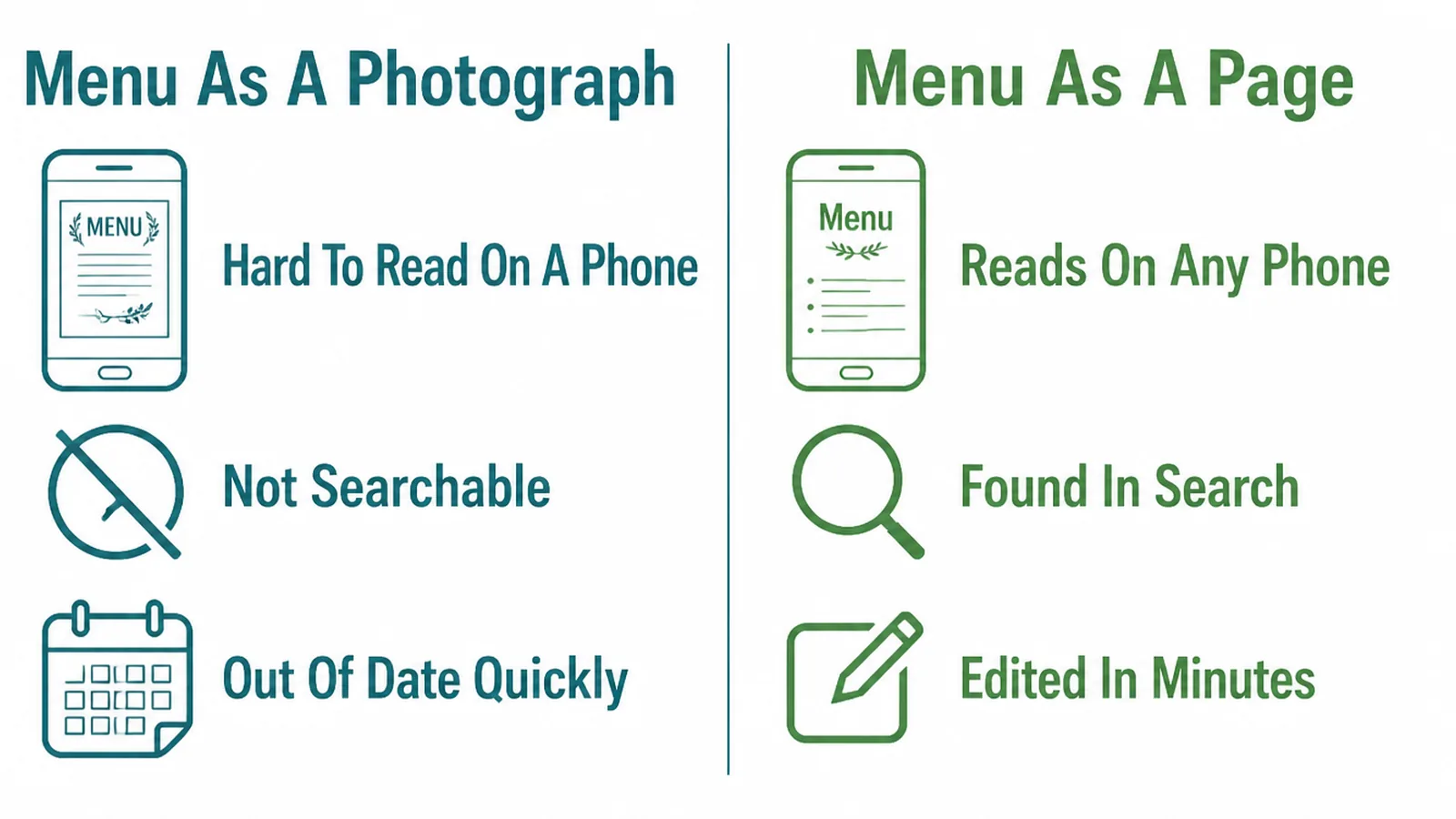
The most common fault is the menu posted as a photograph.
It made sense at the time. The menu was designed in a document, somebody took a picture of the printed copy, and it went up on the profile.
On a phone it has to be pinched and dragged to read one line. Search engines cannot read the dishes in it. When a price changes, the picture does not.
A menu that cannot be read on a phone is a menu most people will not read. Keep a readable page with the dishes as text, and post the photograph as well if you like the look of it.
The second fault is hours. Festival days, early closes, the week somebody is away. Each one is small and each one sends a real person to a locked door.
Wrong hours are worse than no hours, because somebody acted on them. That is the complaint that turns into a review, and the review outlasts the mistake by years.
Set the special hours in advance for the dates you already know. Public holidays, the week you close after a festival, the early finish on a quiet day.
It takes ten minutes a quarter and it removes the single most expensive error on the list.
Marketing For Cafes, Step By Step
Three pieces of work. Know what you already have, build one page worth landing on, and decide who answers the messages.
1. Start With What You Already Know
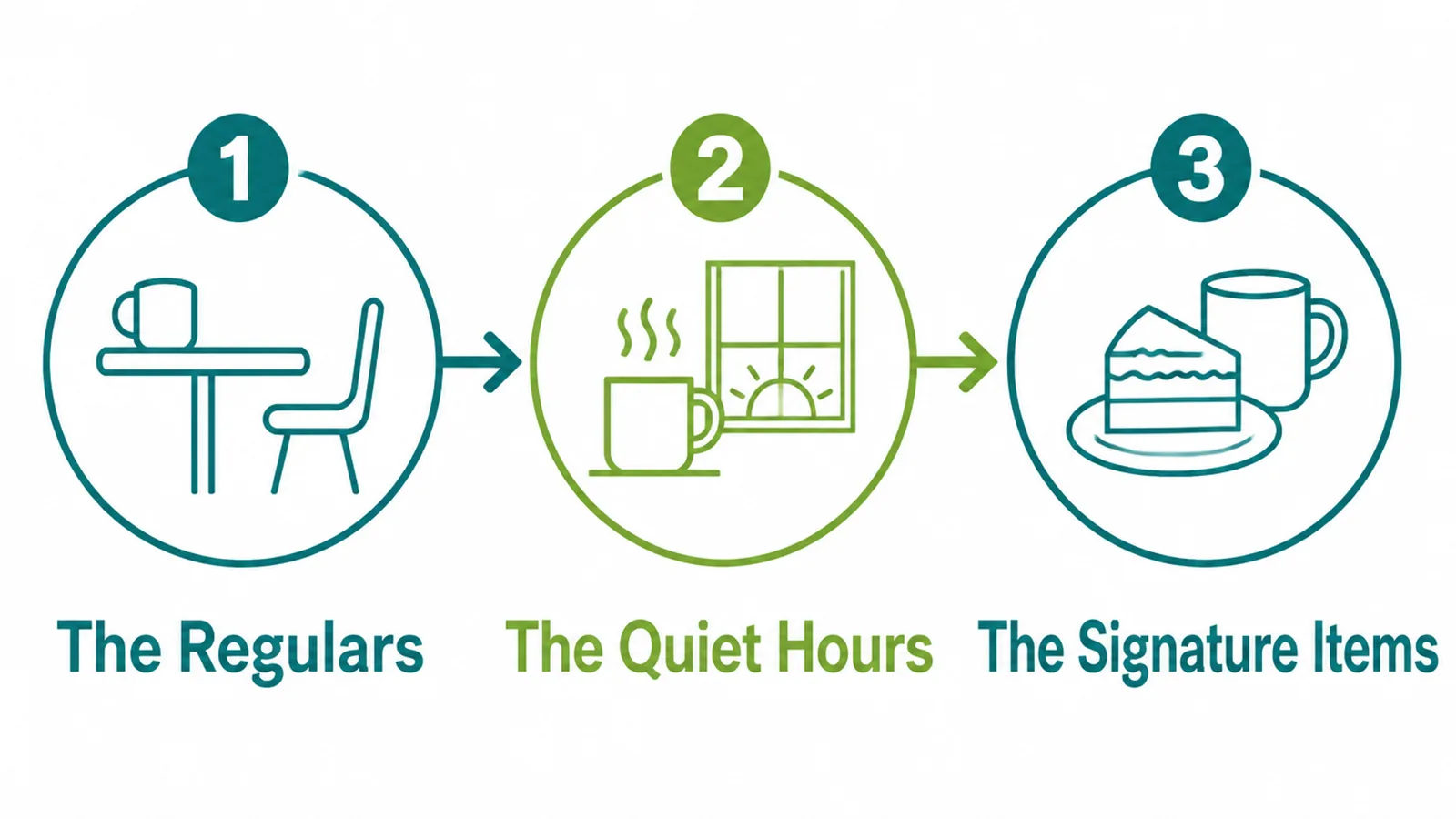
You do not need a survey. You need three answers you already have.
- The regulars. Who comes back, and what they come back for. That is your actual market, not the one in a trend article.
- The quiet hours. The part of the day with empty tables. That is the part worth promoting.
- The signature items. The two or three things people mention by name when they recommend you.
Write them down. Every decision below gets easier once those three are on paper, because most marketing questions are really questions about who you are talking to.
It also stops you promoting the wrong thing. Discounting a Saturday that is already full costs money and fixes nothing.
2. Build The Page They Land On
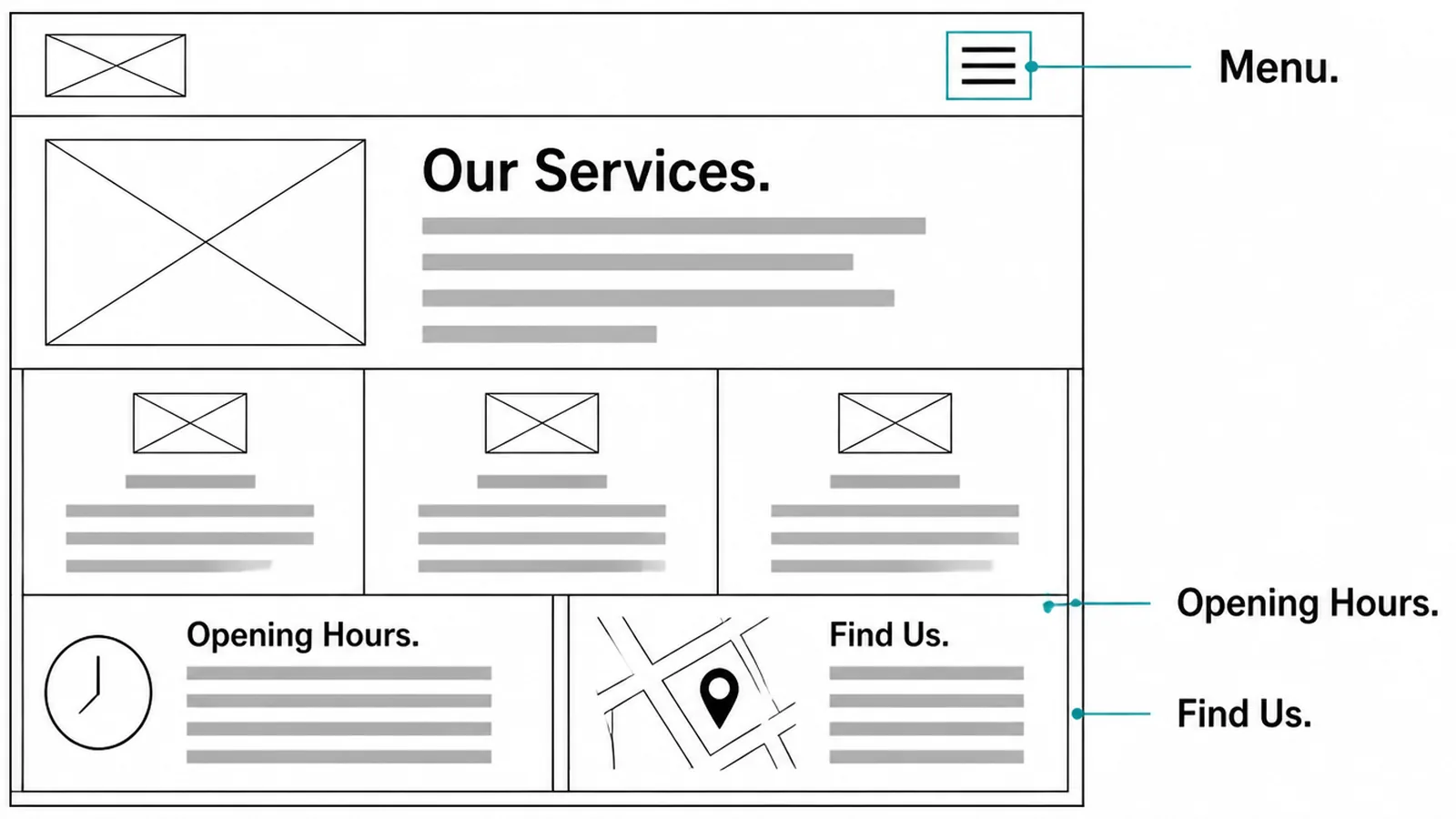
A cafe does not need a big website. It needs one page that answers the three questions, fast, on a phone.
- Menu. As text, grouped into sections, with prices you can edit in a minute.
- Opening hours. Including the days you are closed, written plainly.
- Find us. The address, a map link, and a line about parking or the nearest landmark.
Put the menu at a permanent address. That link goes on your listing, in your profile bio, and on anything printed, so there is one place to update when something changes.
Resist the urge to add more. A cafe page with a history section above the menu is a page that buries the thing people came for.
Check it on a phone, outdoors, in daylight. That is the condition it will actually be read in, and a menu set in pale grey type disappears completely.
If you only have time for one thing on the whole page, make the menu load first and read well. Everything else can wait for a quiet week.
3. Decide Who Answers
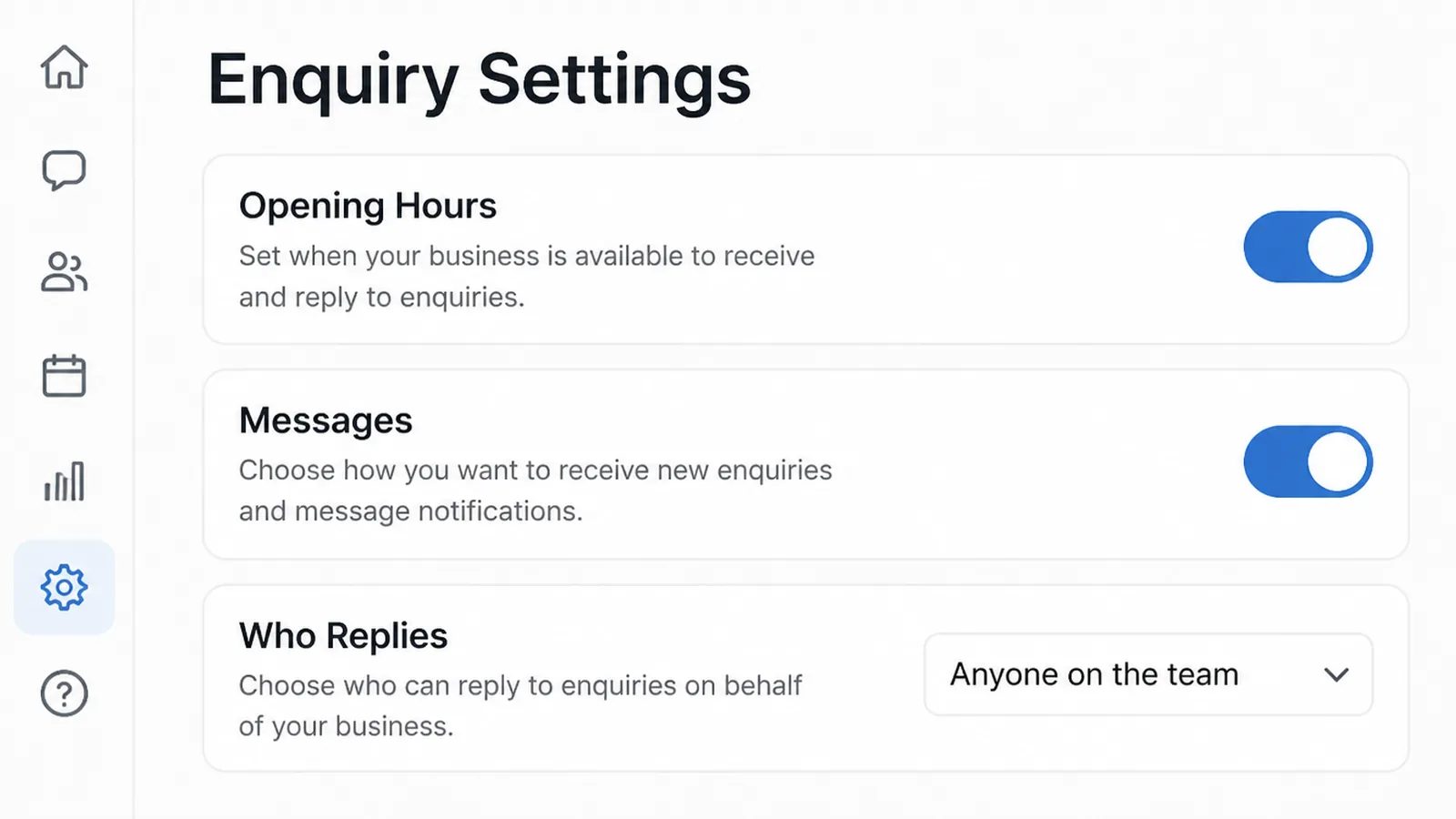
People message cafes constantly. Do you have oat milk, can we bring a pram, are you open on the holiday.
Those are easy questions with a cost attached. Unanswered, they are a customer who went elsewhere and a reply time on your profile that keeps dropping.
Decide three things and write them down:
- Who checks. One named person per shift, rather than everybody and therefore nobody.
- When. Two or three set times a day is plenty, and far more realistic than constantly.
- What the standard answers are. Saved replies for the five questions you get every week.
Put the answers to the common ones on the page as well. The best message is the one nobody needs to send.
Keep a short list of what people ask and add to it for a month. Allergies, milk alternatives, prams, laptops, group bookings, parking.
Those six lines on the page will cut the message volume more than any automation, and they cost nothing to maintain.
Marketing For Cafes Ideas That Work Right Now
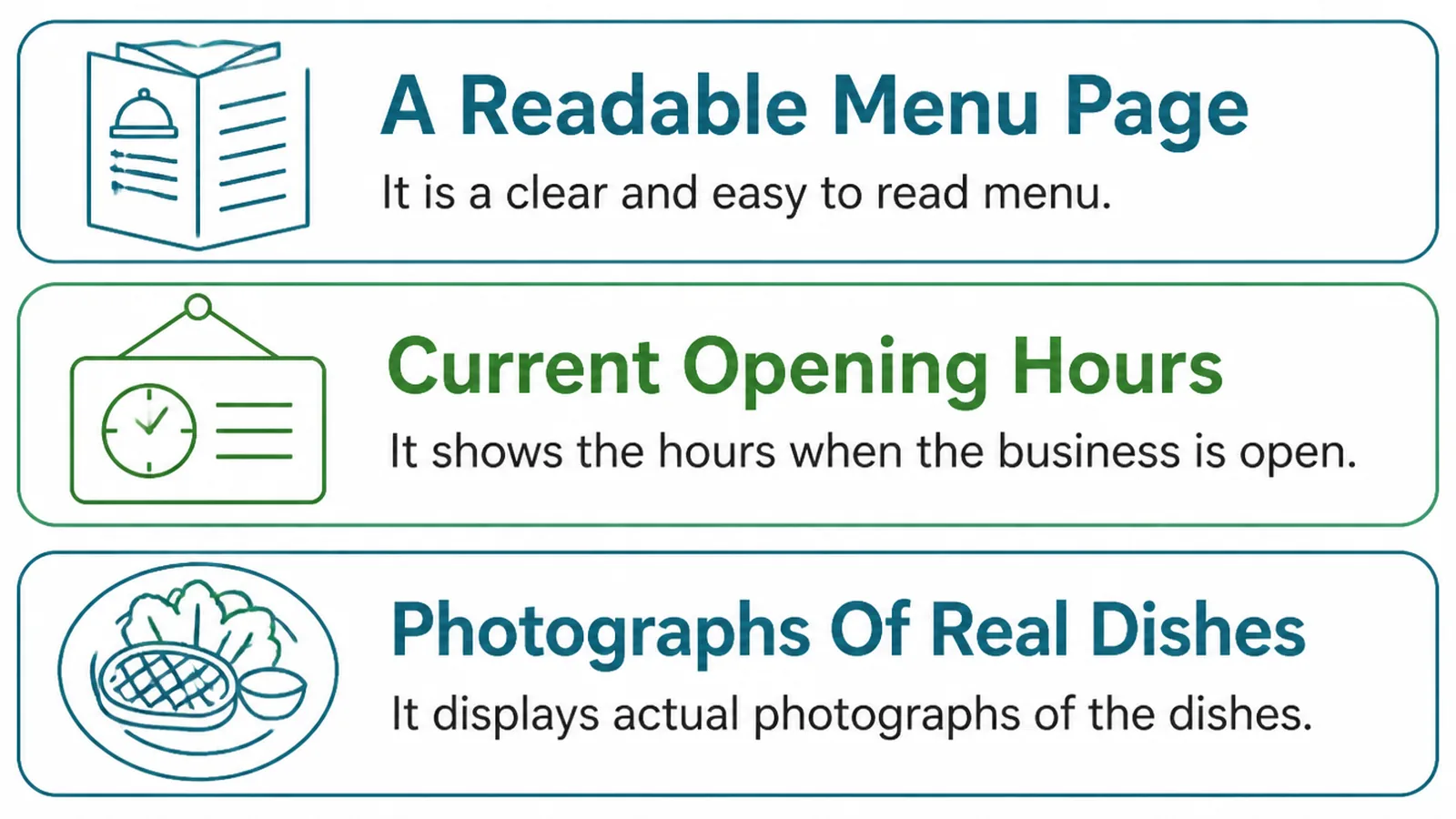
- A readable menu page. Text, not a photograph, at a permanent address you can edit yourself.
- Current opening hours. On the listing and the page, including holidays, updated the week before rather than the day after.
- Photographs of real dishes. What you actually serve, in your actual room, in daylight near a window.
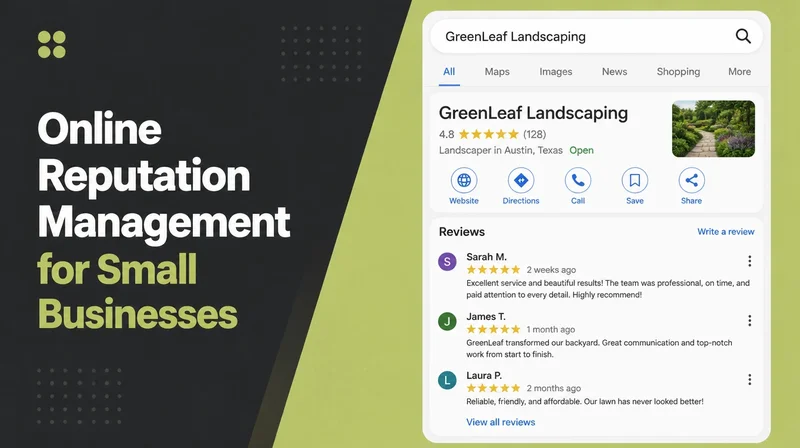
The photographs matter more than people expect. A chooser is deciding between you and two others, and your pictures are the only evidence they have.
Take them yourself on a quiet morning. Twenty honest photographs of the real thing beat a stock library nobody believes.
Shoot the room as well as the food. People are deciding whether to sit there for an hour, and a picture of the seating answers that better than another flat white.
Replace them when the room changes. A photograph of a layout you had two refits ago is a small way of telling somebody the listing is not looked after.
Tools For A Local Food Business
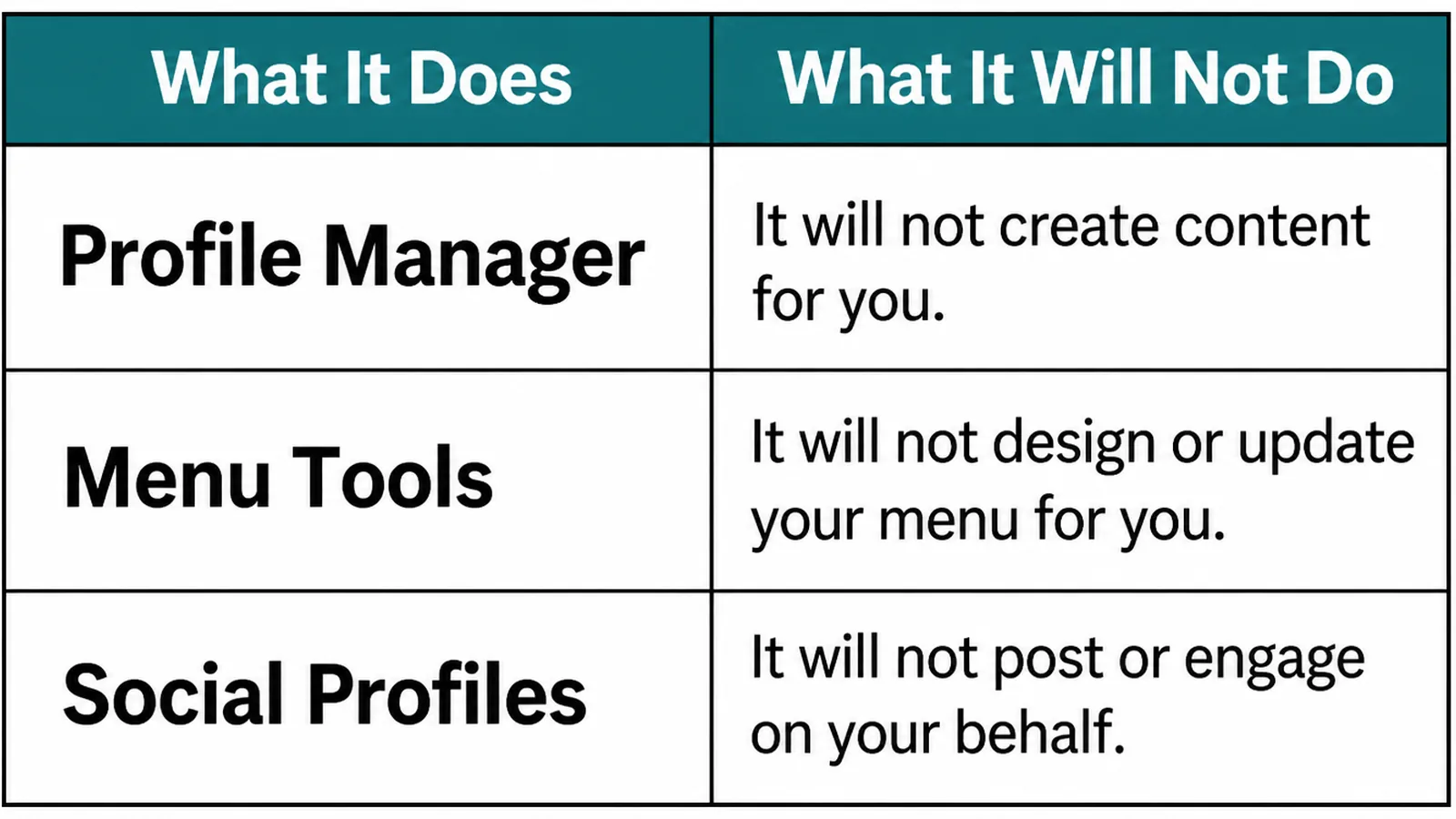
| Tool | What it will not do |
|---|---|
| Profile manager | It will not notice that your holiday hours are wrong. |
| Menu tools | They will not rewrite the menu or decide what to take off it. |
| Social profiles | They will not reply to messages or keep posting on a busy week. |
Google's menu editor is worth the half hour. It is built for food and drink businesses, it holds sections and prices, and the guidance asks for the whole menu rather than a few popular items.
Common Marketing For Cafes Mistakes
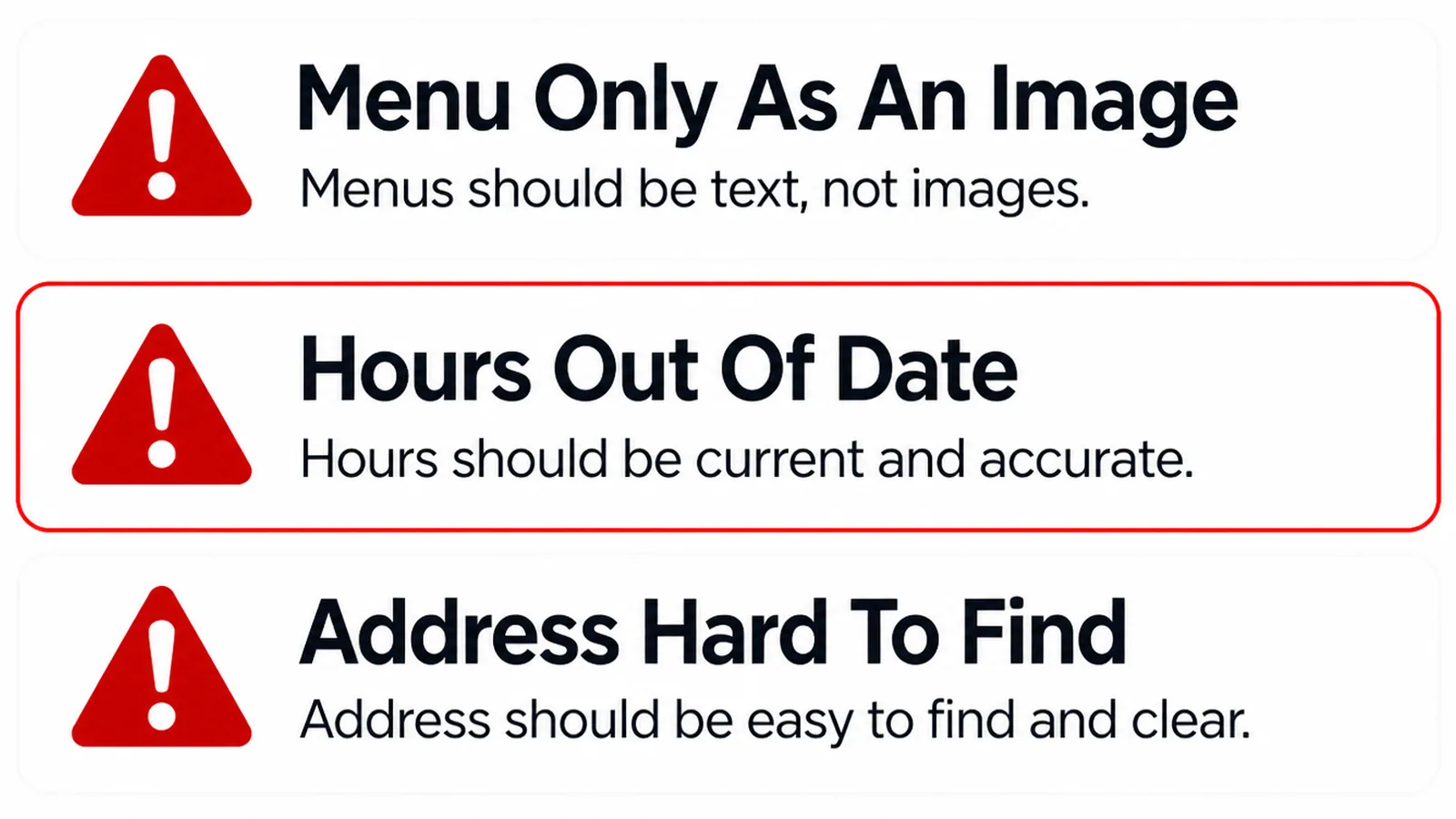
- Menu only as an image. Unreadable on a phone, unsearchable, and silently out of date the moment a price moves.
- Hours out of date. Somebody walks over on a public holiday, finds the door shut, and writes about it.
- Address hard to find. No landmark, no parking note, so the last two minutes of the journey are guesswork.
All three are an afternoon of work, and all three are more valuable than a month of posting.
They also share a cause. Each was correct on the day it was set up, and nothing since has prompted anybody to look at it again.
Put a reminder in the calendar every quarter to read your own listing as a stranger would. That habit catches all three before a customer does.
FAQs
Does a cafe need a website at all?
A listing answers most of what people check, so a cafe can survive without a site. A simple one still helps, because it is the only place you control, and it gives your menu a permanent address you can point a listing or a social profile at.
Should I put my menu on Google?
Yes, and Google has a menu editor for food and drink businesses. You can also add a link to a menu page on your own site. Google asks for the full menu rather than a sample of popular items, so upload all of it.
How long do menu changes take to appear?
Google says edits can take 24 to 48 hours to show on Maps and Search. Change the price list the day before it takes effect rather than the morning of, and keep your own menu page updated at the same time so the two agree.
Is a photo of my menu good enough?
Not on its own. A photographed menu cannot be enlarged comfortably on a phone, search engines cannot read the dishes in it, and it goes out of date silently. Keep a readable menu page as well as any photograph you post.
How often should a cafe post on social media?
Often enough that the account does not look closed. A profile whose last post is from last year raises the same doubt as a locked door. Pick a rhythm you can hold through a busy week rather than one that stops after a fortnight.
Conclusion
Cafe marketing is mostly maintenance. The listing, the hours, the menu and the photographs, kept true.
Fix those four and you have answered nearly everything a hungry person two streets away is checking before they decide.
If you would rather hand it over, see how we approach local search, or get in touch and we will tell you what your listing is currently getting wrong.