Brand Positioning: How to Define Your Place in the Market

Brand positioning is the distinct place your brand takes in a customer's mind, so your name arrives with their need. Write it as one statement: who it is for, the category you compete in, what you offer, and the reason to believe it. Then keep every touchpoint true to it. Seed Light helps owners set that position.
Key takeaways
- Positioning is a place in the mind. It is the distinct spot your brand takes, so people think of you first when a need comes up (Canto).
- Pick one idea for one audience. Own a single clear thing for a single clear group, not everything for everyone.
- Differentiation is the facts, positioning is the feeling. The facts earn the place those facts hold in the mind.
- Use a template. For [target] who [need], [brand] is the [category] that [benefit] because [reason].
- Stay steady. Positioning works through repetition, so say it the same way everywhere and keep it consistent over time.
Brand positioning is the distinct place your brand takes in a customer's mind. It is the reason someone thinks of you first when a need shows up. Positioning is not your logo, and it is not your tagline.
It is the idea underneath them. Get the idea right, and the logo, the words, and the marketing all have something to point at. Get it wrong, and even a pretty brand feels like noise.
This guide keeps it plain. You will learn what positioning really is, how it differs from differentiation, why it matters most for a small business, and a simple template to write your own positioning statement.
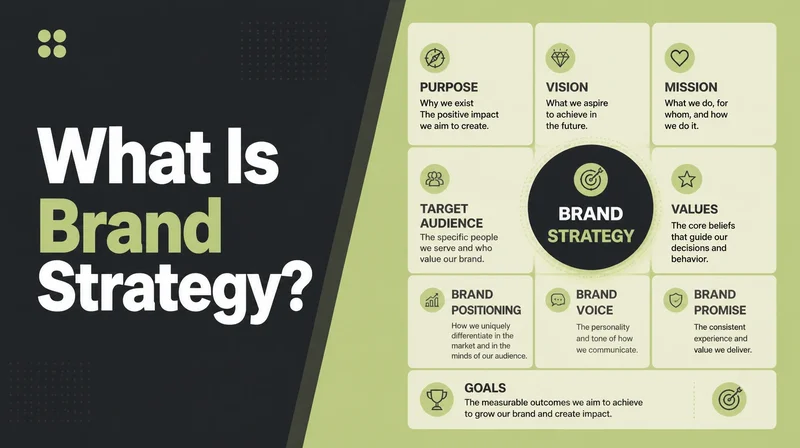
Positioning sits inside your wider plan, so it helps to read this next to our guide on brand strategy. Let us start with the definition.
1. What is brand positioning?
Brand positioning is the strategic act of designing your offer and your image to occupy a distinctive place in the mind of the people you want to serve.
It sets you apart from competitors in a way that actually matters to them (Canto). The key word is place. You are claiming a spot in someone's head, next to a need, so that when the need appears, your name appears with it.
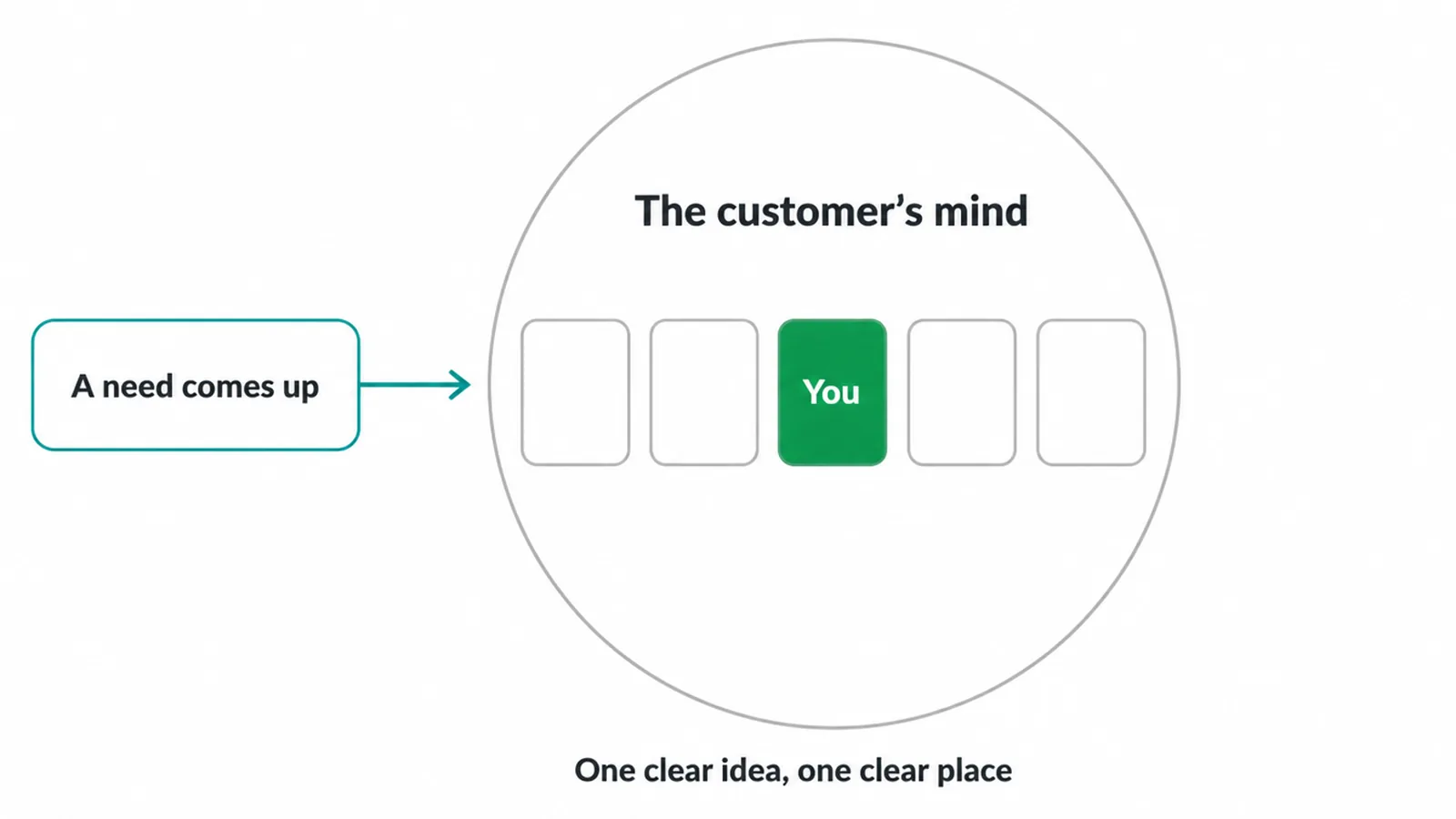
Think of it from the customer's side. When they think of a need, do they think of you? That link is the whole game.
In their classic book Positioning: The Battle for Your Mind, Al Ries and Jack Trout argued that to succeed in an over-communicated world, a company must create a position in the prospect's mind (Al Ries).
There is too much noise for you to win on shouting louder. You win by owning one clear idea.
Here is a plain example. Picture a small bakery in a busy town full of cafes. It cannot be the cheapest, the fastest, and the fanciest all at once. So it picks one thing: sourdough.
Over time it becomes known as the sourdough people. When a local craves a proper crusty loaf, one name comes to mind. That is positioning at work. Nothing about the logo changed the game. The claimed idea did.
2. Positioning vs differentiation
People mix these two up, so let us split them cleanly. Differentiation is the set of facts about your offer, things like faster service, organic ingredients, or a specific feature.
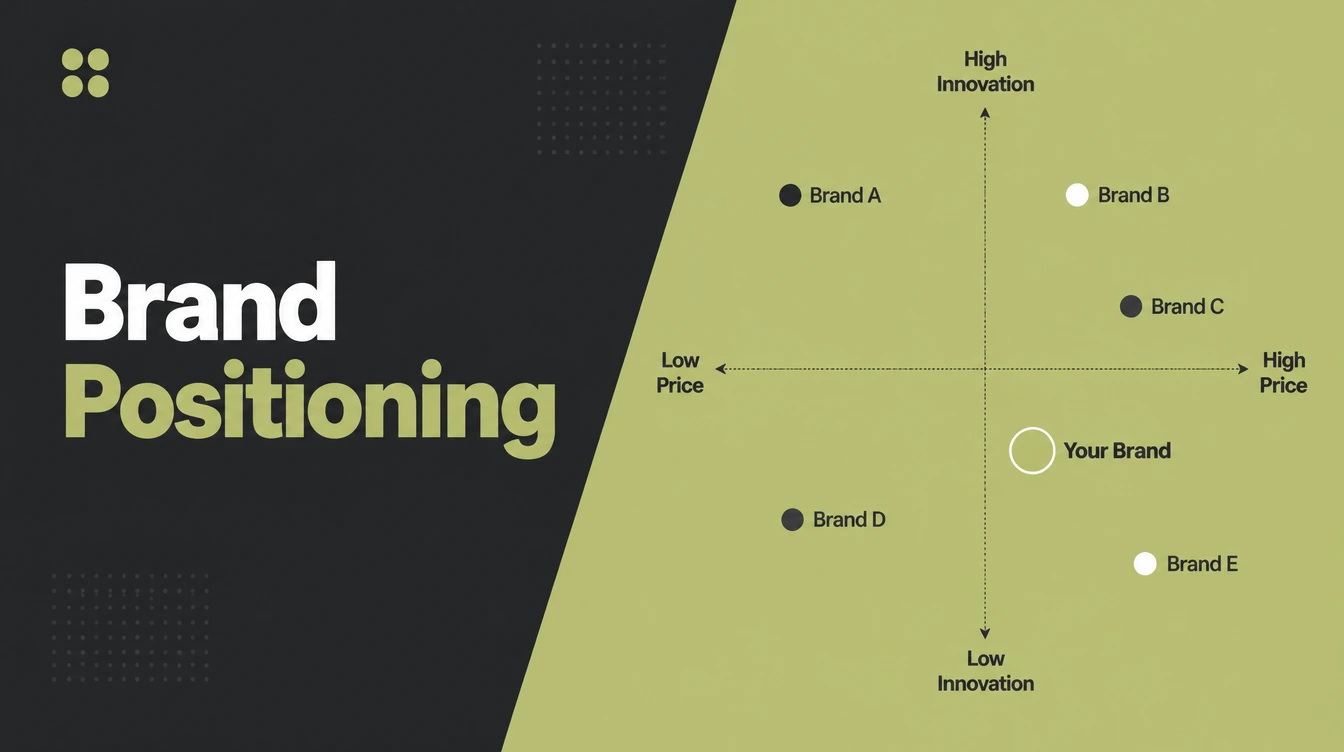
Positioning is the feeling or place those facts create in the customer's mind, like being seen as the most reliable, the most eco-friendly, or the most trusted choice. Differentiation highlights what is unique about you. Positioning turns that into a valued place relative to your competitors.
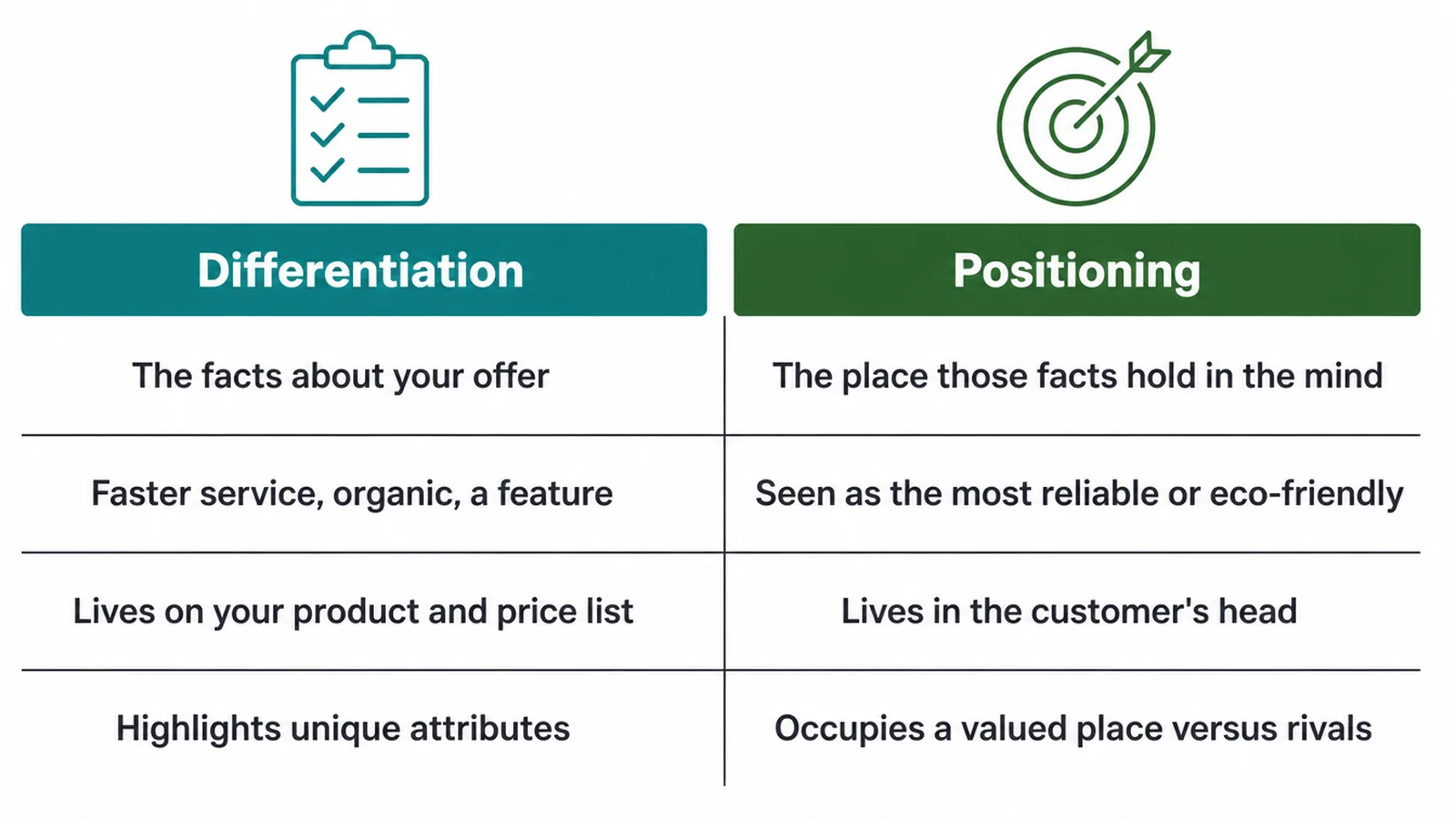
The short version: differentiation is what you can prove, positioning is what people believe. You need the facts to earn the place. A bookkeeping firm that answers every message within the hour has a fact.
When enough clients feel that, the firm starts to own the idea of the responsive one. The fact is the fuel. The place in the mind is the result.
| Differentiation | Positioning |
|---|---|
| The facts about your offer | The place those facts hold in the mind |
| Example: faster service, organic, a specific feature | Example: seen as the most reliable, the most eco-friendly |
| Lives on your product and your price list | Lives in the customer's head |
| Highlights unique attributes | Occupies a valued place versus competitors |
3. Why positioning matters for a small business
Canto frames positioning as a way to stand out in a "crowded, competitive marketplace" (Canto). A clear position helps buyers understand where your offer fits among the alternatives.
If you own a clear idea, you are the easy pick. If you own nothing, you are just another option in a long list, competing on price and hoping to be noticed.
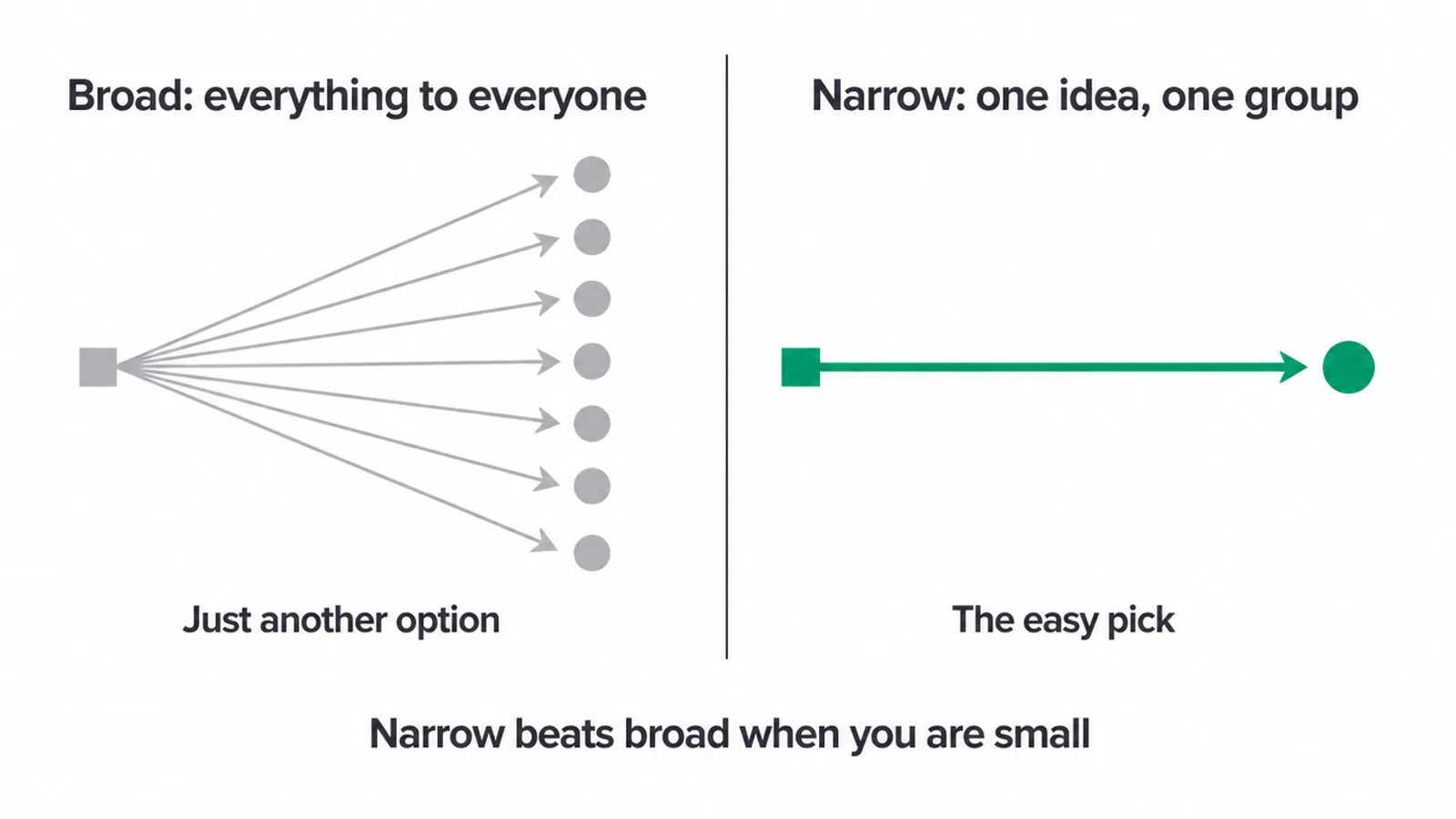
Small businesses actually have an edge here. You do not have to appeal to the whole world. You can pick a narrow focus and own it well. A big brand has to be many things to many people, which blurs its position.
You can be one sharp thing to one clear group. That focus is a strength, not a limit. For the wider view of how this fits your identity, see our guide to small business branding. The lesson is simple: narrow beats broad when you are small.
4. The positioning statement template
A brand positioning statement puts your position into one or two sentences. It names your target audience, your market category, and the unique value you offer. It is an internal guideline, not a public slogan, and its job is to keep your marketing focused and aligned (Brandwatch).
You do not paste it on your homepage. You keep it on your wall, and you use it to check that every message pulls in the same direction.
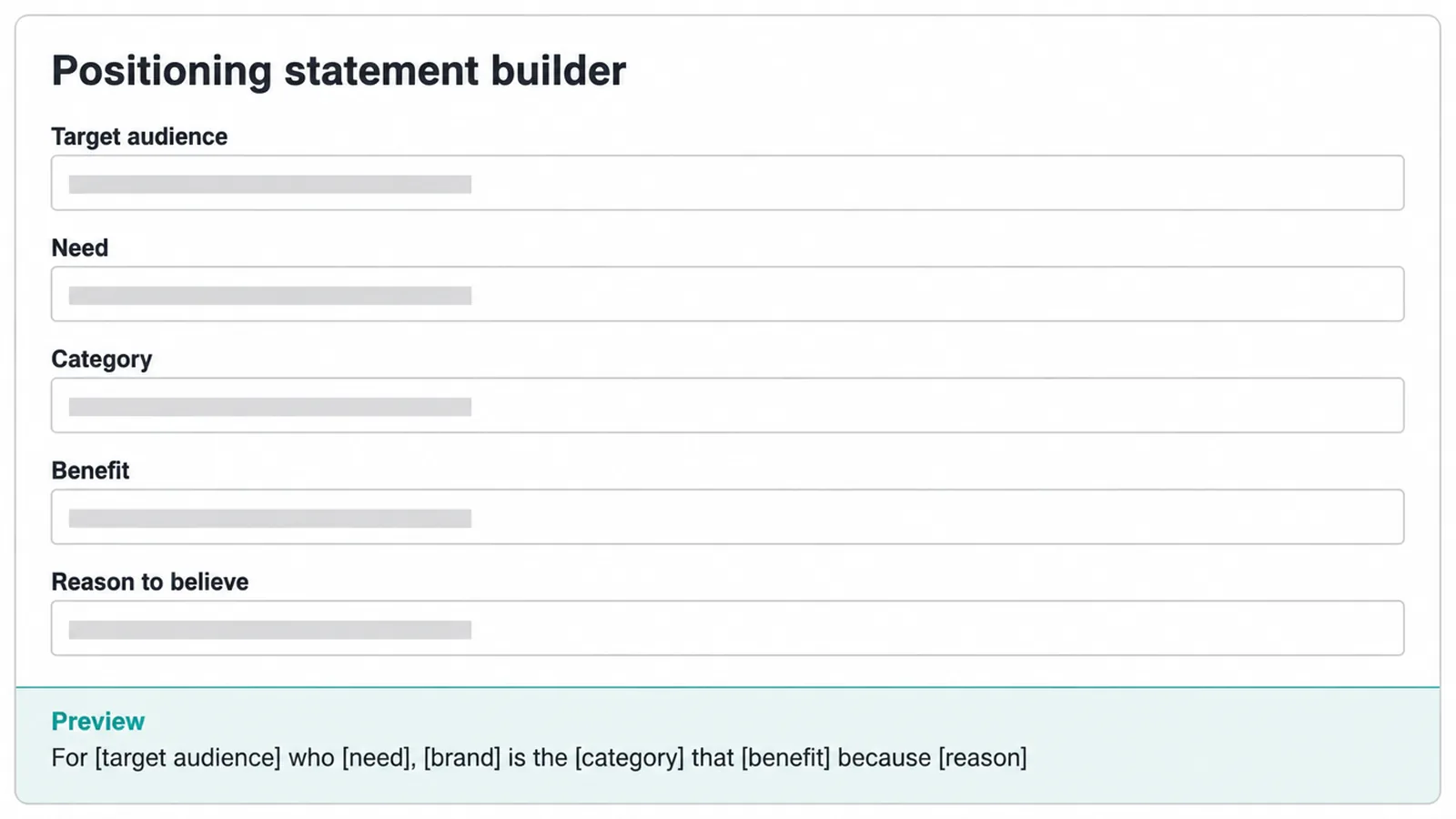
Here is the classic sentence form: For [target audience] who [need], [brand] is the [category] that [benefit] because [reason]. Fill each blank with a single clear idea, then let it steer everything you write. The table below breaks down what each part answers and what to put in it.
| Part | What it answers | Fill it with |
|---|---|---|
| For [target audience] | Who exactly is this for | One specific group, not everyone |
| who [need] | What they want or struggle with | The real problem you solve |
| [brand] is the [category] | What kind of thing you are | Your frame of reference in the market |
| that [benefit] | The one thing that makes you different | A single clear benefit, not a list |
| because [reason] | Why they should believe it | Your proof or reason to believe |
Let us fill it in for a made-up bookkeeping firm. For freelancers who dread tax season, Ledger Loft is the bookkeeping service that keeps you ready all year because we tidy your books every week, not once in a panic.
Read it back. It names a group, a real worry, a category, one benefit, and a reason to believe. That is enough to steer a website, an email, and a sales call.
You will also see a four-part variant that reads: For [your target market] who [target market need], [your brand] provides [main benefit that sets you apart] because [reason to believe].
Its four building blocks are the target market, the market need, the main benefit or brand promise, and the reason to believe or differentiator (HubSpot). Use whichever shape reads more naturally. The parts do the same work.
5. How to build your positioning, step by step
You do not need a workshop or a big agency to do this. You need a quiet hour and honest answers. Work through these steps in order.
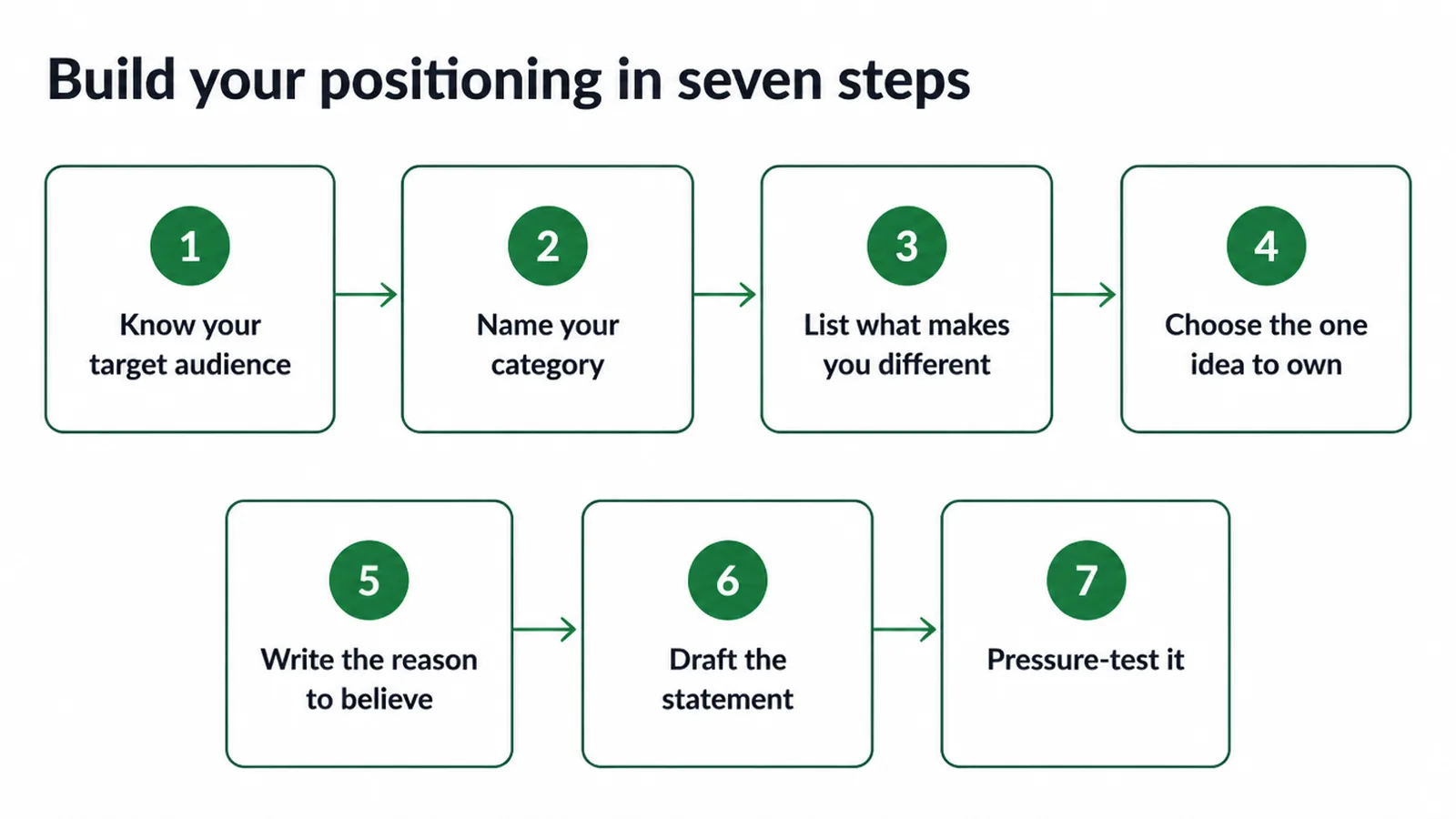
- Know your target audience. Write down the one group you serve best. Be specific. First-time home sellers. Busy cafe owners.
- Name your category. Decide the frame of reference. Are you a design studio, a bookkeeping service, a bakery? The category is the shelf people mentally place you on.
- List what makes you different. Write the plain facts. Faster turnaround, a niche you specialise in, a promise nobody else makes. These are your differentiators.
- Choose the one idea to own. From that list, pick a single word or concept. Trying to own several usually means owning none (Canto). One is the target.
- Write the reason to believe. Back the idea with proof, whether that is a track record, a guarantee, or the way you work. No proof, no belief.
- Draft the statement. Drop your answers into the template. Read it aloud. If it stumbles, simplify.
- Pressure-test it. Ask three questions. Is it true? Is it distinct from rivals? Does it matter to the customer? If any answer is no, rework that part.
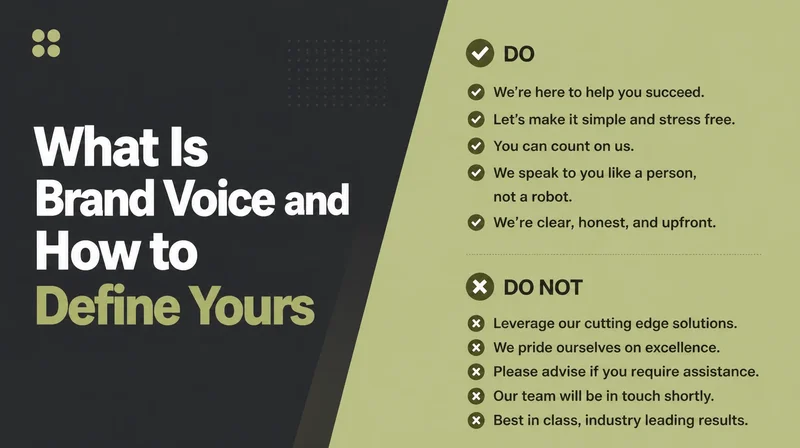
Once the statement holds up, it becomes the brief for everything you say. The way you express it in words, the tone, the phrasing, all flows from here, which is where our guide to brand voice picks up.
The position is the idea. The voice is how you say it out loud, again and again, until it sticks.
6. Common positioning mistakes
Most positioning trouble comes from a short list of avoidable slips. Watch for these.
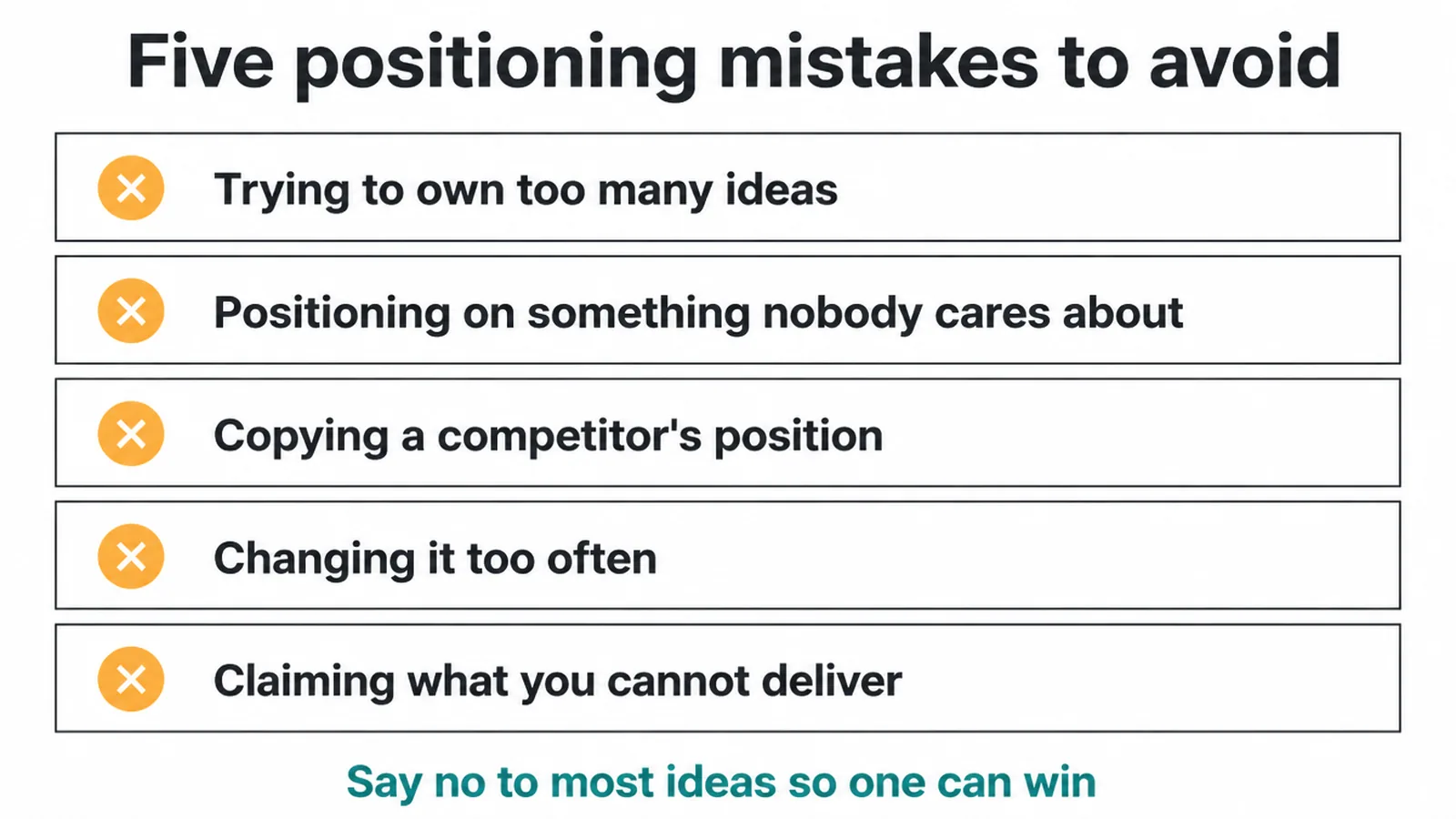
- Trying to own too many ideas. When you claim reliable, cheap, premium, and fastest all at once, buyers hold none of them. Pick one and let the rest be quiet strengths.
- Positioning on something nobody cares about. A benefit that thrills you but leaves the customer cold is wasted. Test it against a real need, not your own pride.
- Copying a competitor's position. If you claim the same idea someone already owns, you are the second-best version of them. Find the open space instead.
- Changing it too often. A position takes time to land. Swap it every season and it never sets. Steady repetition is the point.
- Claiming what you cannot deliver. Promise the fastest, then be slow, and the position turns against you. The idea has to be true in the customer's actual experience.
None of these are clever traps. They are just the easy roads that feel productive while quietly blurring your brand. Say no to most ideas so one can win.
7. Turning positioning into a consistent experience
A position only becomes real through repetition. It sticks when a customer meets the same clear idea on your website, in your social posts, in an email, and in person.
If your homepage says one thing and your sales call says another, the idea never settles, and the position leaks away. Consistency is not about being loud. It is about being the same, everywhere, over time.
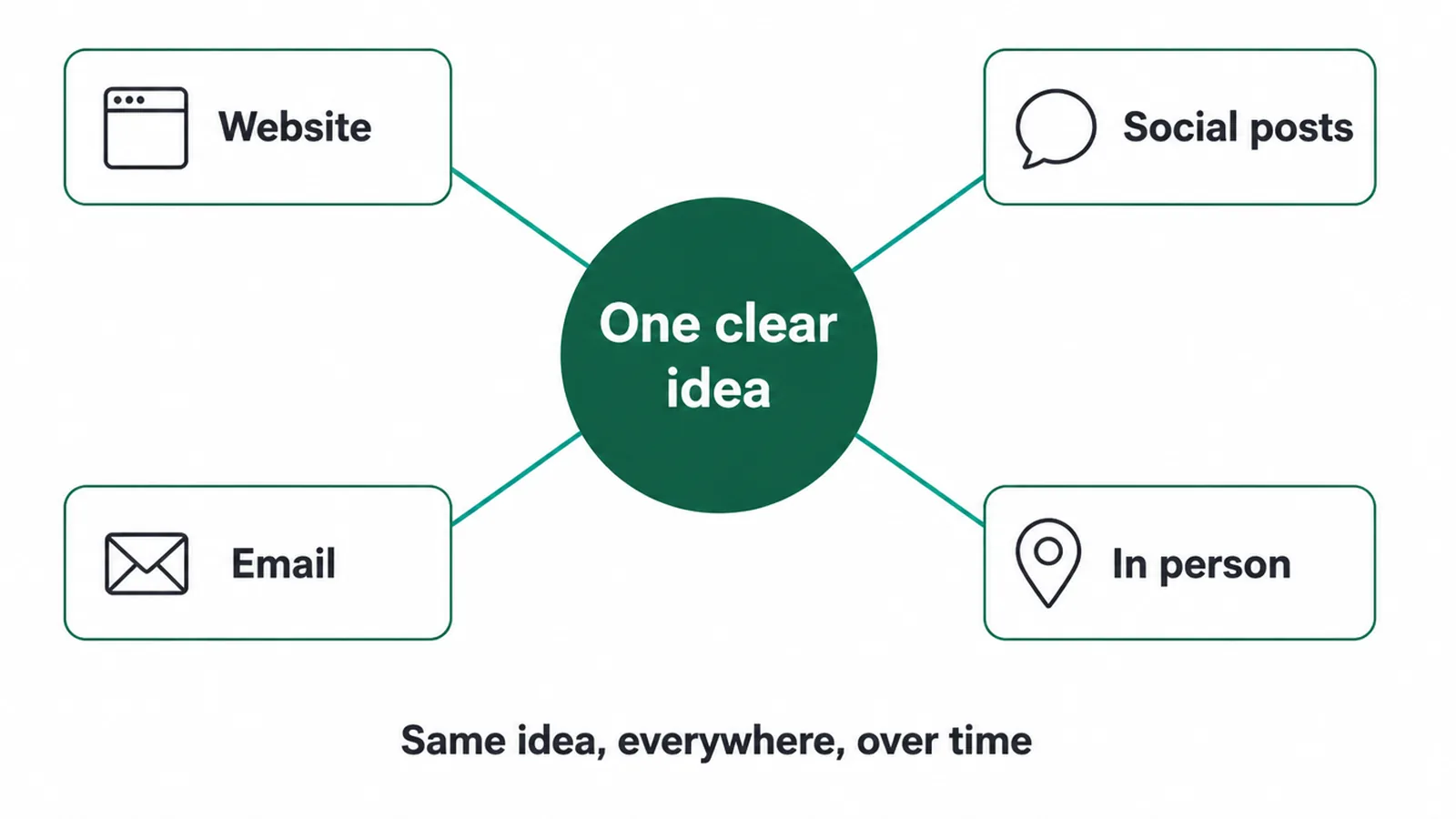
That means every touchpoint should express the one idea you chose. The words, the look, the way you answer the phone, the promise on your pricing page.
This is where positioning grows into a full identity, and it is exactly the work we build in our branding service. The statement is the seed. The consistent experience is the tree that grows from it, and that is what customers actually remember.
If you are not sure what place your brand holds today, or you know the idea but it is scattered across a dozen mixed messages, we can help you sharpen it. Tell us about your brand and we will help you find the one place worth owning.
FAQ
1. What is brand positioning?
Brand positioning is the distinct place your brand takes in the customer's mind. It is what people think of first when they have a need you can meet. It is set apart from competitors in a way that matters to that customer.
2. What is a brand positioning statement?
It is one or two sentences that name your target audience, your market category, and the one benefit that makes you different. It is an internal guide, not a public slogan. It keeps your marketing focused and consistent.
3. What is the positioning statement template?
A common one is: For [target audience] who [need], [brand] is the [category] that [benefit] because [reason]. You fill in each blank with a single clear idea, then use it to steer every message.
4. What is the difference between positioning and differentiation?
Differentiation is the facts about you, like faster service or a longer warranty. Positioning is the place those facts win in the customer's mind, like being seen as the most reliable choice. You need the facts to earn the place.
5. How is positioning different from a tagline or logo?
A logo and tagline are how the brand looks and sounds. Positioning is the idea underneath them. You decide the position first, then the logo, tagline, and words express it.
6. Can a small business own a position in the mind?
Yes, and it is often easier for a small business because you can pick a narrow focus. Owning one clear idea for one clear group beats trying to be everything to everyone.
7. How many things should my brand try to be known for?
One. Ries and Trout argued that trying to own several ideas usually means owning none. Pick the single word or idea you most want to be linked with.
8. How often should I change my positioning?
Rarely. Positioning works through repetition over time, so keep it steady. Revisit it only when your audience, your offer, or the market shifts in a real way.