How to Name a Business and Check the Name

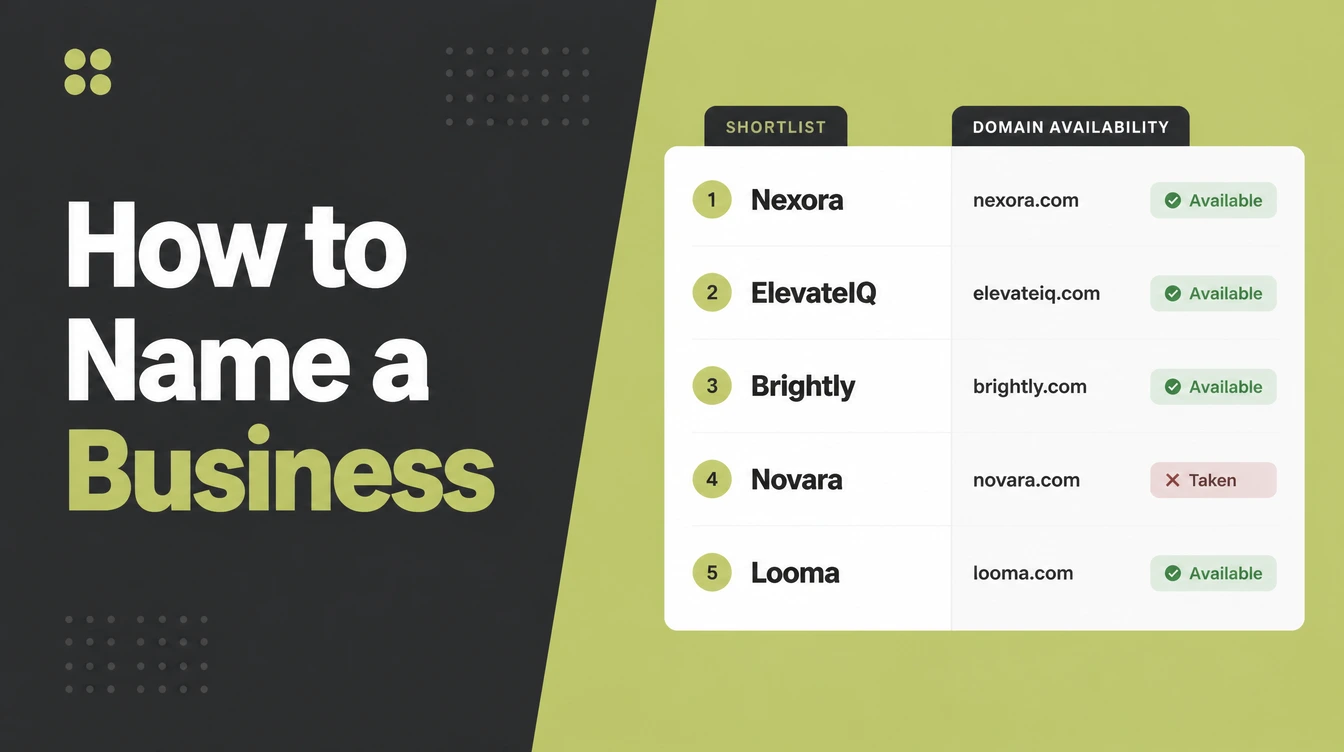
Name a business by picking one of five approaches, descriptive, evocative, invented, founder or acronym, then testing each idea against six criteria and checking the domain, the social handles and the trademark before you commit. Seed Light turns the chosen name into a logo, a look and a website.
Key takeaways
- Pick an approach first. There are five: descriptive, evocative, invented, founder and acronym. Each is a different way in.
- Test every idea against six criteria: memorable, easy to say and spell, domain available, trademark clear, on-brand, and room to grow.
- Work a list, do not wait for magic. Brainstorm wide, cut to a shortlist, say each one out loud, then check availability.
- Check the name, the domain and the trademark before you commit. A search lowers your risk of a costly rename.
- Trademark checks here are general guidance, not legal advice. For a real clearance, talk to a trademark attorney.
1. How do you name a business?
To name a business, pick a naming approach, test each idea against six criteria, then check availability before you commit.
The five approaches are descriptive, evocative, invented, founder and acronym. The six criteria are memorable, easy to say and spell, domain available, trademark clear, on-brand, and room to grow.
Once you have a shortlist, check the name, the social handles, the domain and the trademark. That last part, the trademark and availability checks, is general guidance here, not legal advice.
Do not rush it. A name is one of the few things that is genuinely painful to change later, so a few careful hours now saves you a mess down the road.
2. Why your business name matters
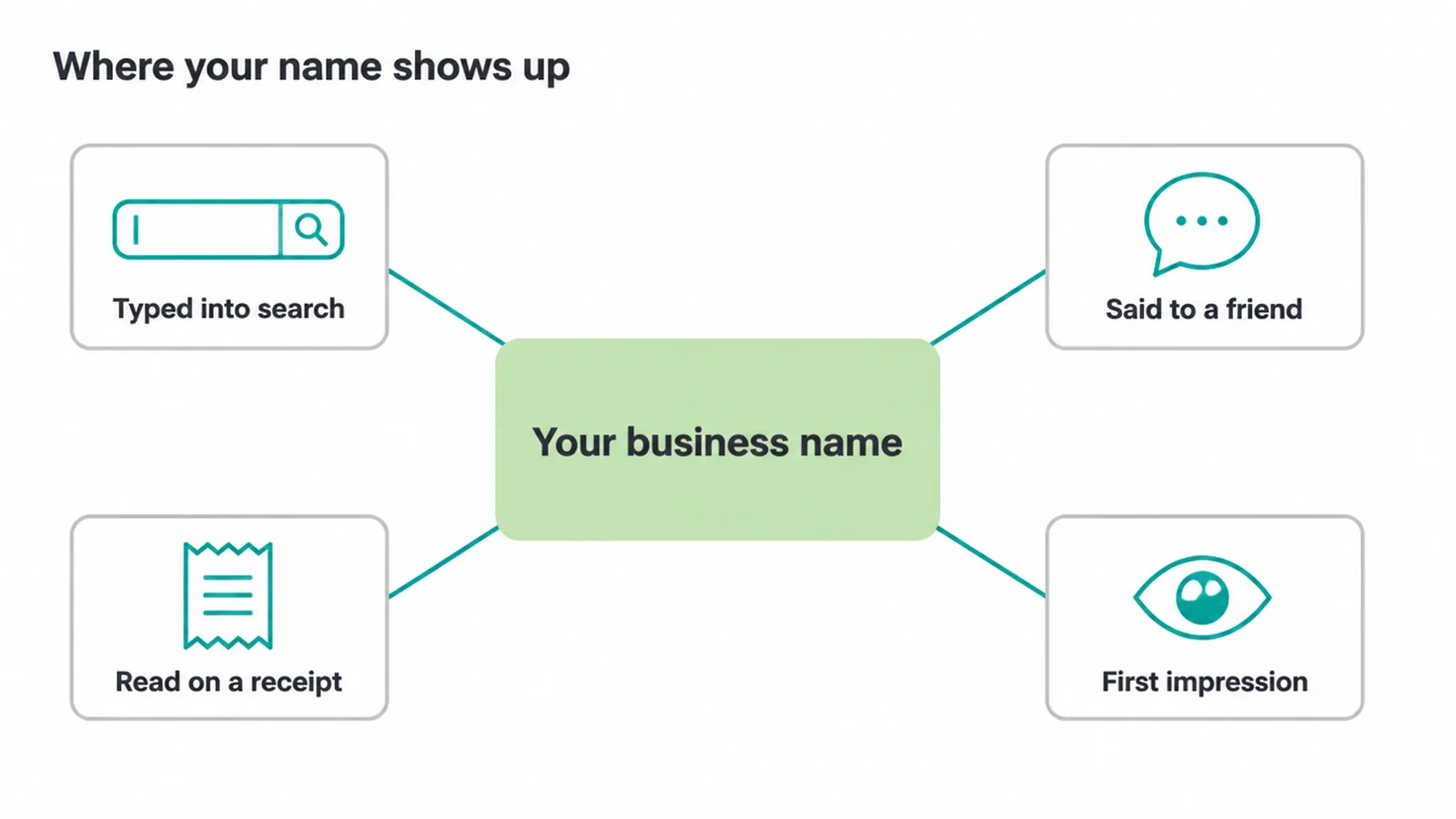
Your name is the first thing most people hear about you. It shapes their first impression before they see a single thing you have made. It is also the label they type into a search bar, say to a friend, and read on a receipt.
A clear name that is easy to say and spell makes you easy to find and easy to recommend. A clumsy one adds friction to every single one of those moments.
The name is not the whole brand, though. It sits inside a bigger picture of how you look, sound and feel to a customer. If you want the wider view, our guide to small business branding shows where naming fits.
The point for now is simple. The name is small, but it is load-bearing, and it is the hardest piece to swap out once people know you by it.
3. The 5 main ways to name a business
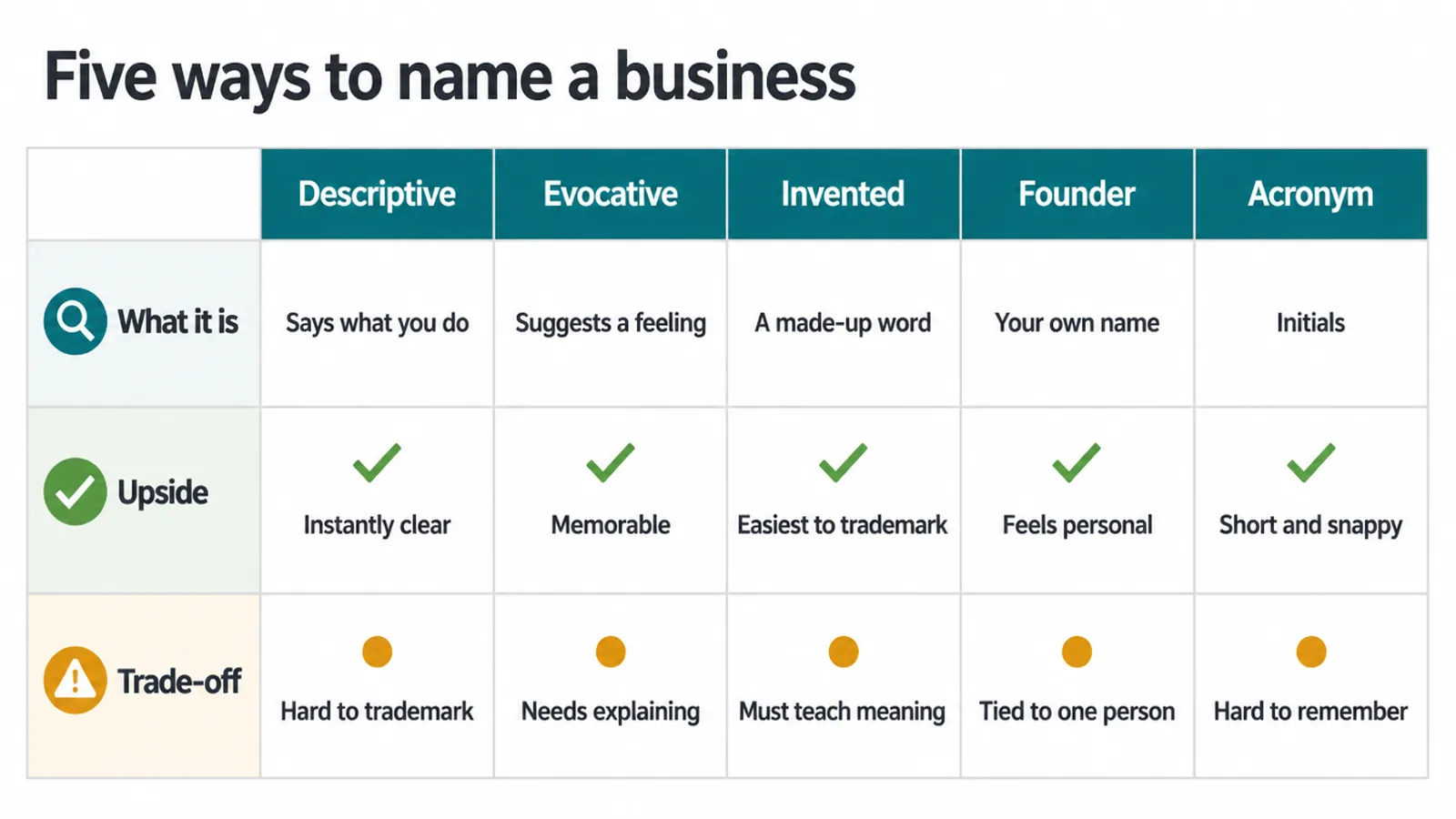
Most names fall into one of five buckets. Knowing them turns a blank page into five clear starting points. Which one fits should follow from your strategy and positioning, so if you have not set those yet, our piece on brand strategy is a good first stop. Here is each approach in plain terms.
Descriptive names
The name says what you do. It is instantly clear, so nobody has to guess your business. The catch is that descriptive names use common words, which makes them hard to trademark, because you cannot easily own everyday language (Ignyte Brands).
Evocative names
The name suggests a feeling or idea rather than the product. Think of the style of Apple or Nike. These use metaphor to hint at a brand's personality, and they are easier to trademark than descriptive names because they are more original (Ignyte Brands).
Invented or coined names
The name is a made-up word with no existing meaning. This gives you the most creative room, and it is the easiest to trademark because it is not already in use. The trade-off is that you have to teach people what it means (Ignyte Brands).
Founder names
You use your own name as the brand, the way Disney is named after Walt Disney (Ignyte Brands). It feels personal and trustworthy, but it is harder to sell the business later and it ties the brand to one person.
Acronym names
You shorten a longer name to its initials. It can feel snappy, but acronyms are among the hardest names to remember, and among the hardest to trademark (Ignyte Brands). Most new businesses are better off starting elsewhere.
The five approaches side by side
| Approach | Example style | Pros and cons |
|---|---|---|
| Descriptive | Says what you do (a "Fresh Bread Bakery" style name) | Clear and instant to understand, but hard to trademark and can box you in later |
| Evocative | Suggests a feeling or idea, not the product (Apple, Nike style) | Memorable and easier to protect, but needs marketing to explain what you do |
| Invented / coined | A made-up word with no prior meaning | Most creative freedom and easiest to trademark, but you must teach people what it means |
| Founder | Your own name as the brand (Disney style) | Personal and trustworthy, but harder to sell later and tied to one person |
| Acronym | Initials of a longer name | Can feel short and snappy, but often hard to remember and hard to trademark |
4. What makes a business name work: 6 criteria
Once you have some ideas, you need a way to judge them. These six criteria do that. Run every candidate through the list, and the weak ones drop out fast.
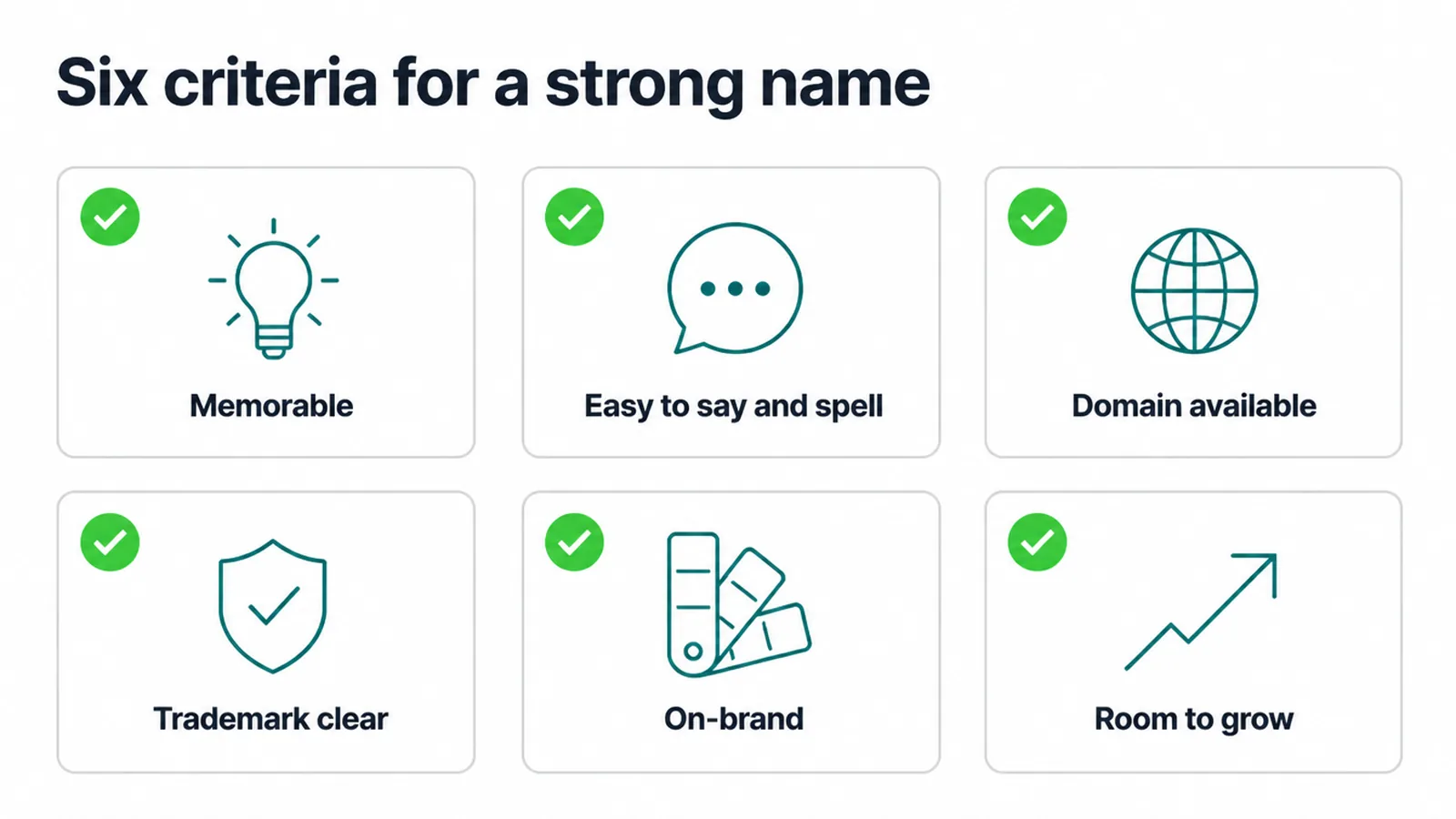
- Memorable. People should recall it after hearing it once. Short, distinctive names are easier to remember (Wix).
- Easy to say and spell. Pick something pronounceable and simple to spell, so people can actually find you when they search for you (Wix).
- Domain available. Check that a matching or close domain is free, and register it quickly before someone else grabs it (Network Solutions).
- Trademark clear. The name should look clear of existing marks for related goods or services. More on how to check this below.
- On-brand. The name should fit the wider identity you are building, from your logo to your voice. Our guide to brand identity covers how those pieces line up.
- Room to grow. Choose a name that does not pin you to one product or one audience, so you are not boxed in if you expand later (Xero).
Aim for roughly one to three words. If a name passes all six criteria, it earns a place on your shortlist.
5. A step-by-step process to name your business
Here is a repeatable process. Follow it in order and you will end with one or two strong options instead of a headache.
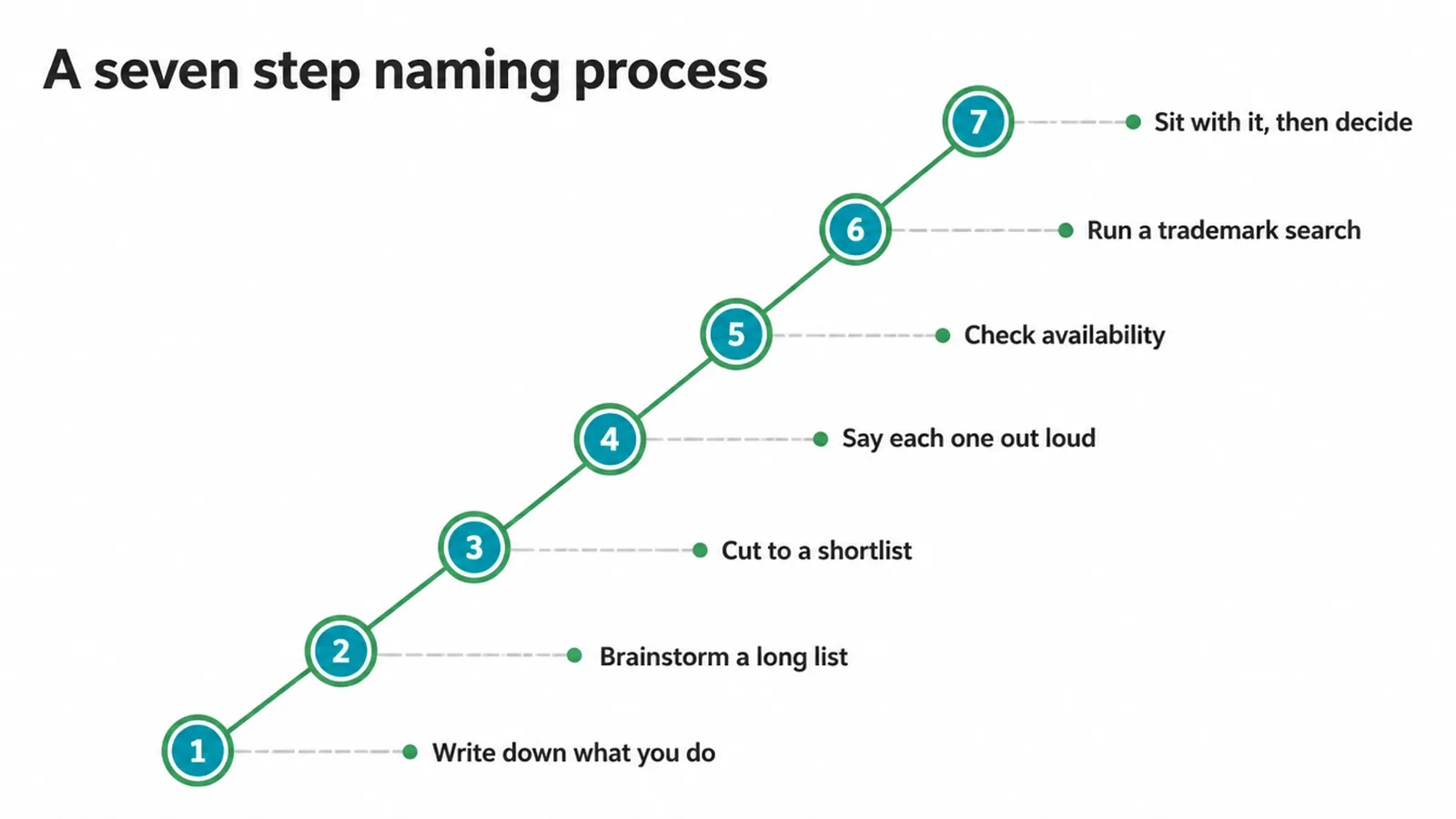
- Write down what you do and who you serve. One or two plain sentences. This anchors every idea that follows.
- Brainstorm a long list. Pull from all five approaches and do not judge anything yet. Quantity first. Aim for a big, messy list.
- Cut to a shortlist. Now run each idea through the six criteria and keep the ones that pass.
- Say each one out loud. Read them to a few people you trust. Watch for the ones people mishear or cannot spell back to you.
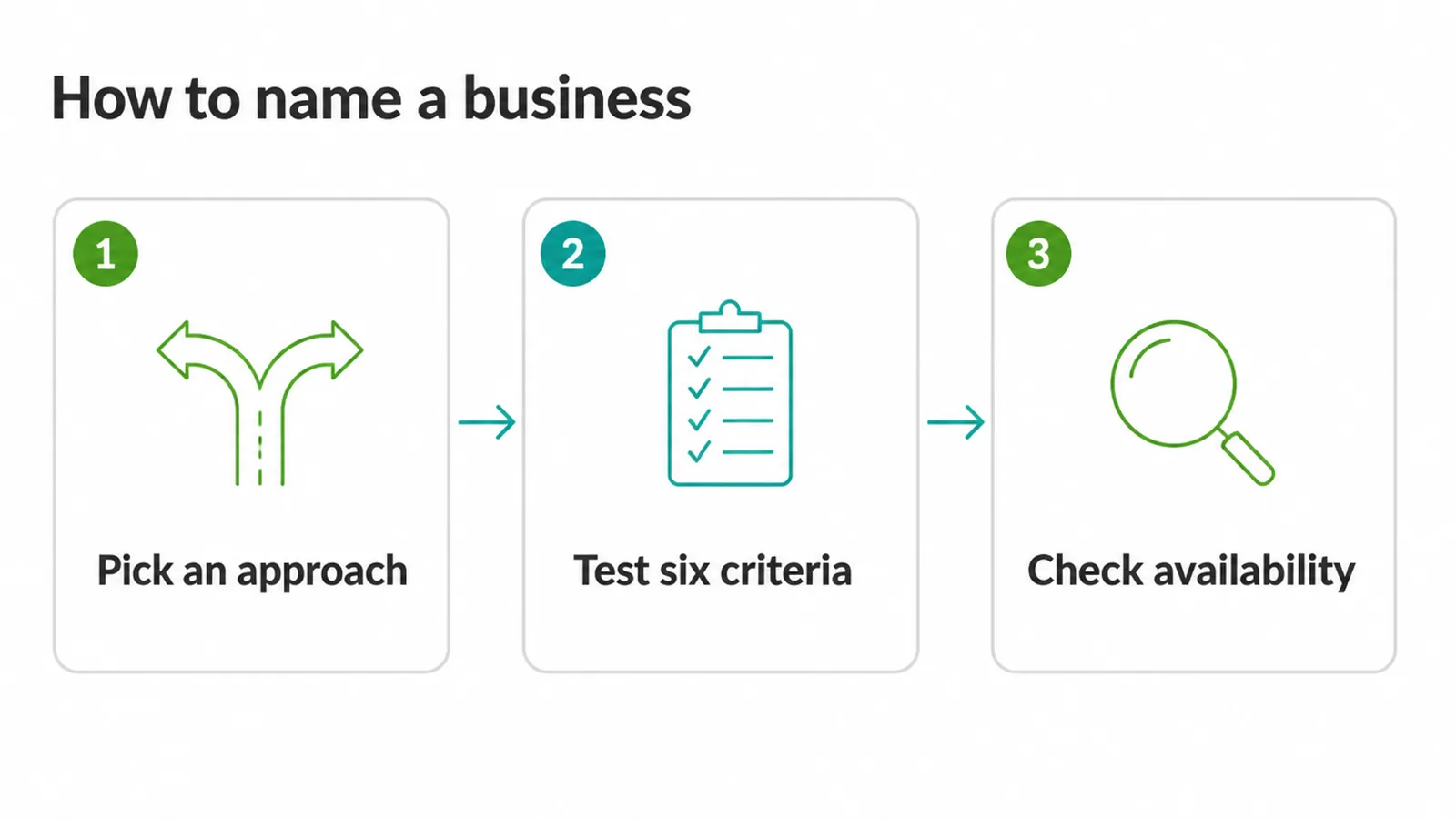
- Check availability. For your favourites, search the name, the social handles and the domain. Drop anything that is clearly taken.
- Run a trademark search. Look for conflicts before you fall in love. The next section shows how.
- Sit with your top one or two, then decide. Sleep on it. A name that still feels right after a few days is usually the one.
6. How to check if a name is available
Before you commit, run these checks. They are quick and they save you from a painful rename. Trademark rights are territorial, so search the trademark office in every country where you trade. In Malaysia, start with MyIPO, use WIPO's Global Brand Database for wider screening, and keep the USPTO as the US example.
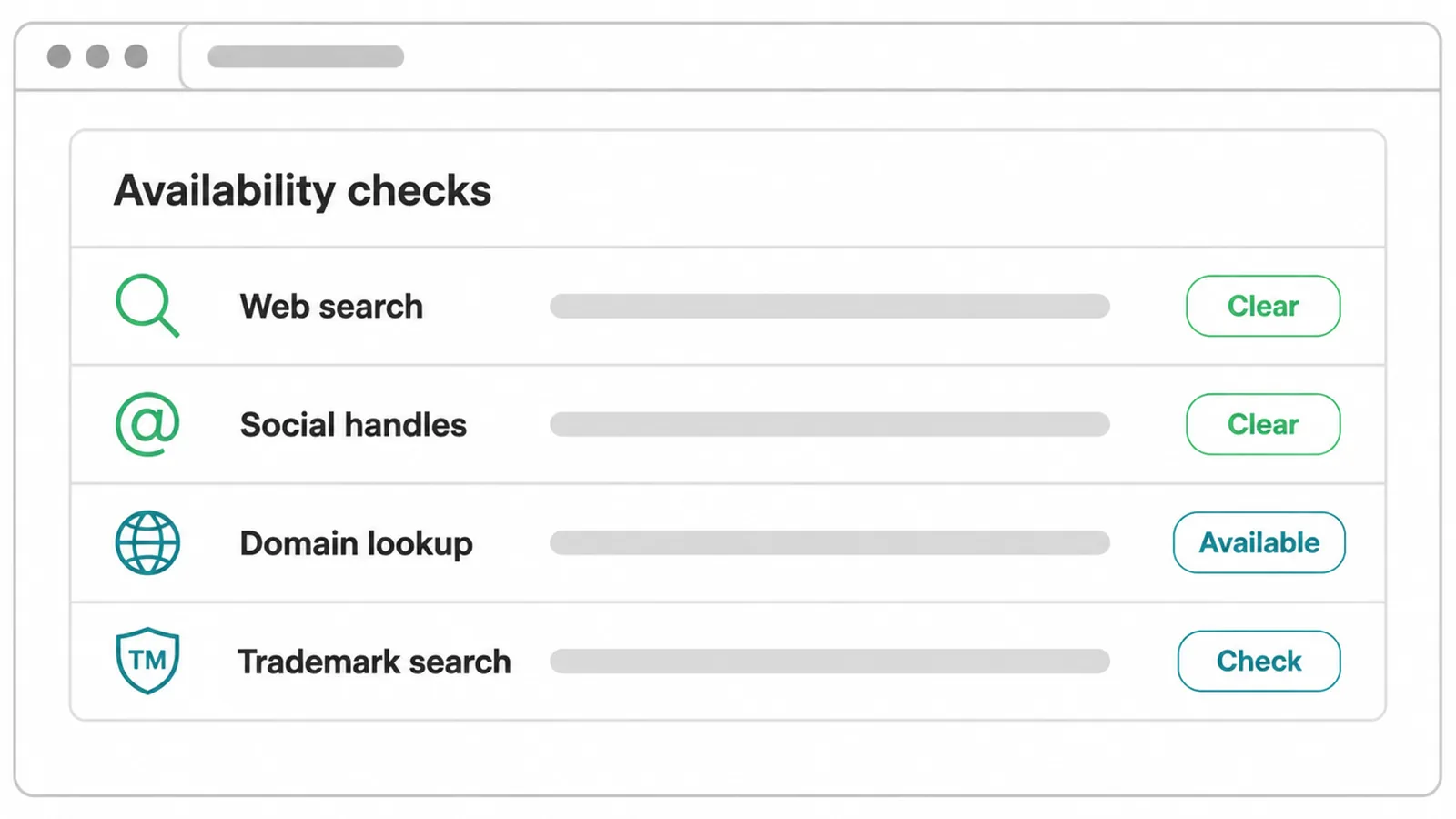
- Web and business-name search. Search the name in quotes and see who already uses it. In Malaysia, also check it through SSM's business-name service.
- Social handles. Check the platforms you plan to use. Matching handles make you easier to find.
- Domain lookup. Check the domain and register it fast if it is free (Network Solutions).
- Trademark search. Search the relevant national office in every country where you trade, then use WIPO's database as a wider check. A search lowers risk but is not a legal clearance.
What counts as a clash? In plain words, two marks may be "confusingly similar" if they look alike, sound alike, mean something similar, or leave a similar impression.
If that is true, and the goods or services are related, and the other mark is still live, there may be a likelihood of confusion (USPTO).
In the US, the official free tool is the Trademark Search system at tmsearch.uspto.gov (USPTO). For an example, if your idea reads as "Bright Bloom" and a live mark for a related service reads as "Brite Bloom", that is the kind of overlap worth a closer look.
This is general guidance, not legal advice. A search lowers your risk but does not guarantee a name is free to use. For a real clearance, talk to a trademark attorney.
The USPTO itself notes you can hire a private trademark attorney to advise on searching and run a clearance search for you (USPTO).
7. Common naming mistakes to avoid
Most naming regrets come from the same handful of slips. Each one maps back to a criterion you have already met.
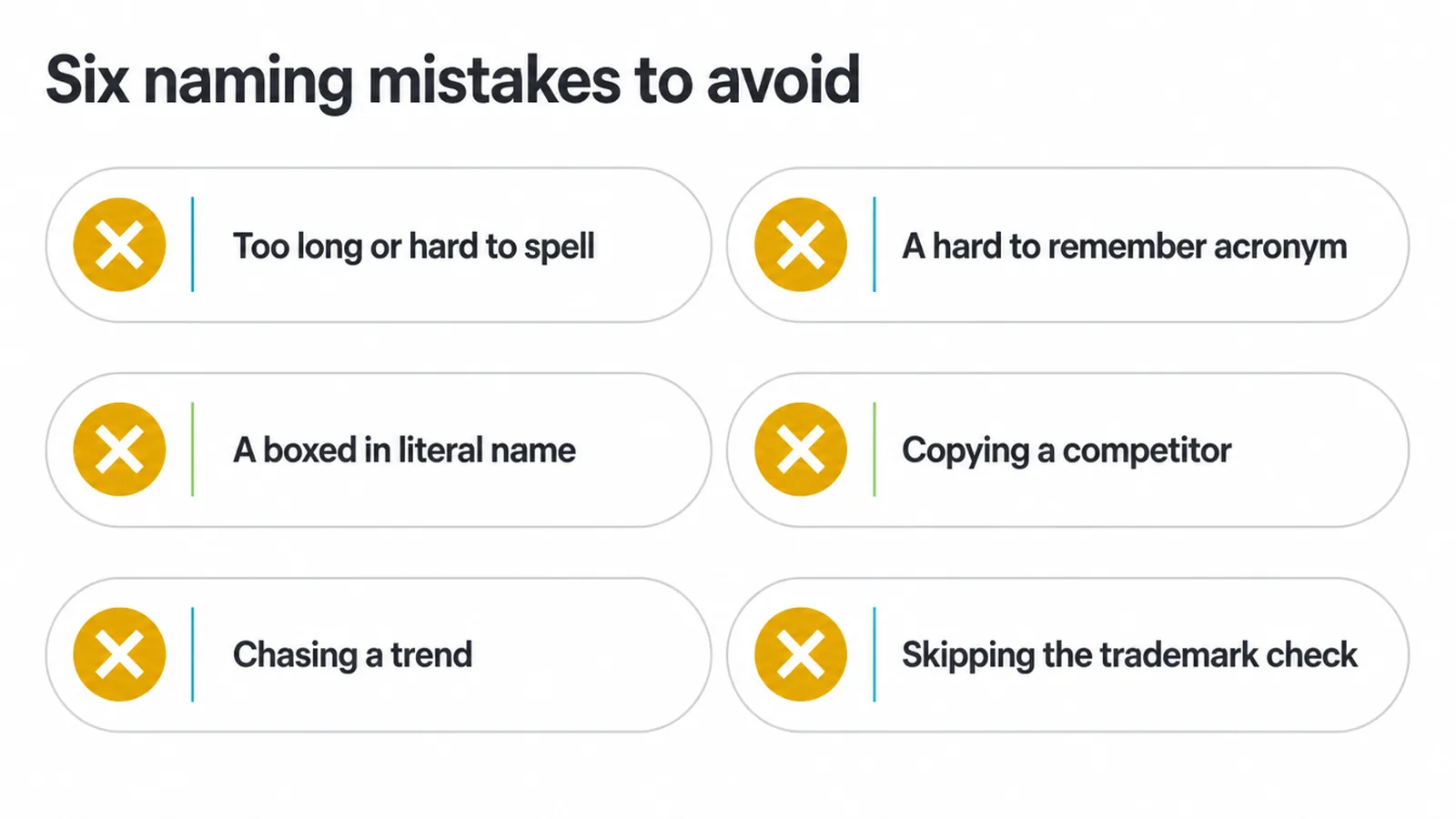
- Too long or hard to spell. Breaks the "easy to say and spell" test and hurts search.
- A hard-to-remember acronym. Snappy on paper, forgettable in real life.
- A boxed-in literal name. Very descriptive names leave no room to grow when you expand.
- Copying a competitor. You blur into them and risk a trademark clash.
- Chasing a trend. Trendy spellings and suffixes date fast and confuse spelling.
- Skipping the trademark check. The one shortcut that can force a full rename later.
Frequently asked questions
1. What are the main types of business names?
The five common ones are descriptive (says what you do), evocative (suggests a feeling or idea), invented (a made-up word), founder (your own name), and acronym (initials). Each has trade-offs in how clear, memorable, and easy to trademark it is.
2. How do I know if a business name is good?
A good name is easy to say and spell, easy to remember, fits what you do, has an available domain, looks clear of existing trademarks, and leaves room to grow. If it passes all six, it is worth shortlisting.
3. Should my business name describe what I do?
It can help people understand you fast, but very literal names are harder to protect and can box you in later. A little room for meaning often ages better than a purely descriptive name.
4. How do I check if a business name is taken?
Check the name online, social handles, domain and, in Malaysia, the SSM business-name search. Because trademark rights are territorial, search the trademark office in every country where you trade. Use MyIPO for Malaysia, WIPO's Global Brand Database for wider checks, and the USPTO for the US. This is general guidance, not legal advice.
5. Do I need to trademark my business name?
Not always to start, but a trademark helps stop others using a confusingly similar name for related goods or services. A trademark search before you commit lowers the risk of a costly rename. Talk to a trademark attorney for a real clearance.
6. How long should a business name be?
Shorter is usually easier to remember, spell, and fit on a logo. Aim for roughly one to three words. If it is hard to say out loud, it is probably too long or too tricky.
7. Does the domain name have to match exactly?
An exact match is ideal, but a close variation can work if the exact one is taken. Whatever you pick, register the domain quickly so you do not lose it while you decide.
8. Can I change my business name later?
Yes, but it costs time and money and can confuse existing customers. It is worth doing the checks up front so you are less likely to need a rename.
Turn your name into a brand
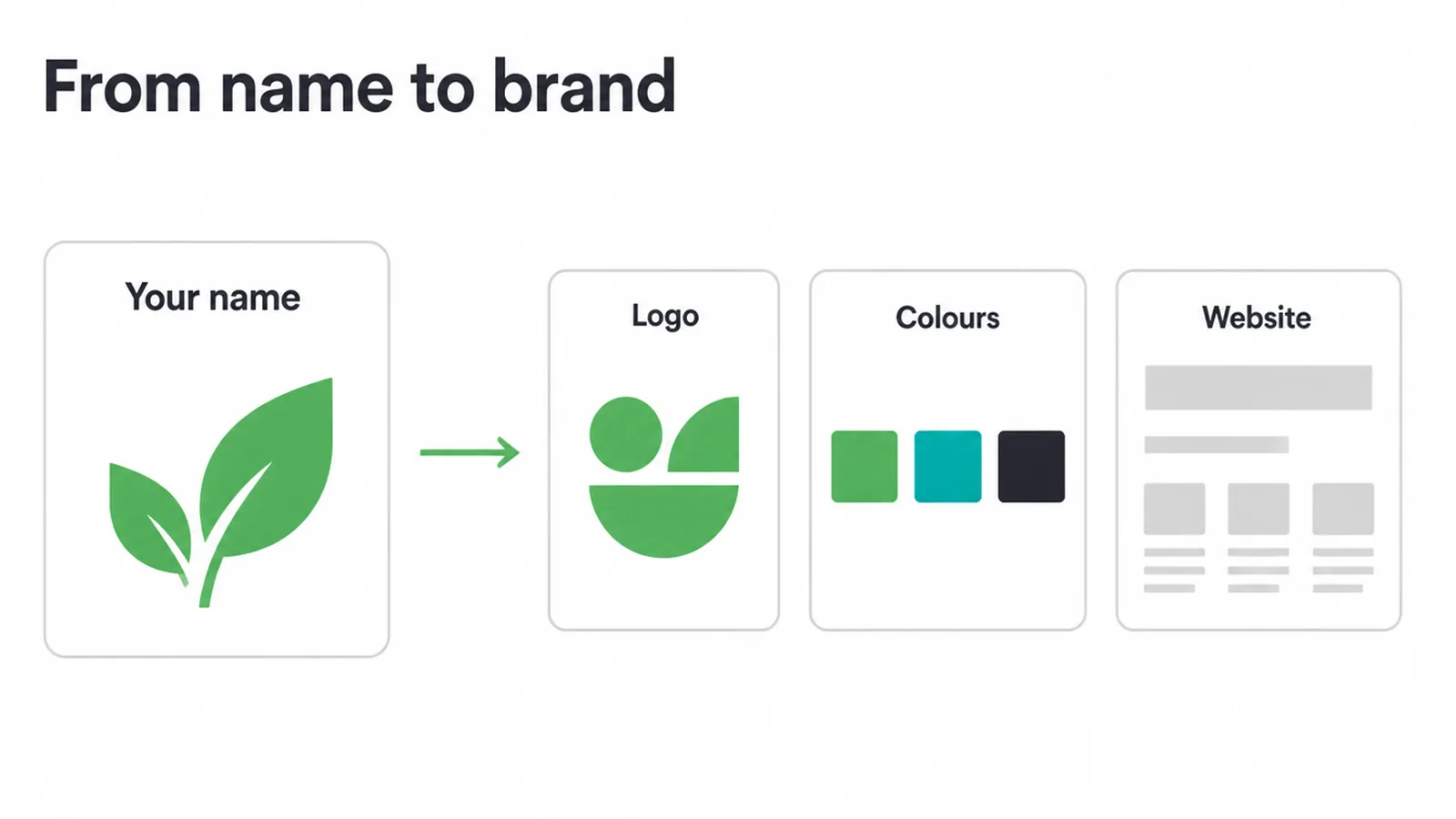
Once you have a name you are happy with, the next job is making it look and feel like a real brand. That means a logo, colours, and a website that all match and pull in the same direction.
That is exactly what a branding team does. If you want a hand turning your new name into a full identity, take a look at our branding work, then tell us about your business and we will help you build around it.