Small Business Branding: The Four Parts That Matter

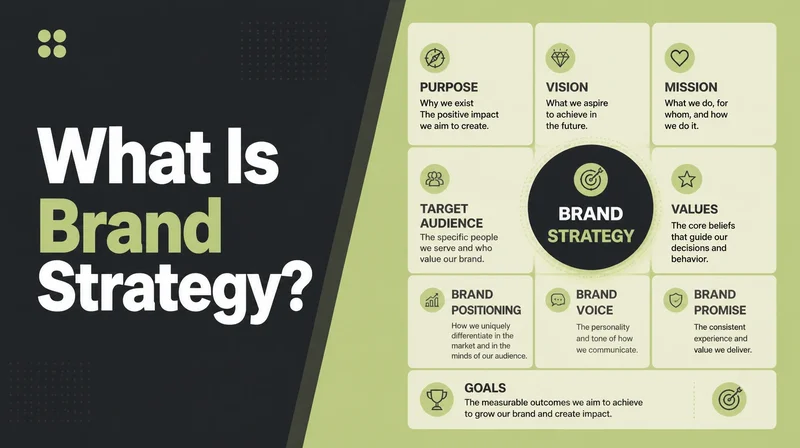
Small business branding has four parts: strategy and positioning, verbal identity, visual identity, and the experience you give people. Only one of those four is about how you look. Consistency beats budget, so a simple brand used everywhere wins. Seed Light starts every brand with positioning, then the colours and logo.
Key takeaways
- Branding is the whole system, not the logo. A logo helps people spot you. Your brand is what they remember and feel about you.
- A brand is a promise. Nielsen Norman Group calls a brand "a promise about what a company stands for" (Nielsen Norman Group), and branding is the work you do to keep that promise visible.
- Four parts. Strategy and positioning, verbal identity (your voice), visual identity, and the experience you give. They all work together.
- It matters most for small businesses. Trust and recognition are hard to earn, and a business people know can charge a fair price.
- Consistency beats fancy, and you can start free. A simple brand used everywhere beats a fancy one used once, and a one-page guide is enough to begin.
1. What branding actually is (and is not)
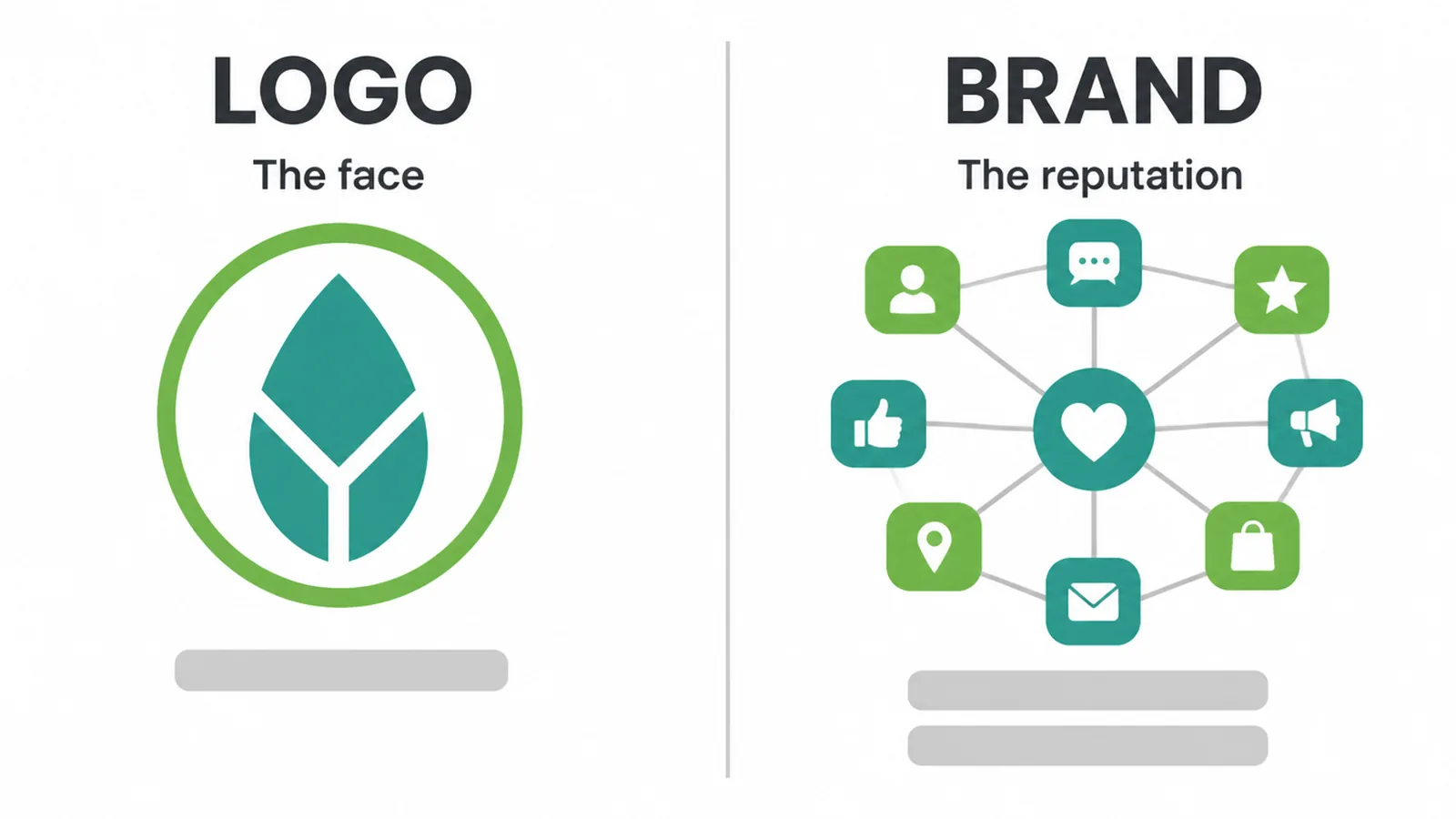
Here is the simplest way to hold it in your head. Your logo is the face. Your brand is the reputation. A face helps people pick you out of a crowd.
A reputation is the story people tell about you when you are not in the room. One is a picture. The other is a feeling built up over every visit, every message, and every promise you kept.
Nielsen Norman Group puts branding as "the controlled manifestation of the Brand's identity through application of logo or other guidelines to advertising, communications, packaging, and so on" (Nielsen Norman Group). In plain words: the brand lives in people's minds, and branding is all the little things you do on purpose to shape it.
The logo is a tool for branding, not the brand itself. If you want the logo piece done properly, read what makes a logo work. Just remember it is one tool in a bigger box.
2. The parts of a brand
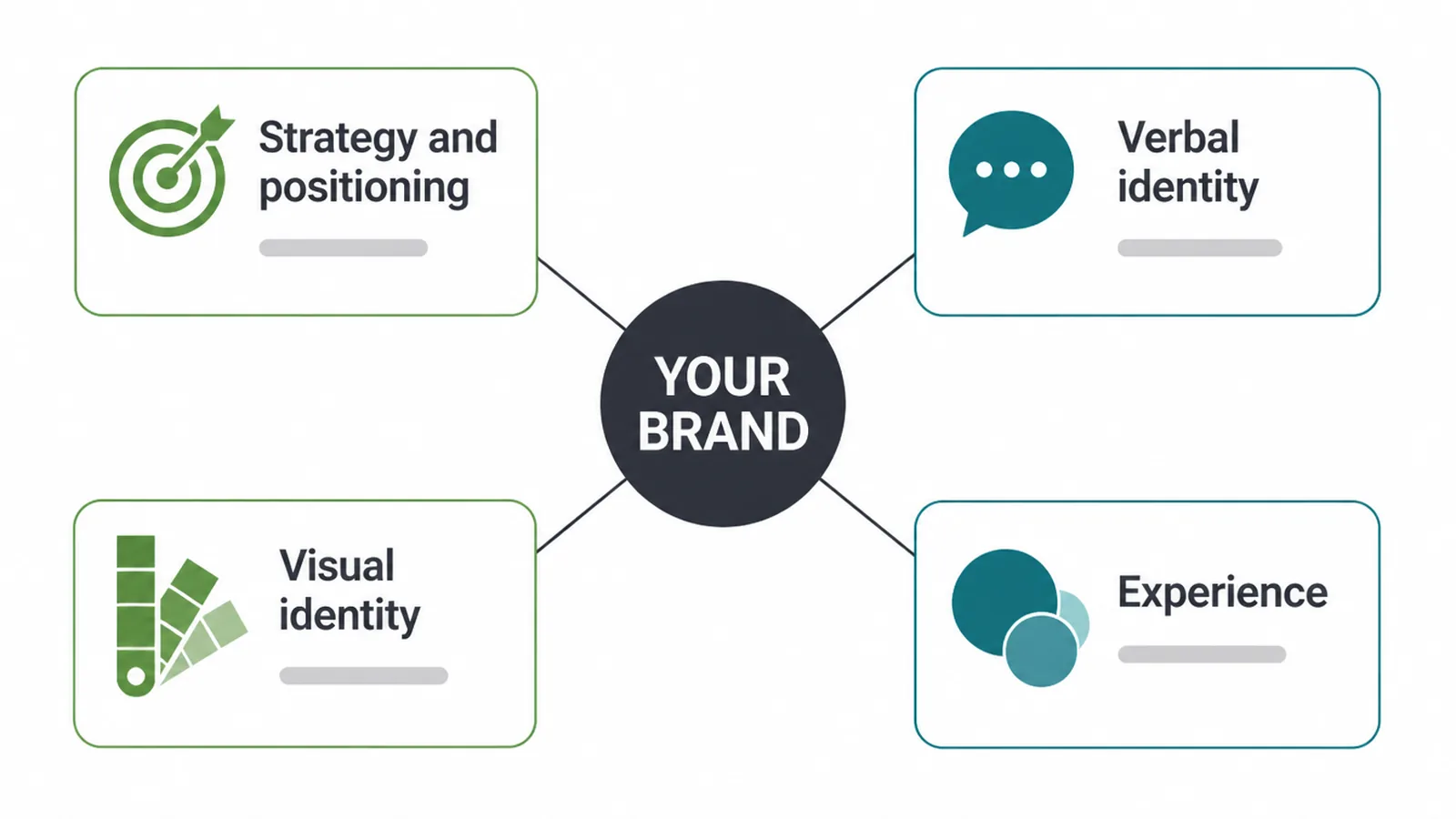
A brand is not one thing. It is a handful of parts that fit together. When people say "branding", they usually mean the logo, but the logo is only the visual bit.
The table below breaks the whole brand into four plain parts, what each one really is, and one small first step you can take today. Read it across, row by row. None of this needs a big budget, just a clear head.
| Element | What it is | A simple first step |
|---|---|---|
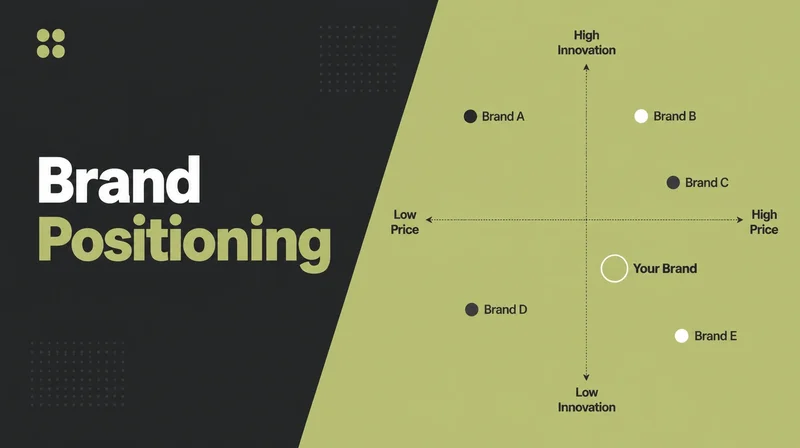
| Strategy and positioning | Who you are for and why you are different | Write one sentence: "We help [who] get [result]." |
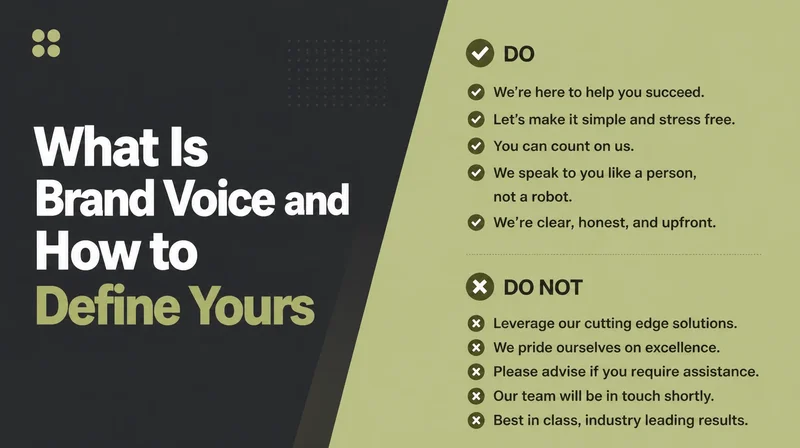
| Verbal identity (name and voice) | Your name and how you sound | Pick three words for your tone, like warm, clear and honest. |
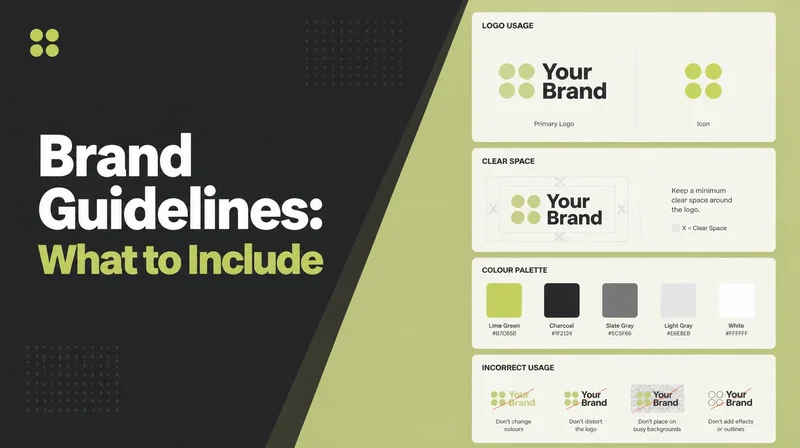
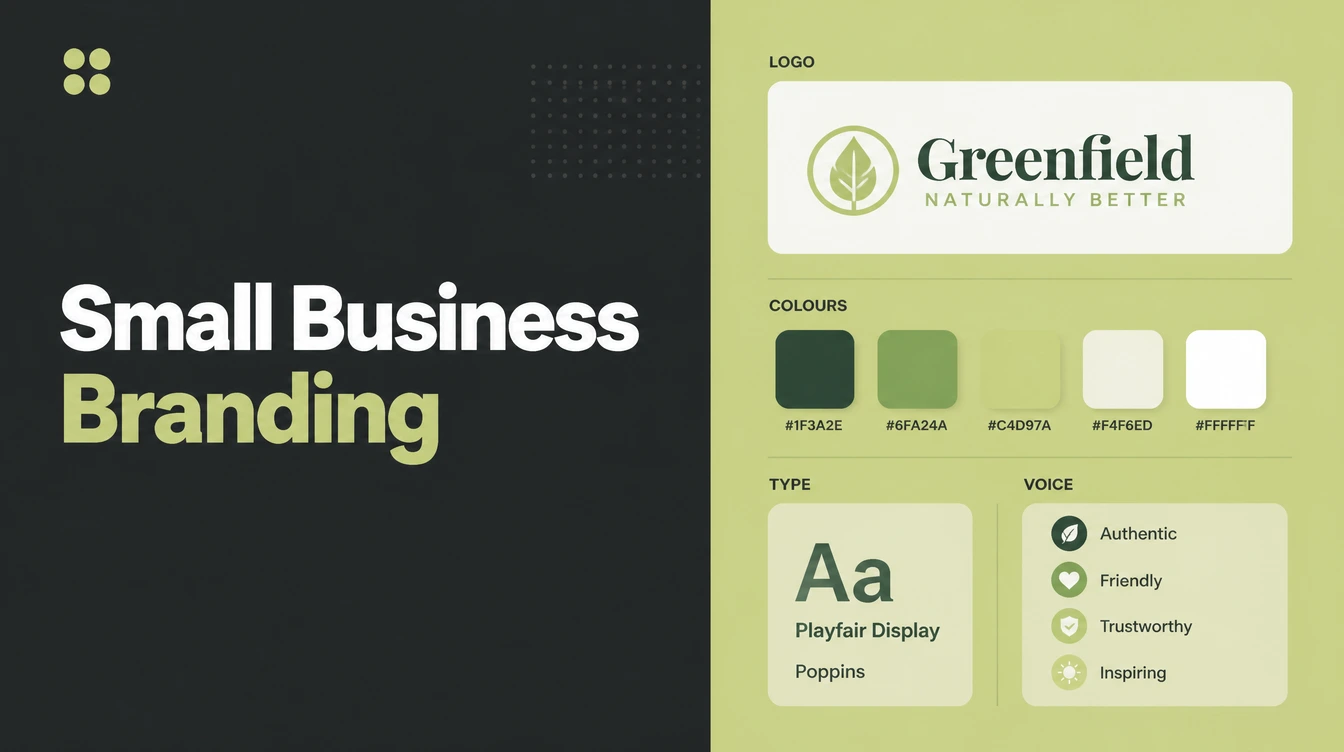
| Visual identity | Logo, colours, fonts and imagery | Choose two or three colours and one or two fonts, and keep a clean logo. |
| The experience | How you treat people everywhere they meet you | Reply the same friendly way on every channel. |
Notice that only one of these four rows is about how you look. The rest are about what you stand for, how you speak, and how you behave. That is the whole point.
Most owners polish the visual row and skip the other three, then wonder why their brand feels flat. If you want to go deeper on the look and feel, our guide to your brand identity covers the visual and verbal parts in detail.
3. Strategy comes before the pretty stuff
This is the part people rush, and it is the part that matters most. Strategy is deciding who you serve, what you promise them, and how you are different from the other choices they have.
Get that clear and every other decision gets easier. Skip it and your colours, fonts, and logo are just decoration with nothing behind them.
Nielsen Norman Group calls the heart of this a brand promise, or brand essence, which it describes as "the unique, enduring idea behind a brand's purpose" (Nielsen Norman Group).
It also talks about brand attributes, "a set of well-defined traits that personify the brand", which is a fancy way of saying your brand has a personality (Nielsen Norman Group).
Is it calm or bold? Formal or friendly? Cheeky or serious? Decide that on purpose, because your customers will feel it whether you chose it or not.
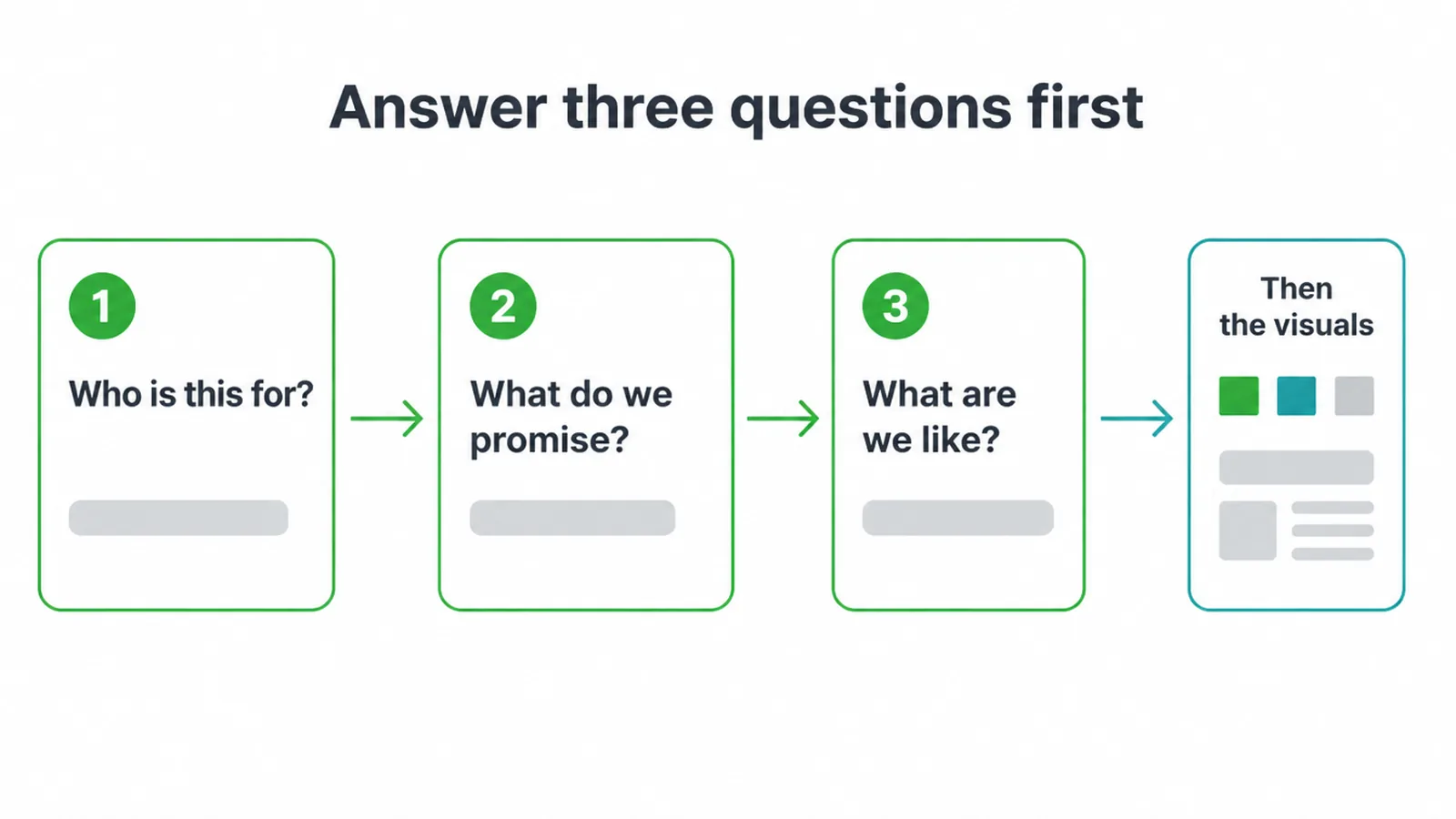
So before you touch a colour picker, answer three questions. Who is this for? What do we promise them? What are we like? Write the answers down in a few plain lines.
That short document is the spine of your brand, and everything visual hangs off it. Our guide to brand strategy walks through those questions step by step if you want a hand.
4. Why branding matters for a small business
You might think branding is a big-company thing, something for firms with money to burn. It is the opposite. A small business needs branding more, because you do not have a huge ad budget or a famous name to lean on. Your brand is how you punch above your weight.
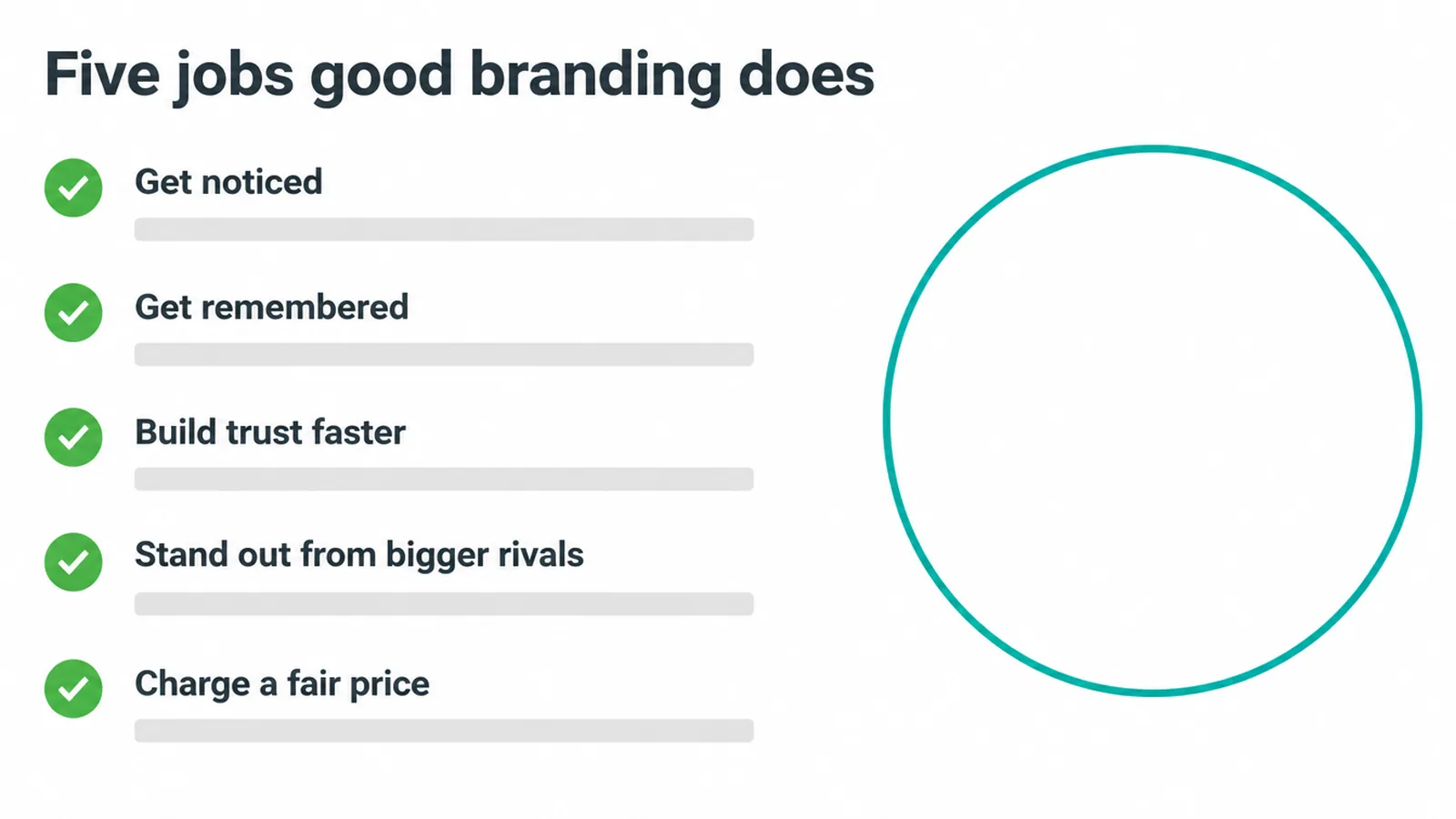
Good branding does five quiet jobs for you. It helps people notice you in a busy market. It helps people remember you, so the next time they need what you sell, your name comes to mind first. It builds trust faster, because a clear, consistent business looks like one that has its act together.
It helps you stand out from bigger competitors who feel cold and faceless, while you feel human and specific. And it lets you charge a fair price, because people happily pay more for a business they know and trust than for a stranger they found five minutes ago.
None of that comes from the logo alone. It comes from the whole brand doing its job over time. A recognisable, trusted small business is not lucky. It made a set of small, consistent choices, on purpose, again and again.
5. Consistency is the real secret
If you take one thing from this guide, take this. A simple brand used everywhere beats a fancy brand used once.
Recognition comes from repetition, not from a clever design you show off a single time. People need to bump into the same look, the same voice, and the same behaviour over and over before it sticks.
Nielsen Norman Group says people experience a brand through three areas: visuals, tone, and behaviour (Nielsen Norman Group). Visuals are your logo, colours, fonts, and images. Tone is how you communicate, from your website words to how your staff speak.
Behaviour is how your business acts when something happens, like how you handle a late order or a happy review. For your brand to feel real, all three need to match. A slick logo means nothing if your emails sound rude and your phone goes unanswered.
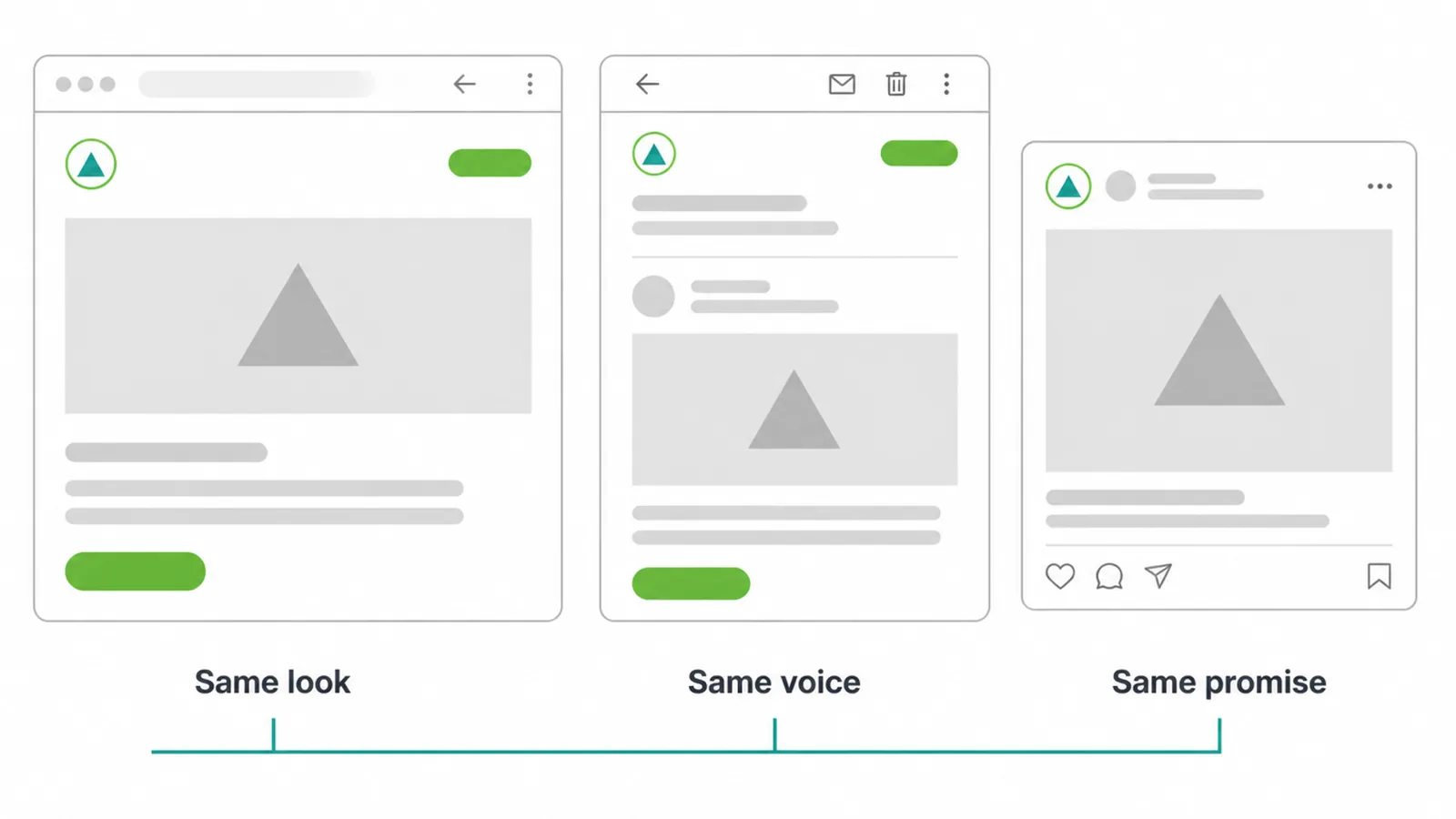
So aim for this: everywhere a customer meets you should feel like the same business. Your website, your social posts, your emails, your shopfront, your invoices, and the way you say hello. Same look. Same voice. Same promise kept. That is what turns a scattered set of touchpoints into a brand people trust.
6. How to build a brand on a small budget
Good news: you can build a solid brand with almost no money. The value is in being clear and consistent, not in spending big. Here is a simple order to work through.
Do them in this sequence and you will end up with a brand you can actually use, not a folder of pretty files you forget about.
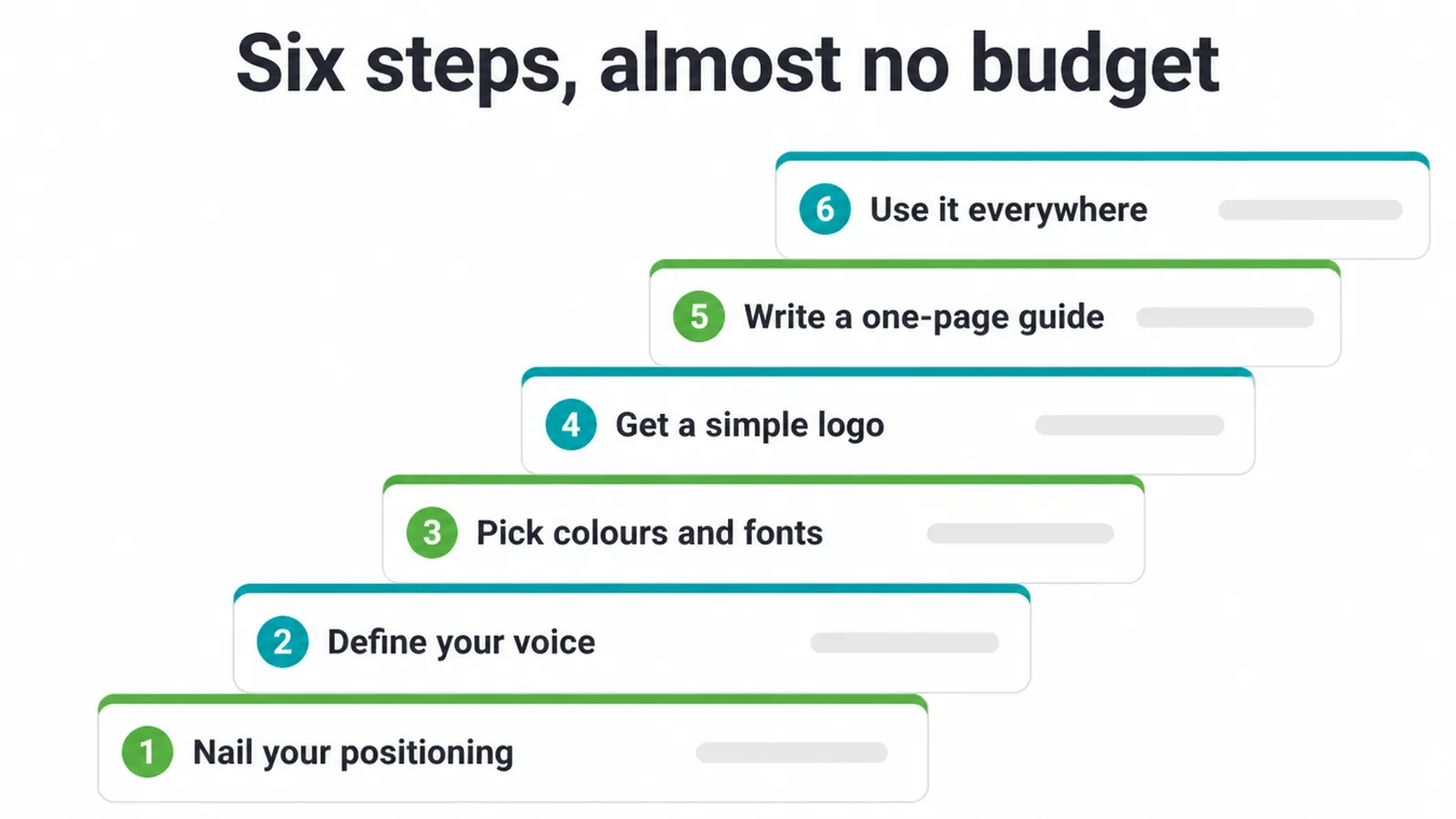
- Nail your positioning. Write one sentence about who you serve and why you are different. This is your foundation, so do it first.
- Define your voice in three words. Pick three words for your tone, like warm, clear and honest. Use them to check everything you write.
- Pick your colours and fonts. Choose two or three colours and one or two fonts. Keep it small so it is easy to stay consistent.
- Get a simple, clean logo. It does not need to be clever. It needs to be clear, readable, and yours. You can upgrade it later.
- Write a one-page brand guide. Put your positioning, voice words, colours, fonts, and logo on a single page. That is all you need to start.
- Use it everywhere. Apply the guide to your website, social, emails, and anything else. Consistency is where the payoff lives.
One honest note on colours. You will find charts online telling you a colour "means" a certain feeling. Treat those as common patterns, not fixed laws. Colour associations change with culture and context, so the same colour can feel different to different people.
Choose colours that fit your business and your customers, then see how they land, rather than trusting a chart. If you would rather have this done for you, our branding services can build the whole set, from positioning to a proper guide.
7. Common branding mistakes small businesses make
Most branding trouble comes from a few repeat mistakes. Spot them early and you save yourself a lot of wasted effort. Here are the ones we see again and again.
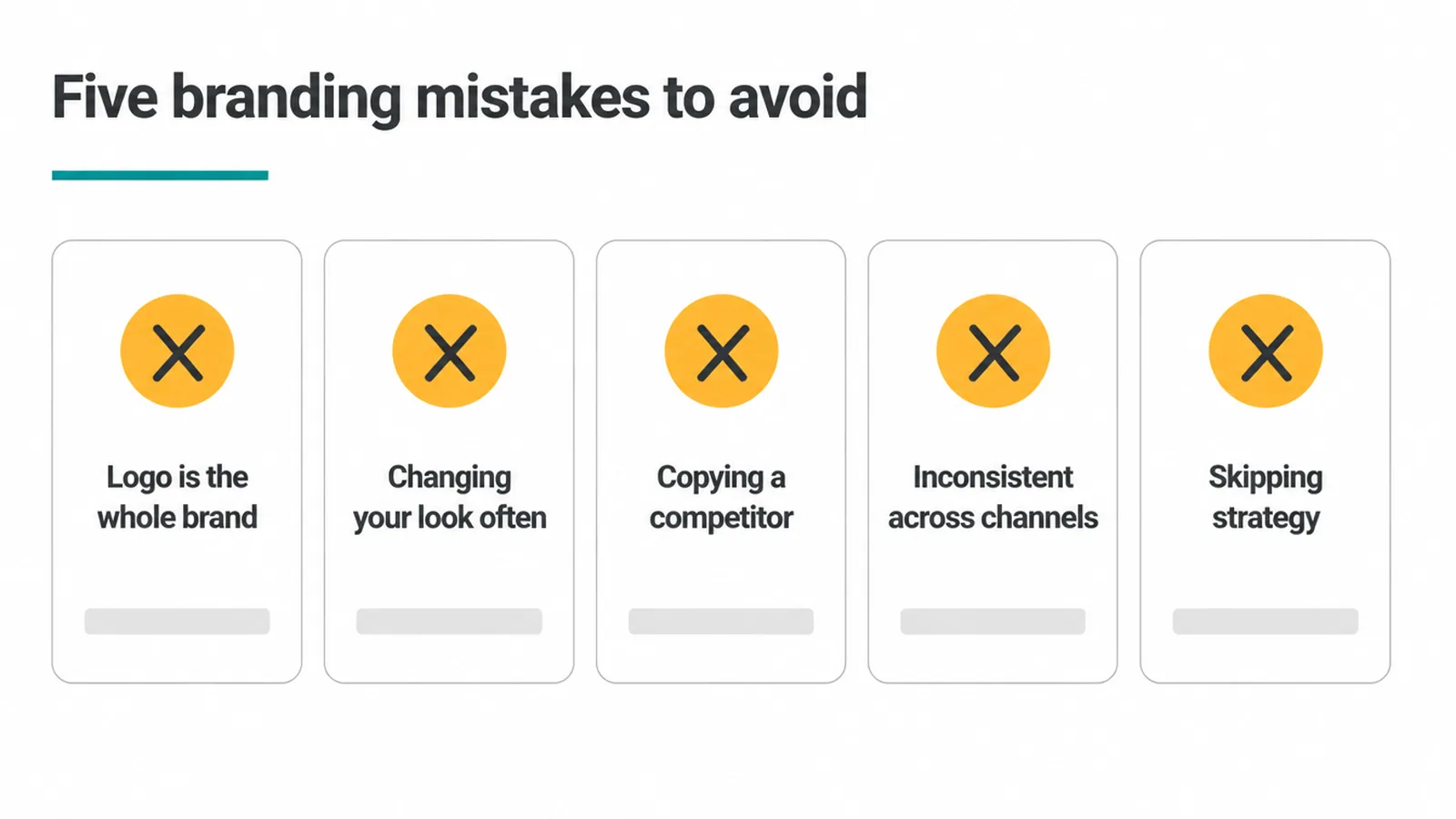
The first is treating the logo as the whole brand. You now know it is one small part, so do not stop there. The second is changing your look all the time. New colours this month, a new logo the next, a different voice every post.
Every switch resets the recognition you were building, so pick something decent and stick with it. The third is copying a competitor. If you look and sound like them, you have handed them the comparison and given customers no reason to pick you. Be clearly yourself instead.
The fourth is being inconsistent across channels, where your website says one thing and your social feed says another. Pick one brand and carry it everywhere. And the fifth, the root of most of the others, is skipping strategy.
When you jump straight to visuals without deciding who you are for and what you promise, the brand has nothing holding it together. Start with strategy and the rest falls into place.
Frequently asked questions
1. What is small business branding?
Branding is how your business looks, sounds, and behaves, and the feeling that leaves in a customer's mind. It includes your positioning, your voice, your visual look, and the way you treat people, all working together so customers know you and trust you.
2. Is a logo the same as a brand?
No. A logo is one small part of your brand. Your brand is the whole picture, including your colours, your words, your promise, and how you make people feel. A logo helps people spot you, but the brand is what they remember about you.
3. Does a small business really need branding?
Yes. Branding helps a small business get noticed, get remembered, and build trust faster. It also helps you stand out from bigger competitors and charge a fair price, because people pay more for a business they recognise and trust.
4. How much does branding cost for a small business?
It can cost very little to start. You can define your positioning, voice, colours, and a simple logo yourself, then upgrade later. The value is in being clear and consistent, not in spending a lot of money up front.
5. What are the main parts of a brand?
The main parts are strategy and positioning (who you are for and why you are different), verbal identity (your name and voice), visual identity (logo, colours, fonts, imagery), and the experience (how consistent and reliable you are everywhere a customer meets you).
6. How do I start branding my business?
Start with strategy. Get clear on who you serve, what you promise, and how you are different. Then pick a simple voice, a small set of colours and fonts, and a clean logo. Write it down in one page so you can stay consistent.
7. What makes branding effective for a small business?
Consistency and clarity. When your look, your words, and your service all match and stay the same over time, people start to recognise you and trust you. A simple brand used everywhere beats a fancy brand used once.
8. Do colours really have meanings in branding?
Colours carry common associations, but these are patterns, not fixed rules. They change with culture and context, so the same colour can feel different to different people. Choose colours that fit your business and your customers, and test them, rather than trusting a chart of colour meanings.
See our branding service if you want help putting the pieces together.