Local Business Marketing: How Nearby Customers Pick You

Local business marketing is the work of being found and chosen by people near you. Google says local results are mainly based on relevance, distance and popularity, so a complete profile and recent reviews support that visibility. Seed Light treats the profile, the reviews and the website as one path a customer walks.
Ask an owner how their last ten customers found them and you will usually get a shrug. Someone searched, someone drove past, someone's neighbour passed the name along.
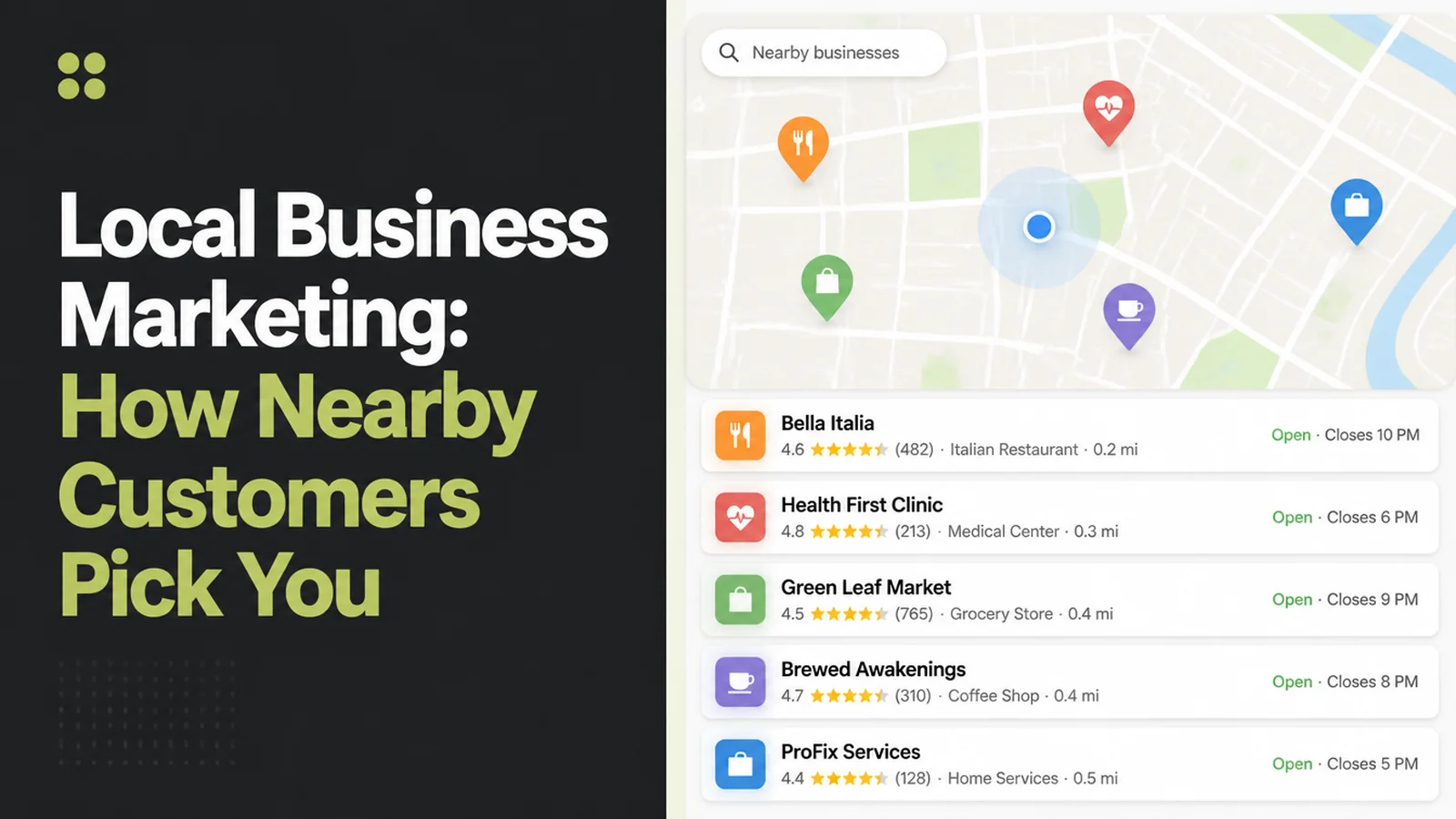
Local business marketing starts with knowing. Not knowing is expensive. People choosing a nearby business follow a short path. They search, glance at a listing, read a few reviews, then call.
Improve a few steps on that path and more of the people already looking for you will choose you. Here is what the platforms say in their own words, and what I would do first.
Key Takeaways
- Being closest is not enough. Google says local results come mainly from relevance, distance and popularity, so distance is only one of three things.
- Your profile carries the first facts. Keep the hours, address, category and contact details accurate before sending people to your website.
- Old reviews stop helping. A few recent ones read better to a stranger than a large pile from three years ago.
- Write your reply for the next customer. The person reading your answer to a complaint is rarely the person who wrote the complaint.
- No local marketing strategy can buy you a ranking. Google says there is no way to request or pay for a better local position.
What Is Local Business Marketing?
Local business marketing is everything you do to be found and picked by people near you. It covers your listings, your reviews, your website and plain word of mouth.
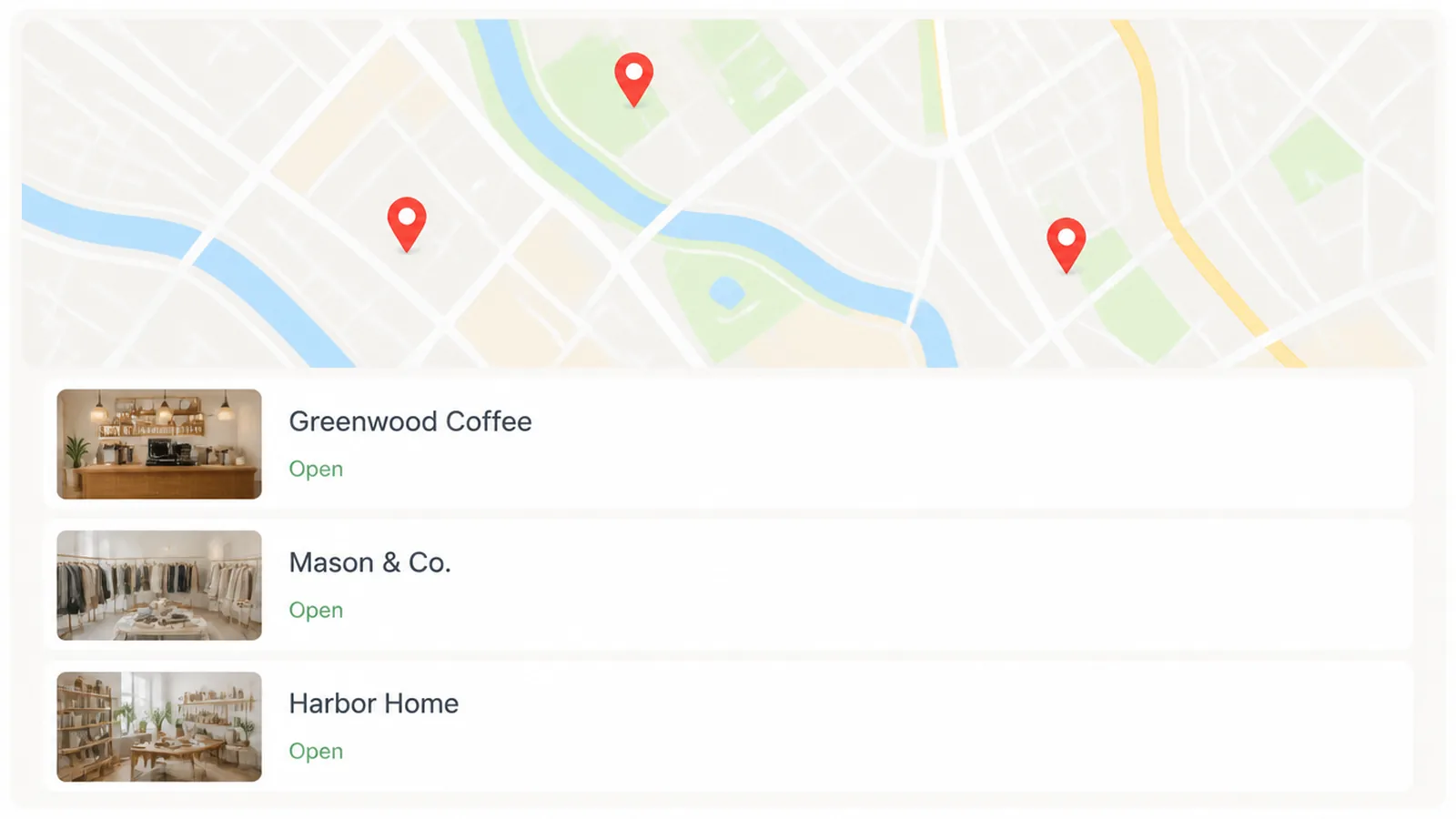
Local business marketing is different from marketing to the whole country. You are not trying to reach everybody. You are trying to be the obvious choice within a few miles.
Google describes its local results as coming from three things: how well your profile matches the search, how far away you are, and how well known your business is. Its summary names those relevance, distance and popularity.
You cannot move your shop closer to anyone. You can change the other two.
Relevance is mostly paperwork. It is the difference between a profile that says contractor and one that lists the six jobs you actually take bookings for.
Popularity is slower to build. Google explains the third factor under the heading "Prominence" and points to reviews and links to your site as part of that picture.
That is why local business marketing keeps coming back to the same short list of tasks. Those are the only parts you can change.
Why Your Local Marketing Strategy Is Different Now
People now look in more places than they used to. In BrightLocal's 2026 survey of 1,002 US consumers, 71% named Google as a place they read reviews, with Facebook next.
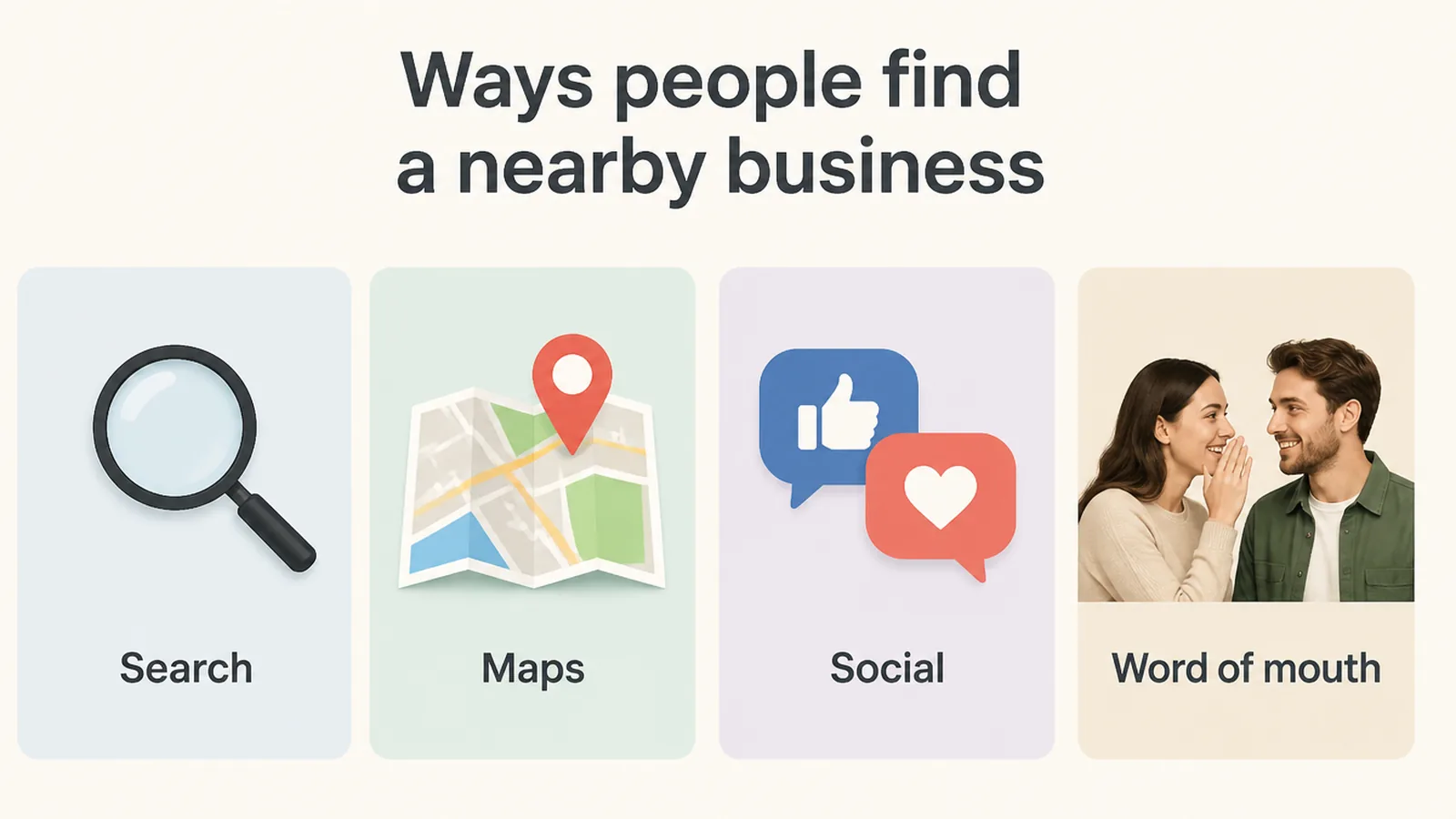
Two figures moved fast. Using ChatGPT or a similar AI tool to find a local business reached 45%, up from 6% the year before, and Apple Maps reached 27%. Those are survey answers from US consumers, not a measurement of your town.
The bar for reviews also rose. In the same survey, 68% said they would only consider a business rated four stars or better, and 74% looked for reviews written in the last three months.
So a five star average earned in 2023 stops doing its job. People now judge you on how recent the reviews are as well as how good they are.
Speed matters too. The same survey found 19% expect a reply to a review on the same day, and 81% expect one inside a week.
None of that means you have to be everywhere at once. It does mean the one place you are needs to look up to date.
One thing has not changed. Google says there is no way to request or pay for a better local ranking, so there is nothing here to buy your way past.
How to Market a Local Business
1. Claim and verify your profile
Google says you can add or claim your business at no charge. Until it is verified, somebody else decides what it says about you.
Verification runs by phone, email, video call or a posted card, and Google says the review can take up to five business days once you finish the steps.
Google also decides which method you get automatically, so you may not have a choice. Start it early rather than in the week you need it.
Do this before anything else. Everything below depends on it.
2. Fill in the details people actually check
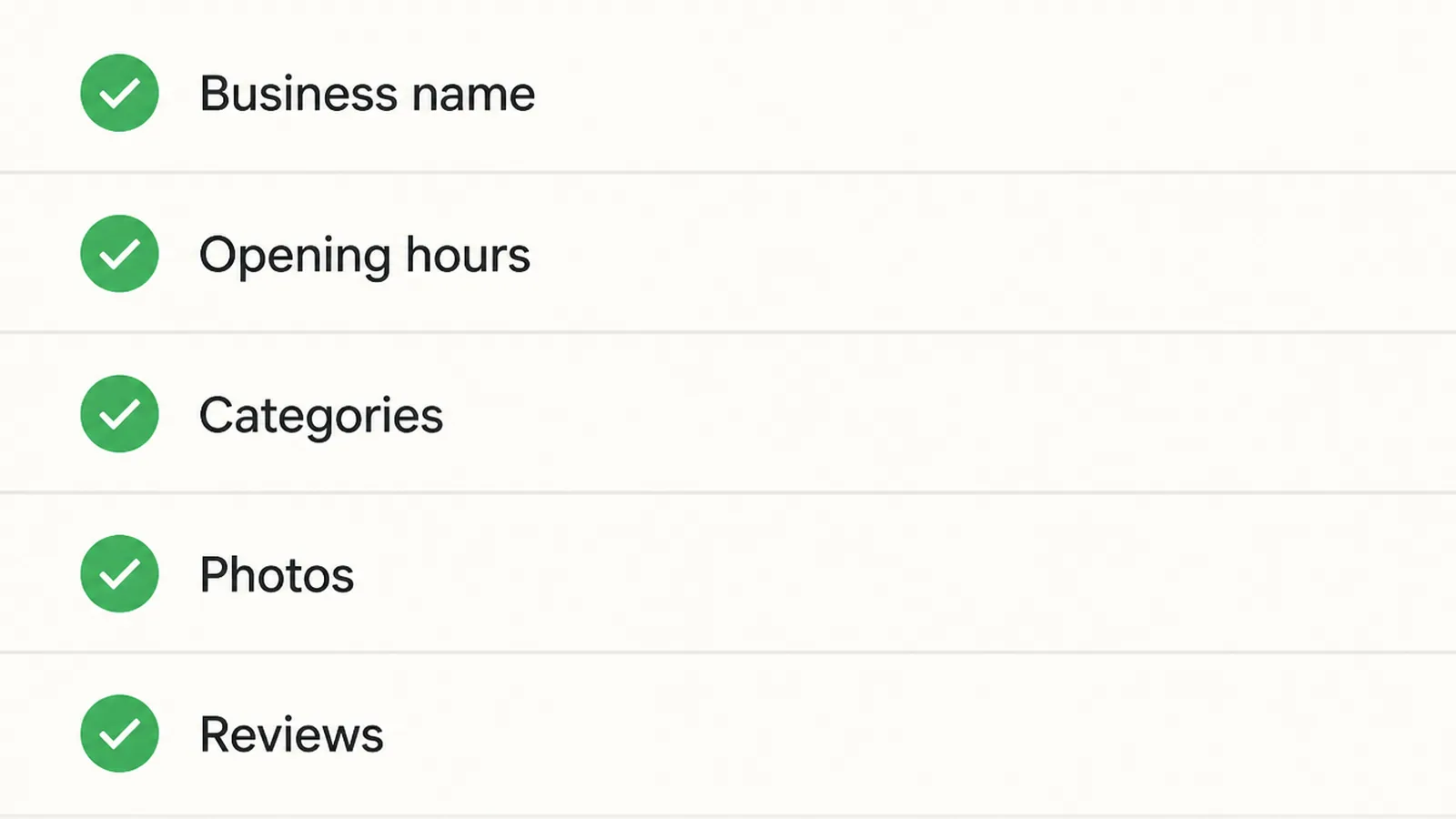
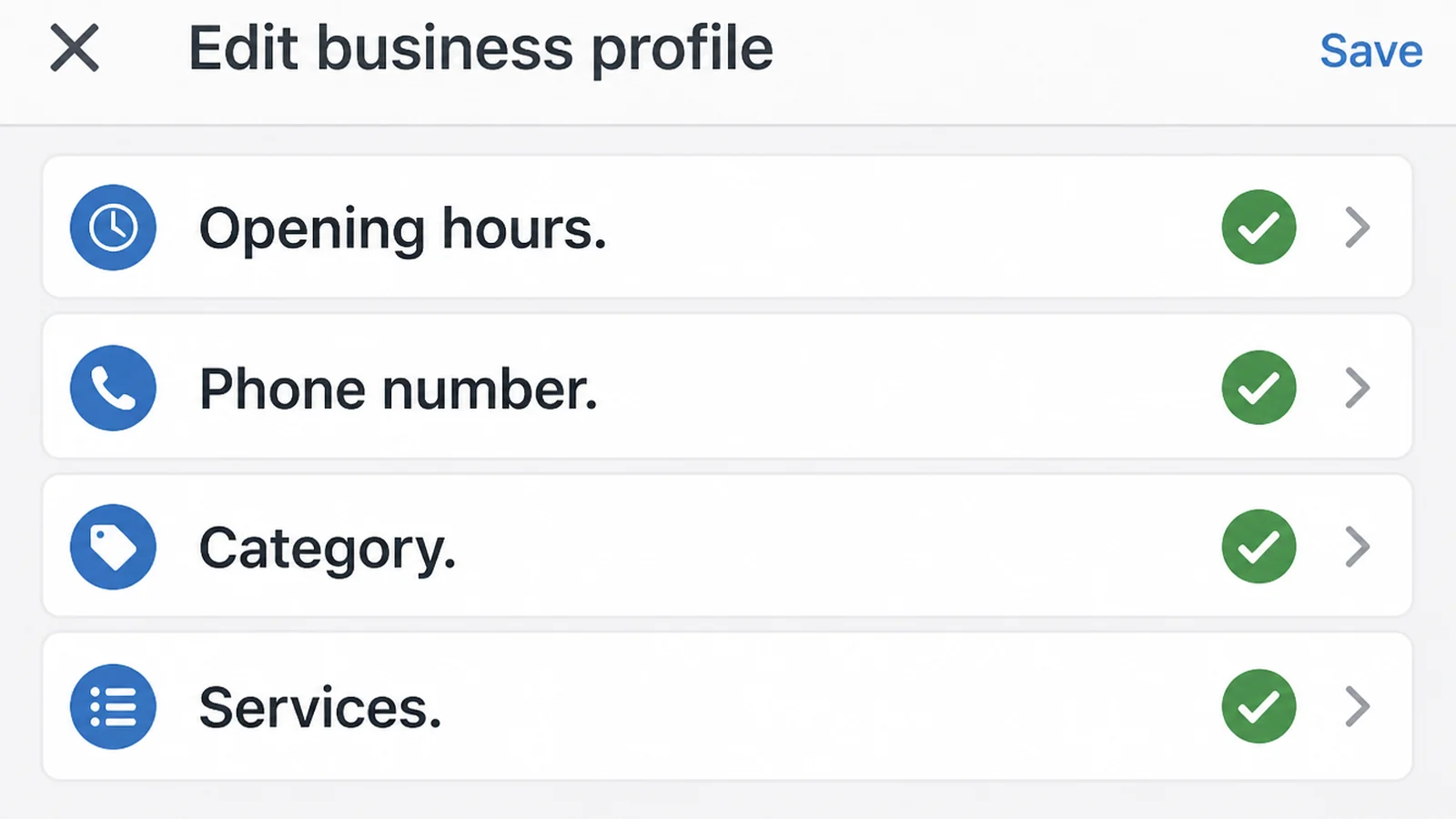
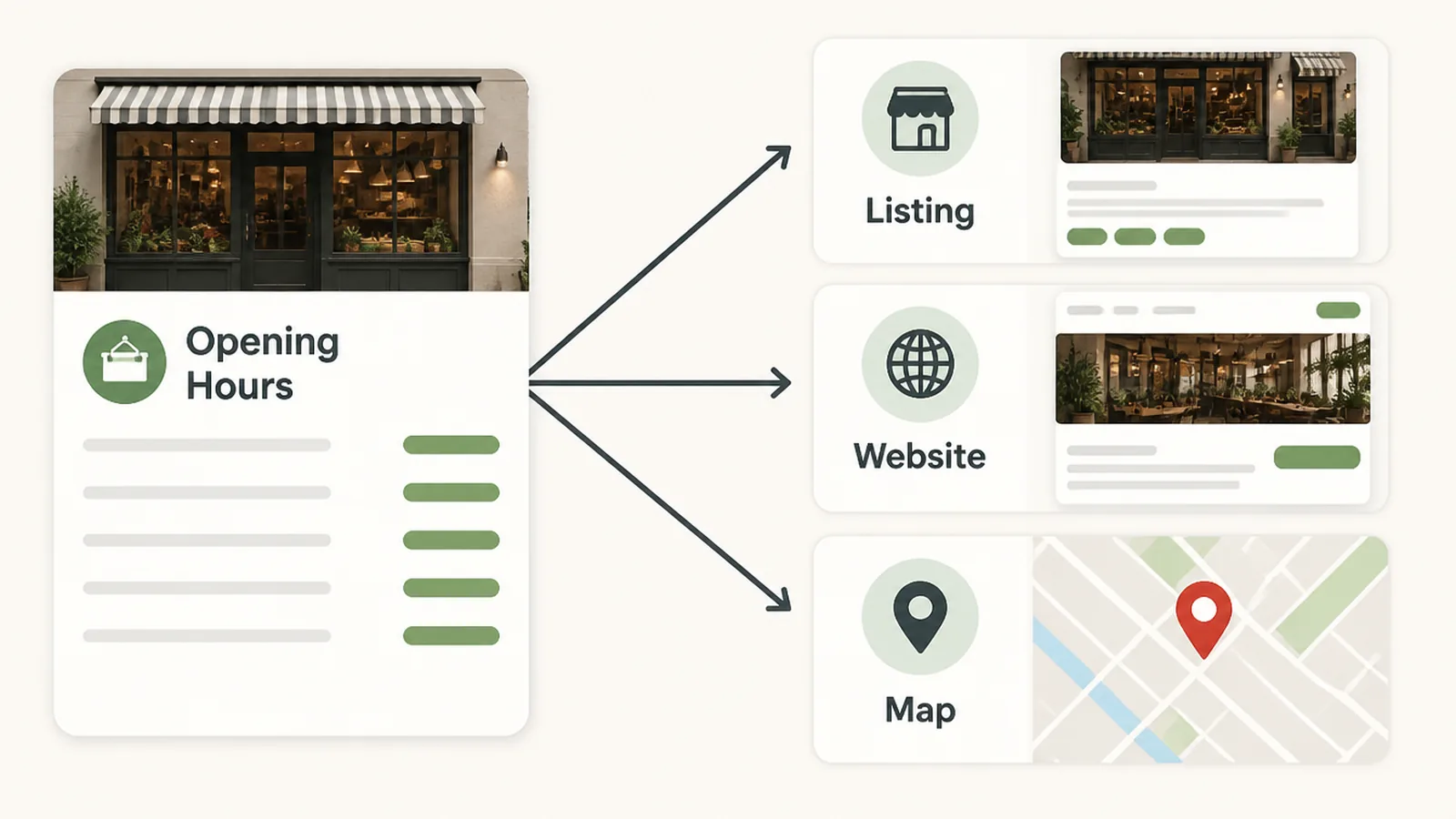
Hours, phone number, category, services, photos. Google says businesses with complete and accurate information are more likely to show up in local results.
Do not add extra words to the name field. Google's naming rules say your name should be the one on your shopfront and your paperwork, with no taglines, town names or service words added.
If you travel to customers instead, Google asks you to remove the address and set a service area instead. You can list up to 20 areas, and the whole patch should stay inside roughly two hours of driving.
Check this once a year. Opening hours change, a service gets dropped, a phone number changes, and nobody remembers to update the listing.
3. Ask for reviews on a schedule
97% of people in that survey read reviews for local businesses. You do not need a campaign to collect them. You need a habit.
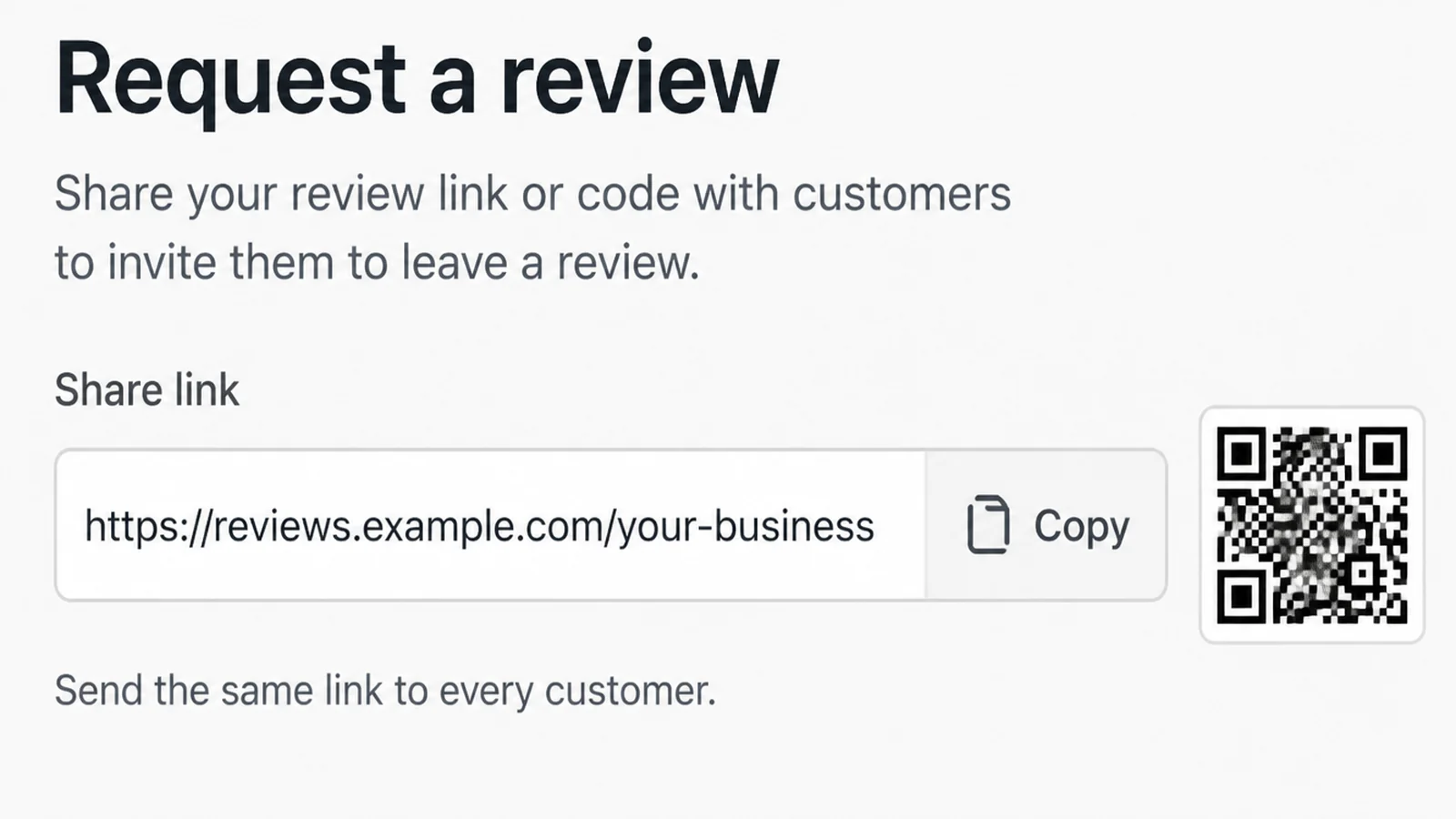
Google says you can remind customers to leave reviews by sending them a link or letting them scan a QR code. So the asking itself is fine.
Paying for them is not allowed. Offering free or discounted goods and services in exchange for a review counts as fake and misleading content, and Google prohibits it.
The plainest wording works best. Say what you did for them, then ask whether they would write a line about it on Google.
Keep the link somewhere you already look. A pinned message, the bottom of an invoice, a sticker by the till. Anywhere that makes asking a single tap.
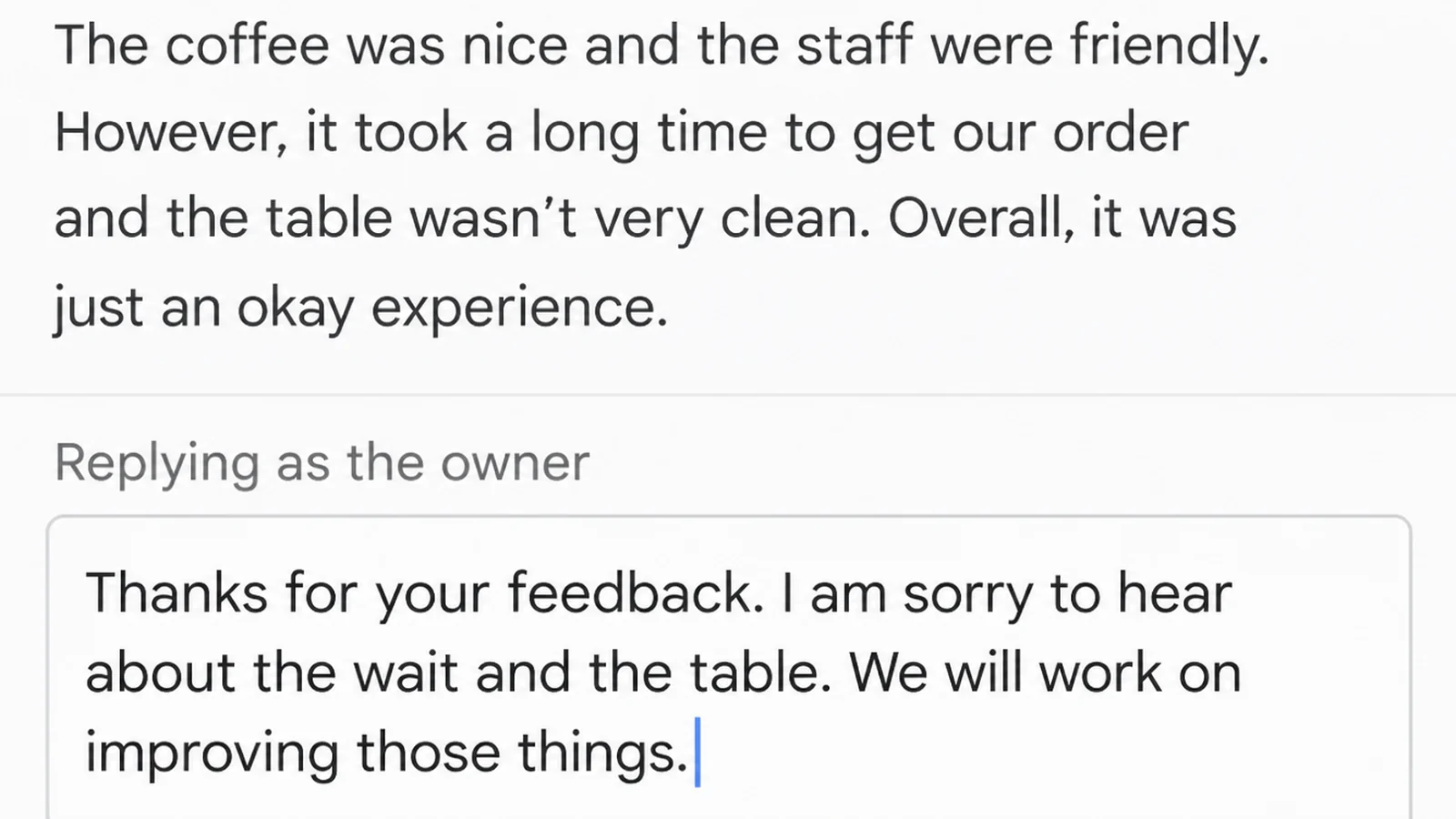
4. Reply in public, in your own words
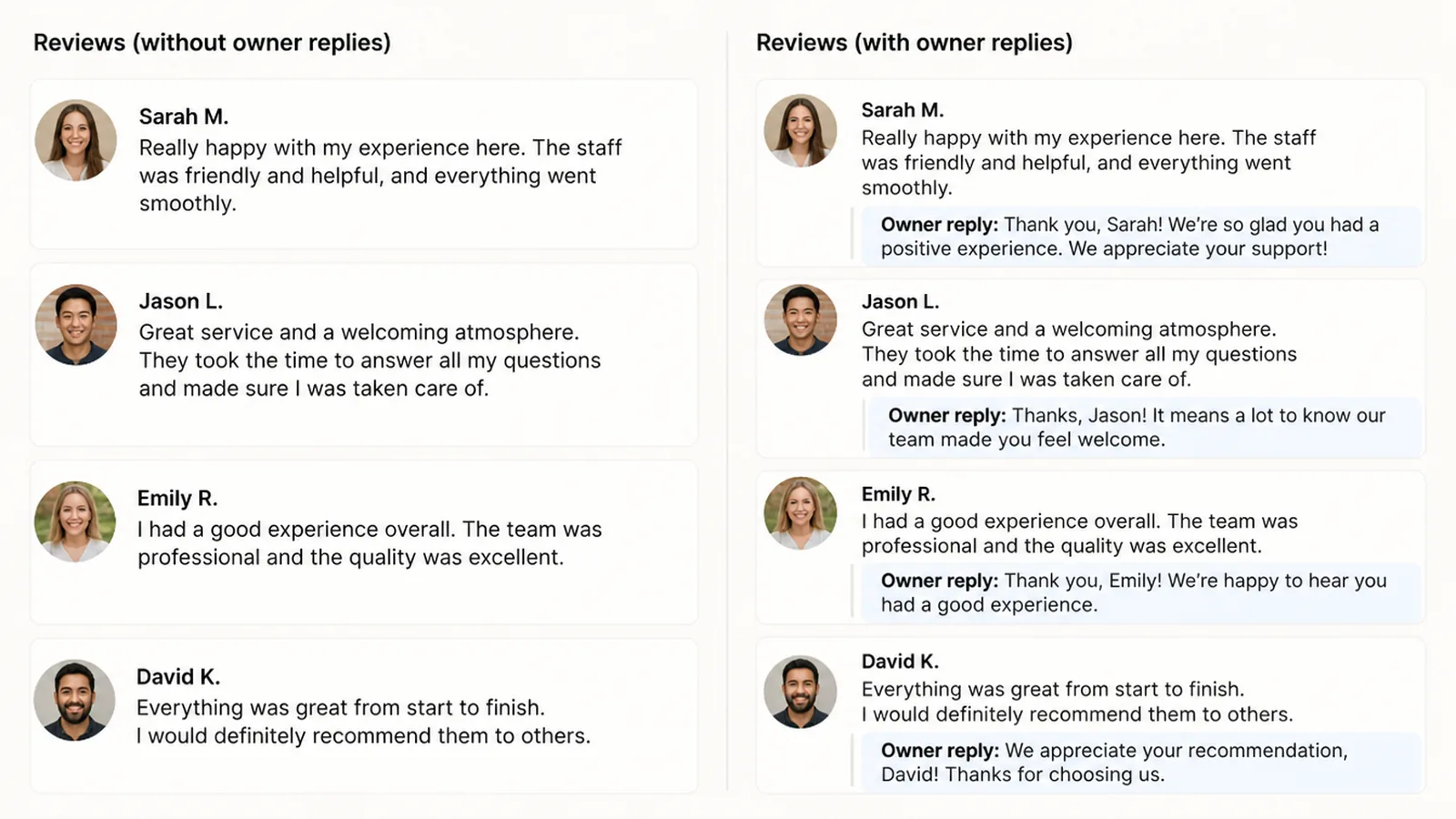
In the survey, 89% expected an owner to respond to reviews, and half said they disliked replies that read like a template.
Google's own advice is to reply promptly, keep it clear and polite, and stay conversational rather than promotional, since the reviewer is already a customer.
Write for the stranger reading it afterwards. That person is deciding whether you handle a bad day well.
A short reply is better than a long one. Thank them, mention the specific thing, say what happens next, and stop before it becomes a public argument.
If a review genuinely breaks Google's content policies, Google says you can flag it. That is a separate step from replying, and it is slower.
5. Give your website the job a listing cannot do
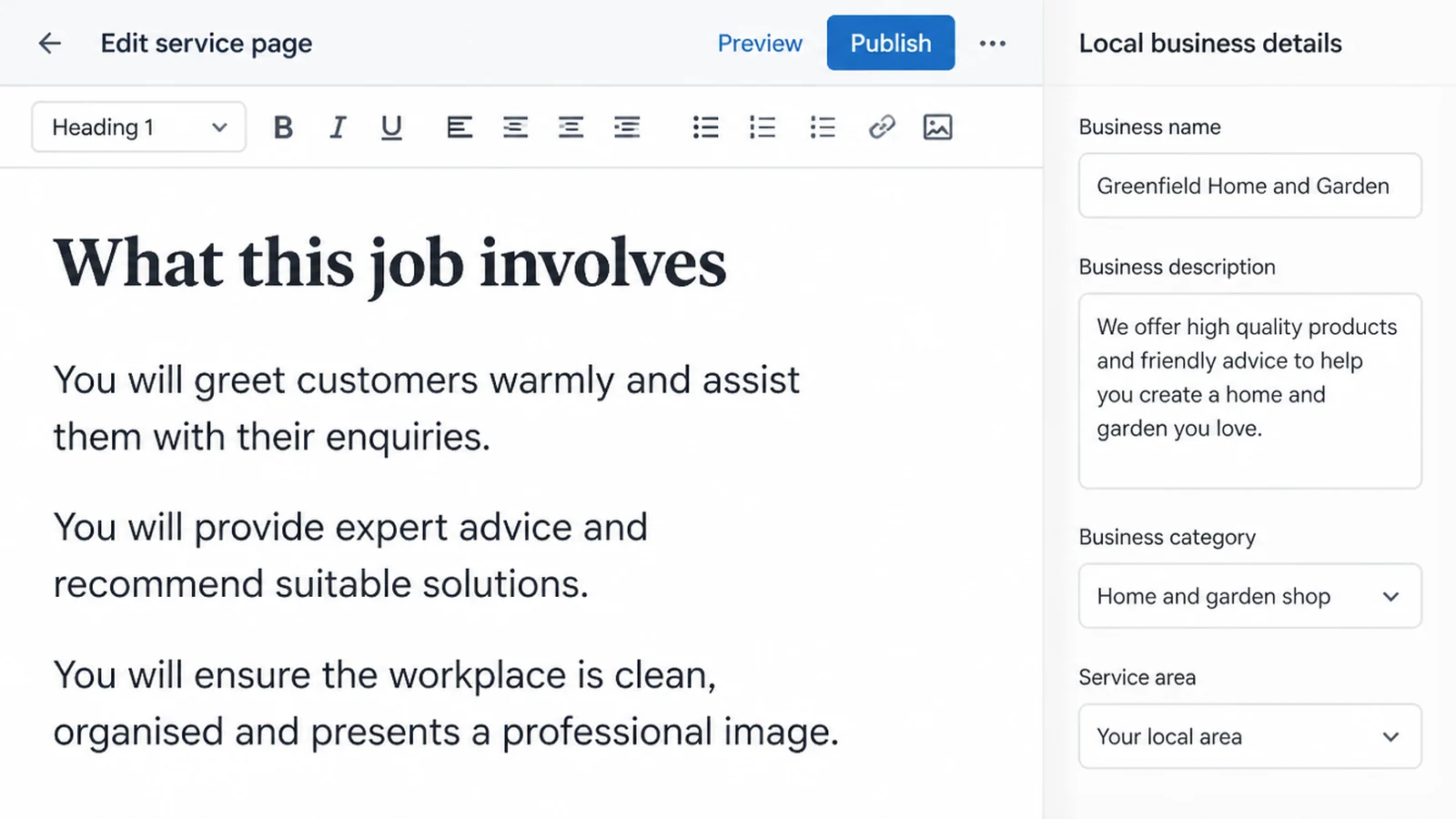
A listing gets you found. Your website is where you explain how you work, what a job involves, and who you suit.
Then add the basics in a form search engines can read. Google's local business structured data needs a name and an address at minimum, and also accepts opening hours and a phone number.
Use exactly the same name, address and phone number everywhere they appear. Two versions of your own address will cause confusion for years.
One page per service you sell, written for somebody who has never met you, is enough to start with. You can add more later.
Local Business Marketing Ideas That Work Right Now
These are small, cheap and easy to repeat. Pick two and leave the rest.
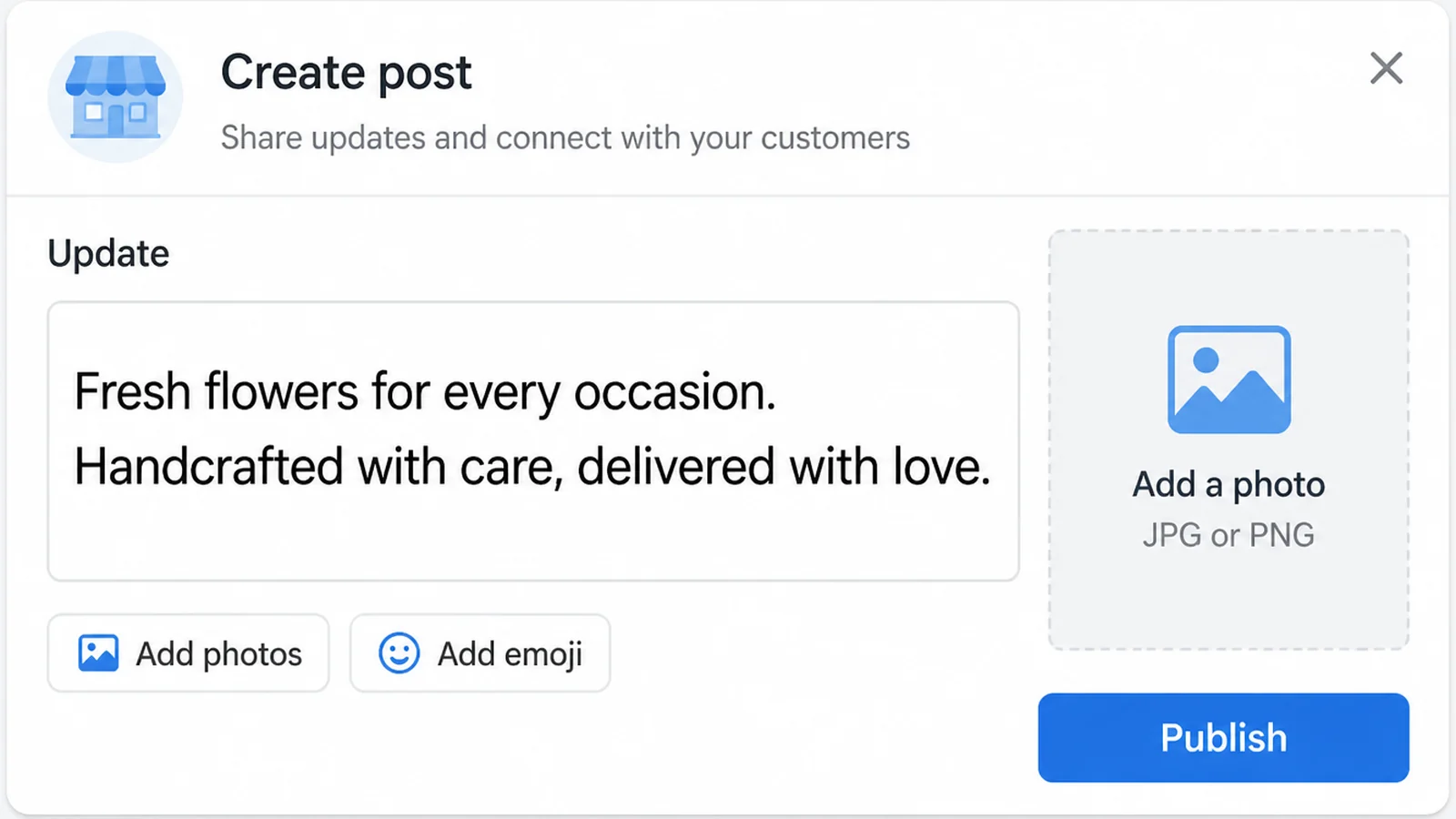
- Post to your profile most weeks, the cheapest of the local business marketing ideas here. Google offers updates, offers and events, shows them under "From the owner", and archives posts older than six months unless you set a date range.
- Photograph your own business. Your van, your team, a finished job, the front door lit up at night. Stock photos tell people nothing about you.
- Answer the question you get on every call. One page, plain words, on your own site, linked from your profile.
- Ask the moment the job ends. That is when somebody is most willing to write two sentences about it.
- Open your own listing on a phone. Check that the call, direction and website actions work on the smaller screen.
Local Business Marketing Tools
None of these cost anything to start with. Set up the first two this week and leave the rest for later.
| Tool | Best for |
|---|---|
| Google Business Profile | Any owner who wants to appear on Search and Maps. Google says you can add or claim it at no charge. |
| A Google review link or QR code | Owners who keep forgetting to ask. Google names both as ways to remind customers. |
| Business Profile posts | Shops with something that changes weekly, like an offer or an event. |
| Google Search Console | Seeing which searches bring people to your site. Google calls it a free service. |
| Rich Results Test | Checking your page markup is readable before you assume it is working. |
Common Local Business Marketing Mistakes
The damage I see is almost always one of these, not something unusual.
- Hours that are wrong on a holiday. Someone drives over, finds you shut, and writes about it. Google says inaccurate information can also keep a profile from showing.
- Keywords jammed into the business name. Google's naming rules ban taglines, location tags and service words in that field.
- An address left showing when you visit customers. Google asks you to take it off and set a service area instead.
- Buying reviews or trading them for a discount. Google calls that fake and misleading content and prohibits it.
- Saying nothing under a bad review. You can report it if you think it breaks Google's content policies, but leaving it unanswered helps nobody.
FAQs
How do I get my business to show up on Google Maps?
Add or claim your Business Profile, which Google lets you do at no charge, then verify it. Verification can use phone, email, video or a mailed postcard, and Google says the review can take up to five business days once you finish the steps.
Can I pay Google for a better local ranking?
No. Google states plainly that there is no way to request or pay for a better local ranking. It says local results are mainly based on relevance, distance and popularity, so fill in your profile properly and earn reviews from real customers.
Can I offer a discount in exchange for a review?
No. Google calls offering free or discounted goods and services in exchange for reviews fake and misleading content, and prohibits it. You are allowed to remind customers to leave a review by sending them a link or letting them scan a QR code.
Do I still need a website if I have a Google Business Profile?
A profile gets you found. A website is where you answer the questions a listing cannot, like how you work, what a job involves and who you are for. Google also reads a page's structured data, where a business name and address are the required fields.
How often should I ask customers for reviews?
Often enough that recent ones keep arriving. BrightLocal's 2026 survey of 1,002 US consumers found 74% look for reviews written in the last three months. In my experience the easiest habit is one ask at the moment the job is finished, every time.
Conclusion
Local marketing rewards tidiness more than cleverness. A profile that is correct, reviews that keep arriving, and a site that answers the next question.
None of that needs a big budget, and Google has said the ranking itself is not for sale. It needs someone to own the habit.
If you want ongoing help with the profile, reviews and reporting, see our local SEO service, then reach out to my team at Seed Light.