Agency or Freelancer: Which One Should You Hire?

Choosing an agency or freelancer comes down to whether the work can stop for two weeks. A one off job can wait, so one person suits it. Monthly work cannot, so you are paying for cover. Put the ownership of the site in writing either way. Seed Light works with both.

You are deciding whether to hire a freelancer or agency. Ask around for a web designer and you will have eight names by the weekend. Some will be one person working from a laptop. Some will be a company with a sales team and a proposal template.
Which of the two you hire matters less than you would expect. What you will notice six months later is who owns the work, and who answers the phone when the site breaks.
So here is what actually differs between them, what Malaysian law says about who owns work you paid for, and the questions that tell a good fit from an expensive mistake.
Key Takeaways
- Ownership follows your contract. Malaysian law hands commissioned work to the person who paid for it, but only until an agreement says otherwise (Copyright Act 1987, s.26(2)).
- A handshake moves no copyright. No assignment and no licence has effect unless it is in writing (s.27(3)), so the wording in the quote matters more than the meeting.
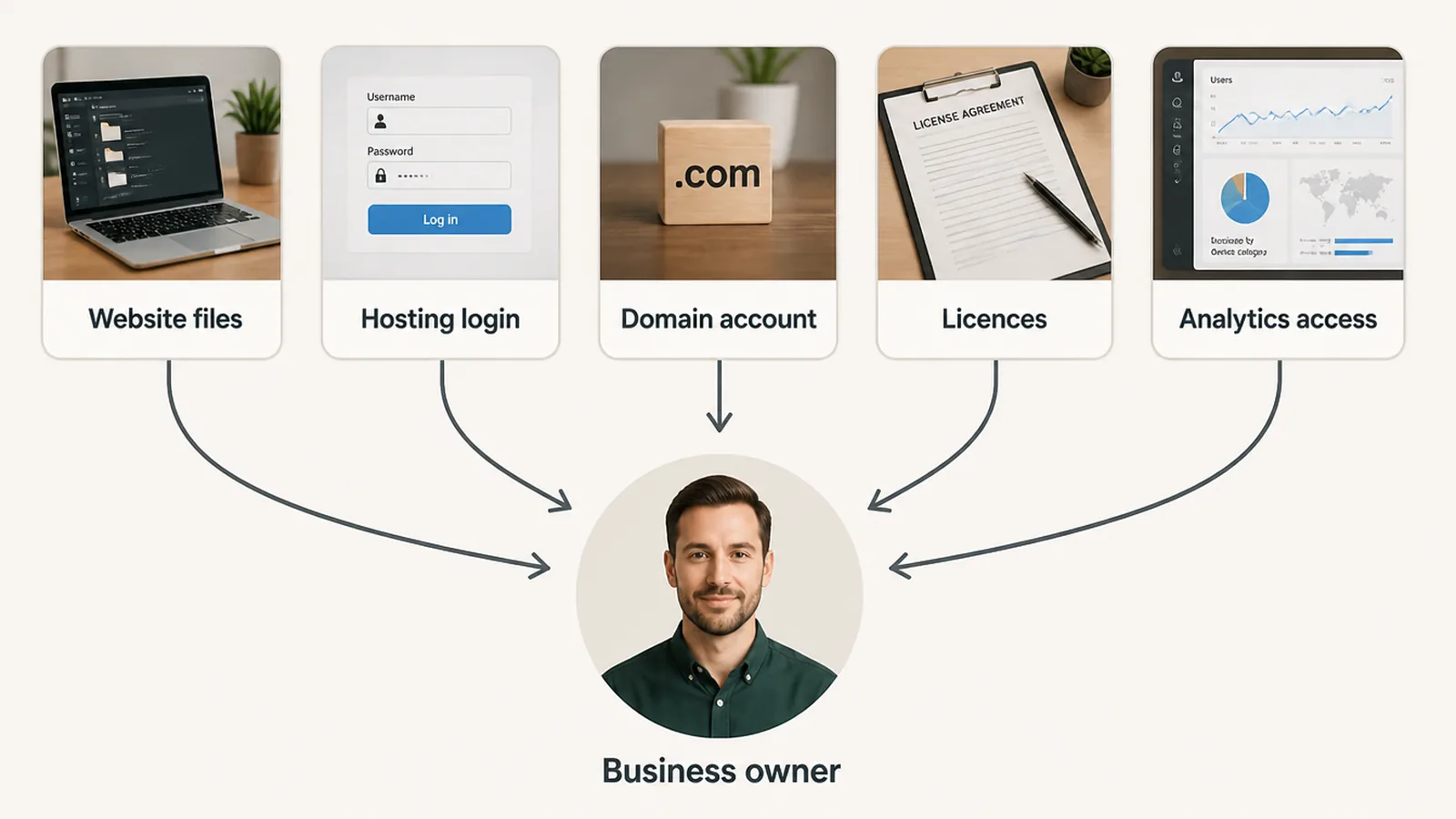
- Accounts count as much as files. Your domain, your Google listing and your hosting should sit in your name, whoever does the work on them.
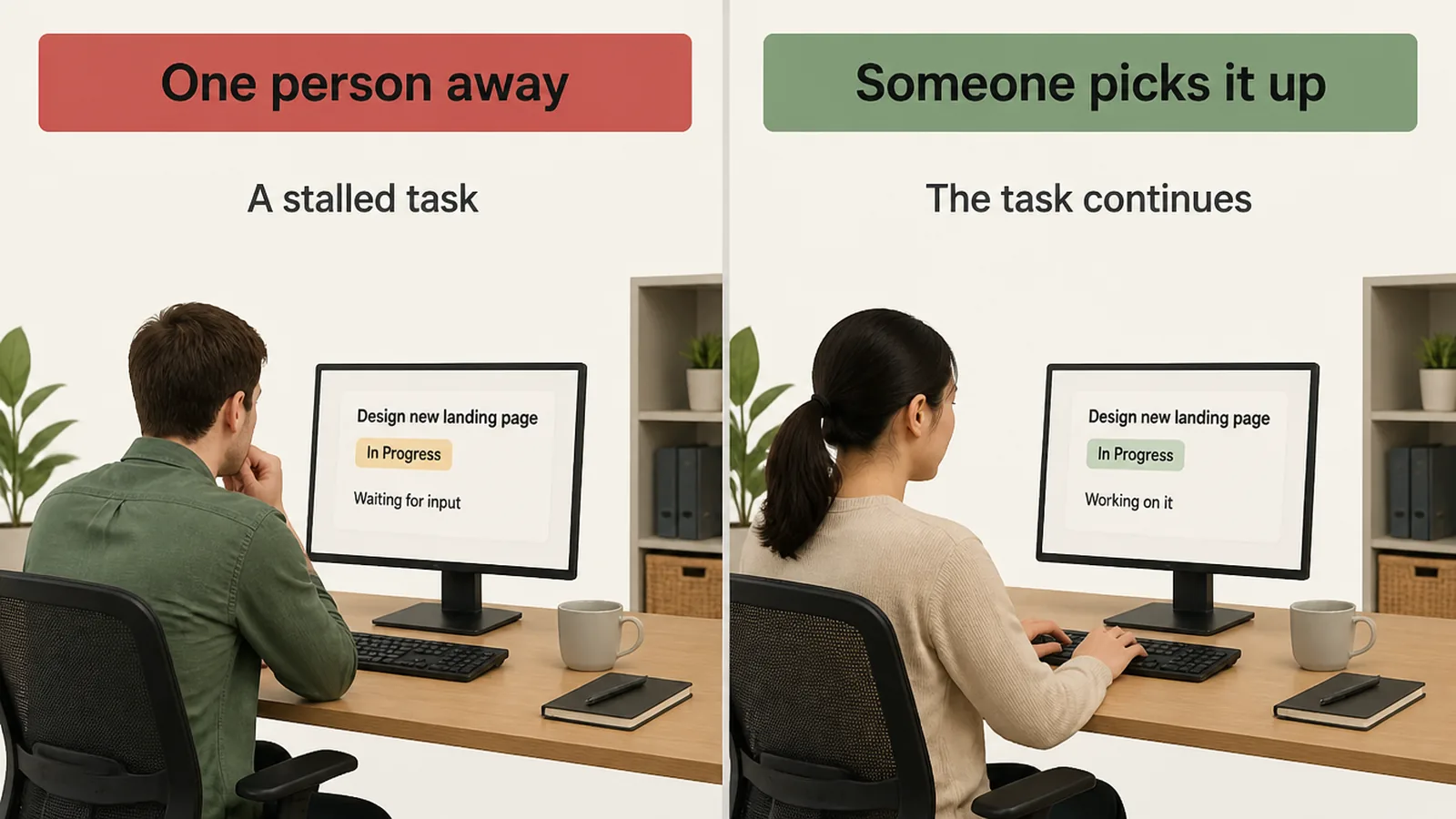
- What happens when they are away is the real difference. One person has one diary. A team can hand your job to somebody else, as long as it really is a team.
- When you hire a freelancer or agency, a bigger company is not a better one. Ask who will do the work day to day. The answer tells you more than any portfolio page.
Agency or Freelancer: What Each One Is
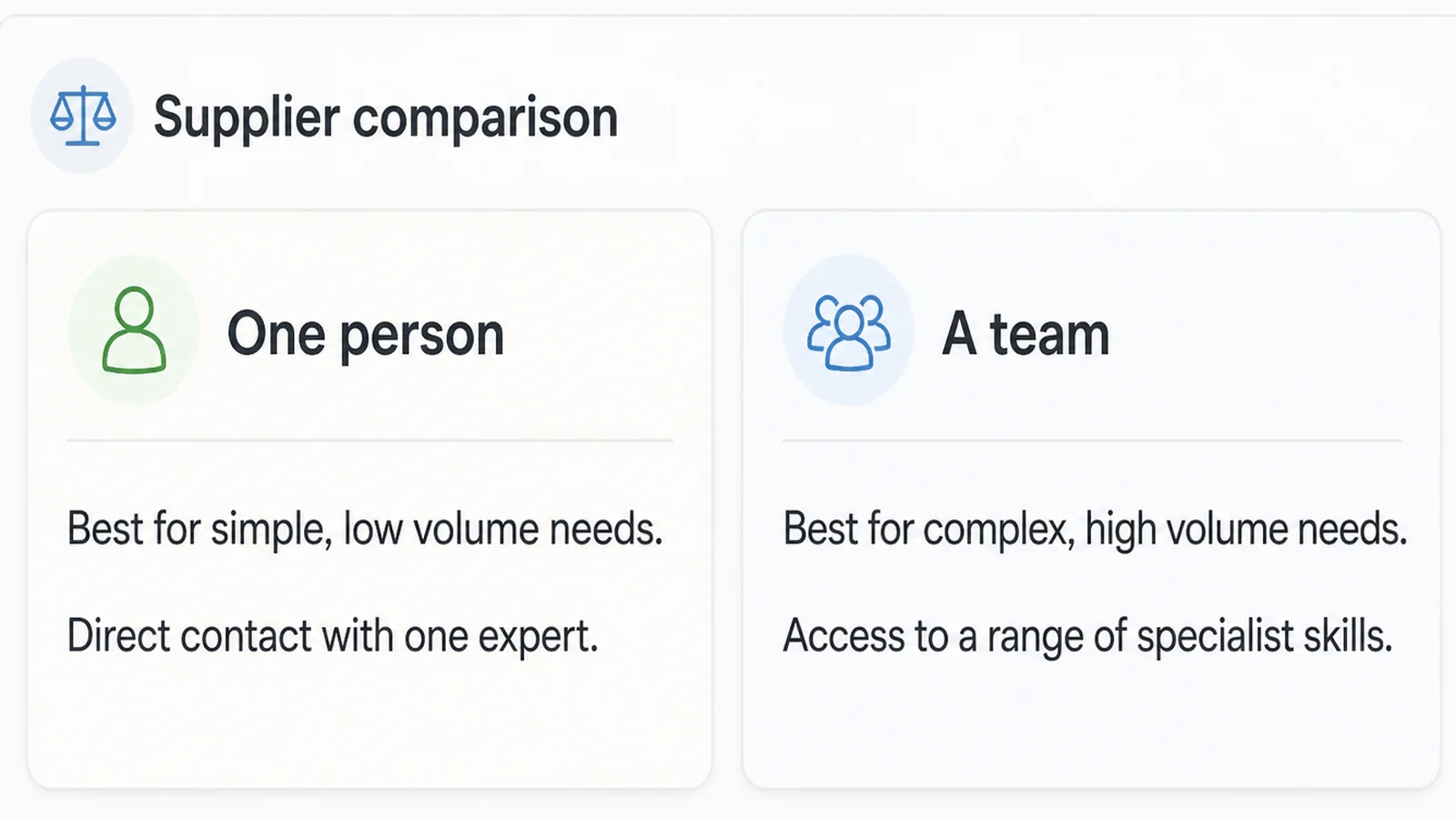
A freelancer is one person selling their own time. They may run a registered sole proprietorship, and they may bring in help for parts of a job.
Either way, the work and the relationship stay with that one person. You are buying a person.
An agency is a company with several people and split roles. Someone sells, someone designs, someone builds, someone answers your email.
You are buying the group. That is the whole difference, and almost everything else follows from it.
The agency or freelancer labels are both legitimate, and both can be registered businesses here. You can look either one up before you talk money.
SSM e-Info searches companies, businesses, limited liability partnerships and audit firms by name or registration number. Full results need a sign-in, and profile documents are paid (read on 9 September 2026).
Plenty of suppliers sit between the two. Many small studios are two people plus contractors, and many people working alone present themselves as a company.
Neither is dishonest. It does mean the name on the proposal tells you very little by itself.
Why the Choice Feels Harder Than It Should
Price and speed are easy to compare, so that is what people compare when making a marketing supplier choice. Once the site is live, what matters more is who owns it, who covers for them, and who fixes problems.
Three things decide how it goes. Who owns the work, who covers when your supplier is away, and who is actually doing the work.
None of those three depends on whether you hired an agency or a freelancer. That is why the label keeps letting people down.
I have seen careful contracts from one person working alone, and vague ones from a company with an office. It goes both ways.
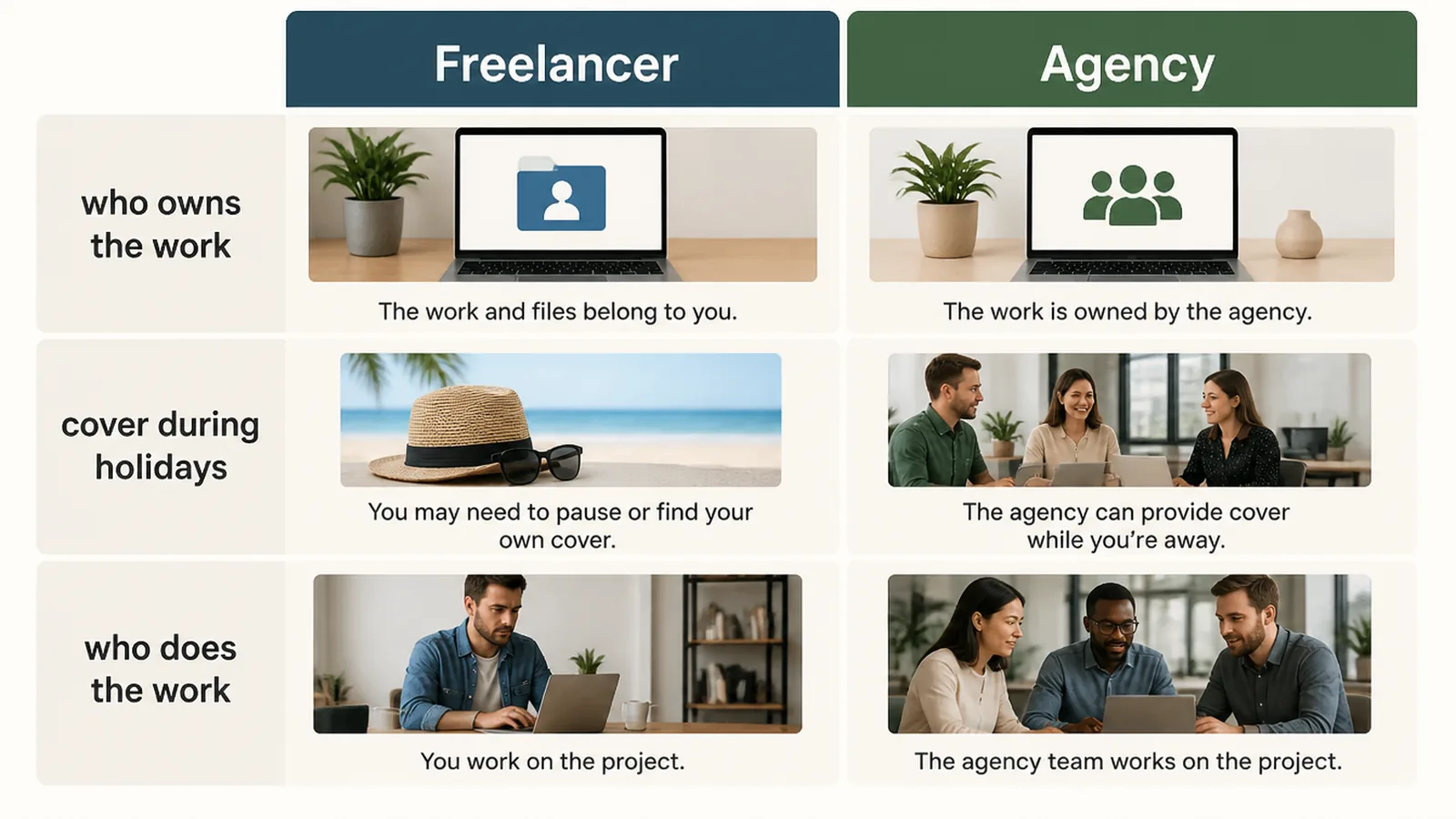
Ownership is the one with law behind it. Section 26(2) of the Copyright Act 1987 covers work you commission from someone who is not your employee.
In that case copyright is deemed transferred to the person who commissioned the work, subject to any agreement between the parties.
Read that last part twice. Your agreement can override that default, and plenty of agreements do.
Section 27(3) of the same Act adds that no assignment of copyright, and no licence, has effect unless it is in writing.
Everything beyond that depends on the contract in front of you, so do not rely on a general rule. If a clause is unclear, ask for it in plain words before you pay.
Agency or Freelancer: Which One Fits Which Job
| Setup | What you're really buying | Best for |
|---|---|---|
| Solo freelancer | One person's craft and direct access to them | A defined one-off job where one skill carries it, and a short wait is fine |
| Freelancer with a small crew | Their judgement plus borrowed hands | A bigger build with one owner, when you want a single person accountable |
| Small studio or agency | Split roles and someone to cover the gap | Ongoing monthly work, or anything that cannot stop for a holiday |
| Large agency | Process, reporting and depth across several channels | Multi channel spend where reporting has to survive staff changes |
| In-house hire | Someone whose whole week belongs to your business | Steady daily work you can describe, once the volume is there every month |
How to Make the Agency or Freelancer Choice
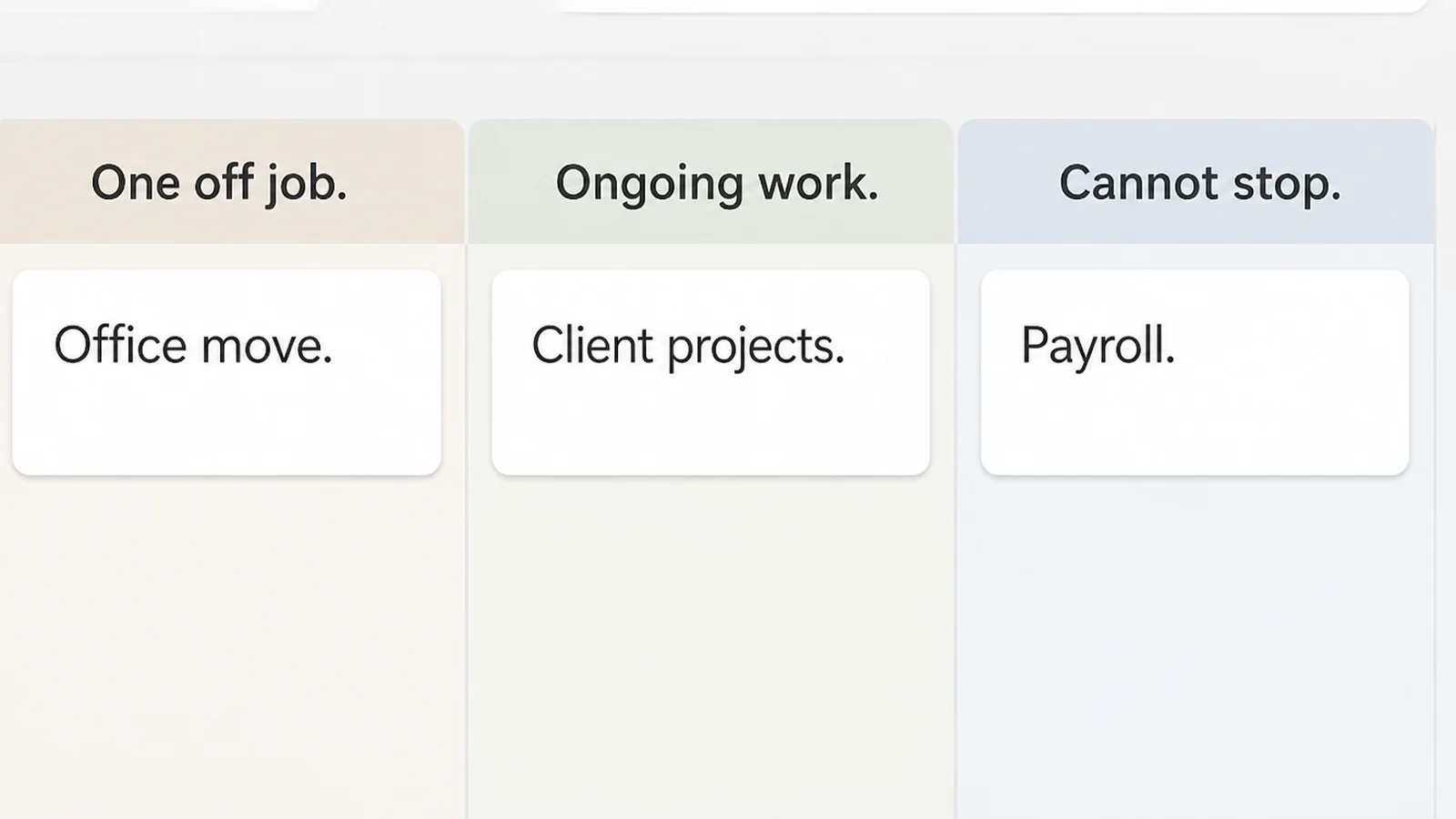
1. Work out whether the job can stop for two weeks
This is the question the agency or freelancer choice is really about, and it decides the rest.
A one-off site can wait. If your supplier is ill in week three, the launch moves and nothing is lost but time.
Monthly work cannot wait. Ad campaigns keep spending, enquiries keep arriving, and a fortnight of silence costs real money.
If the answer is that it can stop, one person is usually the better buy. If it cannot, you are paying for cover, and you should ask who provides it before you ask anything else.
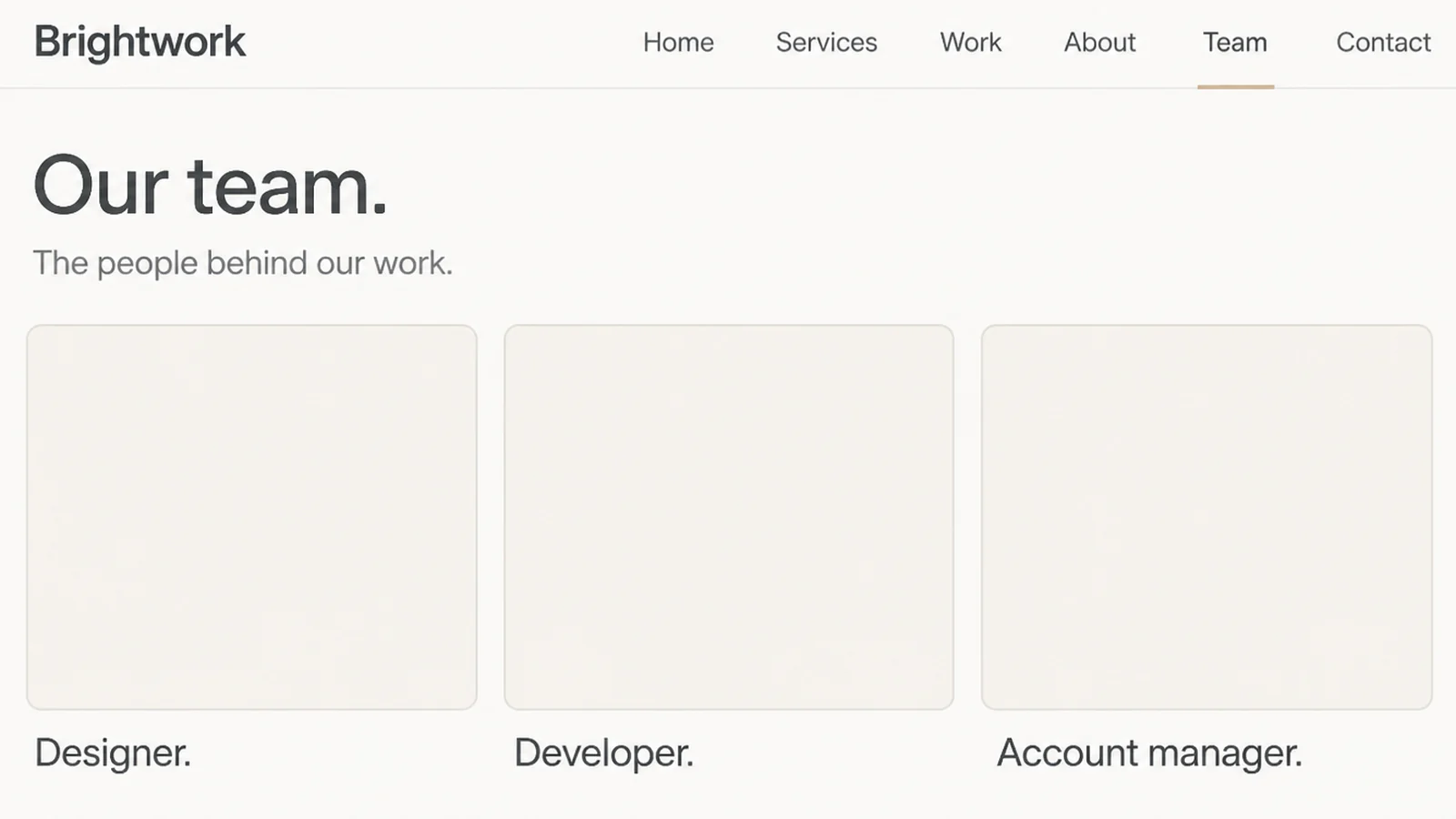
2. Ask who does the work
Ask who will design, who will build, and who replies to your email. Names, not job titles.
If it turns out to be one person inside an agency, you have hired a freelancer with an office. That is fine, as long as you know it.
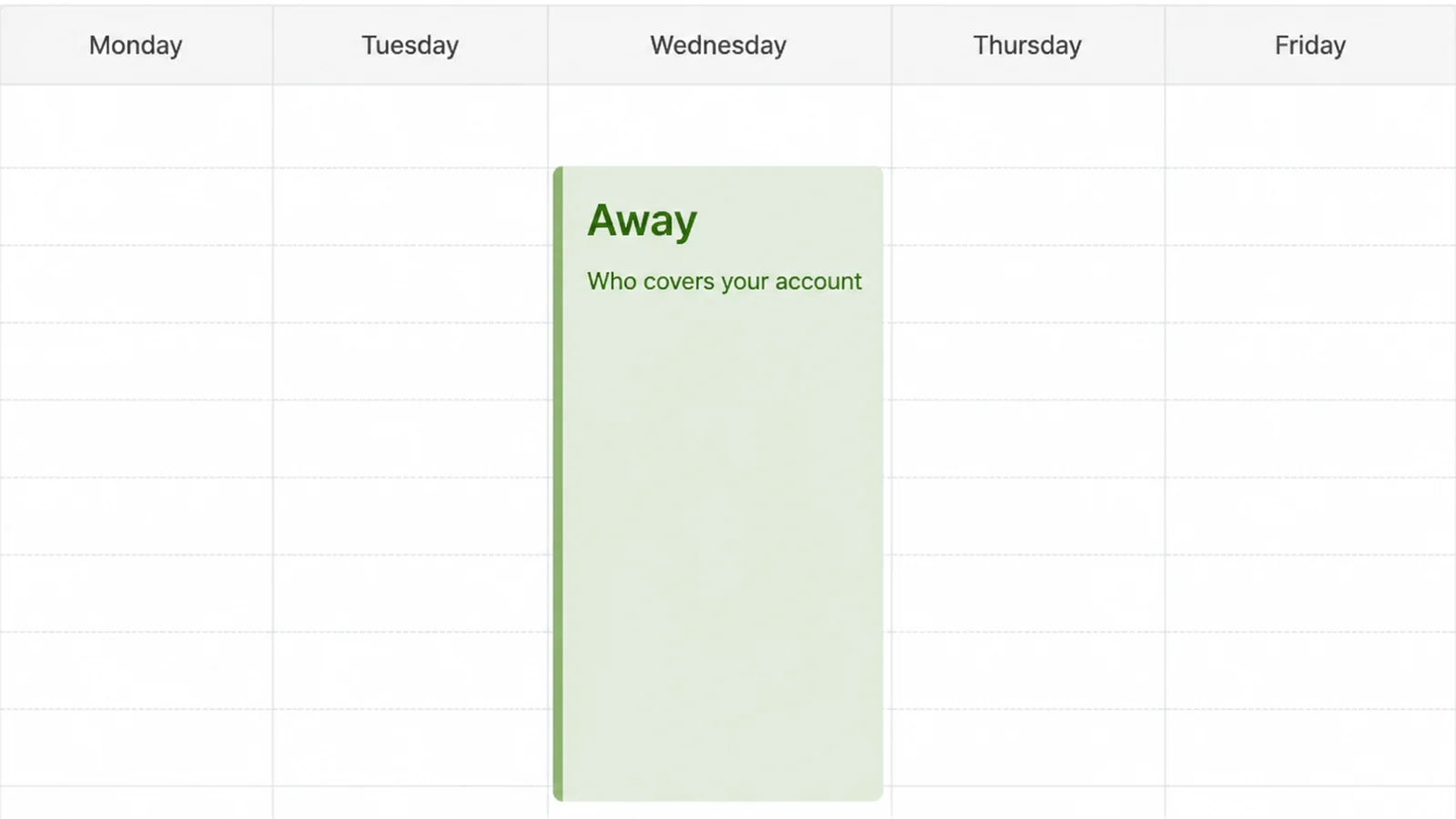
3. Ask what happens when they're away
Illness and holidays are normal. The useful question is what happens to your job while they are away.
A freelancer might pause it for a week. A team might pass it to somebody else. Both answers are fine, as long as you hear them before you start.
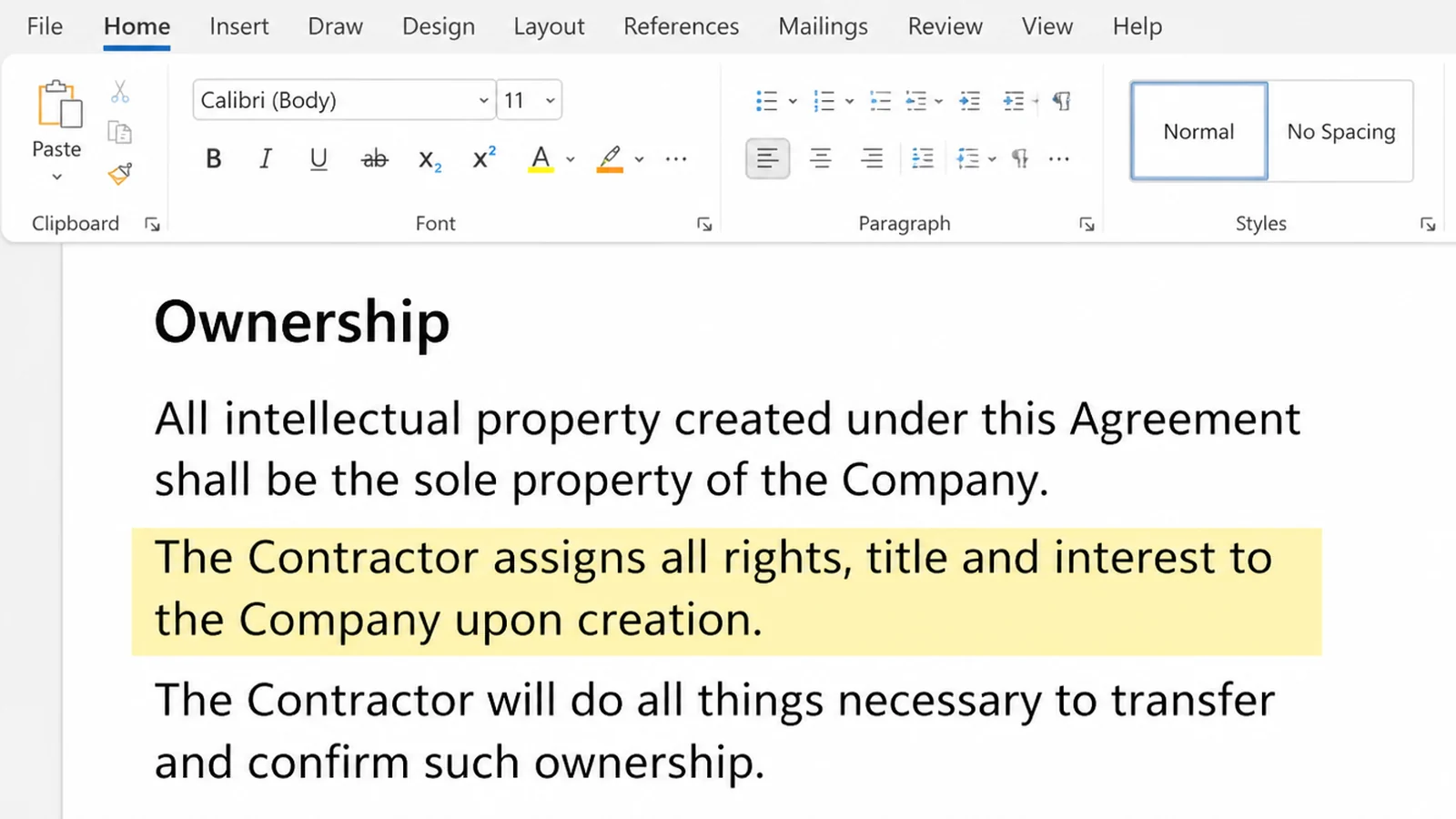
4. Put ownership in writing
Ask for one sentence saying you own the finished site and its files once you have paid in full.
Then ask for a second sentence covering anything that is licensed rather than owned, such as a stock photo or a paid theme.
5. Start with something small
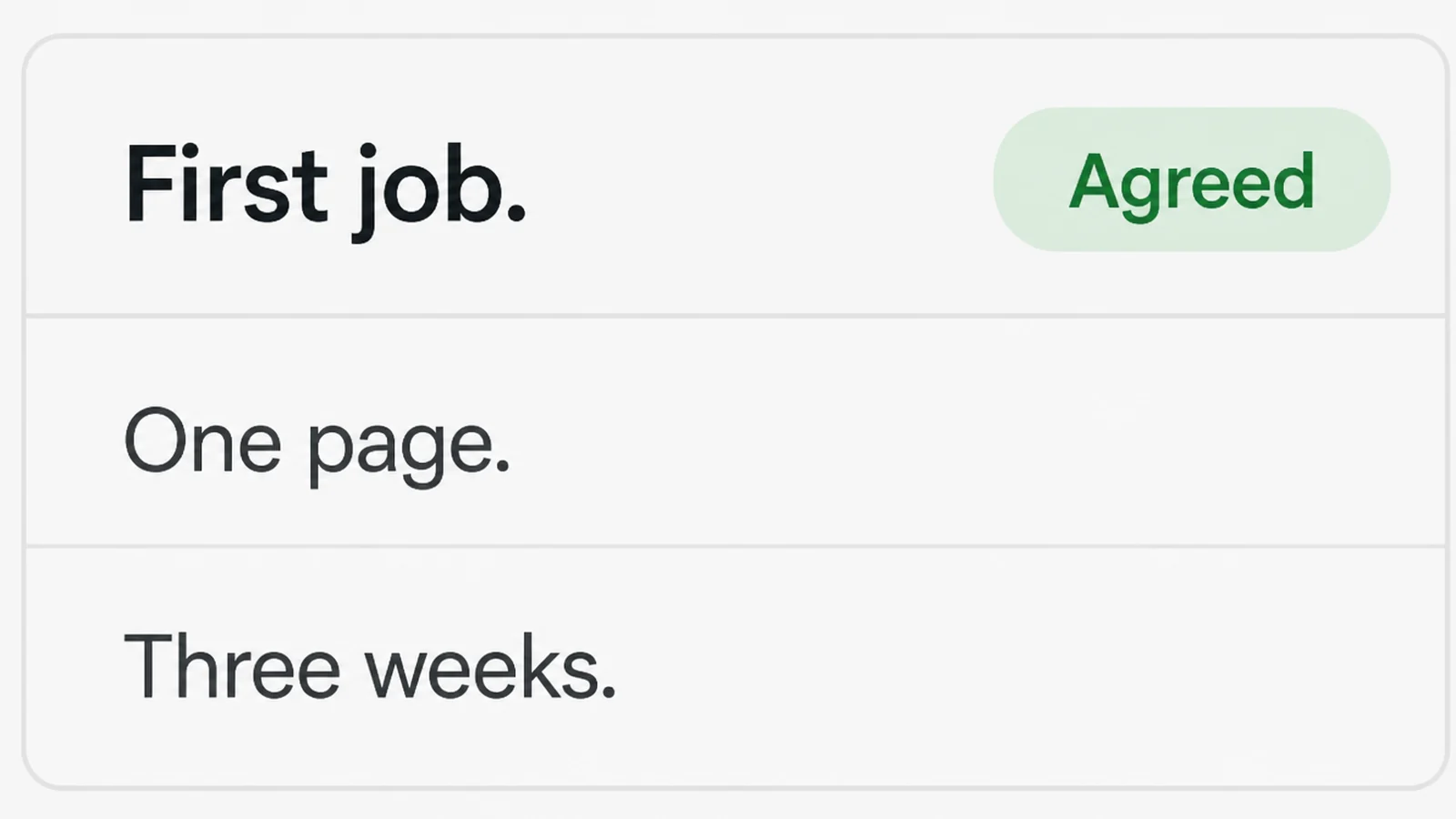
A single page, a small fix, or one month of work. You learn more from one paid job than from three meetings.
It is also a cheap way to find out how somebody communicates when a deadline is close.
Agency or Freelancer Ideas That Work Right Now
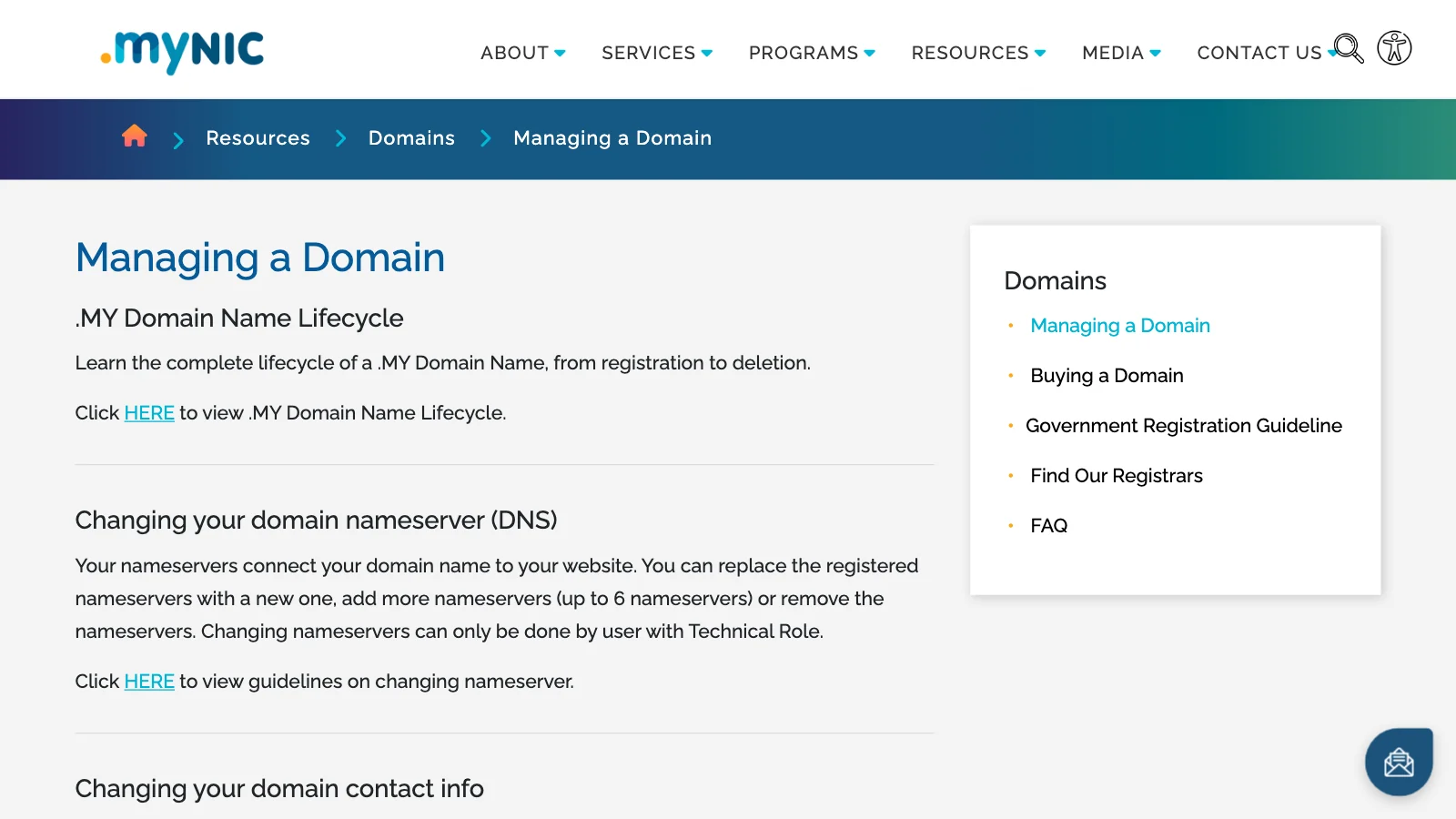
- Buy the domain yourself. MYNIC treats the registrant as the domain owner, and changing the registrant later is a formal transfer rather than a quick edit (MYNIC).
- Own the Google listing. Only the primary owner can pass primary ownership on, and a new owner waits 7 days before some controls unlock (Google Business Profile Help, read 9 September 2026).
- Ask for a named contact. One person you can reach is better than a shared inbox, whichever kind of supplier you hire.
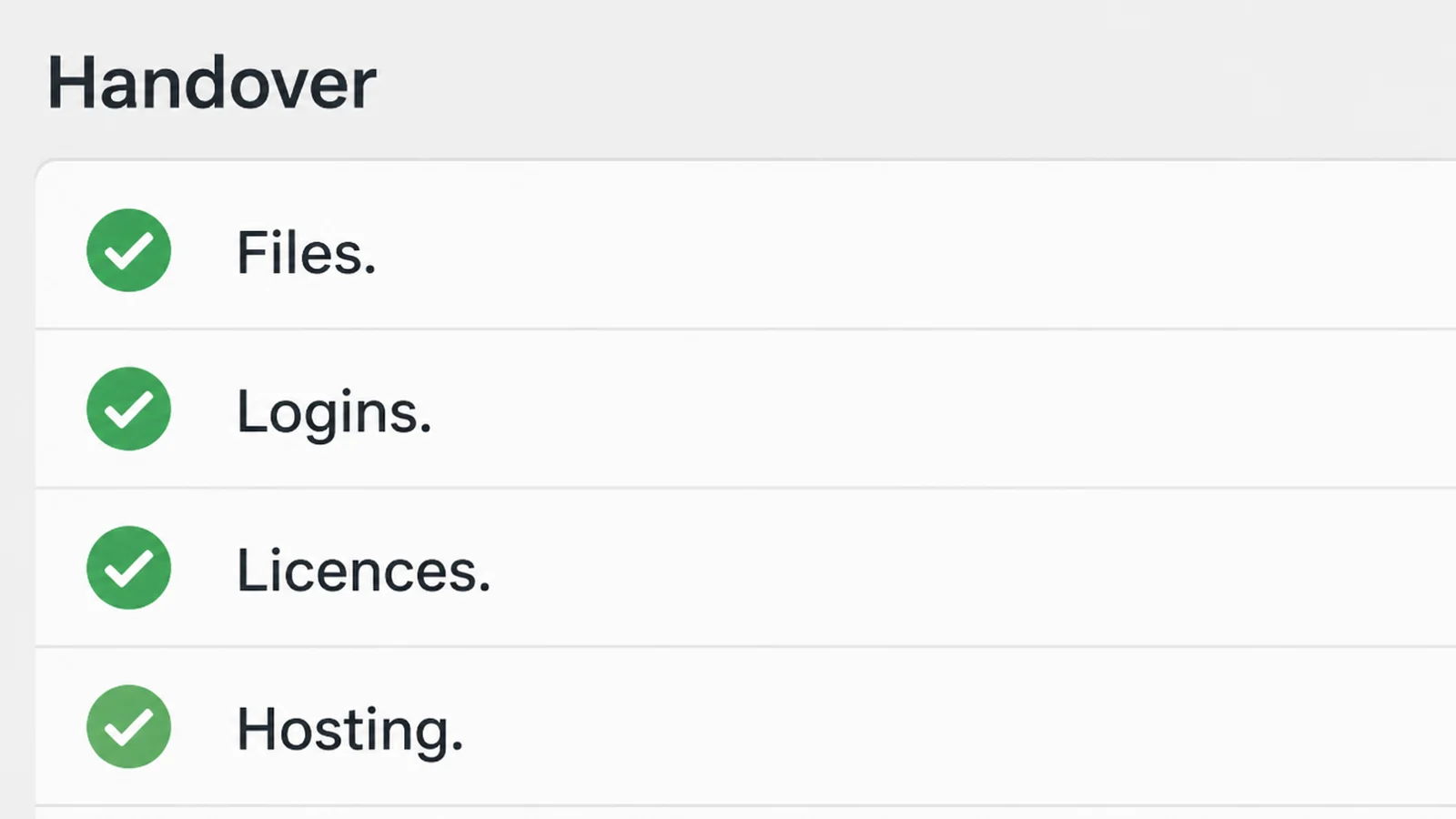
- Agree the handover list before you start. Files, logins, licences and where the site is hosted, written down while everyone is still on good terms.
- Check the registration number of any web design freelancer in Malaysia. Ask for it, then search it yourself rather than taking the logo on a website as proof.
- Pay in stages tied to the work. A deposit, a payment at an agreed point partway through, and the last one when you have the files and the logins.
- Keep the first job short. Three or four weeks is long enough to see how someone works and short enough to walk away.
- Write the brief before you set the budget. Suppliers reading the same brief will give you quotes you can actually compare.
- Keep your own copy of everything. A folder with the logo files, the photos and the text you paid for costs nothing and saves a rebuild.
Tools for Checking Who You're Hiring
| What you want to know | Where to check it |
|---|---|
| Is this a registered business? | SSM e-Info, by name or registration number |
| Who controls a .my domain | The MYNIC domain manager account, since personal details are hidden in the public WHOIS |
| Who owns your Google listing | People and access inside your Business Profile settings |
| What the law starts from on ownership | Copyright Act 1987, sections 26 and 27 |
Common Agency or Freelancer Mistakes
- Comparing quotes for different jobs. A marketing supplier choice only makes sense when both numbers cover the same pages, the same content and the same support.
- Letting the supplier register your domain in their name. It is easier for them today and difficult for you later.
- Treating the contract as paperwork. Copyright only moves in writing, so the clause you skip over is the one deciding who owns the work.
- Judging a web design freelancer in Malaysia by the portfolio alone. Ask which parts that person did, and who else was on the job with them.
- Buying the biggest option for a small job. You pay for meetings, documents and project management, and a simple site needs very little of that.
- Skipping the handover. Collecting logins at the end of a project is far easier than chasing them a year later.
- Assuming a monthly fee includes fixes. Ask what the fee covers, what counts as extra, and how quickly someone answers when the site goes down.
FAQs
Is an agency better than a freelancer?
Neither is better on its own. A freelancer suits a small, clear job where one skill does most of the work and a short wait is fine. An agency suits work that spans several skills, runs every month, or cannot stop when one person is away. Match the choice to the job, not to the size of the company.

Who owns my website if someone else builds it?
In Malaysia, section 26(2) of the Copyright Act 1987 says copyright in a commissioned work is deemed transferred to the person who commissioned it, subject to any agreement between the parties. So your contract can change that. Read the ownership clause before you sign, and ask for it in plain words.
Does the contract really need to be in writing?
For copyright, yes. Section 27(3) of the Copyright Act 1987 says no assignment of copyright and no licence has effect unless it is in writing. A friendly chat about who owns the files is not enough. Get the ownership and licence terms written into the quote or the agreement itself.
Should my designer hold my domain name?
I would keep it in your own name. MYNIC treats the registrant as the domain owner, and changing the registrant later is a formal transfer, not a quick edit. MYNIC also hides personal details in its public WHOIS, so you cannot confirm ownership from outside. Ask for account access instead.
How do I check a supplier is a real business?
Ask for the registered name and registration number, then look it up. SSM e-Info searches companies, businesses and limited liability partnerships by name or number, though full results need a sign-in and profile documents are paid. A supplier who will not give you the number is telling you something.
Conclusion
The honest answer is that the label is the last thing to decide. Sort out the job, the ownership and the cover first.
Do that and the right kind of supplier usually becomes obvious, often before you've compared a single price.
If you want a second opinion on a quote sitting in your inbox, or help scoping a web design project before you send it out, reach out to my team at Seed Light.