AI Receptionist 2026: Calls, Messages and Booking Workflows

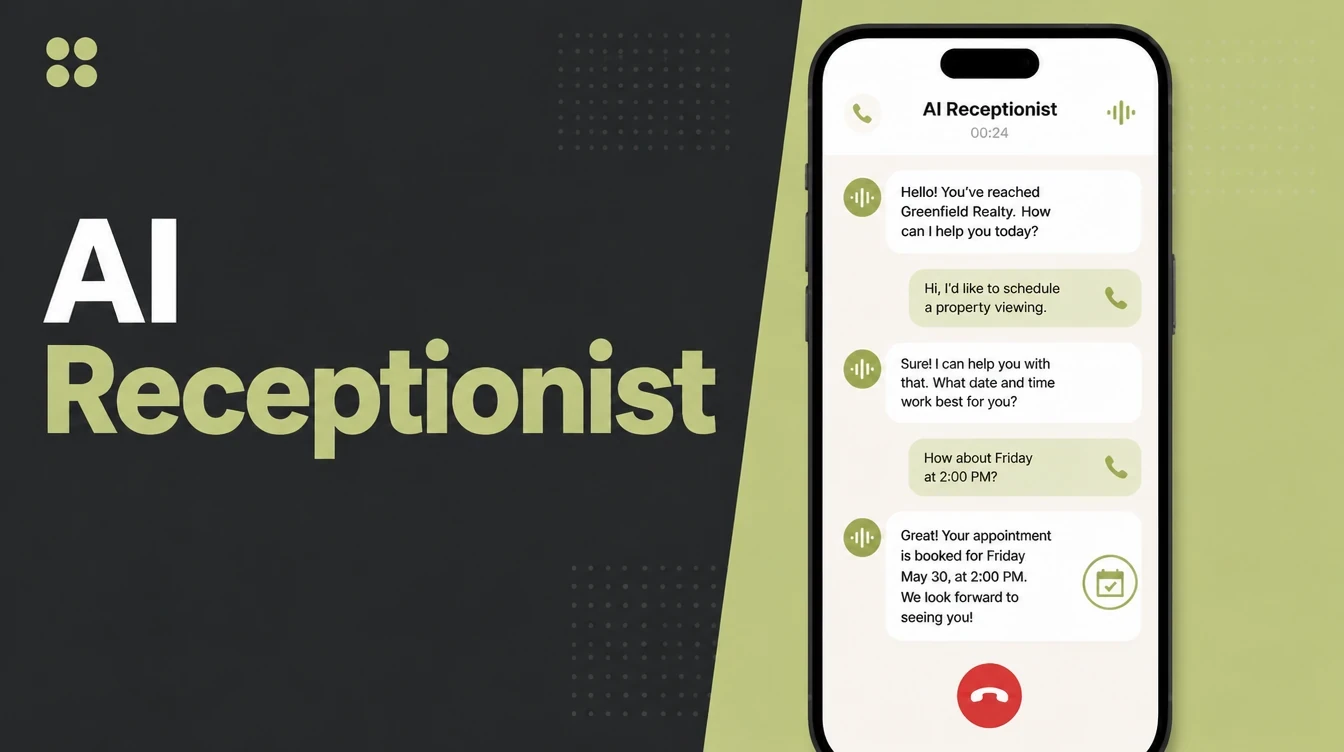
An AI receptionist is a voice agent that answers your phone, talks like a person, books appointments, takes messages and passes urgent calls to a human. It runs around the clock. A 411 Locals study found only 37.8% of small-business calls reached a live person. Seed Light sets them up.
Key takeaways
- Most small-business calls go unanswered. A study of 85 small businesses across 58 industries found only 37.8% of calls were answered by a live person (411 Locals, 2016), so roughly 6 in 10 callers got voicemail or nothing.
- It does the routine work. It answers, books into your calendar, takes messages and replies to common questions, all day and night.
- It hands off the hard calls. Complex, urgent or emotional calls get passed to a real person. That escalation is a feature, not a fault.
- Speed wins jobs. The business that responds first usually gets the customer, so a phone that always answers is worth real money.
- It is only as good as its setup. Your hours, FAQs, booking rules and transfer triggers decide how well it performs.
1. What is an AI receptionist?
An AI receptionist is a voice AI that picks up your phone, talks like a person, and gets things done. It can book an appointment, take a message, answer a common question or route the call to the right place.
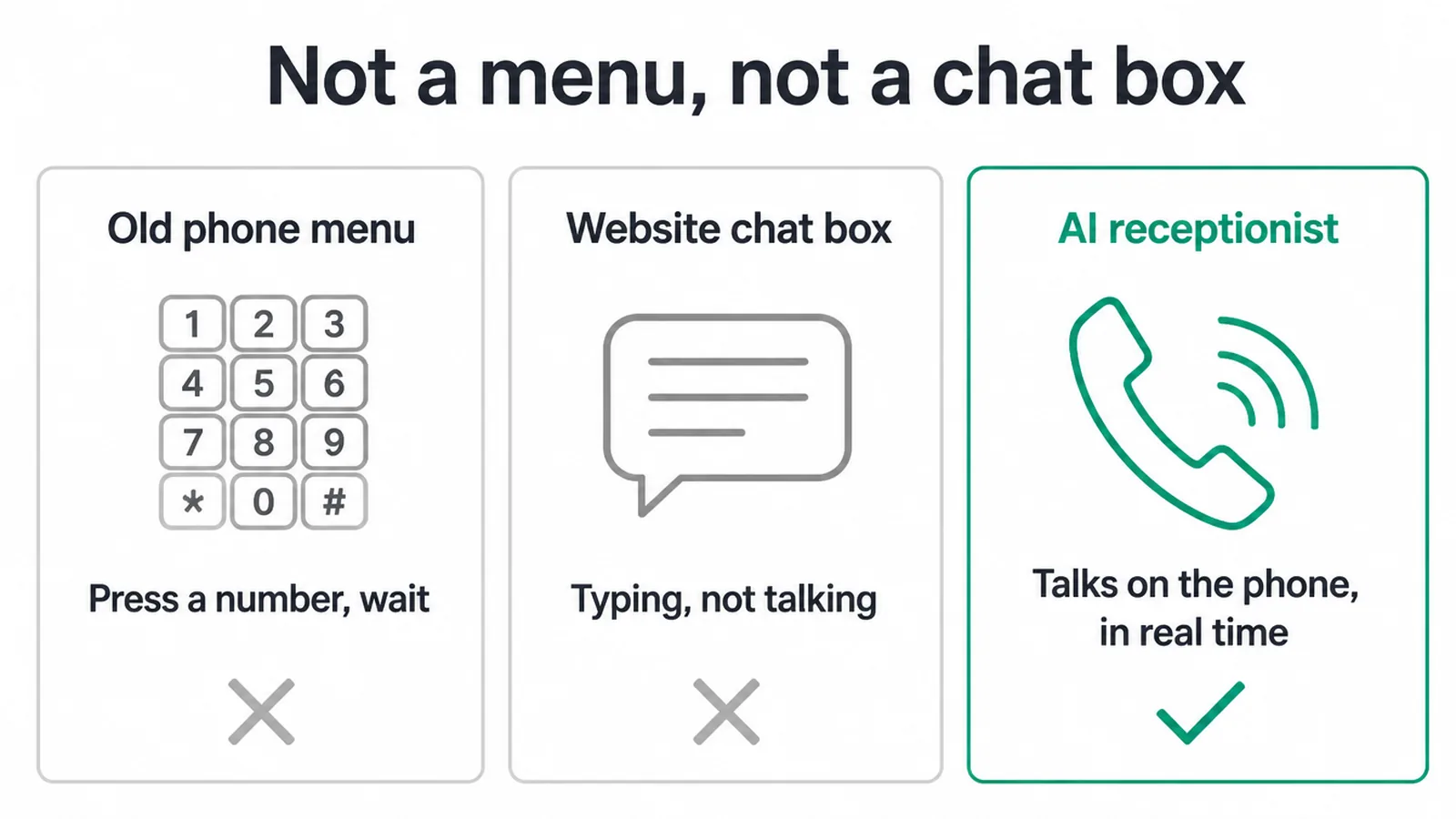
It is not the old "press 1 for sales" menu, and it is not a chat box on your website. It talks, on the phone, in real time.
Think of it as a front desk that never goes home. A caller asks for an opening time, a price range or a booking, and the AI replies in plain words and acts on the request.
It can hold a normal back and forth, ask a follow up question, then do the task. The big shift from old phone tech is that it understands what people mean, in their own words.
2. Why missed calls cost you customers
Missed calls cost you customers because a ringing phone with nobody on it is a lost job, and an AI receptionist fixes that by always picking up. The numbers are stark.
In a study of 85 small businesses across 58 industries over 30 days, only 37.8% of calls reached a live person (411 Locals, 2016). The rest hit voicemail or got no response at all.
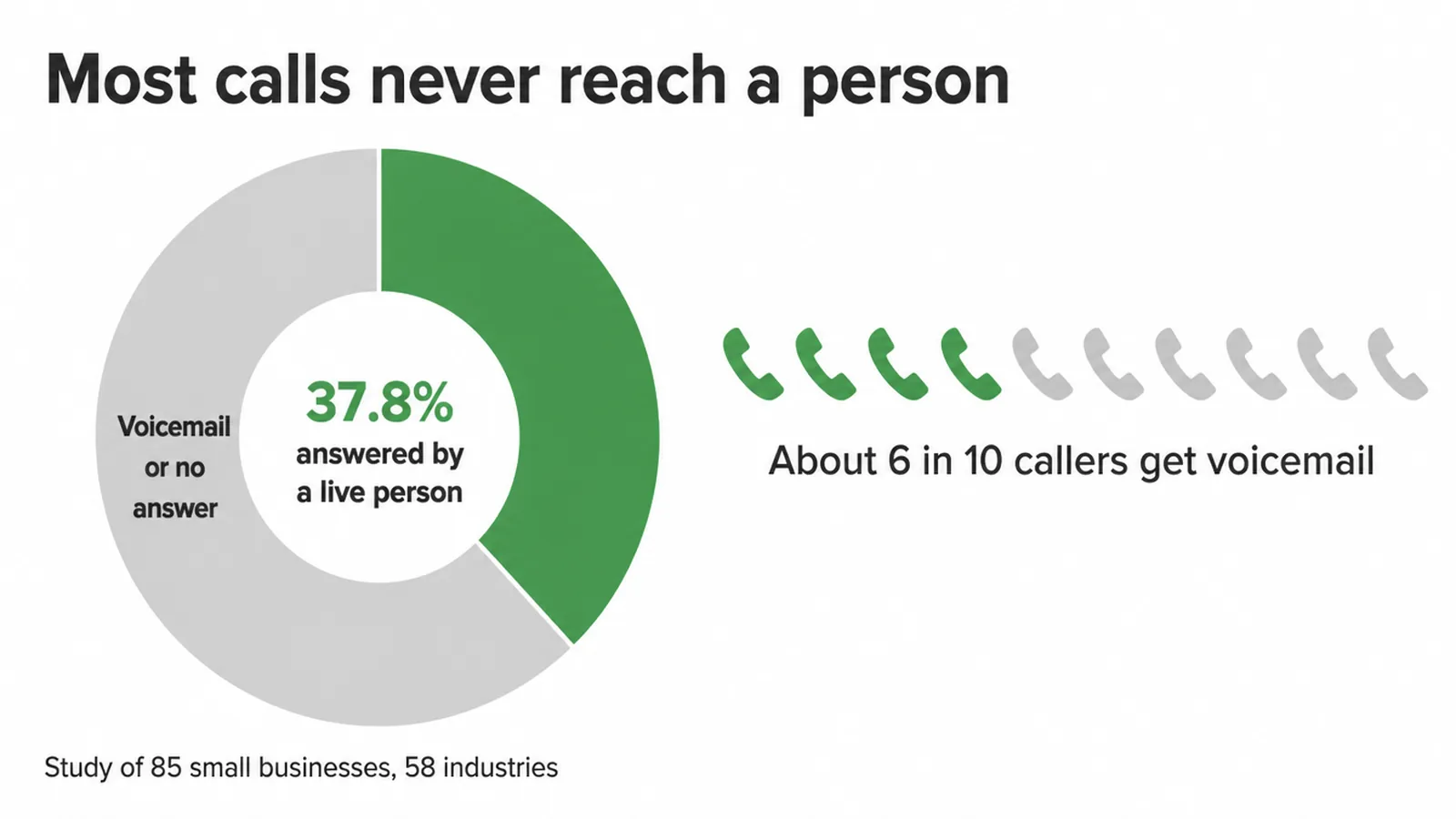
Voicemail asks callers to leave a message and wait for a reply. An AI receptionist can answer the call, collect the details and route the enquiry while the business is closed. Speed is measurable in at least one setting.
In a study of business-to-business enquiries submitted through web forms, Harvard Business Review found that firms which reached a lead in the first hour were far more likely to qualify it than those who waited (HBR, 2011).
So the call that gets answered is the one that can be quoted. If you want the wider picture on catching demand the moment it shows up, see our guide to using AI to find and follow up with leads.
3. What an AI receptionist does
An AI receptionist does the day to day phone jobs a busy owner keeps dropping. It is built to handle the routine, fast, and free you up for the work in front of you. Here is the core of it.
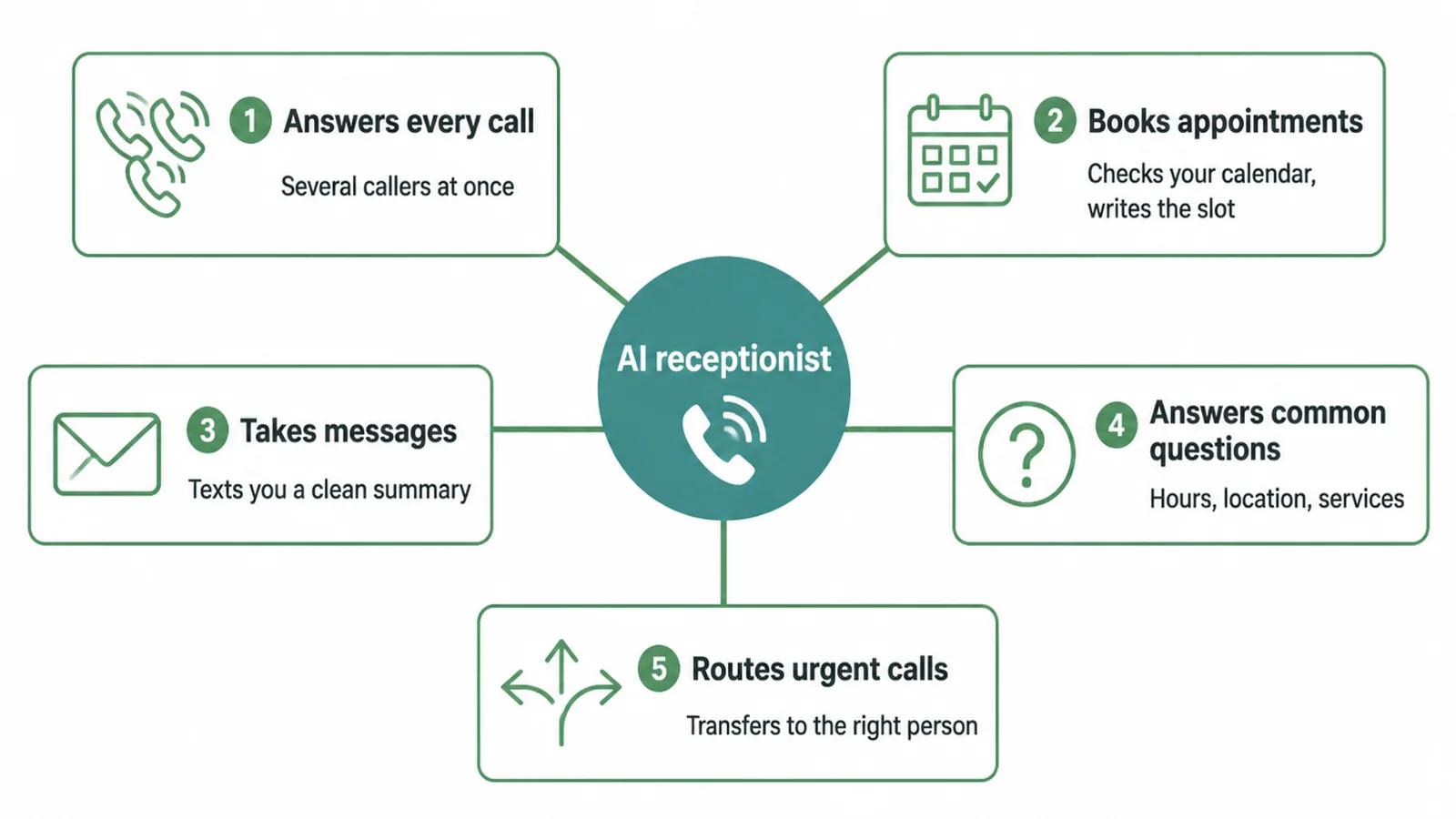
- Answers every call. It can pick up several calls at once, so two or three people ringing at the same time all get a real conversation, not a busy tone.
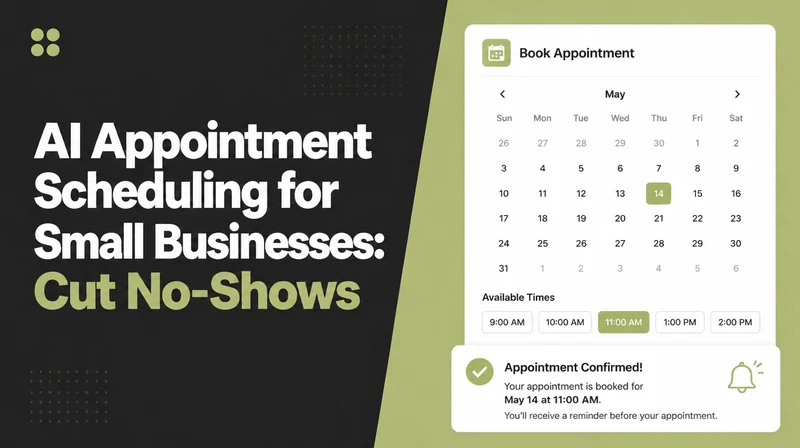
- Books appointments. It checks your calendar, offers open slots and writes the booking in.
- Takes messages. If someone needs a callback, it takes the details and texts you a clean summary.
- Answers common questions. Opening hours, location, services, parking, what to bring. The repeat questions get instant answers.
- Routes urgent calls. When something needs a human, it transfers the caller to you or the right team member.
4. How an AI receptionist works
An AI receptionist works by joining voice AI to your calendar and your contacts, so it can both talk and act.
The voice part listens to the caller, works out what they want, and replies out loud in a natural voice. It runs on speech recognition plus a language model, the same family of tech behind modern AI assistants.
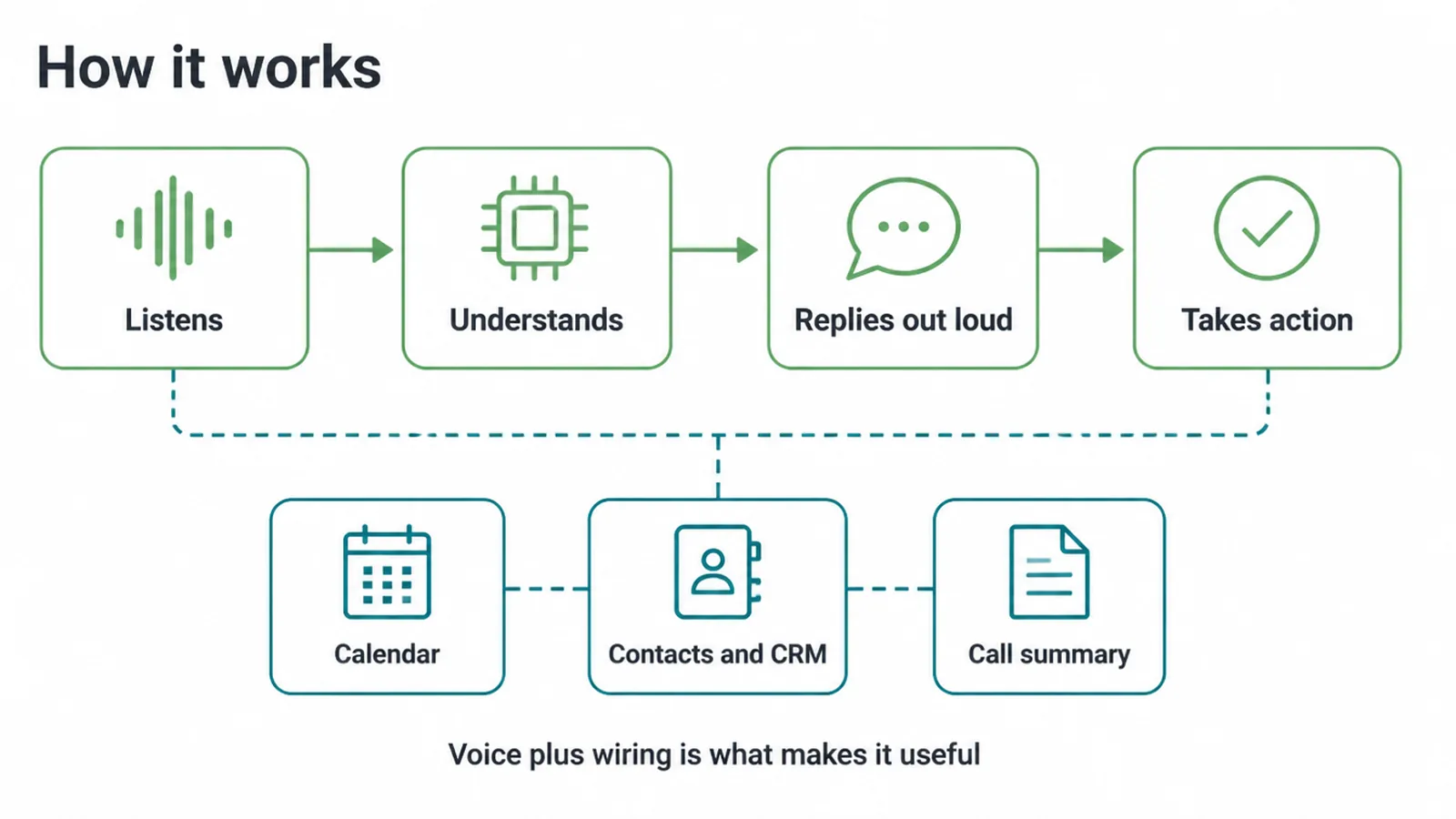
The useful bit is the wiring behind the voice. Connect it to your booking calendar and it can see real open slots and write a confirmed appointment. Connect it to your contact list or CRM and it saves the caller's name, number and what they wanted.
After each call it sends a short summary, so you always know who rang and what happened. If you want the bigger picture of how these pieces fit together, start with our explainer on what AI automation actually means for a small business.
5. Who an AI receptionist is for
An AI receptionist is for anyone who misses calls while they are busy doing the actual work. If your hands are full and the phone keeps ringing, this is built for you. The table below shows how it earns its keep across common small businesses.
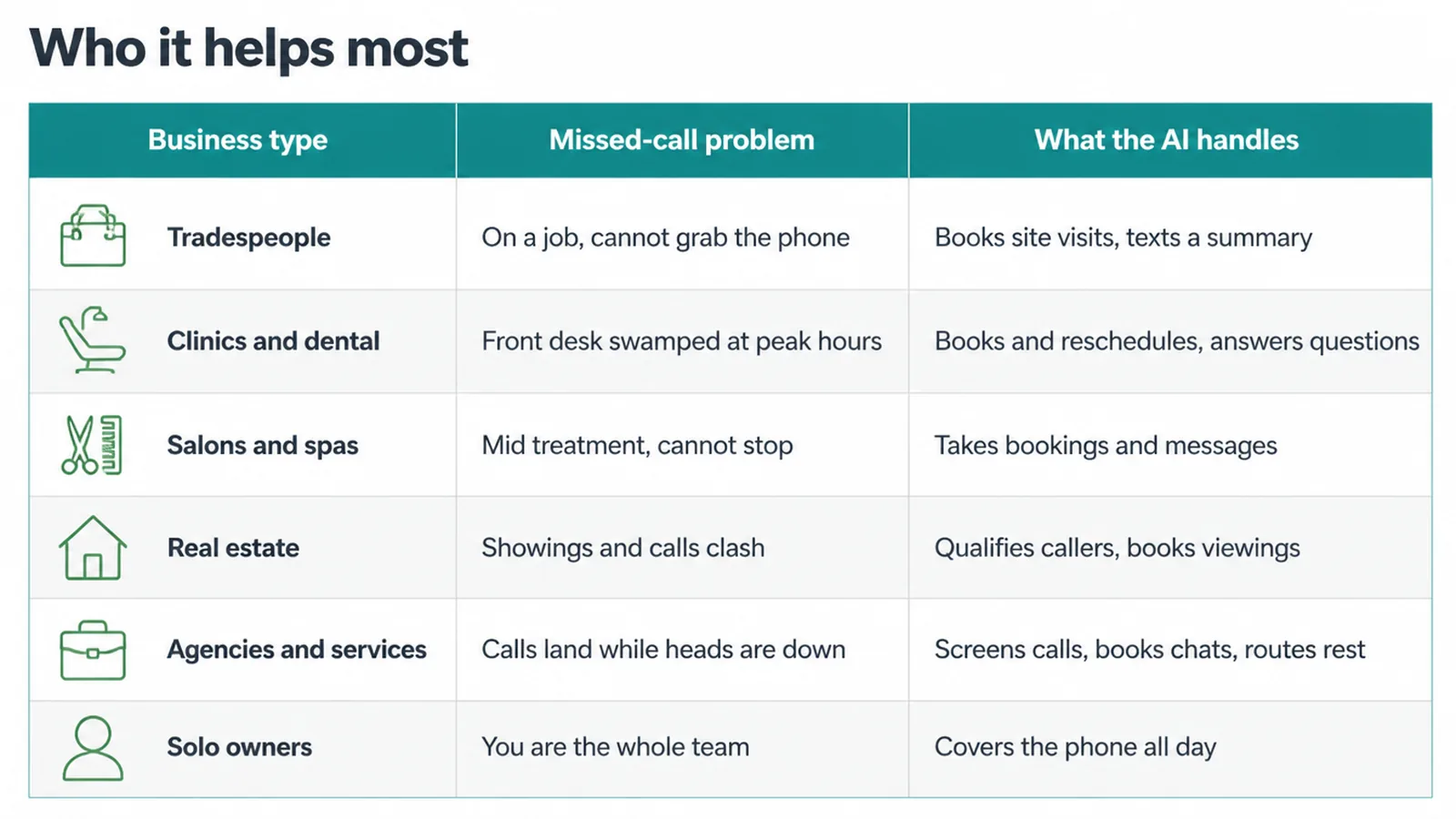
| Business type | The missed-call problem | What the AI handles |
|---|---|---|
| Tradespeople | On a job, hands dirty, cannot grab the phone | Books site visits, takes job details, texts a summary |
| Clinics and dental | Front desk swamped at peak hours | Books and reschedules appointments, answers FAQs |
| Salons and spas | Mid treatment, cannot stop to answer | Takes bookings, quotes service options, takes messages |
| Real estate | Showings and calls clash all day | Qualifies callers, books viewings, captures details |
| Agencies and services | Calls land while everyone is heads down | Screens calls, books discovery chats, routes the rest |
| Solo owners | You are the whole team, you cannot be in two places | Covers the phone so you never miss a new customer |
6. The honest limits of an AI receptionist
An AI receptionist is great at routine calls and weak at the unusual ones, and a good one knows the difference. It handles the booking, the FAQ and the message with ease.
When a call gets complex, emotional or out of the ordinary, it should escalate to a human. That hand off is by design, not a sign it failed.
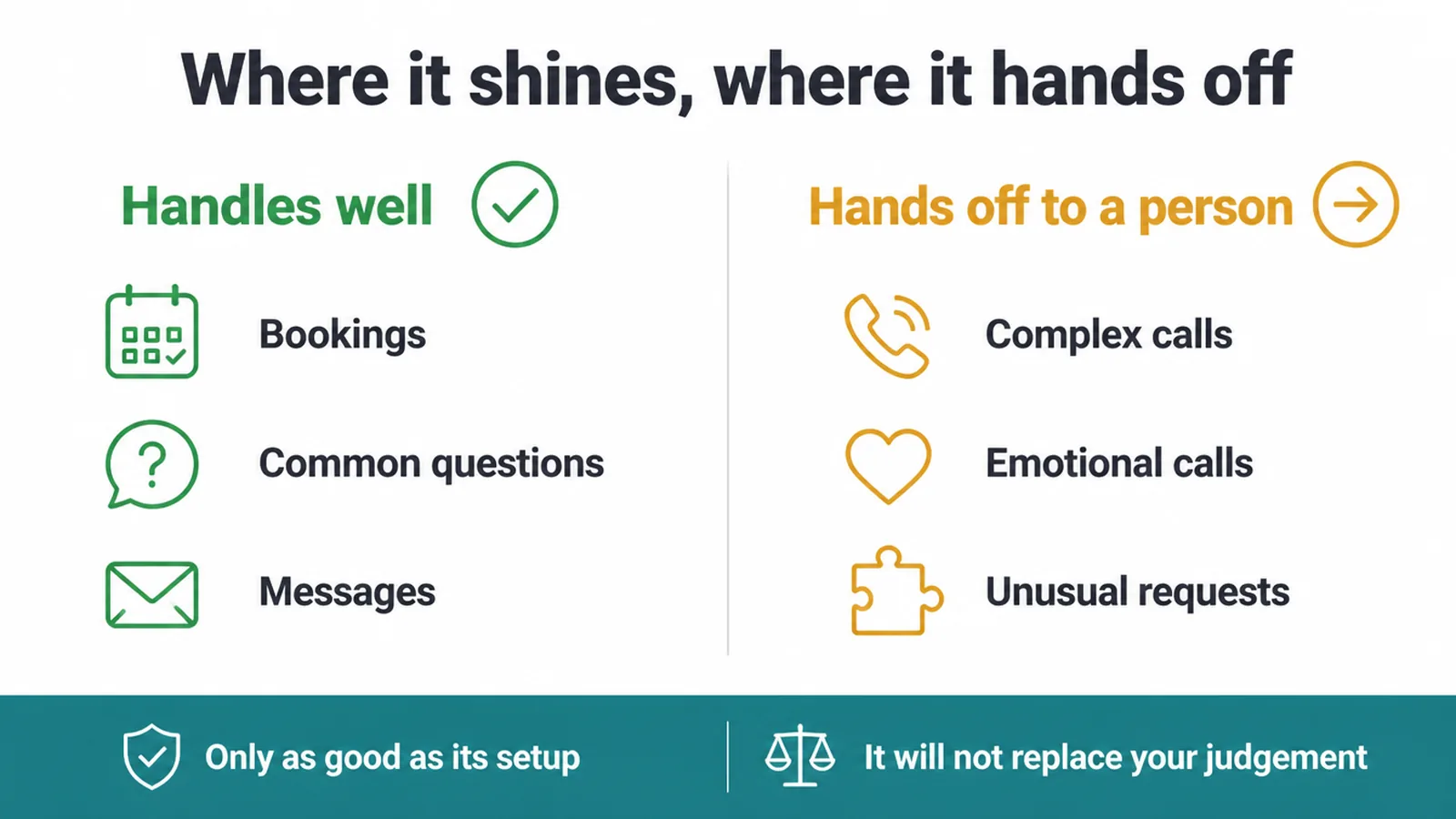
Two honest limits matter. First, it is only as good as its setup. If your hours, FAQs, booking rules or transfer triggers are vague, the answers will be vague too. Second, it will not replace your judgement.
A sensitive complaint, an odd request or a high stakes decision still needs a person. The right way to think about it: a sharp front desk for the everyday calls, with a clean, fast path to you for everything else.
7. How to choose an AI receptionist
To choose an AI receptionist, look past the demo and check the parts that make or break it in real calls. The flashy voice is the easy bit. The wiring and the rules are what decide whether it actually helps. Run through this checklist:
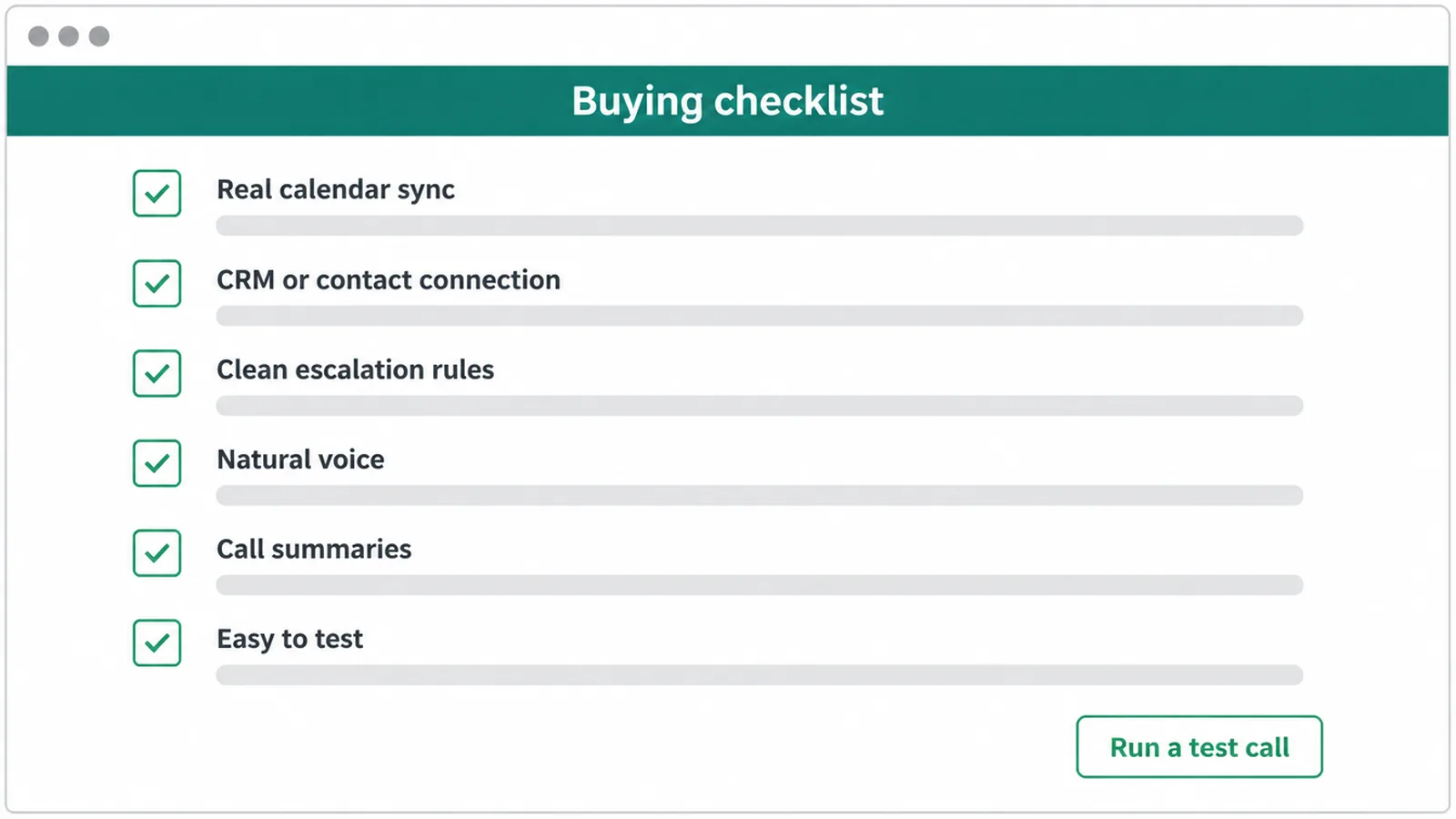
- Real calendar sync. It must read your true availability and write bookings into the calendar you already use, not a separate one.
- CRM or contact connection. Caller details should land where you keep your customers, so nothing is lost.
- Clean escalation rules. You should be able to set exactly when it transfers to a human and to whom.
- Natural voice. It should sound clear and human, not robotic or laggy.
- Call summaries. Every call should leave a written note so you can see what happened.
- Easy to test. You should be able to ring it yourself and try the awkward questions before you trust it.
Run your own test calls first. Ask the odd questions, the rude ones, the booking that clashes. If it stays calm, books right and hands off when it should, it is ready.
If you would rather have someone set the whole thing up and wire it to your tools properly, that is the kind of work our AI automation service handles. For a wider tour of where AI helps a small business, our beginner's guide to AI automation is a good next read.
8. What an AI receptionist costs
An AI receptionist costs far less than a full-time receptionist, and usually less than a human answering service too. We will not quote a figure here, because plans vary, but the shape is simple to weigh up. Most run on a flat monthly fee, which makes budgeting easy and predictable.
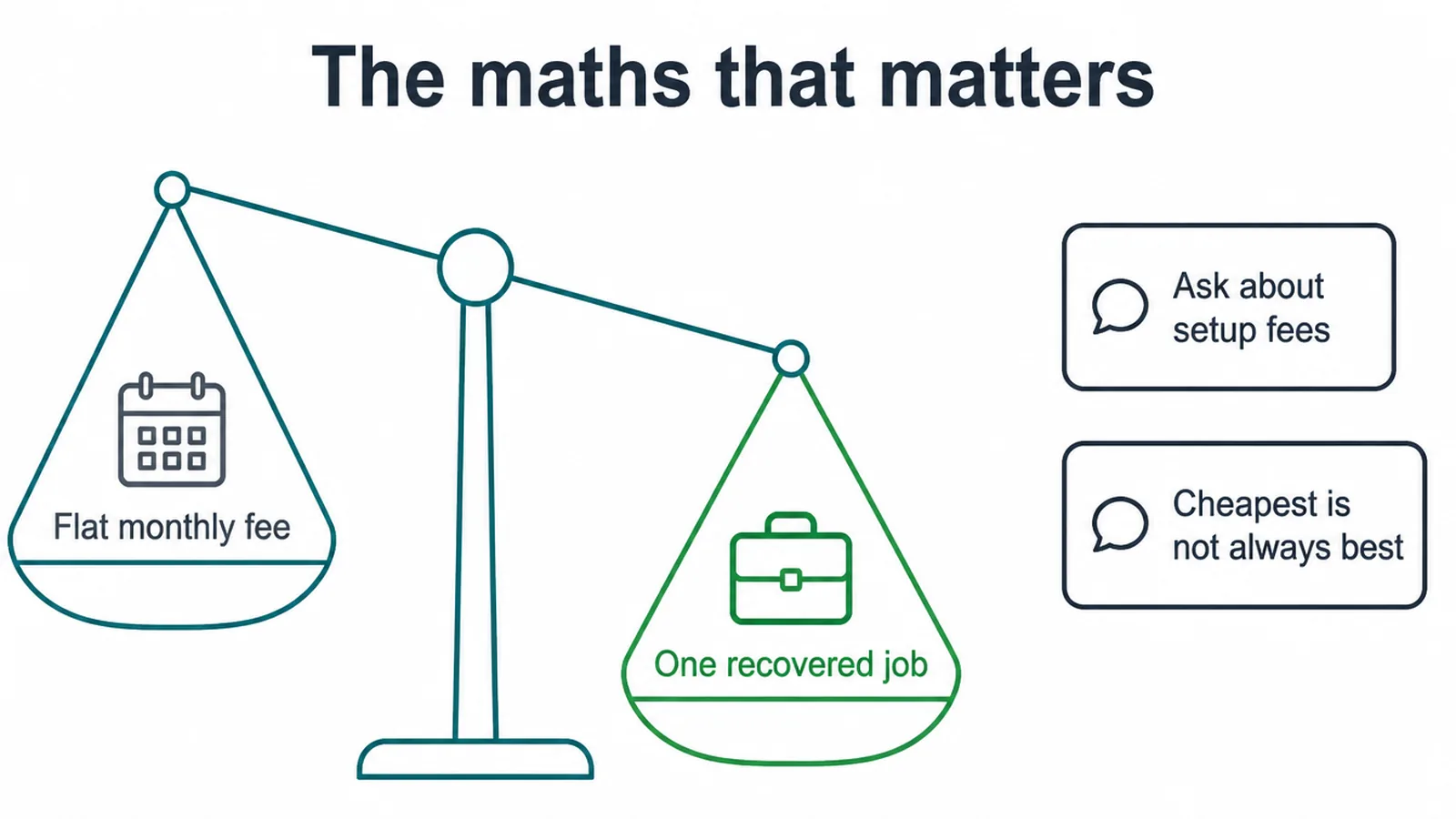
Watch two things. Some providers charge a setup fee on top of the monthly cost, so ask about that upfront. And cheaper is not always better. A slightly pricier tool that syncs your calendar properly and escalates cleanly will earn its keep faster than a cheap one that drops the ball.
Here is the maths that matters: if the tool recovers even one job a month that you would have lost to a missed call, it has likely paid for itself. The rest is profit and time back.
Frequently asked questions
1. What is an AI receptionist?
An AI receptionist is a voice agent that answers your phone, talks to the caller like a person, and gets things done. It can book appointments, take messages, answer common questions and pass urgent calls to a human. It works around the clock, so calls do not go to a dead voicemail.
2. How does an AI receptionist work?
An AI receptionist uses voice AI to listen, understand what the caller wants and reply out loud. It connects to your calendar and contact list, so it can see open slots, make a booking and save the caller's details. After each call, it sends you a short summary.
3. Can AI really answer phone calls?
Yes. Modern voice AI can hold a natural back and forth conversation, ask follow up questions and take action like booking a time. It handles routine calls well. For complex, unusual or emotional calls it should hand the caller to a real person.
4. Will callers know it is an AI?
Many AI voices now sound natural, so some callers will not notice. The honest approach is to have it say it is a virtual assistant. People care less about who picks up and more about getting a fast, clear answer and the thing they called for done.
5. Can an AI receptionist book appointments?
Yes, if it is connected to your calendar. It checks your real availability, offers open slots, confirms the booking and saves the caller's name and number. A good setup writes the appointment straight into the same calendar your team already uses.
6. Is an AI receptionist worth it for a small business?
An AI receptionist can be worthwhile when missed customer calls are common. It can answer basic questions, record details and book appointments while you work. If missed calls are rare, a simpler voicemail and callback process may be enough.
7. Can an AI receptionist transfer to a real person?
Yes, and it should. You set rules for when to hand off, like an urgent issue, a complaint or a request it cannot handle. The AI takes the routine calls and escalates the tricky ones to you or your team. That mix is the point, not a flaw.
8. What can an AI receptionist not do?
An AI receptionist cannot replace your judgement on complex, sensitive or one-off situations. It is only as good as its setup, so weak hours, FAQs or booking rules give weak answers. Treat it as a front desk for routine calls, with a clear path to a person for everything else.