How to Humanize AI Content So It Reads Like You Wrote It

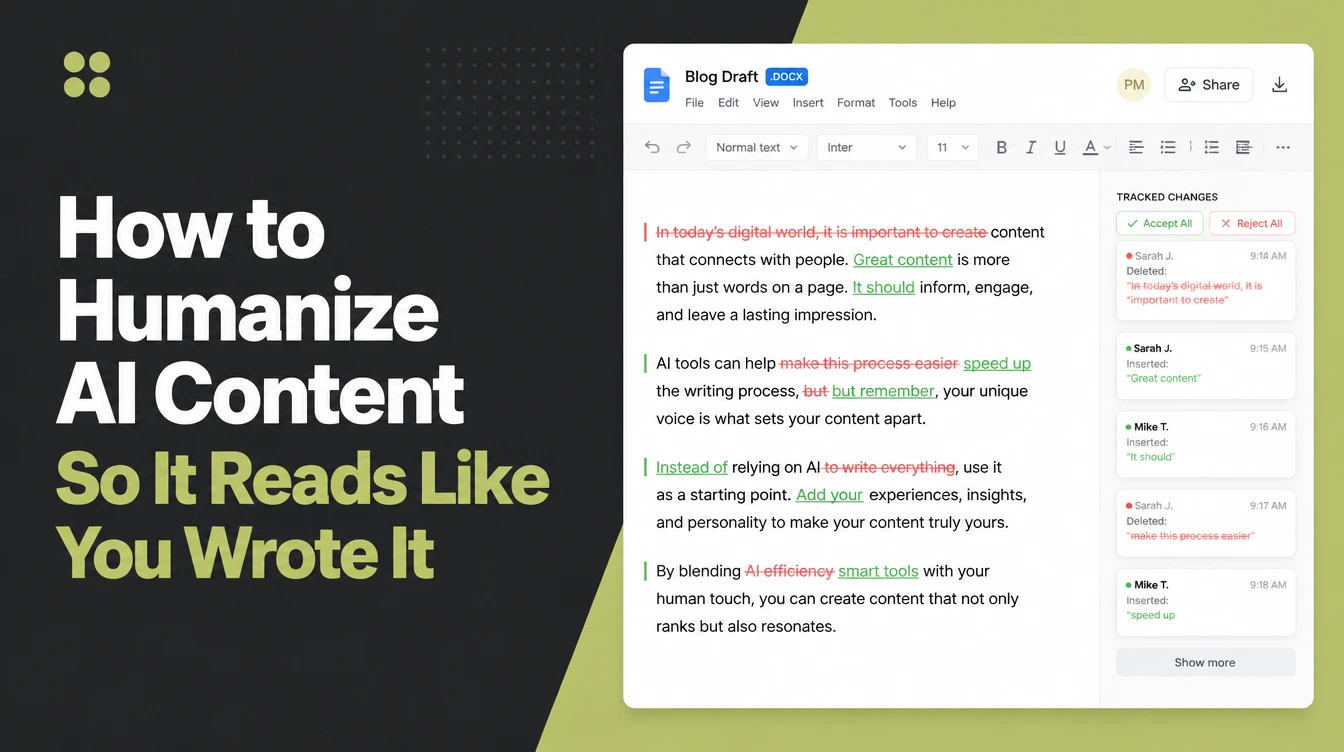
Humanizing an AI draft means editing it until it carries information, judgement and voice that came from you. Cut the opening, add the specifics only your business knows, break the rhythm, check every fact at its source, read it aloud. Seed Light runs that pass on every AI-assisted draft.
You asked ChatGPT for a blog post, it gave you nine hundred tidy words, and something about them is off. Nothing is wrong exactly. It just doesn't sound like you, and you can't say why.
This guide covers what Google actually says about AI drafts, why chasing an AI detector score is the wrong target, and the six edits that turn a generic draft into something only your business could have published.
By the end you'll have a repeatable editing pass you can run on any draft in about twenty minutes.
Key Takeaways
- Google's rule is about intent, not authorship. Its spam policy targets automation used to manipulate rankings, and scaled content abuse means many pages generated without adding value.
- AI detectors are documented as unreliable. A Stanford study found seven GPT detectors falsely flagged non-native English essays as AI 61.3% of the time.
- Specifics are the fix. The draft is generic because it contains nothing only you know, so adding what a real customer asked you last week is the whole edit.
- Editing has an evidence base. Nielsen Norman Group found concise, scannable and objective writing together improved usability by 124% over the control version.
- Disclosure is a question Google asks. Its own guidance asks whether AI use is self-evident to visitors, so it's a reasonable thing to answer plainly.
What Does Humanizing AI Content Actually Mean?
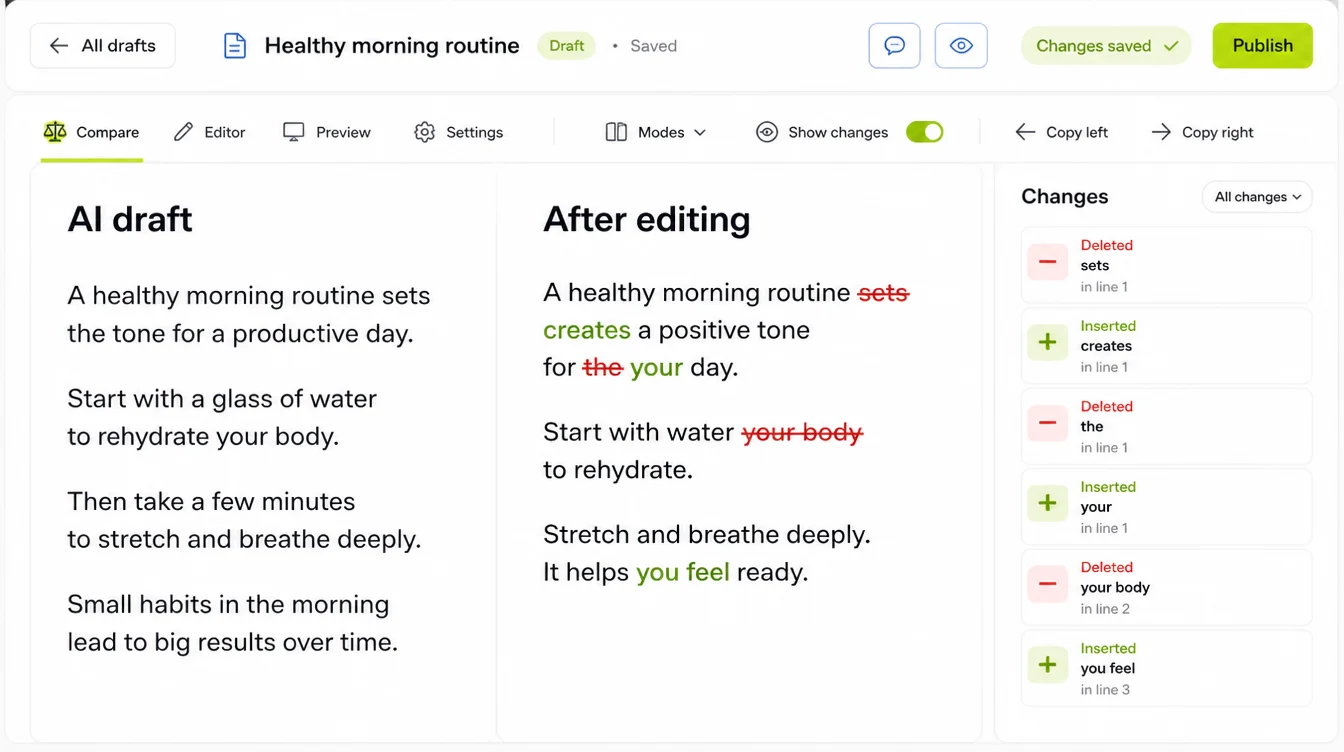
Humanizing an AI draft means editing it until it carries information, judgement and voice that came from you rather than from a prediction of what an article usually says.
It does not mean running the text through a paraphrasing tool until a scanner turns green. That's a different job with a worse outcome.
Here's the distinction I hold onto. Reading human and being human are not the same thing, and only one of them helps a reader.
A model writes the average of everything it has read on your topic. Average is exactly what nobody needs another one of.
So the work is subtraction and addition. Cut what any article on the subject would say, then add the parts only your business can supply.
What Google Actually Says About AI Content
Most articles on this topic never link to Google's documentation, which is odd, because it's short and it's clear.
The line that matters sits in Google's people-first content guidance: "If you use automation, including AI-generation, to produce content for the primary purpose of manipulating search rankings, that's a violation of our spam policies."
Read that twice. The trigger is the purpose, not the tool.
The companion policy is scaled content abuse, which Google defines as many pages generated primarily to manipulate rankings rather than help users. It names generative AI used to produce many pages without adding value as an example.
That's a volume problem. One carefully edited post is not the thing being described.
Google also asks a disclosure question in the same guidance: is the use of automation, including AI-generation, self-evident to visitors through disclosures or in other ways? It's worth having an answer.
None of this tells you your draft is fine. It tells you the test is whether the page helps somebody, which is a harder bar than sounding human.
How to Humanize an AI Draft
This is the pass I run. It works on a blog post, a service page or an email.
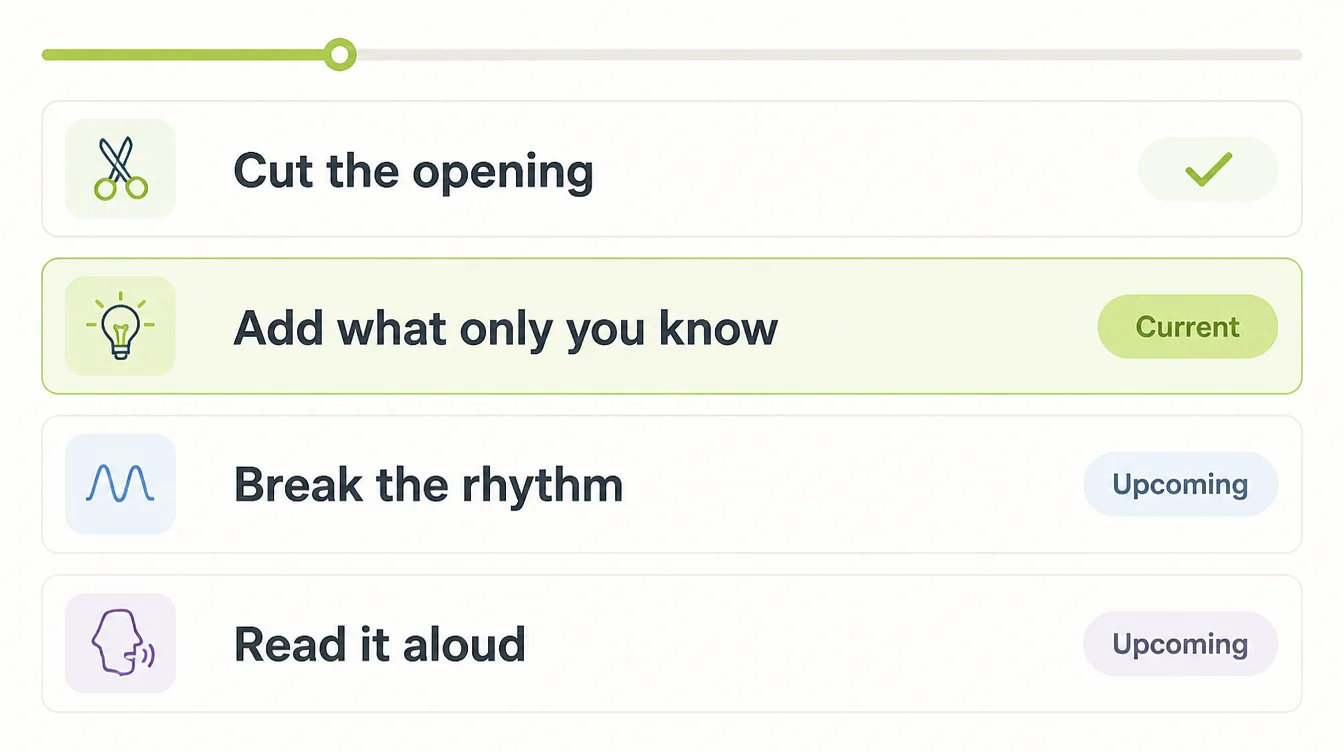
1. Delete the first paragraph
AI drafts almost always open by explaining that the topic is important in today's world. Nobody has ever needed that sentence.
Start at the second paragraph. Usually the article improves immediately.
2. Add the thing only you know
Go through and find every place where a real example would land. Then put one there.
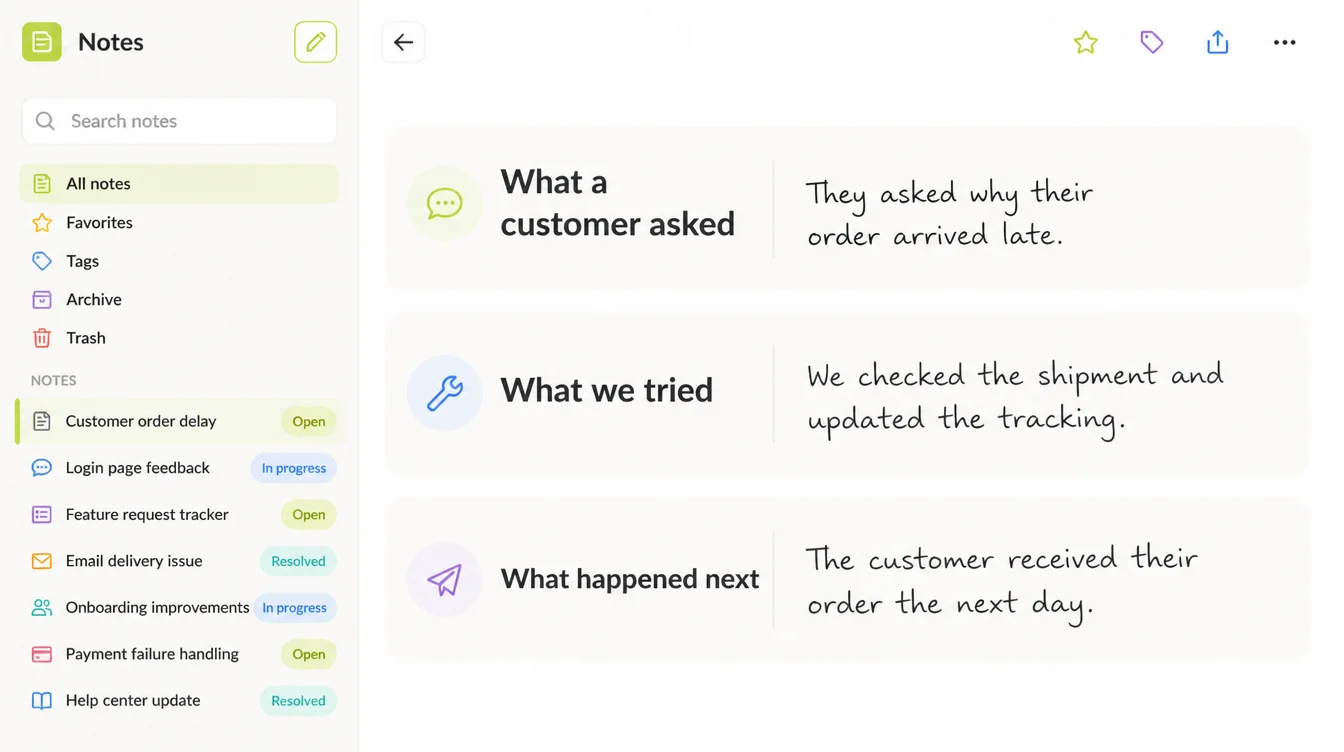
What a customer asked you last Tuesday. What you tried that didn't work. The price band you actually quote. A model cannot know these unless you provide them, which is precisely why they work.
3. Break the rhythm
Model output tends toward paragraphs of a similar length with sentences of a similar shape. It's the most recognisable tell there is.
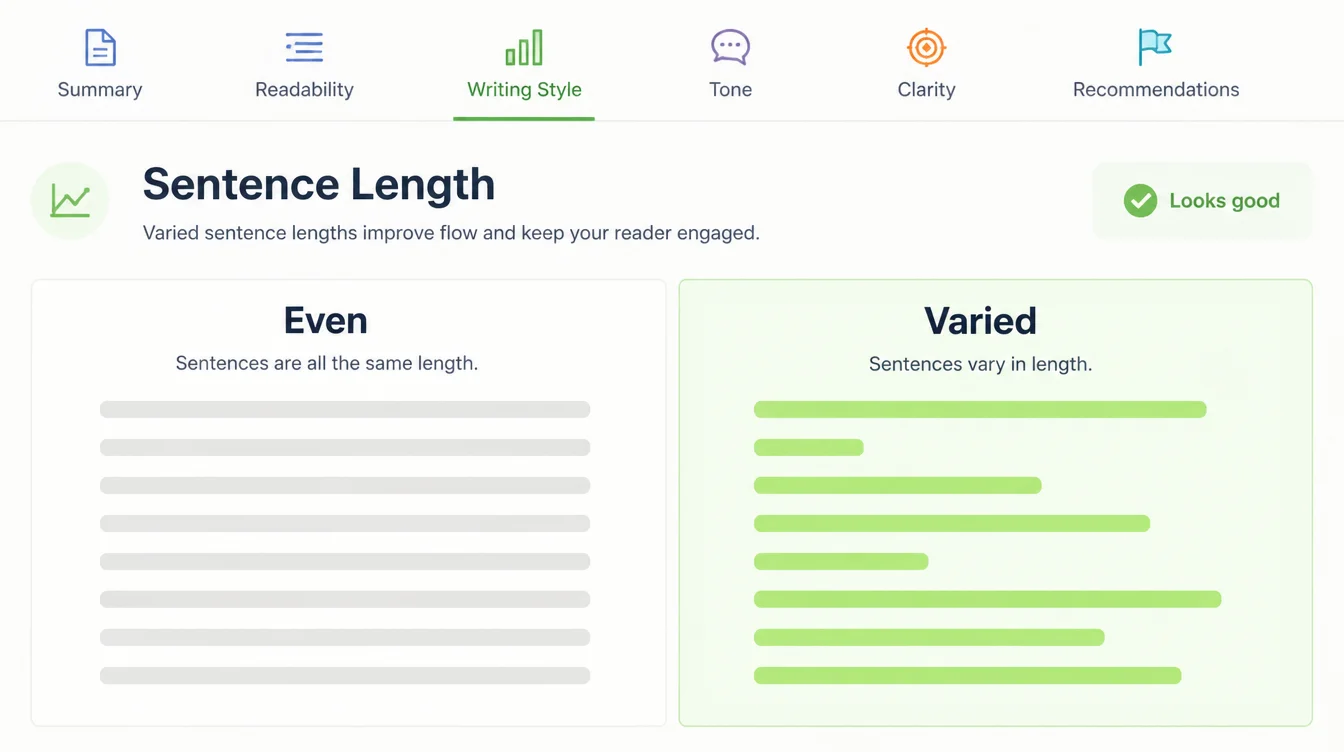
Split some sentences. Merge others. Leave a three-word one on its own line where it earns the emphasis.
4. Replace the vocabulary tells
Certain words cluster in generated text: delve, leverage, robust, landscape, unlock, seamless, in today's fast-paced world. Search for them and swap each one for the plainer word you would have used.
It is also the plain-word rule I write to, and it has nothing to do with AI. The same instinct runs through how we approach content writing generally.
5. Check every fact against a source
Anything the draft states as a number, a date or a rule needs opening at the source before it stays. Models produce confident, wrong specifics.
Google's own self-assessment asks whether the content contains easily verified factual errors, so this step is not optional housekeeping.
6. Read it out loud
The final pass, and the one people skip. Anything you stumble over gets rewritten until you don't.
If a sentence would embarrass you to say to a customer across a counter, it should not be on your website either.
Edits That Work Right Now
Small, specific moves you can make on the draft in front of you.
- Name a real constraint. "We only take three of these a month" tells a reader more about your business than a paragraph of positioning.
- Answer the question in the first line of a section. Nielsen Norman Group's web writing research found a concise version scored 58% better for usability than the wordy control.
- Turn any list hiding in a sentence into bullets. The same study measured a 47% gain from a scannable layout alone.
- Strip the promotional adjectives. Objective language was worth 27% on its own, and all three changes together came to 124%.
- Say who wrote it. A named author with a real role does something no phrasing tweak can.
- Cut the closing summary. AI drafts end by restating the article. Delete it and finish on the last real point.
- Keep one sentence that only makes sense in your town. A specific Penang reference is a signal a generic draft rarely carries.
That research is from 1997, which I mention because it matters that these gains predate the current argument entirely. Good editing was always the job.
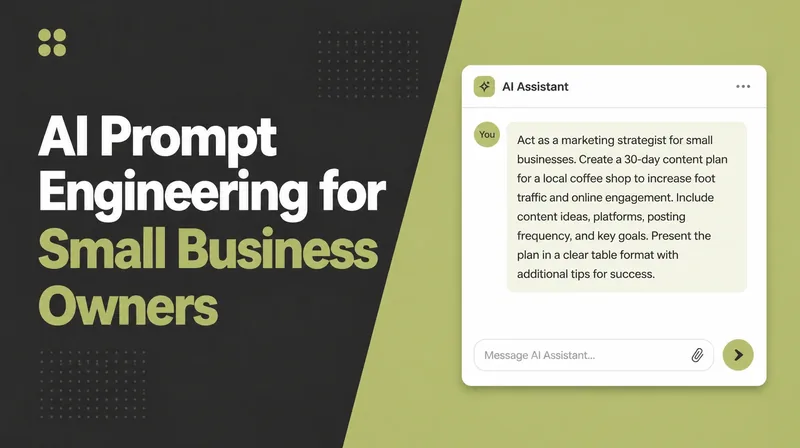
If the drafting itself is where you get stuck, better prompts give you a better starting point to edit from.
Tools Worth Using, and One Habit to Drop
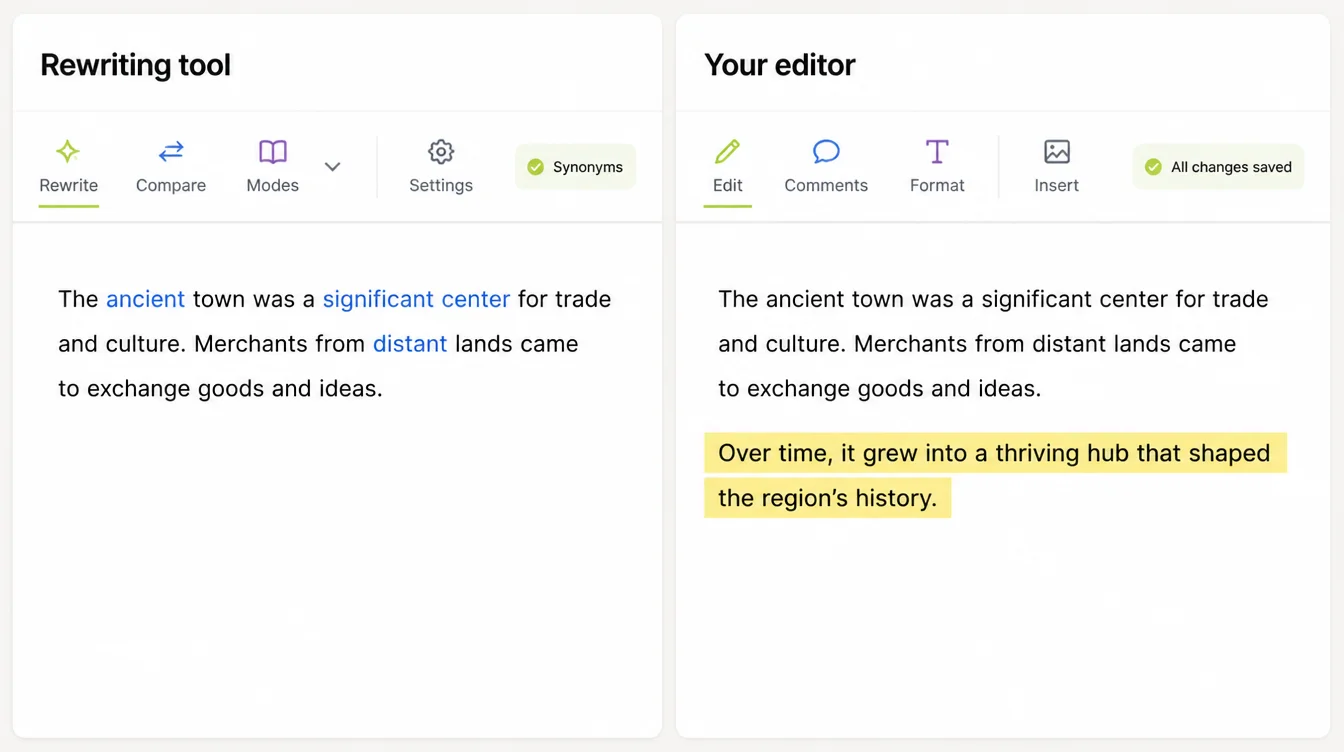
The useful tools here help you edit. The ones sold for this problem mostly help you avoid editing.
| Tool | What it does for you |
|---|---|
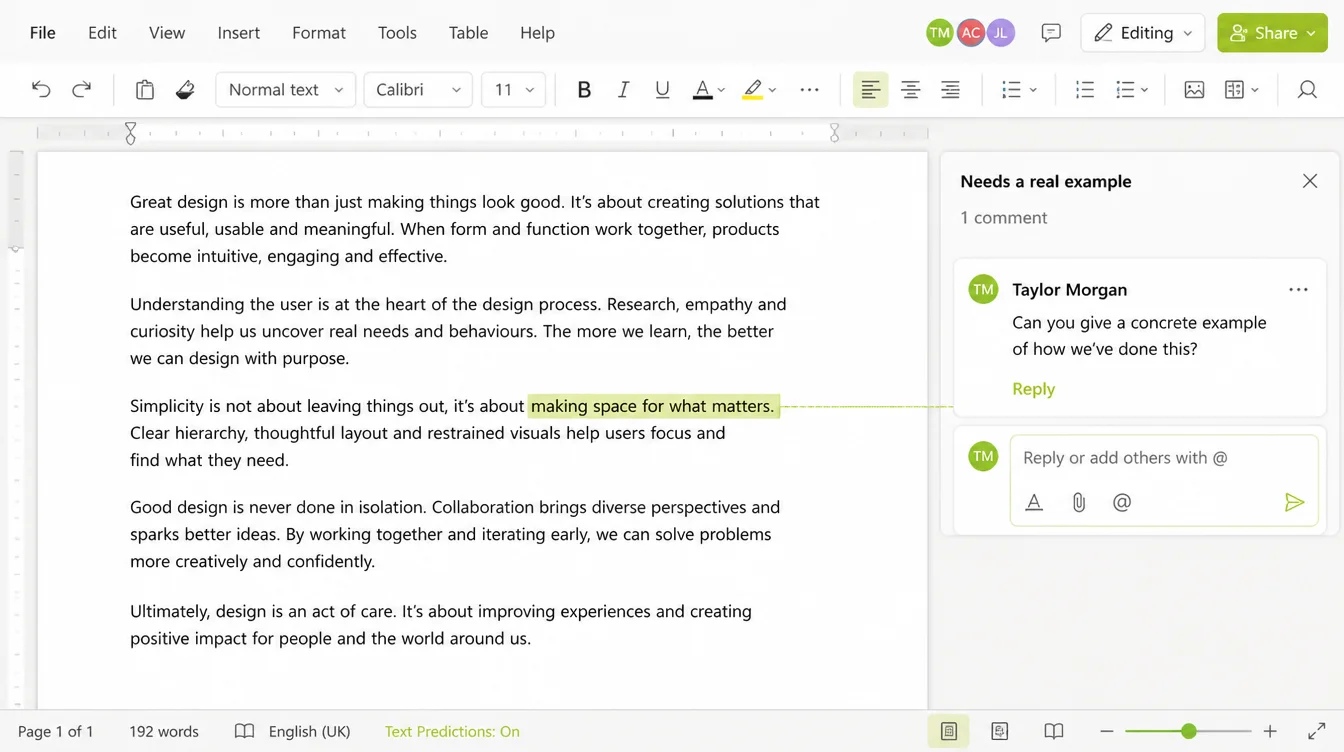
| Any document editor with comments | Where the pass actually happens, one comment per weak paragraph |
| A readability checker | Flags the long sentences you stopped noticing on the third read |
| Your browser and the original source | The only real way to check a number the draft asserted |
| A text-to-speech reader | Does step six for you when your own eyes have gone |
| Your own notes and inbox | Where the specifics live, which is the thing no tool can supply |
| An AI humanizer or paraphraser | Rewrites wording without adding information, which leaves the draft just as generic |
If you're still choosing what to draft with in the first place, I compared the options in AI writing tools.
Common Mistakes When Humanizing AI Content
Most of these come from optimising for the wrong test.
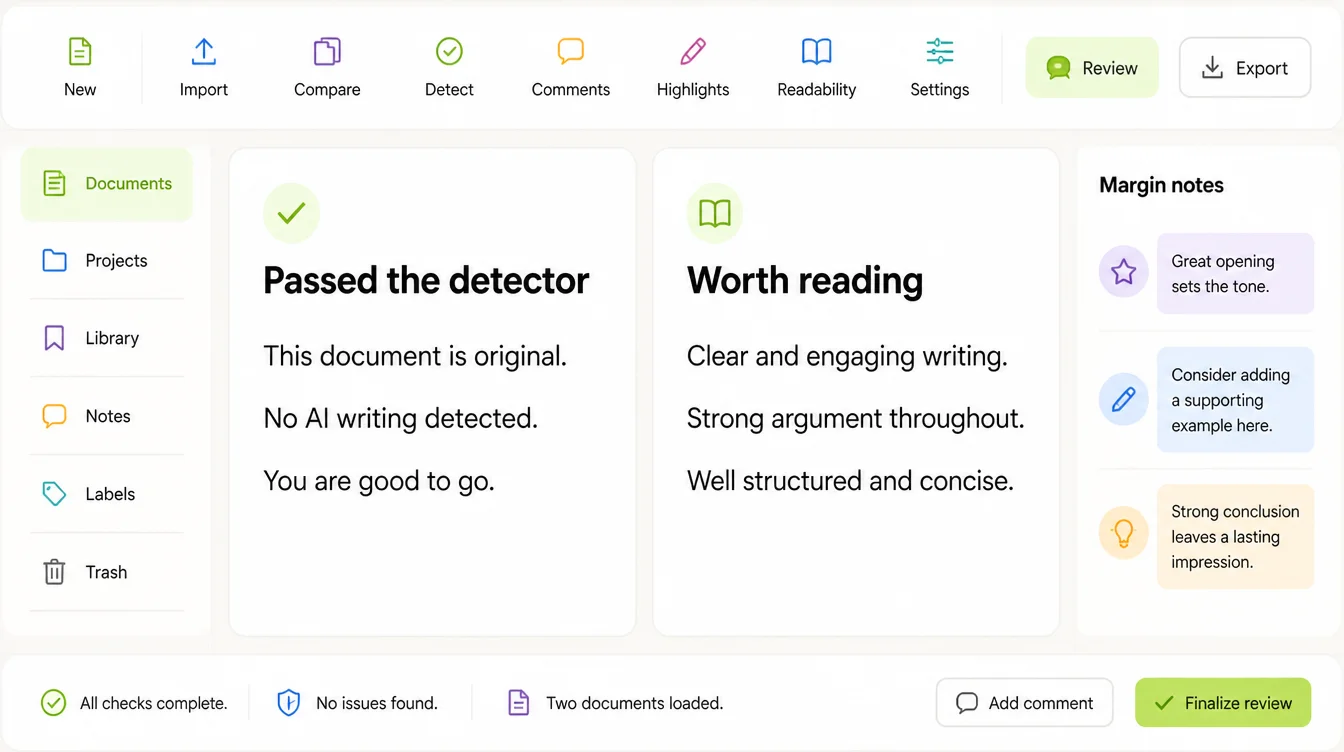
- Writing to beat a detector. A peer-reviewed study of 14 detection tools concluded the available tools are neither accurate nor reliable, so the score you're chasing is not measuring what you think.
- Trusting a detector's verdict on your own writing. Stanford researchers found seven GPT detectors falsely flagged non-native English essays as AI-generated 61.3% of the time, while classifying US student essays accurately.
- Assuming detection is a solved problem. OpenAI withdrew its own AI text classifier in July 2023 for low accuracy, as reported at the time.
- Publishing volume because drafting got cheap. That is the exact behaviour scaled content abuse describes, and it's a policy risk in a way one edited post is not.
- Swapping words instead of adding facts. Paraphrasing changes the surface and leaves the emptiness underneath.
- Letting the draft set the structure. The model chose those headings from habit, not from what your reader needs to decide.
That finding deserves a second look if you write in English as a second language. In the same study, enriching the essays' vocabulary dropped the false-positive rate to 11.6%, which means the detectors were penalising plain writing.
Plain writing is the target. I am not going to recommend making a page harder to read to satisfy an unreliable instrument.
FAQs
Will Google penalise AI-generated content?
Not for being AI-generated. Google's guidance says using automation, including AI-generation, to produce content for the primary purpose of manipulating search rankings violates its spam policies. The separate scaled content abuse policy targets many pages generated without adding value. Intent and volume are what it describes, not the drafting tool.
Do AI content detectors actually work?
Not reliably. A peer-reviewed test of 14 detection tools found them neither accurate nor reliable. A Stanford study found seven detectors falsely flagged more than half of non-native English essays as AI-generated. OpenAI withdrew its own classifier in July 2023, citing low accuracy.
Should I disclose that I used AI to write a post?
It's worth deciding deliberately. Google's people-first guidance asks whether the use of automation, including AI-generation, is self-evident to visitors through disclosures or in other ways. A short line saying a draft was AI-assisted and edited by a named person answers that question honestly.
How long should humanizing an AI draft take?
Budget about twenty minutes for a blog post, and expect the draft to get shorter. Most of that time goes on two steps: adding the specifics only your business has, and opening every source to check a number the model asserted. The wording changes take minutes.
Are AI humanizer tools worth paying for?
I wouldn't. They rewrite phrasing without adding information, so the draft stays generic while reading slightly differently. The things that make a page worth reading, a real example, a real constraint, a checked figure and a named author, are all things you have to supply yourself.
Conclusion
Humanizing an AI draft is not a trick, and there's no tool that does it for you.
It's an editing pass with a clear target: cut what any article would say, add what only your business knows, then check the facts and read it aloud.
Do that and the detector question stops mattering, because the page is genuinely useful to the person who landed on it. That's the standard Google's own documentation keeps pointing at.
If you'd rather hand the drafting and editing over, see how we handle AI and automation work, or reach out to my team at Seed Light.