SEO Content Writing: How to Plan and Draft a Page

SEO content writing is writing a page that answers the search, reads easily, and is built so search engines can understand it. Match the intent first, lead each section with the answer, then use your main term where it fits. Google has no preferred word count. Seed Light writes for the reader first.
Key takeaways
- Write for people first. Google rewards content made primarily for people, not to game rankings. Nail the reader and the ranking tends to follow.
- Length is not a target. The average Google top 10 result is 1,447 words, but Backlinko found no direct relationship between word count and rankings. Long pages often win because they cover more, not because they are long.
- Lead with the answer. Most people scan, so put the direct reply in the first line or two of every section.
- Keywords go in naturally. There is no ideal keyword density. Use your term a few times where it fits, then write like a human.
- AI is fine, spam is not. Mass-producing pages to manipulate rankings breaks Google's rules, however you make them.
1. What is SEO content writing?
SEO content writing is writing a page that answers the search, reads easily, and is built so search engines can understand it. You write for the person first, then layer the SEO basics on top.
That order matters. Google says people-first content is content created primarily for people, and not to manipulate search engine rankings. Get that right and the technical bits become simple.
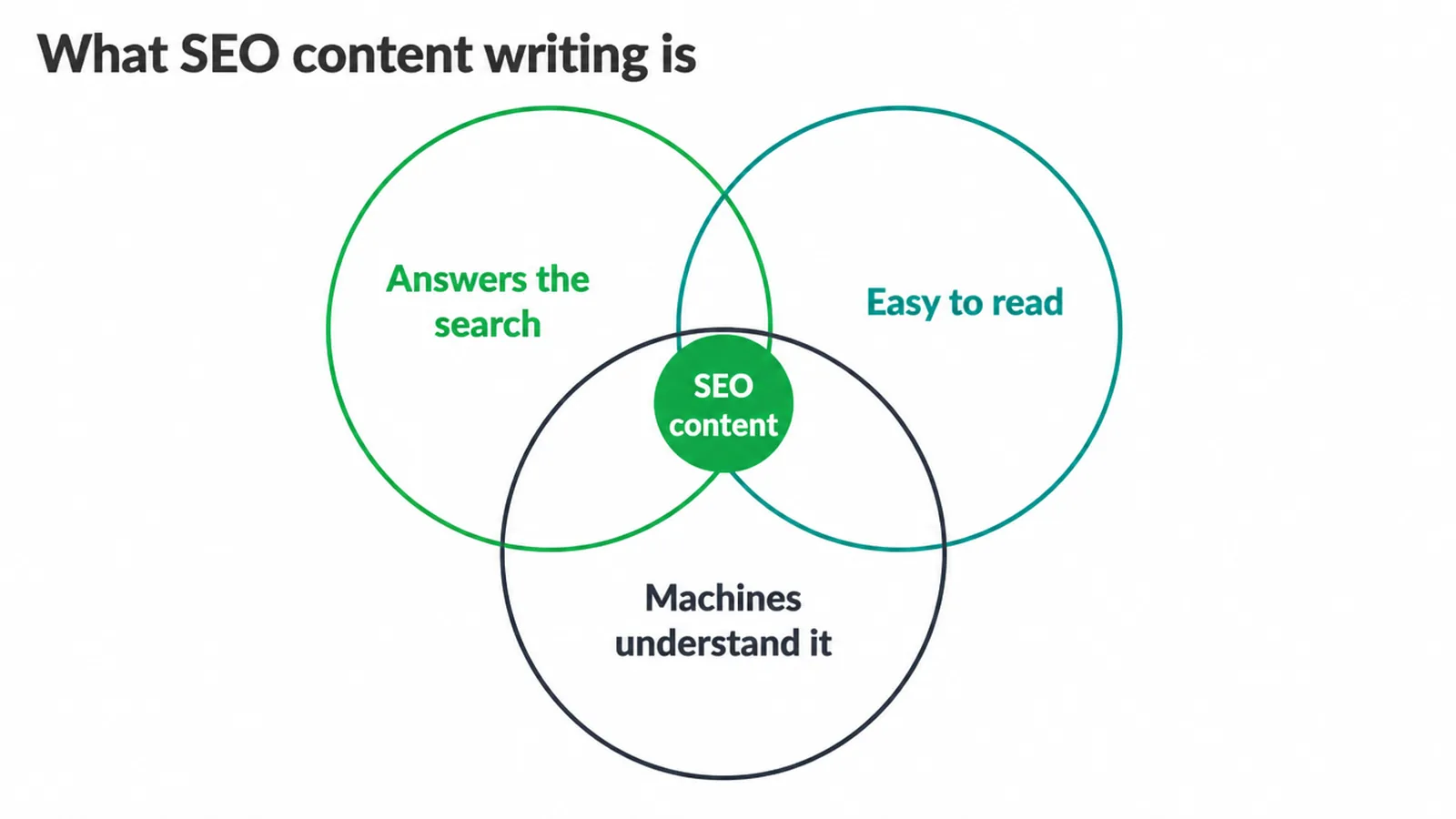
It is not copywriting and it is not keyword spam. It sits in the middle. You still need the basics, like a clear title, sensible headings, and links.
If you have not picked your topic yet, start with keyword research, then run the finished page against an on-page SEO checklist. The writing itself is what we cover below.
2. Step 1: Match the search intent
Before you write a word, work out what the searcher actually wants. That is search intent, and it shapes everything else in SEO content writing.
The fastest way to find it is to search your keyword and look at what already ranks. Google has already tested those pages on real people, so they show you the shape that works.
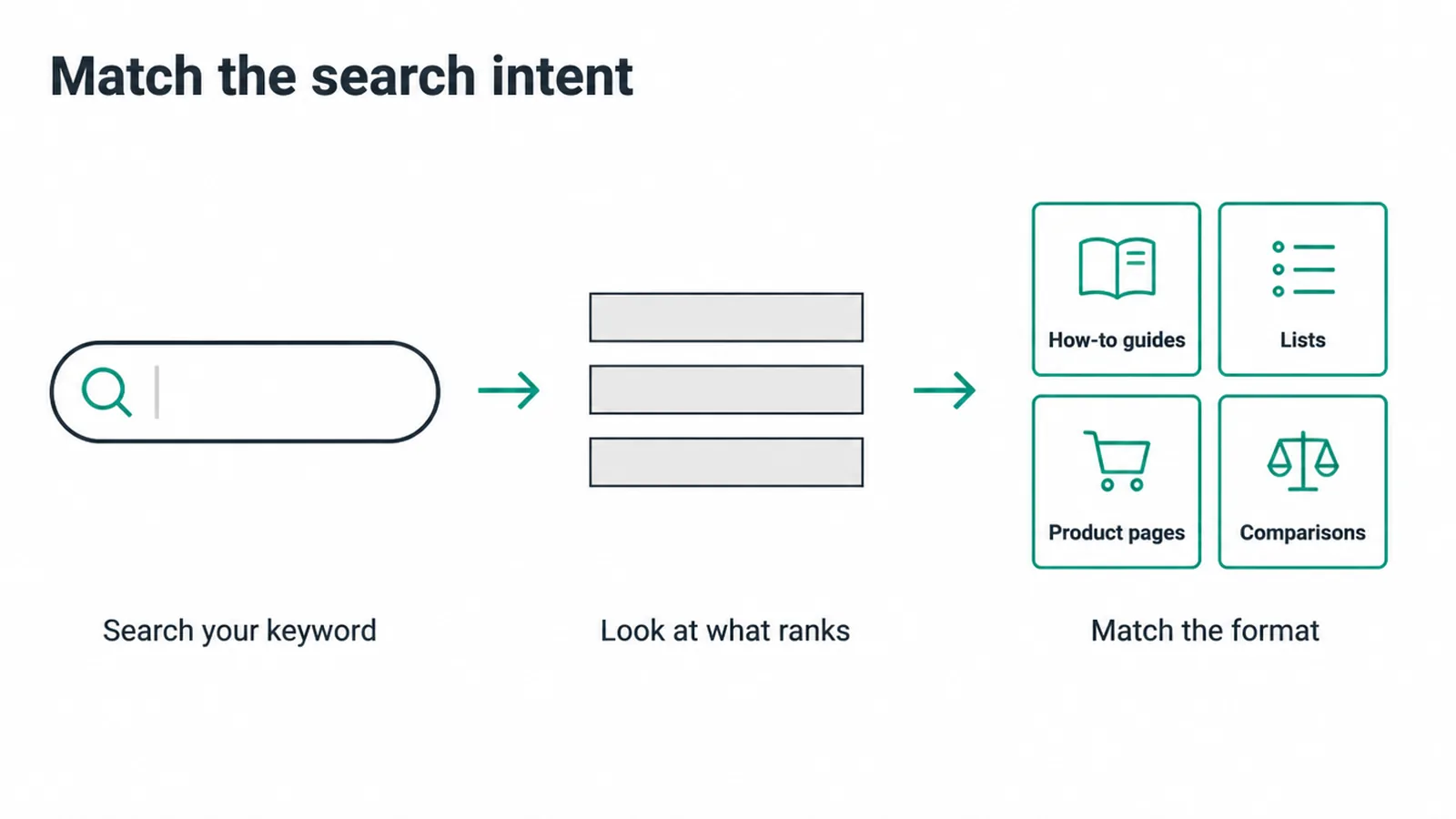
Are the top results how-to guides, lists, product pages, or comparisons? Match that format. If everyone is answering "how to," do not publish a sales page. Note the angle too.
A search like "best running shoes" wants options, not a single product. Pull your shortlist of terms from solid keyword research so you target what people really type, not what you wish they typed.
3. Step 2: Outline before you write
Plan the page before you draft it. A quick outline saves you from rambling and from missing the questions people care about. Map your main sections as H2 headings, one idea each.
Then look at the "People also ask" box and related searches for sub-questions to fold in. Each one can become a heading or a short paragraph.
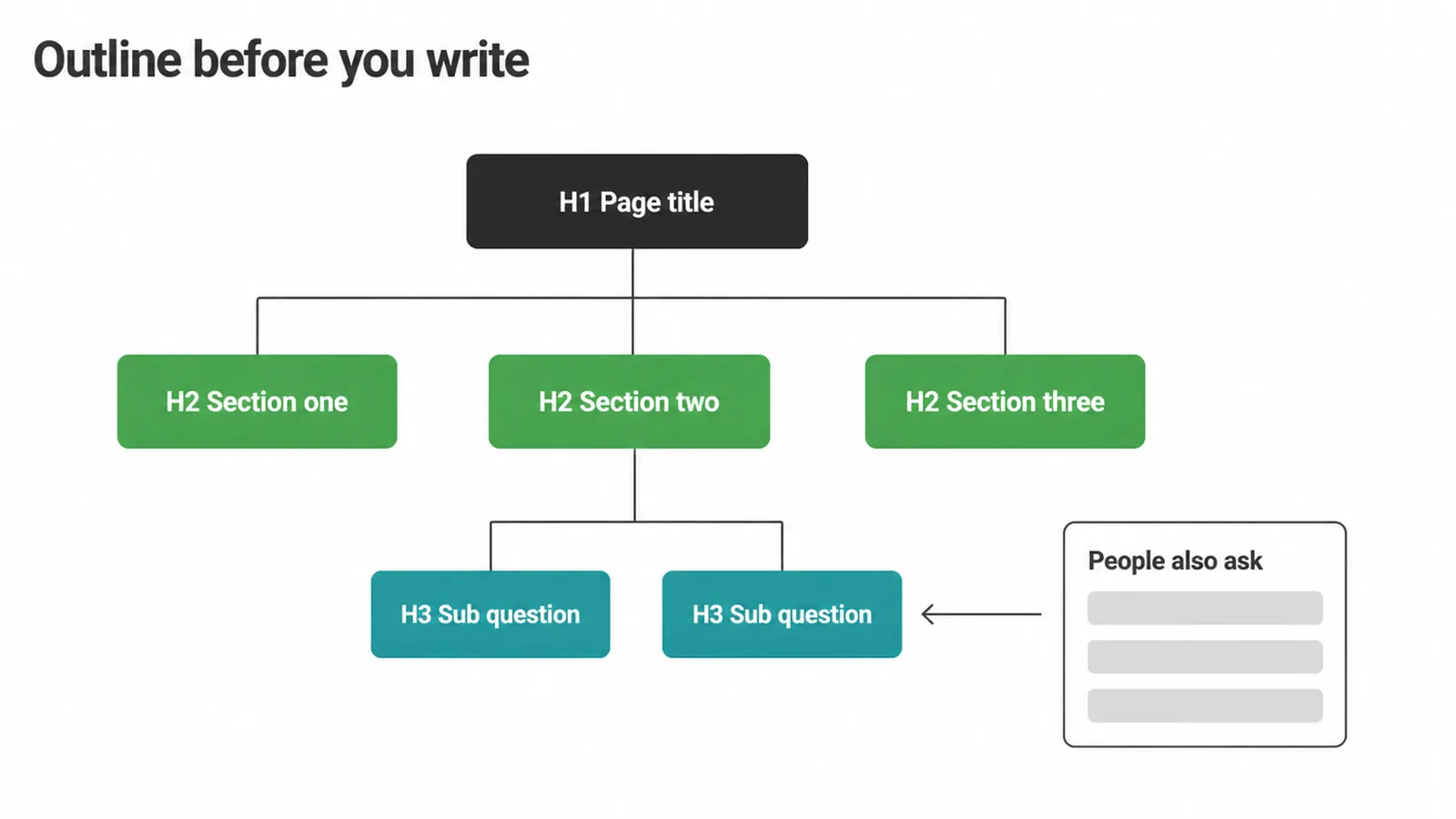
An outline also stops you covering the same point twice across different pages. If you publish often, plan topics ahead in a simple content calendar so each post owns its own job and links to its neighbours.
4. Step 3: Lead with the answer
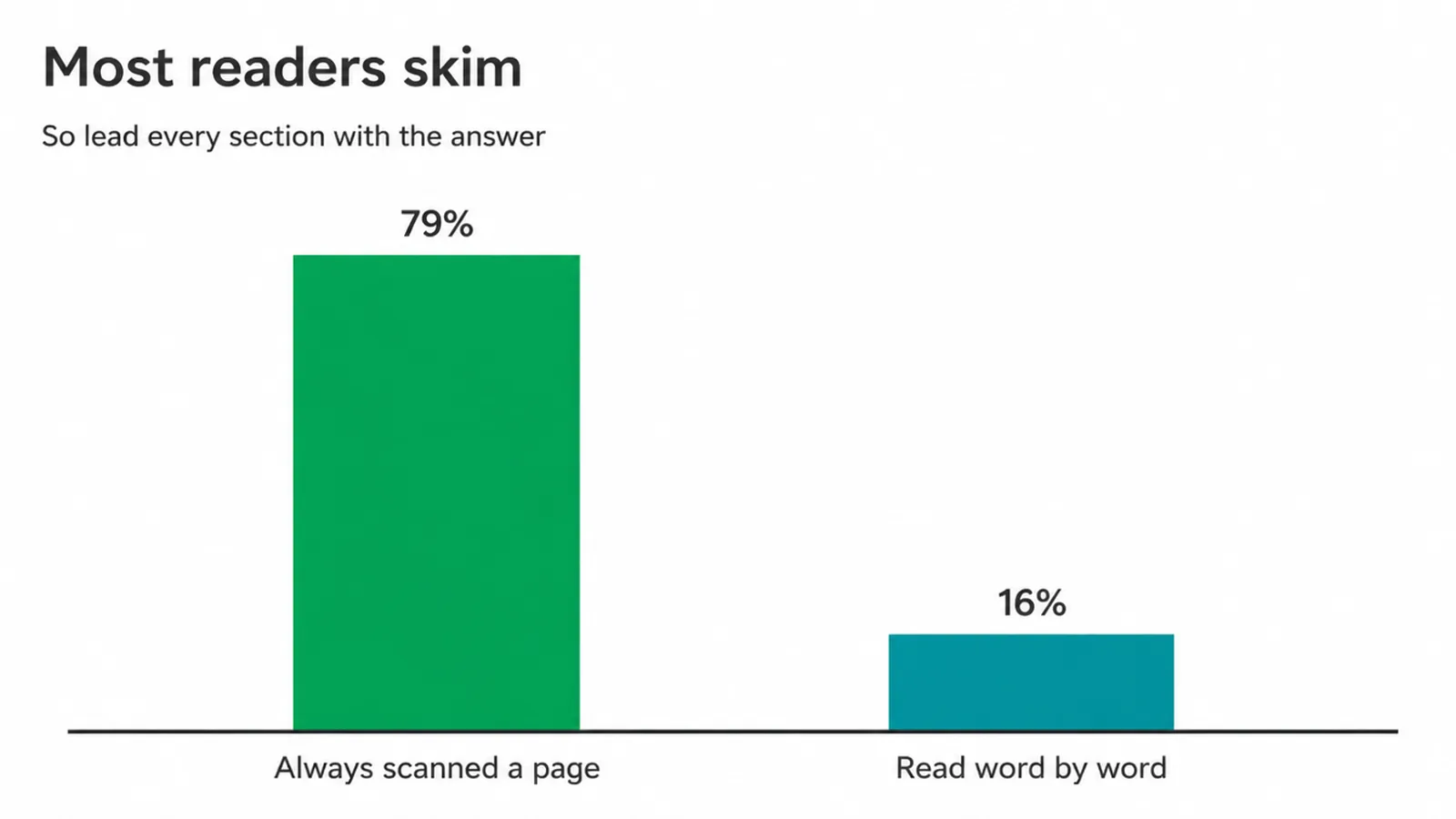
Give the answer first, then explain. Open every section with the direct reply in the first sentence or two, before any background. People skim, so reward them fast.
Nielsen Norman Group found that 79 percent of test users always scanned a new page, and only 16 percent read word by word. If your point is hiding in paragraph three, most readers never reach it.
Answer-first writing helps machines too. Search engines and AI answer boxes love a clean, direct reply they can lift straight off the page. Lead with it, then add the detail, the steps, and the nuance underneath. You lose nothing by being clear up front.
5. Step 4: Make it scannable
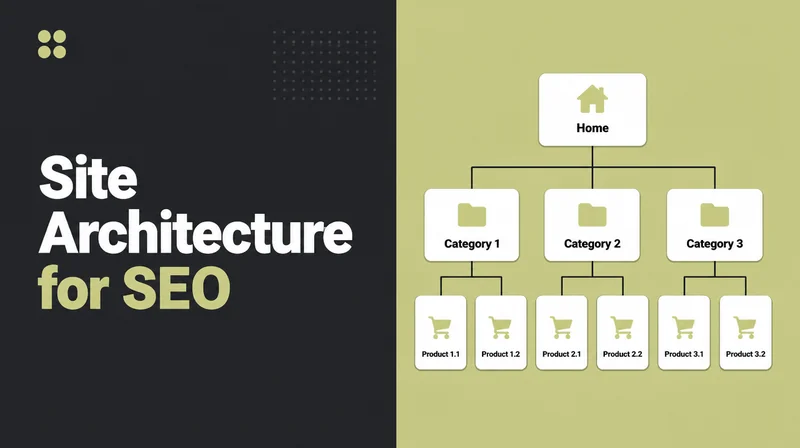
Structure your page so a skimmer can follow it at a glance. Use one H1 for the title, then logical H2 and H3 headings that read like a table of contents.
Keep paragraphs short, two or three sentences. Break dense bits into bullet lists. Add a table when you are comparing things, because a grid is far easier to scan than a wall of text.
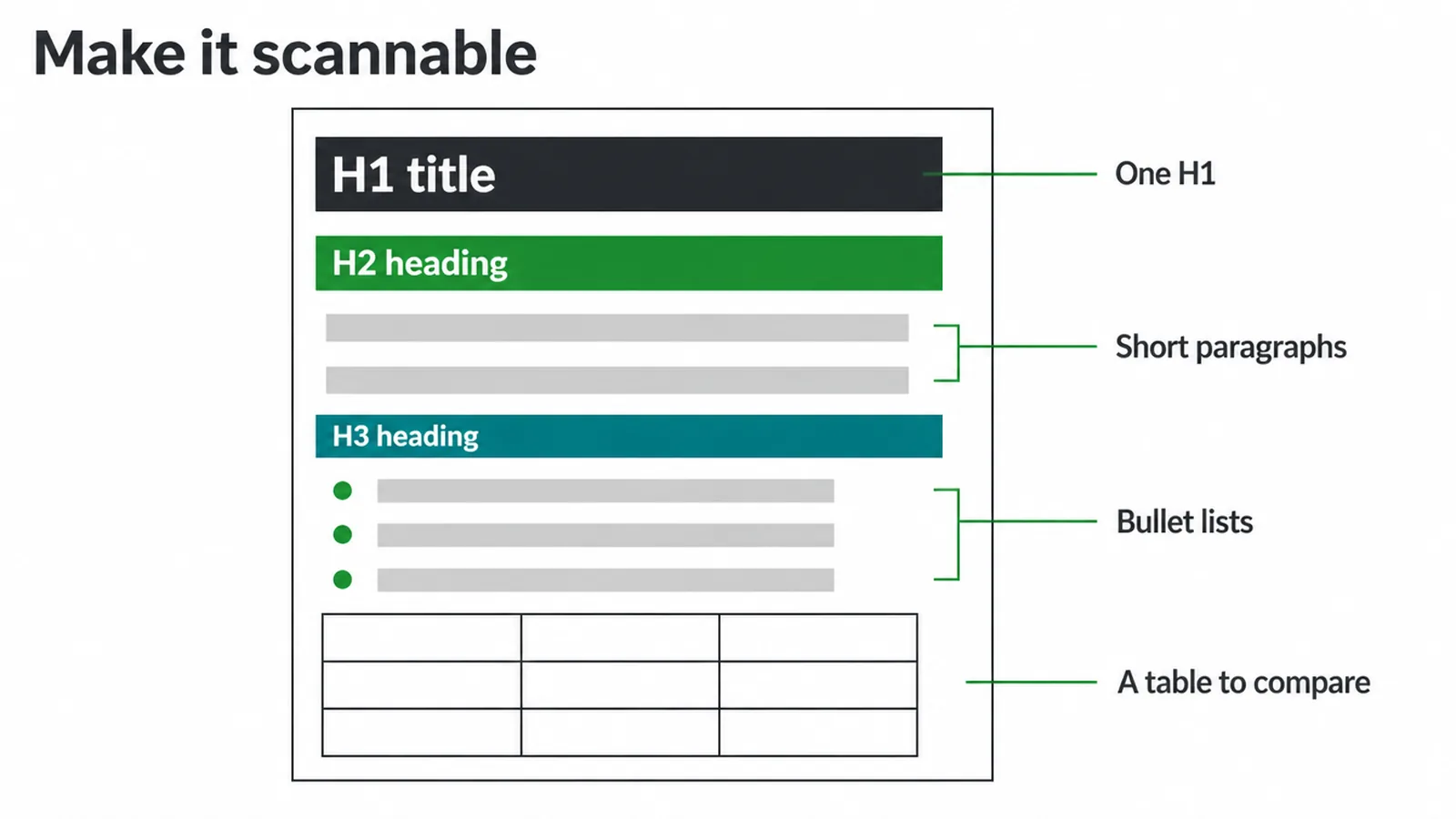
Front-load your headings with the words people search. A heading like "How long should SEO content be?" beats "On the matter of length." The same care goes into your meta descriptions, the snippet that decides whether anyone clicks your result in the first place.
Clear structure helps the reader, the search engine, and your click-through rate all at once.
6. Step 5: Cover the topic fully
Answer the question completely, then stop. Depth beats padding every time. The goal is to leave the reader with no follow-up question, not to hit a word count. That is also how you build trust, and trust matters most. Google states plainly that of these aspects, trust is most important when it judges helpful content.
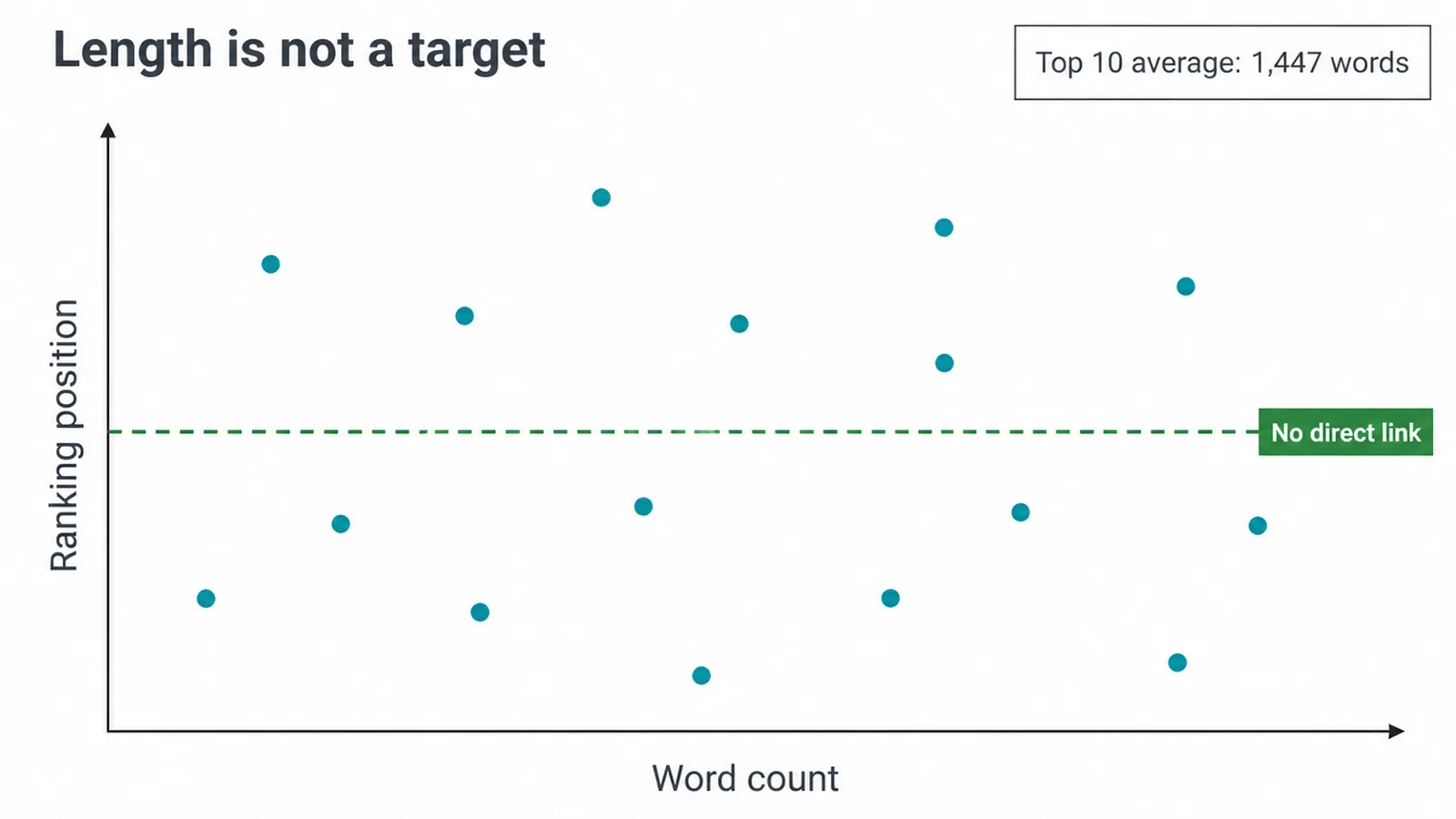
This is where the length myth needs killing. Google says it has no preferred word count. Backlinko's study of 11.8 million results found the average top 10 page runs 1,447 words, but it also found no direct relationship between word count and rankings.
So treat that number as correlation, not cause. Longer pages often rank because covering a topic well tends to take more words, not because Google counts them. Cover it fully, then trim.
7. Step 6: Use keywords naturally
Place your main term where it fits, then write like a person. Put it in the title, somewhere in the first 100 words, and in a heading or two. After that, stop counting.
There is no magic ratio to chase. Google's John Mueller has said there is no ideal keyword density, and mentioning a word seven or eight times does not necessarily help.
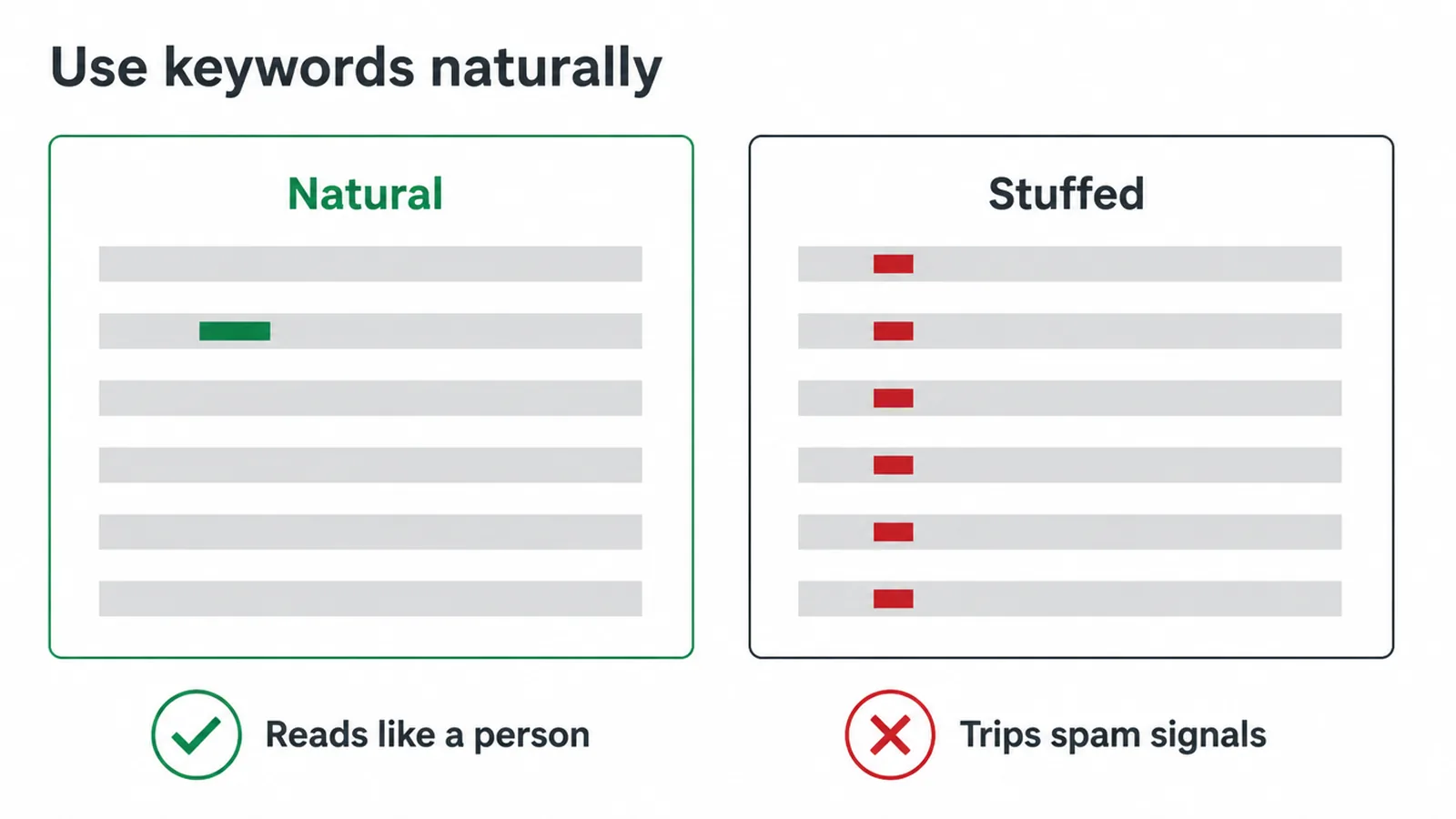
Keyword stuffing, cramming the same phrase into every line, makes a page painful to read and can trip spam signals. Trust your topic. When you cover something properly, you naturally use the related words people and search engines expect to see. That coverage does more for you than any repeated phrase ever could.
8. Step 7: Edit like a reader
Your first draft is never the page that should go live. Edit it as if you were the reader who is busy and slightly impatient. Cut filler words. Shorten long sentences. Delete any line that does not add something. If a paragraph repeats the one above it, kill one of them.
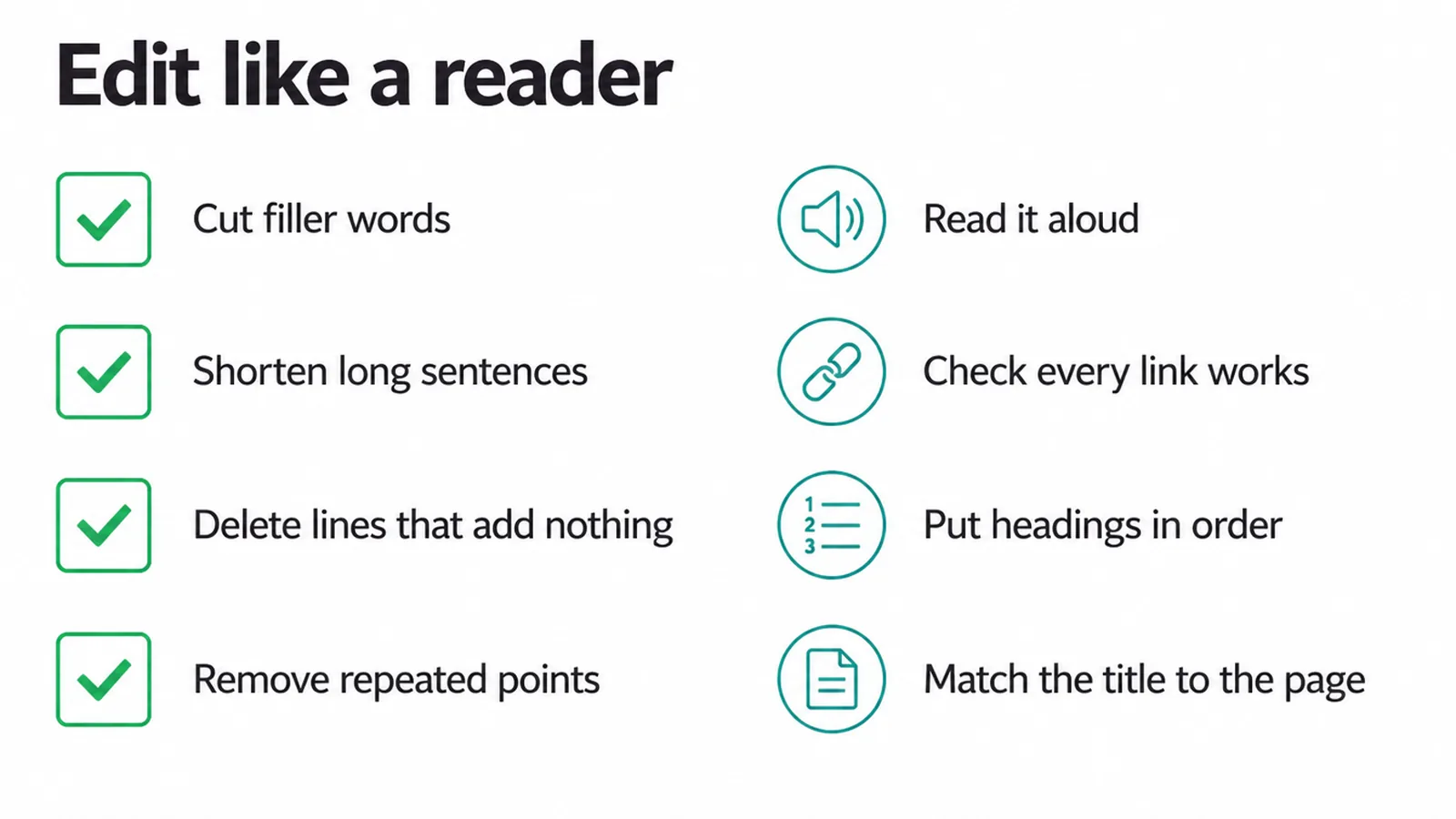
Read the whole thing aloud. You will hear the clumsy bits your eyes skip. Anywhere you stumble, a reader will too, so rewrite it simpler.
Then check the small stuff, links that work, headings in order, and a title that matches the page. This pass is short, but it is the difference between a draft and something worth publishing.
9. Where does AI writing fit?
AI writing is allowed, but quality is still the rule. Google judges content on whether it helps people, not on how it was produced. What it does penalise is intent.
Using automation to produce content for the primary purpose of manipulating search rankings is a violation of our spam policies. So spinning out hundreds of thin AI pages to game Google is a fast way to get hurt.
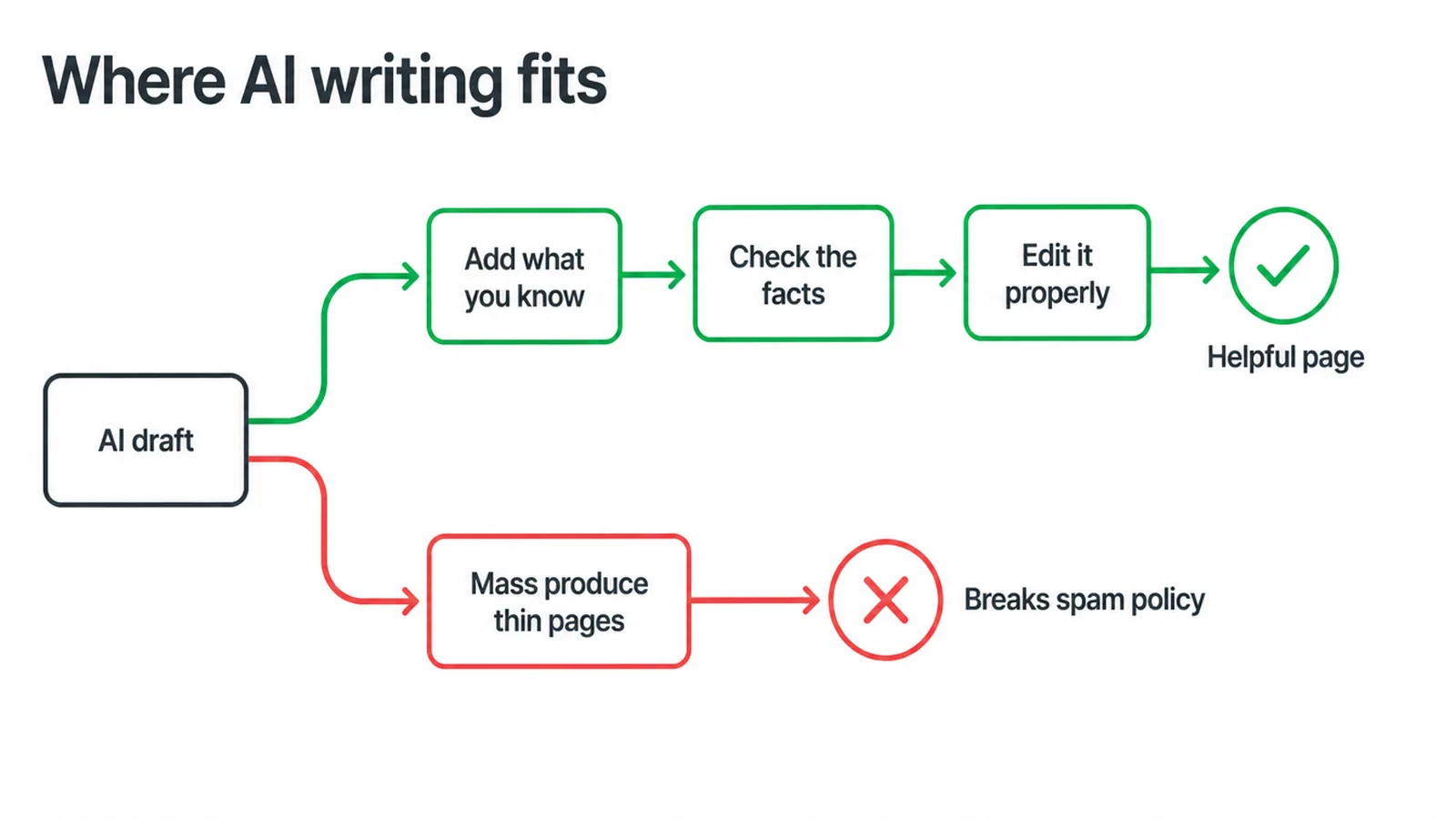
Used well, AI is a fine drafting partner. Let it get a rough version down, then do the human part. Add what you actually know. Check every fact and stat, because tools make confident mistakes.
Cut the bland bits and rewrite in a real voice. The page should end up more useful than the AI left it, with your judgement in every line.
10. SEO content writing: do and don't
Here is the whole guide boiled down to a quick reference. When you are stuck on a page, run it against this list before you publish.
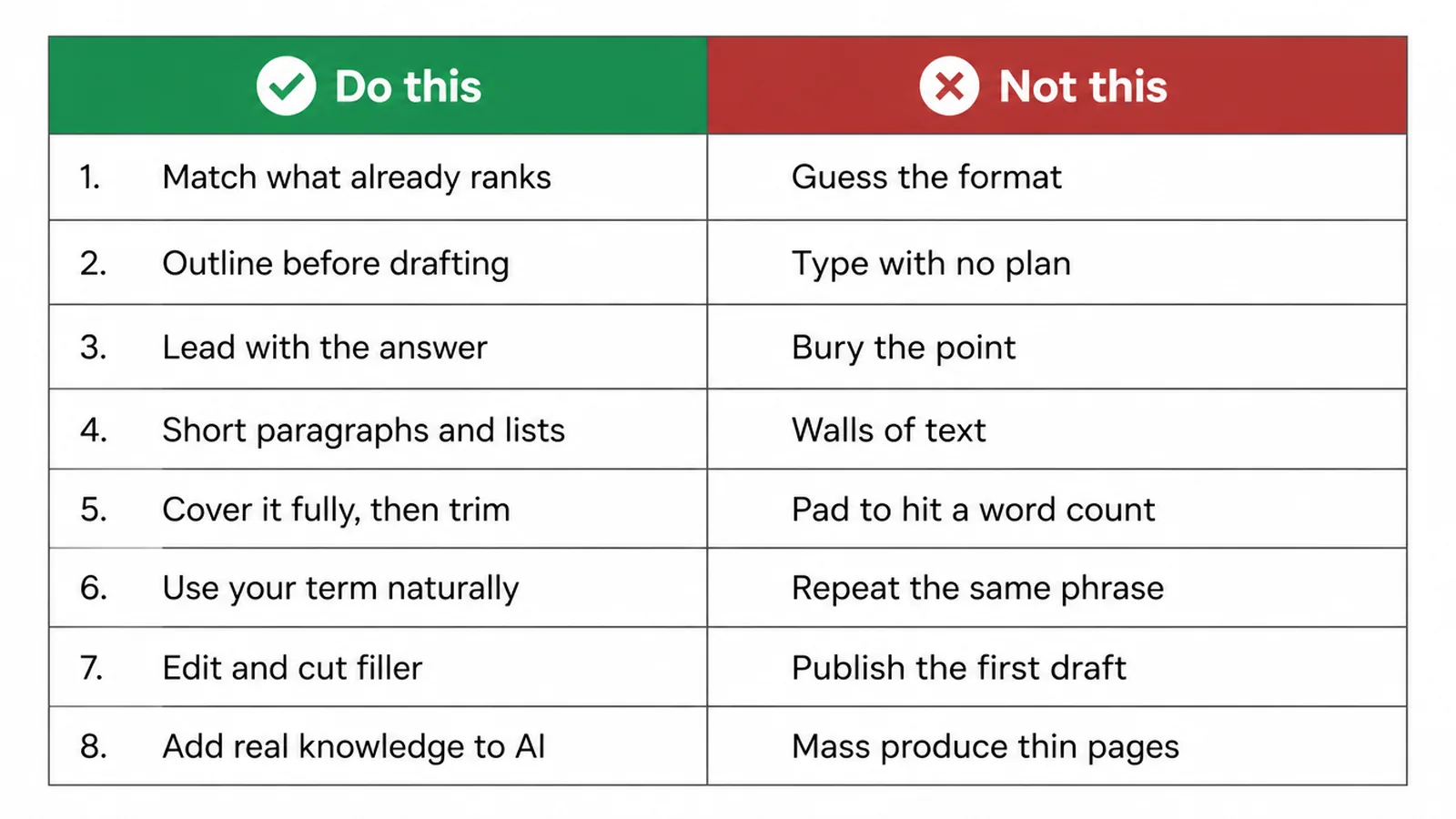
| Do this | Not this |
|---|---|
| Match what already ranks for the keyword | Guess at the format and angle |
| Outline your headings before drafting | Start typing with no plan |
| Lead each section with the answer | Bury the point under a long intro |
| Short paragraphs, lists, a table | Walls of unbroken text |
| Cover the topic fully, then trim | Pad to hit a word count |
| Use your term naturally, a few times | Repeat the same phrase everywhere |
| Edit, read aloud, cut filler | Publish the first draft |
| Add real knowledge to any AI draft | Mass-produce thin AI pages |
None of this is hard. It is just easy to skip when you are rushing. If writing and ranking pages is not your idea of fun, our SEO team does this work daily, or you can just tell us what you need.
Frequently asked questions
1. What is SEO content writing?
SEO content writing is writing a page that answers what someone searched for, is easy to read, and is built so search engines can understand it. You write for people first, then layer in the SEO basics like a clear title, headings, and your main term used naturally.
2. How long should SEO content be?
There is no magic number. Google says it has no preferred word count. Backlinko looked at millions of results and found no direct relationship between word count and rankings. Make the page as long as it needs to be to answer the question fully, and not a word longer.
3. Does keyword density matter for SEO?
Not the way people think. Google has said there is no ideal keyword density, and repeating a word seven or eight times does not necessarily help. Use your main term where it reads naturally, then write like a human. Stuffing the same phrase over and over can hurt you.
4. Is AI content bad for SEO?
AI writing is not banned. Google judges content on quality, not on how it was made. But using automation to mass-produce pages mainly to game rankings breaks Google's spam policies. Use AI to help draft, then add real knowledge, check the facts, and edit it so it is genuinely useful.
5. What is people-first content?
People-first content is content made primarily for people, not to manipulate search engine rankings. It answers a real question, is satisfying to read, and would still be worth publishing even if search engines did not exist. Write for the reader and the rankings tend to follow.
6. What is answer-first writing?
Answer-first writing means you give the direct answer in the first sentence or two, before any background. It respects readers who skim, and it gives search engines and AI answer boxes a clean reply to pull. You can still add detail and nuance right after the answer.
7. How do I write for search intent?
Search the keyword yourself and look at what already ranks. If the top results are how-to guides, write a guide. If they are product pages or comparisons, match that. Intent is just what the searcher actually wants, so let the current results show you the shape your page should take.
8. Is keyword stuffing still a thing?
Yes, people still do it, and it still backfires. Cramming the same phrase into every line makes the page awkward to read and can trip spam signals. Use your term once in the title, once near the top, and in a heading or two, then trust normal writing to cover related words.