AI for Content Creation 2026: Faster, Better Workflows

Use AI for the slow early steps: research, an outline, and a rough first draft. Then take over and edit for your voice, check every fact, and add your own experience. Google judges content on quality, whoever typed it. Seed Light works to that split, and it is how these guides get written.
Key takeaways
- Quality is the line, not the tool. Google targets large amounts of unoriginal content that gives little value, "no matter how it's created". Help readers and you are fine.
- AI is everywhere now. 88% of small businesses use AI tools, so a draft is no longer the hard part. The edit is.
- A raw AI draft is not finished. It writes the most average version, it can invent facts, and it does not know your story.
- Three jobs stay human. Edit for voice, fact check, and add real experience. Never paste and publish.
- Mass producing thin pages is spam. Helpful content with AI help is fine. Hundreds of empty pages to game rankings is not.
1. How do you use AI for content creation?
AI for content creation gets you most of the way there, fast. It is brilliant at the slow early steps: gathering ideas, shaping an outline, and producing a rough first draft. The last stretch, the part that actually ranks and sells, is the human part. That is your voice, your facts, and your real experience.
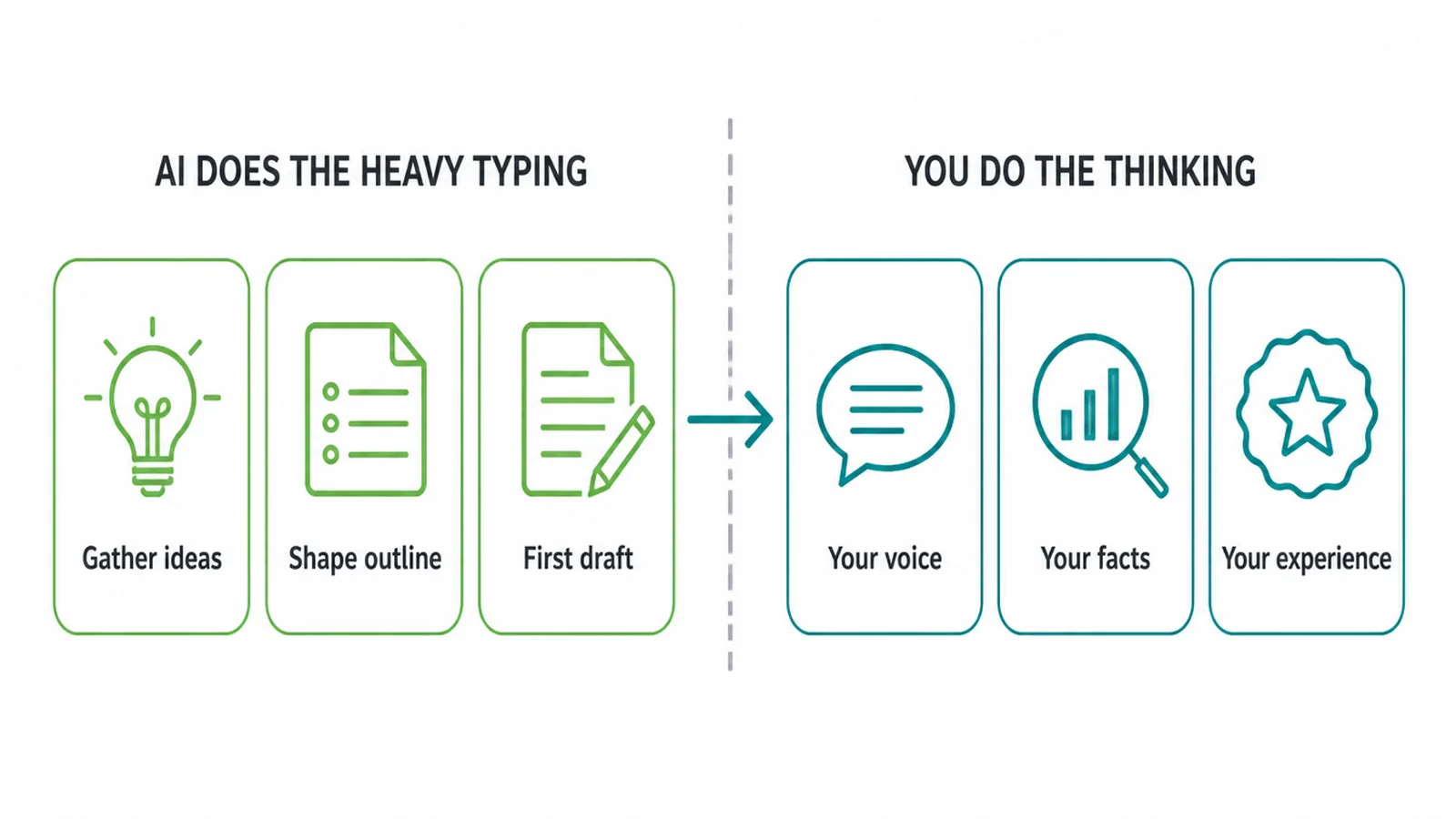
So the order is simple. Let AI do the heavy typing. Then you do the thinking. Most people get this backwards. They ask AI to do everything and ship whatever comes out, then wonder why it reads flat and gets no traffic.
If you are still picking which tool to start with, our guide to AI writing tools walks through the main options. The tool matters less than the habit. A cheap tool with a strong edit beats an expensive one you paste straight to the page.
2. Why a raw AI draft is not finished
A raw AI draft is a starting point, not a finished post. AI is trained on what already exists, so it writes the most average version of every sentence. That is fine for a skeleton. It is weak for anything you want people to remember or trust.
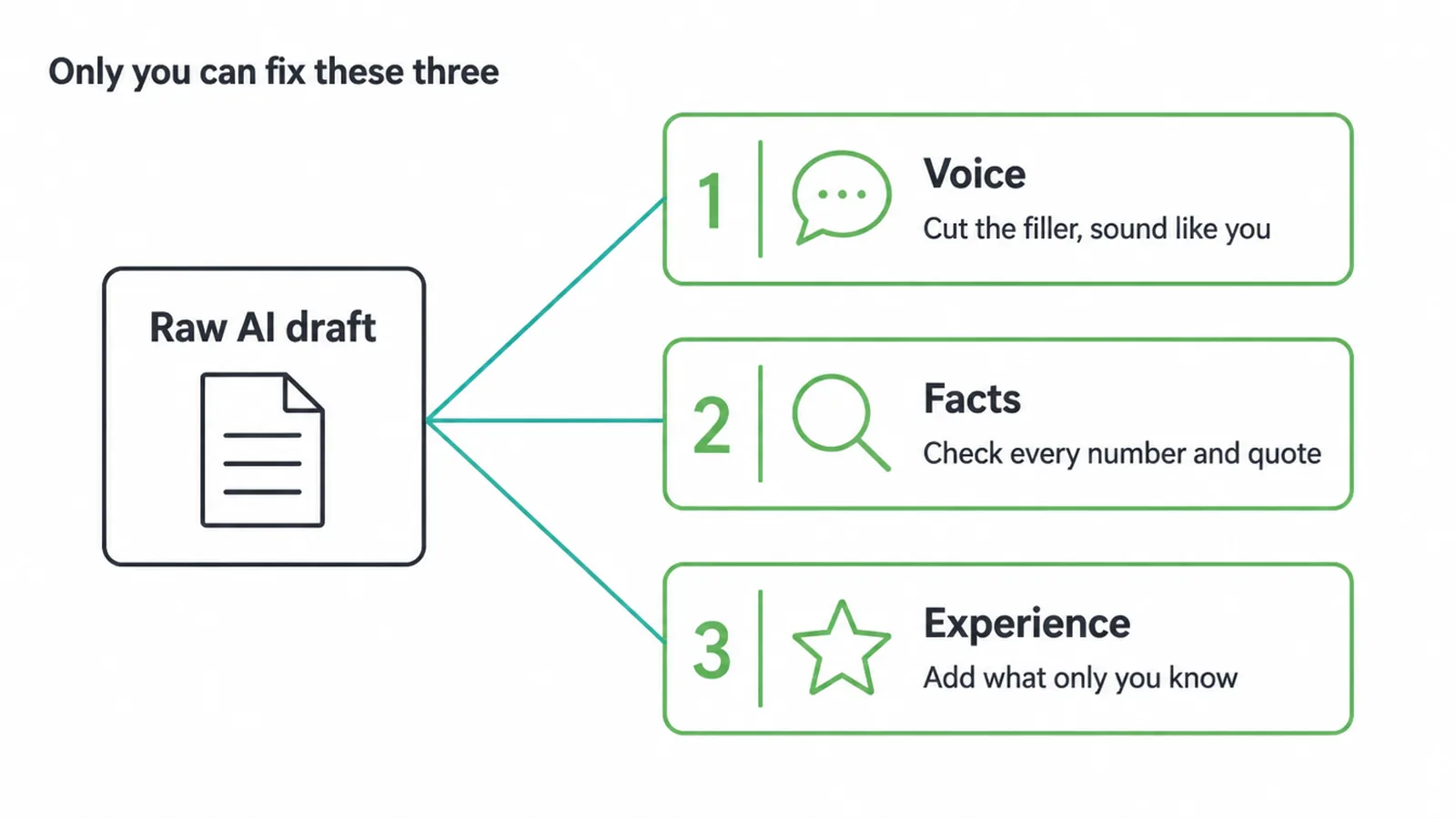
There are three things only you can fix. First, voice. The draft sounds like everyone else until you cut the filler and make it sound like you. Second, facts.
AI can state a wrong number or a fake quote with full confidence, so you check everything. Third, experience. AI does not know what happened to your business, your clients, or your town. That detail is what makes a page worth reading.
So never paste and publish. That habit is how the web fills up with grey, samey pages that help nobody. The draft saves you time. The edit earns the trust.
3. The honest AI content workflow
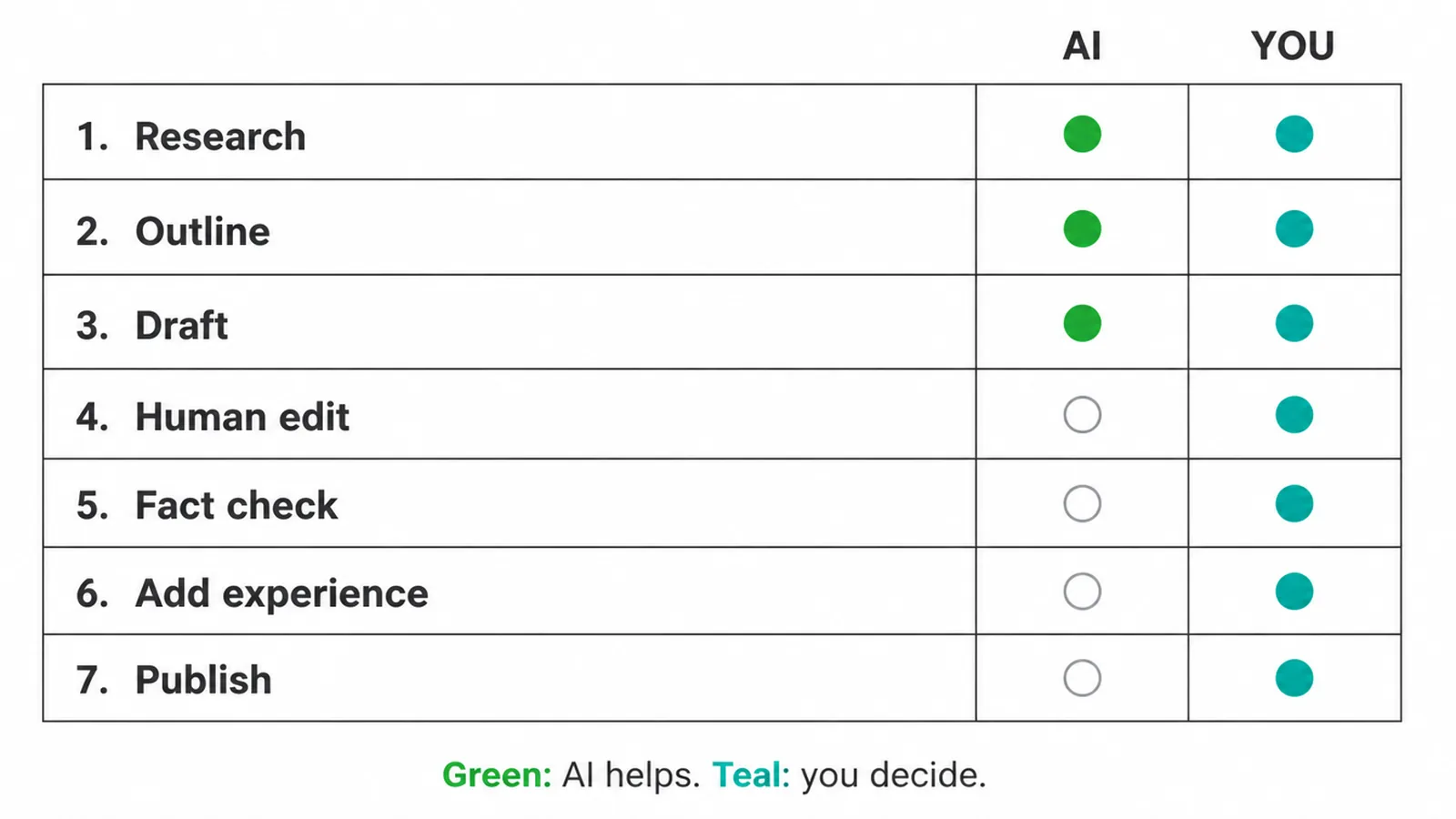
Here is a simple workflow for AI content creation that keeps the speed and protects the quality. AI handles the early grind. You own the parts that need judgement. Run it the same way every time and it gets quick.
| Step | What AI does | What you do | Why it matters |
|---|---|---|---|
| Research | Pulls together angles, questions, and common points | Pick the angle that fits your reader, drop the rest | Saves hours, but you steer it |
| Outline | Builds a clear heading structure | Reorder it around what your reader actually asks | A good shape is half the work |
| Draft | Writes a full first pass quickly | Read it once and mark the weak parts | Beats the blank page |
| Human edit | Nothing | Rewrite into your voice, cut the clichés and filler | This is the part readers feel |
| Fact check | Nothing reliable | Confirm every number, name, and claim against a real source | One fake stat can sink your trust |
| Add experience | Cannot | Drop in your own story, example, or opinion | This is what makes the page original |
| Publish | Nothing | You make the final call | Your name is on it, not the tool's |
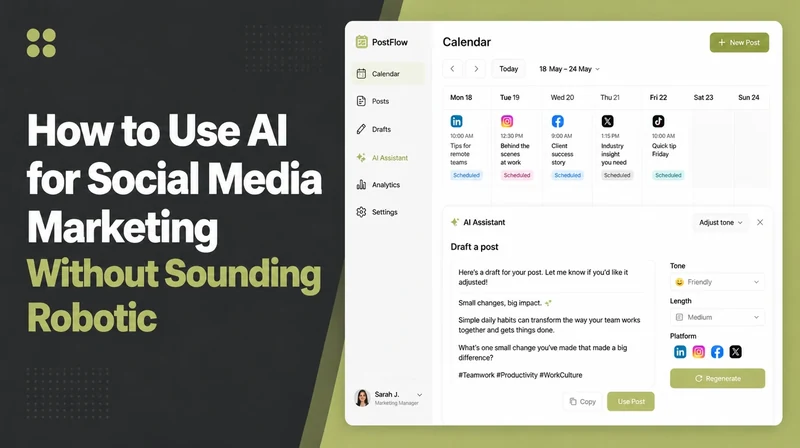
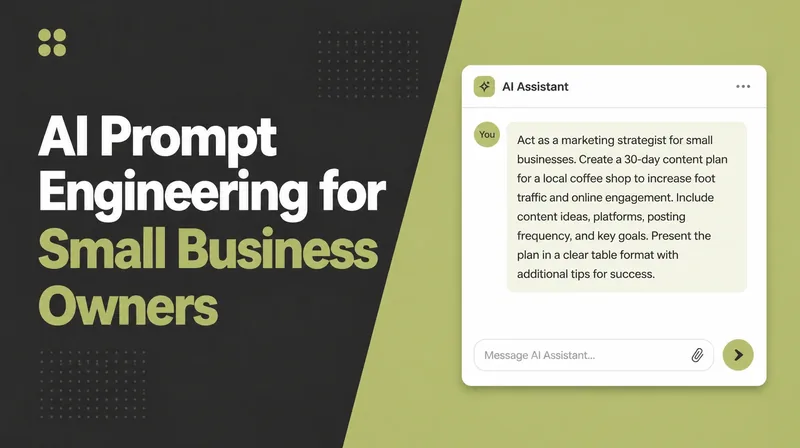
Plan your posts ahead with a content calendar so this workflow runs on a schedule instead of a panic, the same way we plan content for clients. And feed AI better instructions with our best ChatGPT prompts so the draft starts closer to done.
4. How to keep your voice with AI
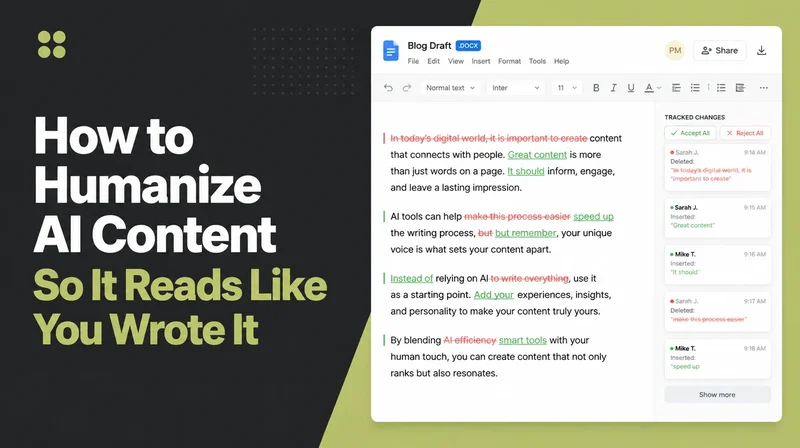
The biggest worry with AI for content creation is sounding like a robot. It is easy to fix. Feed the AI two or three samples of your real writing and ask it to match the tone, length, and word choice. Show it with samples, which teaches the tone faster than describing it.
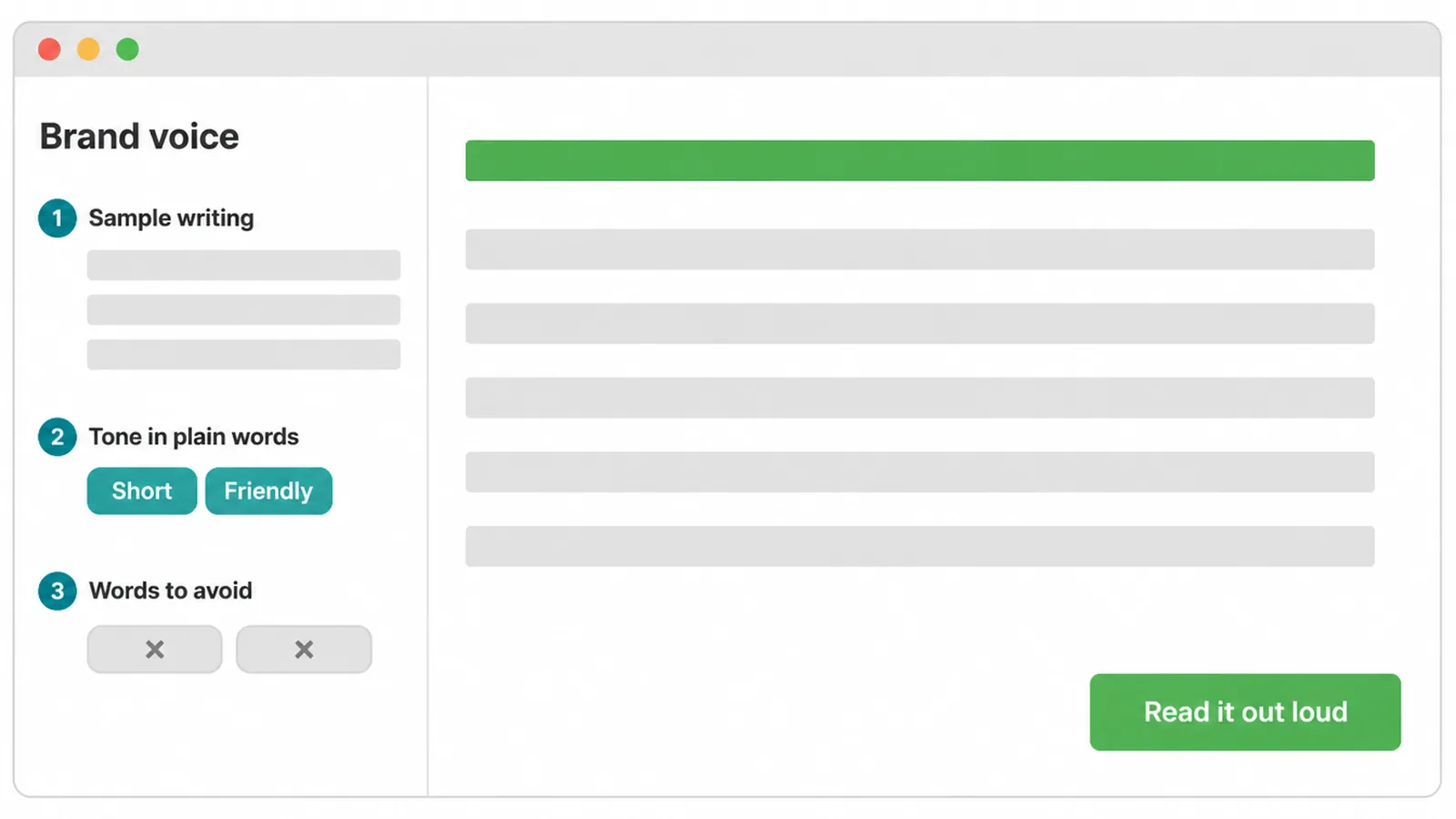
Set the tone in plain words too. Tell it short and friendly, or direct and no fluff, whatever you actually are. Keep a short banned-words list, the corporate phrases you never use, and ask it to avoid them.
Then do the oldest trick there is. Read the draft out loud. If you would not say a sentence to a customer across the counter, cut it or rewrite it. Real writing sounds like a real person talking. Our guide to SEO content writing goes deeper on shaping copy that reads well and still ranks.
5. What Google actually says about AI content
Google does not penalise content just because AI helped make it. It judges the page, not the method. In its own spam policies, Google targets large amounts of unoriginal content with little value, "no matter how it's created". Read that line carefully. The problem is thin and copycat, not the tool.
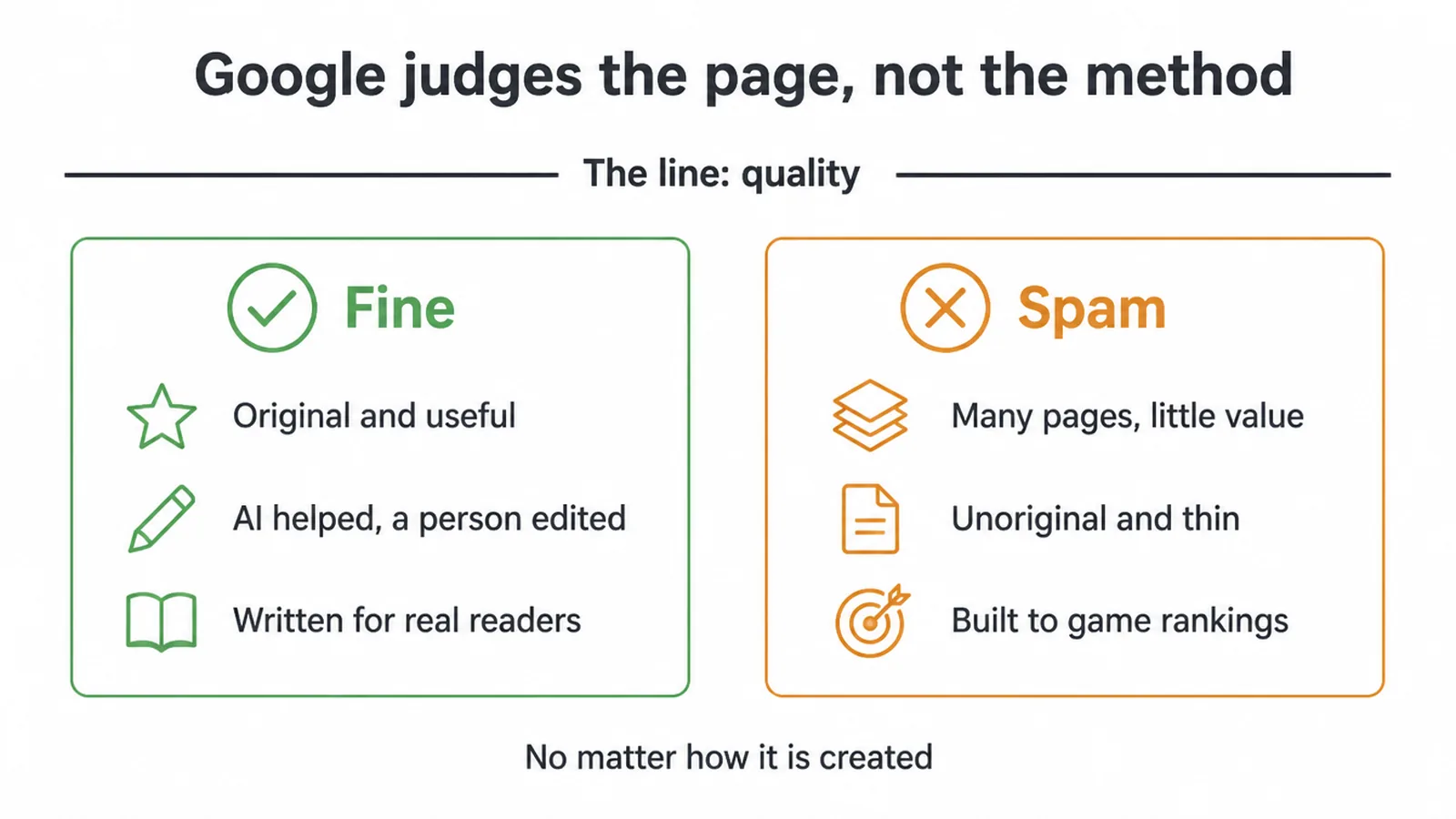
Google has also said plainly that using AI to generate many pages without adding value may break its spam policy, while AI can be useful for researching a topic and adding structure to original content.
So the rule is clear. Helpful content made with AI help is fine. Pages built only to manipulate rankings are spam, and Google will act on them.
The same idea now stretches to AI search results. If you want to show up there too, see how to rank in AI Overviews. The winners are the same either way: clear, original, genuinely useful pages.
6. What to use AI for, and what to keep human
The split is easy once you see it. Use AI for the work that is slow but low risk. Keep human anything that needs truth, trust, or judgement.
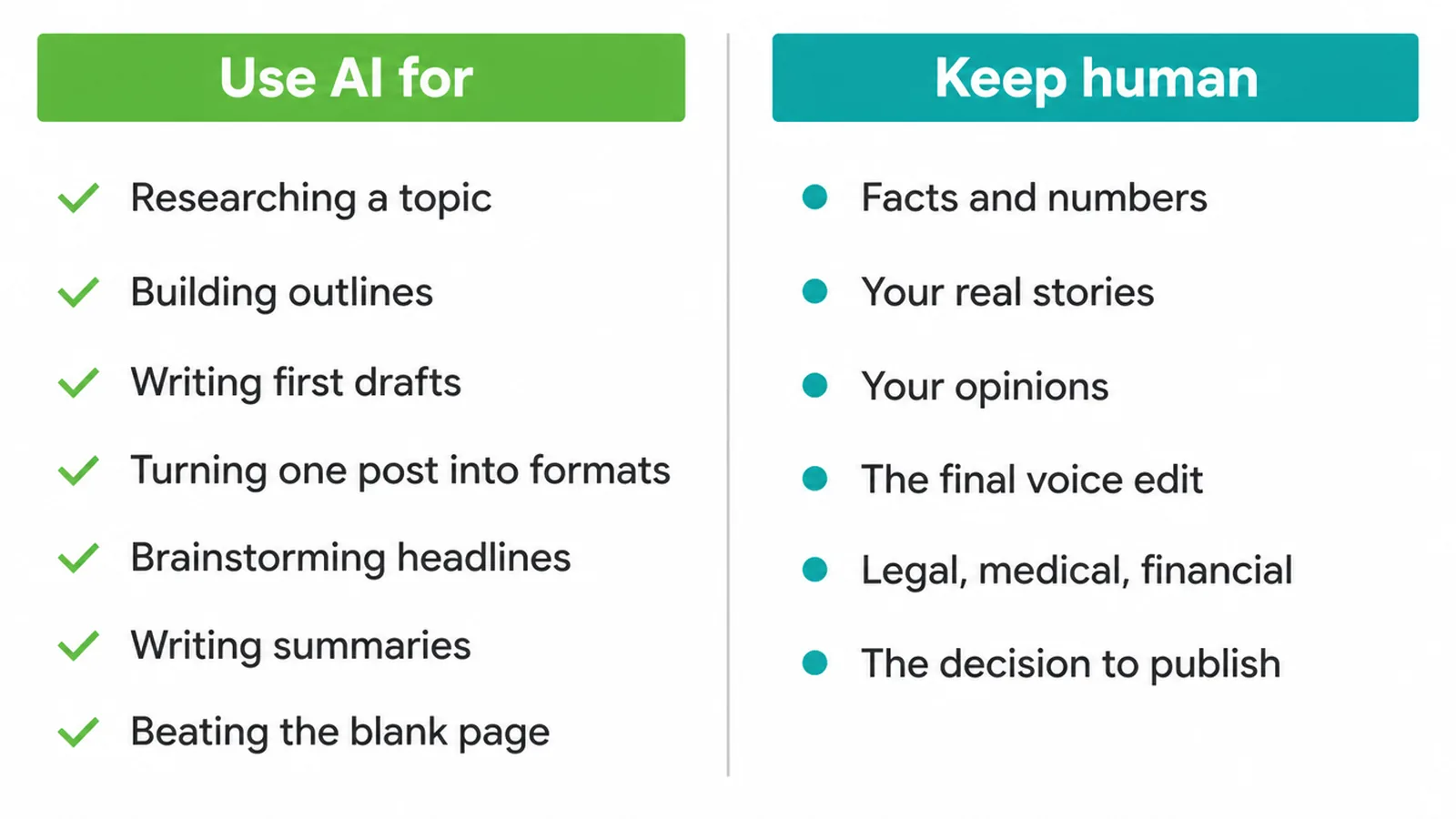
Use AI for: researching a topic, building outlines, writing first drafts, turning one post into a few formats, brainstorming headlines, writing summaries, and beating the blank page.
Keep human: your facts and numbers, your real stories, your opinions, the final voice edit, anything legal, medical, or financial, and the decision to publish. If a wrong line could hurt someone or cost them money, a person checks it first. No exceptions.
7. What to avoid with AI content
A few habits will quietly hurt you, so name them and skip them. Each one is the easy lazy path, and each one backfires.
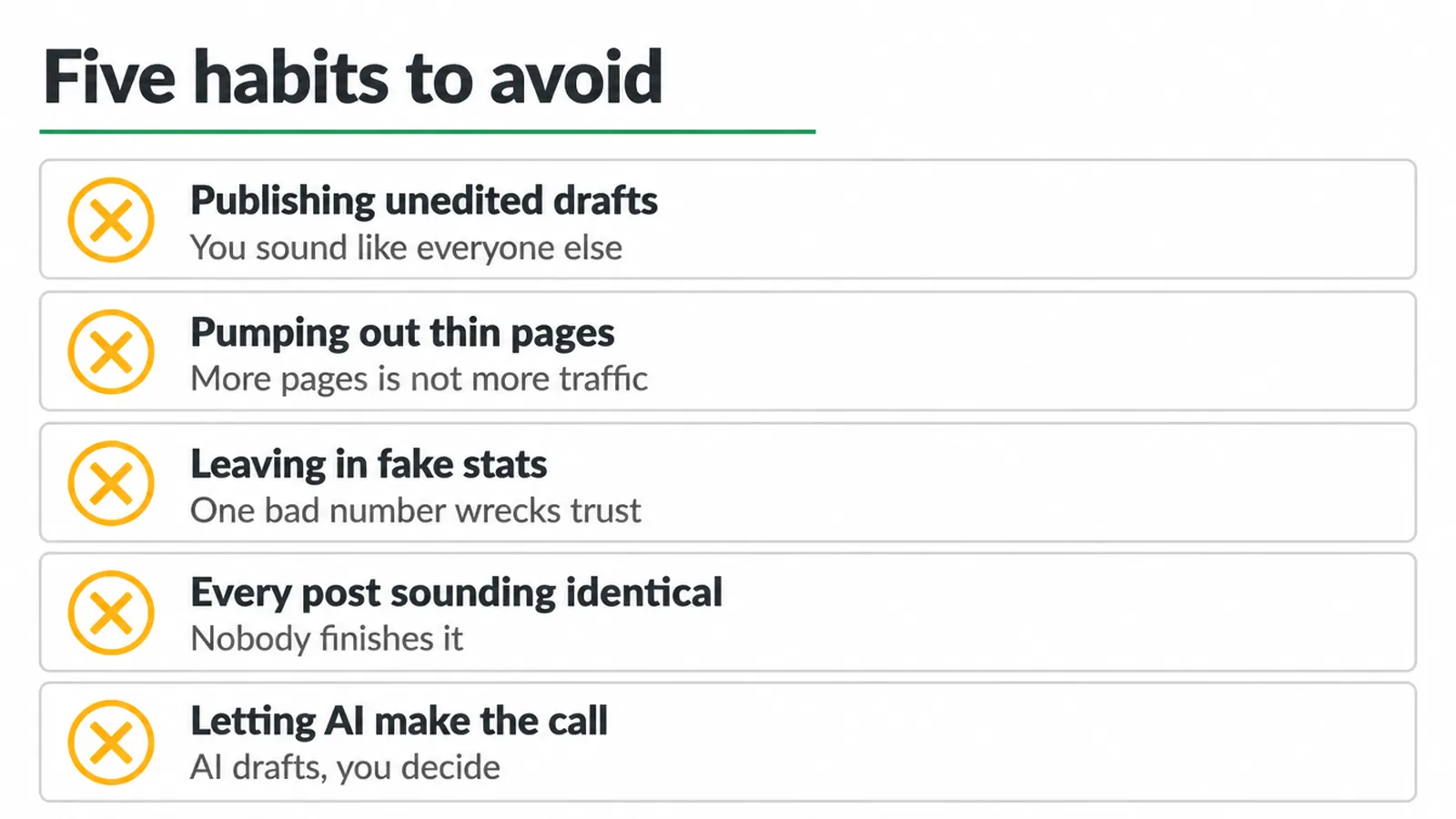
- Publishing unedited drafts. The fastest way to sound like everyone else and earn no trust.
- Pumping out hundreds of thin pages. This is the exact spam pattern Google calls out. More pages is not more traffic.
- Leaving in fake stats and quotes. AI invents these. One unchecked number can wreck your credibility.
- Letting every post sound identical. If your blog reads like a settings menu, nobody finishes it.
- Letting AI make the call. AI drafts. You decide. The judgement is the part you cannot outsource.
Used well, AI is a real help for a busy small business. If you want a hand setting up a content process that stays honest and saves you time, our content marketing service is built for exactly that, and you can get in touch any time.
Frequently asked questions
1. How do I use AI for content creation?
Use AI for the slow early steps. Ask it to research a topic, build an outline, and write a first draft. Then you take over. You edit it into your voice, check every fact and number, and add your own stories. AI gets you most of the way fast. The last part, the part that ranks and sells, is still your job.
2. Is AI content bad for SEO?
No, not on its own. A helpful page made with AI help is fine. A pile of thin pages made only to climb rankings is spam, and that fails whether a person or a machine wrote it. The test is simple. Does the page help a real reader, or was it made just to trick search? Help wins.
3. Does Google penalise AI content?
Google does not punish content just because AI helped make it. Google judges the page, not the method. If the page is original and useful, you are fine. If you mass produce low value pages to game the results, that breaks Google's spam rules and can hurt you. Quality is the line, not the tool.
4. How do I keep my brand voice when using AI?
Feed the AI two or three samples of your real writing and ask it to match the tone, length, and word choice. Describe your voice in plain words, like short and friendly. Keep a short list of words you never use. Then read the draft out loud. If you would not say it to a customer, cut it.
5. Can AI replace my content team?
No. AI is a fast first drafter, not a finisher. It cannot fact check itself, it does not know what happened to your business, and it has no real opinion. A person still has to edit for voice, confirm the facts, and decide what to publish. AI speeds up the team. It does not stand in for the team.
6. How do I stop AI content sounding robotic?
Cut the filler and the stock phrases. AI writes the most average version of any sentence, so trim it. Use short sentences, speak straight to the reader, and swap fancy words for plain ones. Add a real detail only you know. Read it aloud one more time. If it sounds like a brochure, keep cutting.
7. Do I need to fact check AI content?
Yes, every time. AI can state a wrong fact, a made up statistic, or a fake quote with total confidence. Check every number, name, date, and claim against a real source before you publish. This matters most for money, legal, medical, and health topics, where a wrong line can do real harm.
8. What should I use AI for and what should stay human?
Use AI for research, outlines, first drafts, repurposing one piece into many, headline ideas, and summaries. Keep human the facts and numbers, your real stories, your opinions, the final voice edit, anything legal or medical or financial, and the decision to hit publish. AI helps. You stay in charge.