The SEO Words Agencies Use, Explained

An SEO glossary is only useful if each word comes with a consequence. Seed Light explains these sixteen terms using Google's own published definitions, then says what each one should change for you, because knowing that indexing is not guaranteed matters more than being able to recite it.
Somebody sends you a report full of impressions, canonicals and crawl budget. You nod, and you are no better informed than before you opened it.
This SEO glossary covers sixteen terms that actually come up in a report or a proposal, using Google's own published wording wherever it exists.
By the end you will know what each word means and, more usefully, what it should change about a decision you make.
Key Takeaways
- Being found and being chosen are different problems. Impressions measure the first, clicks the second.
- Indexing is not guaranteed. Google states plainly that not every page it processes will be indexed.
- Robots.txt does not hide a page. It controls crawling, and Google says it is not a mechanism for keeping a page out of Google.
- Your report runs two days behind. Search Console data appears 48 hours after collection, and history stops at 16 months.
- Two of these terms get swapped constantly. Indexed and ranked are not the same thing.
Every definition below is Google's own wording where Google publishes one. Where it does not, I have said so rather than dressing up my version as official.
Most SEO definitions online are someone's paraphrase of a paraphrase. That is how a term quietly drifts from what the search engine actually means by it.
The Words That Matter
Start with the three that appear in almost every report, because they are the three most often misread.
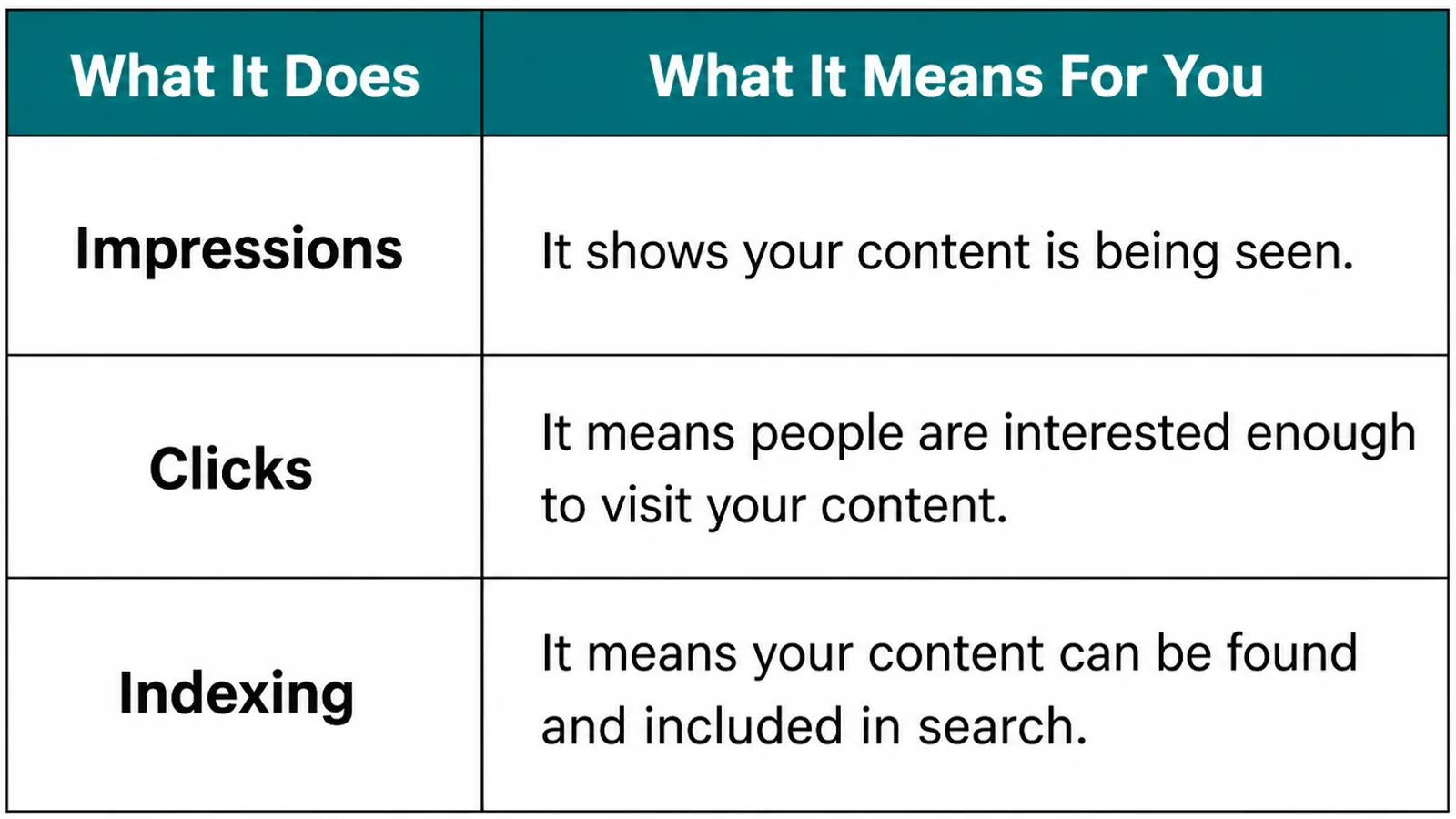
If you read nothing else in this SEO glossary, read this table. Everything after it is detail hanging off these three ideas.
| Term | What it means for you |
|---|---|
| Impressions | You were shown to someone. It says nothing about whether they noticed. |
| Clicks | Someone chose you over the other results. This is the first real signal. |
| Indexing | Google has processed the page. It is permission to compete, not a position. |
Google defines an impression as meaning a user has seen, or potentially seen, a link to your site, counted whenever the item appears on the current page of results.
That "potentially" is doing real work. An impression can be counted for a result nobody scrolled down to.
So impressions and clicks answer two different questions. Impressions ask whether you were in the race, clicks ask whether anyone picked you.
Read together they tell you something useful. Plenty of impressions and almost no clicks usually means your title and description do not match what the searcher wanted.
A click is counted when the user is sent to a page outside Google. Clicking, returning and clicking the same link again counts as only one click.
Indexing sits behind both. A page that is not indexed produces no impressions at all, so a zero there is a different problem from a low number.
SEO Glossary: Words About Being Found
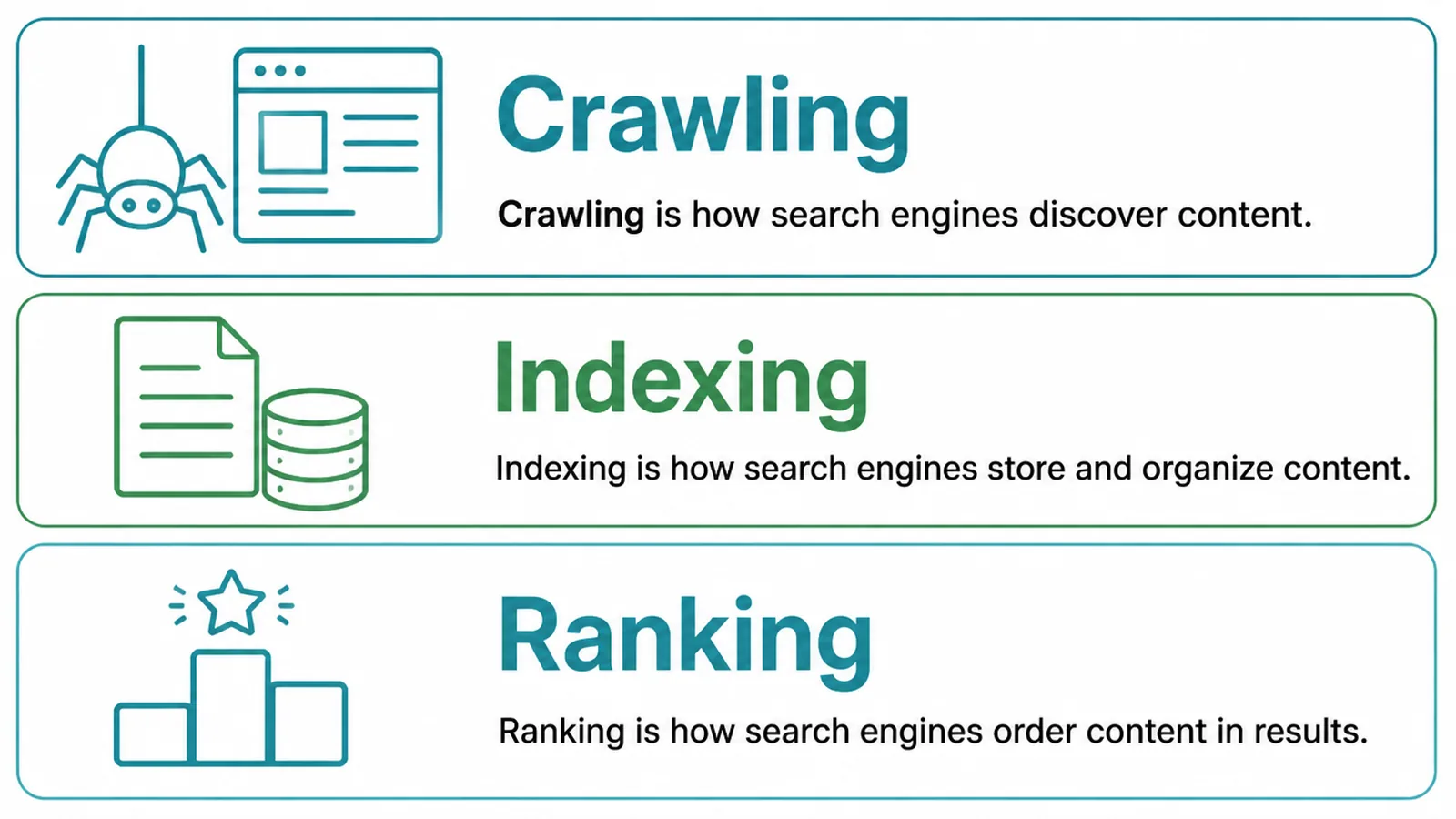
These describe whether Google knows your page exists at all.
- Crawling. Google downloads text, images and videos from pages with automated programs called crawlers.
- Indexing. After a page is crawled, Google tries to understand what it is about and may store it.
- Sitemap. A file listing your pages and their relationships, which does not guarantee they will be crawled and indexed.
- Robots.txt. A file telling crawlers which URLs they may access, used mainly to avoid overloading a site.
- Noindex. A rule that keeps a page out of results, which Google honours regardless of whether other sites link to it.
The robots.txt one trips people up constantly. Google states it is not a mechanism for keeping a web page out of Google, so blocking a page there can leave it in results with no description.
It is the single most expensive misunderstanding in this SEO glossary, because a site can block its own pages for months without anyone noticing.
If you want a page gone from search, noindex is the tool. If you want to spare your server, robots.txt is.
What is indexing, in practice? It is Google deciding your page is worth keeping in the library at all. A lower bar than ranking, and not an automatic one.
Plenty of perfectly good pages sit unindexed for weeks. Thin pages, near duplicates and pages nothing links to are the usual reasons.
A sitemap helps Google find them, and no more than that. Google is explicit that listing a page is not a promise to index it.
Words That Describe The Page Itself
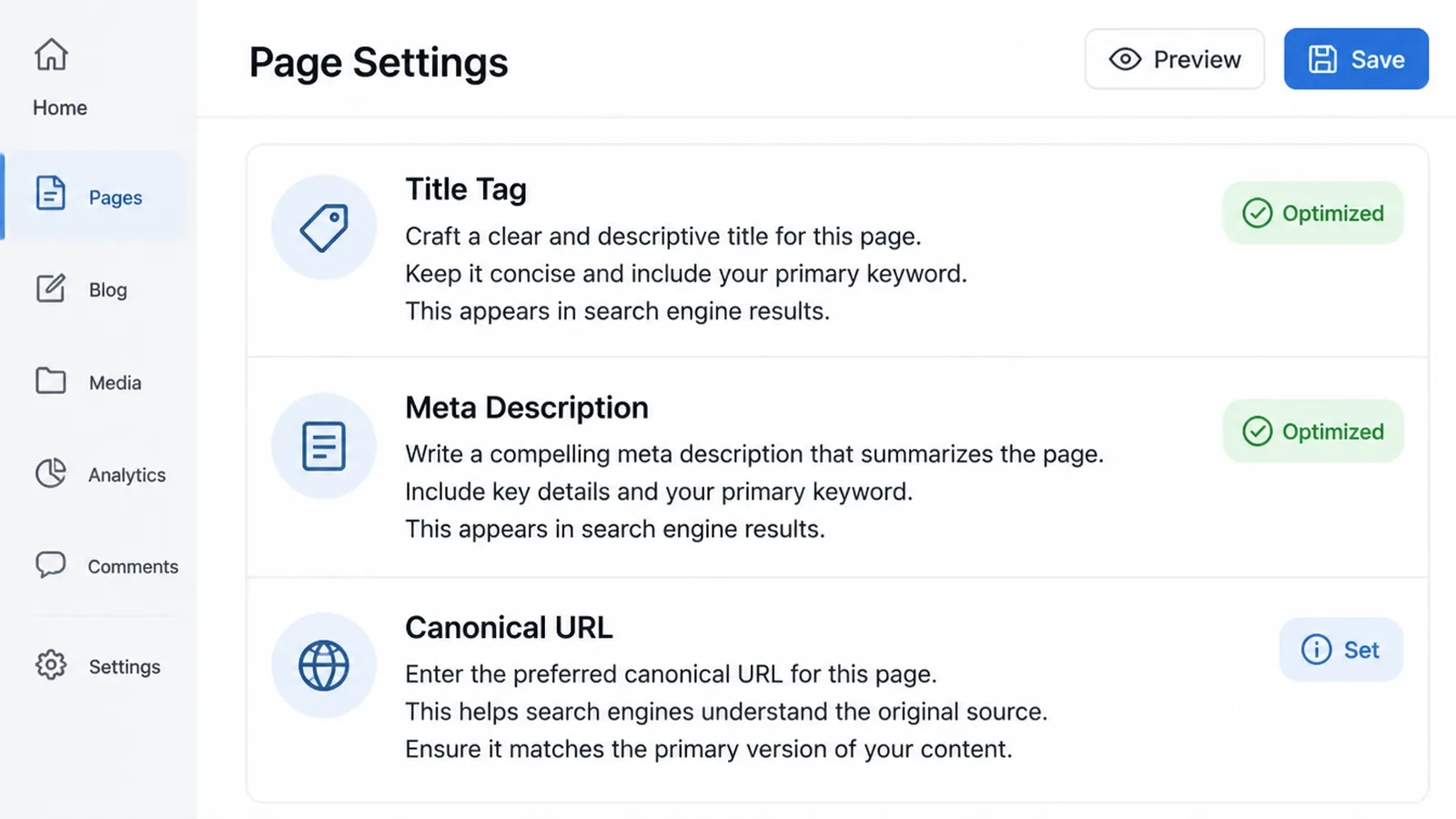
These describe the page itself rather than how it is found.
- Canonical. Google selects the most representative URL from a set of duplicate pages, and that one gets the credit.
- Link text. Google calls it link text or anchor text, and defines it as the visible text part of a link.
- Alt text. A short, descriptive piece of text explaining the relationship between the image and your content.
- Structured data. A standardised format for providing information about a page and classifying its content.
- Core Web Vitals. Three measures: loading, responsiveness and visual stability.
Canonical matters more than it sounds. If two of your pages say nearly the same thing, Google picks one, and it may not pick the one you promote.
That is worth knowing before you publish a near duplicate of a page that already works.
Structured data is the one owners most often pay for without understanding. It does not change your ranking by itself. It describes the page so Google can display it richly.
How They Fit Together
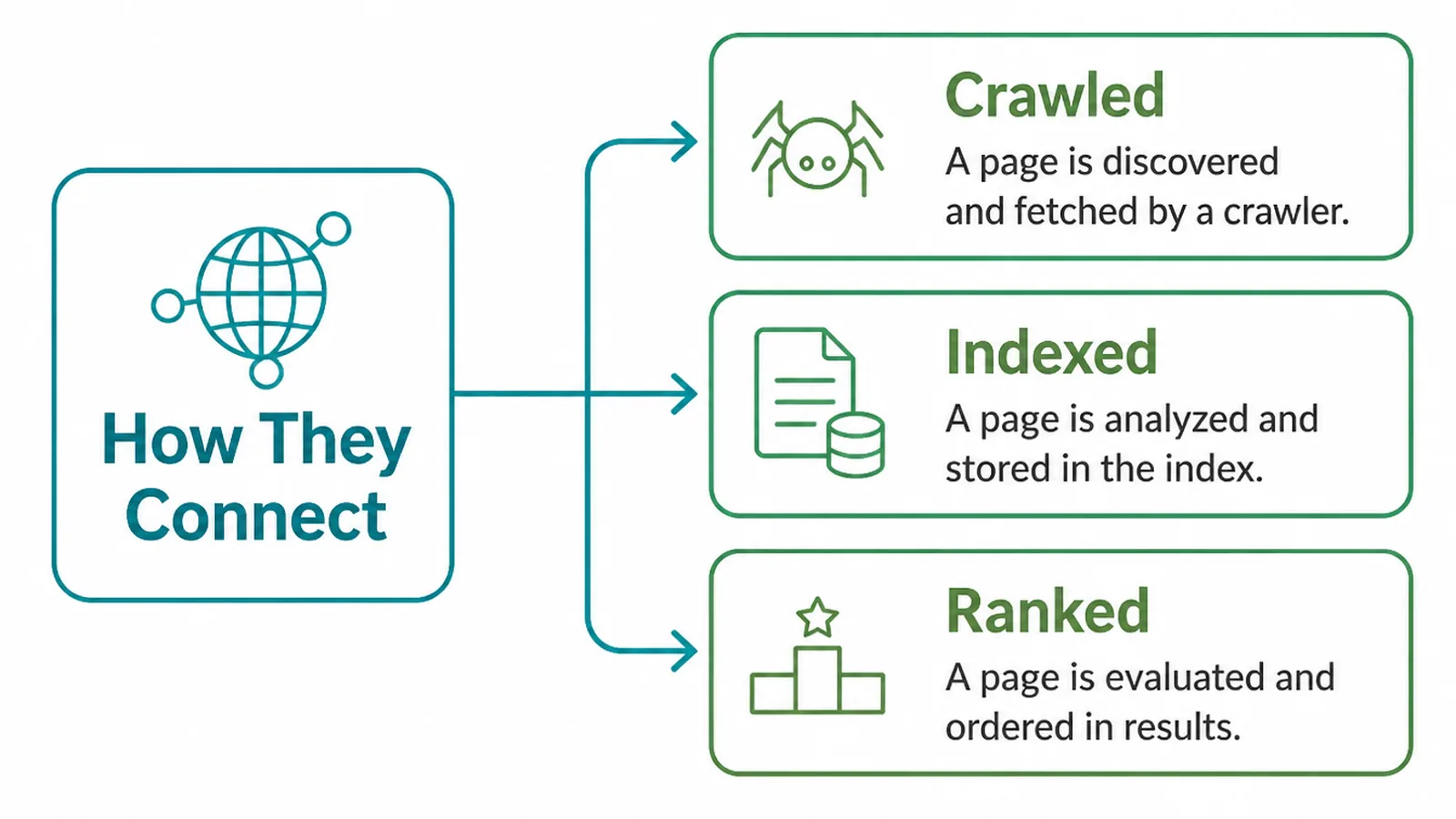
These terms are a sequence, not a list, and a problem at one stage cannot be solved at another.
A page is crawled, then possibly indexed, then possibly ranked for a search. Google is explicit that indexing is not guaranteed.
It adds that it does not guarantee it will crawl, index or serve your page even when the page follows its guidance.
So when a report says a page is not performing, the first question is which stage it stopped at. Not crawled, not indexed and not ranking are three different problems.
Each has its own fix. Crawling is usually a technical block, indexing is usually a quality or duplication judgement, and ranking is competition.
Asking which of the three applies is the most useful question an owner can put to an agency, and it is answerable from one free report.
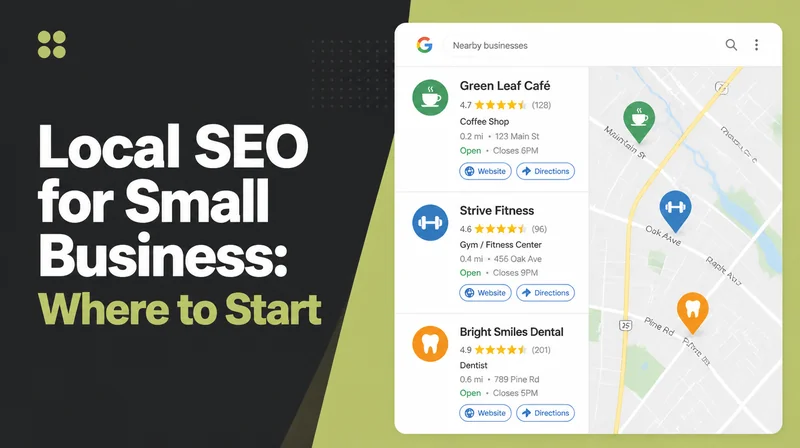
Local search has its own vocabulary, and it works on different terms. Google says they are based mainly on relevance, distance and prominence, where distance is simply how far you are from the searcher.
The phrase local pack, incidentally, is industry slang. Google says local results, and there is no official definition to quote.
That is worth noticing whenever a proposal uses it. A term with no published definition can mean whatever the person selling it needs it to mean.
Where You Will See Them
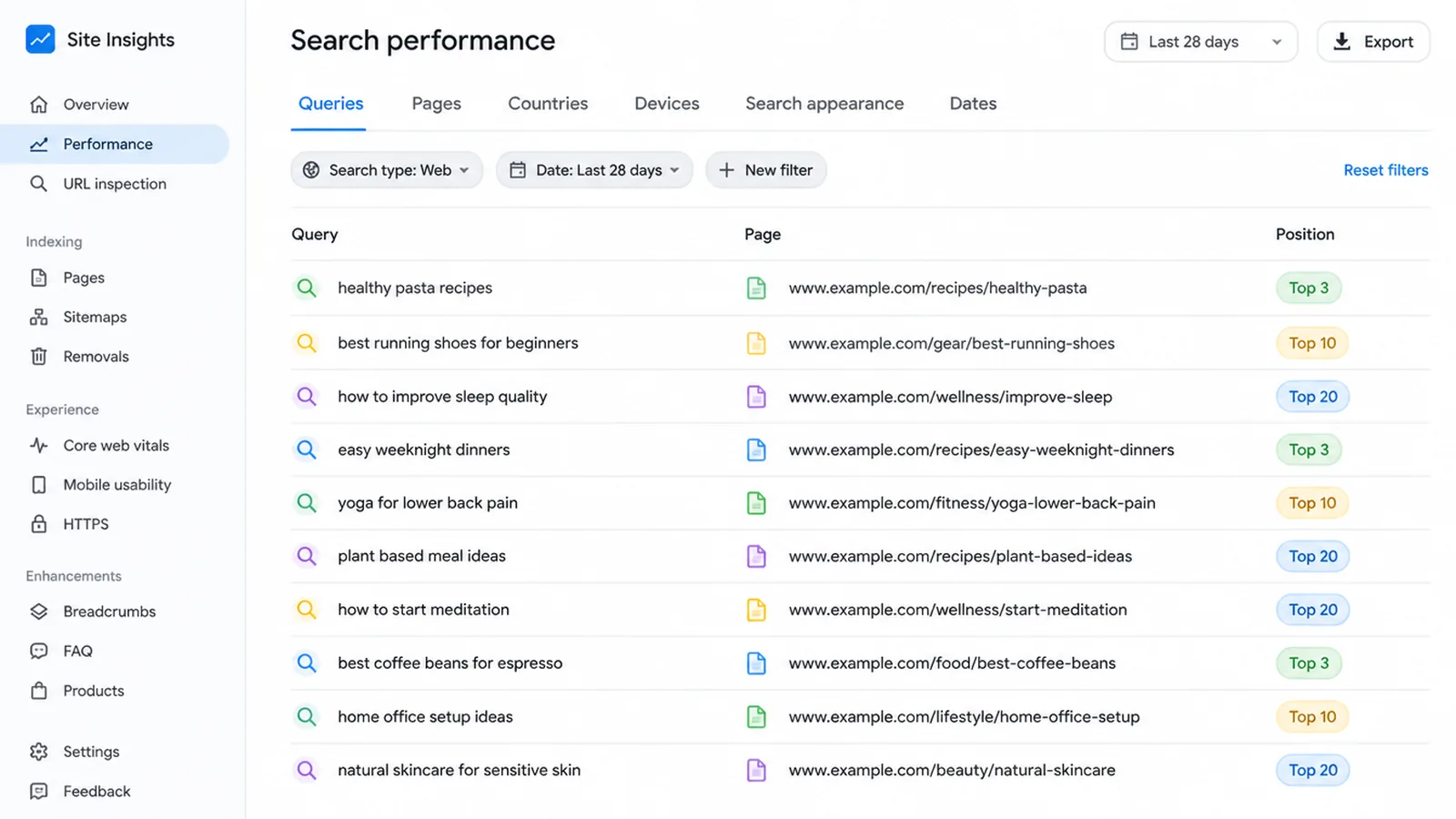
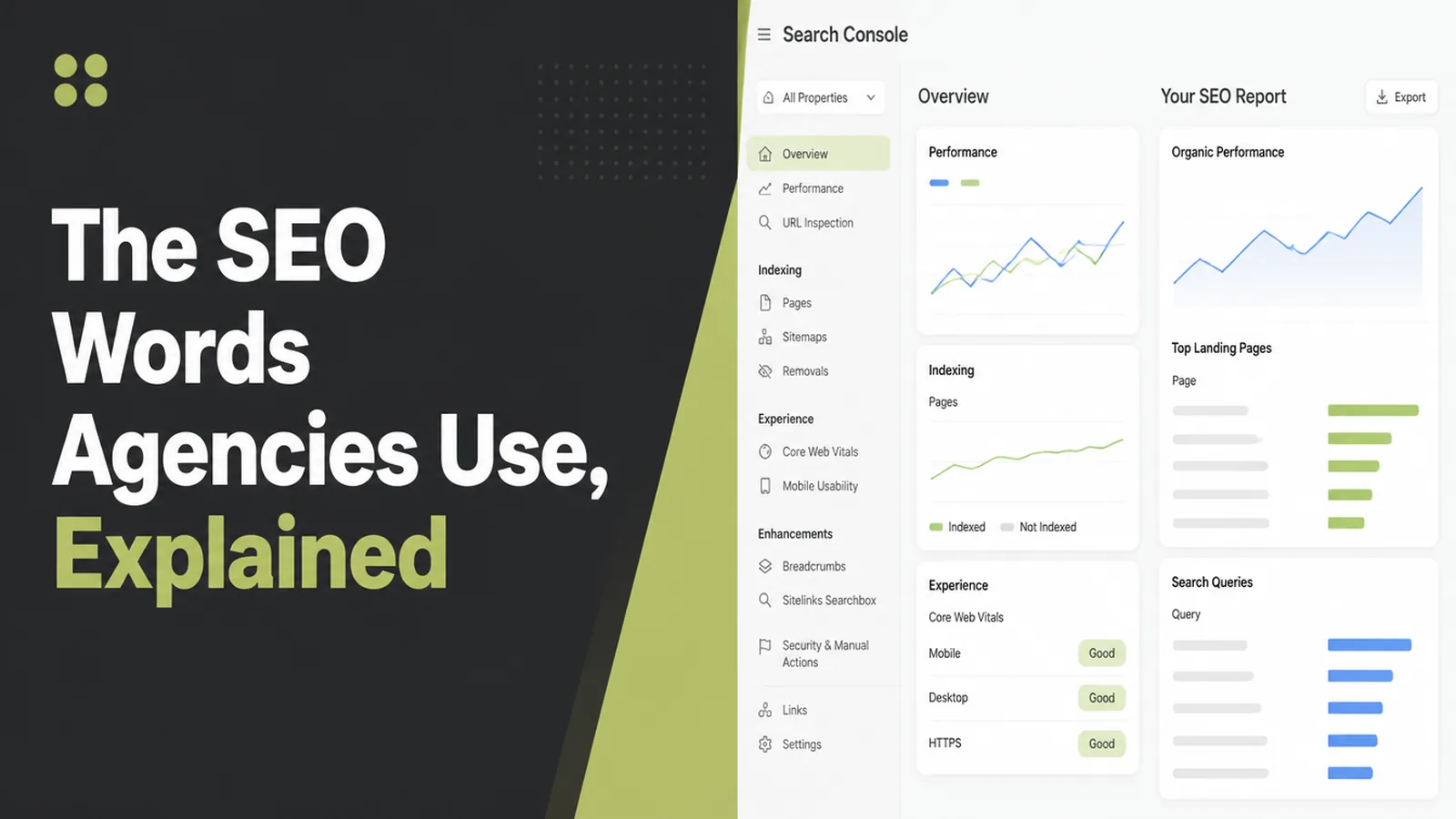
Most of this vocabulary comes from one free tool, Search Console, so it is worth knowing what its columns mean.
Click-through rate is simply clicks divided by impressions. Average position is the topmost position your link occupied, averaged across the queries you appeared for.
Average position is the number most often over-read. It mixes a search where you were second with one where you were fortieth.
Filter by one query before you believe it. An average across hundreds of queries is a number about nothing in particular.
A backlink, in Google's own words, is a link on a page from another site that links to a page on your site.
These SEO terms explained in a report are only as good as the period you read them over. A fortnight tells you very little.
Compare the same month against last year rather than against last week. Seasonality moves these numbers more than most of the work does.
And read queries alongside pages. A page can gain impressions purely because Google started showing it for something irrelevant.
Two That Get Confused
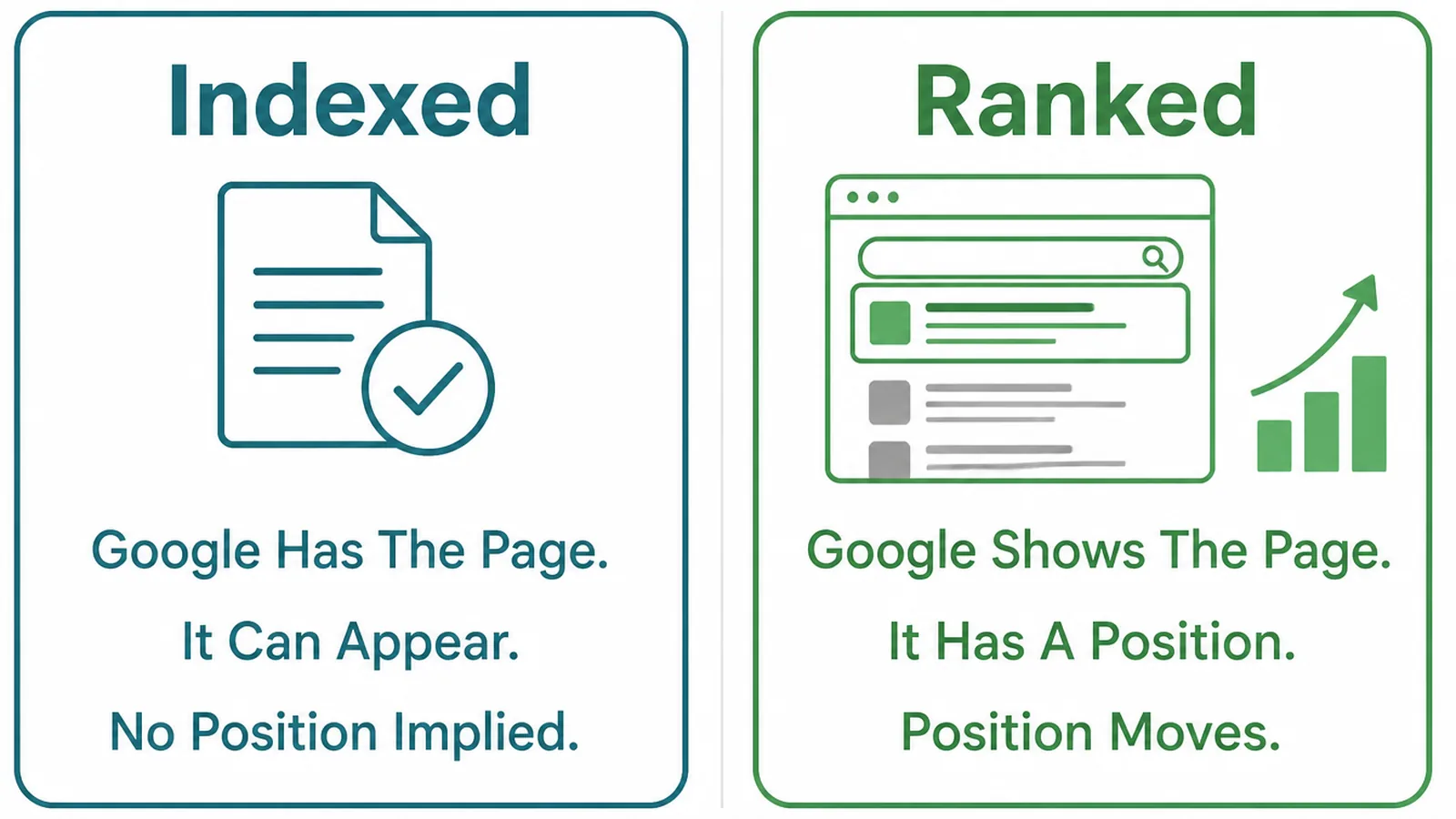
Indexed and ranked are the two that get swapped most often, usually in a sentence that sounds reassuring.
Indexed means Google has your page and could show it. Ranked means it actually appeared for a search, somewhere.
"All your pages are indexed" is therefore not good news on its own. It means you are allowed to compete.
It is still worth hearing, because the alternative is worse. A page outside the index cannot be found at any price.
There is a second pair worth separating: what the report will not tell you.
Search Console data appears 48 hours after it is collected and goes back 16 months. Today is empty, yesterday is incomplete, and anything older than 16 months is gone.
Chart and table totals can also differ legitimately, because the graph aggregates by property while the table can aggregate by page. That is documented behaviour, not a broken setup.
None of these SEO definitions will win you a ranking on their own. They stop you being sold something, which over a year is worth considerably more.
FAQs
Does Google publish its own SEO glossary?
Not as a single page. Each term is defined in the documentation that owns it, so crawling is explained in How Search Works and canonical in the canonicalization guide. That is why the definitions here link to different pages rather than to one list.
What is the difference between indexed and ranked?
Indexed means Google has processed your page and may show it. Ranked means it actually appears for a given search, at some position. A page can be indexed and never rank for anything useful. That is the most common situation.
Why do my Search Console numbers not add up?
Google aggregates the chart by property and the table by page, so the two totals can legitimately differ. Rare queries are also anonymised and excluded from filtered views. Both behaviours are documented by Google rather than faults in your own setup, so there is nothing to fix.
Can I block a page from Google with robots.txt?
No, and Google says so directly. Robots.txt controls crawling rather than indexing, and a blocked page can still appear in results if other pages link to it. Use a noindex rule instead when you want a page kept out of search altogether.
Conclusion
An SEO glossary earns its place when each definition changes a decision rather than filling a page.
The three worth carrying into your next report are these: indexing is permission rather than a position, robots.txt does not hide anything, and your numbers run two days behind.
If a report you have been sent still does not make sense, see how we report on SEO, read our guide to how long SEO takes, or get in touch and we will read it with you.