

Key takeaways
- Shopify is rented, WordPress is owned. One handles hosting, security and updates for a monthly fee. The other hands you the keys and the upkeep.
- Speed to launch goes to Shopify. Sign up, pick a theme, add products, sell the same day.
- Content and SEO depth go to WordPress. Full control of structure and URLs, and a proper blog behind the store.
- Neither is simply cheaper. Shopify bundles the running costs into a fee. WooCommerce trades that fee for hosting and maintenance.
- Pick on who runs the site after launch. No technical person and no time points to Shopify. A capable team or a maintenance partner opens up WordPress.
Here is the short answer. Pick Shopify if you want to start selling online fast with almost no upkeep and you do not mind a monthly fee. Pick WordPress with WooCommerce if you want full control, deeper content and SEO, and lower long-term costs, as long as you have someone to handle the upkeep.
Both can run a great store. The right one depends on what you sell, how much content you plan to publish, and who will look after the site. The sections below show you exactly where each one wins.
1. The quick verdict (TL;DR)
Shopify is a hosted store builder. You pay a monthly fee and they handle the hosting, the security and the updates for you. It is built for one job: selling. You can be live in a day.
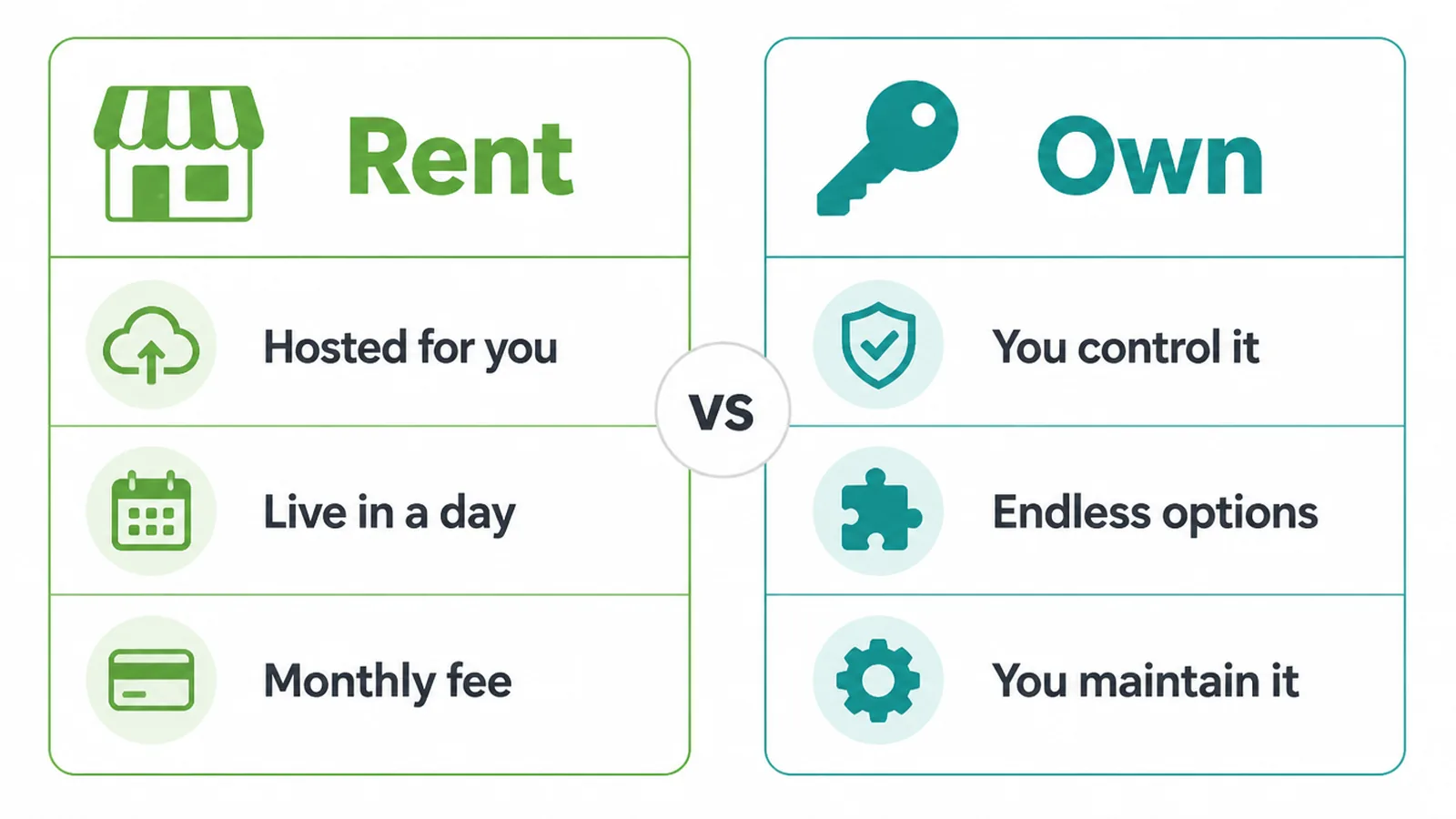
WordPress is free, open software you install on your own hosting. With the WooCommerce plugin it becomes a full online store. It can do anything, but you (or someone you hire) manage the hosting, the plugins and the updates.
It is also the most widely used option by a wide margin: WordPress runs 40.8% of all websites and 59.0% of those built on a known content management system (W3Techs, 2026).
Think of it like renting versus owning. Shopify is like renting a fully serviced shop. Easy, fast, but you pay rent forever and follow their rules. WordPress is like owning the building. More freedom and lower long-term cost, but you are responsible for the upkeep.
- Want to sell fast with no tech worries: lean Shopify.
- Want a content-heavy site, a blog, or full control: lean WordPress.
- Selling is simple and the store is the whole point: Shopify.
- The store is one part of a bigger marketing site: WordPress.
2. Ease of use and setup
Shopify wins here, clearly. You sign up, pick a theme, add your products and you are open for business. There is nothing to install and nothing to host. Most people can launch a basic store the same day with no help.
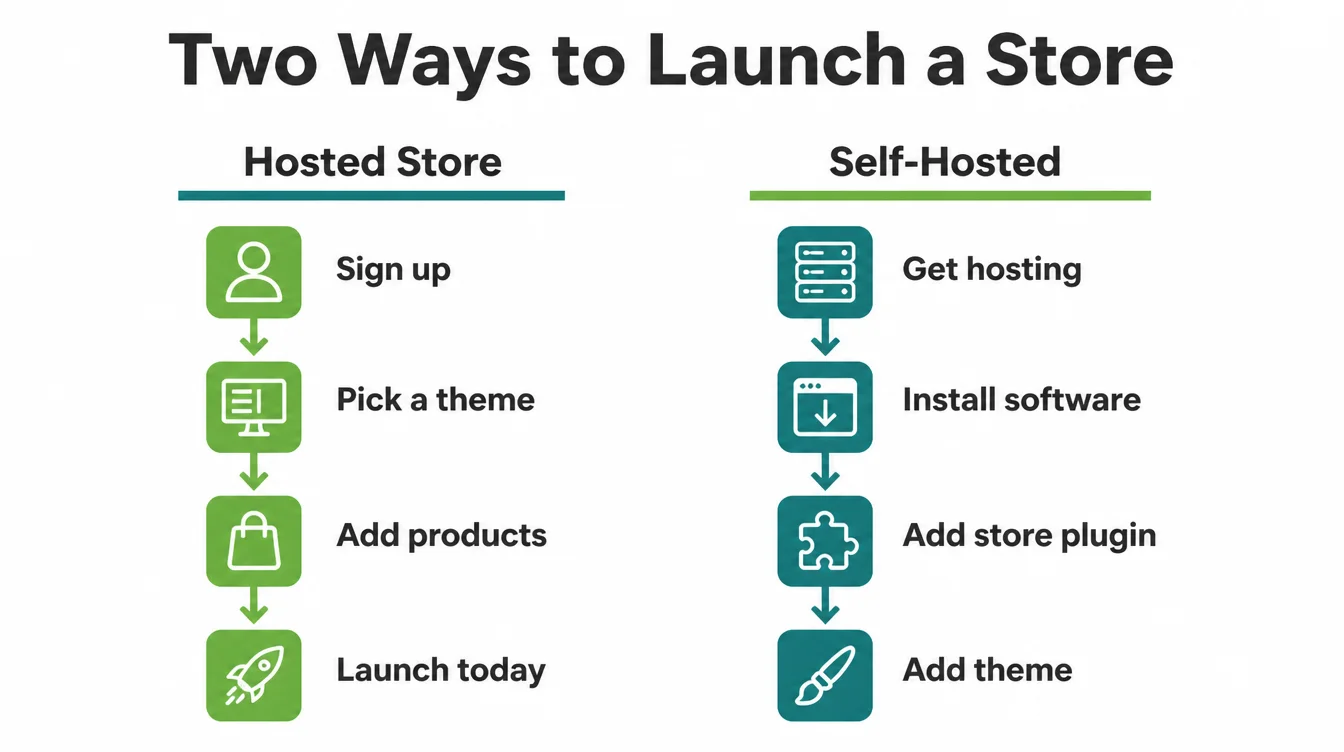
WordPress takes more steps. You need hosting, you install WordPress, then you add WooCommerce and a theme. None of it is hard, but there are more moving parts and more choices to make. The first setup is where most beginners feel stuck.
Day to day, both are manageable once they are running. But if you have never built a website and you do not want to learn, Shopify is the gentler start. If you like having options and do not mind a steeper first week, WordPress rewards the effort.
3. Design and flexibility
WordPress wins on flexibility. You can change almost anything. There are thousands of themes and plugins, and a developer can build any layout or feature you can describe. If you want your site to look and work exactly your way, WordPress gives you the room.
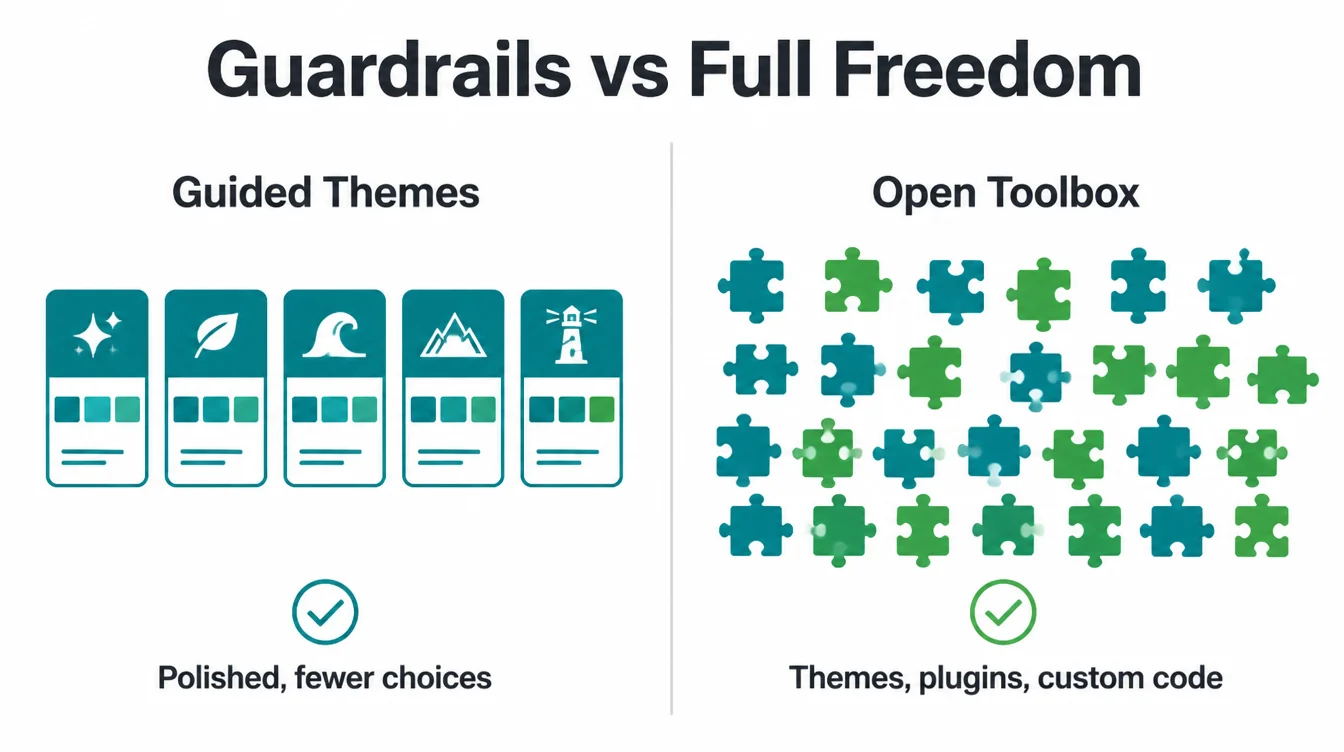
Shopify gives you a smaller set of polished themes and a clean editor. The themes look great out of the box, which is part of why it is so fast to launch.
But you are working inside Shopify's frame. Big custom changes often need a developer who knows Shopify's own coding language, and some things simply cannot be changed.
So the trade is freedom versus guardrails. Shopify keeps you on rails that are hard to break, which is safe and quick. WordPress hands you the whole toolbox, which is powerful but easier to make a mess of without a steady hand.
4. SEO and content (WordPress's edge)
WordPress started life as a blogging platform, and it still leads on content and SEO. The blog tools are stronger, you control every part of how a page is built, and you can fine tune the technical SEO down to small details.
Plugins like Yoast or Rank Math make on-page SEO simple. If you plan to win customers through Google with guides, articles and resource pages, WordPress is the better home.
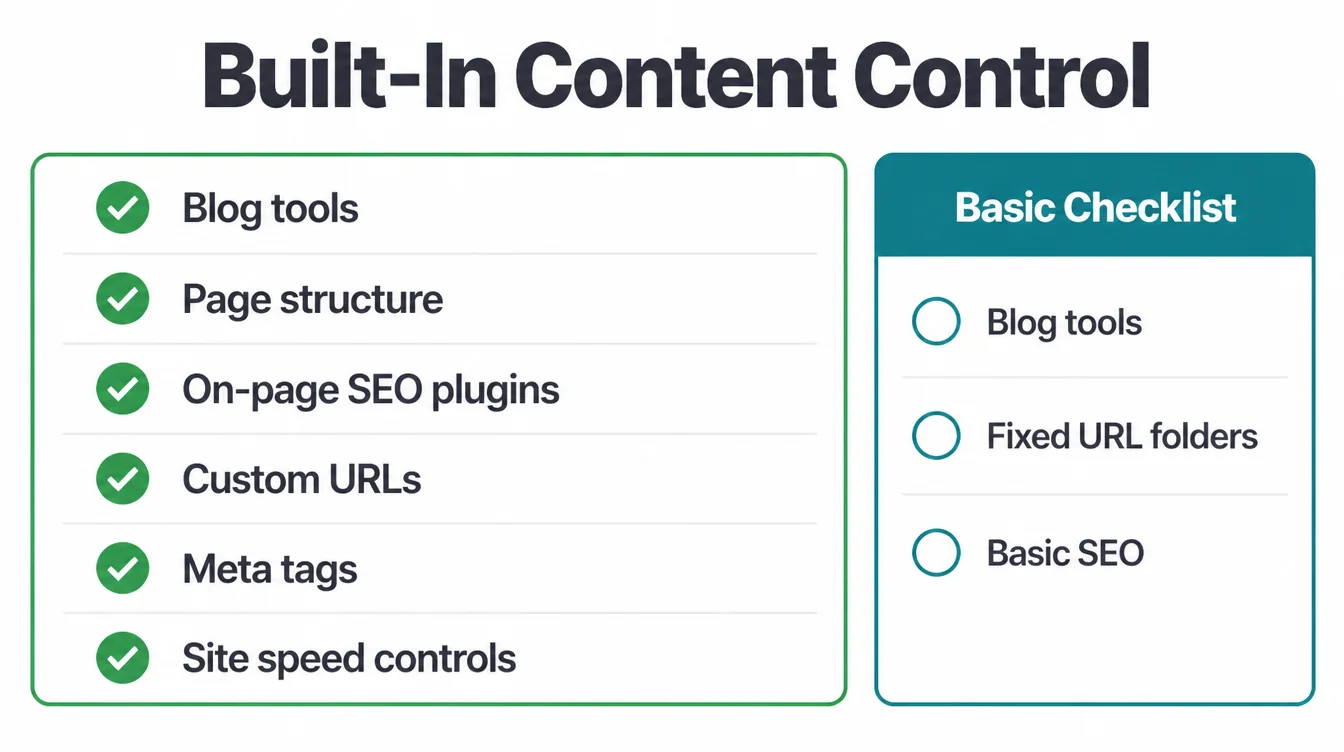
Shopify has solid SEO too, and a Shopify store can rank well. But you have less control over the finer technical bits, and the blog is more basic. Its URL structure is also more rigid, with fixed folders you cannot fully change.
Here is the honest line. For a pure product store, Shopify's SEO is good enough for most shops. For a content-led strategy where the blog and the pages do the heavy lifting, WordPress gives you more rope. If long-term organic traffic is your main growth plan, that edge matters.
5. E-commerce features and payments (Shopify's edge)
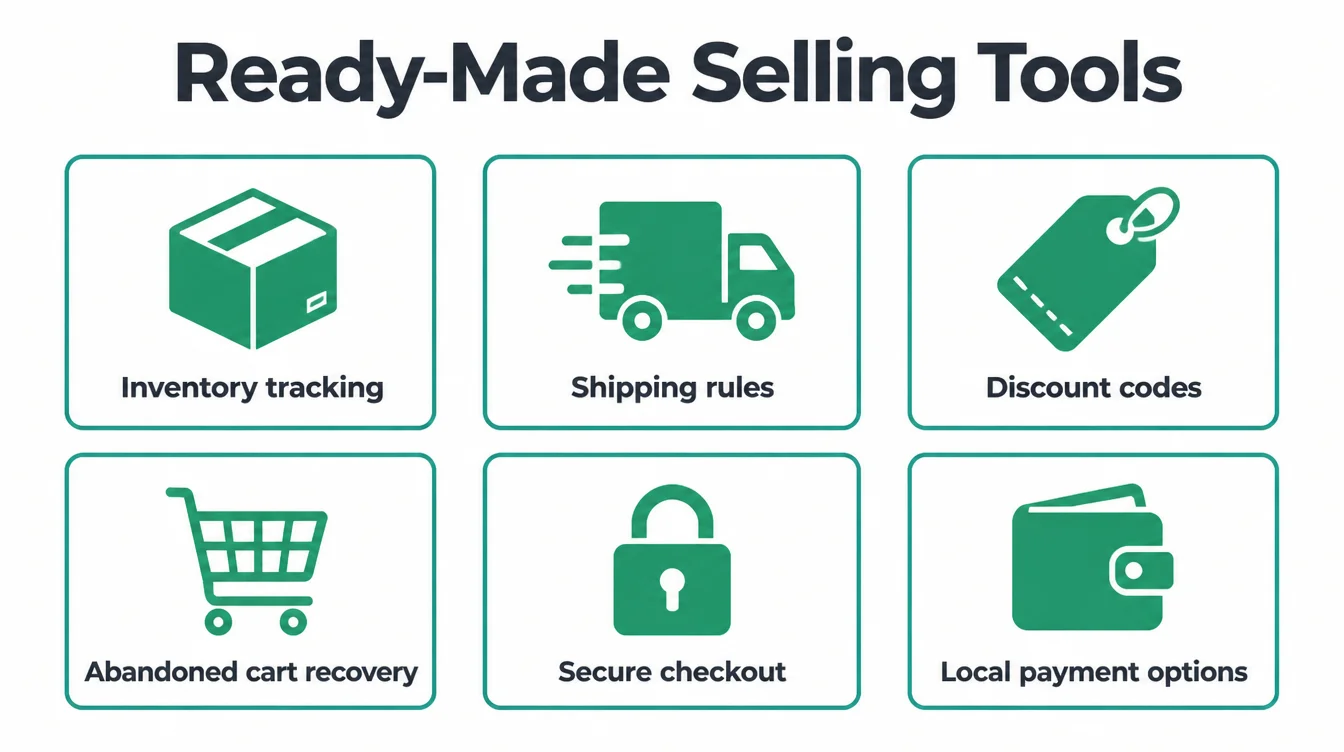
Shopify is built for selling, so the store features are smoother out of the box. Inventory, shipping rules, discount codes, abandoned-cart recovery and a clean checkout all come ready. The checkout in particular is one of the most tested and trusted online, which helps you lose fewer sales at the final step.
Payments are the one catch to watch. Shopify pushes its own payment system, and if you use an outside payment provider it adds an extra transaction fee on top.
Shopify's own help pages state that "third-party transaction fees apply on all third-party and alternate payment gateways even when Shopify Payments is activated," with the rate depending on your plan and country (Shopify Help Center). WooCommerce does not charge any platform transaction fee, so you only pay your payment provider's normal rate.
For local selling, both can take the payments your customers expect. WooCommerce connects to local gateways that support FPX bank transfers, GrabPay and Touch n Go eWallet, which Malaysian shoppers use every day.
Shopify can support these too through approved local providers, though your options and fees depend on the gateway you pick. Always check that your must-have payment method is supported before you commit.
Bottom line: if rich selling features and a battle-tested checkout matter most, Shopify leads. If you want zero platform transaction fees and freedom to plug in any local gateway, WooCommerce leads.
6. Total cost of ownership
Neither one is simply cheaper. They charge in different ways, so the real cost depends on how you run the store.
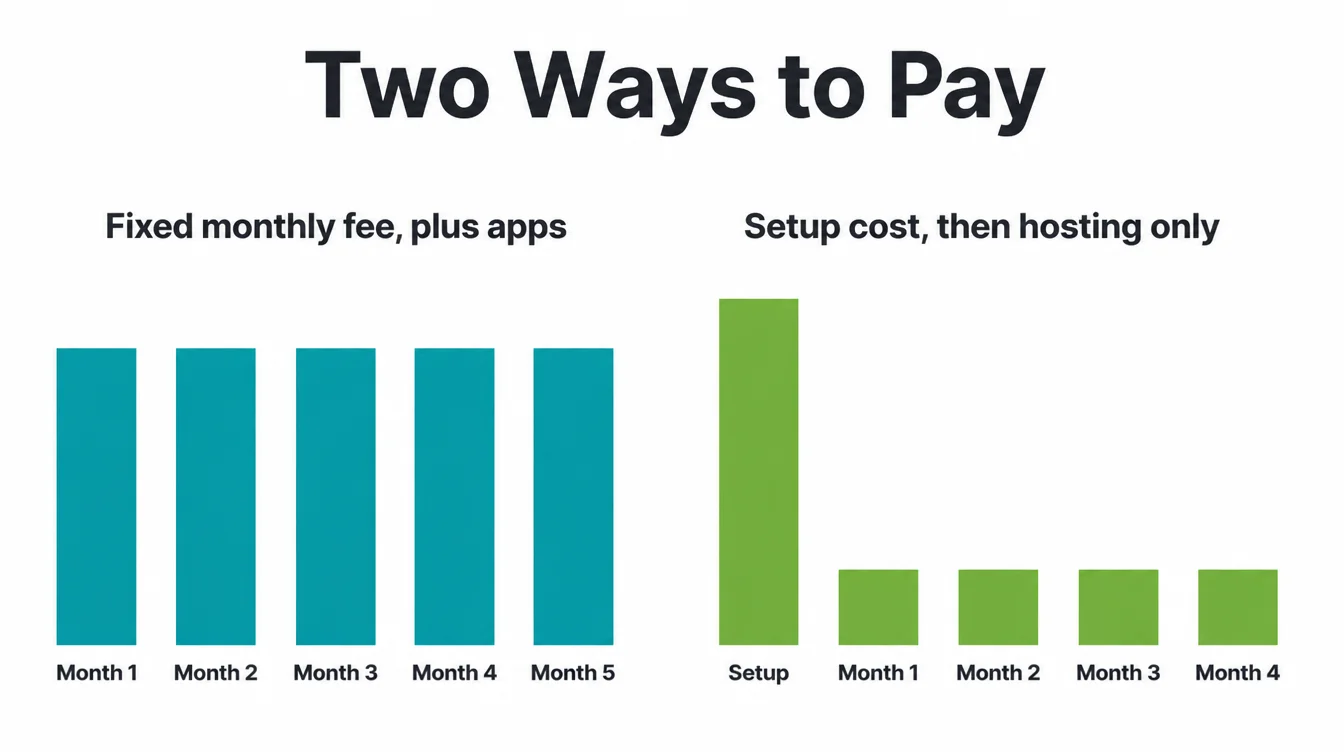
Shopify charges a fixed monthly fee. That fee covers hosting, security and updates, so a lot is bundled in.
On top of that you may pay transaction fees, especially if you use an outside payment provider, and many useful apps add their own monthly fees. The cost is predictable, but it never goes away and it grows as you add apps.
WordPress with WooCommerce has no platform fee at all. The software is open source, licensed under the GPL, which gives you "the freedom to run the program for any purpose" and to change and redistribute it (WordPress.org).
Instead you pay for hosting, a theme, and any premium plugins you choose, plus the time or money to maintain it. Many plugins are one-time buys or free. So the running cost can be lower over the years, but more of the work, and the risk, sits on your side.
A simple way to think about it: Shopify trades money for convenience, and the bill is steady and ongoing. WordPress trades effort for lower fees, and the bill depends on the choices you make.
A small shop with a tight budget and someone handy often comes out cheaper on WooCommerce over time. A busy owner who values their hours often finds Shopify's all-in fee worth it.
7. Maintenance and security: what Shopify handles for you
This is where Shopify earns its fee. They handle hosting, software updates, backups and security for you. If something breaks behind the scenes, that is their problem to fix, not yours. For an owner who does not want to think about any of it, that peace of mind is the whole point.
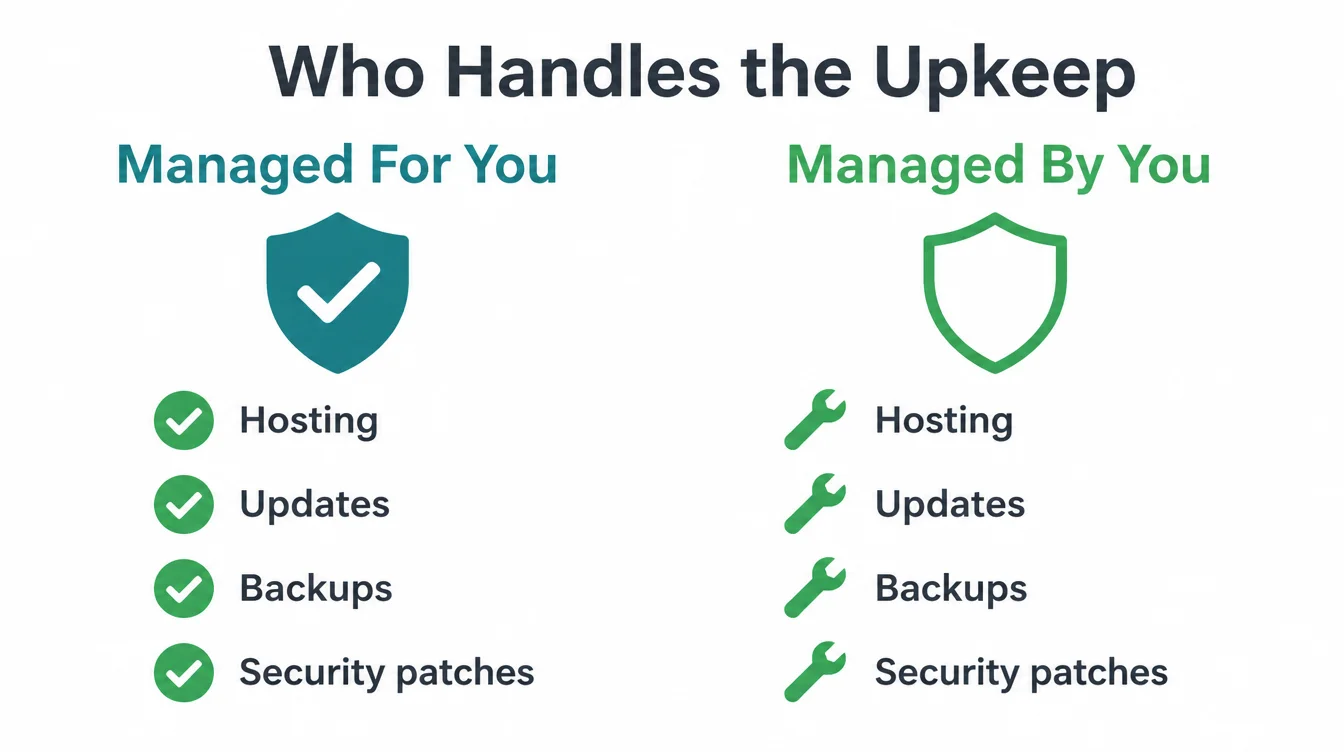
WordPress puts that responsibility on you. Plugins and the core software need regular updates, you need backups, and you need basic security in place. Skip the upkeep and the site can slow down, break, or get hacked. It is not hard work, but it is real work that has to happen.
So be honest about your situation. If nobody on your team will keep the site updated, either choose Shopify or pay someone to maintain WordPress for you. A neglected WordPress site is worse than a managed Shopify one. A well-maintained WordPress site is rock solid.
8. Scaling as you grow
Both platforms can grow with a serious business. Shopify scales smoothly because they own the whole system. As your orders and traffic climb, they handle the heavy lifting. You may step up to a higher plan, but you rarely hit a wall, and big stores run on it every day.
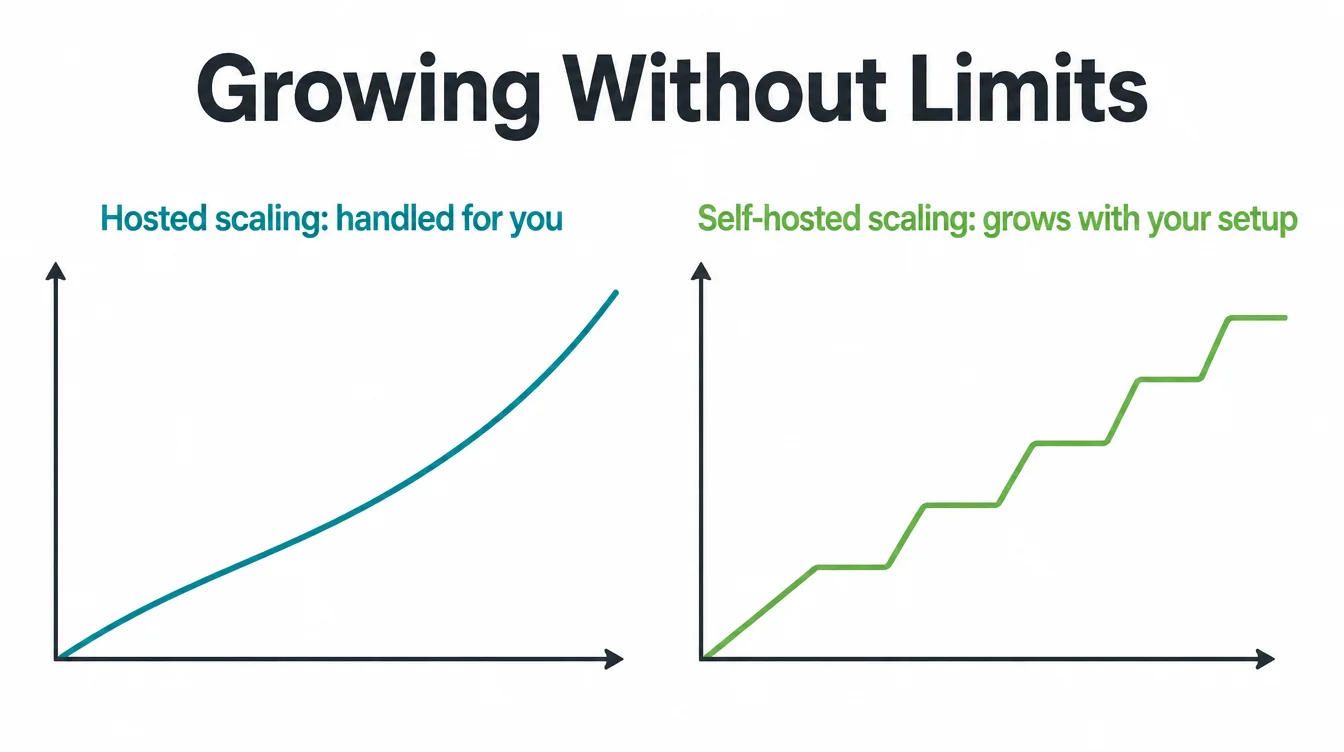
WordPress can scale just as far, but more of it is on you. Bigger traffic means better hosting and a tidy, well-built site. With the right setup it handles large stores and millions of visits. With a cheap setup and too many plugins, it can get slow. Growth on WordPress rewards good engineering.
The practical takeaway: Shopify gives you smooth, hands-off scaling for a steady fee. WordPress gives you unlimited room to scale on your own terms, as long as you invest in solid hosting and clean building as you grow.
9. How to choose: which should you pick?
Forget the feature lists for a second and match the platform to your situation. Here is the simple if-then guide we give clients.
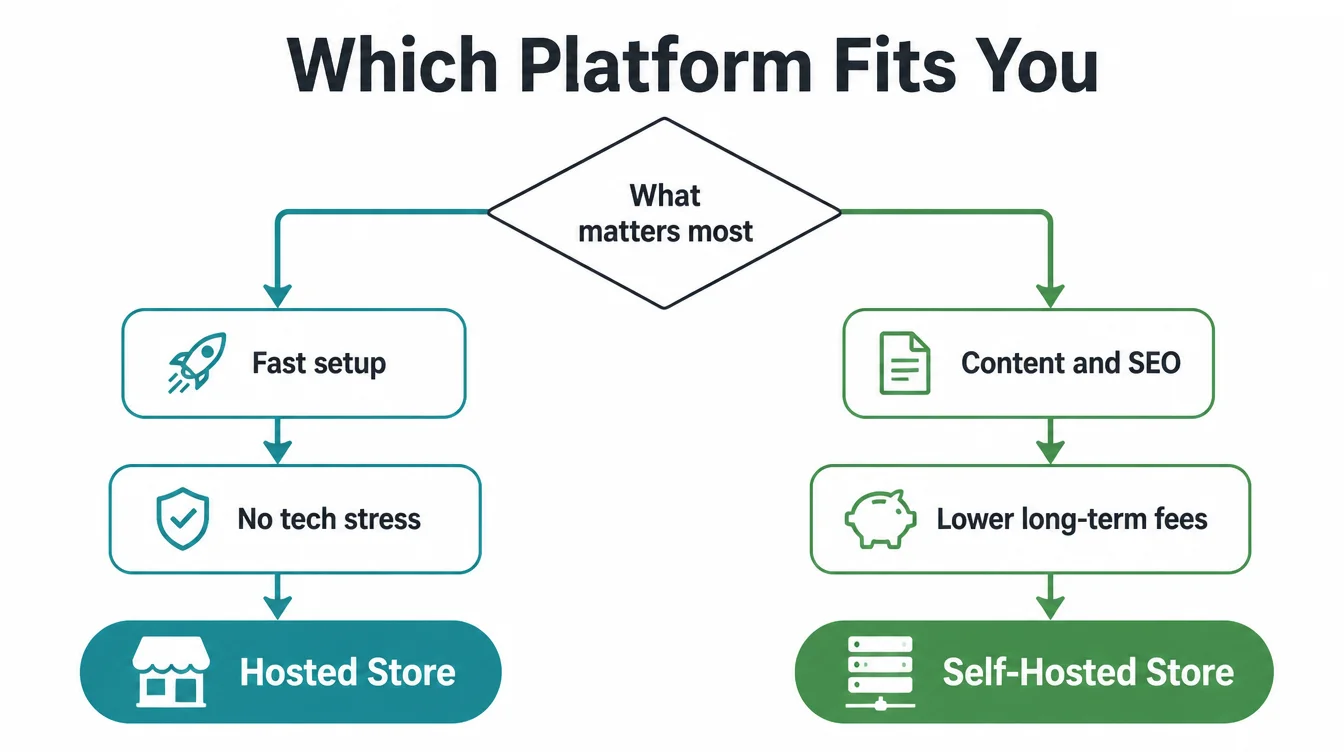
The simple if-then guide
- If you are a small shop or solo seller who wants to start selling this week with no tech stress, pick Shopify.
- If you run a service business where the website is the main thing and the store is a small part, pick WordPress so the content and SEO can lead.
- If your whole growth plan is ranking on Google with blogs and guides, pick WordPress for the deeper SEO control.
- If you sell a lot of products and want the smoothest checkout and selling tools with no upkeep, pick Shopify.
- If you want the lowest long-term fees and you have someone to maintain it, pick WordPress with WooCommerce.
- If you need a very custom design or feature that has to work exactly your way, pick WordPress for the freedom.
Still unsure? Pick on who owns the site
Still unsure? Pick based on who will own the site after launch. No technical person and no time: Shopify. A capable team or a maintenance partner: WordPress is on the table and often the better long-term value.
At Seed Light we build both
At Seed Light we build both. We make WooCommerce stores on WordPress and we build on Shopify, so we are not trying to push you onto one or the other.
We will look at what you sell, your budget and who will run the site, then recommend the platform that actually fits, not the one that is easiest for us.
Our pricing page explains how a store build is scoped and quoted, and you can see stores we have built on our recent work page. If you want a second opinion before you commit, talk to us and we will help you choose.
Two of our own client stores show the split. Libulbs is a wholesale LED lighting distributor on Long Island, New York, and it runs on WooCommerce because its buyers search by fitting type, spec and part number.
Ottoman Malaysia sells furniture on Shopify, browsed room by room. Same agency, two platforms, each picked on what the business actually sells.
- Choose Shopify if: you want to sell fast, hate tech upkeep, value a steady all-in fee, and the store is the whole point.
- Choose WordPress with WooCommerce if: you want full control, content and SEO depth, lower long-term fees, and you have someone to maintain it.
Frequently asked questions
1. Is WordPress or Shopify better for a small business?
It depends on who will run the site. Shopify suits a small business that wants to sell online fast with no technical upkeep, since hosting, security and updates are handled for you. WordPress with WooCommerce suits a small business that wants full control, a strong blog and lower long-term fees, as long as someone maintains it.
2. Which is cheaper to run, WordPress or Shopify?
Neither is simply cheaper. Shopify charges a fixed monthly fee that bundles hosting, security and updates, plus possible transaction and app fees. WordPress with WooCommerce has no platform fee, but you pay for hosting, a theme and maintenance. A hands-on owner often spends less on WooCommerce over time, while a busy owner may find Shopify's all-in fee worth the convenience.
3. Can I move from WordPress to Shopify later?
Yes. Products, customers and orders can be exported and imported with migration apps or a developer's help. Your design does not transfer, so the theme gets rebuilt on the new platform, and you need redirects so your Google rankings carry over. Moving is doable, but it takes planning, so it pays to pick the right platform first.
4. Which is better for SEO, WordPress or Shopify?
WordPress has the edge for SEO. It gives you full control over site structure and the technical details, and plugins like Yoast or Rank Math make on-page work simple. Shopify's SEO is solid and a store can rank well, but its URL structure is more rigid and the blog is more basic. For a content-led strategy, WordPress wins.