GEO vs SEO 2026: How AI Search Changes Optimisation

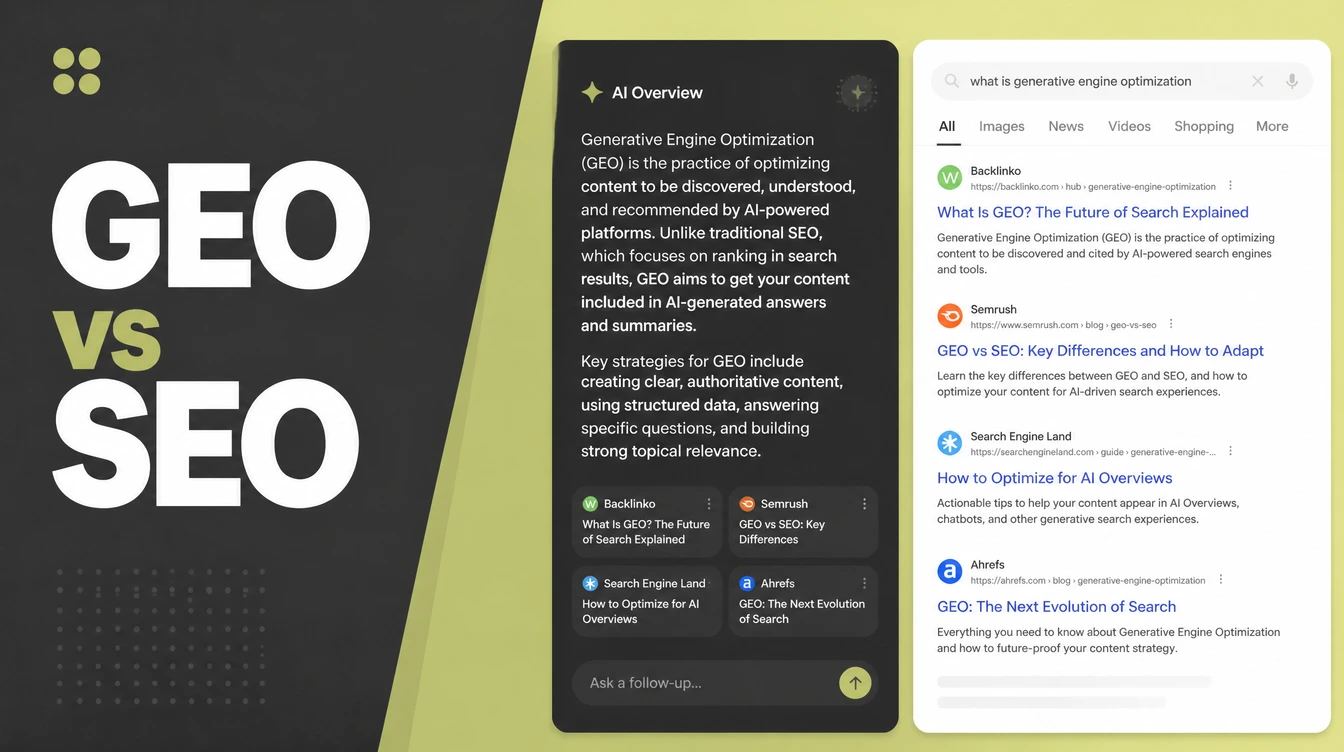
SEO gets your page ranked so people can click it. GEO gets your page cited inside AI answers in Google AI Overviews, ChatGPT, Perplexity and Gemini. They share the same foundation, so most small businesses should do both: answer clearly and early, structure the page, and earn mentions. Seed Light treats them as one job.
Key takeaways
- The click is shrinking. An AI Overview now lines up with a 58% lower average click-through rate for the top-ranking page (Ahrefs, 2026), so being seen inside the answer matters more.
- GEO is a layer, not a replacement. AI answers pull from pages that already rank, so you cannot do GEO without SEO.
- The base is shared. Helpful content, clear structure, and authority feed both ranking and citation.
- Google says no special tactics. The same SEO best practices still apply for AI features.
- The verdict is do both. Most GEO work is just good SEO done well, so it is one job, not two.
1. GEO vs SEO, defined in one line each
GEO vs SEO comes down to two different goals for the same page. SEO is the work of ranking your page in search and earning the click. GEO is the work of being referenced inside AI answers, the ones you see in Google AI Overviews, ChatGPT, Perplexity and Gemini.
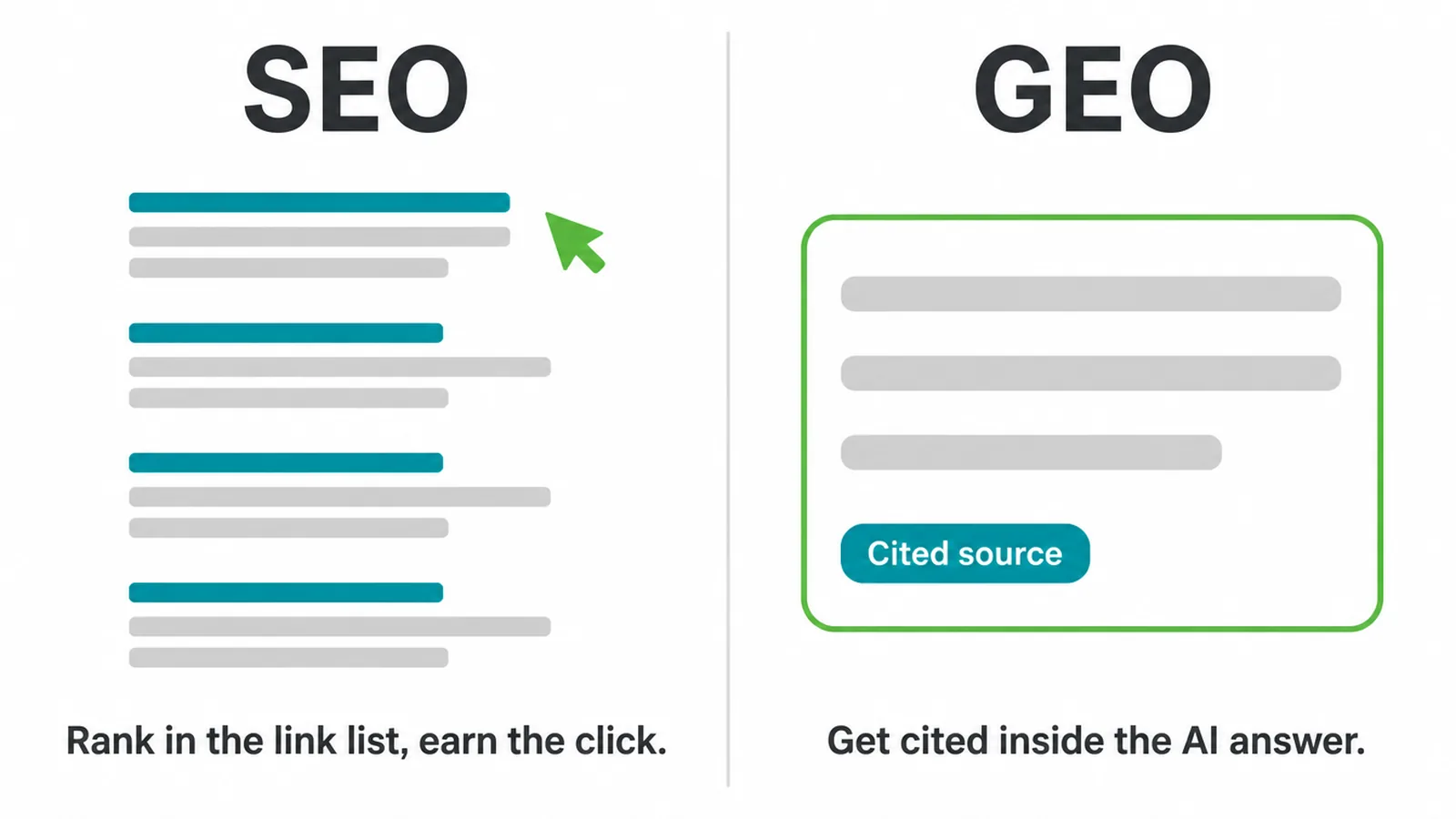
SEO has been around for years and you likely know it. GEO is newer, so if you want the full breakdown of how AI engines choose and cite sources, that lives in our guide to GEO. The one thing to hold in your head: SEO targets the link list, GEO targets the answer box.
2. Why this is suddenly a conversation
GEO vs SEO matters now because the click is getting harder to win. AI answers sit at the top of the page and give people what they asked for without a visit. So the page that ranks first still wins, but it wins fewer clicks than it used to.
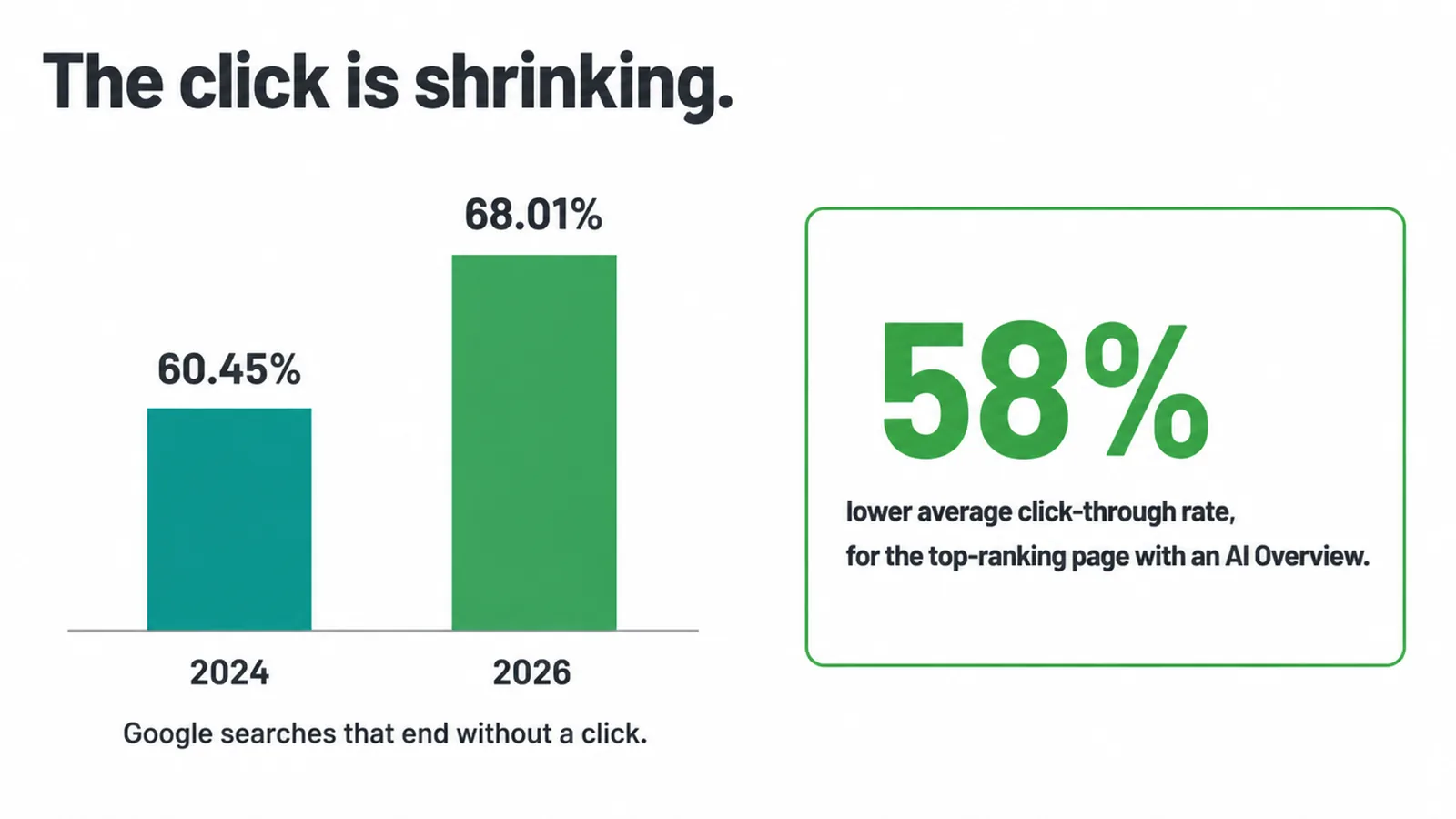
The numbers back this up. Ahrefs found an AI Overview correlates with a 58% lower average click-through rate for the top-ranking page across 300,000 keywords. And SparkToro reported that between January and April 2026, 68.01% of US Google searches ended without a click, up from 60.45% in 2024.
That does not mean search is over. It means a slice of your old traffic now reads the answer instead of clicking. Being the source inside that answer is the new prize, and that is what GEO is about.
3. What stays exactly the same
For GEO vs SEO, most of the work is identical. The things that help you rank are the same things that get you cited. Google has been clear about this, which is the honest anchor for the whole debate.
In its own guidance, Google says the best practices for SEO still apply for its AI features, because those features are built on the core search ranking and quality systems, and there is no special schema markup you need to add.
In the same guidance, Google adds that making content people find unique, useful and compelling will influence your presence in AI search more than anything else.
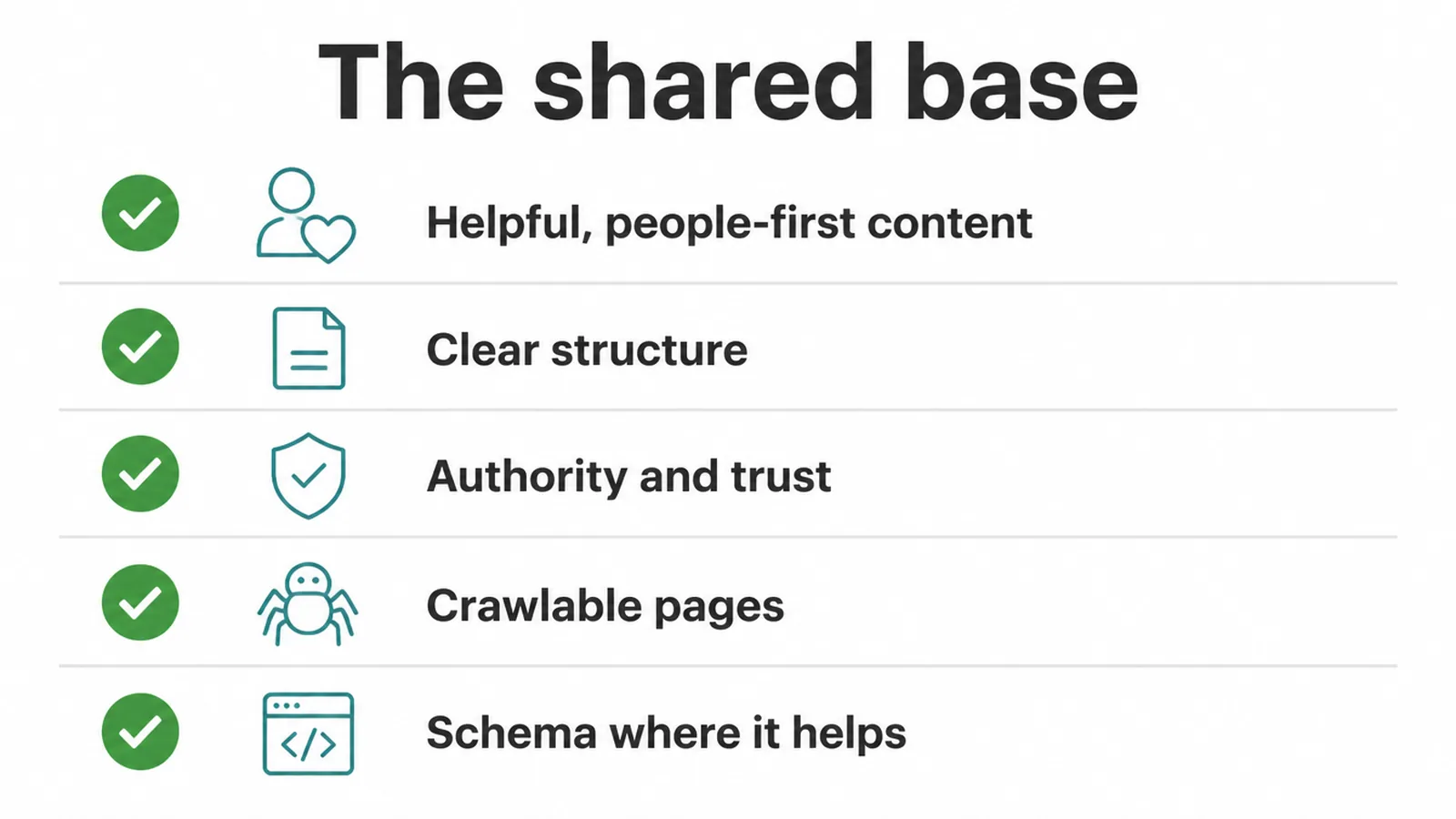
So the shared base is short and familiar:
- Helpful, people-first content that answers a real question.
- Clear structure with sensible headings and clean pages.
- Authority and trust built over time, the E-E-A-T idea.
- Crawlable pages the engines can actually read.
- Schema where it helps, but no secret AI-only markup.
If you already do solid SEO content writing, you are most of the way to GEO without changing your approach.
4. What is actually different
GEO vs SEO does have a few real differences, and they are all about being quoted rather than just clicked. You are still writing good pages. You are just shaping them so an AI can lift a clean answer out of them.
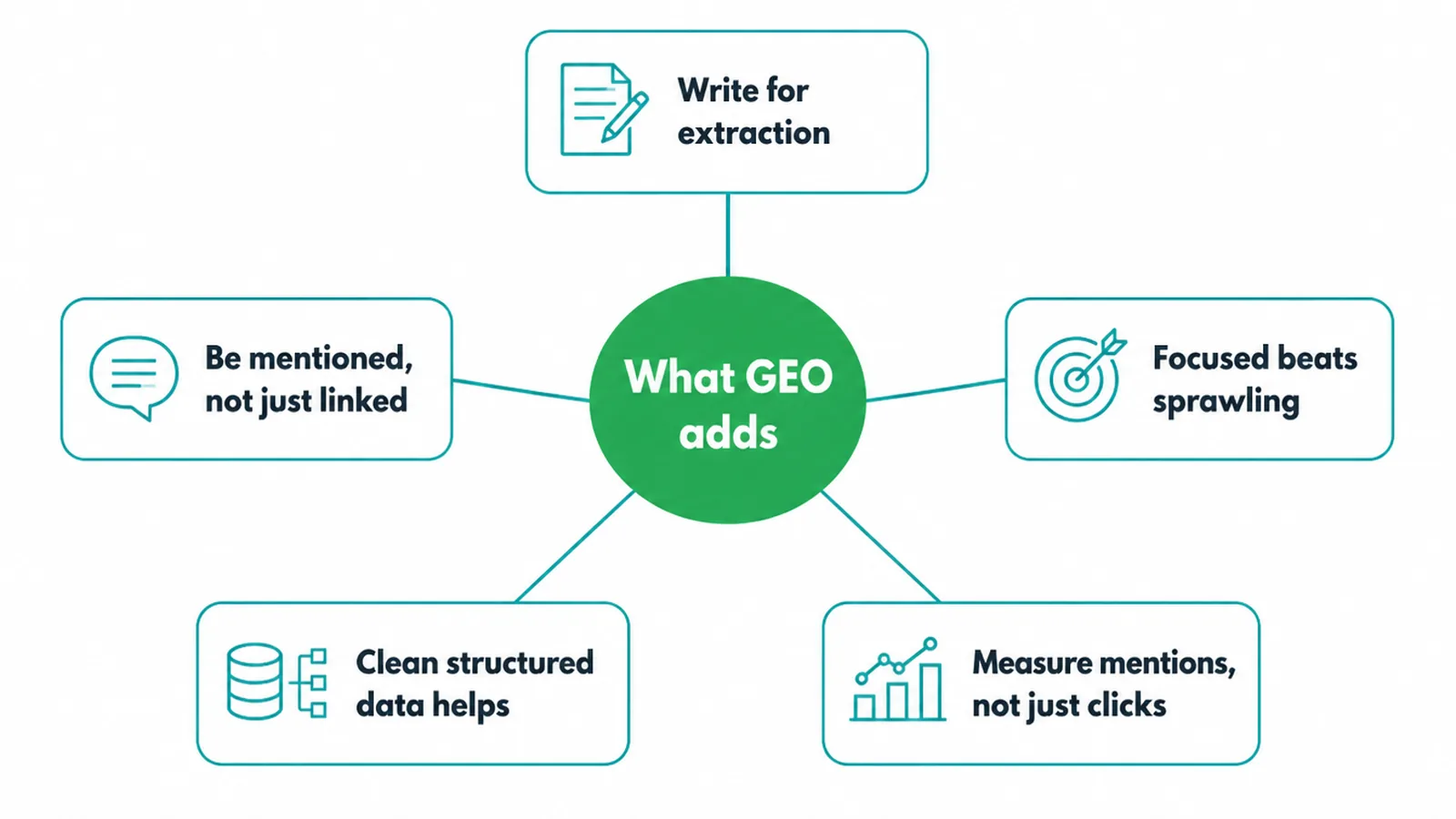
Here is where GEO asks a bit more:
- Write for extraction. Put a direct answer in the first line or two of a section so the AI can grab it. Long wind-ups get skipped.
- Be mentioned as well as linked. AI engines notice where your business is talked about across the web, not only who links to you.
- Focused beats sprawling. A study by AirOps of 16,851 queries found ChatGPT cited the top-ranked page 58.4% of the time versus 14.2% for position 10, and that 500 to 2,000 word pages beat 5,000-plus word ultimate guides.
- Clean structured data helps. In that same study, pages with JSON-LD were cited 38.5% of the time versus 32.0% without it.
- Measure mentions as well as clicks. Track whether you show up in answers, not only your visit count.
None of that fights with SEO. It is SEO with a sharper edge, and that edge is what AI search optimisation works on. For the platform-specific moves, see how to rank in AI Overviews and how to rank in ChatGPT.
5. GEO vs SEO at a glance
Here is the side-by-side so you can scan the whole thing in one go.
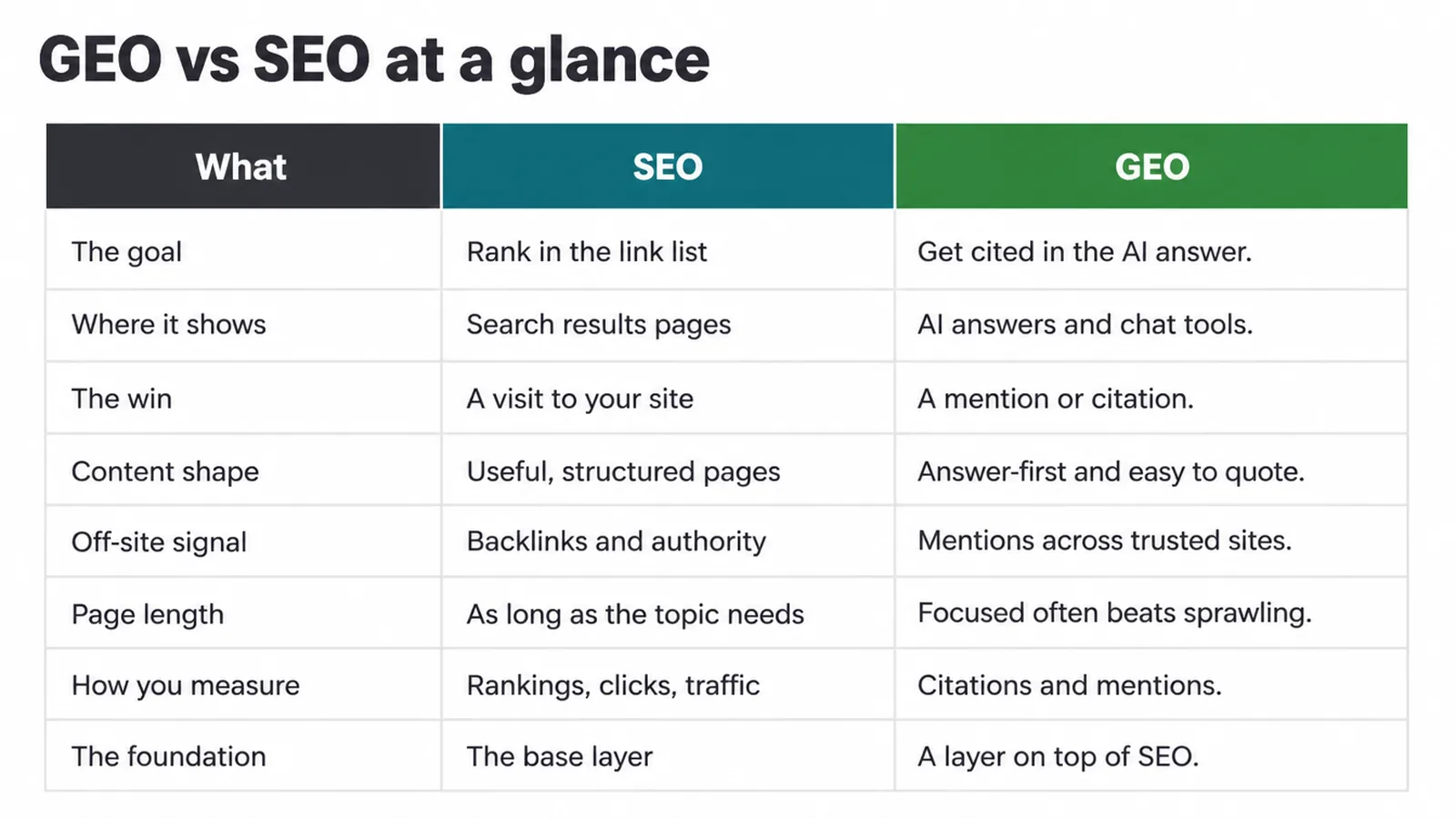
| What | SEO | GEO |
|---|---|---|
| The goal | Rank in the link list and earn the click | Get cited inside the AI answer |
| Where it shows | Search results pages | AI Overviews, ChatGPT, Perplexity, Gemini |
| The win | A visit to your site | A mention or citation, with or without a visit |
| Content shape | Useful, well-structured pages | Same, but answer-first and easy to quote |
| Off-site signal | Backlinks and authority | Mentions of your brand across trusted sites |
| Page length | As long as the topic needs | Focused often beats sprawling |
| How you measure | Rankings, clicks, traffic | Citations and mentions in answers |
| The foundation | The base layer | A layer on top of SEO |
6. Why the foundation is shared
The core point of GEO vs SEO is that you cannot have one without the other. AI answers do not invent sources. They pull from pages that already rank and that the engine can crawl and trust. No ranking, nothing to cite.
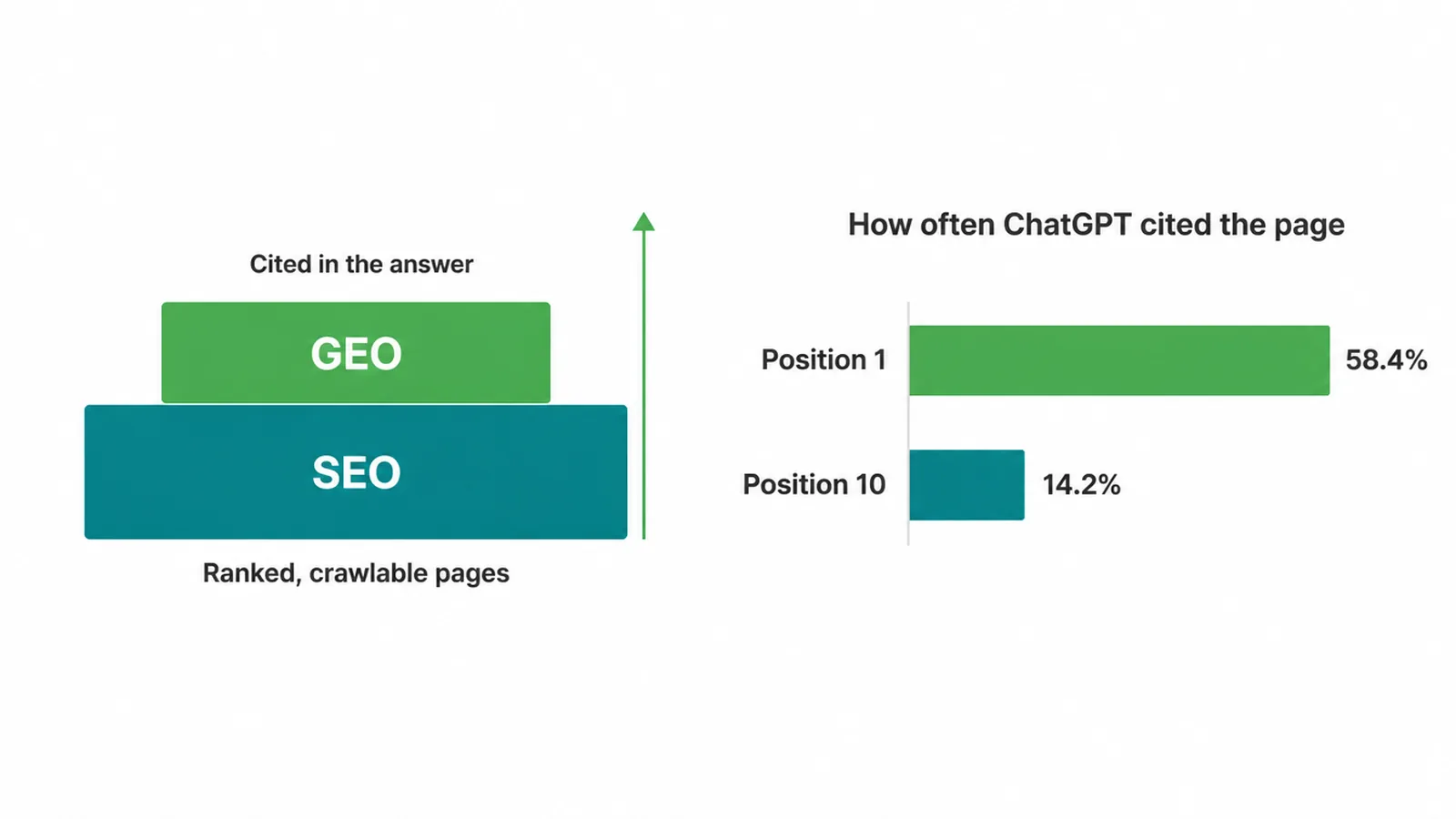
This is why the AirOps numbers matter so much. The top-ranked page got cited far more than the page in position 10. So your old SEO work, getting a page to rank, is the very thing that makes it eligible to be quoted. The foundation feeds both outcomes from one effort.
7. The honest verdict: do both
So for GEO vs SEO, what should a small business actually do? Do both. SEO is not dead, and GEO is not a magic replacement. They run on the same base, and chasing only one leaves easy wins on the table.
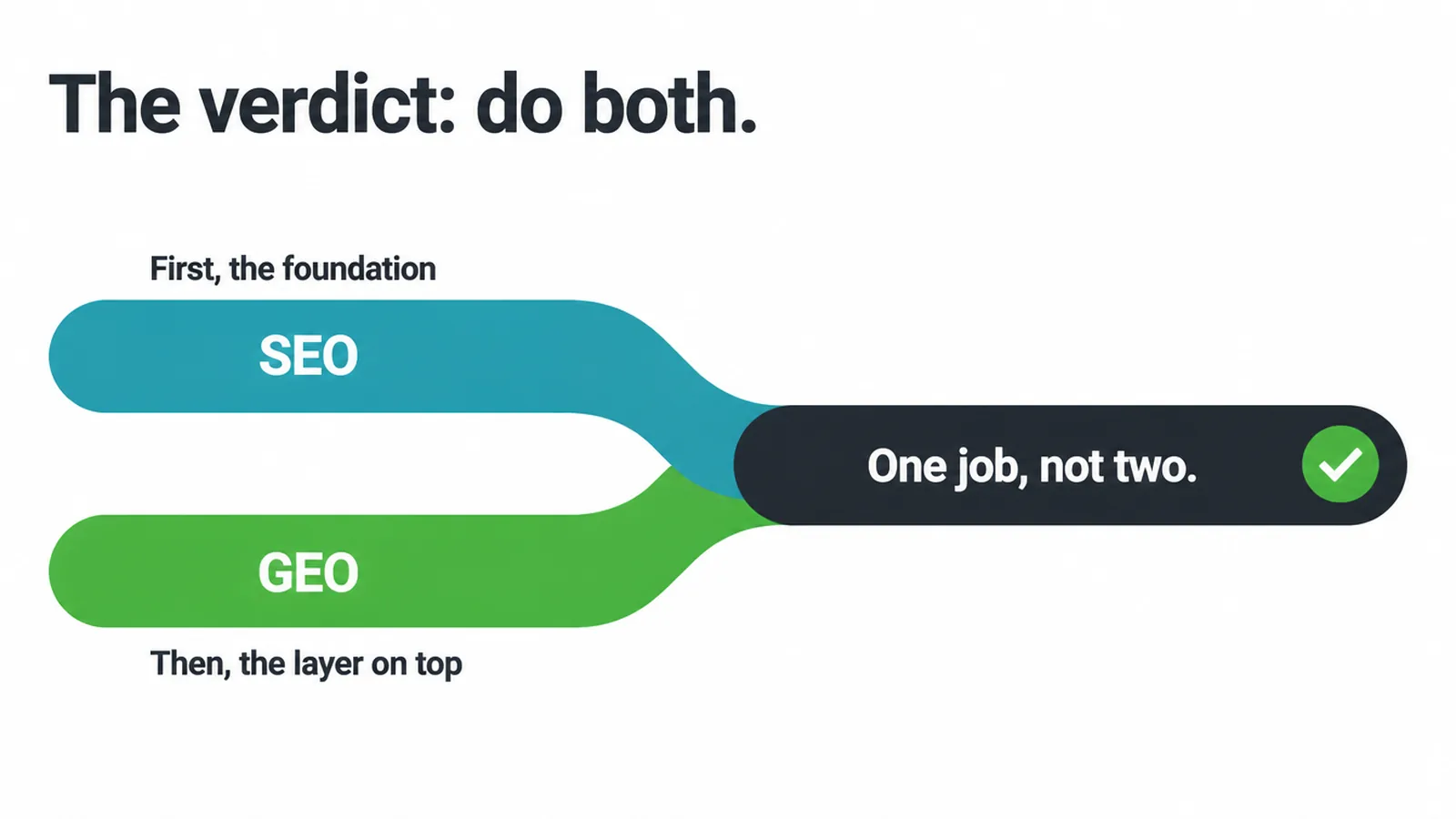
Be honest with yourself about the order. SEO comes first because it is the foundation. GEO is the layer you add once your pages can rank and be read.
And here is the relief: most GEO work is just good SEO done with a bit more care about clear answers and mentions. You are not buying a second system. If you want a hand turning this into a steady plan, our AI search optimisation service covers both lanes.
8. How to start without overthinking it
You do not need new tools or special markup to begin. Work in this order and you cover GEO vs SEO at the same time.
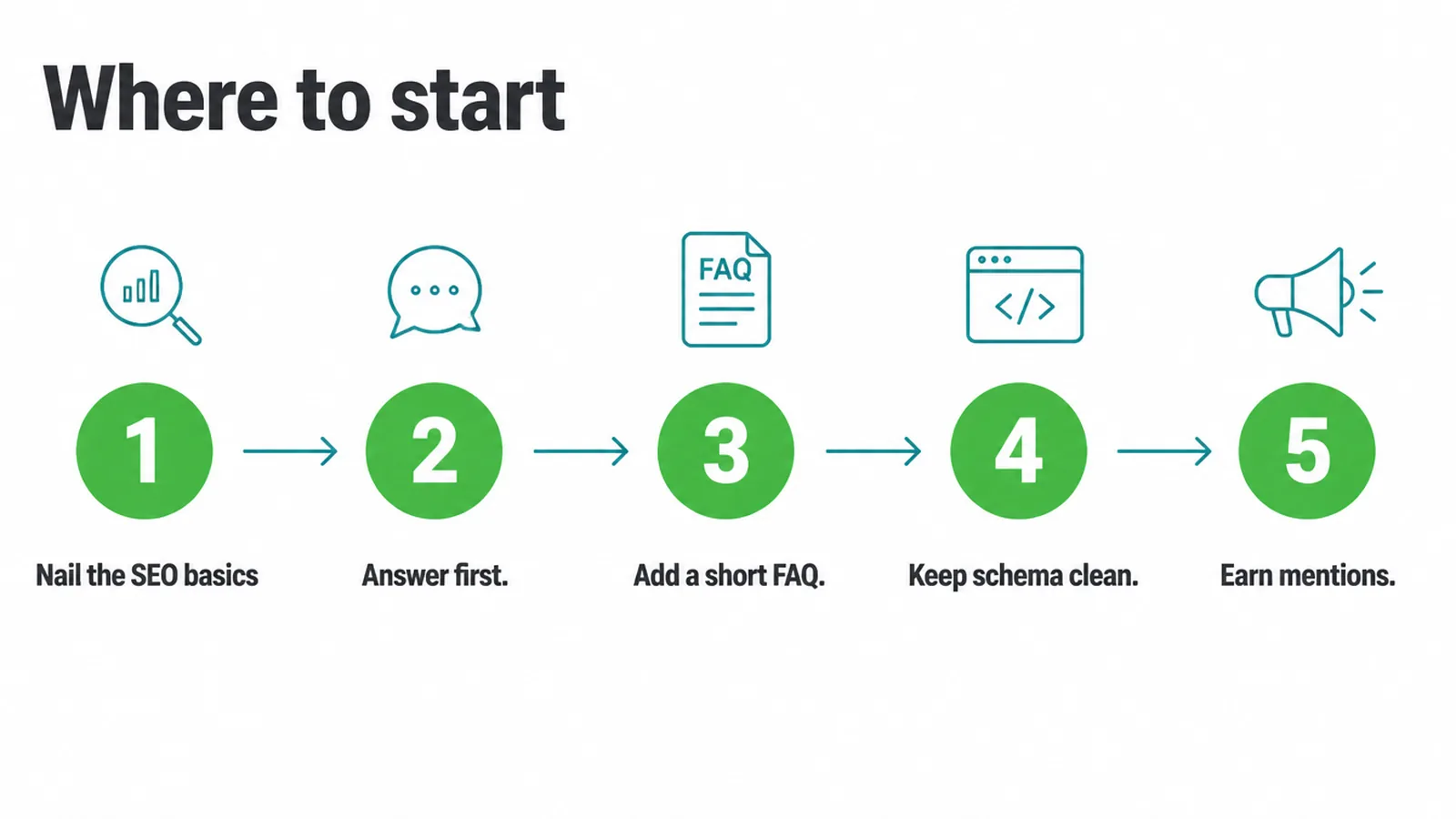
- Nail the SEO basics. Useful pages, clean structure, crawlable site. Our guide to SEO content writing is a good base.
- Answer first. Open each section with a plain, direct answer the AI can lift.
- Add a short FAQ. Real questions, plain answers, no fluff.
- Keep schema clean. Use it where it fits. Do not chase secret AI markup that does not exist.
- Earn mentions. Get your business talked about on other trusted sites, as well as linked from them.
That is it. Same content, two payoffs. If you would rather talk it through with someone who does this daily, get in touch with Seed Light and we will point you at the next sensible step.
Frequently asked questions
1. What is the difference between GEO and SEO?
SEO gets your page into the list of links so people can click it. GEO gets your page cited inside the AI answer that sits above those links. SEO is about ranking and earning a visit. GEO is about being the source the AI quotes. They share the same base, so most of the work overlaps.
2. Is SEO dead?
No. AI answers are built from pages that already rank in normal search. If your page is not findable and ranked, the AI has nothing to pull from. SEO is the foundation GEO stands on. The click is shrinking on some searches, but ranking still helps you get cited.
3. Do I need to do both GEO and SEO?
For most small businesses, yes. You cannot get cited in an AI answer if your page does not rank, so SEO comes first. GEO is a thin layer on top. The good news is that most GEO work is just good SEO done well, so you are not running two separate projects.
4. Does GEO replace SEO?
No. GEO is a layer that sits on SEO, not a swap for it. AI engines pick their sources from ranked, crawlable pages. Skip the SEO basics and there is nothing for GEO to work with. Think of GEO as an extra goal for the same content, not a new system.
5. Does Google need special GEO tactics?
Google says no. Its guidance is that the same SEO best practices still apply for AI features, and there is no special schema markup you need to add. Helpful, unique, useful content is what influences whether you show up in AI search. So you do not need a secret playbook.
6. Where do AI answers get their information?
Mostly from web pages that already rank well in search, plus mentions of your business across other trusted sites. The AI reads those pages, pulls out clear passages, and cites a few sources. Pages that answer the question early and plainly are easier for it to quote.
7. Can a small business compete in AI search?
Yes. AI engines reward clear, useful answers over big budgets. A focused page that answers one question well can beat a giant ultimate guide. Get the SEO basics right, write answer-first, and earn honest mentions, and a small site can be cited alongside large ones.
8. How do I start with GEO?
Start with solid SEO, because that is the foundation. Then make each page answer its question in the first line or two, add a short FAQ, keep your structure clean, and earn mentions of your business on other sites. You do not need new tools or special markup to begin.