How to Show Social Proof on a Website

Social proof on a website works when it is specific, attributable and placed beside the claim it supports. Seed Light gathers it as a named customer, a real result and something a visitor can see, with permission recorded, because Google's own content policy bans reviews that are incentivised or not based on a real experience.
Most websites have a testimonials page. Almost none of them are read.
The quotes sit together, away from the claims they support, with no names, no businesses and nothing a visitor can check. They look like decoration because they behave like decoration.
This guide covers what counts as proof, how to gather it without breaking a platform's rules, and where to put it so it does some work.
Key Takeaways
- Proof needs a name. An anonymous quote gives a visitor nothing to check, so it reads as copy.
- Ask at the moment it is true. Right after the job, in the customer's own words.
- Place it beside the claim. Proof three screens away from the sentence it supports does not land.
- Record permission. Who agreed, on what date, and where you are allowed to use it.
- Never write it for them. Google bans content that is not based on a real experience.
Social proof on a website is not a design problem. It is a gathering problem that shows up as a design problem.
Trust signals, testimonials and case studies all do the same job in different formats. They answer the question a visitor is already asking: has anyone like them done this and been glad.
What Counts As Social Proof On A Website
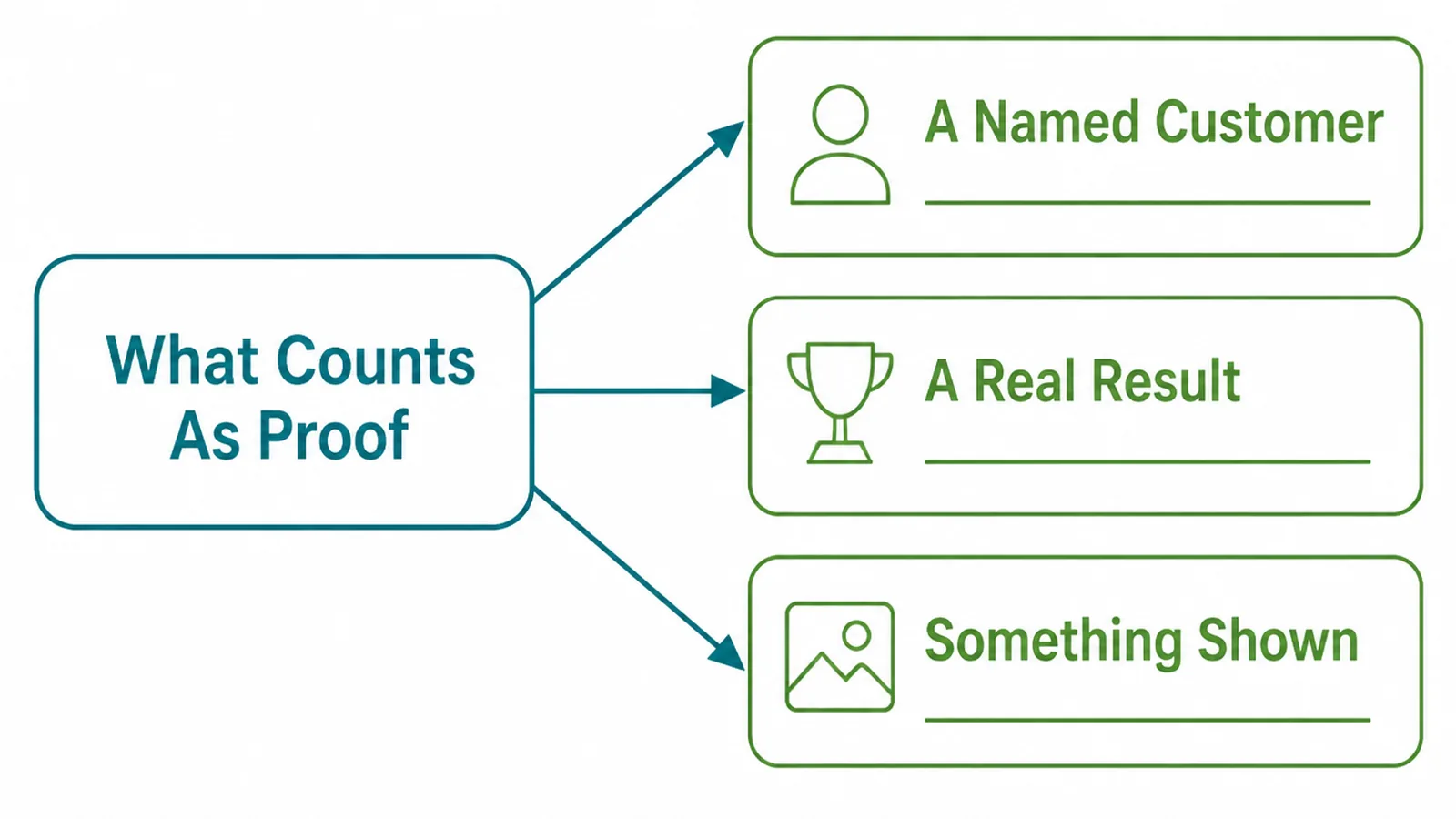
Something only functions as proof when a stranger could, in principle, go and verify it.
- A named customer. A person and the business they run, not "a happy client in Penang".
- A real result. Something that happened, described plainly, with no invented figure attached.
- Something shown. A photograph of the finished work, a screenshot, a before and after.
Miss the name and it could be anyone. Miss the result and there is nothing to be convinced by. Miss the showing and the visitor is taking your word for all of it.
The same three tests apply to case studies, to a logo wall and to the badges in a footer. Trust signals that cannot be traced back to anything are decoration with a serious typeface.
That is also the honest test for whether you have proof at all. If you cannot tick all three, you have a kind comment. Worth having, and not evidence.
Why Anonymous Quotes Do Little
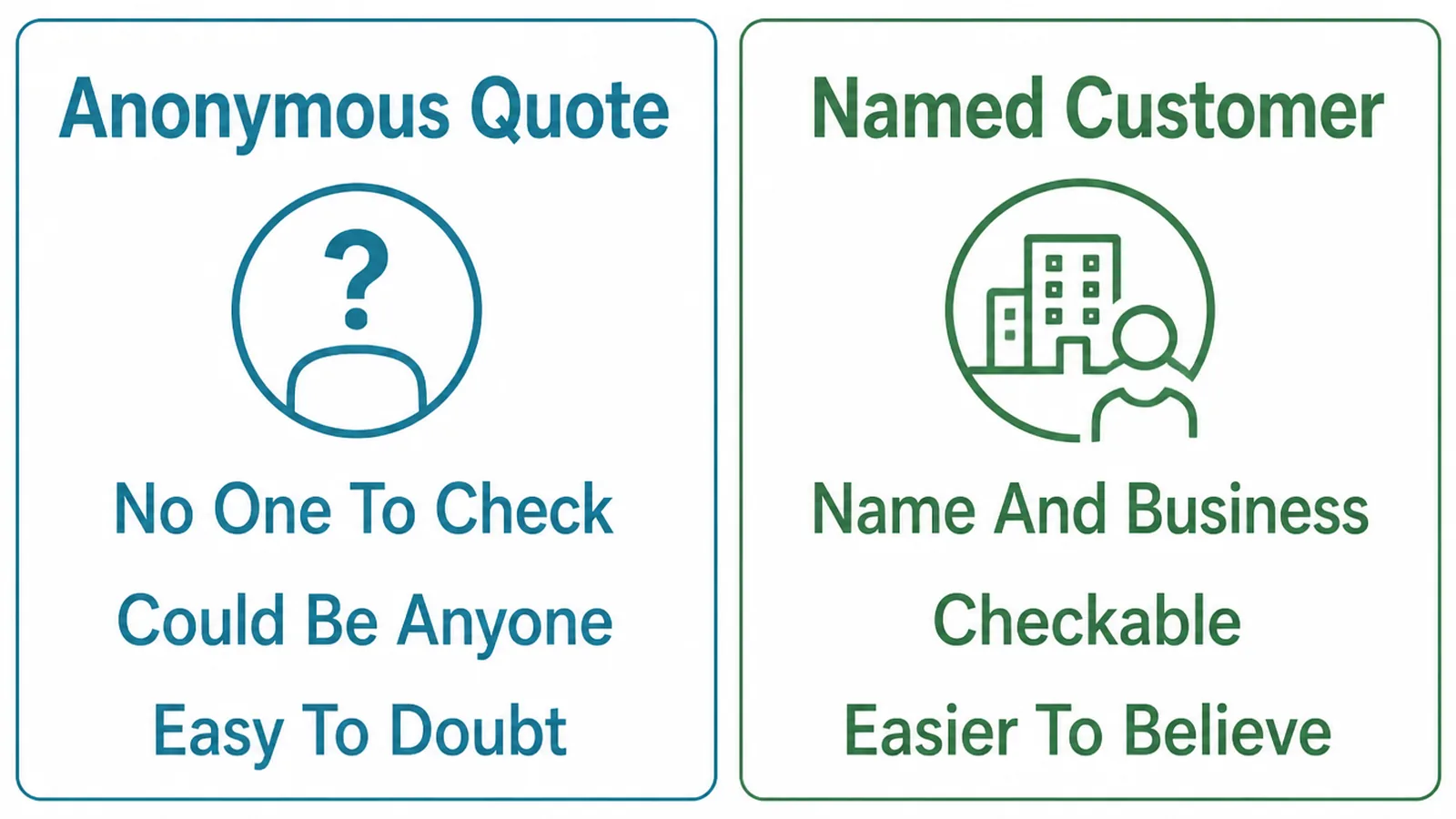
An unattributed quote asks a visitor to trust the company about what other people think of the company.
They have no way to check it, no way to tell it apart from marketing copy, and every reason to assume it was written by whoever wrote the rest of the page. That is not cynicism on their part. It is a reasonable reading.
A name and a business change the maths. The quote becomes something a person said and could be asked about, which makes it harder to dismiss.
This is why the most common fix fails. Styling the quote beautifully, adding a large opening quotation mark and a soft shadow, does nothing about the missing name. It makes a decorative element look more decorative.
How To Gather Proof You Can Publish
Three steps, and none of them are design work. Most businesses already have the material and have never asked for it in a form they are allowed to use.
1. Ask At The Right Moment
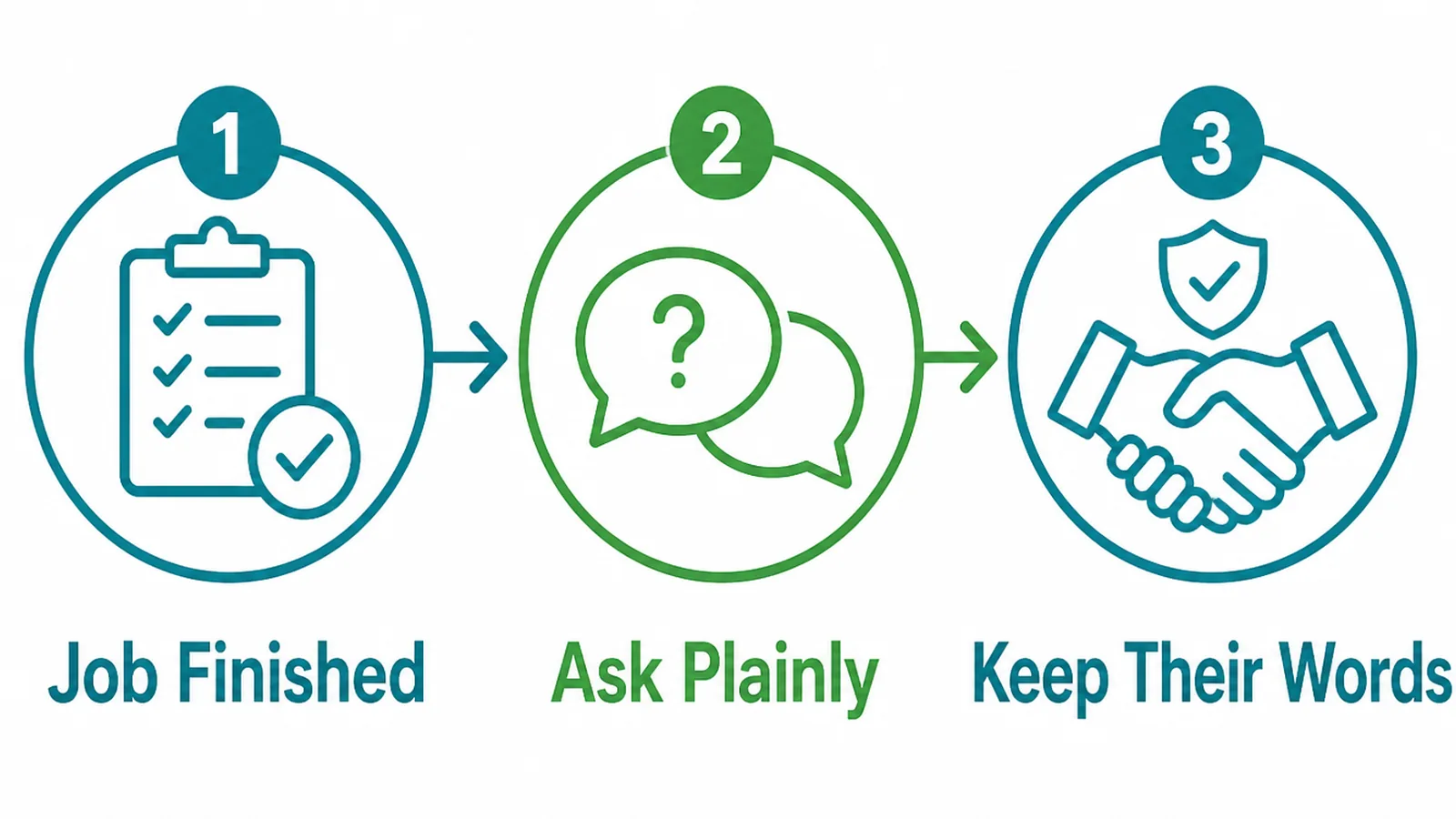
The single biggest reason businesses have thin proof is timing. They ask months later, by email, in a form.
Ask when the job is finished and the customer is pleased, in whatever channel you were already using. A message is fine. A short call is better, because people say more out loud than they type.
Keep the question open and specific to the work: what was the problem before, what happened, and what would you tell someone considering it. Then keep their words.
Editing for length and spelling is normal, and you should show them the edit before it goes live. Rewriting the sentiment is not editing, it is authorship, and you no longer have a testimonial.
If you want public reviews as well, Google permits asking: merchants may request genuine reviews so long as they do not offer an incentive or try to steer the rating. Ask everyone, not only the people you expect to be kind.
2. Place It Beside The Claim
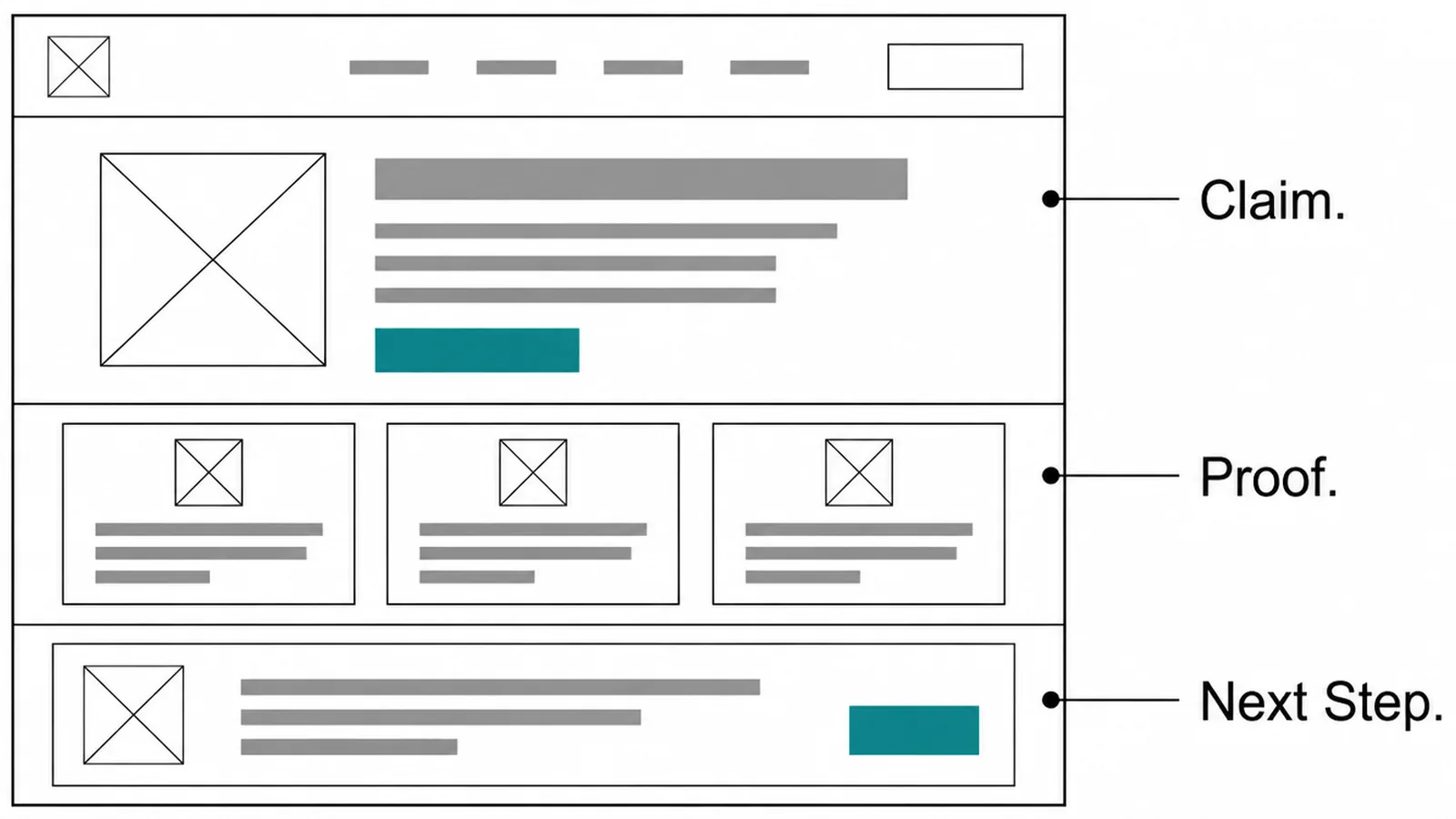
Proof works where the doubt is. A visitor is deciding whether to believe a specific sentence, so the evidence belongs in sight of that sentence.
The pattern is simple and it repeats down a service page. State the claim, show the proof for that claim, then offer the next step.
- Claim. What you do and what it gets them, in one line.
- Proof. The named customer, the result, the photograph of that specific thing.
- Next step. The action, right there, while they are convinced rather than two screens later.
A dedicated testimonials page can still exist. Treat it as an archive for people who want more, never as the place proof lives.
Where a claim has no proof yet, that is useful information. It tells you exactly what to ask the next customer for.
The same applies to logos and badges. A row of client logos under a hero means little; one logo beside the case study it belongs to means something.
3. Keep A Record Of Permission
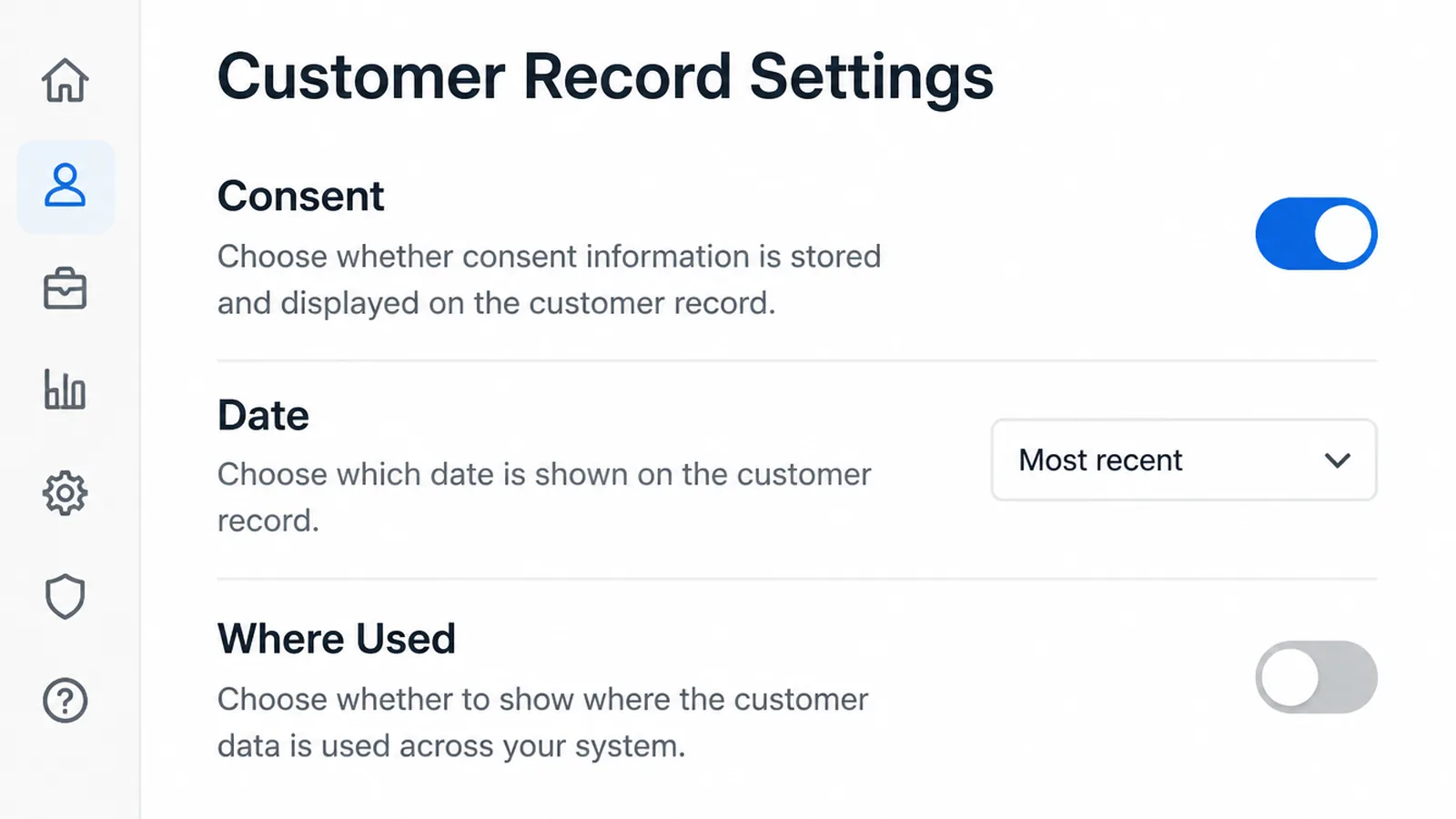
Permission is the part everyone skips, and the part that causes the only genuinely unpleasant moments in this work.
Keep a simple record for every piece of proof you publish.
- Consent. That they agreed, in writing, ideally in the message thread where they said it.
- Date. When they agreed, so you know how old the approval is.
- Where used. Website, social, printed material, advertising. Permission for one is not permission for all.
A spreadsheet is enough. The point is that when a customer asks you to take something down, or a new staff member wants to reuse a quote in an ad, the answer is on file rather than in someone's memory.
Photographs of people need the same treatment, and more care. A photograph of finished work on a customer's premises is not automatically yours to publish.
Kinds Of Proof Worth Gathering
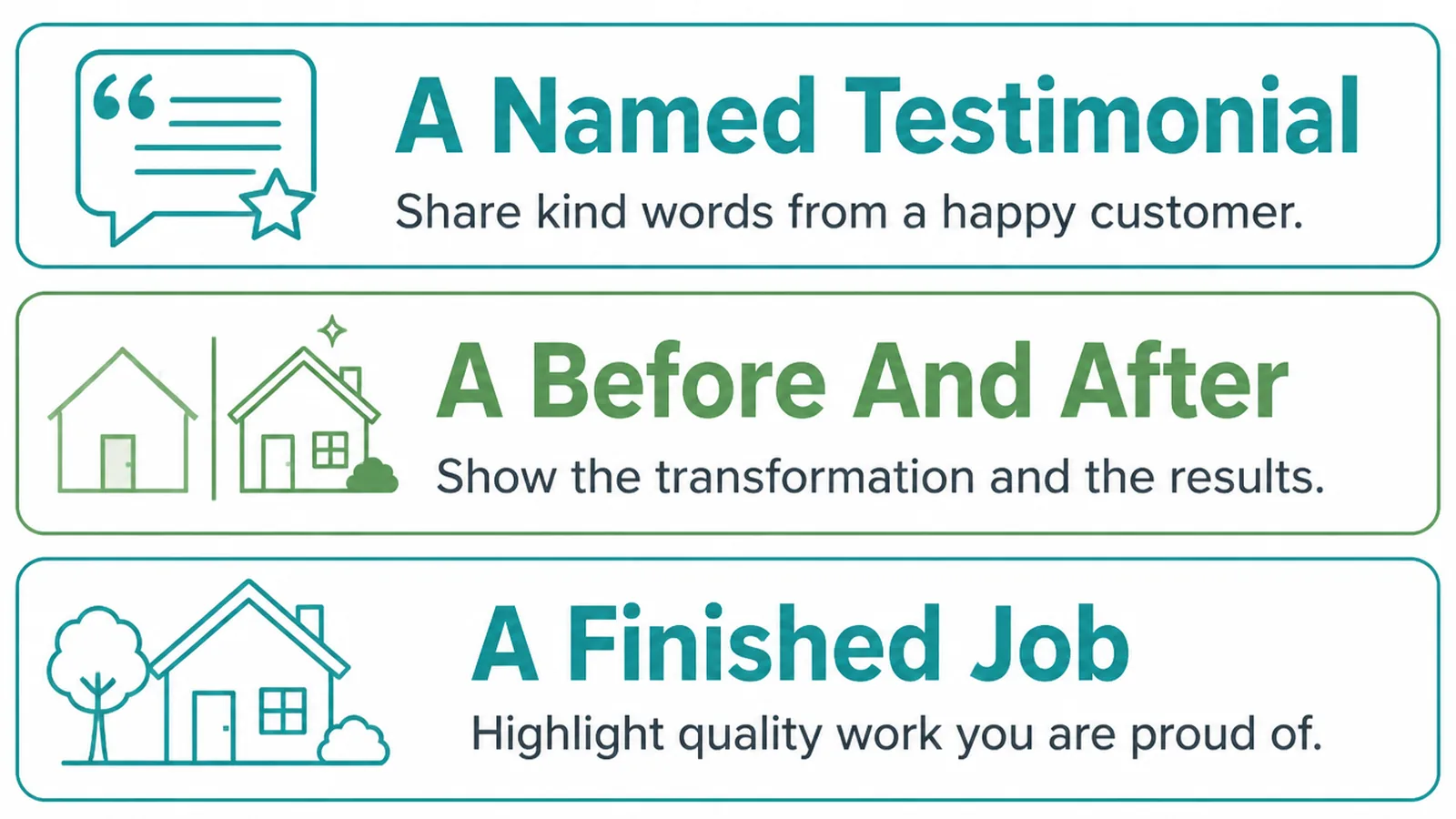
Different claims need different evidence, so gather a mix rather than more of the same thing.
- A named testimonial. Best for how the work felt: responsiveness, clarity, being looked after.
- A before and after. Best for anything visual, where the change is the argument.
- A finished job. Best for craft and scope, because it shows what you actually produce.
Collect them as you go, in a shared folder, named after the customer and the date. Proof gathered as a project is always thinner than proof gathered as a habit.
Photographs do not need a studio. A clean, well-lit picture of the real thing beats a stock image of something similar, every time.
Case studies are worth the extra effort on your two or three biggest services, because they carry a story a quote cannot. Problem, what you did, what changed, in the customer's words where possible.
Everything else can stay short. A line of customer proof under the right paragraph does more for a service page than a long write-up filed somewhere else.
Proof Tools
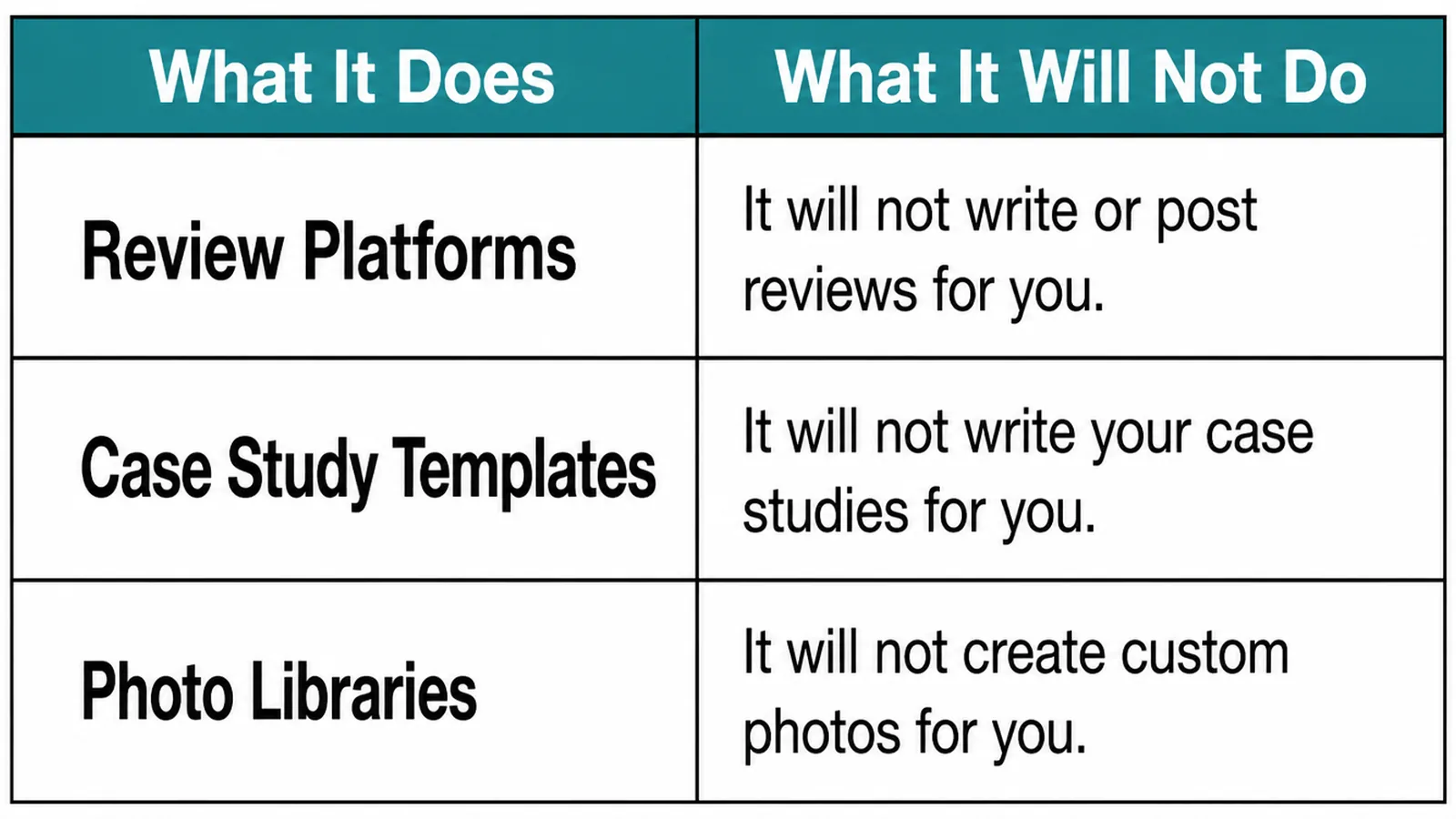
Tools help with the collecting and the storing. None of them can make a vague quote specific.
| What it does | What it leaves to you |
|---|---|
| Review platforms gather public ratings and reviews | Staying inside the platform's rules on how you ask |
| Case study templates give the write-up a consistent shape | Getting the customer to approve the finished version |
| Photo libraries keep your own images findable | Actually taking the photograph on the day |
One warning about review widgets. A feed that pulls in every rating will also pull in whatever arrives next, including a one star from someone you never served.
That is survivable, and usually better than hiding ratings, but decide it deliberately rather than discovering it.
If you are collecting public reviews as part of this, the mechanics are worth getting right once: see how to get more Google reviews for the asking side of it.
Common Social Proof Mistakes
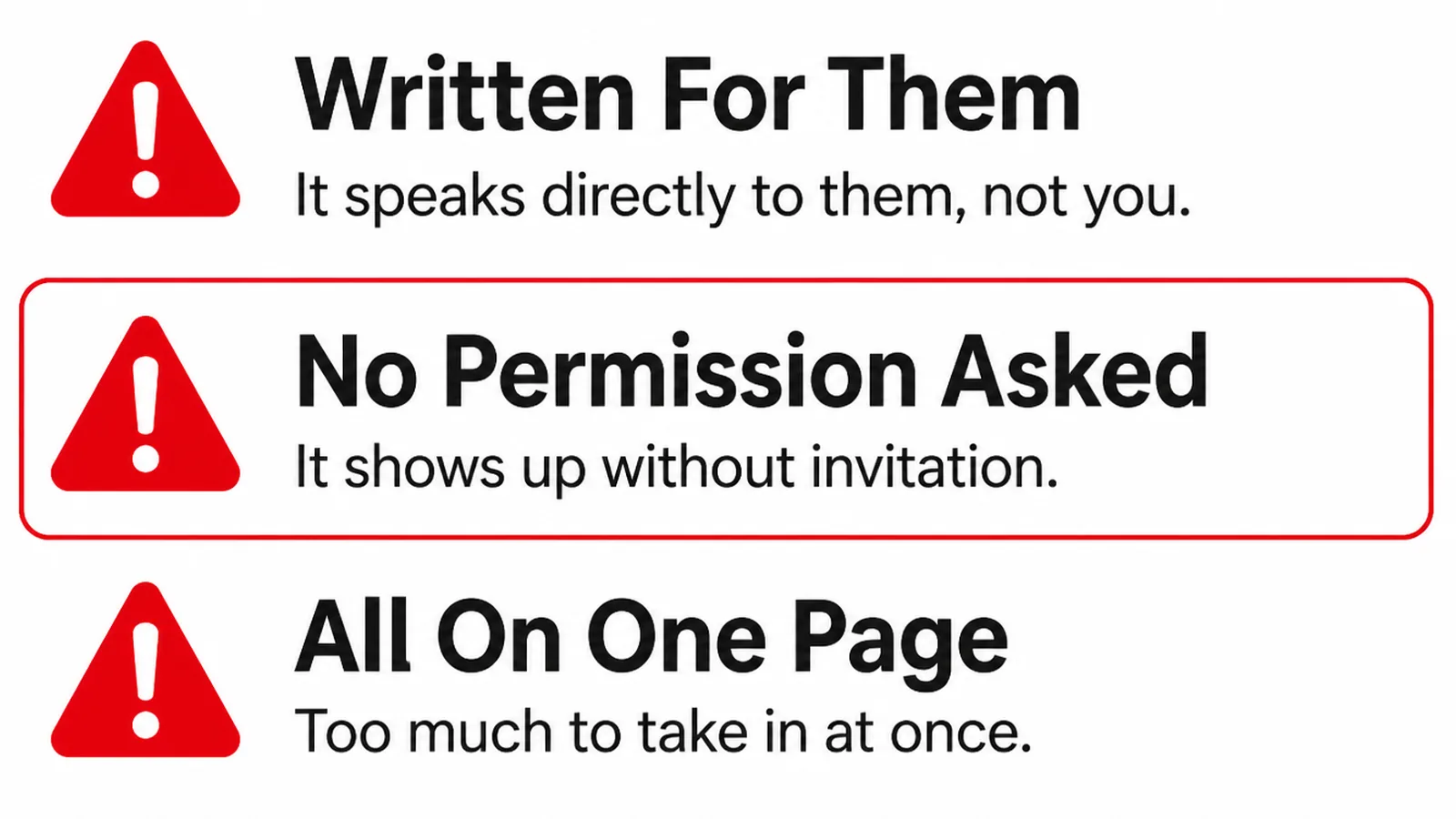
- Written for them. You drafted the quote and they approved it. It reads as marketing because it is.
- No permission asked. Published from a private message, which works until the day it does not.
- All on one page. Every piece of proof filed away from every claim it could support.
There is a fourth that belongs with them: inventing the numbers. A testimonial that quotes a percentage nobody measured is worse than no testimonial, because it is checkable and wrong.
Google treats paid and incentivised reviews as prohibited content, alongside reviews from employees, relatives and competitors. Those rules exist because the pattern is common enough to need a rule.
FAQs
Can I write the testimonial for my customer?
No. Google's Maps policy prohibits content that is not based on a real experience, and a quote you wrote is yours rather than theirs. Ask for their own words, in a message or a short call, and edit only for length and spelling with their agreement before it goes live.
Can I offer a discount for a review?
Not for a public review platform. Google's policy bans content posted because of an incentive offered by a business, including rewards for posting, revising or removing one. You can ask every customer for a genuine review, as long as you do not try to influence the rating or what it says.
Where should proof go on the page?
Next to the claim it supports, not collected on a separate page nobody visits. If a service page says you finish on time, the proof that you finished on time belongs in that section, within sight of the sentence a visitor is deciding whether to believe.
How many testimonials do I need?
Fewer than you think, if each one is specific. Three named customers with a result and a photograph do more than twenty unattributed lines. Gather steadily rather than in a push, so the proof on the page always reflects work you did recently rather than years ago.
Conclusion
Social proof on a website is mostly a habit of asking at the right moment and keeping what people actually said.
Gather a named customer, a real result and something a visitor can see. Record who agreed to what. Then put each piece beside the claim it answers, rather than filing it all on a page of its own.
If you want the proof you already have working harder on the page, see how we approach web design, or get in touch and we will look at what you can publish today.