AI Voice Agents 2026: What They Can Handle for Business

An AI voice agent is software that talks to callers in real time, joining speech recognition, a language model and a synthetic voice. It answers questions, books appointments and passes tricky calls to a person. Nearly eight in ten consumers still say phone calls matter. Seed Light builds them and wires them to your calendar.
Key takeaways
- In a 2016 study, only 37.8% of incoming calls were answered by a live person, according to a 30-day study of 85 businesses across 58 industries by 411 Locals. The rest go to voicemail or nowhere.
- An AI voice agent talks on the phone. It listens, understands, and replies out loud, so calls get picked up even when you are busy or closed.
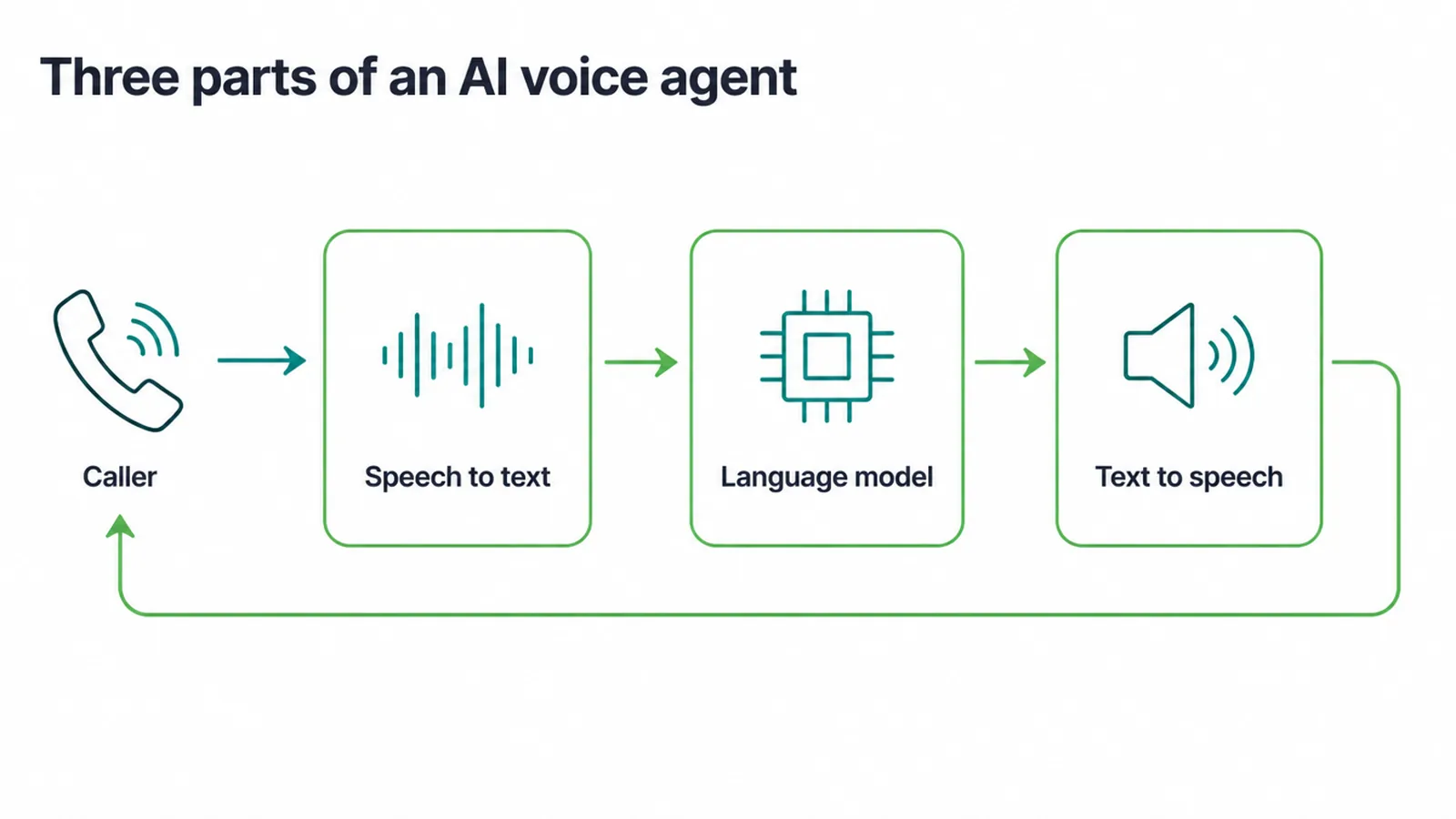
- It runs three steps in a loop. Speech to text, then a language model, then text to speech.
- It is best for routine calls. It books, answers common questions, and follows up. It should hand tricky calls to a person.
- Be honest with callers. Tell them they are speaking to an automated assistant.
1. What is an AI voice agent?
An AI voice agent is AI that talks on the phone. It joins three pieces of software: one that turns speech into text, a language model that decides what to say, and one that turns that reply back into a spoken voice.
Put together, they let a caller have a normal back and forth chat with a machine.
This matters because the phone still pulls weight. Nearly 8 in 10 consumers say phone calls are important for talking to a business, per a 2024 TransUnion survey of 1,556 US adults. People still ring you. The trouble is answering every call.
A voice agent is one branch of the wider world of AI doing jobs for you. If you want the bigger picture first, read what is AI automation, then come back here for the voice part.
2. How an AI voice agent works
An AI voice agent works in three plain steps that repeat for every turn of the conversation. None of it is magic. It is just three tools handing work to each other, fast.
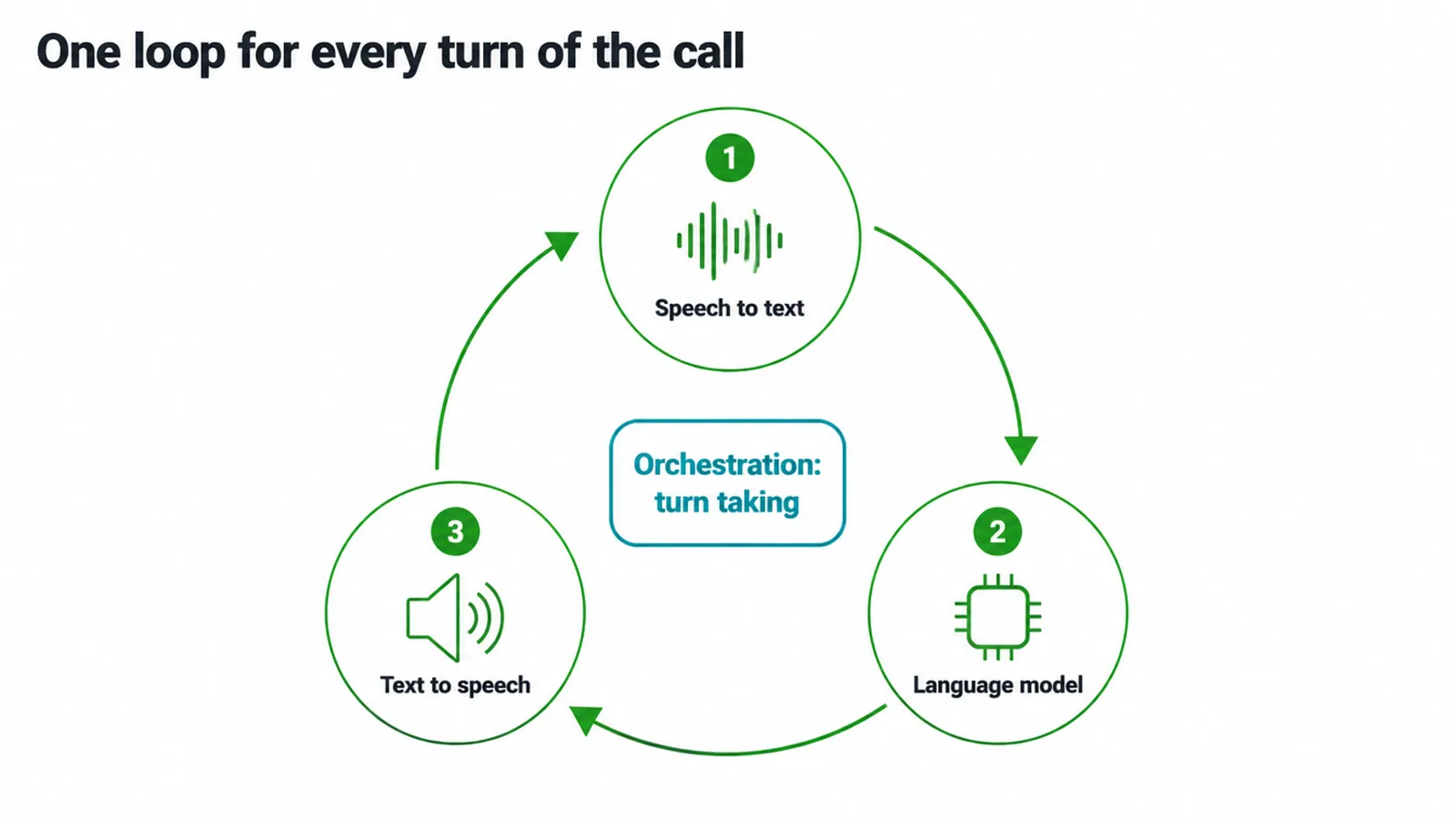
Step one: speech to text. The caller talks. The software writes down what they said as text, word by word, while they are still speaking.
Step two: the language model. That text goes to a language model, the same kind of brain behind tools like ChatGPT. It reads the words, checks what it knows about your business, and works out a reply.
Step three: text to speech. The reply gets turned into a natural sounding voice and played back to the caller. Then the loop starts again with their next sentence.
A fourth part, called orchestration, manages turn taking. It works out when the caller has stopped talking, when to jump in, and when to stay quiet. Get that wrong and the agent talks over people.
Speed is the catch. For routine questions, a good agent replies fast enough to feel natural. For longer or messier requests, you can hear a small lag. When a call gets too complex, a well built agent should stop guessing and pass the caller to a human.
3. What an AI voice agent can do
An AI voice agent can do far more than answer a ringing phone. Once it is set up and connected to your tools, it can run a handful of useful jobs on calls in and out.
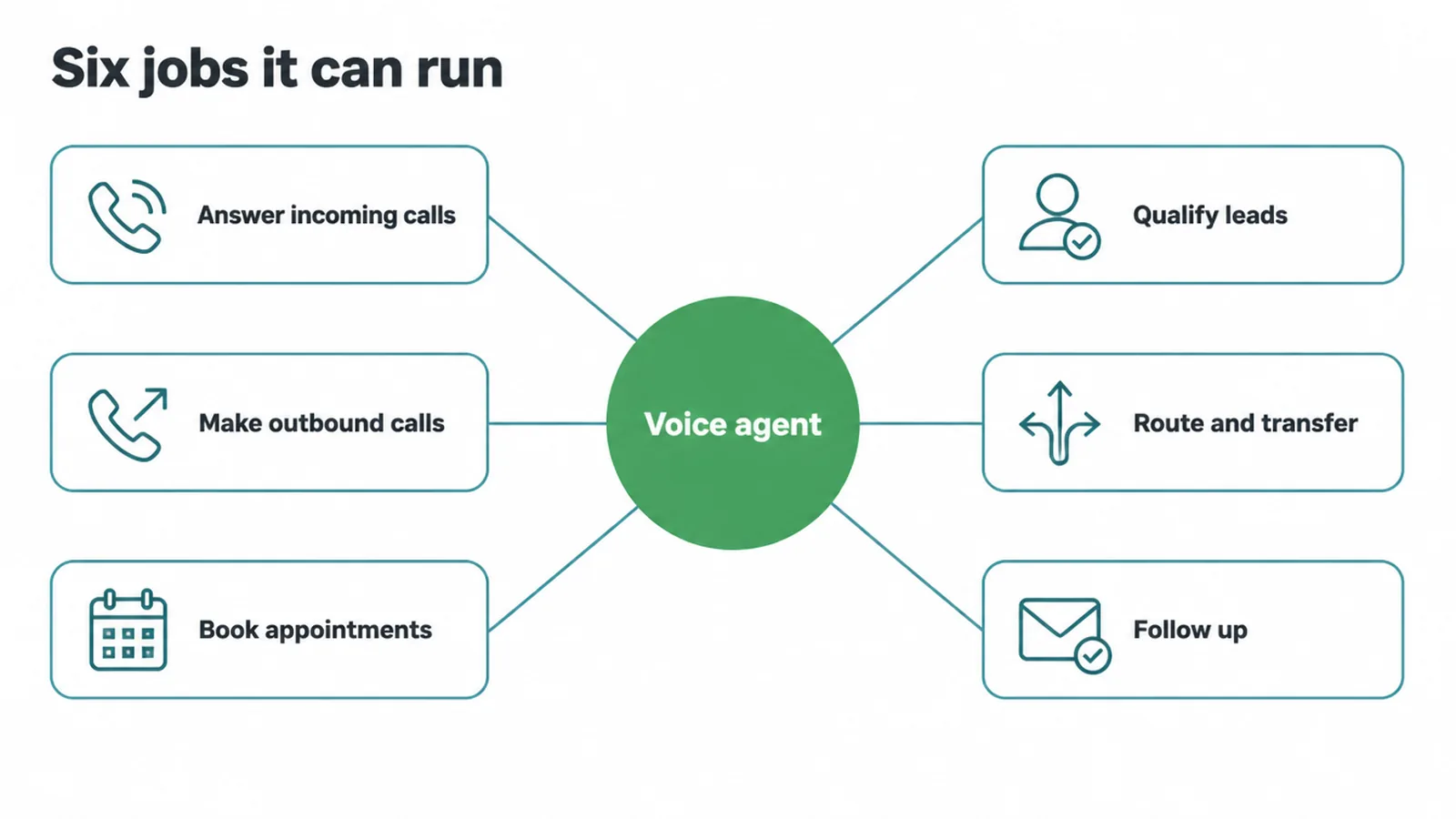
- Answer incoming calls. Pick up, greet the caller, and handle common questions about hours, prices, location, and services.
- Make outbound calls. Ring people to confirm a booking, remind them of an appointment, or follow up on a fresh lead.
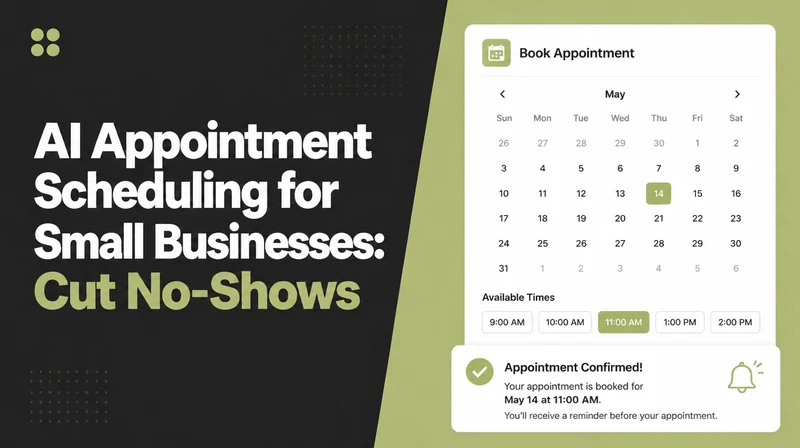
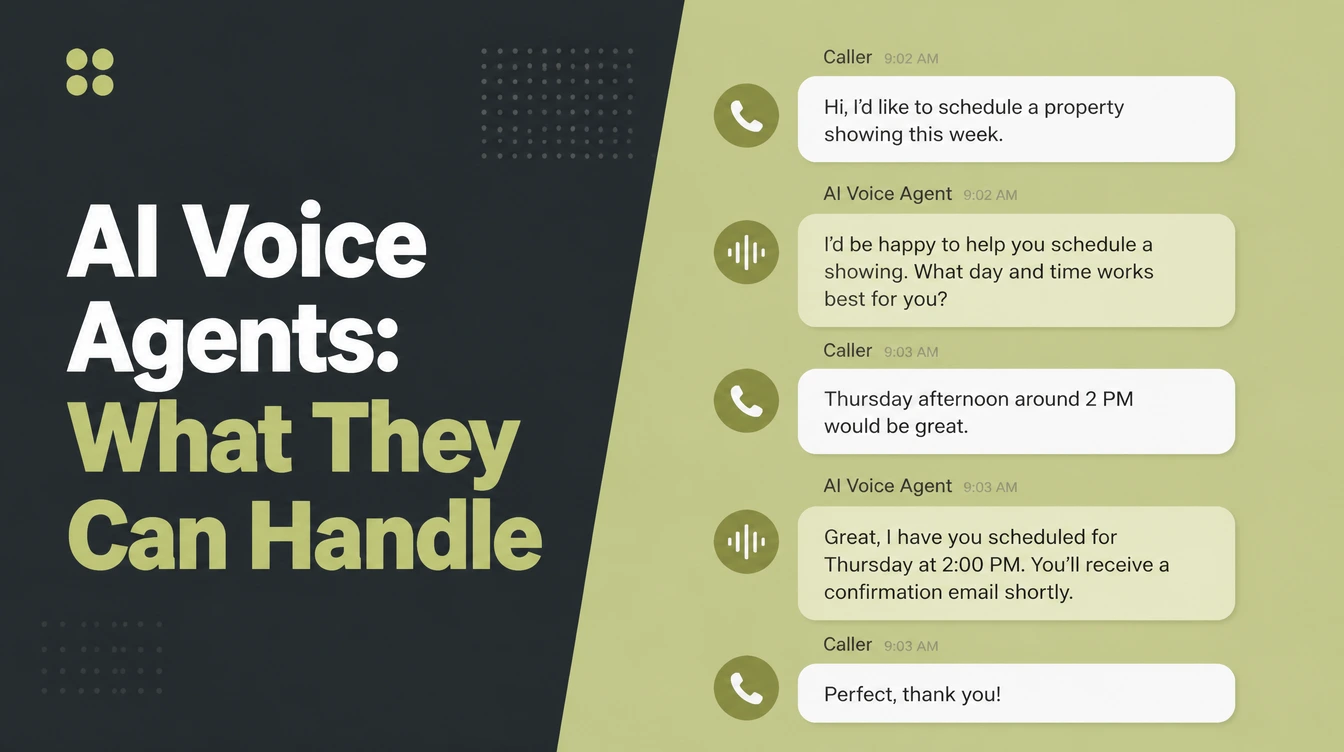
- Book appointments. Check your calendar, offer open times, and lock in the slot, if it is linked to your booking system.
- Qualify leads. Ask a few quick questions to sort a serious buyer from a tyre kicker before a person spends time on them.
- Route and transfer. Send the caller to the right person or department, and hand off cleanly when it cannot help.
- Follow up. Call or text back leads that came in through your website or ads.
That last one carries real weight for sales. Companies that respond to a web lead within an hour are nearly 7 times more likely to qualify that lead than firms that wait longer, Harvard Business Review found across 2,241 US companies.
A voice agent can start that follow up the moment a lead lands, day or night.
4. Where small businesses use an AI voice agent
An AI voice agent fits any business that lives or dies by the phone. Here are the spots where small businesses get the most out of one.
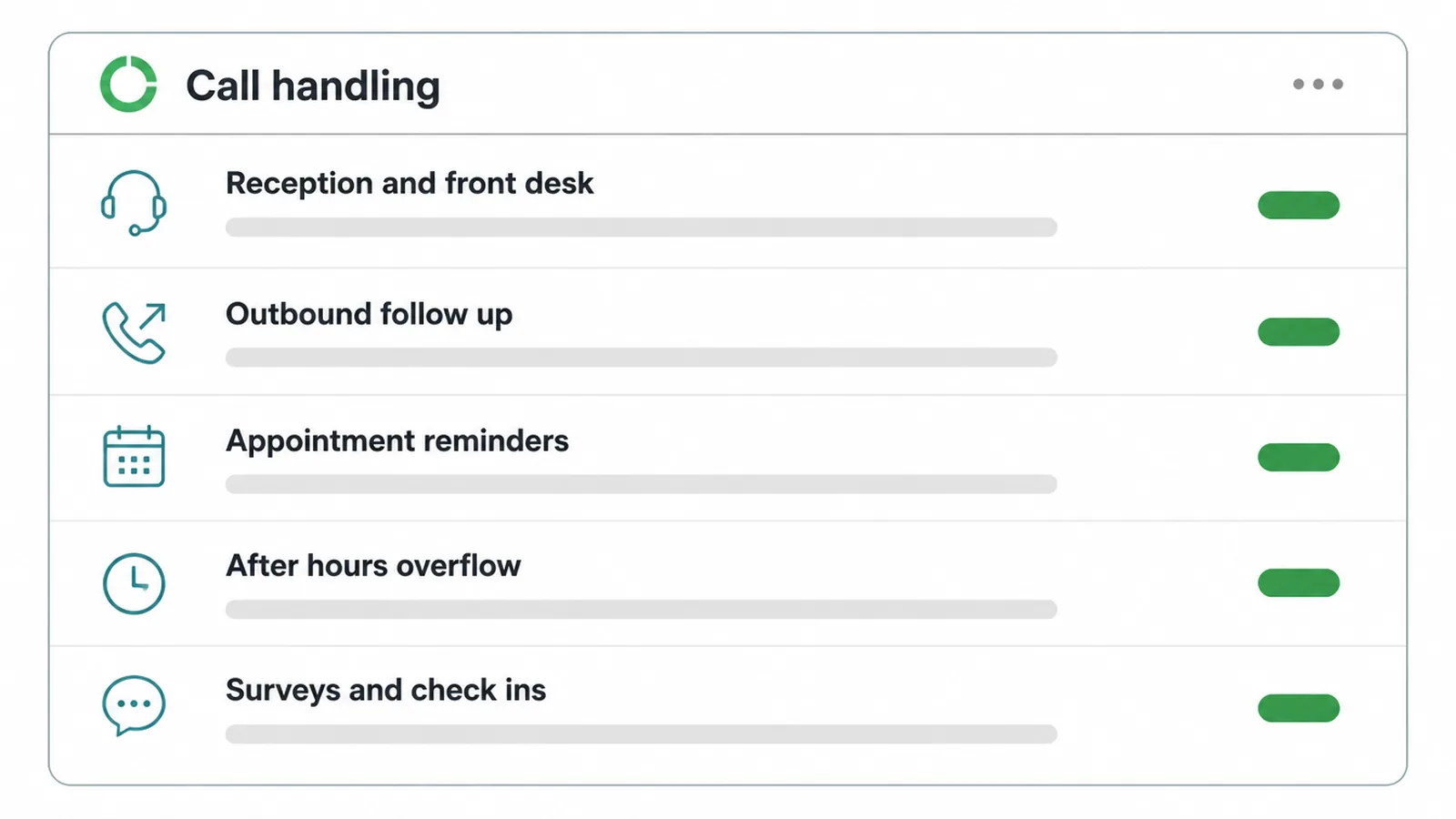
Reception and front desk. Answering, taking messages, and booking visits is such a common job that it has its own product. We cover that one in detail in our guide to the AI receptionist.
Outbound follow up. Calling new leads back quickly while they are still warm, which is where that 7 times figure pays off.
Appointment reminders. Ringing or texting clients before a booking to cut no shows.
After hours overflow. Picking up calls that come in once your team has gone home, so nothing drops to silence.
Simple surveys and check ins. Quick calls to gather feedback or confirm a detail, with anything tricky sent to a person.
5. AI voice agent versus chatbot
A voice agent and a chatbot share a similar brain but use a different channel. A voice agent talks out loud on a call. A chatbot replies in text on your website or in a messaging app. Pick the one that matches how your customers actually reach you.
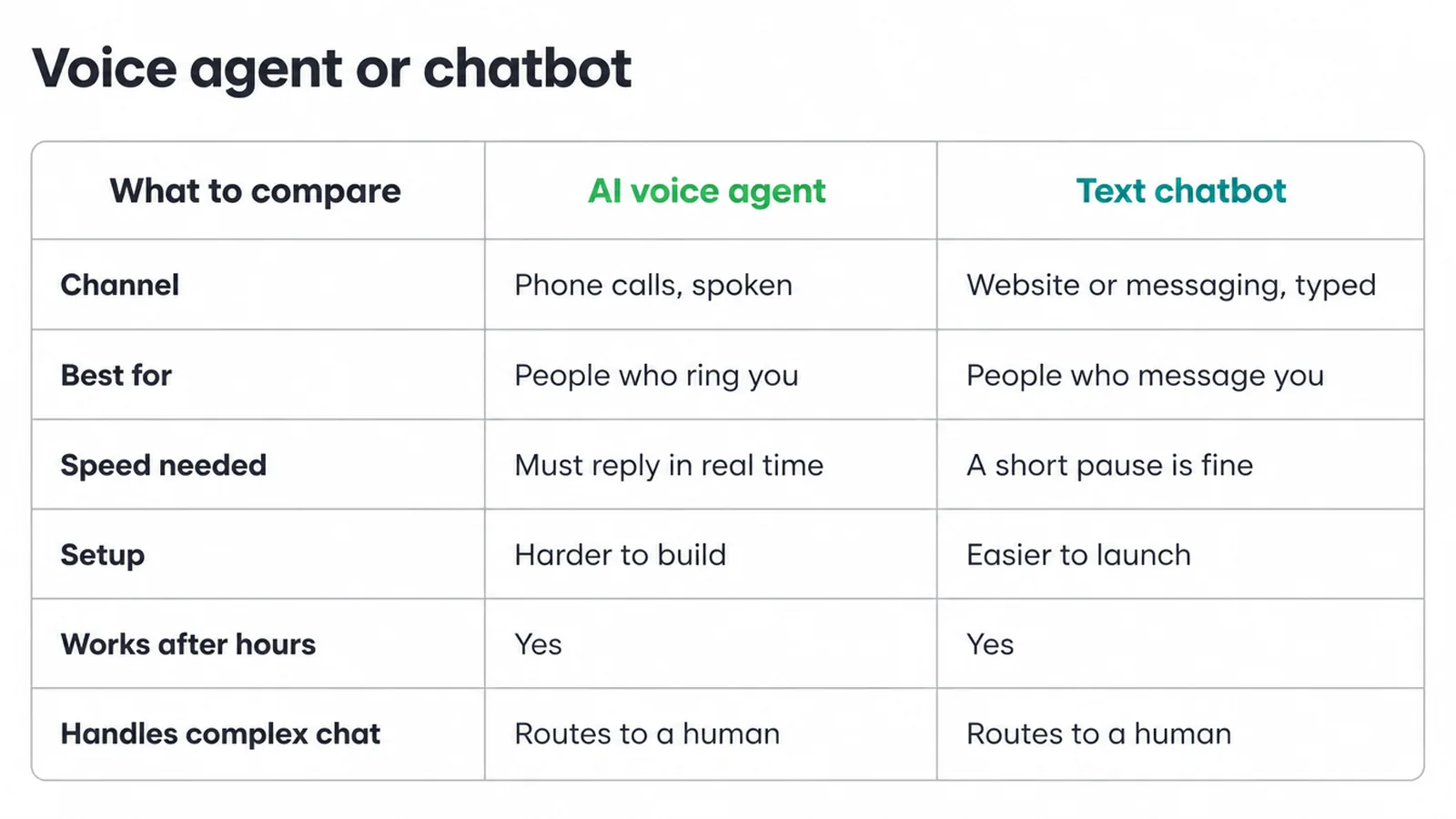
| What to compare | AI voice agent | Text chatbot |
|---|---|---|
| Channel | Phone calls, spoken | Website or messaging, typed |
| Best for | People who ring you | People who message you |
| Speed needed | Must reply in real time | A short pause is fine |
| Setup | Harder, voice and turn taking | Easier to launch |
| Works after hours | Yes | Yes |
| Handles complex chat | Routes to a human | Routes to a human |
If your customers reach you mostly by text rather than by phone, a chatbot fits better. We compare the options in our guide to the best AI chatbot for business.
6. The honest limits of an AI voice agent
An AI voice agent is good at routine calls and weak at messy ones. Knowing where the line sits saves you from a bad set up and annoyed callers.
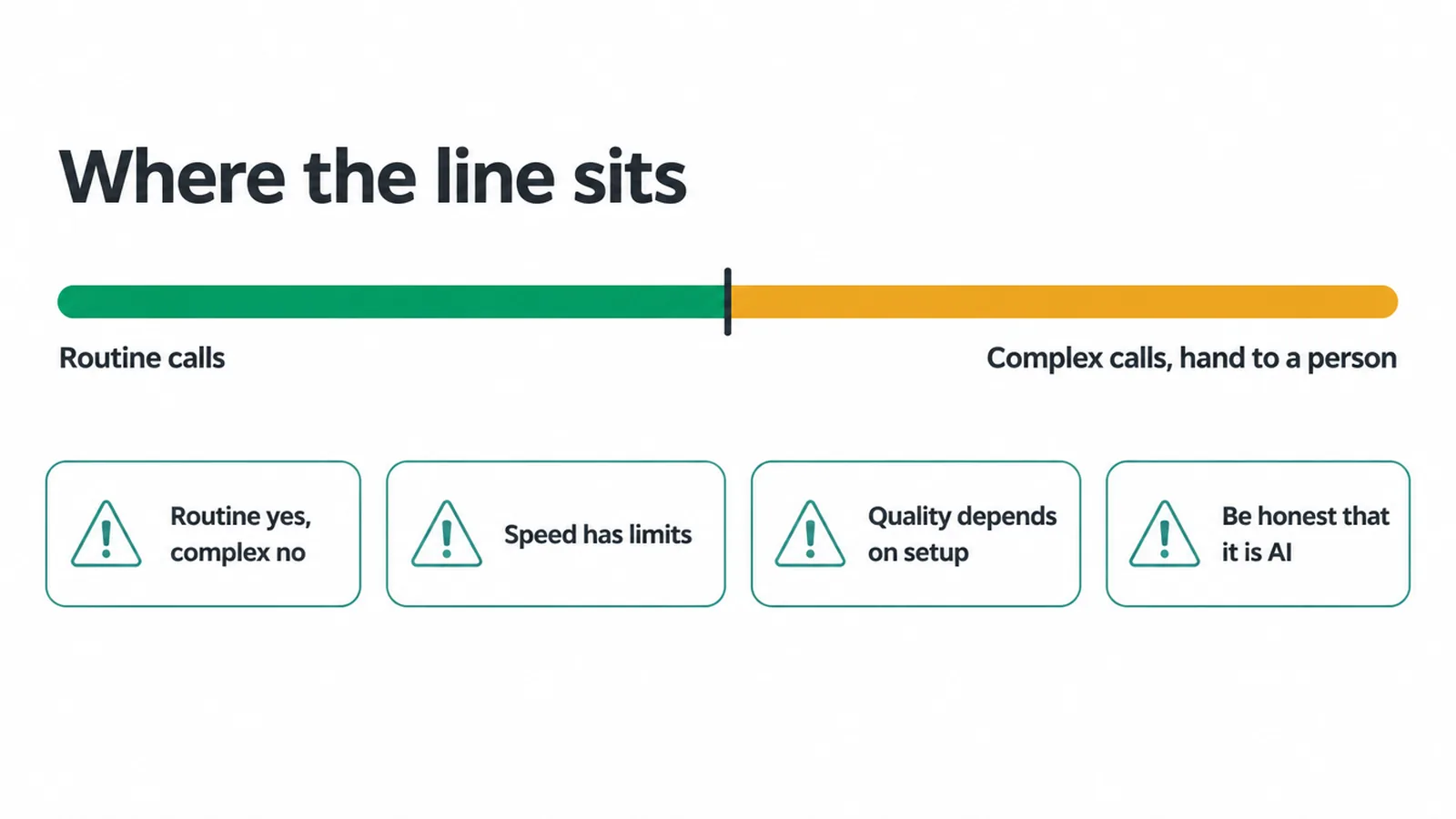
Routine yes, complex no. It handles common, repeat calls well. Emotional, unusual, or high stakes calls still need a person. A good agent knows when to hand off.
Speed has limits. Simple replies feel natural. Longer requests can lag. The bigger the question, the more likely it should go to a human.
Quality depends on the setup. An agent is only as good as the information and rules you give it. A rushed build sounds robotic and gets things wrong.
Be honest that it is AI. This is becoming the rule. In August 2024 the FCC put out a proposal that would require callers to disclose when a call uses an AI generated voice, per the FCC notice in the Federal Register.
Tell callers up front, and always give them a clear way to reach a person.
7. When should you use an AI voice agent?
Use an AI voice agent when the phone keeps beating your team. Run through this quick checklist. If you tick two or more, it is worth a serious look.
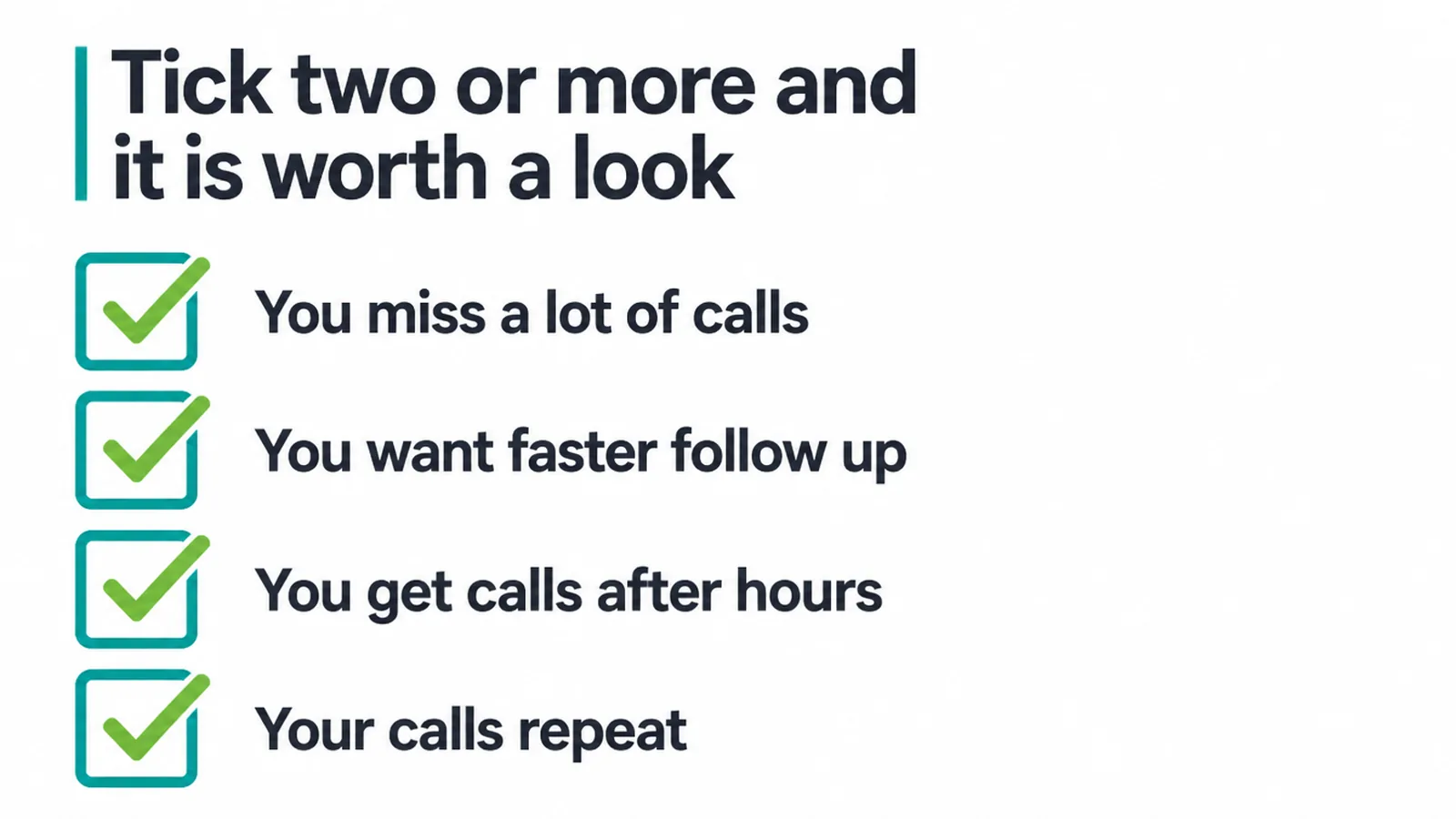
- You miss a lot of calls. Remember, only 37.8% of calls get answered live on average. If that sounds like you, a voice agent fills the gap.
- You want faster follow up. Speed to lead wins sales, and an agent can call back in seconds.
- You get calls after hours. People ring when you are closed, and right now nobody picks up.
- Your calls repeat. Same questions, same bookings, all day. That is exactly what an agent handles best.
If none of those fit, you may not need one yet. If they do, the next step is setting it up properly so it sounds natural and hands off cleanly.
That is the kind of work we do in our AI and automation services. Not sure where to start? Get in touch and we will talk it through with you, no pressure.
Frequently asked questions
1. What is an AI voice agent?
An AI voice agent is software that talks to callers on the phone in real time. It listens to what a caller says, works out what they mean, and replies in a natural voice. It can answer questions, book appointments, and pass tricky calls to a human.
2. How does an AI voice agent work?
An AI voice agent runs three steps in a loop. First it turns your speech into text. Then a language model reads that text and decides what to say back. Finally, it turns the reply into a spoken voice. All three happen fast enough to feel like a normal conversation.
3. What is the difference between a voice agent and a chatbot?
A voice agent talks out loud on a phone call. A chatbot replies in text on your website or a messaging app. The brain behind both can be similar, but the channel is different. Use a voice agent for callers and a chatbot for people who reach you by typing.
4. Can an AI voice agent make and answer calls?
Yes. It can answer calls that come in, and it can also make calls out, such as appointment reminders or following up on a new lead. The same agent can do both, as long as you set it up for each job.
5. Will callers know they are talking to AI?
Callers should know they are talking to AI. Being honest builds trust, and rules are heading that way too. A good setup tells callers at the start that they are speaking to an automated assistant, then offers a person whenever they ask. Disclose it on purpose rather than hiding it.
6. Is a voice agent the same as an AI receptionist?
Not quite. A voice agent is the broad technology that talks on the phone. An AI receptionist is one job you point that technology at, answering the front desk, taking messages, and booking visits. A receptionist is one use of a voice agent.
7. Can an AI voice agent book appointments?
Yes, if it is connected to your calendar or booking system. It can check open slots, offer times, take the booking, and confirm the details with the caller. Without that connection it can only take a message for a person to act on later.
8. Does an AI voice agent replace my staff?
No. It handles routine and repeat calls so your team is not stuck on the phone all day. Tricky or sensitive calls still go to a person. Think of it as cover for the calls you currently miss, not a swap for your people.