Keyword Clustering: Turn Related Searches Into Stronger Pages

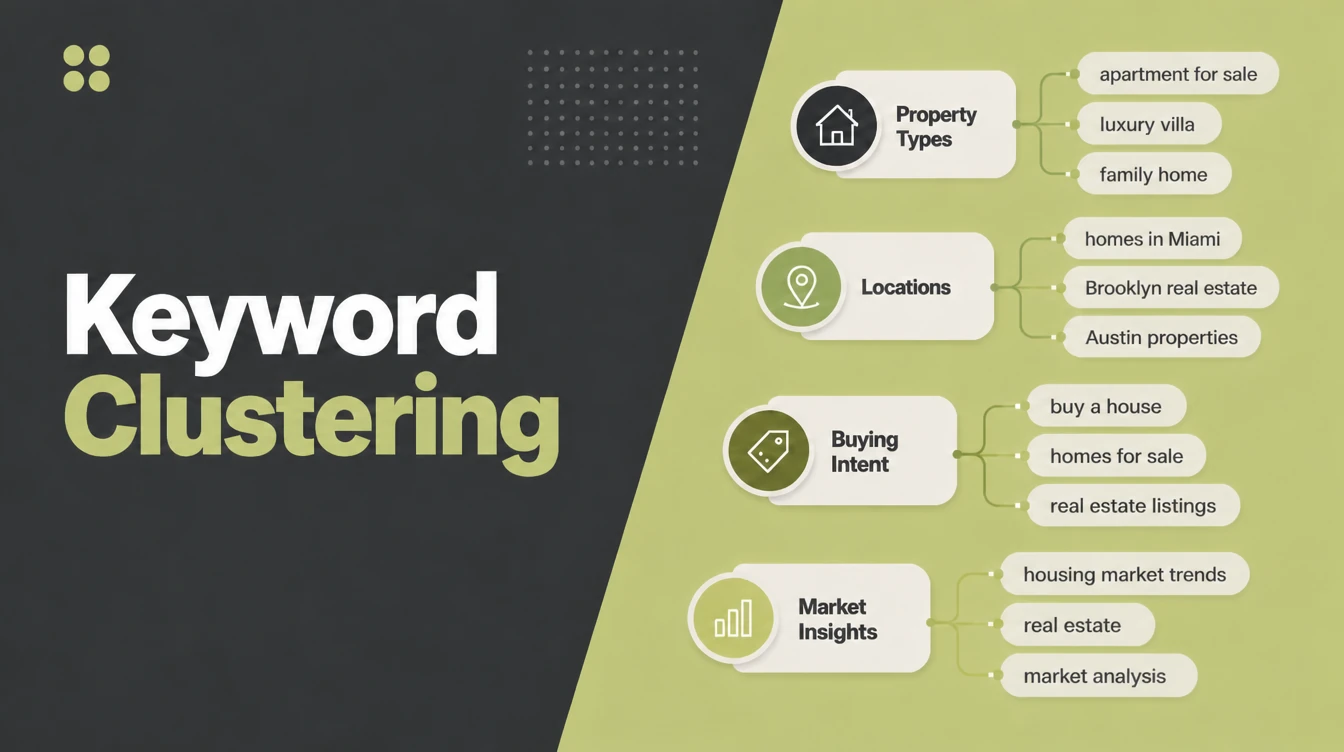
Keyword clustering means grouping keywords that share the same search intent so one strong page can rank for all of them. Confirm a group by checking whether the same pages rank for both terms, then give each cluster one page with a primary keyword and a few secondaries. Seed Light plans clusters and builds the pages.
Key takeaways
- One page ranks for hundreds. The average top-ranking page also ranks in the top 10 for nearly 1,000 other keywords (Ahrefs, study of 3 million queries). That is why grouping beats one page per phrase.
- Cluster by intent first. Keywords that need the same answer share a page. Keywords that need a different answer never do.
- Check SERP overlap to confirm. If the same pages rank for both keywords, they belong together.
- Give each topic one home. One primary keyword, a handful of secondaries, and clear internal links between related pages.
- No paid tool needed. A spreadsheet plus quick Google checks works fine for a small site.
1. What is a keyword cluster?
A keyword cluster is a group of keywords that share the same search intent and can be answered by one page. Keyword clustering is the work of sorting your keyword list into these groups. Each cluster has one primary keyword and several secondary ones that mean roughly the same thing, just worded differently.
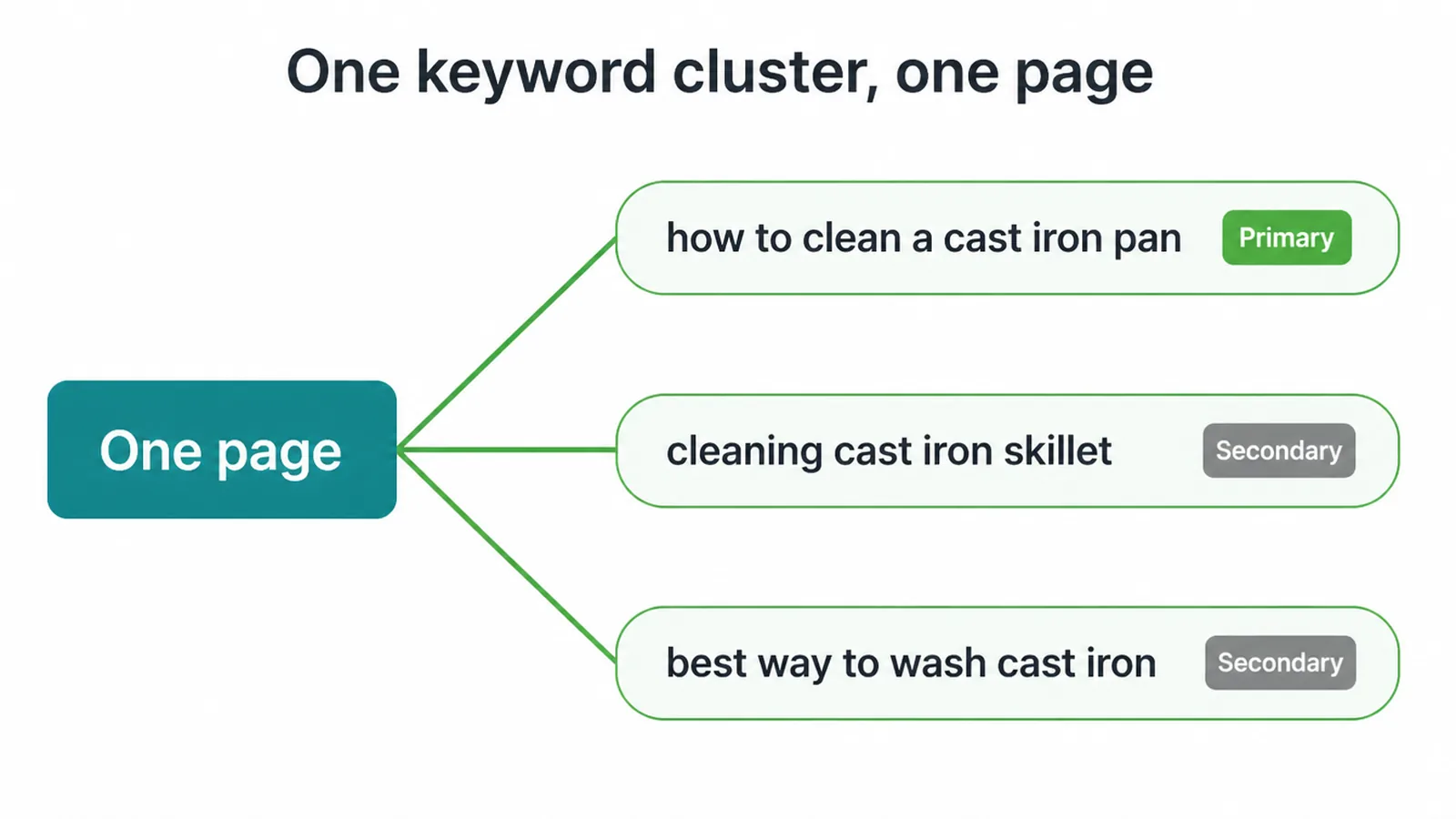
Here is a plain example. "How to clean a cast iron pan", "cleaning cast iron skillet" and "best way to wash cast iron" all want the same thing. One good page answers all three. They are one cluster, not three pages.
Finding the keywords comes first. If you have not built your raw list yet, start with our guide on finding keywords people actually search for. Clustering is the step right after. You take that list and group it.
2. Why one page ranks for many keywords
Keyword clustering works because Google ranks the best page for a topic, not the page that repeats one exact phrase. A single strong page already pulls in a huge spread of searches.
The average top-ranking page also shows in the top 10 for nearly 1,000 other keywords (Ahrefs), with a median around 400. You do not need a separate page for each variation. The good page captures them for you.
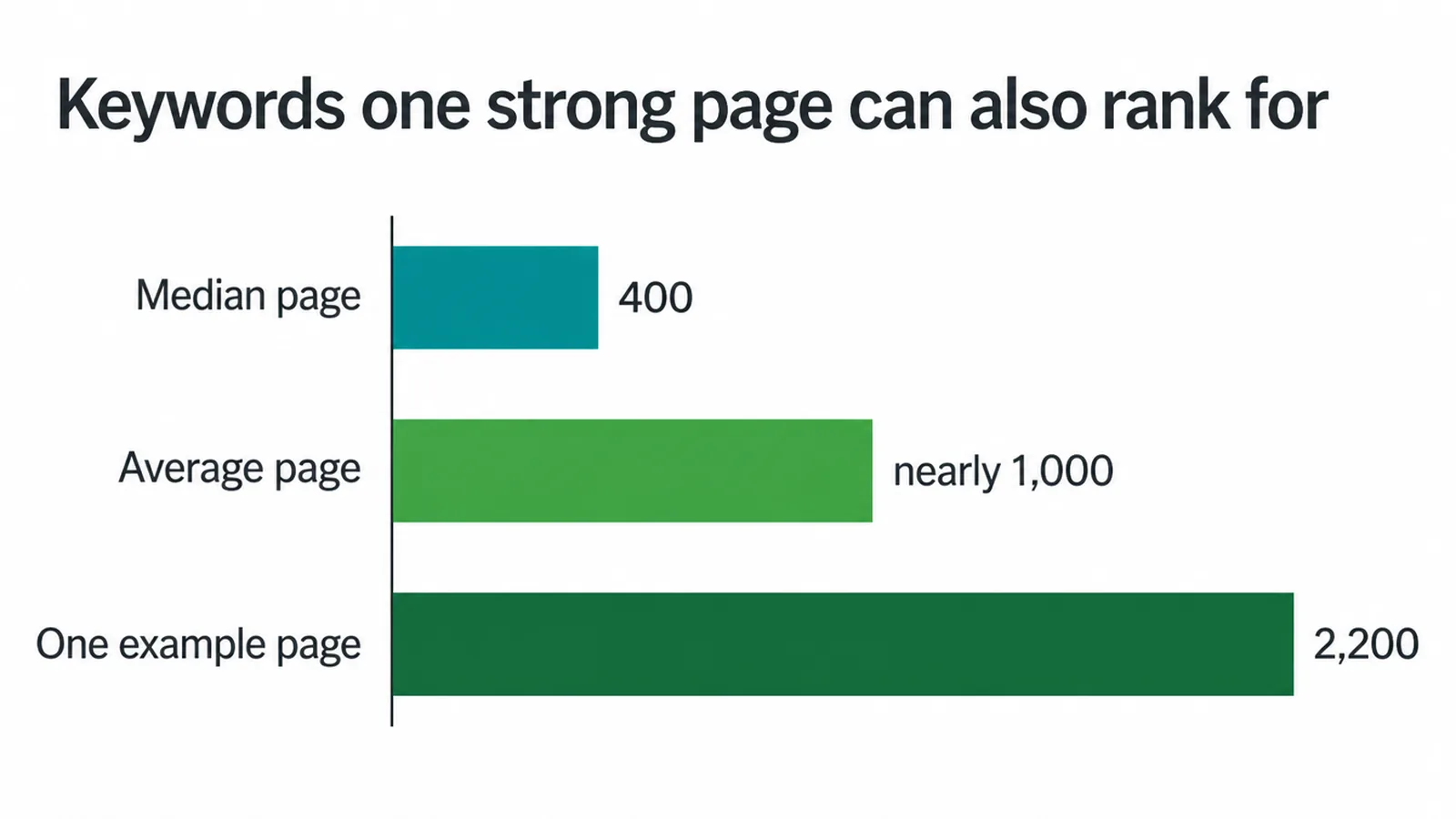
Semrush found one example page ranking for roughly 2,200 keywords on its own. That is the whole point. One page, many keywords. When you split a topic into many small pages, you split your effort, your links and your ranking power too. One deep page tends to beat five shallow ones.
So the goal is not more pages. The goal is the right pages, each one owning a clear topic.
3. How to group keywords into clusters
Keyword clustering has two simple steps: group by search intent, then confirm with SERP overlap. Start with intent because it is the strongest signal. If two keywords need a different kind of answer, they can never share a page, no matter how similar the words look.
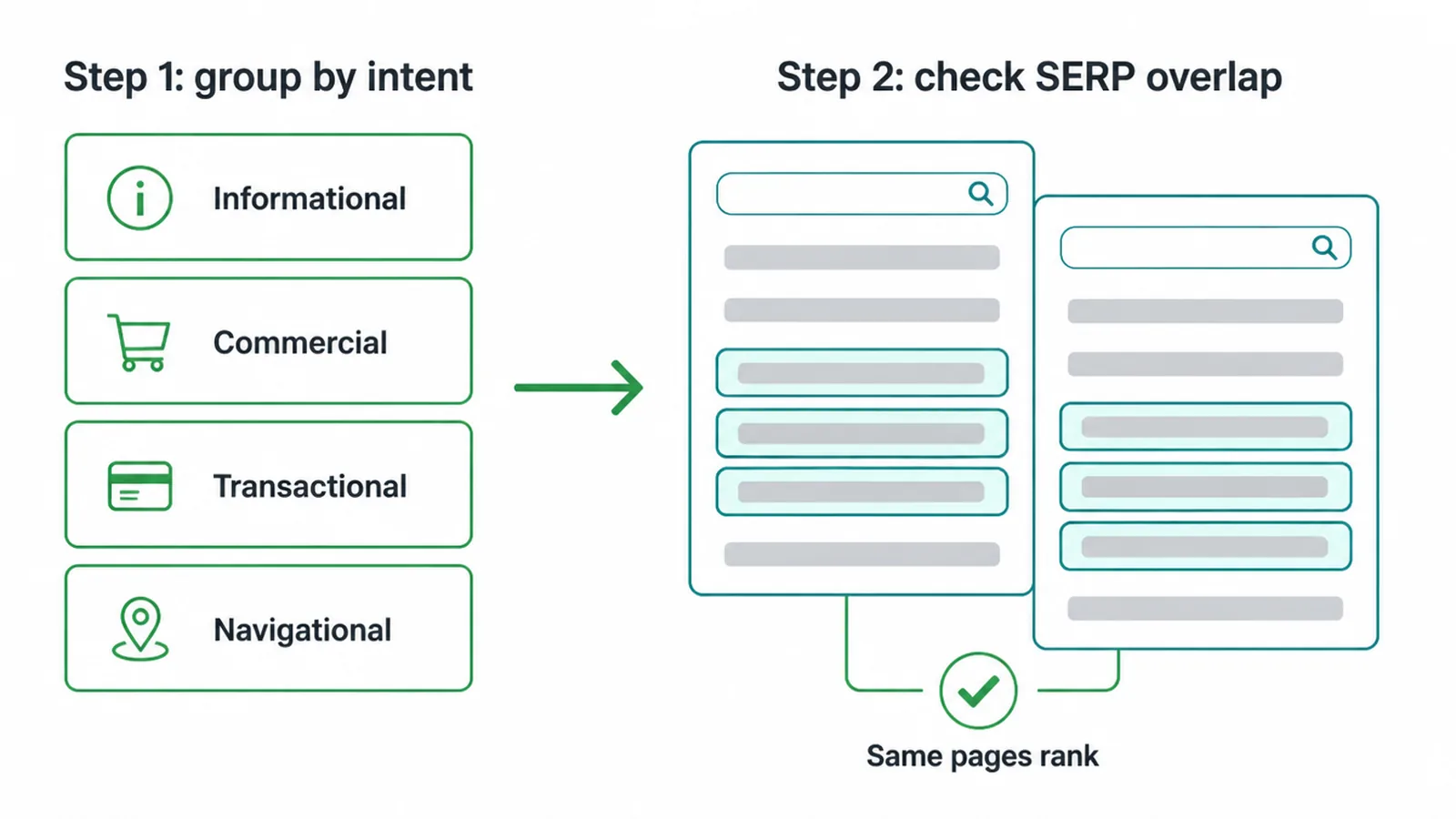
Step 1: group by search intent
There are four common intents behind a search:
- Informational: someone wants to learn ("what is keyword clustering").
- Commercial: someone is comparing ("best keyword tools").
- Transactional: someone is ready to act ("buy keyword tool").
- Navigational: someone wants a specific site or brand.
Keywords with different intent never share a page. "What is a keyword cluster" is a learning question. "Keyword clustering tool" is a buying question.
They get different pages, even though they share words. Match the page to the intent. For more on writing the page itself, see our notes on writing content that matches search intent.
Step 2: check SERP overlap
Once intent matches, confirm with the search results. Type each keyword into Google and look at the top 10. If the same pages rank for both keywords, they want the same answer, so they belong in one cluster. If totally different pages rank, keep them apart.
A common rule SEOs use is that if a good chunk of the top results are shared between two keywords, those keywords cluster together. Treat that as a rough guide, not a hard law. The eyeball test is enough for a small site. Do the same pages keep showing up? Then they are one cluster.
4. Pick a primary and secondary keywords per page
Every cluster gets one page, and that page needs a clear lead keyword. Keyword clustering only pays off if each page knows what it is about. Pick one primary keyword as the main term, usually the one with the clearest intent and the most demand. The rest are secondaries that support it.
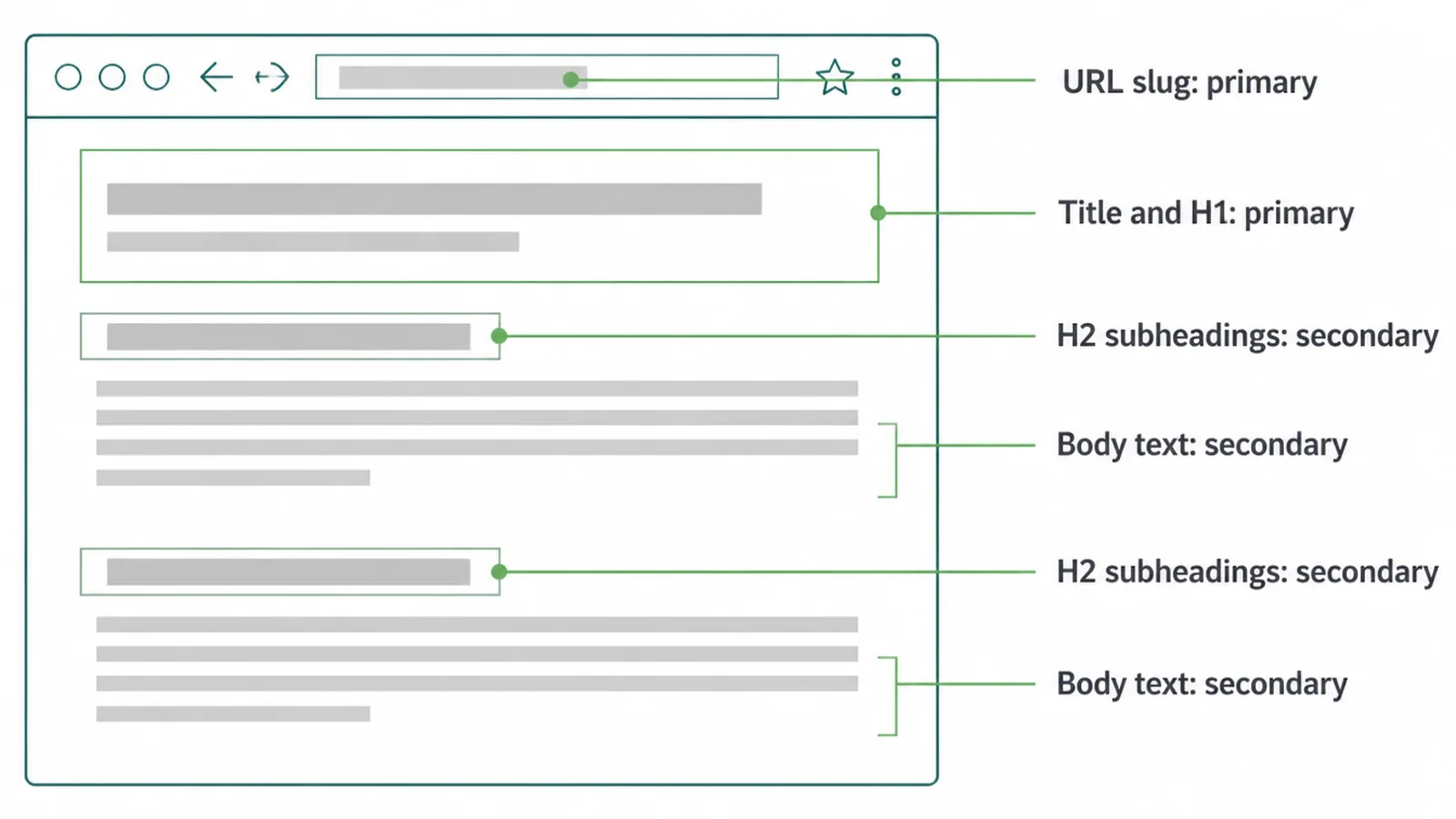
Put the primary keyword in the title, the H1 and the URL slug. Work the secondaries into your H2 subheadings and the body where they read naturally. Do not force them. If a sentence sounds odd because you crammed a keyword in, take it out. Google reads the meaning, not the exact match.
There is no magic number of keywords per page. Target the primary plus the handful of secondaries that truly share its intent. If a keyword needs a different answer, it is a new cluster, not an extra line on this page.
5. Map each cluster to a page
Now turn your clusters into a plan. Keyword clustering ends with a simple map: each cluster gets one page, and you decide whether to build a new page or improve one you already have. Check first. If a page already covers the cluster, optimise that one rather than splitting the topic in two.
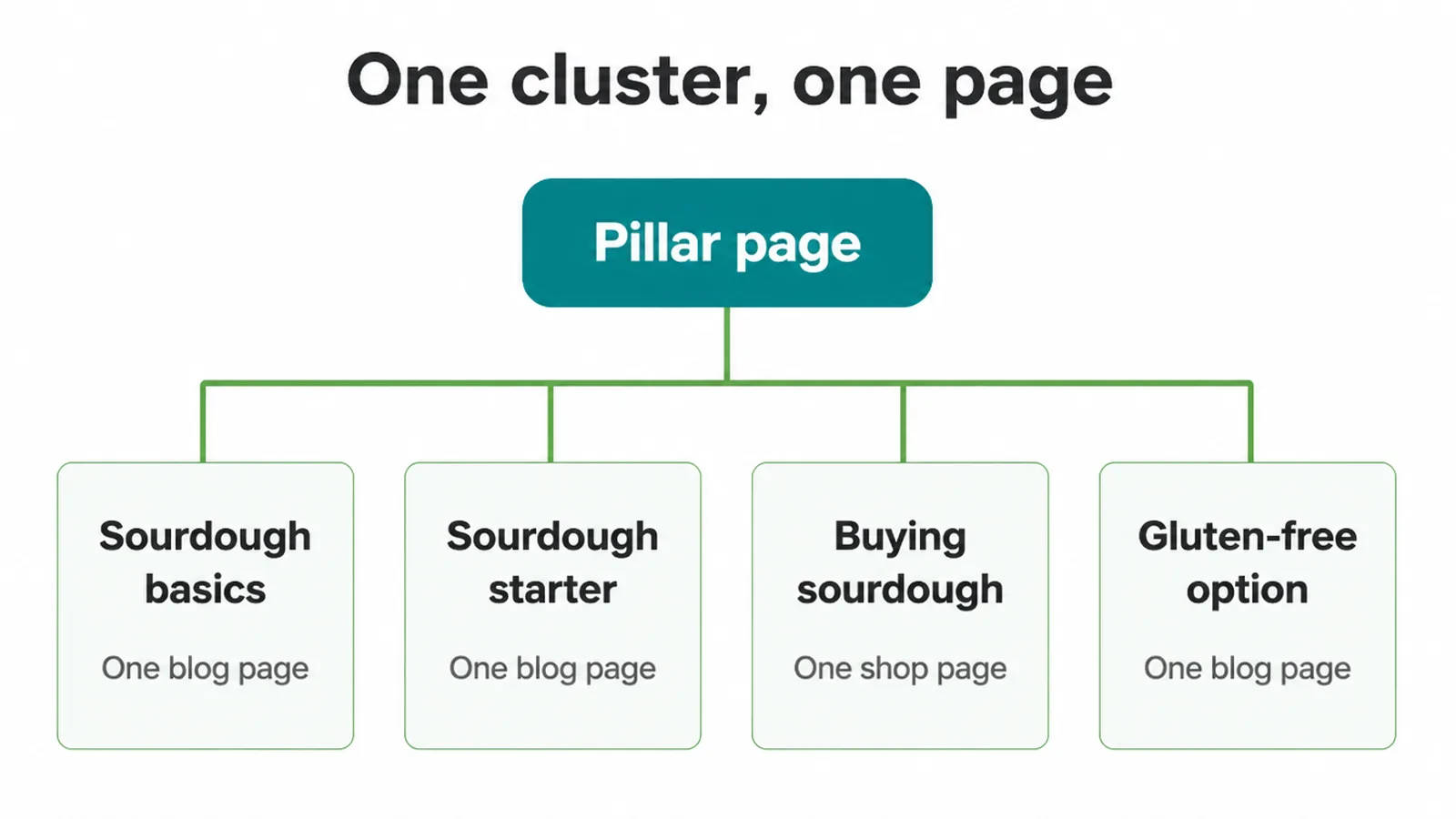
The cleanest shape is a pillar plus its clusters. The pillar page covers the broad topic. The cluster pages cover the specific sub-topics, and they all link back to the pillar and to each other. Those internal links matter.
HubSpot found that the more internal links they added between related pages, the higher those pages climbed and the more impressions they earned. Linking is not a nice-to-have. It is part of how the cluster ranks.
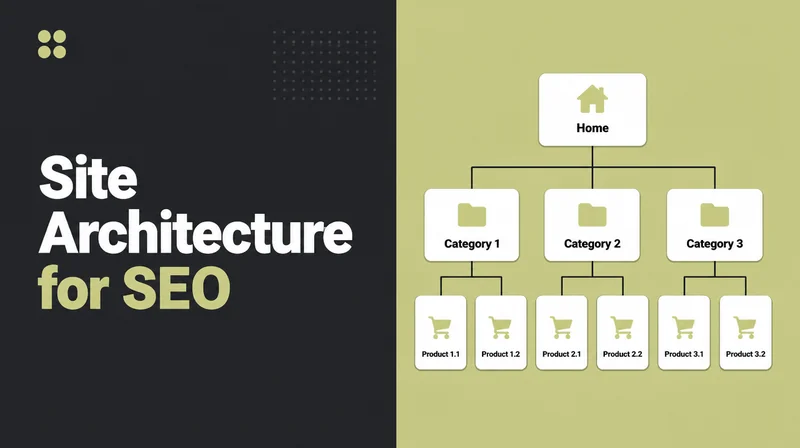
This is the same idea behind building topical authority: cover a subject in real depth and link the pieces together. The way you arrange those pages on your site is its own skill too, covered in our guide to site architecture for SEO.
Here is a worked example. Say you run a small bakery site. Your raw list might cluster like this:
| Cluster (topic) | Primary keyword | Secondary keywords | One page |
|---|---|---|---|
| Sourdough basics | how to make sourdough bread | sourdough recipe for beginners, easy sourdough loaf, sourdough step by step | /blog/how-to-make-sourdough/ |
| Sourdough starter | how to make a sourdough starter | feeding sourdough starter, sourdough starter from scratch, starter not rising | /blog/sourdough-starter/ |
| Buying sourdough | buy sourdough bread online | fresh sourdough delivery, order sourdough near me | /shop/sourdough/ |
| Gluten-free option | gluten free sourdough bread | gluten free sourdough recipe, is sourdough gluten free | /blog/gluten-free-sourdough/ |
Notice how "buy sourdough bread online" sits in its own row. It is a buying intent, so it gets a shop page, not a recipe page. Same topic family, different intent, different home.
6. Avoiding keyword cannibalization
Keyword cannibalization is when two of your own pages chase the same keyword and the same intent. People worry that Google gets confused and ranks neither. Keyword clustering is partly how you avoid it, by giving each topic exactly one home from the start.
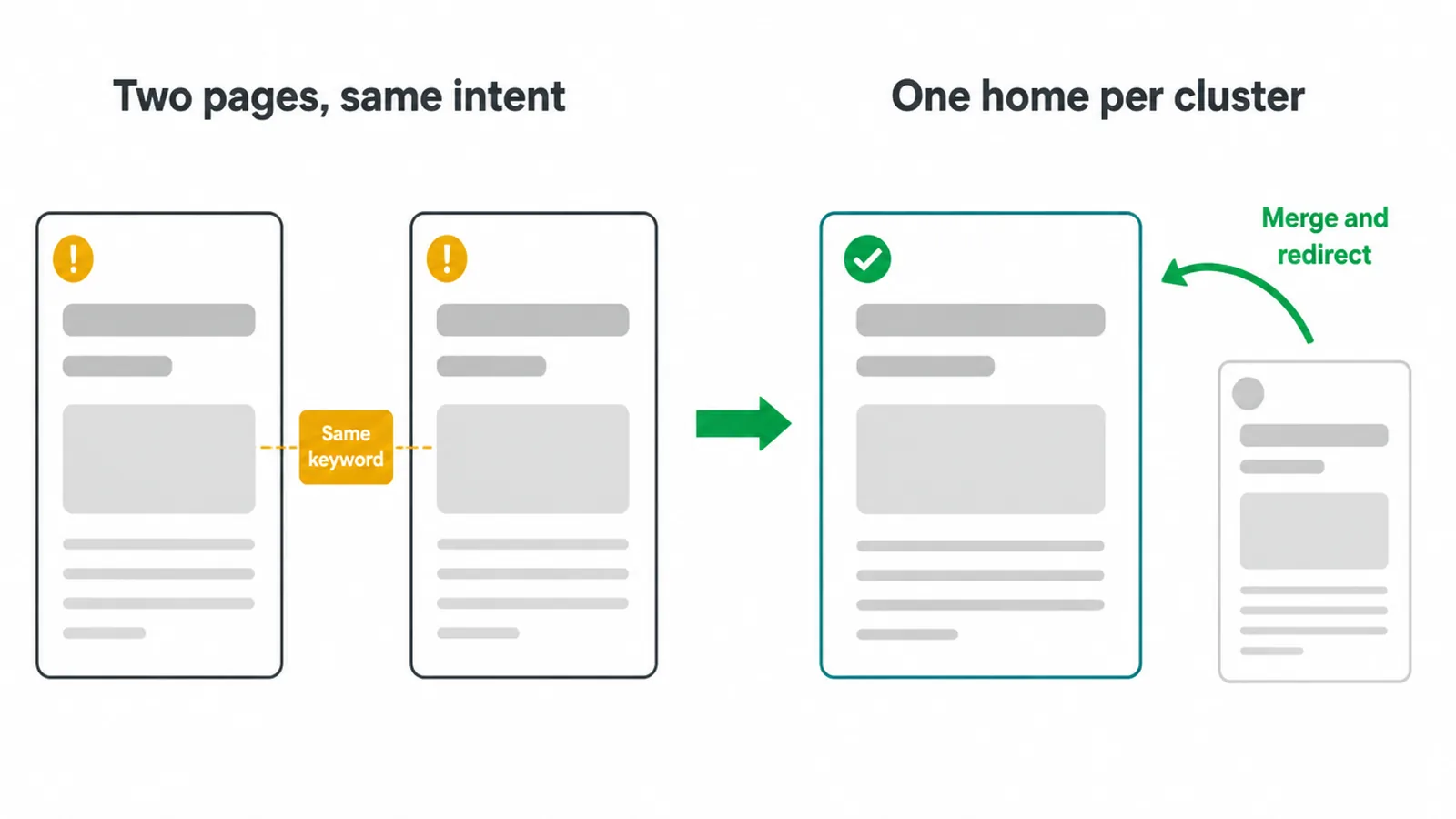
Here is the honest part. The fear is bigger than the real problem. Ahrefs has argued that cannibalization is largely overblown, and that Google usually just picks the better of your pages rather than getting muddled by two pages on similar things.
So do not panic and merge everything. Two pages on close but distinct intents (a "how to" guide and a "best of" comparison, say) can both rank fine.
The real fix is simple. If you genuinely have two pages saying the same thing for the same intent, pick the stronger one, fold the useful bits into it, and redirect the weaker one. One home per cluster. That is it. No need to chase ghosts.
7. Manual clustering vs a tool
You can cluster keywords by hand or with a tool. For a small site, manual keyword clustering is perfectly fine. Drop your keywords in a spreadsheet, sort them into intent groups, and do a few SERP checks on Google. That is the whole job for a few dozen keywords.
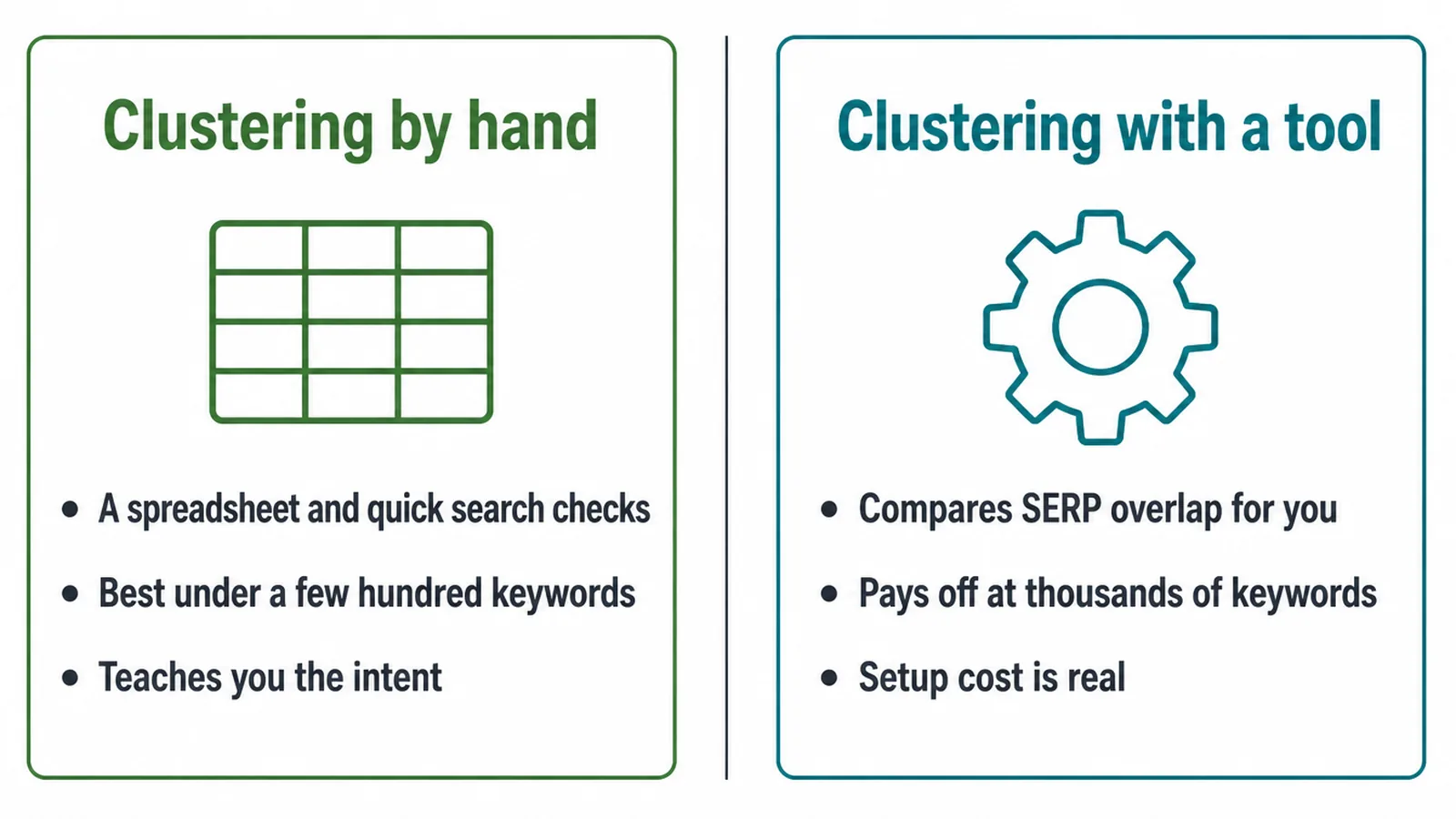
Tools only start to pay off at scale. If you are sorting thousands of keywords, a clustering tool that compares SERP overlap automatically saves real time. Below a few hundred, the setup cost is not worth it. The manual method also teaches you the intent behind each search, which makes you write better pages.
So do not let "I need a tool first" stop you. Start with a spreadsheet today. Add a tool later, only when the list outgrows your patience.
8. Where this leaves you
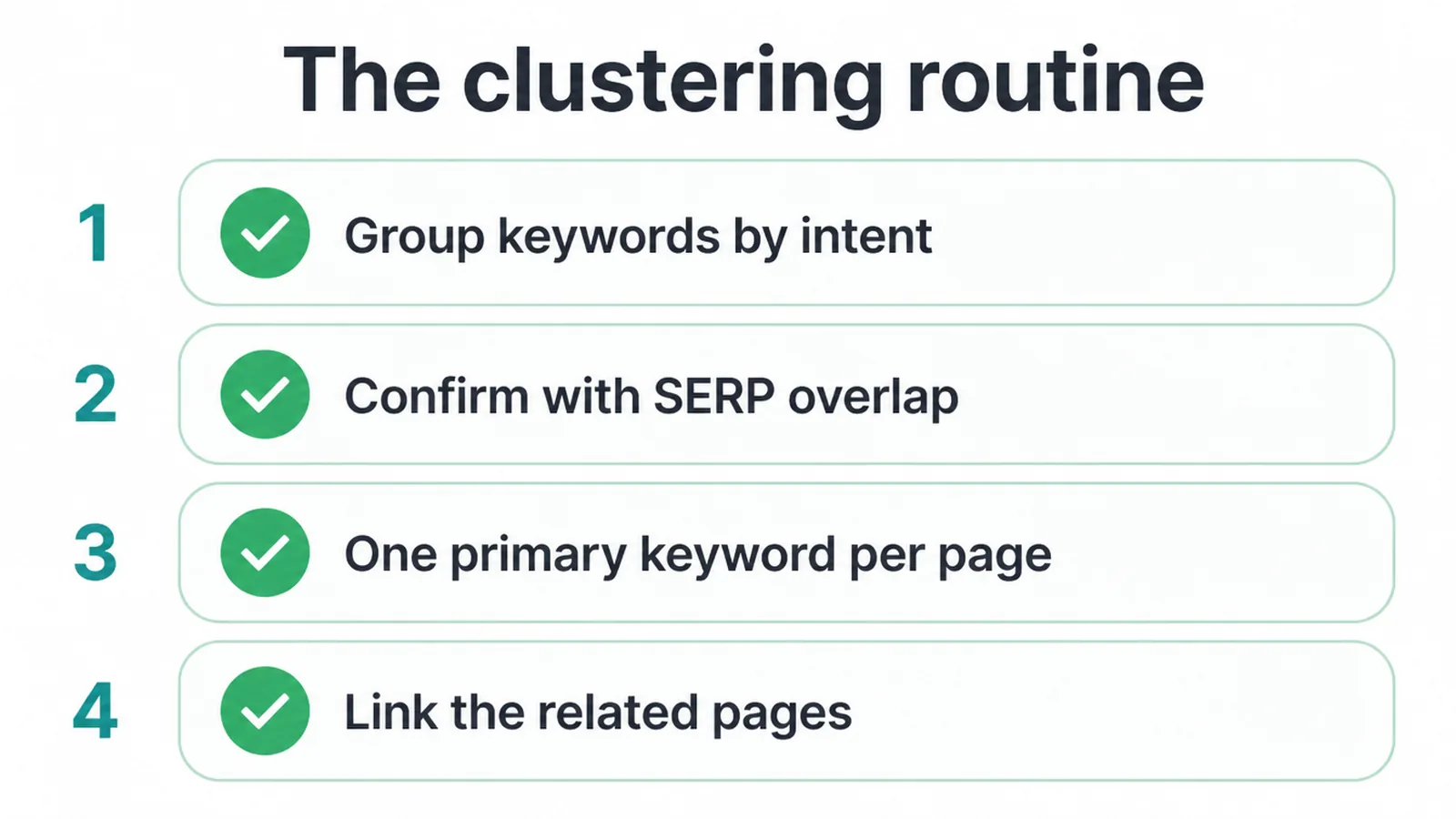
Keyword clustering swaps a pile of thin pages for a few strong ones. You group keywords by intent, confirm with SERP overlap, give each cluster one primary keyword and one home, and link the related pages together. One good page then ranks for far more than the phrase you wrote it around.
If you would rather have a team plan your clusters, build the pages and link them properly, that is the bread and butter of our SEO service. Or just tell us what you are stuck on and we will point you the right way.
Frequently asked questions
1. What is keyword clustering?
Keyword clustering is grouping keywords that share the same search intent so one page can target the whole group. Instead of one thin page per phrase, you build one strong page for the cluster. That page becomes the single home for the topic.
2. What is a keyword cluster?
A keyword cluster is a small group of keywords that mean roughly the same thing and could be answered by one page. It has one primary keyword and several secondary ones. They all point at the same need, just worded differently.
3. How do you cluster keywords?
Group your keyword list by search intent first, then check SERP overlap. If the same pages rank for two keywords on Google, those keywords belong in one cluster. If totally different pages rank, split them apart.
4. Why group keywords instead of making one page per keyword?
Because one strong page can rank for hundreds of related keywords on its own. Splitting a topic across many thin pages spreads your effort and your links too thin. One deep page on the topic tends to beat several shallow ones.
5. How can one page rank for many keywords?
Google ranks the best page for a topic, not the page that repeats one exact phrase. A page that answers a question well naturally matches dozens of ways people search for that same answer. So it shows up for many variations at once.
6. How many keywords should one page target?
There is no fixed number. Target one primary keyword plus the handful of secondaries that share its intent. If a keyword needs a different answer or a different page type, it belongs in its own cluster, not crammed in.
7. What is the difference between a primary and secondary keyword?
The primary keyword is the main term you build the page around, usually the one with the clearest intent and the most demand. Secondary keywords are close variations that share that intent. The primary guides your title and the secondaries fill out the body.
8. What is keyword cannibalization?
Keyword cannibalization is when two or more of your own pages chase the same keyword and intent. The fear is bigger than the real problem. The simple fix is to give each topic one home page and merge or redirect true duplicates.