User-Generated Content: How Small Businesses Can Use It

User-generated content is anything about your business made by customers: reviews, ratings, testimonials, photos, videos and tagged posts. In a 2016 survey, Pew Research found that 82% of U.S. adults consult reviews before a first purchase. Seed Light gets written permission before reposting any of it.
Key takeaways
- UGC comes from your customers, not your brand. Reviews, photos, videos, testimonials, and tagged posts all count.
- It builds trust because it is peer proof. In a 2016 survey, 82% of U.S. adults said they consult online reviews before a first purchase.
- Ask at the right moment and make it one tap easy. The best time is right after a purchase or a good support chat.
- Get written permission every single time before you repost a customer's content or use it in an ad.
- Never fake reviews or condition a reward on a positive rating. The FTC's rules on consumer reviews are strict, so keep it real.
- Use both UGC and your own content. One wins on trust, the other wins on polish.
1. What is user-generated content?
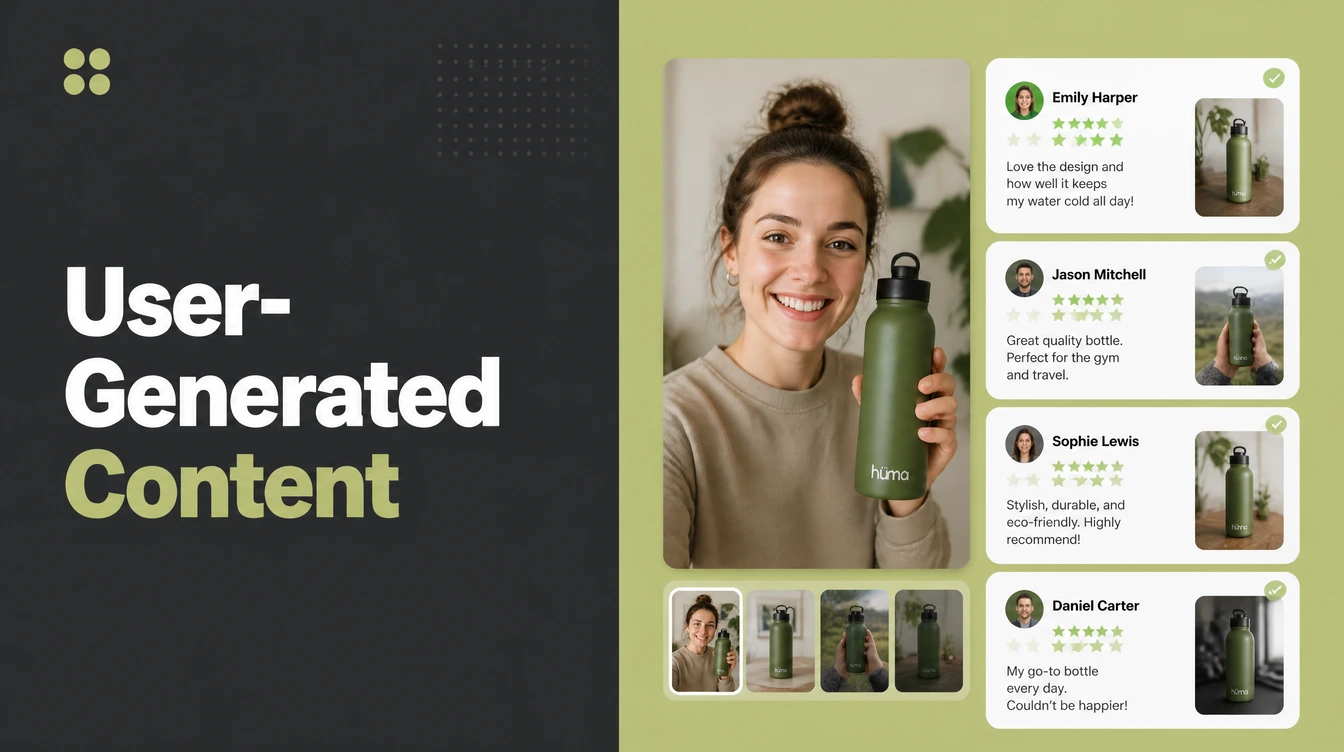
User-generated content is content about your business that comes from your customers instead of from you. A five-star review, a photo a customer tags you in, a short video of someone using your product, a testimonial on your site: all of that is UGC.
The key word is who made it. You did not shoot it or write it. A real buyer did.
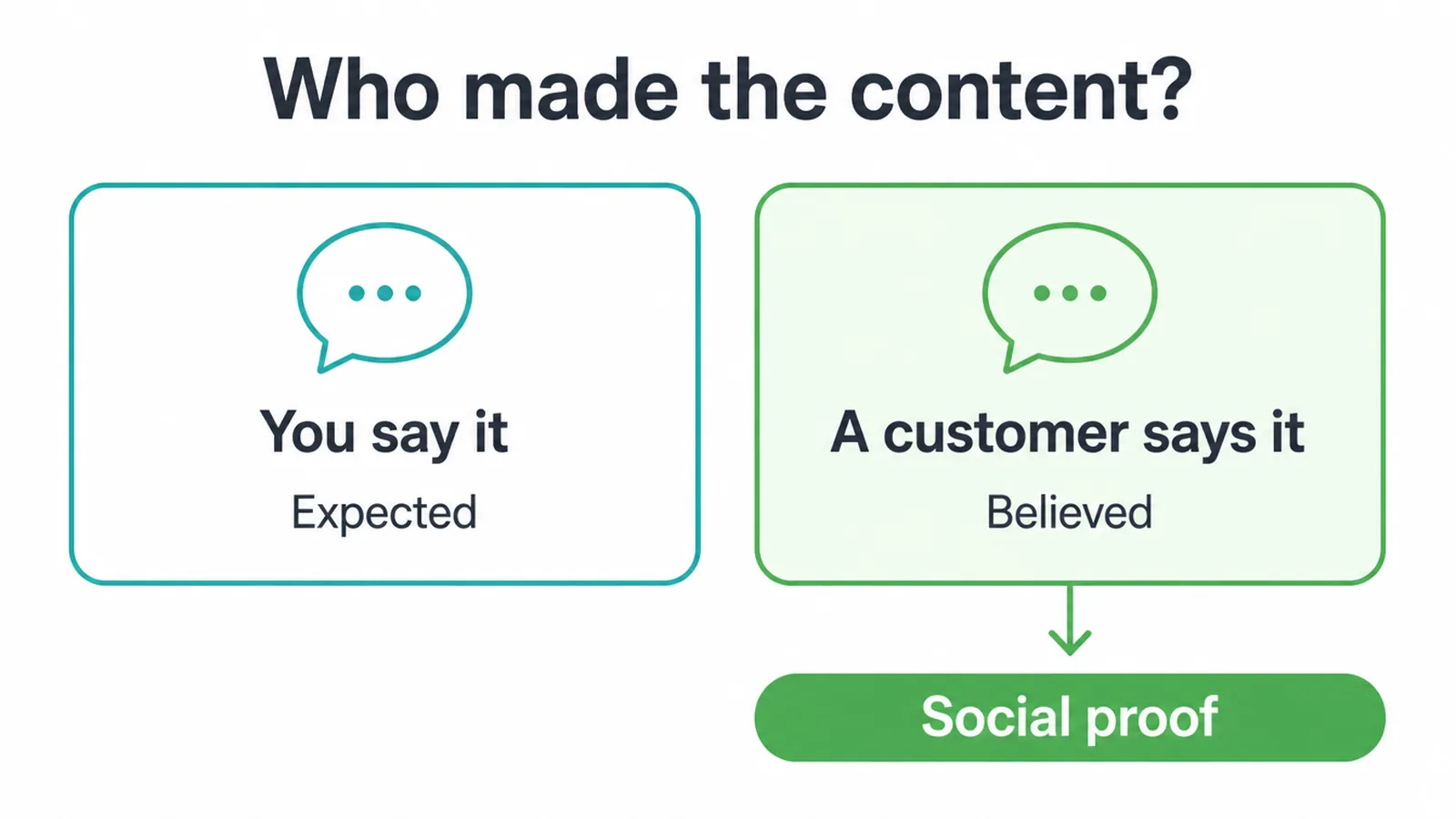
That is why it works differently from your own marketing. When you say your product is great, that is expected. When a stranger who paid for it says the same thing, it lands as proof.
This is called social proof. People can be influenced by what others do, especially when those people seem similar to them.
This is the big split from the content your business creates on purpose, like blog posts, guides, and branded videos. Those are still useful, and we cover formats in our roundup of content marketing examples.
But that content is you talking about you. UGC is your customers talking about you, and that changes how much people believe it.
2. What are the main types of UGC?
There are a handful of UGC types, and each one fits a different spot in your marketing. Reviews and ratings are the workhorses. Photos and videos add life. Tagged posts spread your reach. Here is a plain map of the main types and where each one earns its keep.
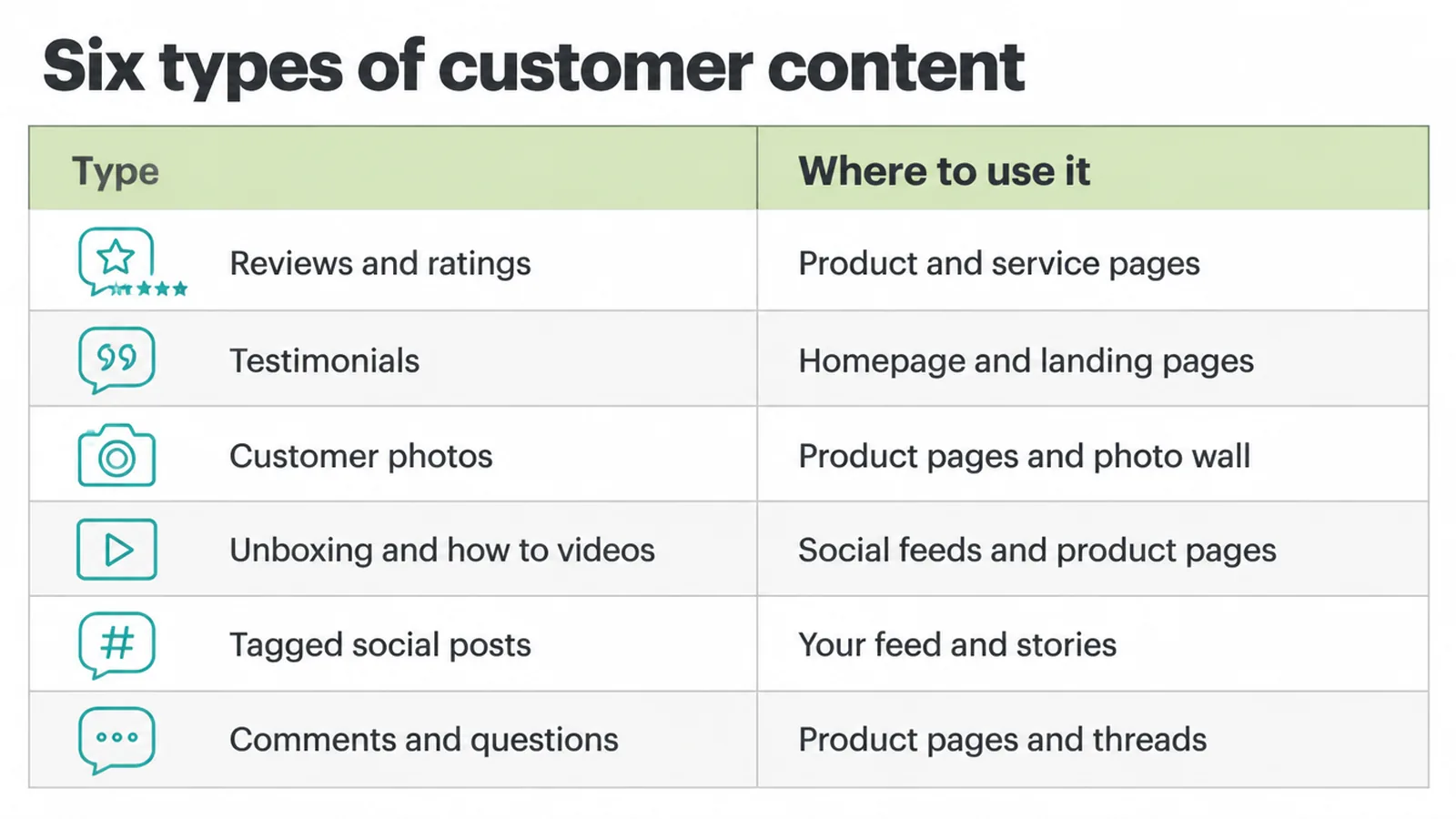
| Type | What it is | Where to use it |
|---|---|---|
| Reviews and ratings | Star ratings and written feedback on your product or service. | Product and service pages, a reviews section, eligible product review snippets. |
| Testimonials | A named customer explaining what changed for them, written or on video. | Homepage, sales and landing pages, proposals. |
| Customer photos | Real shots of people using or wearing your product. | Product pages, a photo wall, social posts, ads. |
| Unboxing and how-to videos | Short clips of someone opening or using what they bought. | Social feeds, product pages, YouTube, ads. |
| Tagged social posts | Posts where a customer tags or mentions your business. | Reshare to your feed and stories, a highlight reel. |
| Comments and Q&A | Public replies and answers from happy customers. | Product pages, community threads, screenshots as proof. |
3. Why does UGC build trust?
UGC builds trust because it is other buyers vouching for you, and shoppers weigh that heavily. The most-cited independent data on how much people lean on reviews comes from Pew Research.
In a 2016 survey, Pew found that 82% of U.S. adults consult online ratings and reviews when buying something for the first time, and 40% said they nearly always do. Almost half, 46%, said reviews help a lot when they want to feel confident about a purchase.
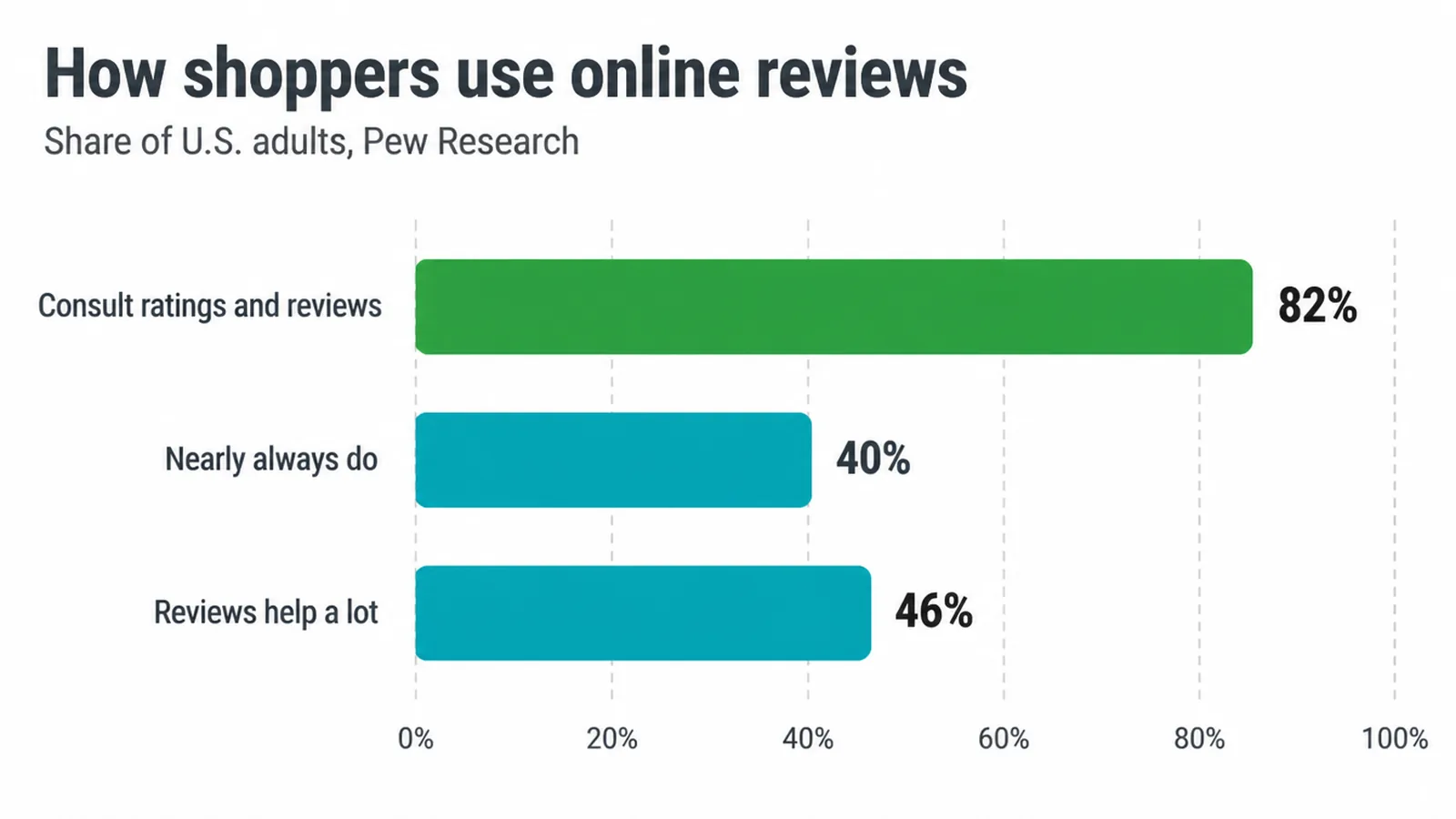
That is a review-specific finding, and reviews are one core UGC type. It is not a magic number that says UGC lifts sales by some exact amount.
Be wary of any blog quoting a tidy "UGC converts X times better" figure, because those are almost always recycled and unverifiable. The honest read is simpler: buyers pay attention to other buyers, so real customer voices help.
There is a catch worth respecting. In that same Pew work, about half of review readers, 51%, felt reviews paint an accurate picture, and the rest were less sure.
That means authenticity matters. Fake or staged UGC fails, and it can backfire when people smell it. So the goal is real content from real customers, gathered the right way.
4. How do you get user-generated content?
You get UGC by asking well, making it easy, and thanking the people who take part. Most happy customers are glad to help. They just need a nudge and a simple path. Here is how to build a steady flow without being pushy.
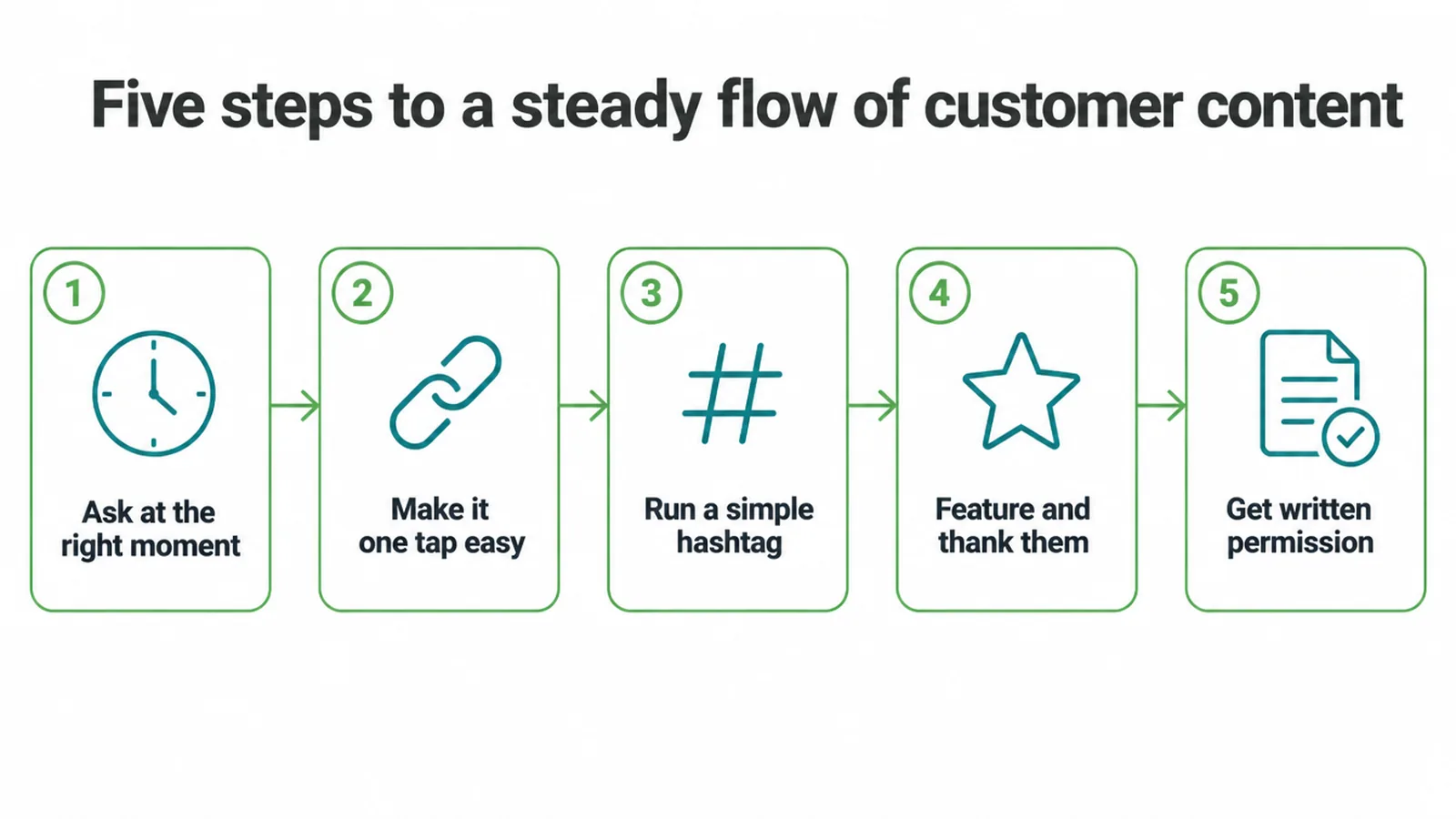
Ask at the right moment
Timing beats everything. The best moment to ask for a review or photo is right after a good experience, like just after a purchase, a delivery, or a helpful support chat. That is when the good feeling is fresh.
A short, friendly message does the job. If you already send order or thank-you emails, add the ask there. Our guide to email marketing for small business shows how to set up a simple review-request email.
Make it one tap easy
Every extra step loses people. Send a direct link straight to the review form, not your homepage. Drop a QR code on the receipt, packaging, or a table card so someone can scan and post in seconds.
If you want photos, tell them exactly what to snap, like "show us where you put it" or "tag us in your first meal." Clear and short wins.
Run a simple hashtag
A short branded hashtag gives customers a place to post and gives you a bucket to find their content. Keep it easy to spell and easy to remember.
Then actually watch the tag and reshare the good stuff, a standing job in any social media plan. If Instagram is your main channel, our Instagram marketing strategy guide covers running a hashtag and resharing without stepping on any rules.
Feature and thank the people who take part
When you reshare a customer's post or pin their review, you reward them and you show everyone else that you notice. A quick thank-you reply goes a long way. People post more when they see it gets seen. Just remember the next step before you repost anything.
Get written permission every time
Do not repost a customer's photo, video, or review on your own channels without clear permission. A reply granting the rights or a signed release protects you and respects them. We cover the legal side just below, but the short version is: ask first, always.
5. Where should you use UGC?
Once you have real customer content, put it where buyers make decisions. The four best homes are your website, your social feeds, your ads, and your email. Each one uses UGC a little differently.
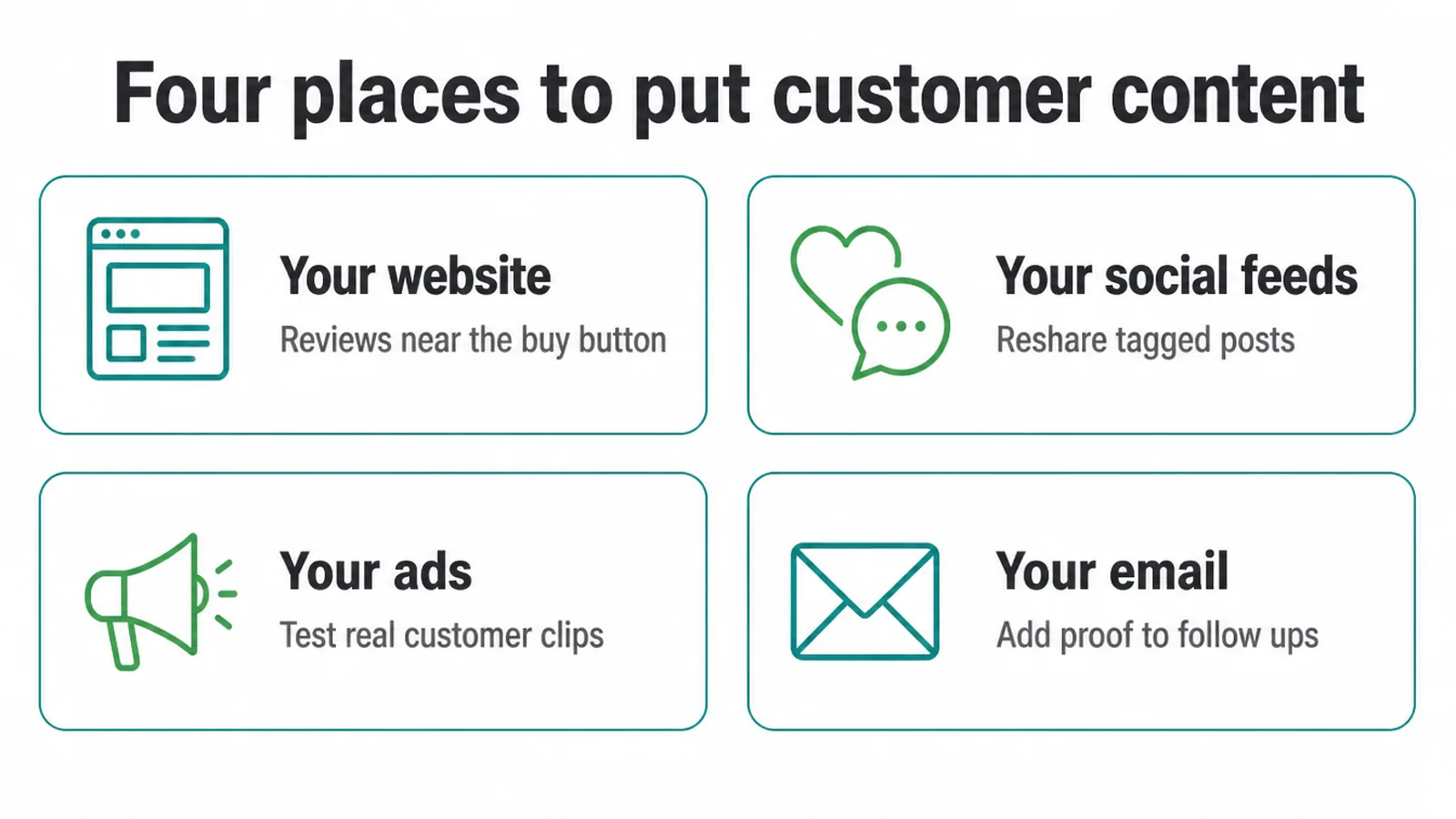
Your website. Put reviews and star ratings on your product and service pages, near the buy or contact button. Build a simple wall of customer photos. Use one or two strong testimonials as homepage proof.
Landing pages love this, and our landing page best practices guide shows where proof pays off most. If your site has no clean place to show any of this, that is a design gap worth fixing, and it is exactly the kind of thing our web design service handles.
Your social feeds. Reshare tagged posts to your stories and grid. It fills your calendar with real content and shows new followers that people actually buy from you.
Your ads. Real customer photos and clips often feel more human than a polished studio shot. Test them. Just keep your claims honest and skip the tidy "converts better" numbers you cannot back up.
Your email. Drop a review or a customer photo into your newsletters and follow-ups. Fresh proof gives someone one more reason to act.
6. What are the FTC rules for reviews and UGC?
UGC comes with real rules, and the main ones in the United States come from the FTC. These FTC rules bind US sellers. Elsewhere, local consumer law applies; in Malaysia, that includes the Consumer Protection Act 1999. Treat this section as guardrails, not fine print.
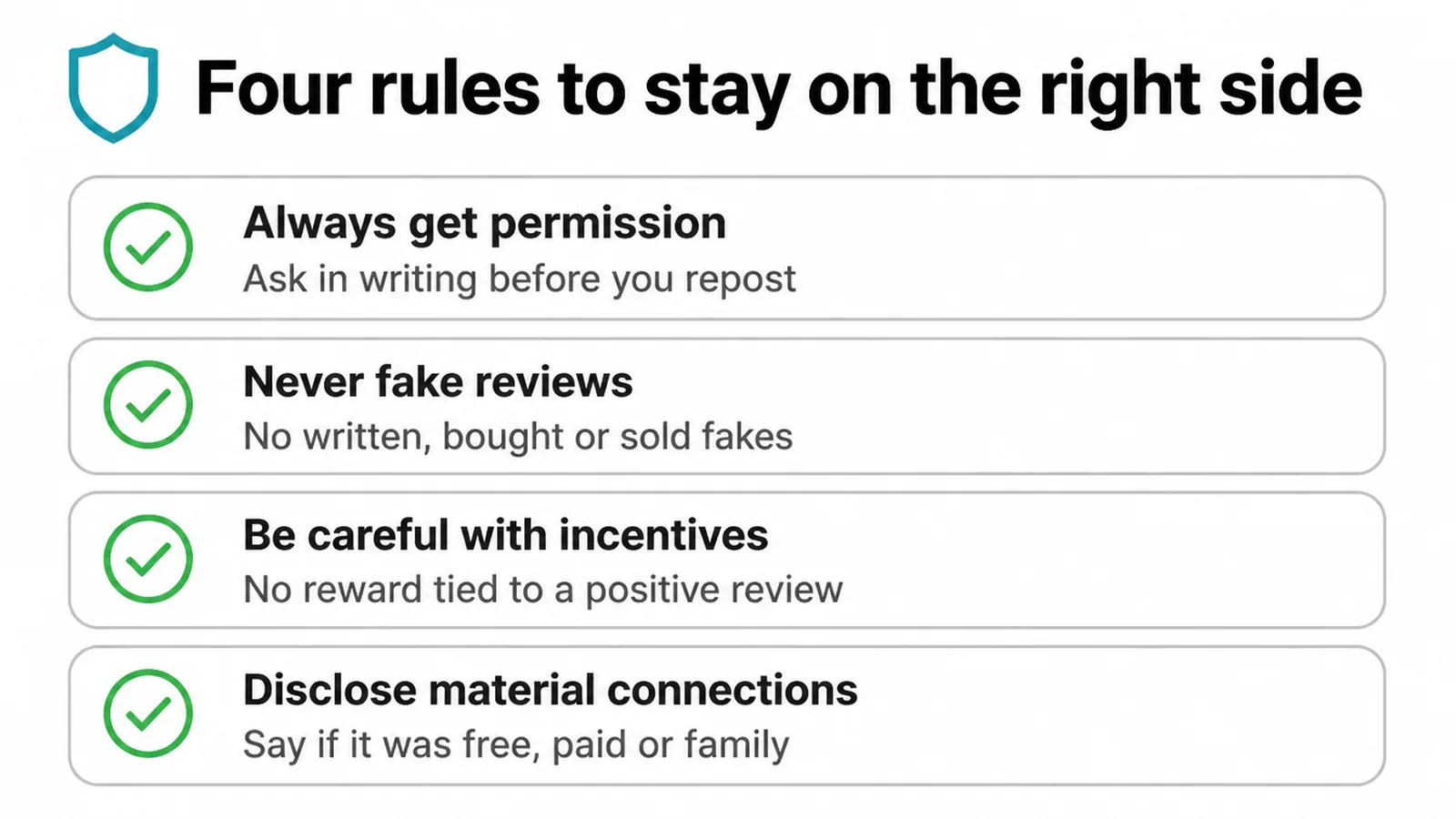
Always get permission. A customer posting a photo does not give you the right to use it in your own marketing. Get clear written permission before you repost or run it in an ad.
Never fake reviews. The FTC's rule on consumer reviews, which took effect on October 21, 2024, bans writing, buying, or selling fake reviews and testimonials. You cannot write your own reviews and pass them off as customers, and you cannot buy fake followers to look bigger than you are.
Be careful with incentives. You are allowed to invite reviews. What you cannot do is make the reward depend on the review being positive. Both "get a discount for a five-star review" and "get a discount for a review telling everyone how much you love us" are off limits.
If you do give something for a review, you must disclose that it was incentivised. The FTC's consumer reviews and testimonials guidance spells this out.
Disclose material connections. If someone posts about you because they got free product, a payment, a discount, or because they work for you or are family, that connection has to be clear and easy to see, right with the post.
The FTC's endorsement guides require honest opinions from real experience, plus a plain disclosure. Keep it real and you have nothing to worry about.
7. Is UGC better than professional content?
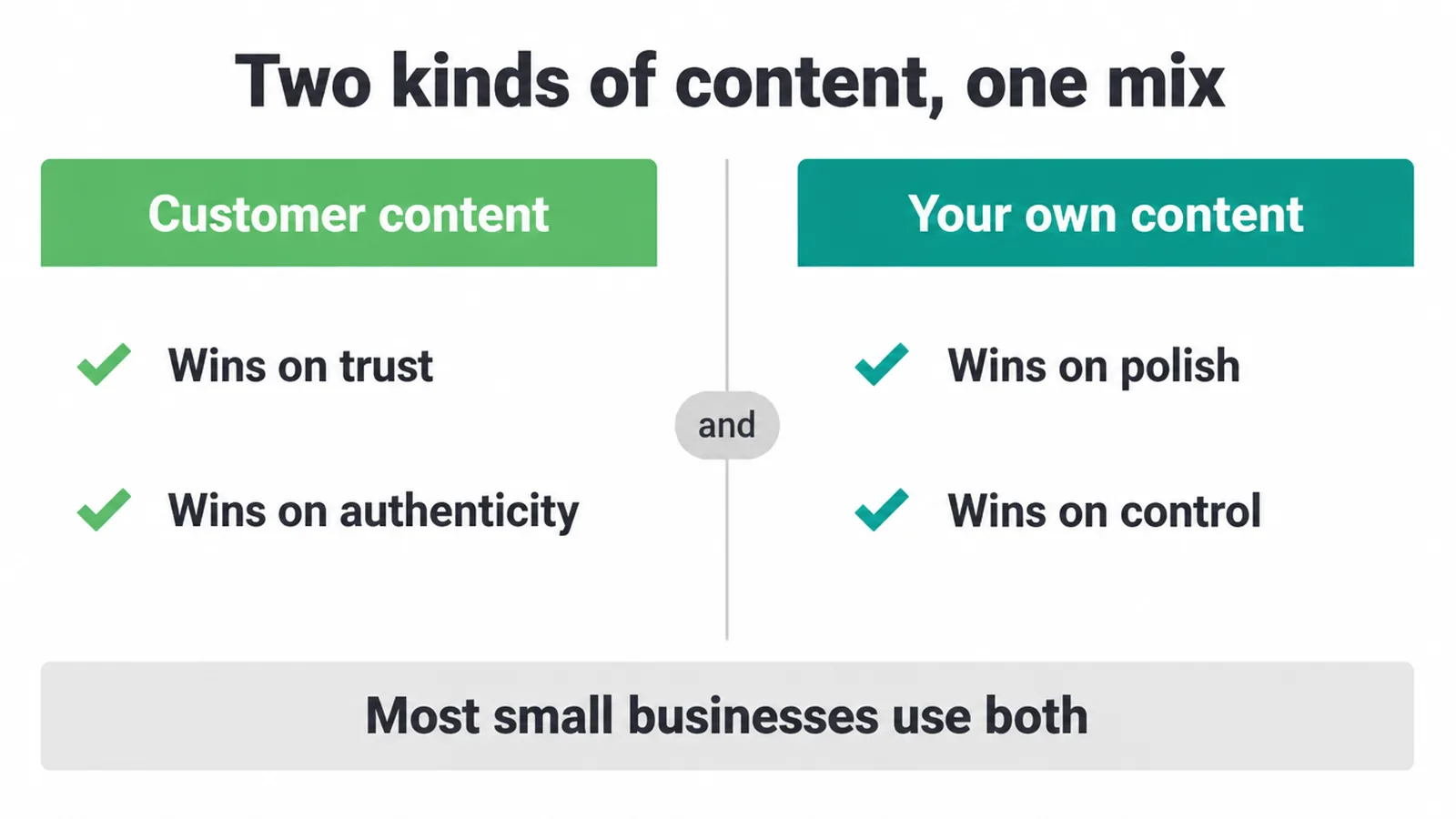
UGC is not better than professional content. It is different, and the smart move is to use both. UGC wins on trust and authenticity because it comes from real customers.
Professional content wins on polish and control because you make it exactly how you want. Most small businesses run a mix: customer proof to build belief, and clean branded content to explain and sell. You do not have to choose.
8. How to get started with UGC
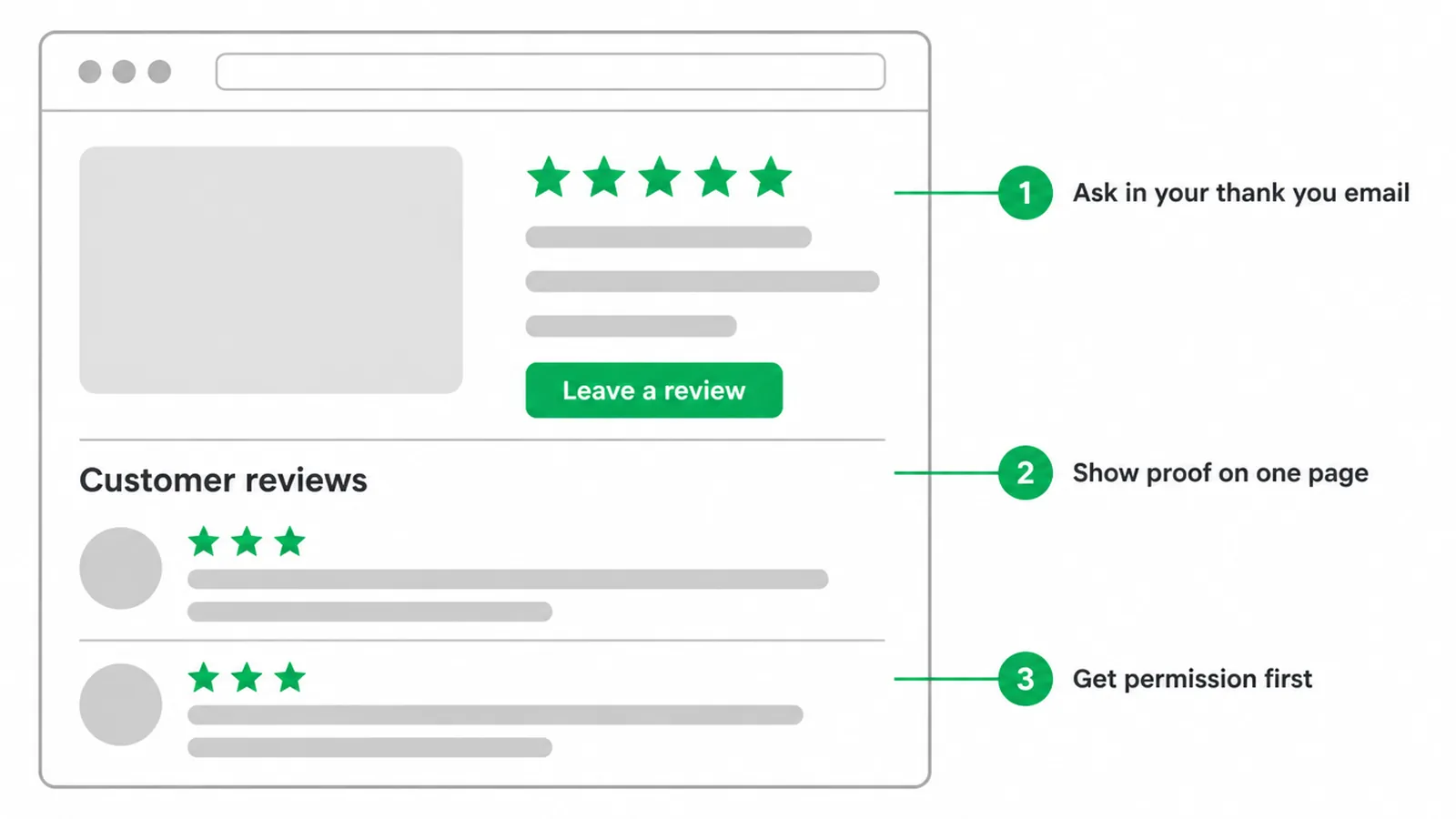
You do not need a big plan to begin. Start with three small moves this week. First, turn on review requests by adding an ask to your thank-you or order email with a direct link.
Second, pick one place to feature proof, like your homepage or a top product page, and put your best reviews there. Third, before you repost anything, ask the customer for permission. Do those three and you have a real UGC habit running.
If your site has no good home for customer proof, or your review requests are not going out at all, that is worth fixing. Talk to Seed Light and we will help you set up a simple, honest way to collect and show off what your customers already say about you.
Frequently asked questions
1. What is user-generated content?
It is any content about your business made by your customers rather than by you, like reviews, ratings, testimonials, customer photos and videos, unboxings, tagged social posts, and comments.
2. Why is UGC good for marketing?
It is real people vouching for you, so it reads as social proof instead of a sales pitch. In a 2016 survey, 82% of U.S. adults said they consult reviews before a first purchase.
3. What are examples of UGC?
Product and service reviews and star ratings, written or video testimonials, customer photos, how-I-use-it or unboxing videos, tagged Instagram or TikTok posts, and answers in a public question and answer section.
4. How do I get customers to create content?
Ask at the right moment, such as right after a purchase or a good support experience, make it one tap easy with a direct link or QR code, run a simple branded hashtag, and feature the customers who take part.
5. Do I need permission to repost customer content?
Yes. Always get clear written permission, such as a reply granting the rights or a signed form, before reposting a customer's photo, video, or review on your own channels or in an ad.
6. Can I offer a discount for a review?
Be careful. You can invite reviews, but you cannot make the reward depend on the review being positive, and you must disclose that a review was incentivised. The FTC bans incentives conditioned on a particular sentiment.
7. Where should I use UGC?
On your website on product and service pages, in a reviews section, and as homepage proof, plus in your social feed, in paid ads, and inside email.
8. Is UGC better than professional content?
It is not better, it is different. UGC wins on trust and authenticity, professional content wins on polish and control, and most small businesses use both.