Content Marketing Examples: 8 Formats to Copy

Eight content formats a small business can copy this month: the how-to post, the FAQ page, the comparison post, the customer story, the email newsletter, short-form video, the lead magnet and the local guide. Pick by goal, whether that is getting found, building trust or helping people decide. Seed Light writes these for clients.
Key takeaways
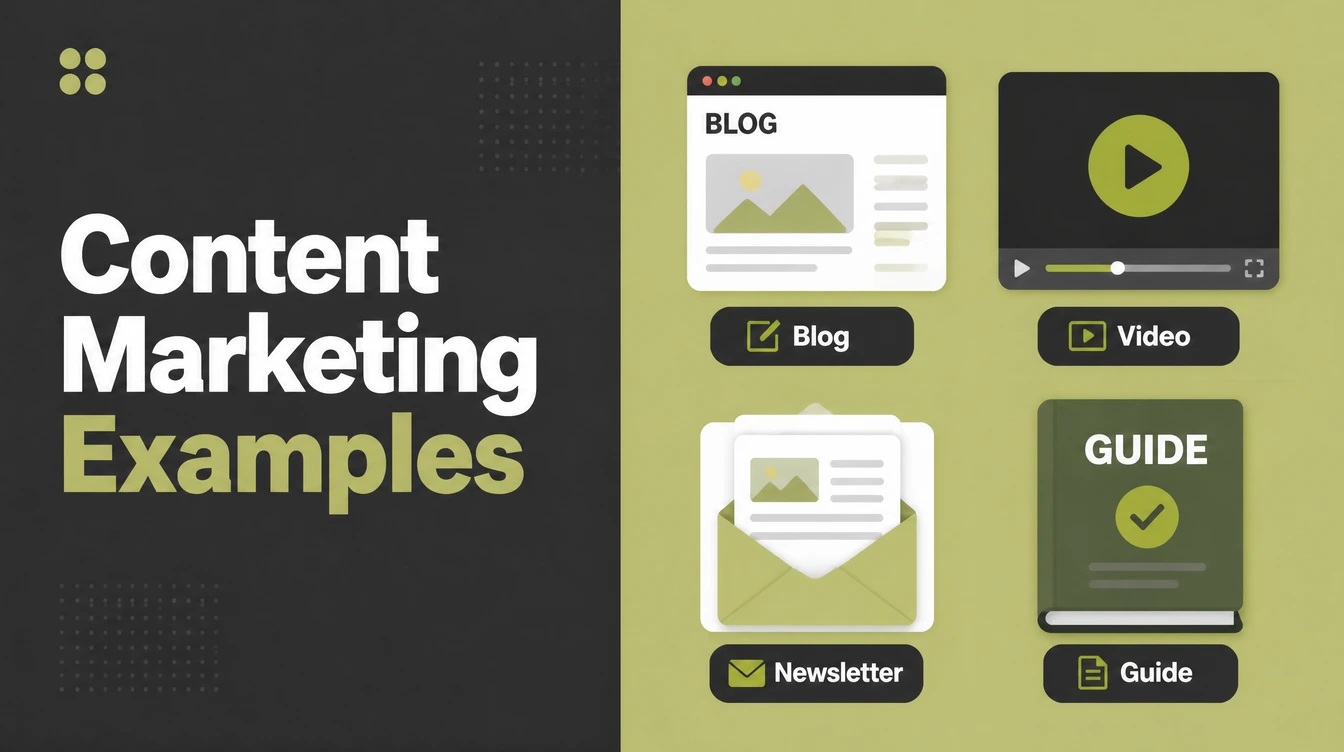
- Eight formats to copy: how-to post, FAQ page, comparison post, case study, newsletter, short-form video, lead magnet, and local area guide.
- Match the format to a goal: some get you found on Google, some build trust, some help people decide, and some keep existing customers.
- Video is popular right now: short-form video is the most-adopted content format, according to what marketers report using in HubSpot's State of Marketing survey. That is what marketers say they use, not a promise about your results.
- Start with real questions: the cheapest, highest-intent content is the answer to a question a customer already asked you.
- Pick one you can sustain: one format done well for a year beats five started and dropped.
- Judge it over quarters: content pays off slowly, so measure over months, and expect no guaranteed numbers.
1. The 8 content marketing formats at a glance
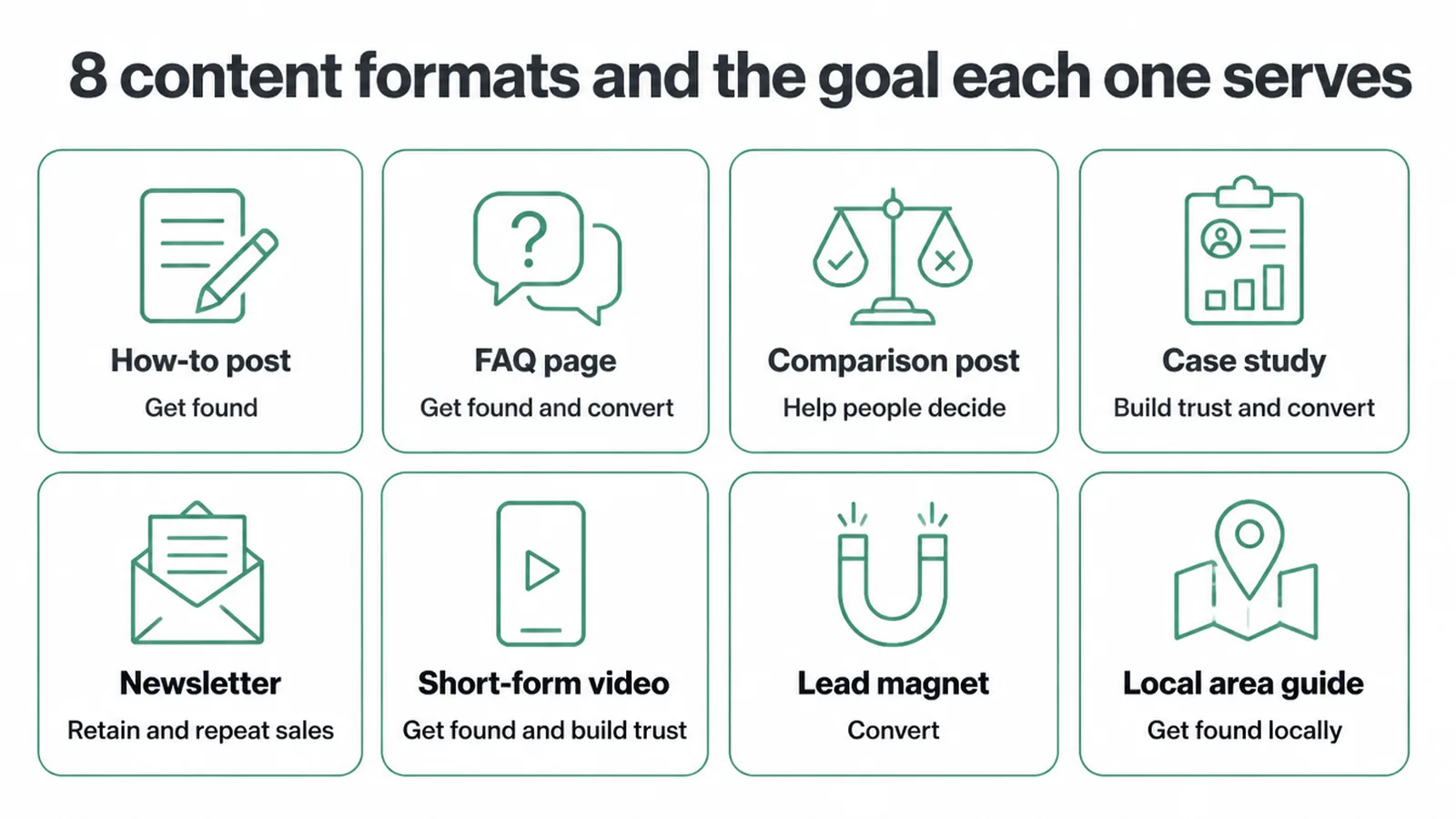
Here is the whole plan in one table. Each format is a container. You fill it with content your customers actually search for or ask about.
Read the "Goal" column first and pick the format that matches what you need right now, whether that is getting found, building trust, helping people decide, or keeping the customers you already have.
| Format | What it is | Why it works | Goal |
|---|---|---|---|
| How-to post | A blog article that walks through a task step by step. | People search "how to" all day, and Google can send them to you. | Get found |
| FAQ page | Straight answers to the questions customers ask most. | High intent, cheap to make, and it saves you answering the same thing twice. | Get found and convert |
| Comparison post | An honest "this vs that" for a choice your customers weigh up. | People compare before they buy, so being the honest guide earns trust. | Help people decide |
| Case study | A short story of how you helped one real customer. | Proof beats claims, and a real story is proof. | Build trust and convert |
| Newsletter | A regular email with a tip and a bit of news. | You own the list, so you are not renting attention from a platform. | Retain and repeat sales |
| Short-form video | A 15 to 60 second clip that shows or explains one thing. | Fastest way to reach new people on social right now. | Get found and build trust |
| Lead magnet | A free checklist, template or guide in exchange for an email. | Turns a browser into a contact you can email later. | Convert |
| Local area guide | A helpful guide about your town or neighbourhood. | Wins local searches that bigger, distant competitors ignore. | Get found locally |
2. The how-to blog post
What it is: a step-by-step article that teaches one task. Why it works: people type "how to" into Google every second, and a clear guide can bring them to your site for years after you publish it. It is the workhorse of getting found.
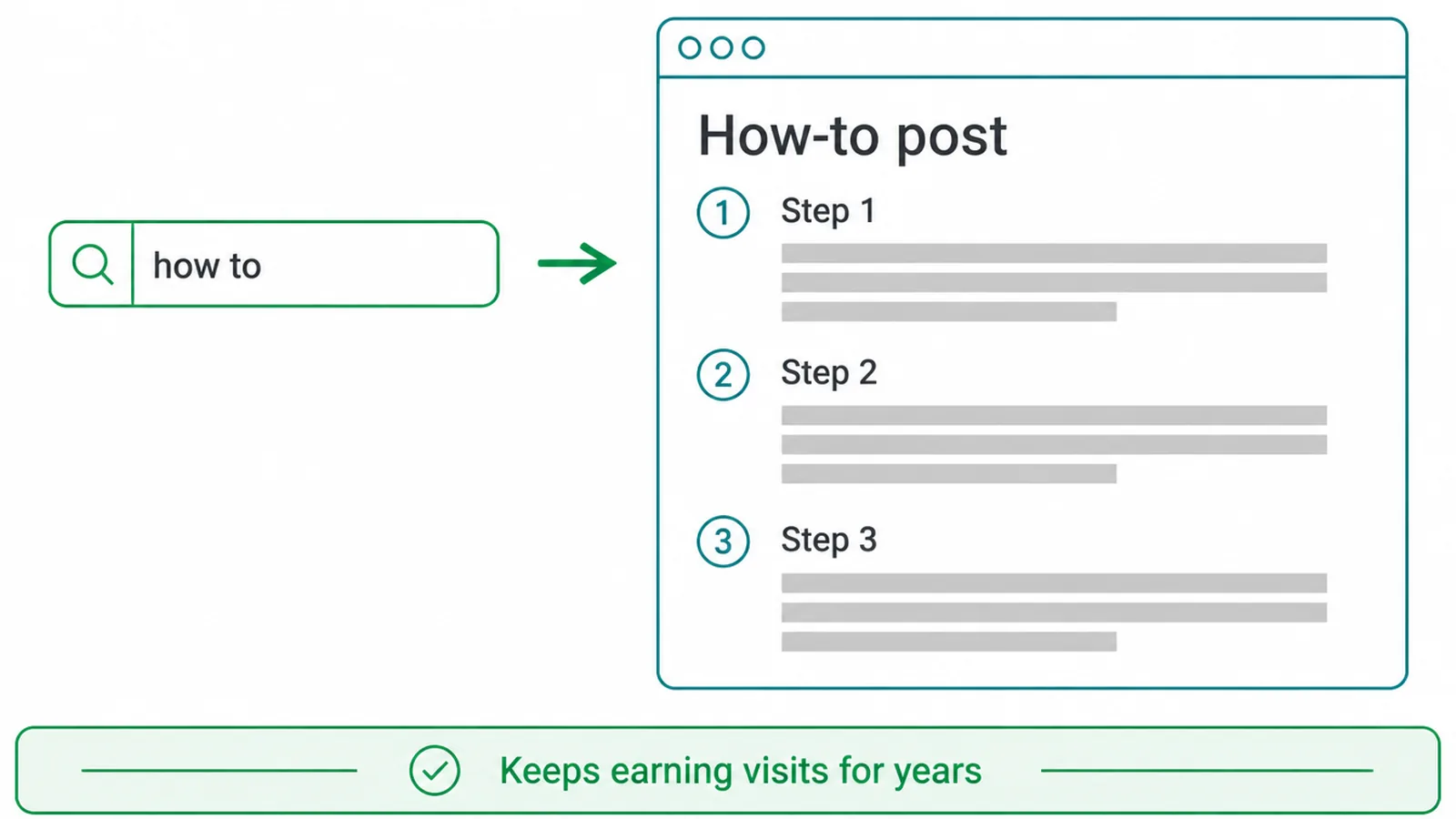
Example: a bakery writes "How to keep sourdough fresh for a week". Someone who just bought a loaf searches that, lands on the bakery's page, and remembers who was helpful next time they want bread. The post keeps earning visits long after it goes live.
The trick is to answer the question fast, then support it, and write like you talk. If you want the full method for one post, read how to write a blog post. To pick topics people actually search, our guide to search engine optimisation and this on keyword research both help.
3. The FAQ page
What it is: one page of plain answers to the questions customers ask most. Why it works: these are the cheapest, highest-intent pages you can make. The person searching already wants what you sell, they just have a doubt in the way.
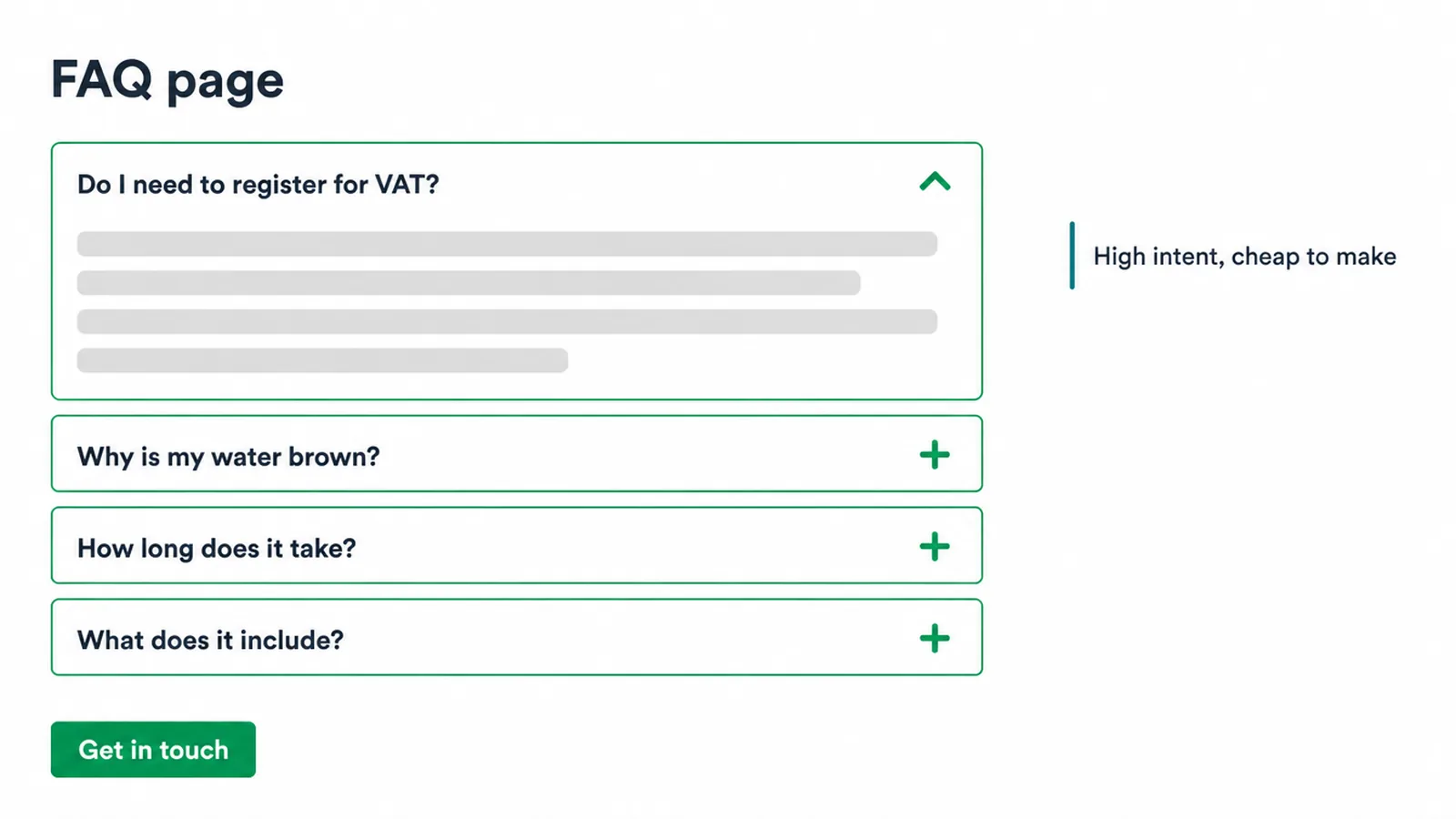
Example: an accountant makes a page answering "Do I need to register for VAT?" and a dozen similar questions. People searching those exact worries find the accountant, get a clear answer, and often reach out. A plumber's "why is my water brown" answer works the same way.
Group the questions by topic, keep each answer short, and add a soft nudge to get in touch at the bottom. Because these questions carry high buying intent, an FAQ page often pays off faster than a blog post does.
4. The comparison post
What it is: an honest side-by-side of two choices your customers weigh up. Why it works: almost everyone compares options before they buy. If you are the guide who lays it out fairly, including where the other option wins, you earn trust that a sales pitch never could.
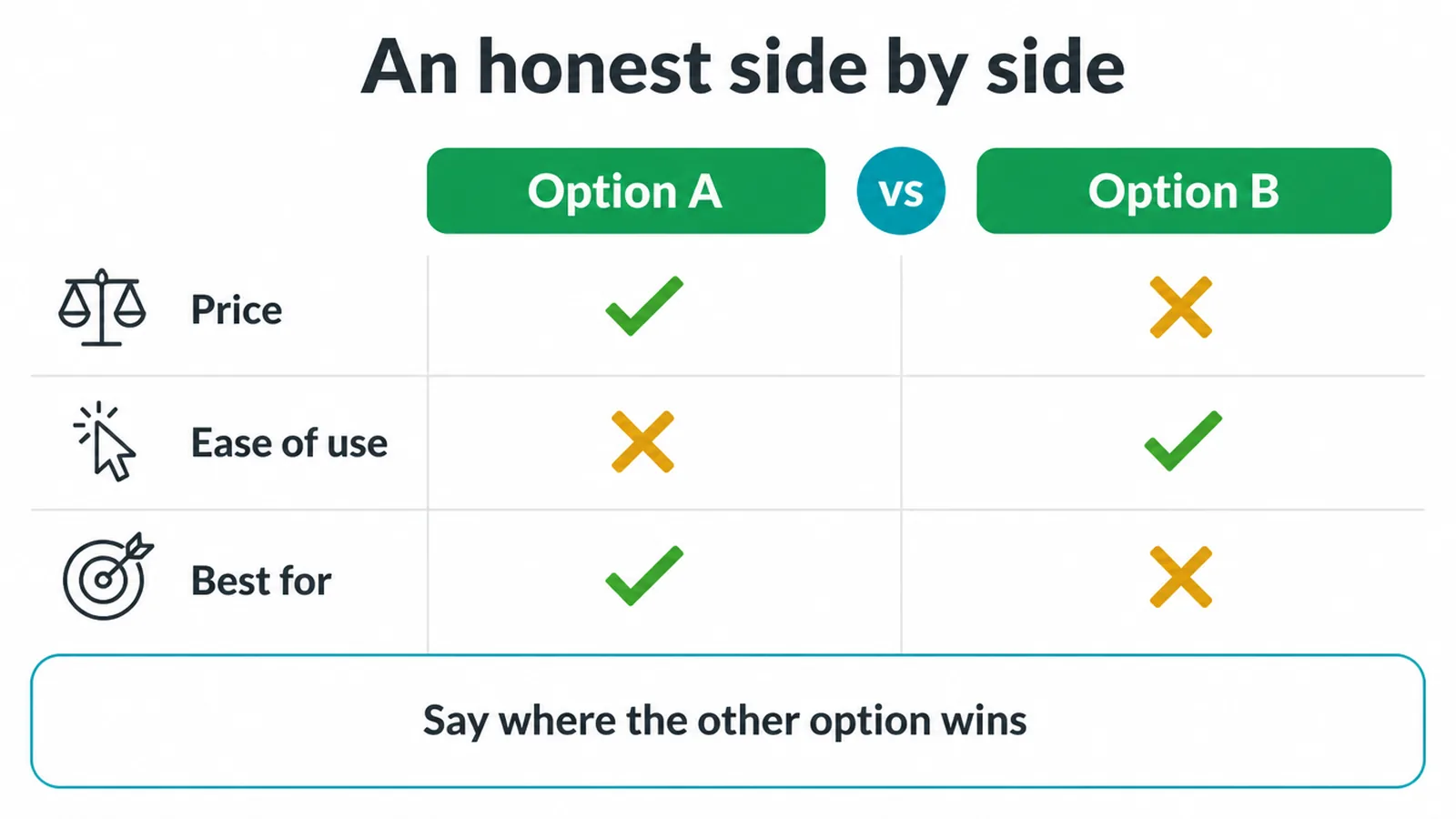
Example: a small web studio writes "WordPress vs Shopify: which suits your shop?" and is honest about when each one is the better pick. A reader who was stuck now has a decision, and a reason to trust the studio that helped them make it.
Honesty is the whole point. If you only ever say your way wins, people smell it and leave. Admit the trade-offs. The trust you build is worth more than pretending you are perfect at everything.
5. The customer story or case study
What it is: a short story of one real customer you helped, what the problem was, what you did, and how it turned out. Why it works: claims are easy to ignore, but a real story is proof. It lets a future customer picture themselves being helped.
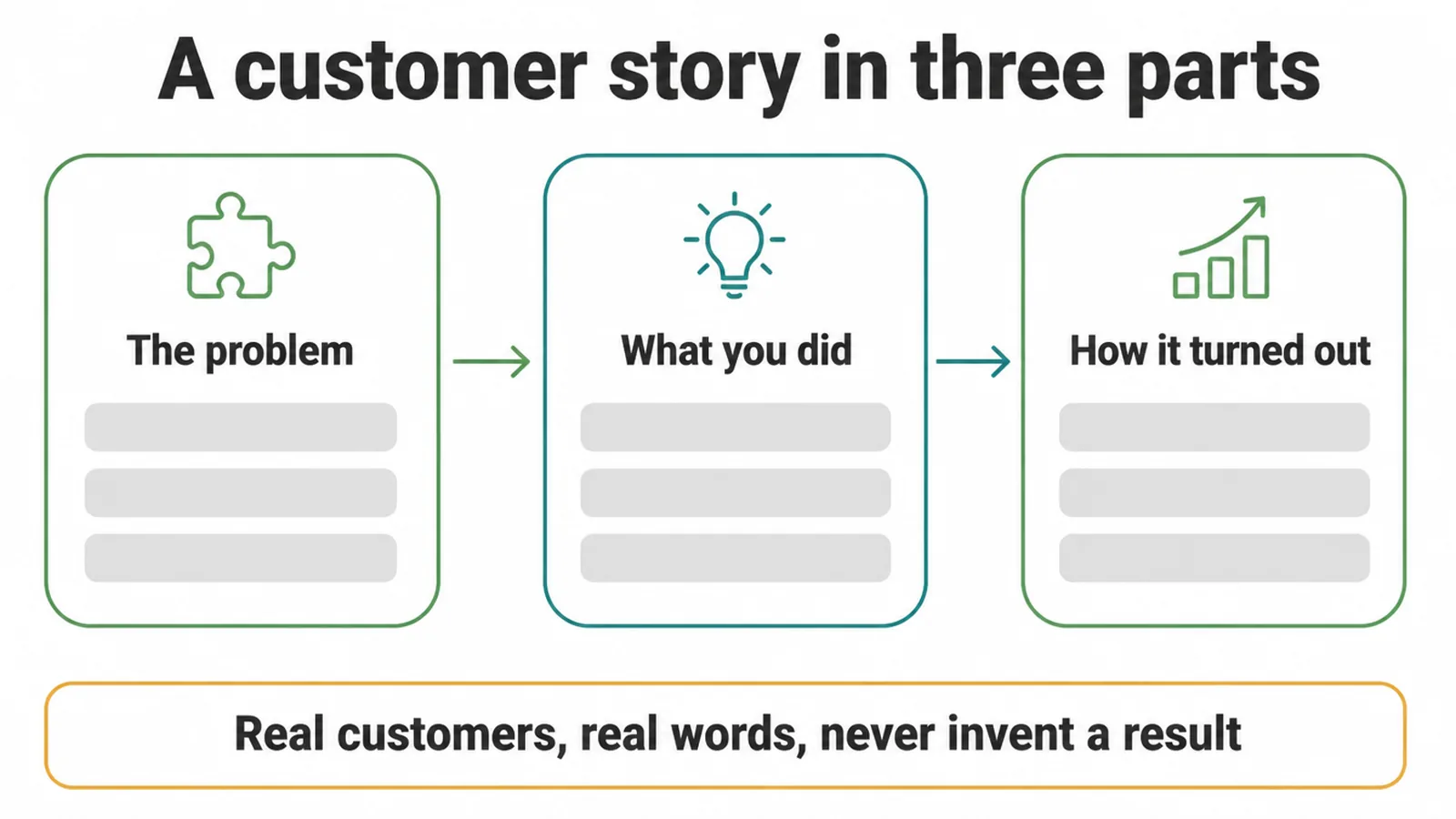
Example: a landscaper shares the story of turning one overgrown garden into a usable family space, with before and after photos and a line or two from the owner in their own words.
Be honest here. Use real customers, real photos, and real words with their permission. Never invent a quote and never make up a result or a number. If you do not have a metric, describe the outcome plainly instead. A believable, modest story beats a shiny fake one every time.
6. The email newsletter
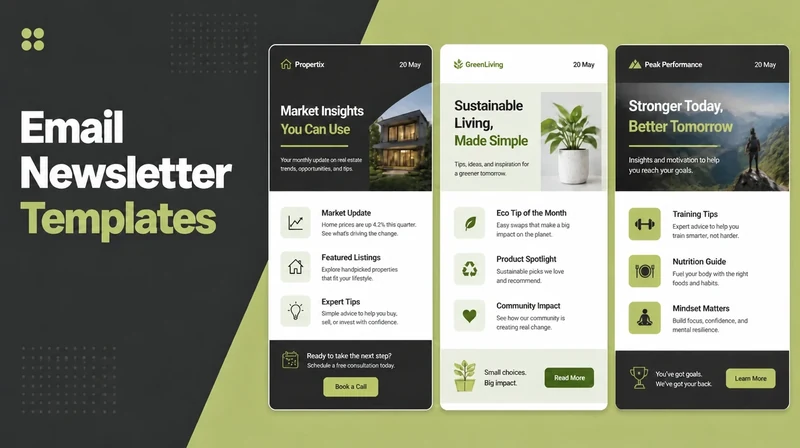
What it is: a regular email with a useful tip and a little news. Why it works: you own the list. Unlike social followers, an email list is yours, so you can reach your people without an algorithm deciding whether they see you.
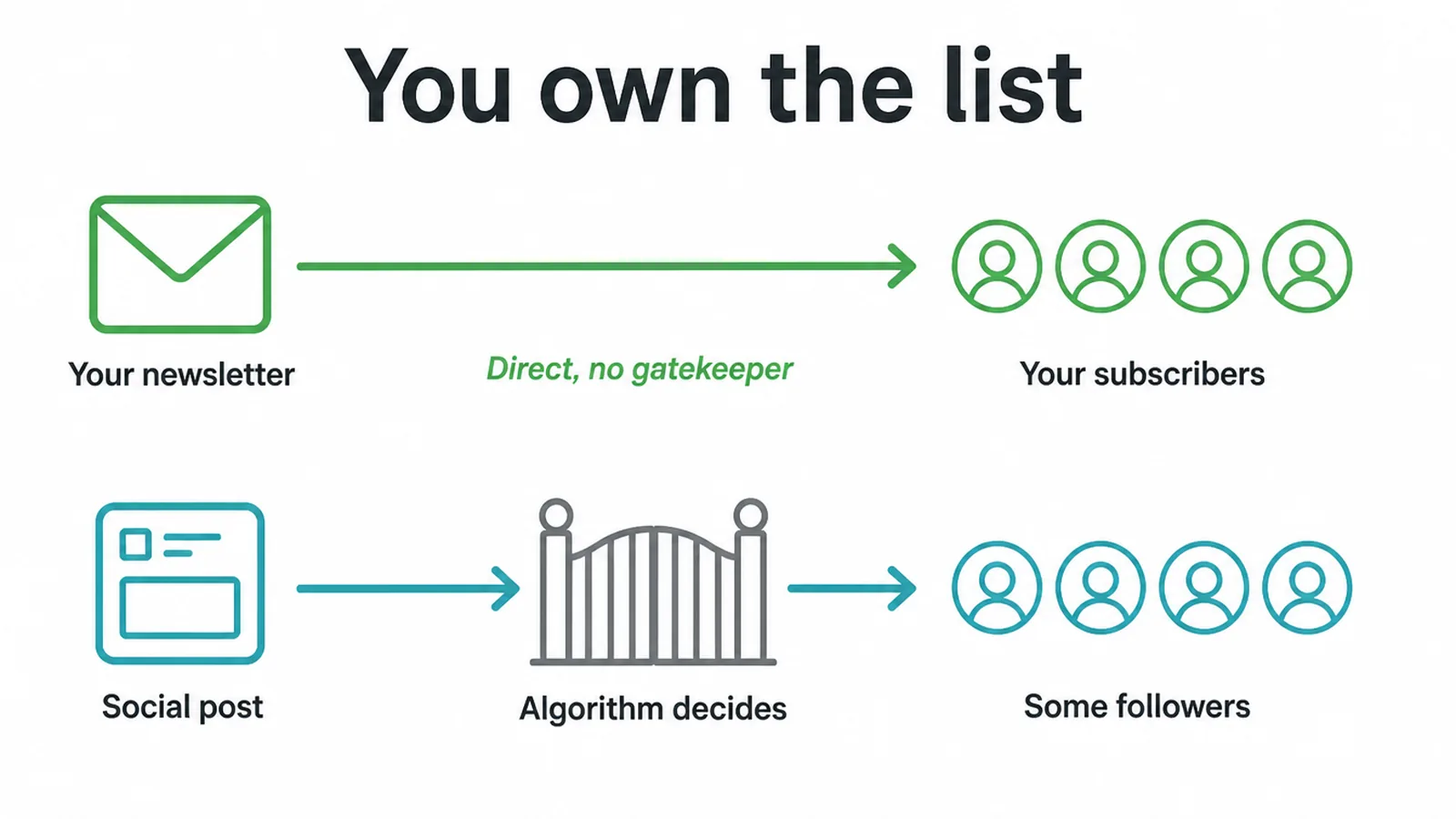
Example: a gym sends a monthly email with one training tip and a short member story. Members who are not visiting as much get a gentle reminder that the gym is there and worth turning up for.
Keep it short, keep it regular, and lead with something helpful instead of a hard sell. For the full setup, from getting the first subscribers to sending, see our guide to email marketing for small businesses.
7. Short-form video
What it is: a 15 to 60 second clip that shows or explains one thing. Why it works: it is the fastest way to reach new people on social right now.
Short-form video is the most-adopted format among marketers, according to what marketers report using in HubSpot's survey. That tells you where attention is, not that video will grow your sales.
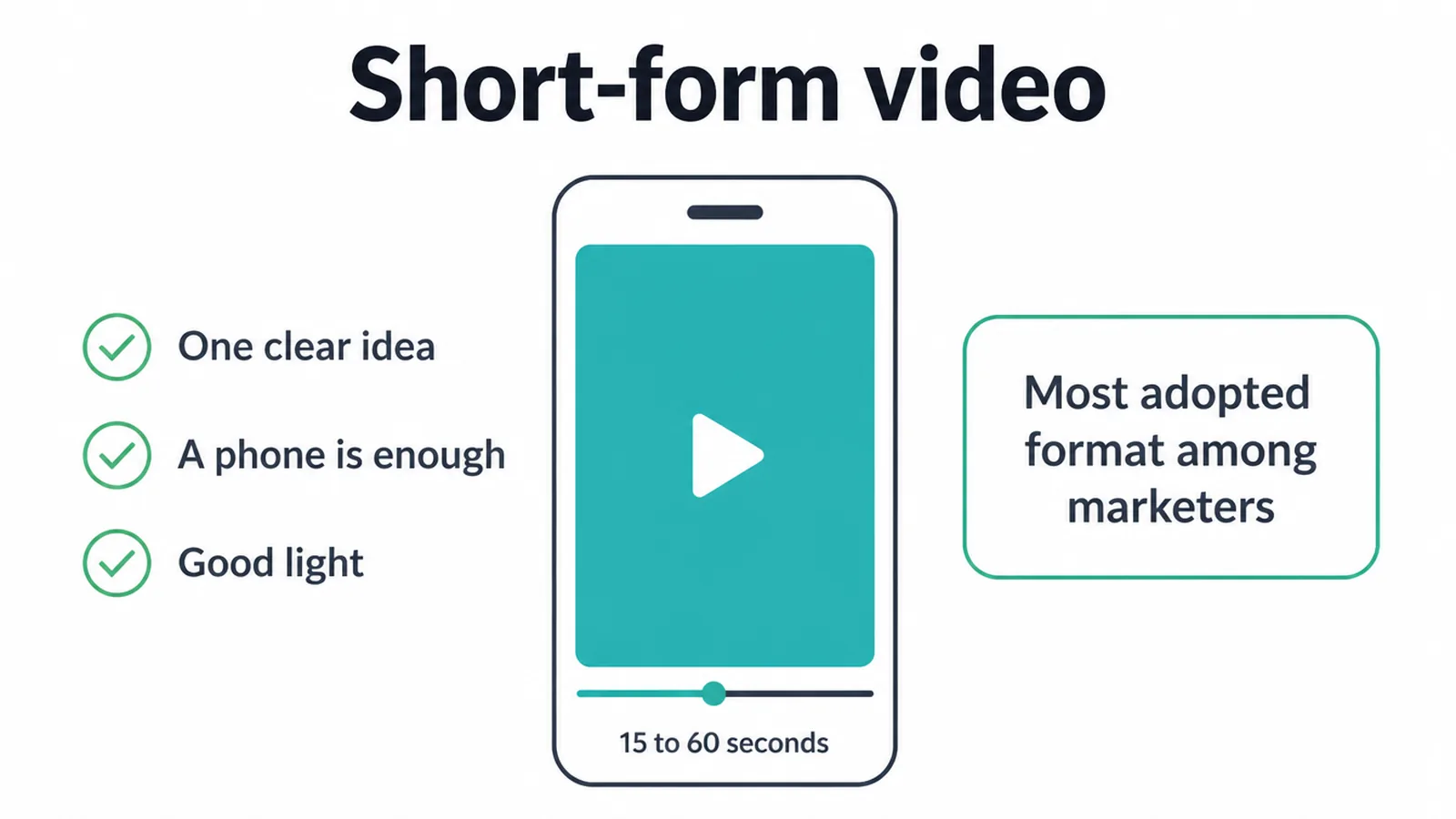
Example: a mechanic films a 30 second clip explaining what one dashboard warning light means and what to do. Simple, useful, and shareable. People who found it now know the mechanic exists.
You do not need a studio. A phone, decent light and one clear idea per clip is enough, and the clips feed your social media posting plan. To go deeper, read our YouTube marketing strategy.
8. The lead magnet or checklist
What it is: a free checklist, template or short guide you give away in exchange for an email address. Why it works: it turns an anonymous visitor into a contact you can email later. It is content built to convert.
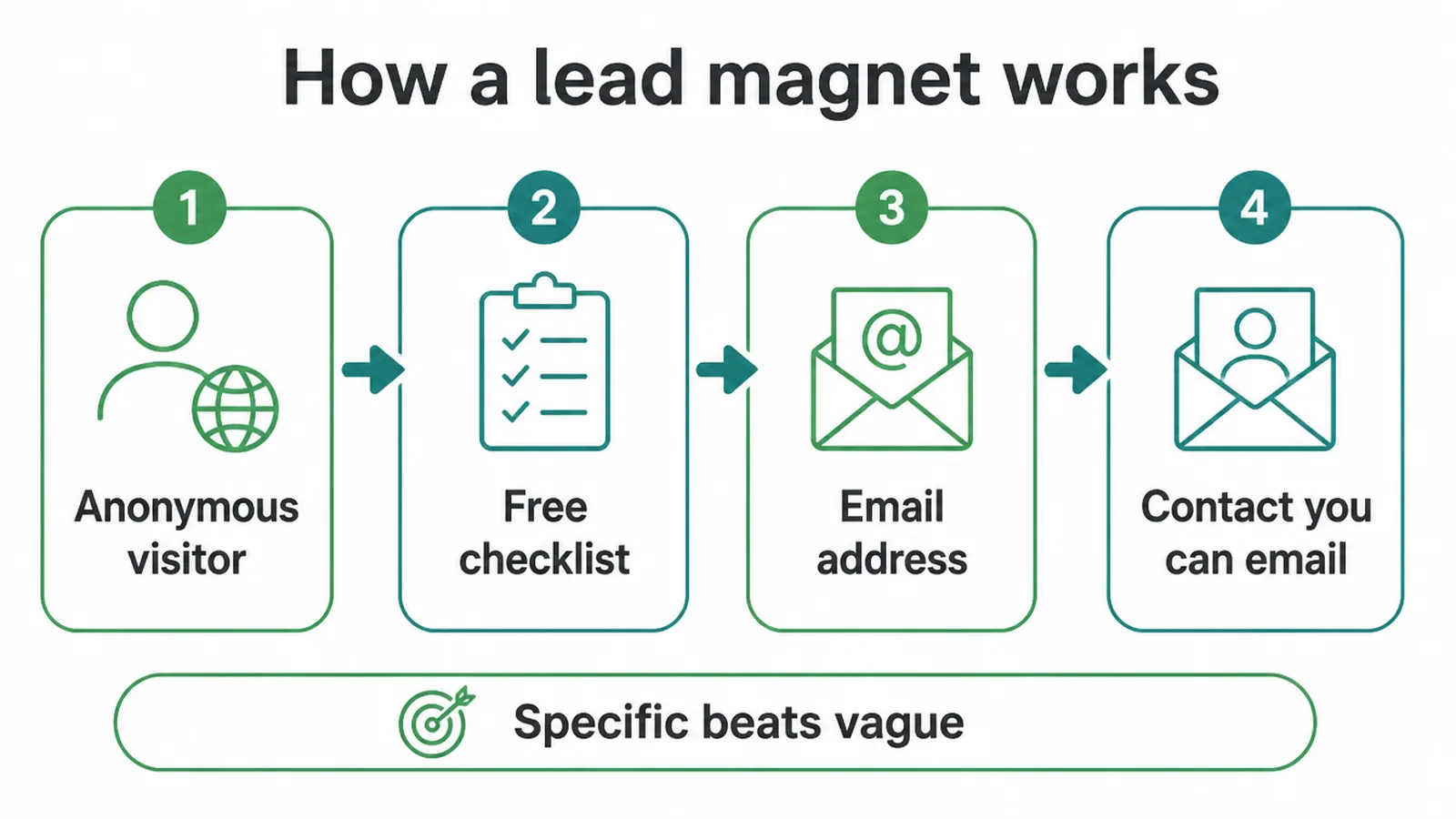
Example: a photographer offers a free "wedding day shot list" checklist. A couple planning their wedding downloads it, joins the photographer's list, and stays in touch through the months before they book anyone.
Make it genuinely useful and specific to the customer you want. A vague ebook nobody reads is worse than a one-page checklist people actually use and remember you for.
9. The local area guide
What it is: a helpful guide about your town or neighbourhood. Why it works: it wins local searches that big, distant competitors do not bother to write. Local intent is easier to rank for and closer to a sale.
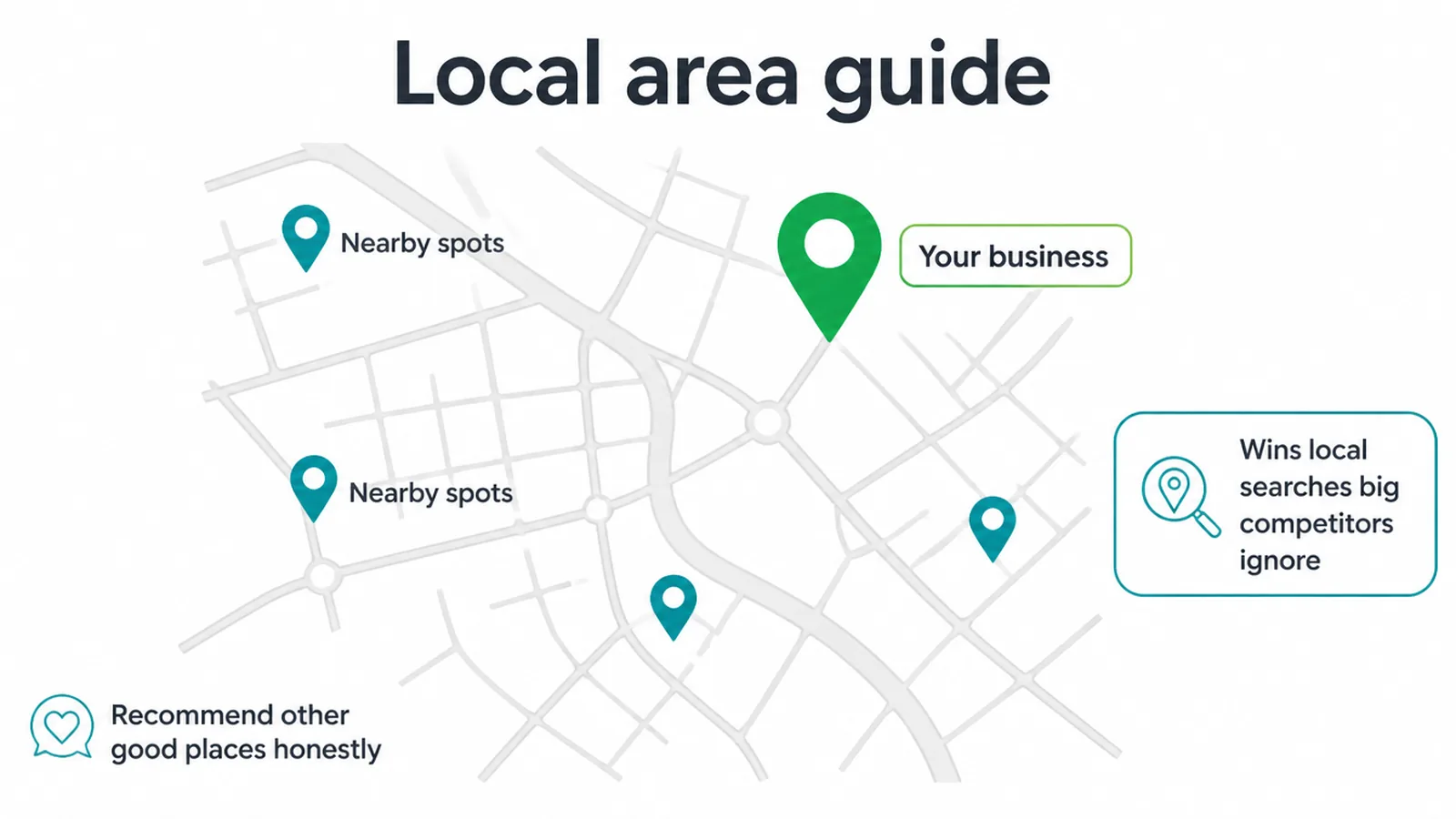
Example: a cafe writes "The best dog-friendly spots in our town" and mentions its own patio among them. Dog owners searching for somewhere to go find the guide, and the cafe.
Be a real local, not a brochure. Recommend other good places honestly. People trust a guide that is actually helpful, and that goodwill points back at you.
10. How to choose and stick with one format
You do not need all eight. The most common mistake is starting five formats and dropping them all in a month. Pick the one format you can honestly keep doing, and do it for a year.
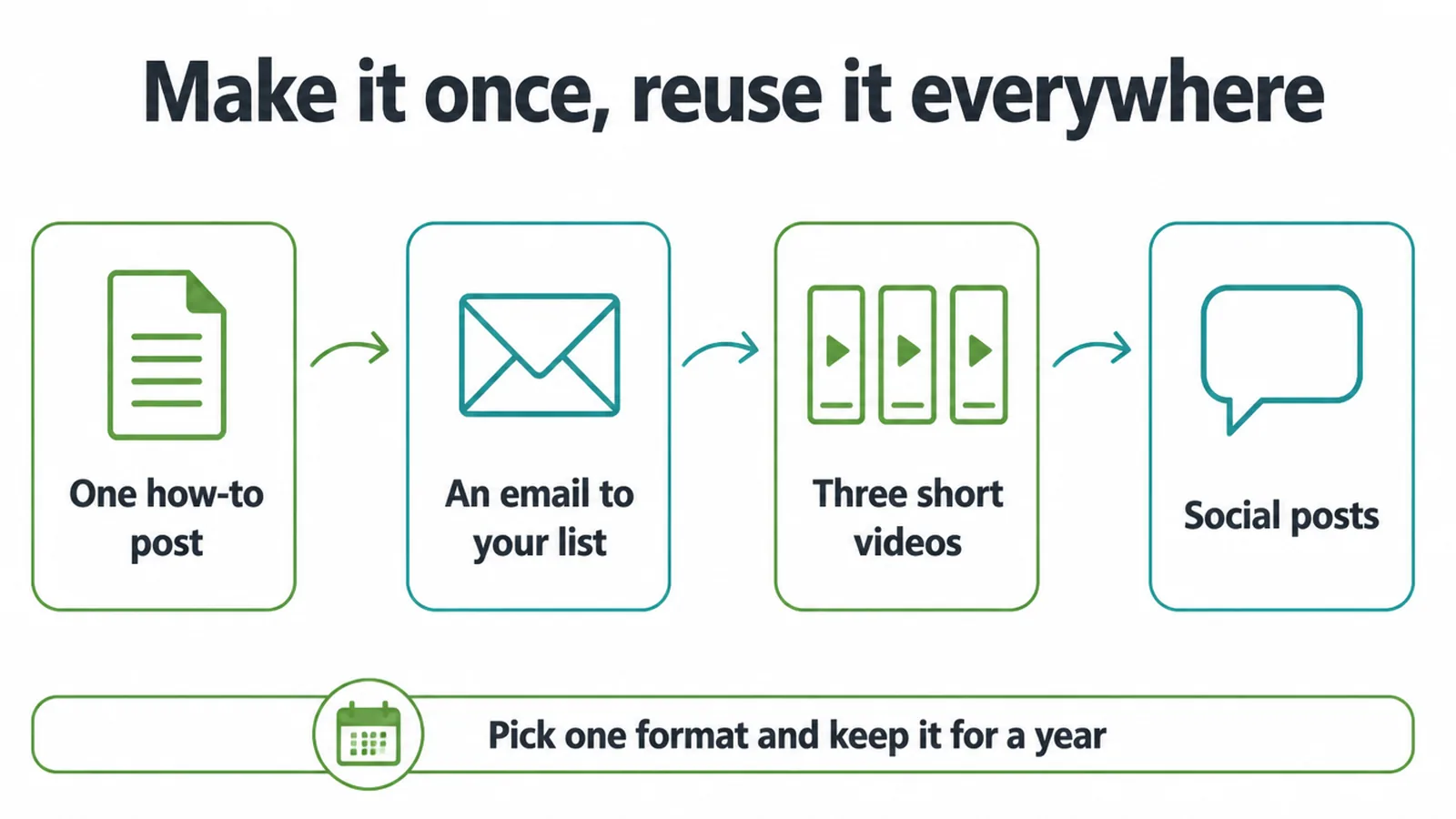
Then reuse ruthlessly. One how-to post becomes an email to your list, which becomes three short videos, which become social posts. Make the thing once, then get it in front of people in as many places as you can. That is how a small team keeps up.
Plan it in a simple schedule so it does not slip, or hand the planning and writing to our content marketing team. Our guide to building a content calendar shows you how to plan a realistic pace.
And to see where content fits alongside ads, email and search, step back to the full picture in digital marketing for small business.
Last thing on honesty: content compounds slowly. Judge it over quarters, not days. It builds a library that keeps working, but it is not a fast tap you turn on for instant leads, and no one can promise you rankings, traffic or sales.
Frequently asked questions
1. What is content marketing?
Content marketing is making useful, free stuff like articles, videos, guides and emails that helps the people you want as customers, so they find you, trust you, and eventually buy. You are not paying for ads, you are earning attention by being genuinely helpful.
2. What are examples of content marketing?
Common examples are how-to blog posts, an FAQ page, comparison posts, customer stories or case studies, an email newsletter, short-form video, a free checklist or lead magnet, and local area guides. Each is a format you fill with content your customers actually search for.
3. What content should a small business make?
Start with what customers already ask you. Turn your most common questions into an FAQ page and a couple of how-to posts. Add one repeatable format you can sustain, like a newsletter or short videos. Do one format well before adding more.
4. How do I start content marketing?
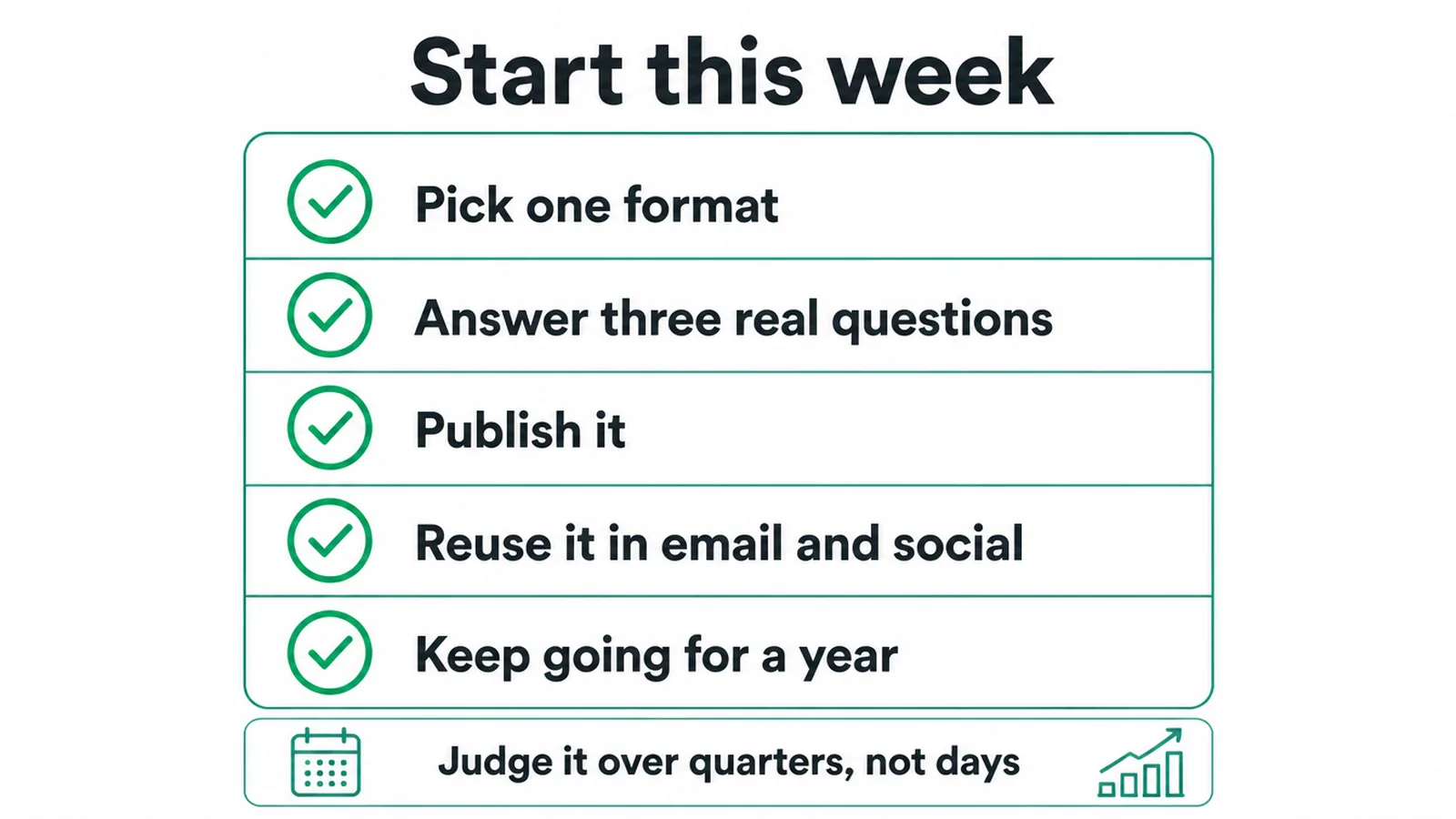
List the ten questions customers ask you most. Answer three of them properly, one per page or video. Publish, share them where your customers already are, and reuse them, so a blog post becomes an email and an email becomes a video. Then repeat.
5. Which content type is best for a small business?
There is no single best type. Short-form video reaches the most people fast, blog posts and FAQ pages get you found on Google over time, and a newsletter keeps existing customers. Pick the one you can actually keep doing, not the trendiest.
6. How often should I publish?
Consistency beats volume. A realistic, sustainable pace, say one blog post or two short videos a month, that you keep for a year will beat a burst of ten posts that then stops. Plan it in a simple content calendar.
7. How do I know if content marketing is working?
Track a few honest numbers over months, not days: search impressions and clicks in Google Search Console, video views and saves, newsletter open and reply rates, and how often new customers say they saw your content. Content compounds slowly, so judge it over quarters.
8. Do I need a blog?
Not necessarily. A blog is one format among many and it earns search traffic over time, but if you will not keep it up, a well-built FAQ page plus short videos may serve you better. Choose formats you can sustain.
11. Pick one format and start this week
You have eight formats and a table telling you which goal each one serves. You do not need a big plan. Pick the one you can keep doing, answer three real customer questions with it, and publish. Reuse each piece across email and social. Keep at it for a year and let it compound. If you would rather have a team build and run this for you, get in touch and we will talk through what fits your business. No promises on numbers, just honest work.