Instagram Marketing Strategy for Small Business

An Instagram marketing strategy has five parts: positioning, three or four content pillars, a deliberate format mix of reels, carousels and stories, a cadence you can keep, and a path from follower to customer. Seed Light plans and runs social content for small businesses this way.
Key takeaways
- Instagram is massive. It hit 3 billion monthly active users in September 2025, and Instagram says growth comes from DMs, Reels and recommendations, so build your plan around those.
- Strategy beats posting. Pick a clear audience, three or four content pillars, and a cadence you can sustain.
- Use formats on purpose. Reels reach new people, carousels earn saves, stories nurture the people who already follow you.
- Hashtags are SEO, not magic. They help categorise and surface posts in search, but they are a minor lever now.
- Followers are not the goal. Customers are. Give every post a clear next step and track real outcomes in your own Insights.
1. What is an Instagram marketing strategy?
An Instagram marketing strategy is a clear plan for who you are talking to, what you post in a few content pillars, how often, and how a post turns into a customer.
Random posting feels busy but goes nowhere. A plan gives every post a job, which is how we run social media marketing for clients.
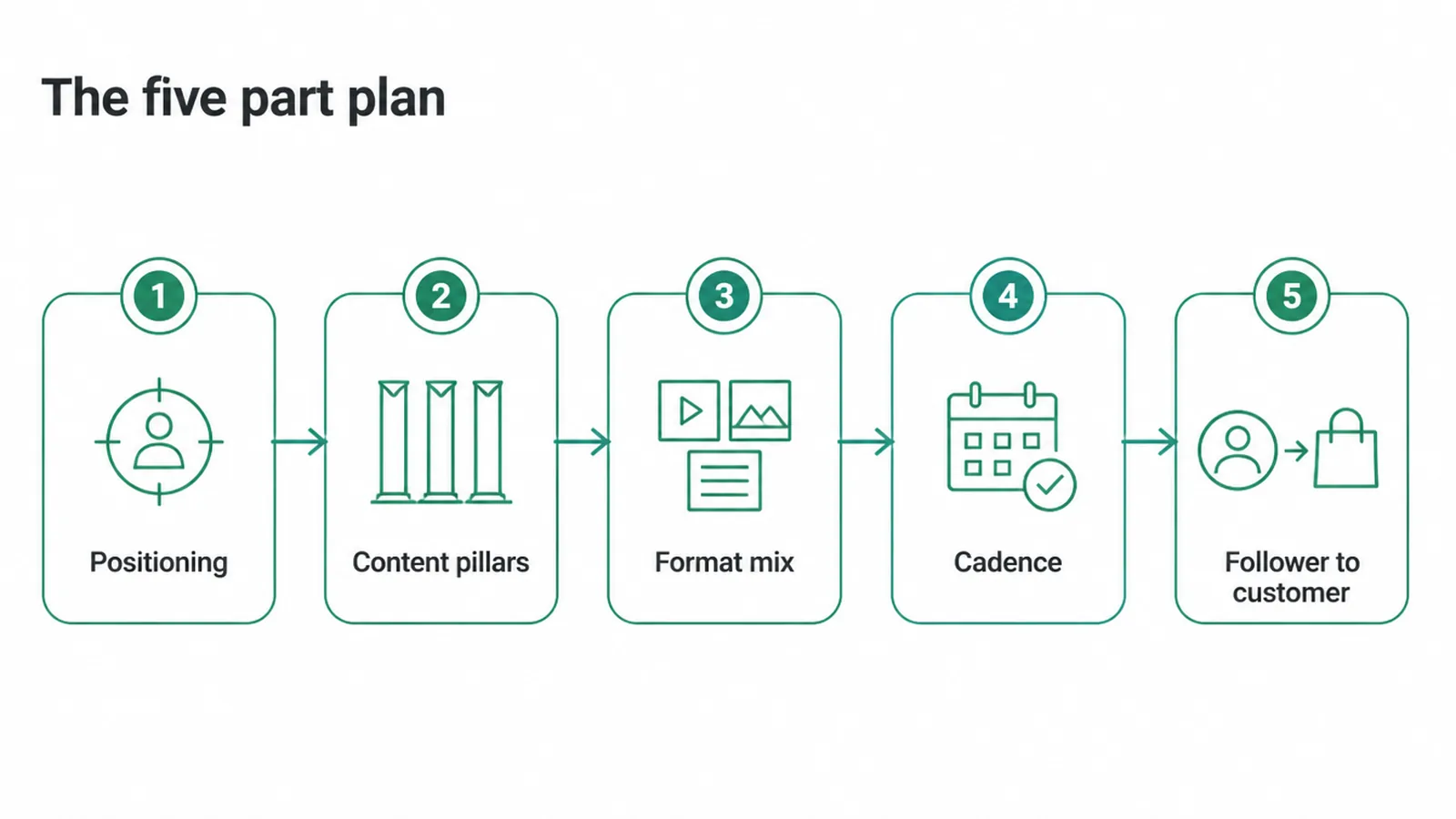
The plan has five parts. One, positioning: who you serve and the one promise you make. Two, content pillars: the three or four themes you post about.
Three, format mix: reels, carousels and stories used on purpose. Four, cadence: how often you post, at a pace you can keep. Five, the follower-to-customer path: how someone goes from a like to a sale.
Get those five right and the rest is just doing the reps. If you also want to handle the posting side without sitting in the app all day, our guide on scheduling Instagram posts automatically covers the tools and batching.
2. Set up your profile and positioning
Before you post anything, get your profile right. People decide in seconds whether to follow you, so your bio has to answer one question fast: what do you do, and for whom?
Start with positioning. Pick the exact person you serve, like busy parents near your cafe or small clinics in your city. Then write one clear promise. Vague accounts get scrolled past. Specific ones get followed and remembered.
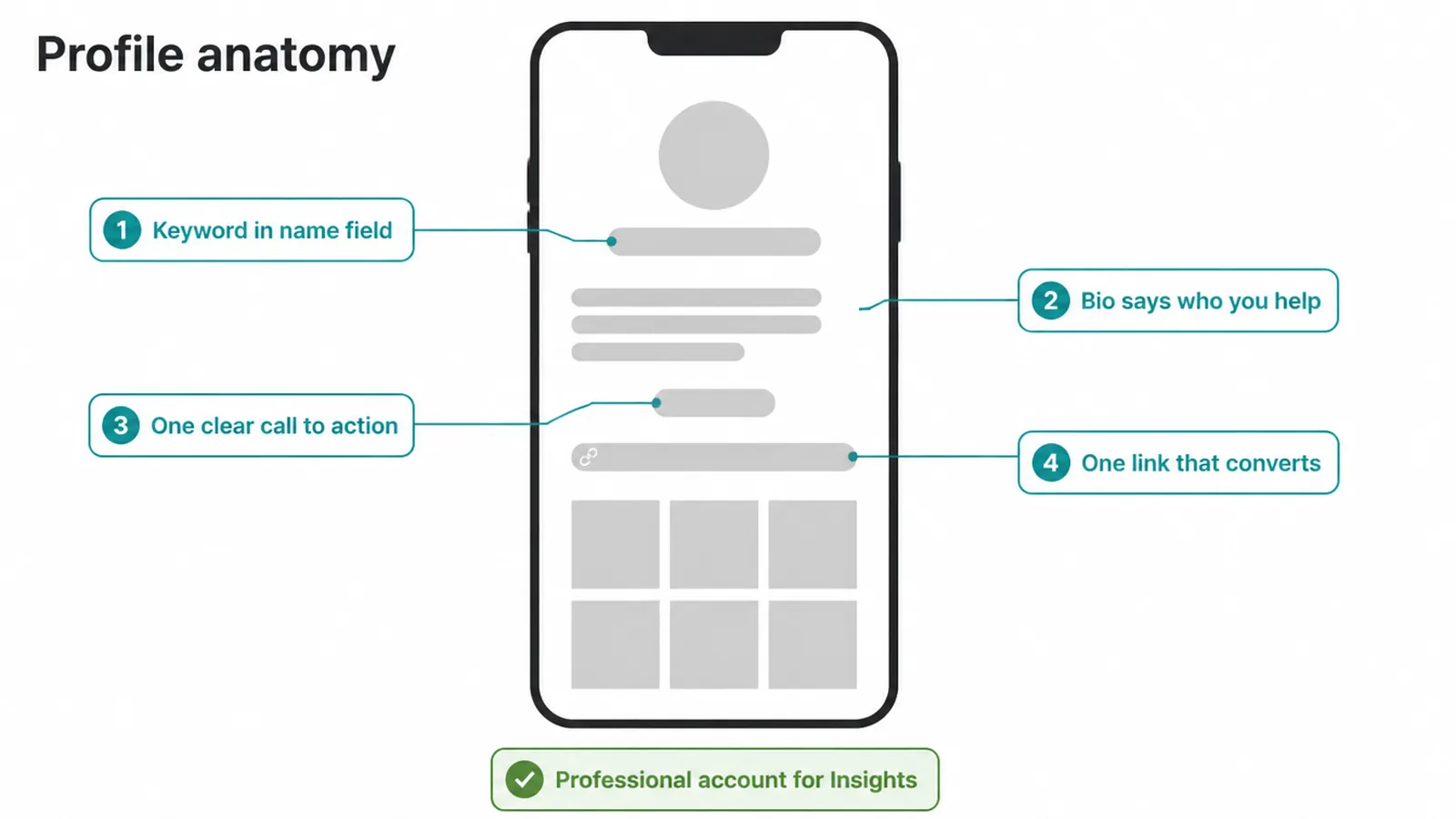
Now make yourself findable. Instagram has a search bar, and your name field and handle are part of how you show up in it. Put a plain keyword in your name field, like "Bakery, George Town", alongside your brand name.
Write a bio that states who you help and what you offer, then add one clear call to action and one link. Switch to a professional account so you get Insights, which is the data you will use later to see what works.
For context on scale, Instagram's ad reach was reported at 1.74 billion users as of January 2025. That is paid reach from Instagram ads, not your free reach, but it tells you the audience is there. Your job is to be clear enough that the right slice of it finds you.
3. Build your content pillars
Content pillars are the three or four themes you post about again and again. They stop the blank-page panic and keep your account focused. When every post fits a pillar, your audience knows what they follow you for, and you always have something to make.
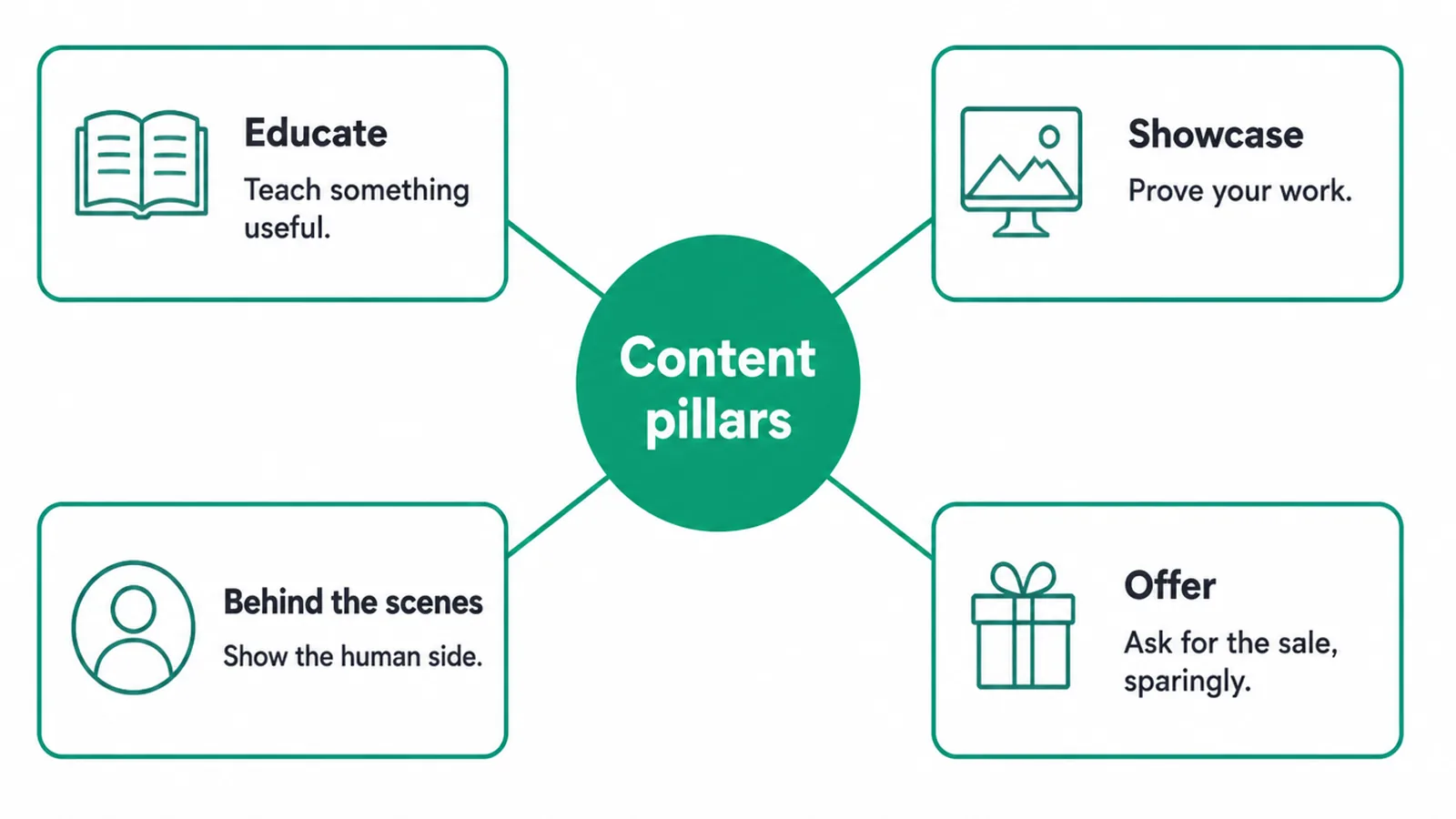
Most small businesses do well with four pillars: educate, showcase, behind-the-scenes, and offer. Educate posts teach something useful. Showcase posts prove your work. Behind-the-scenes posts build trust by showing the human side. Offer posts ask for the sale, sparingly. Plan these out ahead of time with a simple content calendar so you are never scrambling.
| Pillar | What it is for | Example formats | Example posts |
|---|---|---|---|
| Educate | Build trust and get saved and shared | Carousel, text-on-screen reel | "3 mistakes people make before they hire us", a how-to tip |
| Showcase | Prove your work and quality | Reel, photo, carousel | Before and after, a finished project, a product close-up |
| Behind-the-scenes | Show the human side and earn trust | Story, reel | A day in the shop, how an order is made, meet the team |
| Offer or CTA | Turn attention into customers | Reel, story, photo | A new product, a booking reminder, a limited offer |
4. Reels, carousels and stories: when to use each
Each format does a different job, so use all three on purpose instead of betting on one. Reels reach people who do not follow you yet. Carousels go deep and earn saves. Stories nurture the people who already follow you. No single format wins. The mix does.
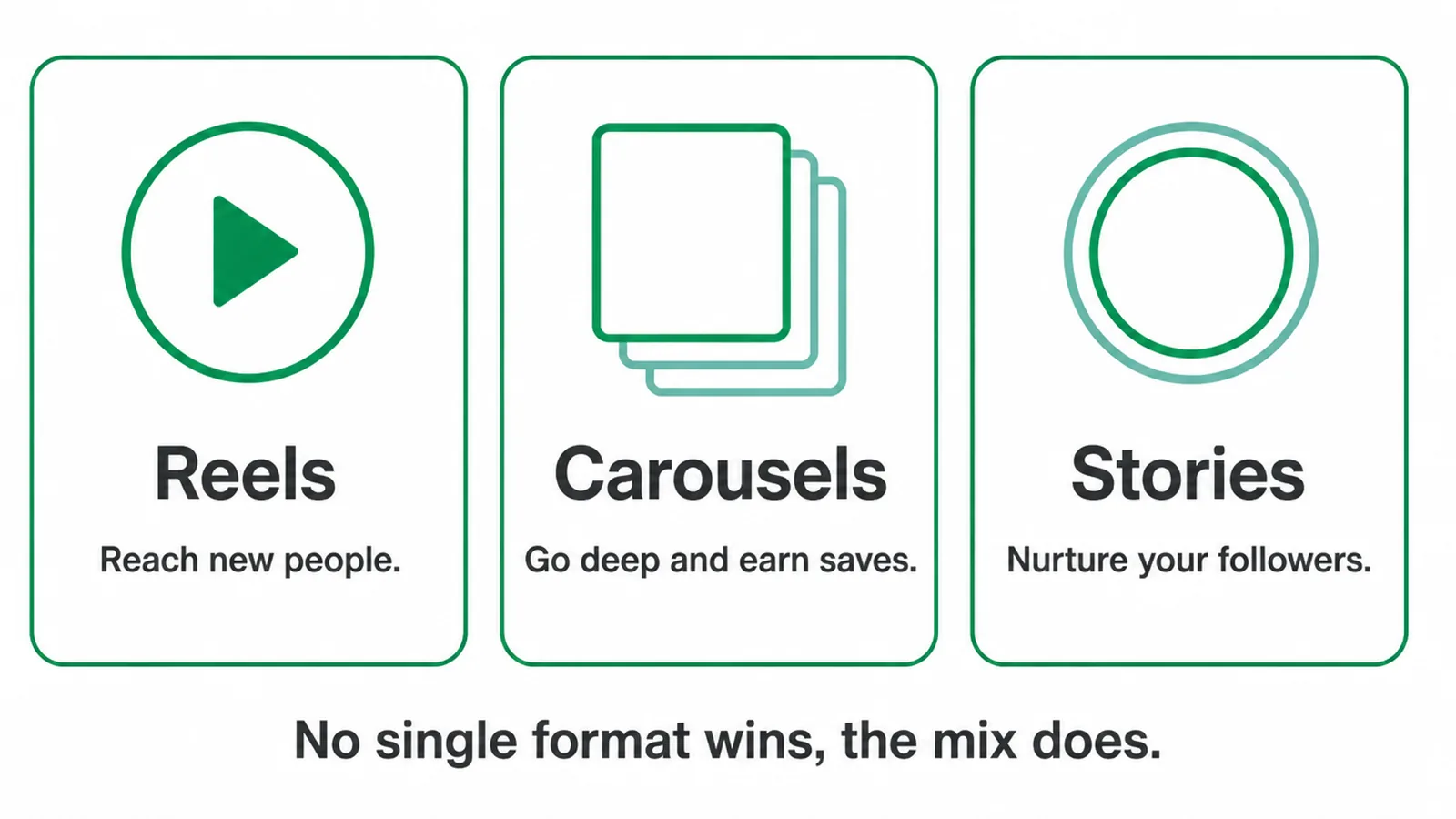
Reels are your reach engine. They get shown to non-followers, which is how new people find you. Use them for quick tips, showcases and hooks that make someone stop scrolling. Carousels are your depth tool.
People swipe and save them, and saves are a strong signal that your post was worth keeping. Stories are for the relationship. Polls, questions and quick updates keep your current followers warm and remind them you exist.
On ranking, here is the honest version. Instagram says it does not use a single algorithm. Each surface, Feed, Stories, Explore, Reels and Search, has its own ranking, and the Feed weighs your activity such as likes, shares, saves and comments, along with info about the post and the poster.
So ignore "best time to post" myths and watch what your own audience actually responds to. If you also want a long-form home for deeper content, see our YouTube marketing strategy, which doubles as search.
5. Pick a posting cadence you can keep
A cadence you can sustain beats a burst you cannot. Posting hard for two weeks and then going quiet for a month hurts you more than a slow, steady pace. Pick a rhythm you can hold for months, not days.
A realistic floor for most small businesses is two to three feed posts a week plus a few stories. Some weeks you will do more, some less, and that is fine.
What matters is that you keep showing up. If you find a steady pace easy, add more. Do not start at a pace you will quietly abandon.
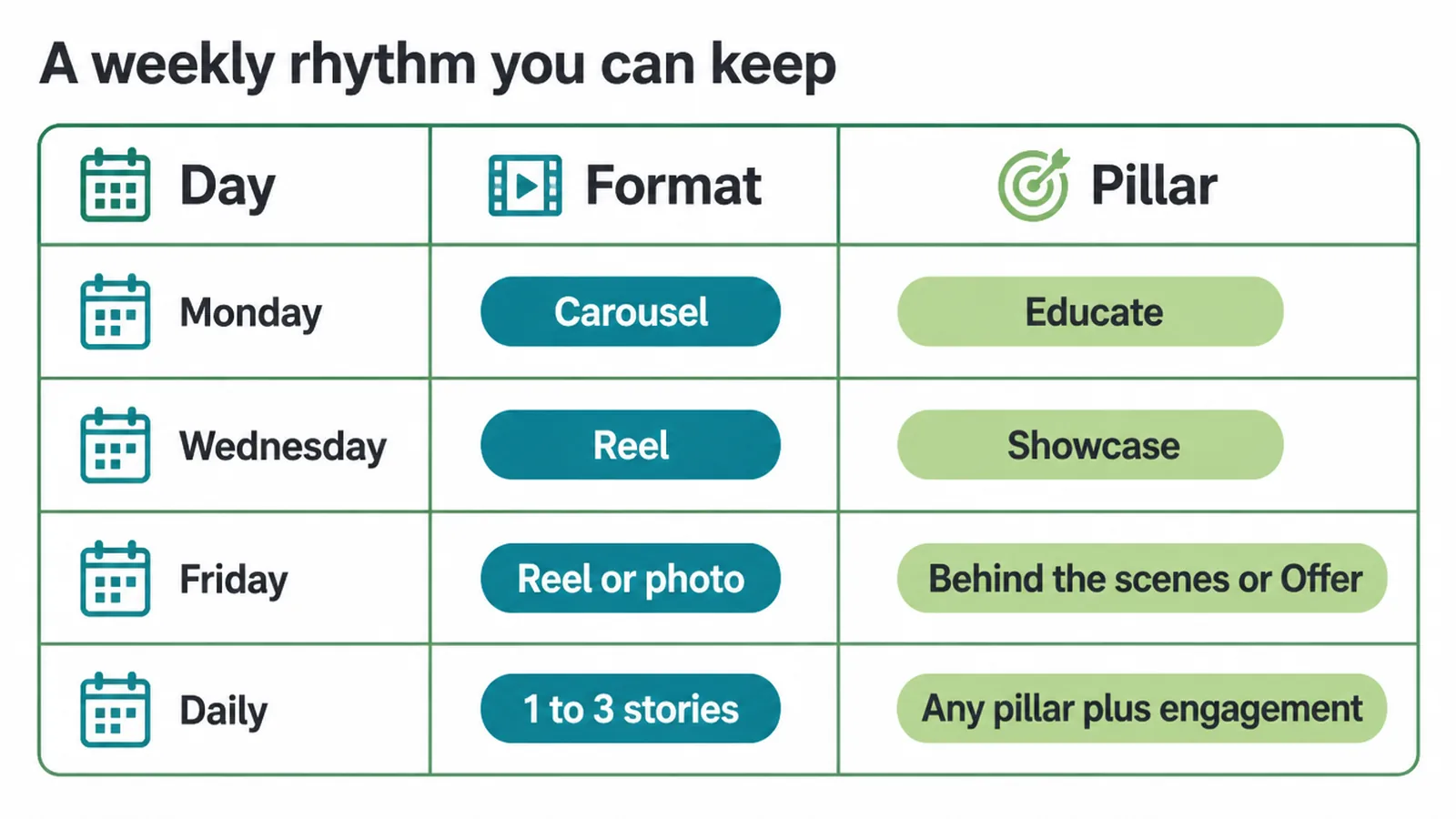
The trick to staying consistent is batching. Set aside one block, plan a week or two of posts against your pillars, and make them all at once. That way a busy week does not knock you off track. Here is a simple weekly skeleton you can adapt.
| Day | Format | Pillar |
|---|---|---|
| Monday | Carousel | Educate |
| Wednesday | Reel | Showcase |
| Friday | Reel or photo | Behind-the-scenes or Offer |
| Daily | 1 to 3 stories | Any pillar, plus engagement |
This is a starting point, not a rule. Instagram is one channel in a bigger plan, so if you want to see where it fits, read our overview of digital marketing for small business.
6. Hashtags and Instagram SEO
Hashtags help categorise your content and surface it in search, but they are a minor lever now. Treat them as Instagram SEO, not a growth hack. A handful of relevant, specific tags is fine. Stuffing thirty broad ones will not save a weak post.
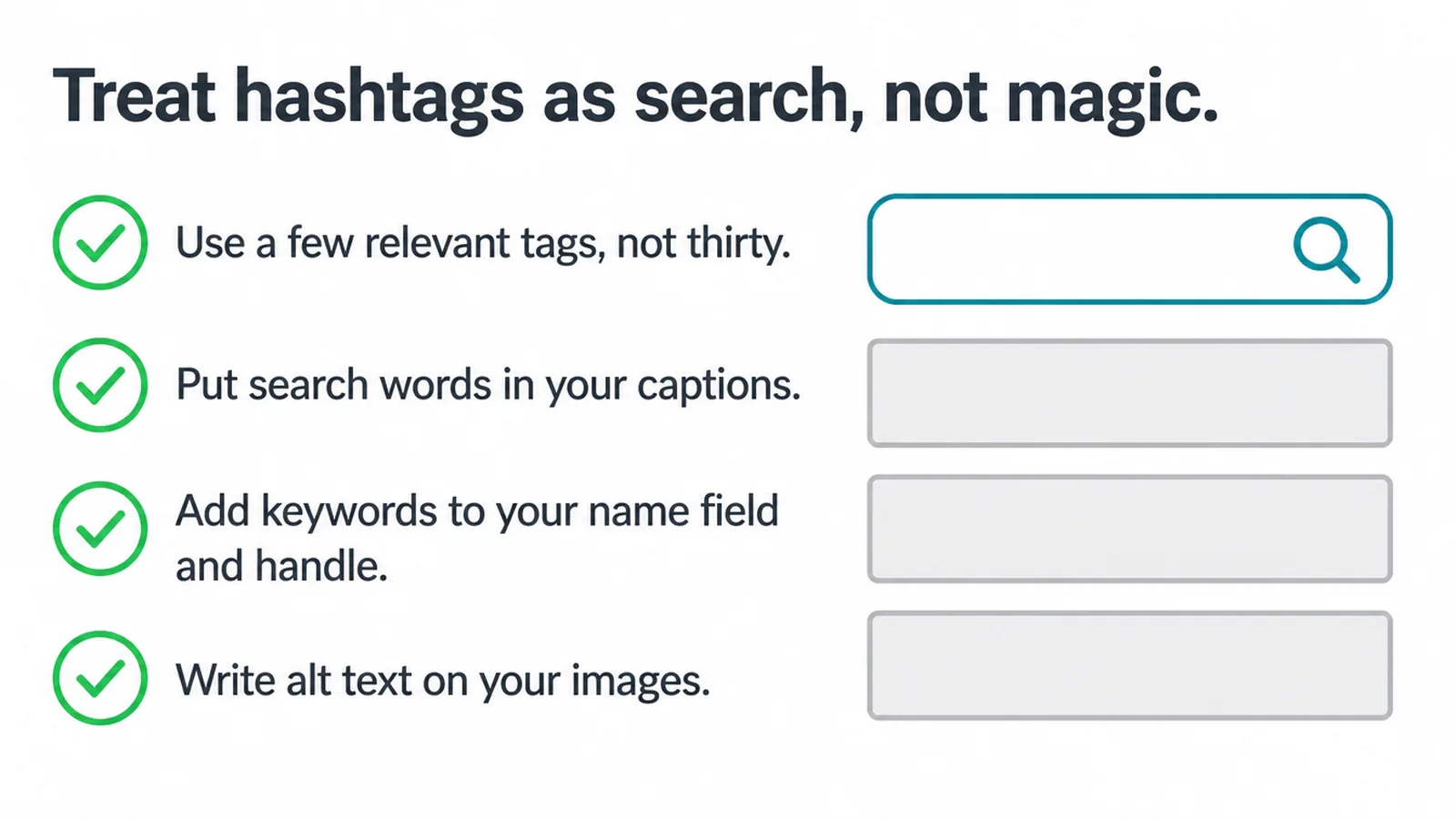
The bigger win is writing for search. Instagram now ranks results in its search bar, so put the words your customers actually type into your captions, your name field and your handle.
If you run a bakery, the word "bakery" and your city should appear in plain language in the caption, as well as in a tag. Add alt text to your images too, which helps with accessibility and gives Instagram more to read.
Writing captions and finding keywords is exactly the kind of task where a tool can speed you up. Our guide on using AI for social media marketing shows how to draft captions fast and then edit them so they still sound like you.
7. Daily engagement habits
Posting is only half the job. The other half is engaging, and it ties straight to what Instagram says drives its growth: DMs and the connections behind them. Reply to every comment and DM quickly. A fast, human reply turns a casual viewer into someone who feels seen.
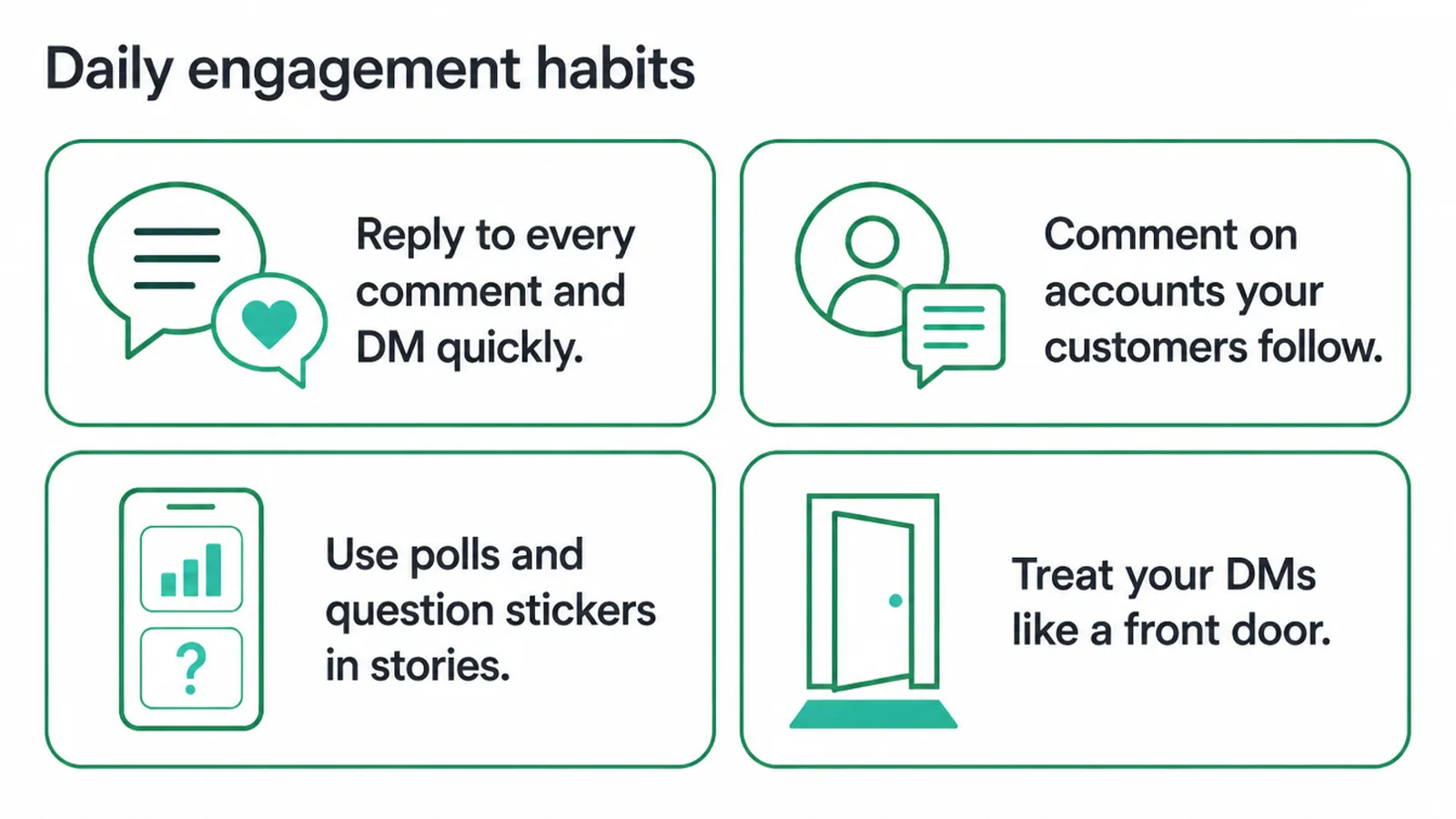
Spend a few minutes a day commenting on accounts your customers follow, like local businesses and community pages. Real comments, not "nice post". Use interactive stickers in stories, like polls and question boxes, to give people an easy way to respond.
Every reply and reaction is a small signal that people care about your content, and it keeps you top of mind. Treat your DMs like a front door, because for a lot of small businesses, that is exactly where the first sales conversation happens.
8. Turn followers into customers
Followers are not the goal. Customers are. A big account that never sells is a hobby. The job of your strategy is to move people from a like to a paying customer, and that needs a clear path.
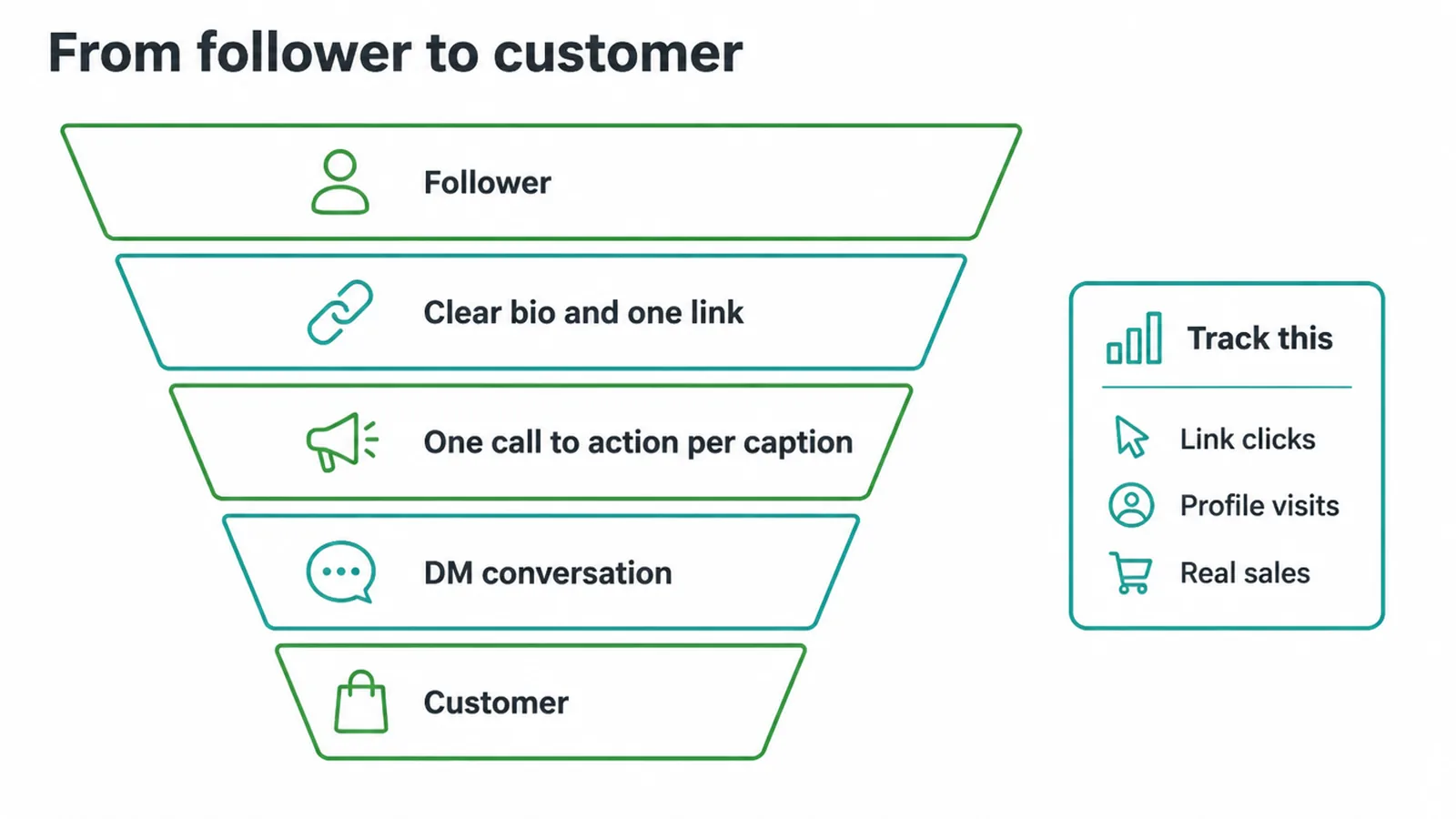
It starts with your bio. One clear link should send people somewhere that converts: a landing page, a booking page or your shop. Do not bury it.
In your captions, ask for the next step in plain words, like "DM us to book" or "tap the link to see the menu". One clear call to action per post beats five competing ones.
Use your DMs as a real sales channel. When someone asks a question, answer it well and gently guide them to buy or book. Run the occasional honest offer, not constant discounts that train people to wait. And track what actually happens: link clicks, profile visits, DMs and real sales.
If you want this whole loop running smoothly, from the content to the page it sends people to, our digital marketing services can help you build it. Or just tell us what you sell and we will point you in the right direction.
9. How to measure if it is working
Look past likes. Likes feel good but rarely pay the bills. The metrics that matter are saves, shares, profile visits, link clicks, DMs and actual sales. Those tell you whether your content is doing a job.
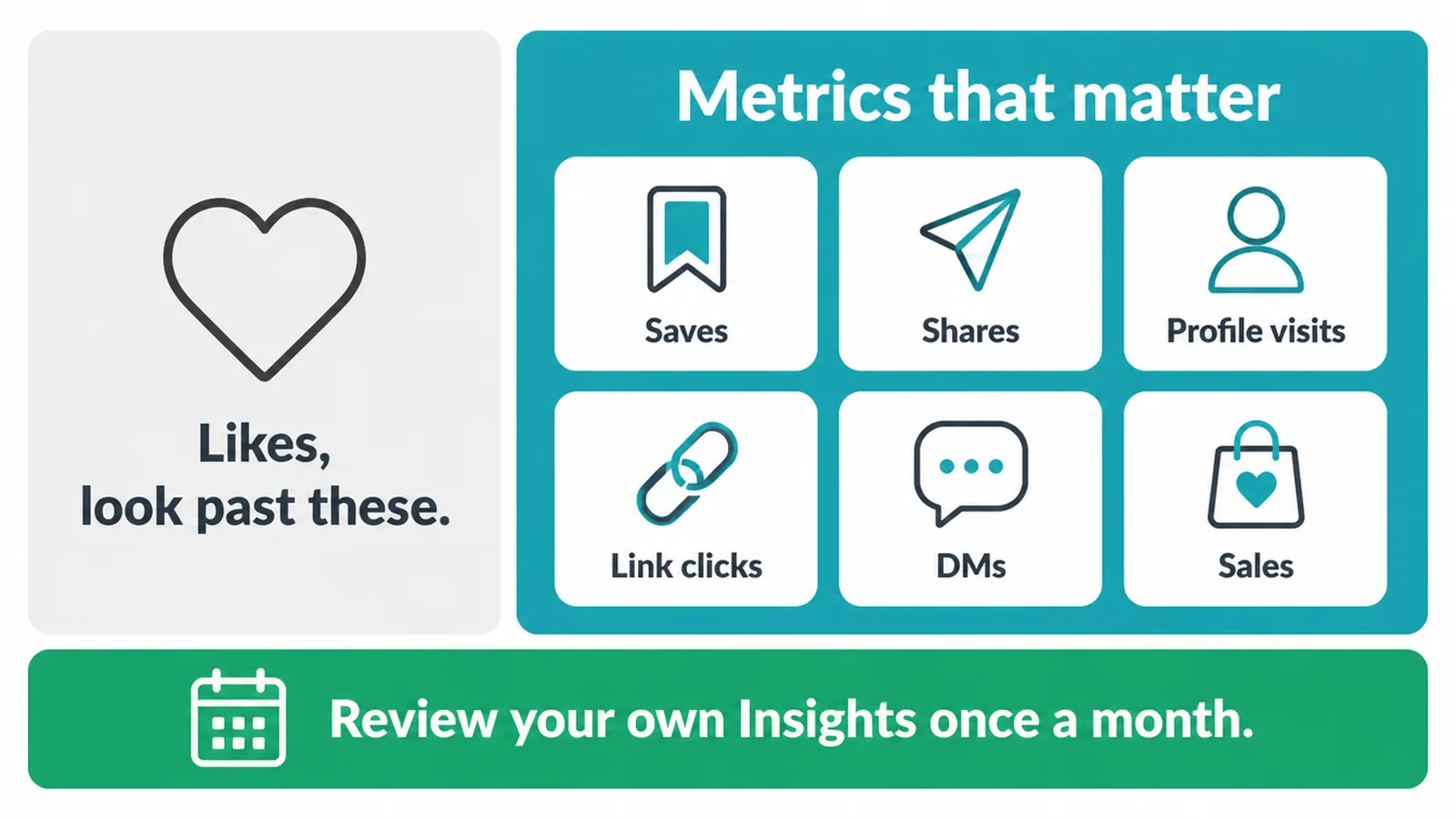
Use your own Instagram Insights, not generic benchmarks you read online. Your audience is yours, and what works for a national brand may not work for a local shop. Check your numbers once a month, not every hour.
Ask simple questions: which posts got saved and shared, which sent people to your link, and which pillar pulls its weight? Then make more of what works and quietly drop what does not. That monthly review is the loop that makes the whole strategy compound over time.
FAQ
1. What is an Instagram marketing strategy?
A clear plan for who you are talking to, what you post in a few content pillars, how often, and how a post turns into a customer.
2. How often should a small business post on Instagram?
A cadence you can sustain beats a burst you cannot. A realistic floor is two to three feed posts a week plus a few stories, and consistency matters more than volume.
3. Do hashtags still matter on Instagram?
Hashtags help categorise Instagram content and surface it in search, but they are a minor lever now. Treat them as part of Instagram SEO and expect a small effect.
4. Reels vs carousels vs stories, which should I use?
Each does a different job: reels for reach to non-followers, carousels for depth and saves, and stories for nurturing the people who already follow you. Use all three on purpose.
5. How do I get more followers without ads?
Through consistent posting, content people share and save, real engagement, and showing up in search, but growth is a by-product of being genuinely useful, not a guaranteed number.
6. How do I turn followers into customers?
With a clear bio and link, calls to action in captions, DMs treated as a sales channel, and the occasional honest offer. Followers are not the goal, customers are.
7. Do I need to be on camera?
No. Plenty of small businesses grow with product shots, behind-the-scenes, text-on-screen reels, carousels and customer stories. On-camera helps trust but is not required.
8. How do I measure if my Instagram strategy is working?
Look past likes and track saves, shares, profile visits, link clicks, DMs and actual sales, using your own Instagram Insights rather than generic benchmarks.