Evergreen Content: Create Posts That Keep Earning Traffic

Evergreen content stays useful for years, so it keeps earning traffic long after you publish. The formats that last are how-to guides, definitions, checklists, FAQs and comparisons. Write for a question people keep asking, avoid dated references, and refresh it once a year. Seed Light builds evergreen libraries for small business clients.
Key takeaways
- Old posts do the heavy lifting. HubSpot found 76% of their monthly blog views and 92% of their monthly leads came from old posts, not new ones.
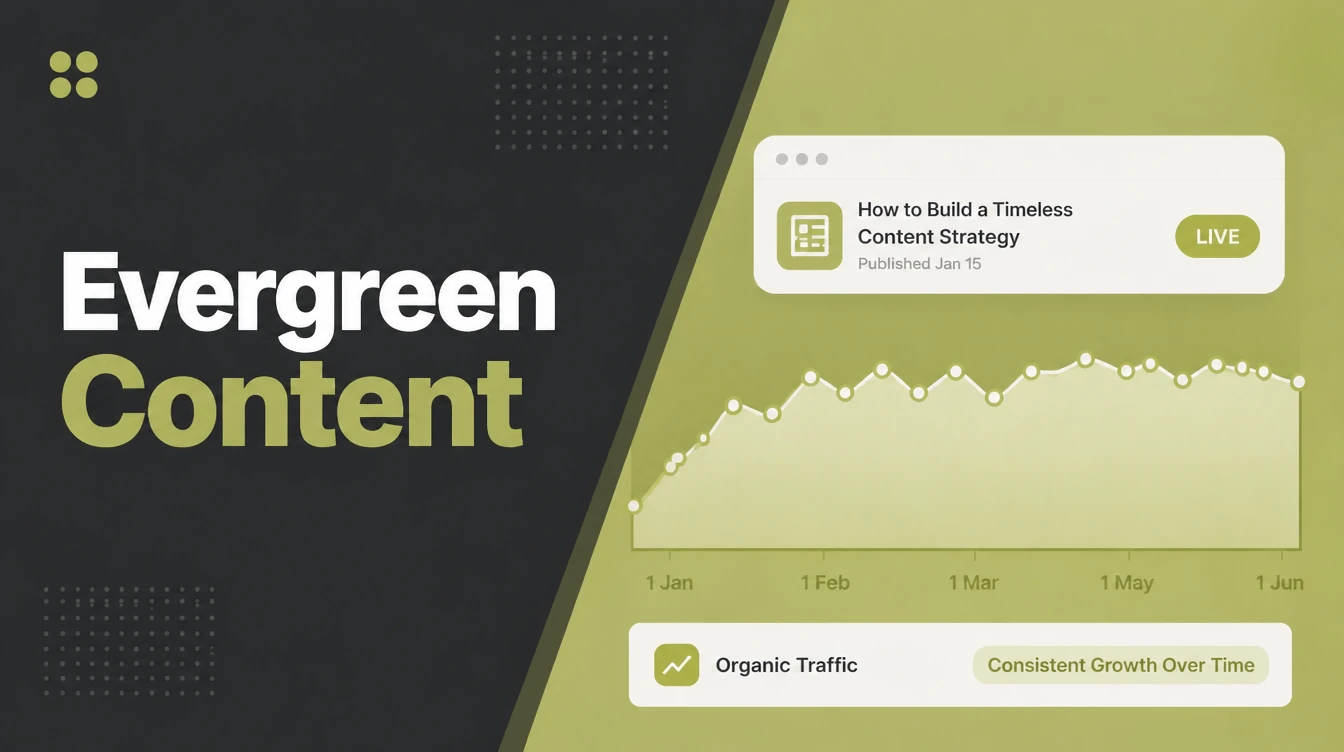
- Evergreen content stays useful for years. It answers a question people keep asking, so it keeps pulling in traffic long after you publish.
- Some formats just last. How-to guides, beginner guides, glossaries, FAQs, and checklists age well. Anything with a year in the title or tied to news does not.
- It is a long game. Only 1.74% of new pages rank in the top 10 within a year, so give your posts time.
- It still needs a light touch. Evergreen is not set and forget. A quick review once or twice a year keeps it accurate and competitive.
1. What is evergreen content?
Evergreen content is content that stays useful for years. It answers a question people keep asking, so it keeps earning traffic long after you hit publish. The name comes from the evergreen tree, which stays green all year round instead of dropping its leaves in autumn.
Think of the difference between a how-to guide and a news story. The news story is read for a day, then forgotten. The how-to guide gets searched for every week, by new people, forever. That steady demand is what makes it evergreen.
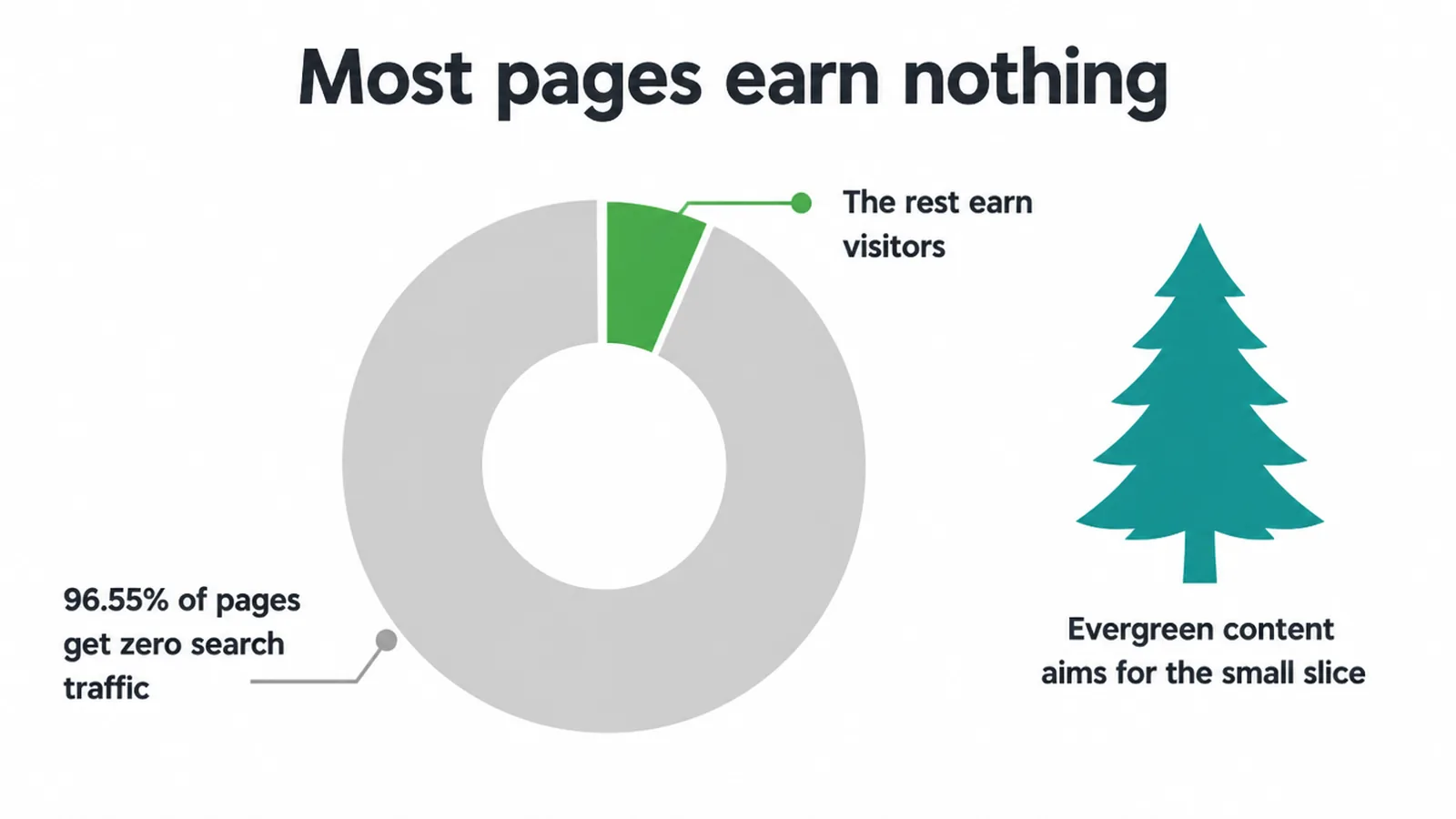
Here is why this matters so much. Most pages on the web get almost no love from search engines. Ahrefs found that 96.55% of pages get zero traffic from Google.
Evergreen content is your best shot at landing in the tiny slice that actually earns visitors, because it targets questions that never stop being asked.
2. Evergreen content vs time-sensitive content
Evergreen content earns a slow, steady stream of traffic for years, while time-sensitive content spikes fast and then drops off. One is a patient earner. The other is a quick burst that fades. Both have a place, but if you only have time for one, the steady earner usually wins.
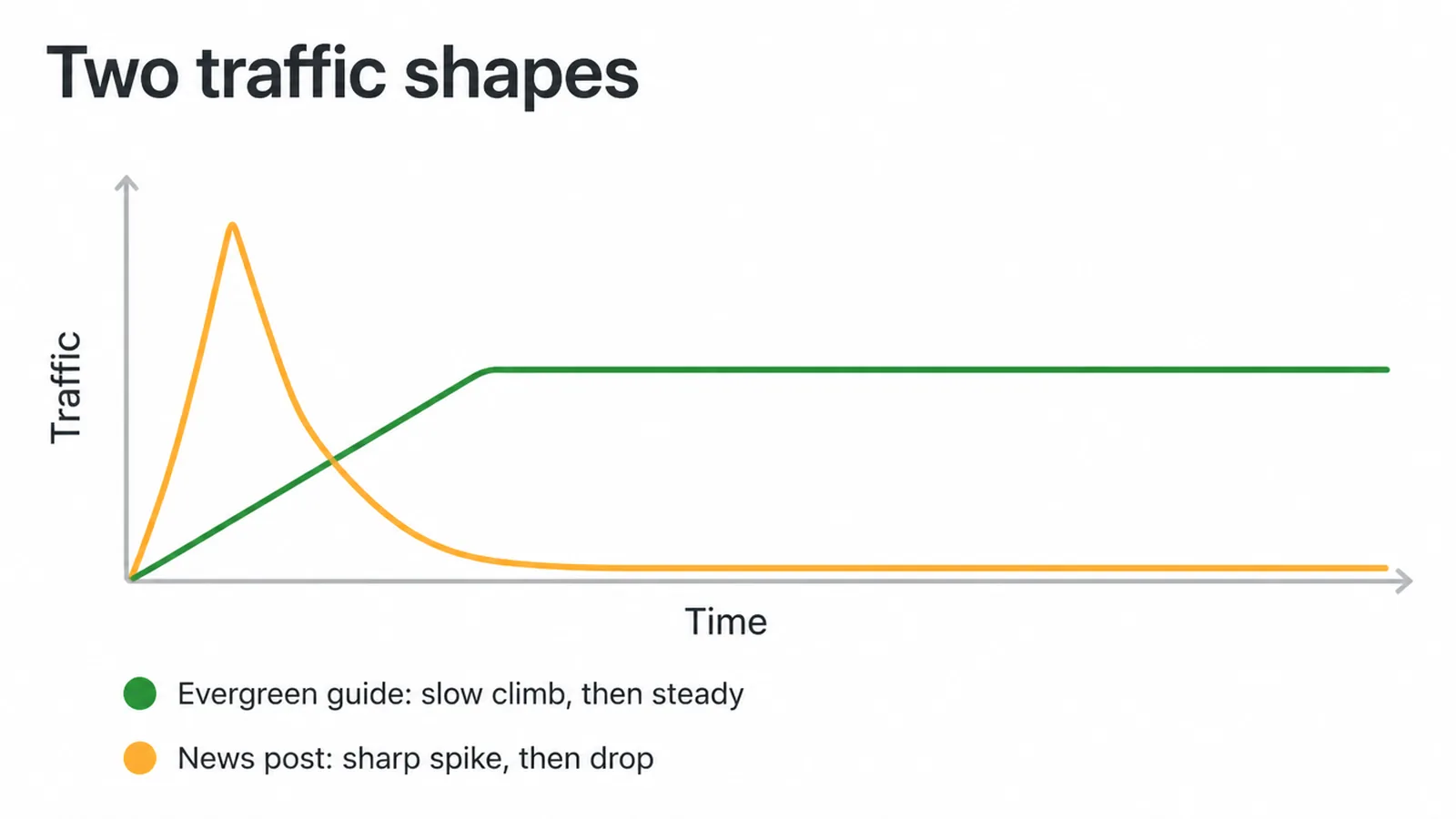
Chasing fresh news rarely pays for a small business. Ranking takes time, and most new pages never make it.
Ahrefs found that only 1.74% of newly published pages rank in the top 10 within a year. By the time a news post might rank, the news is old. Here is how the two stack up.
| What to compare | Evergreen content | Time-sensitive content |
|---|---|---|
| Shelf life | Years | Days or weeks |
| Example | How to clean a coffee machine | Our new menu launches Friday |
| Traffic shape | Slow climb, then steady | Sharp spike, then drop |
| Best for | Steady leads and search traffic | Buzz, launches, social shares |
| Upkeep | Light, once or twice a year | None, it just fades |
You can still run both. Plan your steady earners and your timely posts side by side so nothing slips. Our guide to building a simple content calendar shows you how to mix the two without burning out.
3. Formats that age well
The most evergreen formats are how-to guides, complete beginner guides, glossaries, FAQ pages, and checklists. They cover questions that barely change from one year to the next, so people search for them again and again. Pick one of these and you start with a head start on shelf life.
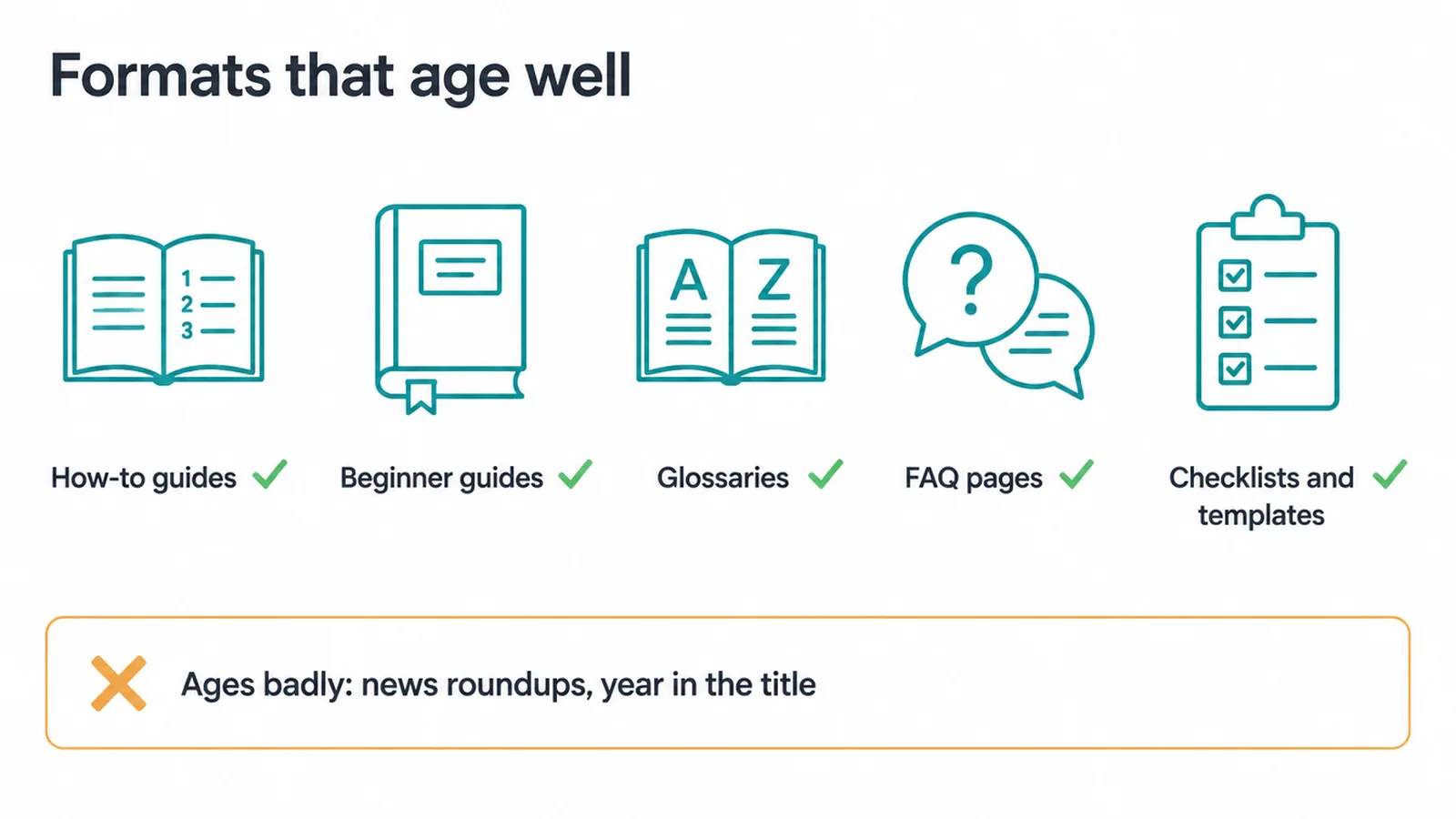
Here are the formats worth building:
- How-to guides. Step-by-step posts that solve one clear problem. People search these forever.
- Complete or beginner guides. The full picture on one topic, written for someone new to it.
- Glossaries and what-is posts. Plain definitions of terms in your field. Quick to read, easy to rank.
- FAQ pages. Honest answers to the questions your customers ask on the phone every week.
- Checklists and templates. Practical tools people bookmark, copy, and come back to.
Some formats age badly, so be careful. A post with a year in the title looks stale fast. News roundups, launch posts, and fast-moving tool lists need constant updates or they rot. If you cannot keep updating it, do not build it.
Want the writing side done right? Our guide to writing content that ranks covers intent and structure, and building a few connected guides on one subject helps you earn topical authority, which search engines reward.
4. How to write evergreen content
To write evergreen content, pick a topic with steady demand, match what the searcher wants, answer the question early, and go deep enough to be the best result. Skip dated language and add links to your other pages. That mix is what keeps a post earning for years.
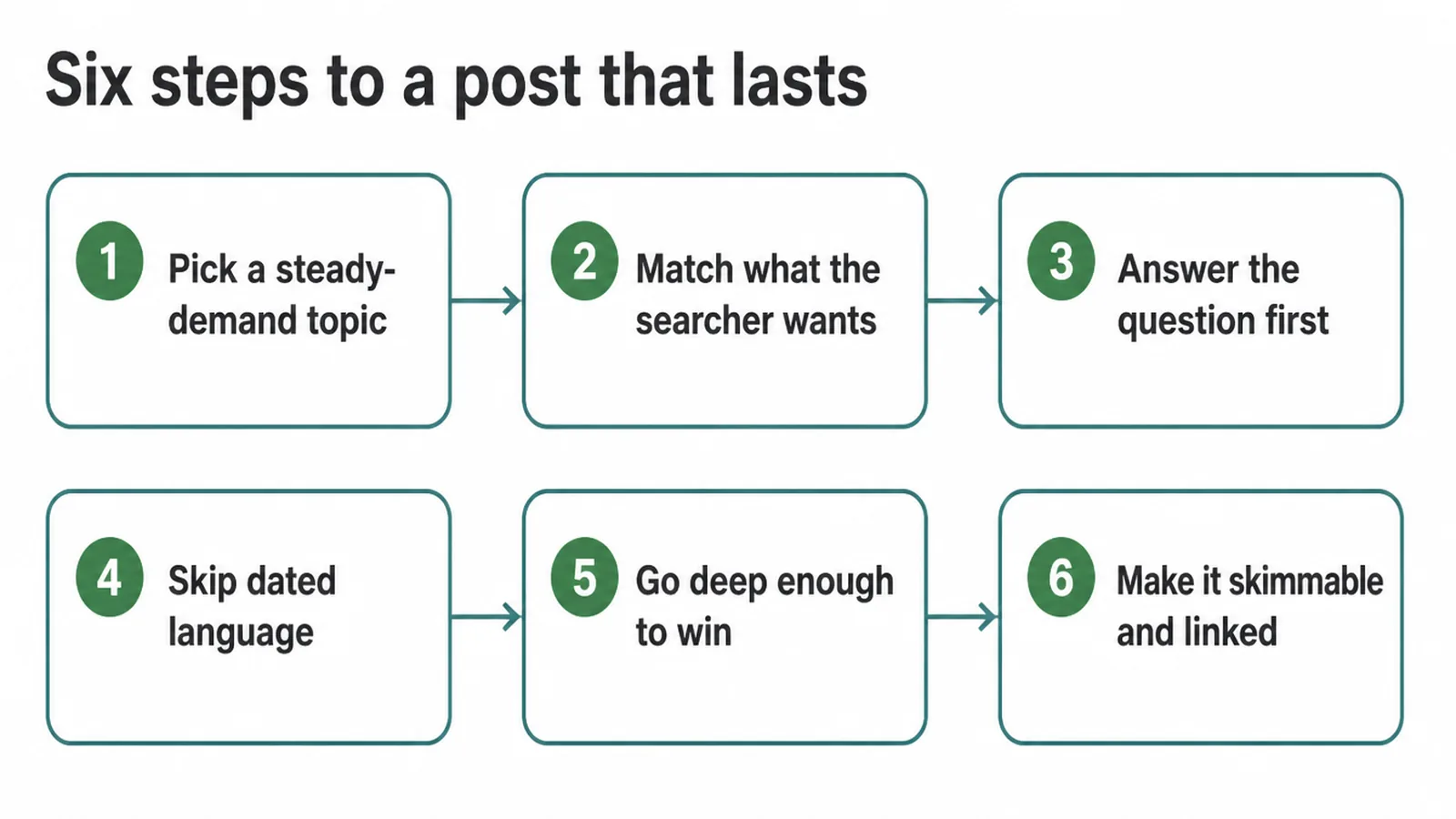
Here is the simple order to follow.
1. Pick a steady-demand topic. Choose a question people search every month, not a one-off trend. A little keyword research shows you which topics have steady, year-round interest.
2. Match what the searcher wants. Look at what already ranks for your topic. If the top results are step-by-step guides, write a guide. Give people the format they are looking for.
3. Answer the question first. Lead with the answer in the first sentence or two. Do not make people scroll. This helps readers, and it helps AI search tools quote you.
4. Skip dated language. Avoid phrases like "this year" or "last month". Avoid years in the title. Write so the post reads fresh in two years.
5. Go deep enough to win. The pages that hold the top spot tend to be older and thorough. Ahrefs found that the average number-one page is five years old, and 72.9% of top-10 pages are three or more years old. Cover the topic fully so yours becomes one of those keepers.
6. Make it skimmable and linked. Use short paragraphs, clear headings, and bullets. Link to your related posts and to your SEO service where it fits, so readers and search engines can find their way around.
5. How to keep evergreen content fresh
Evergreen content is not set and forget. The topic stays steady, but the details drift. Steps change, screenshots get old, and tool names move on. A quick review once or twice a year keeps each post accurate and competitive in search.
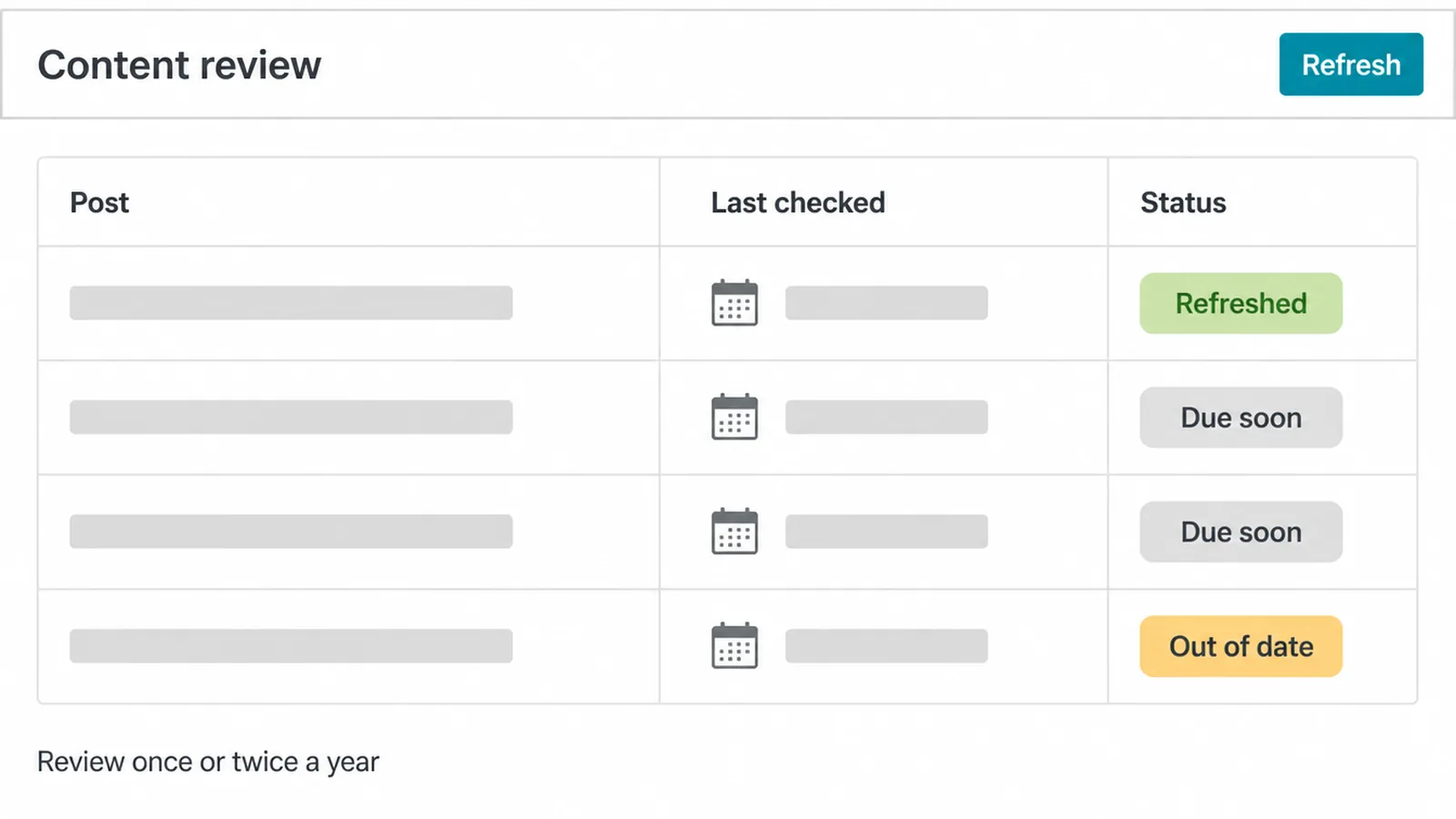
The payoff is real. When HubSpot refreshed old posts, those posts grew their monthly organic views by an average of 106%. A small update can roughly double the traffic a post brings in. That is a great return for an hour of work.
Keep this part light. Fix the facts, swap stale screenshots, check that links still work, and add anything new that matters. Refreshing posts also helps AI search tools trust your page, because they favour accurate, current answers.
When you are ready to go deeper, a full content audit walks you through finding your weak pages, deciding what to refresh, and what to merge or retire. Start there when your library grows past a handful of posts.
6. Evergreen content ideas for a small business
Evergreen content ideas are easiest to spot when you think about the questions your customers ask before they buy. Every trade has a handful of steady, repeating questions. Answer those well and you have a post that earns for years. Here are a few by business type.
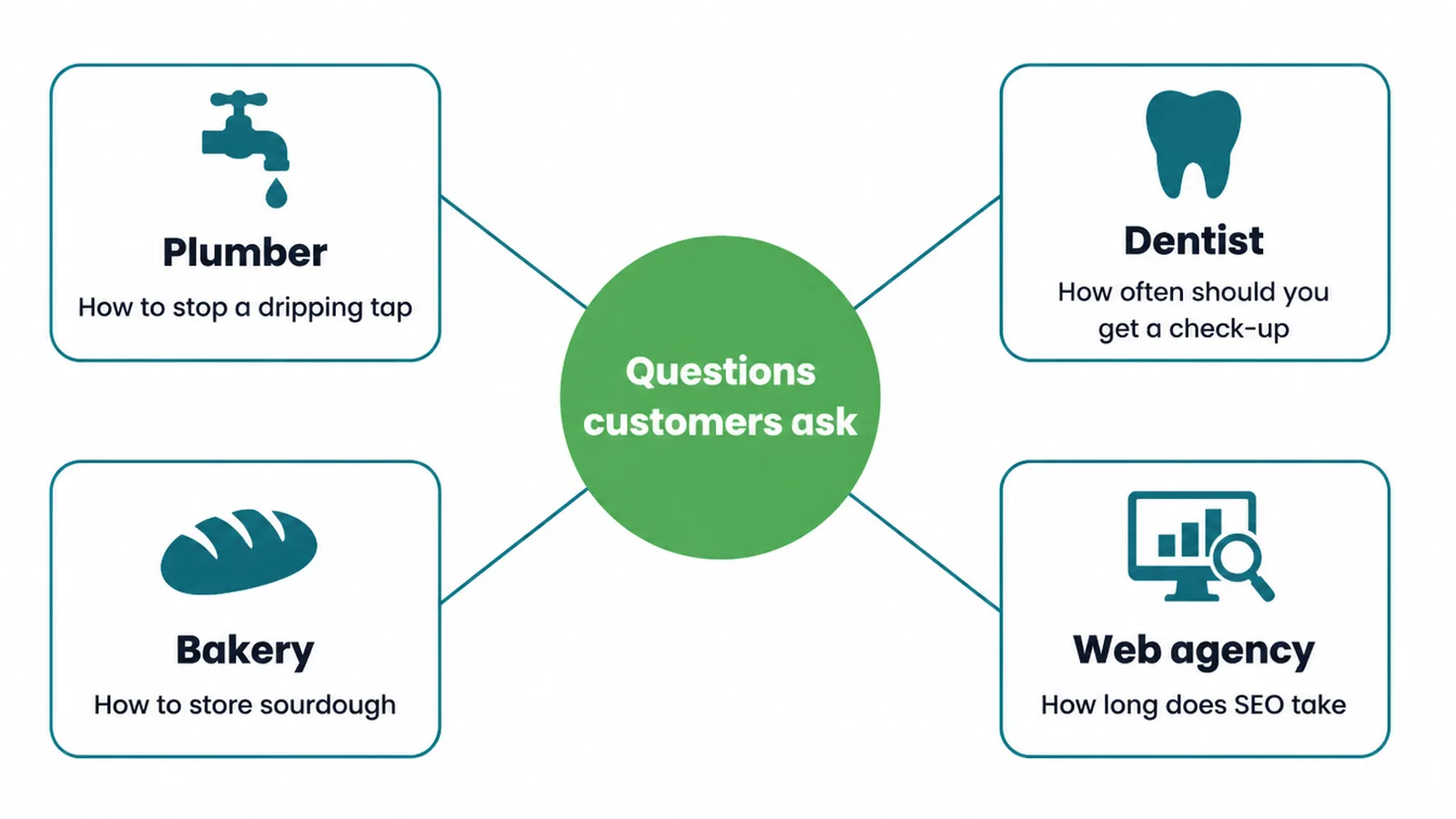
- Plumber: "How to stop a dripping tap" or "What to do when a pipe bursts". People search these in a panic, all year.
- Dentist: "How often should you get a check-up" or "Is teeth whitening safe". Steady questions, steady traffic.
- Bakery: "How to store sourdough" or "How to order a custom cake". Useful, sharable, and always relevant.
- Web agency: "What is evergreen content" or "How long does SEO take". Guides like the one you are reading right now.
Pick three or four of these for your business. Write the best answer on the internet for each one. Then let them work. If you would rather have someone build and maintain a library of evergreen posts for you, get in touch with us and we will map it out together.
Frequently asked questions
1. What is evergreen content?
Evergreen content is content that stays useful for years. It answers a question people keep asking, so it keeps earning traffic long after you hit publish. The name comes from the evergreen tree, which stays green all year instead of dropping its leaves.
2. What are examples of evergreen content?
How-to guides, complete beginner guides, glossaries and what-is posts, FAQ pages, checklists, and templates are all evergreen. They cover questions that do not change much from year to year, so people search for them again and again.
3. How is evergreen content different from time-sensitive content?
Evergreen content stays useful for years and earns a steady stream of traffic. Time-sensitive content, like news or a launch post, spikes fast and then drops off. One is a slow steady earner. The other is a short burst.
4. How often should I update evergreen content?
Once or twice a year is plenty for most posts. Check that the facts, screenshots, and links are still right. Add anything new that matters. You do not need to rewrite it. A light refresh keeps it accurate and helps it stay competitive in search.
5. Is evergreen content better than trending content?
For most small businesses, yes. Trending posts can bring a quick spike, but the traffic fades fast and you have to keep chasing the next topic. Evergreen posts keep working for years with very little upkeep, so they give you more value over time.
6. How long does evergreen content take to rank?
Evergreen content usually takes months to rank. New pages rarely rank quickly, and many top results are a few years old. Treat evergreen content as a long game: publish it, give it time and keep it accurate while it climbs.
7. Which blog posts last the longest?
Posts that answer a steady, repeating question last longest. Think how-to guides, beginner explainers, and definition pages. Anything tied to a date, a news event, or a fast-changing tool list tends to go stale and needs frequent updates.
8. Can evergreen content ever go out of date?
Yes. Evergreen does not mean set and forget. Steps, screenshots, prices, and tool names can change. The topic stays steady, but the details drift. A quick review once or twice a year keeps it accurate and trustworthy.