Ahrefs vs Semrush 2026: Compare SEO Features and Fit

Neither tool wins outright. Ahrefs is simpler to learn and stronger on backlink research, and Semrush bundles SEO, paid ads, content and social into one dashboard. Pick Ahrefs for fewer buttons and the best link data, Semrush to run everything in one place. Seed Light uses both, and suggests starting free.
Key takeaways
- Ahrefs is simpler and best at links. Cleaner screens, shorter learning curve, and a backlink index that refreshes every 15 to 30 minutes (Ahrefs).
- Semrush does more in one place. SEO plus paid ads, content, and social, with a keyword database of 28.8 billion keywords across 142 geographic databases (Semrush).
- You do not need both. Two overlapping paid tools is a waste for a small business.
- Start free first. Google Search Console and Ahrefs Webmaster Tools cover the basics before you pay.
- Pick by job, not by brand. Match the tool to the work you actually do.
1. The short answer on Ahrefs vs Semrush
In the Ahrefs vs Semrush debate, neither tool is flatly better. They sit at the top tier together. Ahrefs wins on simplicity and link research.
Semrush wins on breadth, because it bundles SEO, paid ads, content, and social into one dashboard. Pick Ahrefs if you want fewer buttons and the best link data. Pick Semrush if you want one tool to run everything.
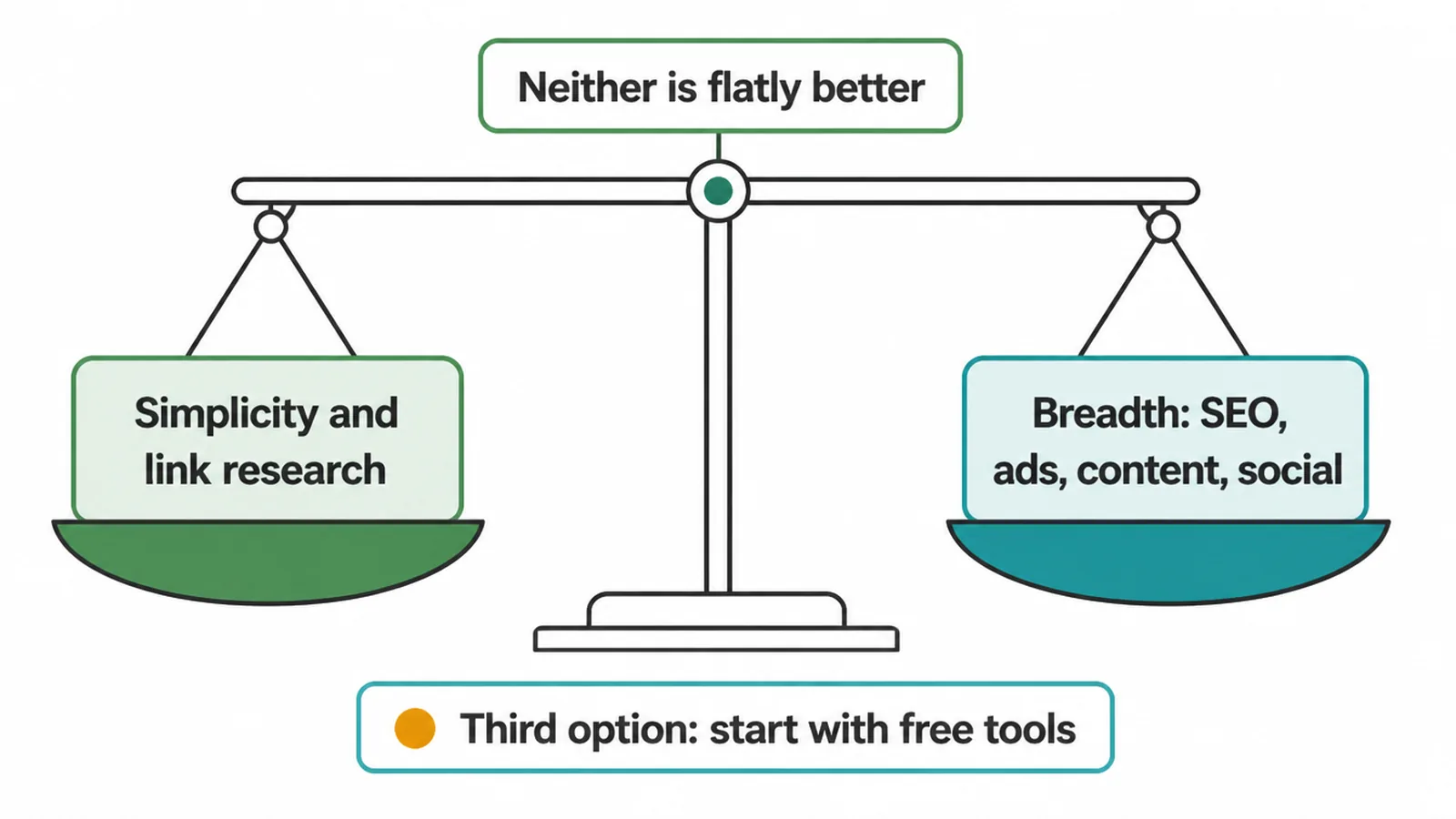
But there is a third answer most comparison posts skip. If you are brand new to SEO, you probably do not need a paid tool at all yet. Free tools cover more than you would think. We will get to that near the end, because it could save you a real chunk of money.
2. What Ahrefs is best at
Ahrefs is best at two things: staying simple and finding backlinks. The screens are clean. You can open a report and understand it without a tutorial. For an owner doing SEO between everything else on their plate, that calm interface matters more than any feature list.
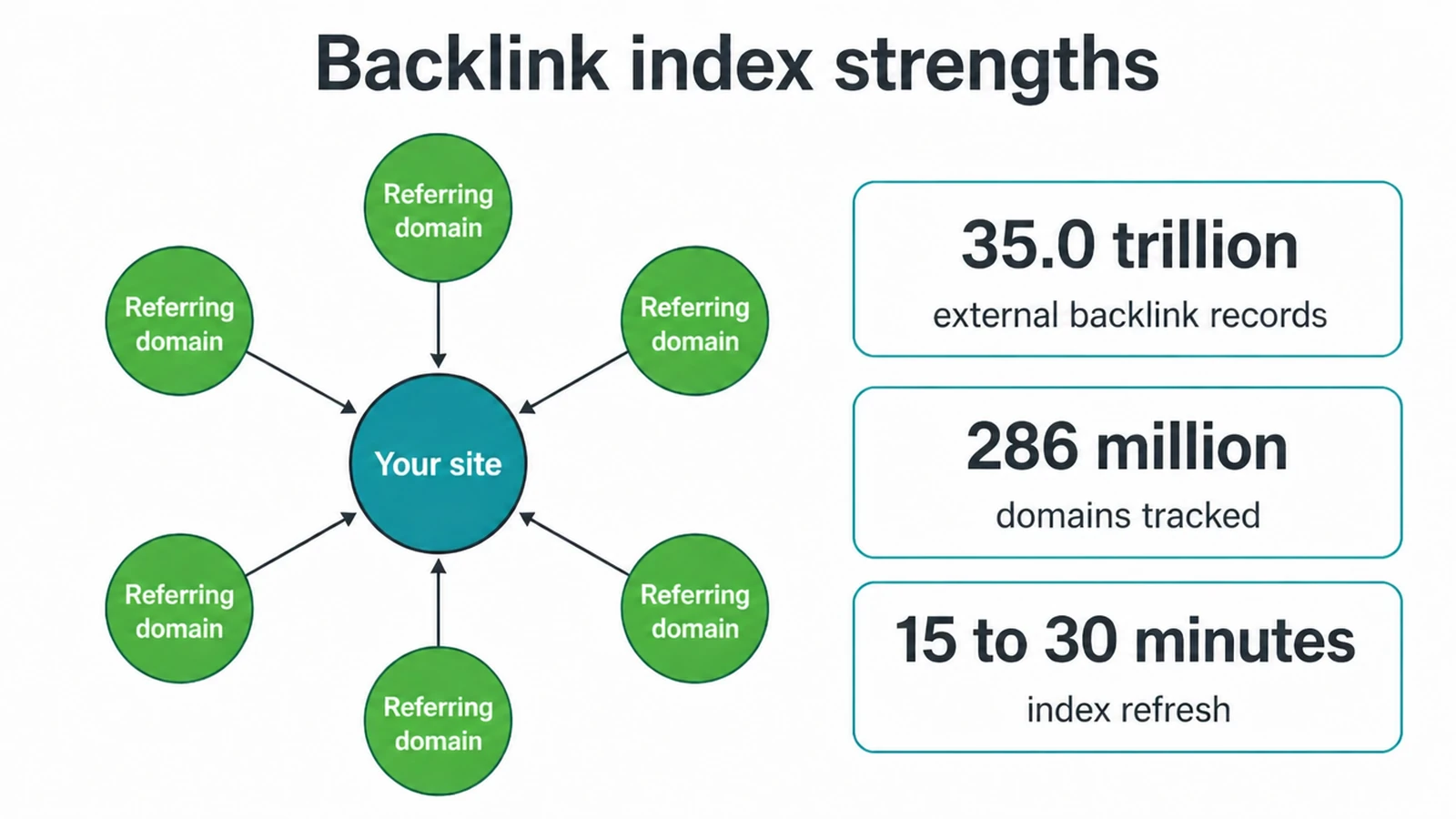
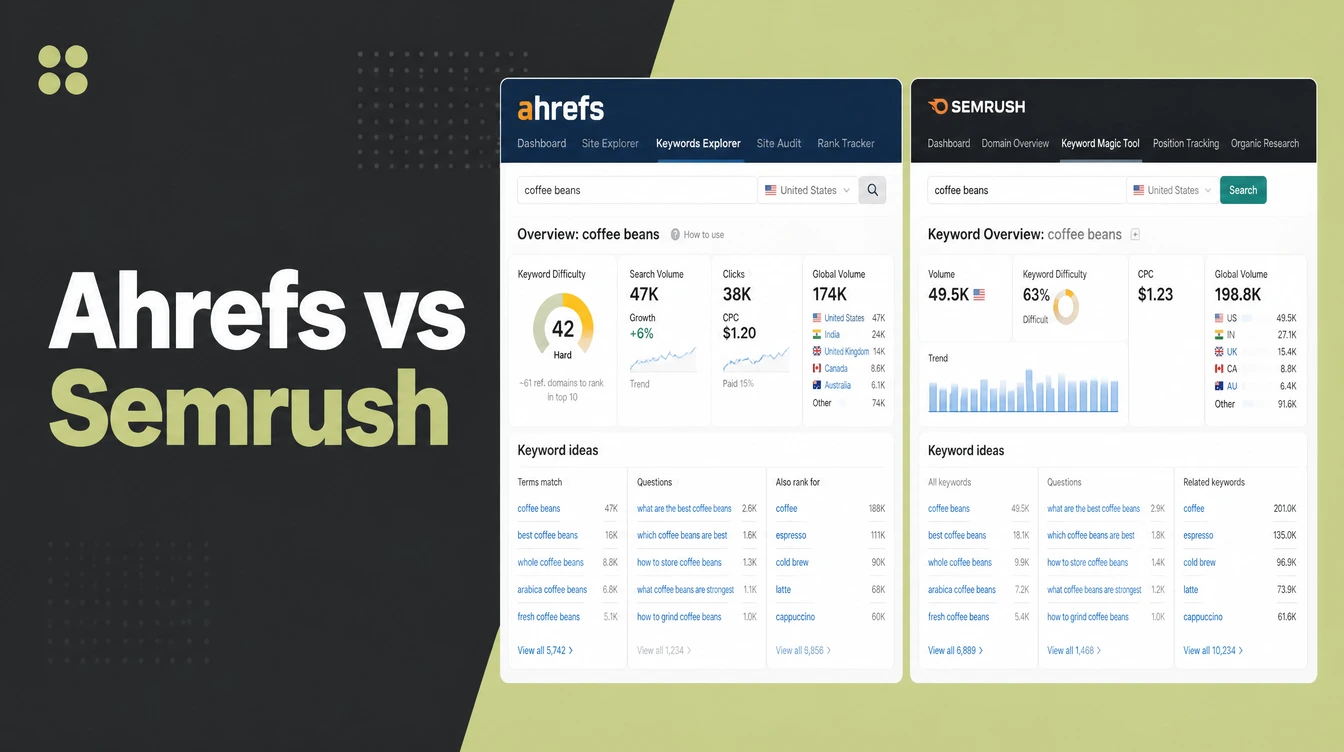
The link database is the real headline. Ahrefs holds 35.0 trillion external backlink records and tracks 286 million domains after vetting (Ahrefs). It also refreshes that index every 15 to 30 minutes, so new links show up fast.
If your main job is to see who links to you, who links to your rivals, and where you could earn links, Ahrefs is the sharpest knife in the drawer. That makes it a strong partner when you start building backlinks the right way.
The trade-off is focus. Ahrefs stays close to organic search and links. It is not trying to be your paid ads tool or your social planner. For a lot of small businesses, that focus is a feature, not a flaw.
3. What Semrush is best at
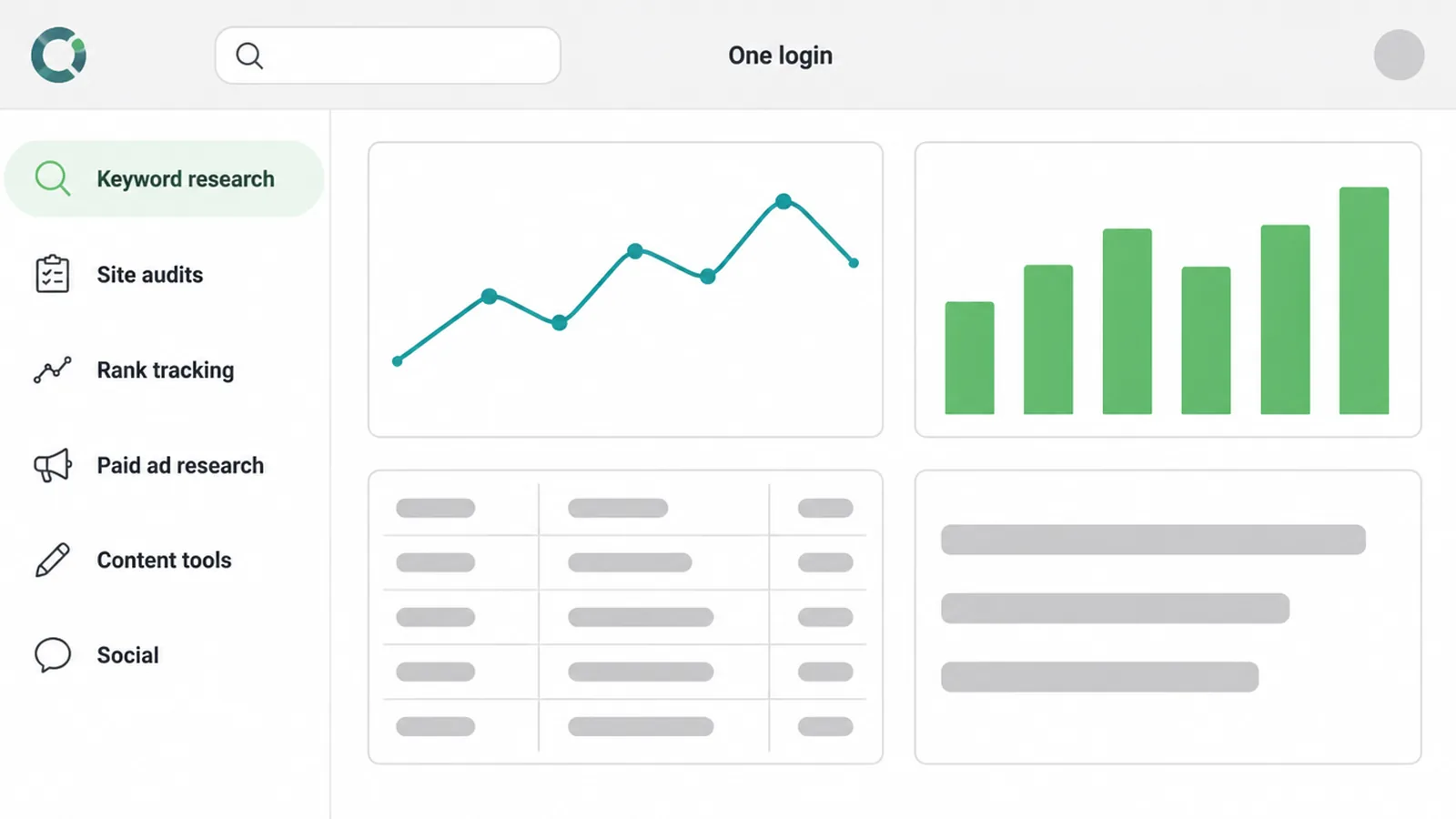
Semrush is best at breadth. It is less a single SEO tool and more a full marketing kit. In one login you get keyword research, site audits, rank tracking, paid ad research, content tools, and social features. If you want fewer subscriptions and one place to look, that is the pitch.
The data behind it is huge. Semrush holds 43 trillion backlinks and crawls around 10 billion pages daily, and its keyword database covers 28.8 billion keywords across 142 geographic databases (Semrush).
For a business that runs both organic search and paid ads, having ad data sit right next to keyword data is genuinely handy. It helps you connect what you rank for with what you pay for, which feeds smarter SEO work.
The trade-off is the busy interface. More tools means more menus, more reports, and more chances to feel lost on day one. Semrush rewards you once you learn it, but the start is steeper than Ahrefs.
4. Ahrefs vs Semrush, by the job you need done
Forget the brand names for a second. The smart way to compare Ahrefs vs Semrush is to ask which one does the specific job in front of you. Here is a plain breakdown, with no talk of cost, since both move their plans around anyway.
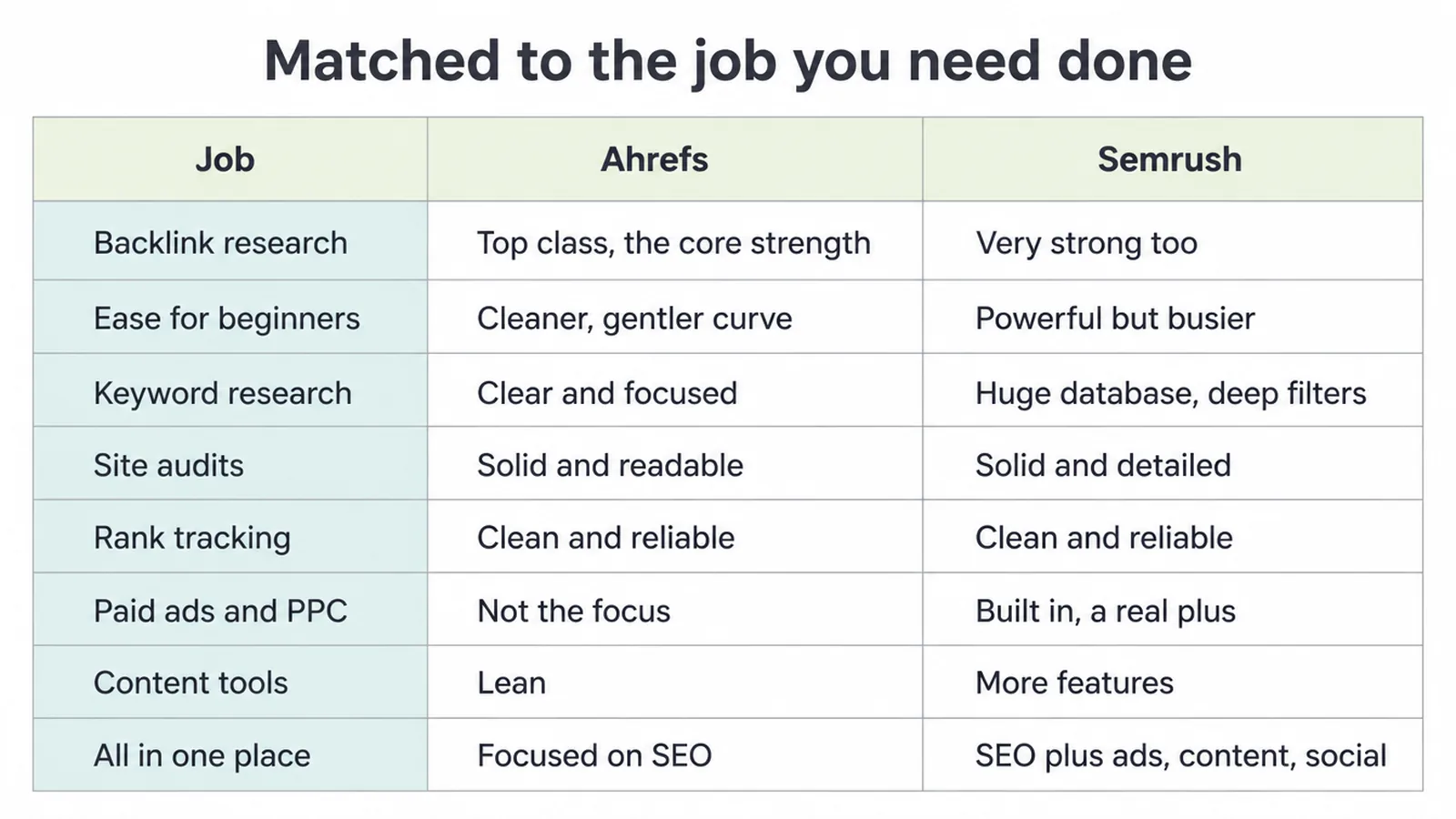
| Job | Ahrefs | Semrush |
|---|---|---|
| Backlink research | Top class, the core strength | Very strong too |
| Ease for beginners | Cleaner, gentler curve | Powerful but busier |
| Keyword research | Clear and focused | Huge database, deep filters |
| Site audits | Solid and readable | Solid and detailed |
| Rank tracking | Clean and reliable | Clean and reliable |
| Paid ads and PPC | Not the focus | Built in, a real plus |
| Content tools | Lean | More features |
| All in one place | Focused on SEO | SEO plus ads, content, social |
Read down the column that matches your work. If most of your rows point one way, you have your answer. If they split, the next section sorts it out.
5. Which should you pick? Three buckets
Most owners fall into one of three buckets. Find yours.
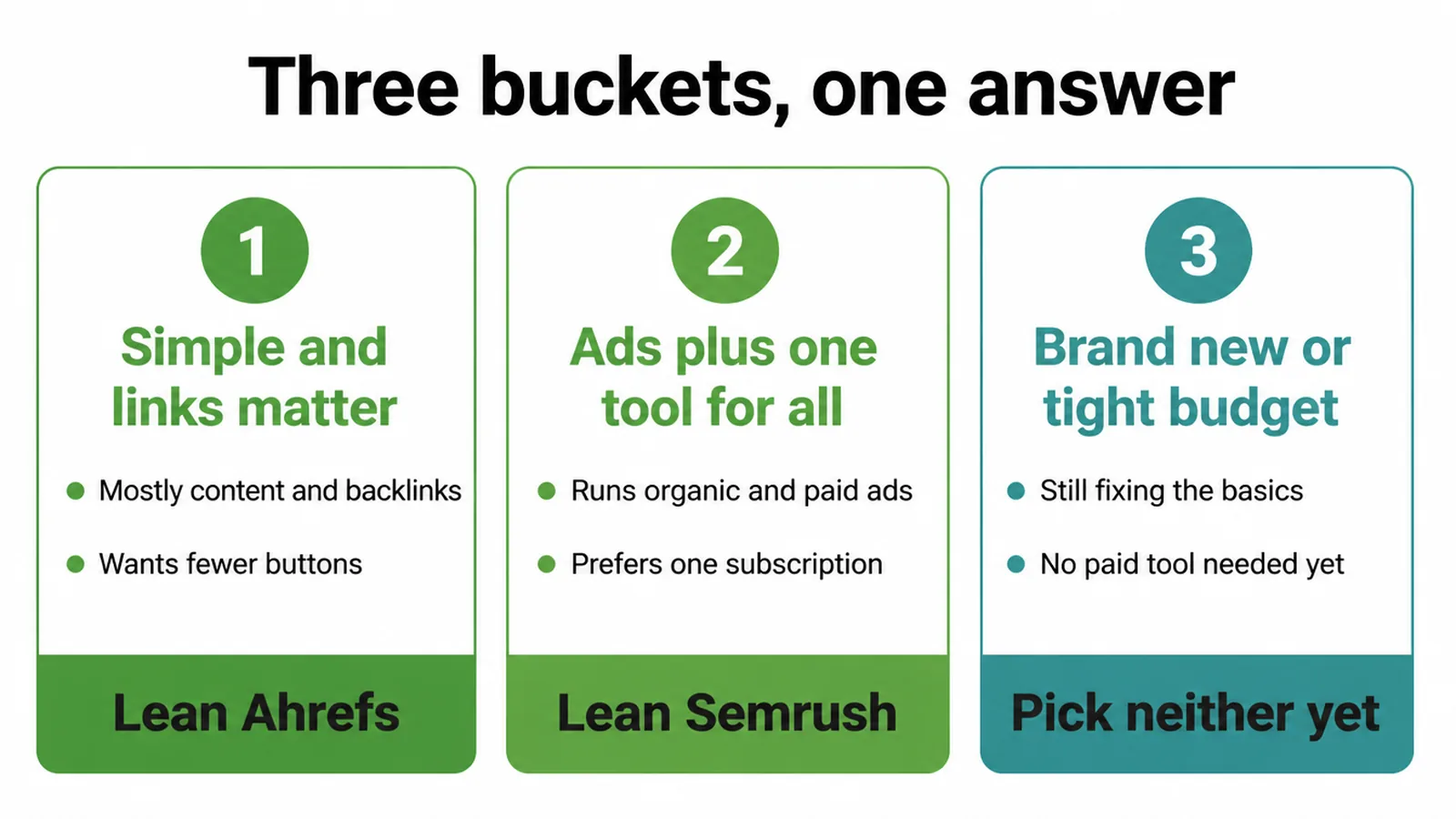
Bucket 1: you want simple and you care about links
Lean Ahrefs. If your SEO is mostly about ranking content and earning backlinks, and you want a tool that does not overwhelm you, Ahrefs fits. It does the link job better than anything and stays out of your way. Pair it with a tight plan and you are set.
Bucket 2: you run ads and want one tool for everything
Lean Semrush. If you do organic search and paid ads, and you would rather pay for one big tool than three small ones, Semrush is the better home. The breadth pays off when you are juggling search, ads, and content from a single dashboard.
Bucket 3: you are brand new or on a tight budget
Pick neither yet. This is the bucket most small businesses are actually in. You do not need a paid SEO tool to fix your title tags, write better pages, and earn your first few links.
Start with the free path below, learn the basics, and upgrade only when a paid tool would clearly pay for itself. Our roundup of SEO tools for small business and our guide to the best AI SEO tools both lean on this same idea: buy the tool that matches the job, not the hype.
6. The free-first reality
Here is the part the affiliate reviews tend to skip. You can do a surprising amount of SEO without paying a cent. Before you compare paid plans, work the free layer first.
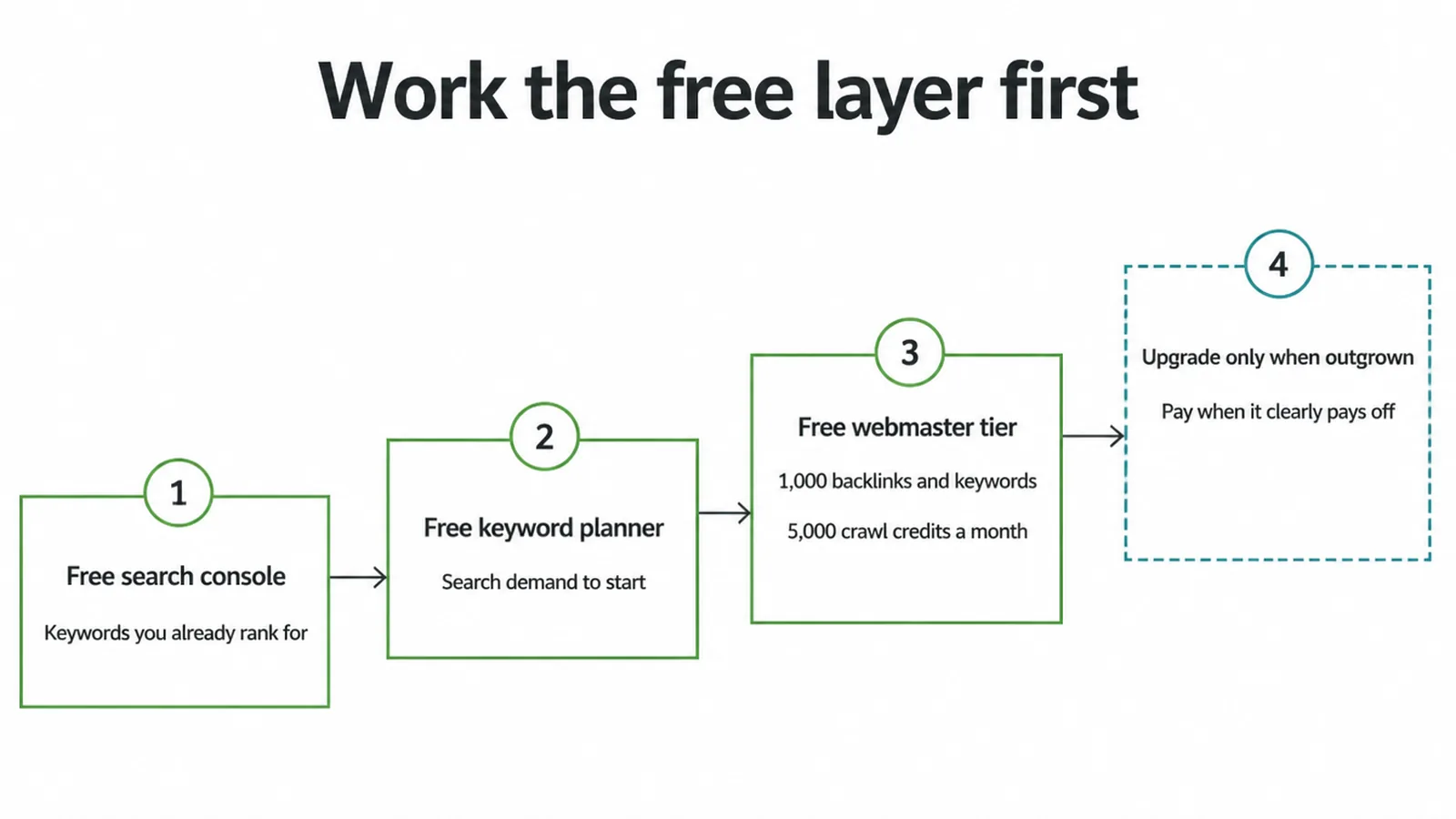
Google Search Console is free and shows the real keywords you already rank for, plus what to fix. If you have never opened it, our walkthrough on how to use Google Search Console gets you going in an afternoon.
Google Keyword Planner is also free and gives you search demand, which is plenty to start your keyword research.
Ahrefs also runs a genuinely useful free tier. Ahrefs Webmaster Tools gives you, per project, up to 1,000 backlinks and keywords, 5,000 crawl credits a month, scans for 170 plus technical issues, and unlimited verified sites (Ahrefs).
For a small site, that covers the early work without a bill. Start here, get comfortable, and only reach for a paid plan when you have outgrown the free one. If you would rather hand the whole thing off, that is what our team is here for.
Frequently asked questions
1. Is Ahrefs or Semrush better?
Neither is flatly better. Ahrefs is simpler to learn and very strong at backlink research. Semrush packs more tools into one place, including paid ads and content features. The right pick depends on what job you need done, not on which name is bigger.
2. Which is better for beginners?
Ahrefs tends to feel friendlier for a first-timer because the screens are cleaner and there is less to wade through. Semrush is powerful but busier, so a new owner can feel lost. If you want fewer buttons and a faster start, Ahrefs is usually the gentler door.
3. Which has more backlinks in its database?
Both run huge link databases that update constantly, so they are very close in real-world use. The headline numbers shift over time. For a small site, either one will surface far more links than you could ever review by hand, so this rarely decides the choice.
4. Do I need both tools?
Almost certainly not. Paying for two overlapping tools is a waste for most small businesses. Pick one if you need a paid tool at all. Agencies and large in-house teams sometimes run both, but a single owner doing their own SEO does not.
5. Are there free alternatives?
Yes, and you should start there. Google Search Console shows the keywords you already rank for, and Google Keyword Planner gives search demand. Ahrefs also offers a free webmaster tier for sites you own. These cover the basics before you ever pay.
6. Is Ahrefs easier to use than Semrush?
For most people, yes. Ahrefs keeps fewer features on screen, so the learning curve is shorter. Semrush gives you more, which is great once you know your way around but heavier on day one. Easier depends on whether you value simplicity or breadth.
7. Which is better for a small business?
If you only do SEO and want simplicity, lean Ahrefs. If you also run paid ads and want one tool for everything, lean Semrush. But many small businesses are not ready for either and should start with free tools and a clear plan first.
8. Which is better for paid ads and PPC?
Semrush. It includes ad research and PPC features alongside its SEO tools, so a team running search and social ads gets more in one place. Ahrefs stays focused on organic search and backlinks, so it does less on the paid side.