B2B SEO Strategy: Reach More High-Value Buyers

A B2B SEO strategy targets a whole buying committee and measures pipeline instead of traffic. Map who searches what, build bottom-of-funnel pages first, grow topic clusters, earn links and fix the technical basics. Forrester puts a typical decision at 13 internal stakeholders. Seed Light builds B2B search programmes around real buyers.
Key takeaways: a 13-person, 9-influencer buying committee changes everything
- One B2B deal is a crowd. A typical buying decision now includes 13 internal stakeholders and 9 external influencers (Forrester, 2026). Your pages have to answer all of them.
- Buyers decide before they call you. They contact sellers 83% of the time, often near the end of a long journey (6sense, 2024).
- Build bottom-of-funnel pages first. Comparison, use-case, and proof pages catch buyers who are ready to choose.
- Most buyers want a rep-free path. 67% prefer a rep-free experience (Gartner), so your site has to sell on its own.
- Measure pipeline, not traffic. Track qualified leads and influenced deals.
1. What is a B2B SEO strategy?
A B2B SEO strategy is a plan to get found on search by people buying for a company, not for themselves. It targets a long, quiet research journey done by a whole team.
The aim is qualified leads and revenue, not raw clicks. That single goal changes how you pick keywords, build pages, and measure wins.
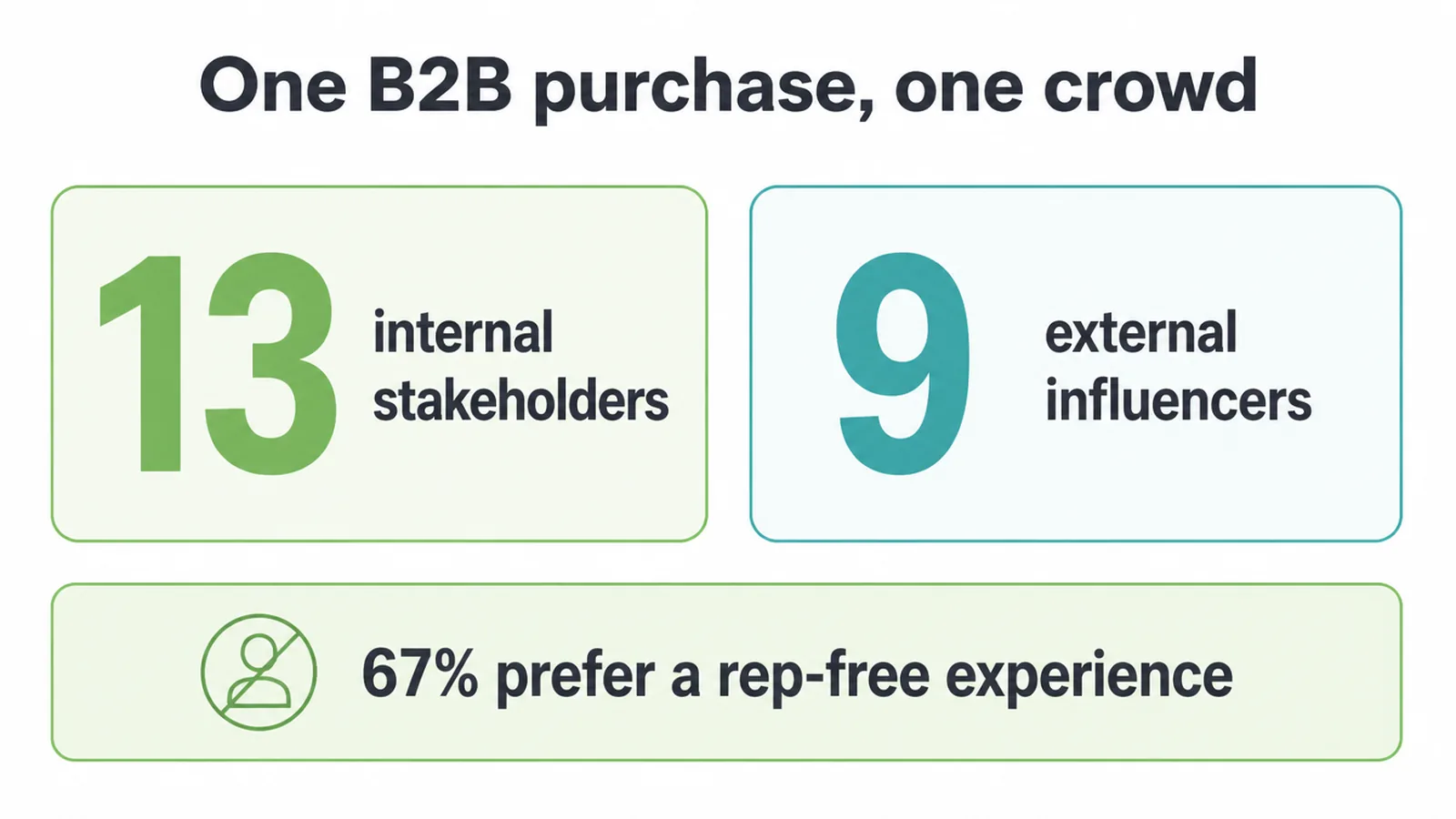
Here is the part most plans miss. One purchase is researched by a crowd. Forrester found a typical decision involves 13 internal stakeholders and 9 external influencers (2026). The boss, the user, the finance person, and the IT person all search different things. Your content has to answer each of them.
And they want to do it without a salesperson hovering. Gartner reports 67% prefer a rep-free experience. So your website is doing the selling while the buyer reads quietly. If you want help turning that into a system, our SEO service builds it around your real buyers.
2. Why B2B SEO is different from B2C
B2B SEO is different because the keywords are low volume but each deal is high value, the cycle is long, and many people decide together. You are not chasing a million casual shoppers. You are reaching a few buyers who will spend a lot, slowly, and as a group. That flips the usual SEO playbook.
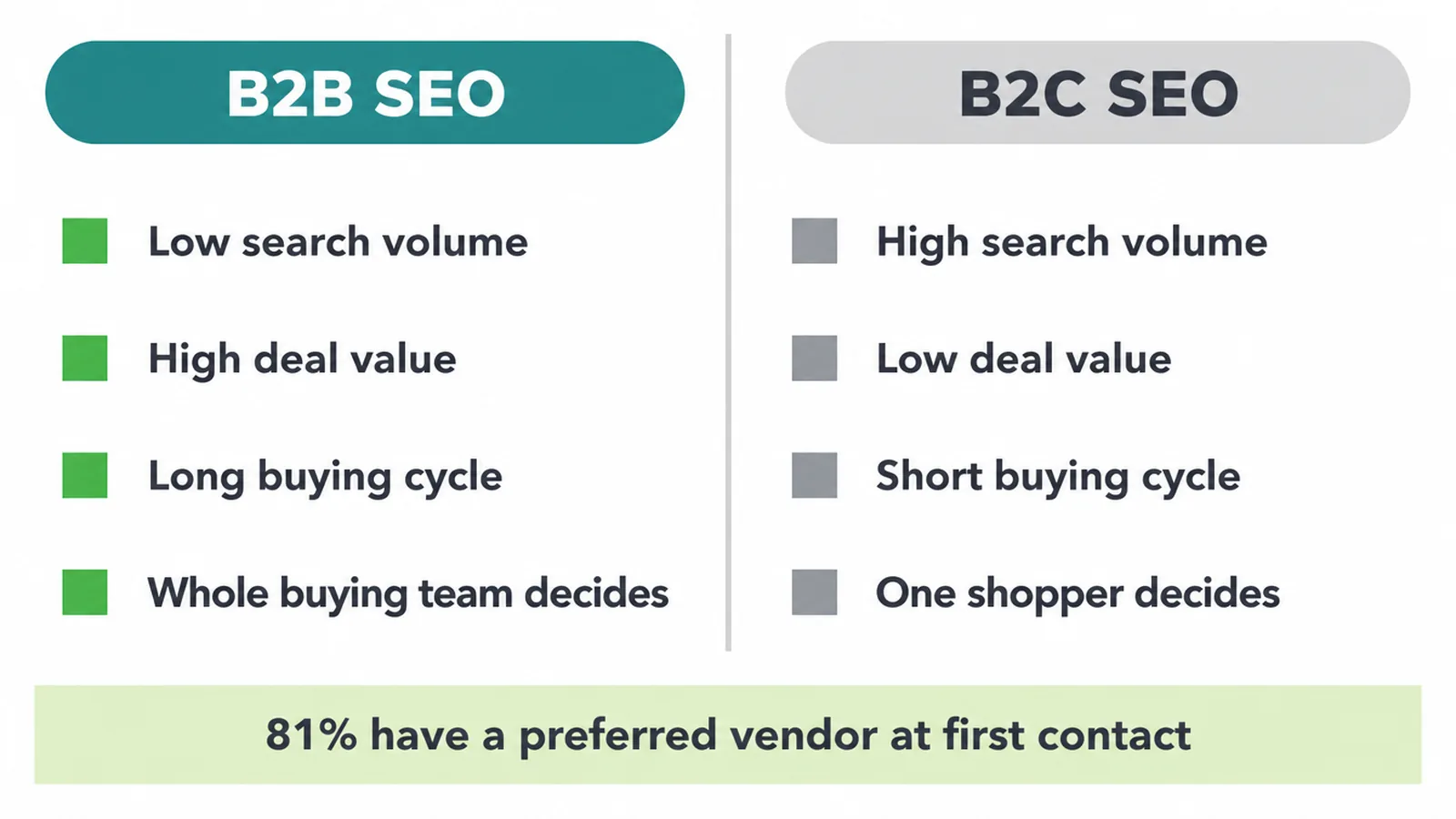
Buyers also lock in their choice early. They reach out to sellers 83% of the time, often after 8 months of an 11-month journey (6sense, 2024). By then most have made up their mind.
81% have a preferred vendor at first contact, and 85% have set their requirements before they ever speak to you. If you are not in their research, you are not in the deal.
Search is how they research. For years, organic search was the largest B2B traffic source, sending 53% of all trackable website traffic (BrightEdge, 2019). If you sell software, the playbook bends a bit further. We cover that in our SEO for SaaS guide, so we will not repeat it here.
3. Step 1: map who searches what
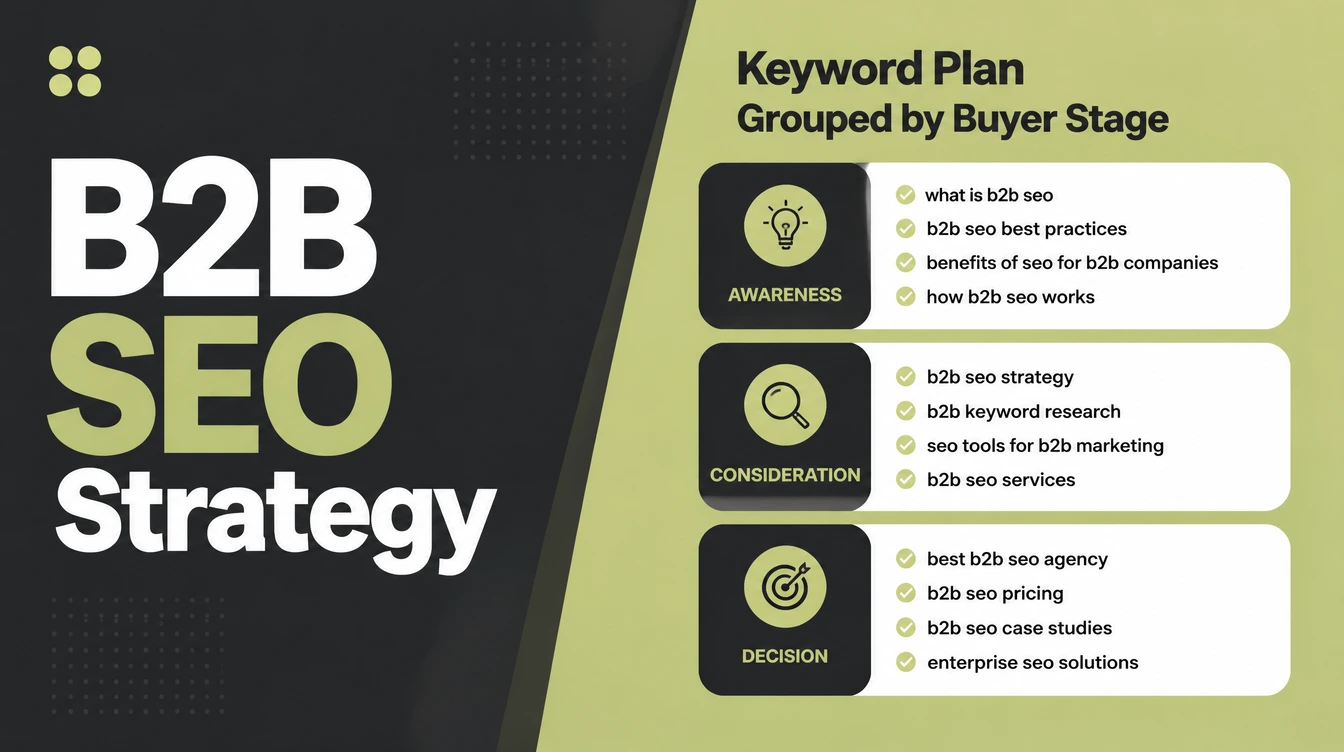
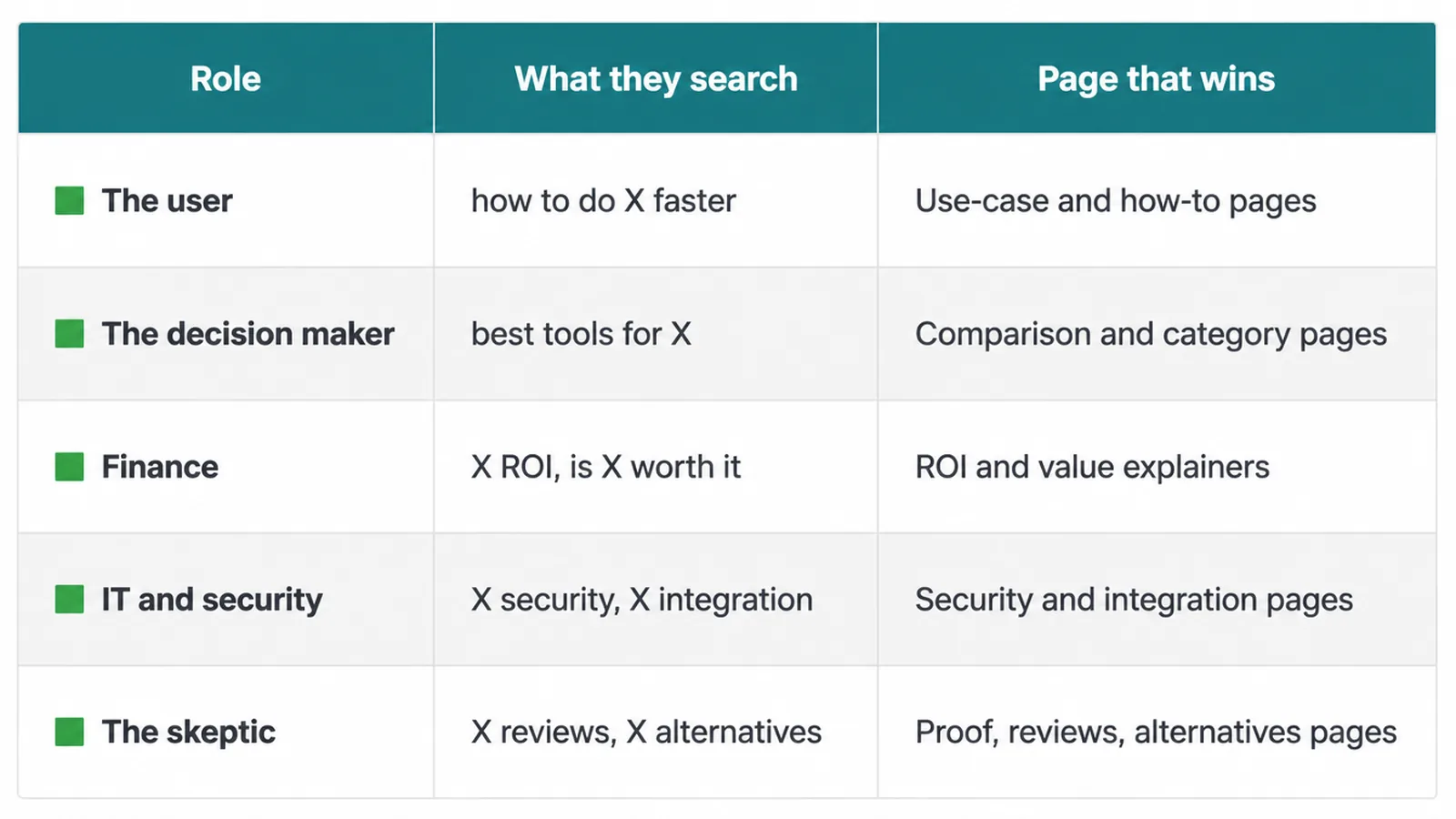
Start by writing down every role on the buying team and the exact questions each one types. This is the foundation of any B2B SEO strategy, because a buying group of 13 stakeholders and 9 outside influencers does not share one search.
The user wants features. Finance wants ROI. IT wants security. Map them, then build a page for each.
Buyers also pull from many places. Gartner found they used an average of 7 information sources during a purchase (Gartner), and AI search is now their starting point (Forrester, 2026). So you want to show up across reviews, comparisons, and your own pages.
| Role | What they search | Page that wins |
|---|---|---|
| The user (does the daily job) | "how to do X faster", feature how-tos | Use-case and how-to pages |
| The decision maker | "best tools for X", "X vs Y" | Comparison and category pages |
| Finance | "X ROI", "is X worth it" | ROI and value explainers |
| IT and security | "X security", "X integration" | Security and integration pages |
| The skeptic | "X reviews", "X alternatives" | Proof, reviews, alternatives pages |
Need a method for finding those phrases? Our guide on how to do keyword research walks through it step by step.
4. Step 2: build bottom-of-funnel pages first
Build your bottom-of-funnel pages before any blog posts, because they catch buyers who are ready to choose. Since buyers research alone and decide early, these pages do the selling. They are also the fastest way to turn rankings into real leads. Start here, then work backwards to broader topics.
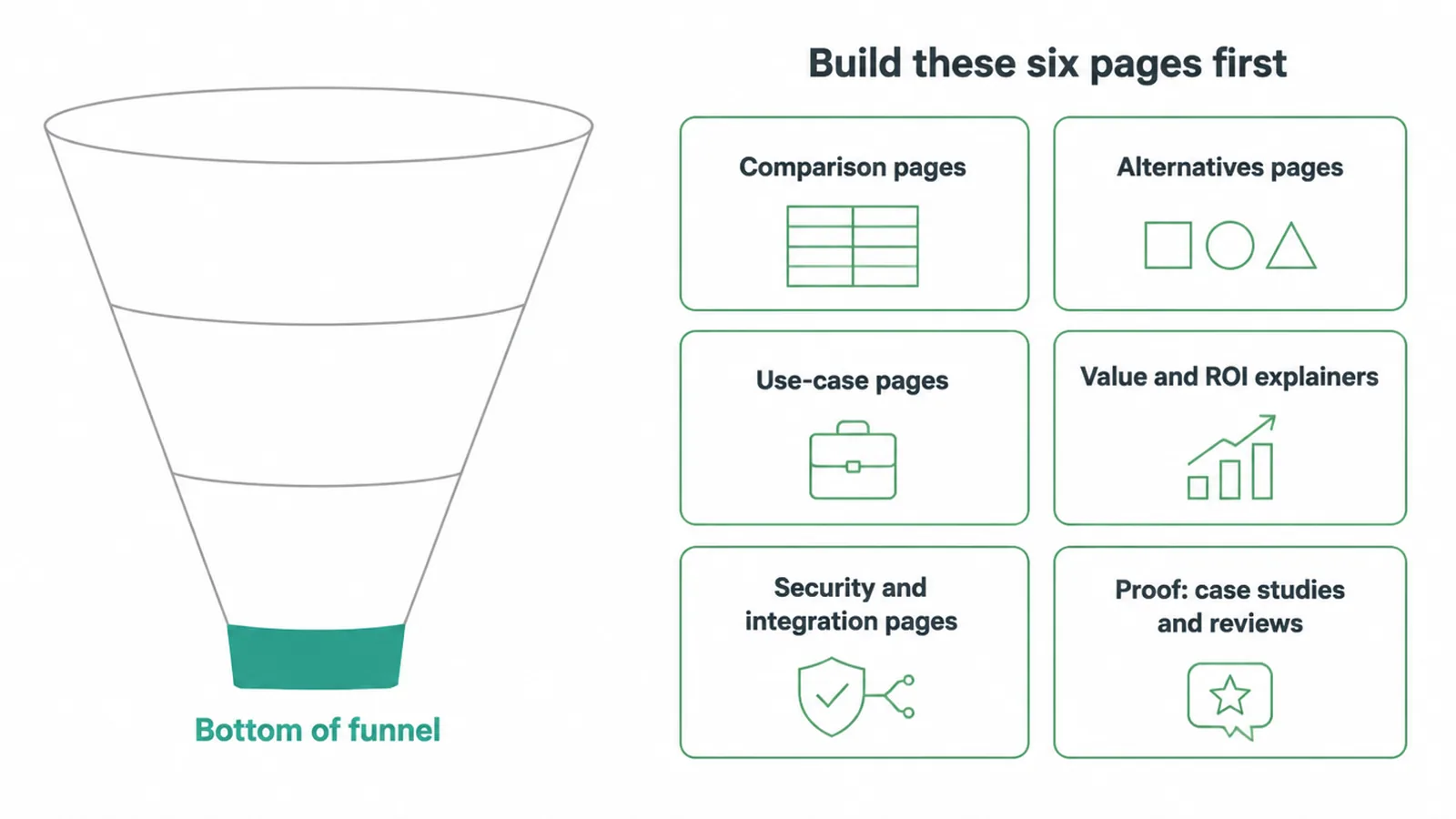
The pages that earn deals are simple to name. Comparison pages ("you vs a rival"). Alternatives pages ("best options for X"). Use-case pages ("X for finance teams"). Value or ROI explainers. Security and integration pages. And proof: case studies, reviews, and results. Each one answers a buyer who is almost decided.
Write these pages honestly. Buyers can smell a sales pitch, and they are checking many sources. Give clear answers, real numbers where you have them, and a plain way to get in touch. The buyer who reads a strong comparison page is often one click from becoming a lead.
5. Step 3: build clusters around the buying committee questions
Once your money pages are live, grow clusters of content around each core topic so search engines see you as an authority. A cluster is a hub page on a big topic, linked to many smaller posts that answer specific questions. This depth helps you rank for the broad terms and the long-tail ones.
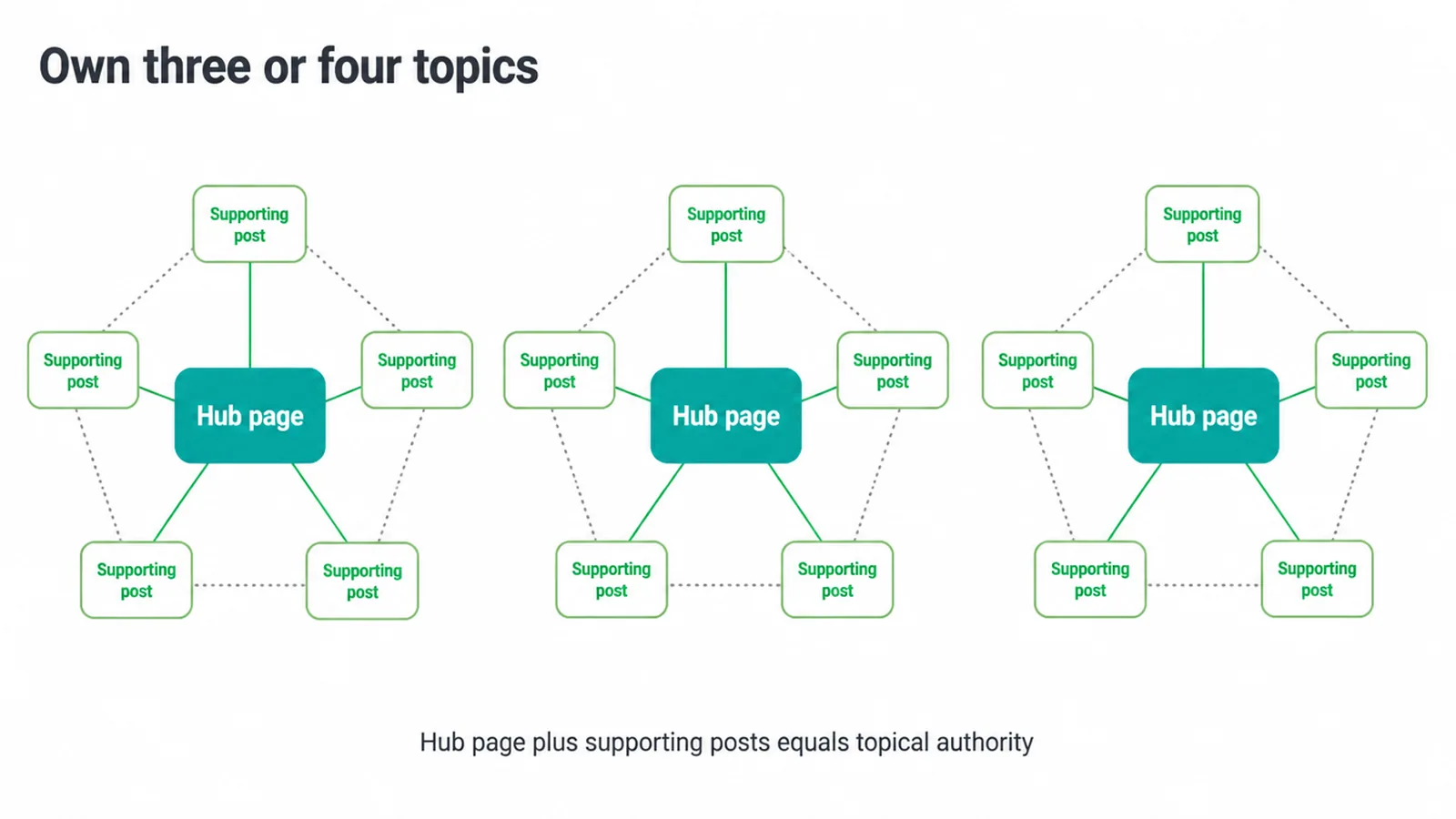
Pick three or four topics you want to own. For each, write one strong hub page, then a set of supporting posts that link back to it and to each other.
Cover the topic so well that a buyer has no reason to leave. Plan the order so you are not writing at random. A simple content calendar keeps the clusters moving and stops gaps.
Clusters take patience. They pay off because they pull in buyers at every stage, then feed them toward your bottom-of-funnel pages. One good cluster can rank for dozens of related searches over time.
6. Step 4: earn links the B2B way
Earn links by being genuinely useful and quotable, not by buying spam. Links tell search engines your pages are trusted, and B2B has its own routes to get them. Real expertise, original data, and partner relationships do the heavy lifting here. Cheap tricks get you penalised.
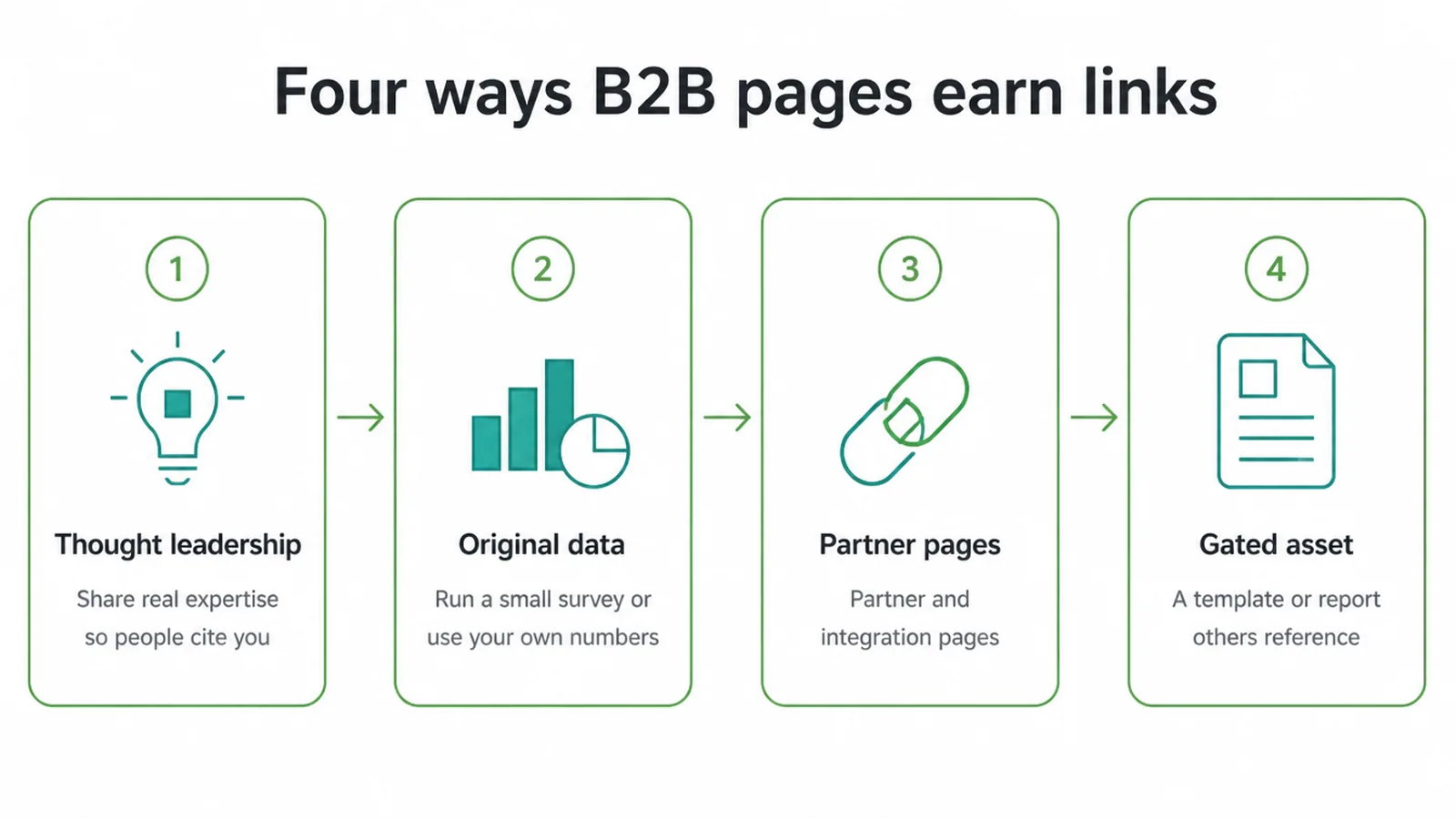
The methods that work are the ones a busy expert can sustain. Share real thought leadership on LinkedIn so people cite you. Run a small original survey or pull numbers from your own data, because journalists and bloggers love fresh stats.
Build partner and integration pages. Offer a gated asset (a template or report) that others want to reference. Each earns links that AI tricks cannot.
Want the full toolkit? Our pillar on how to get backlinks covers outreach, digital PR, and the tactics worth your time.
7. Step 5: get the technical basics right
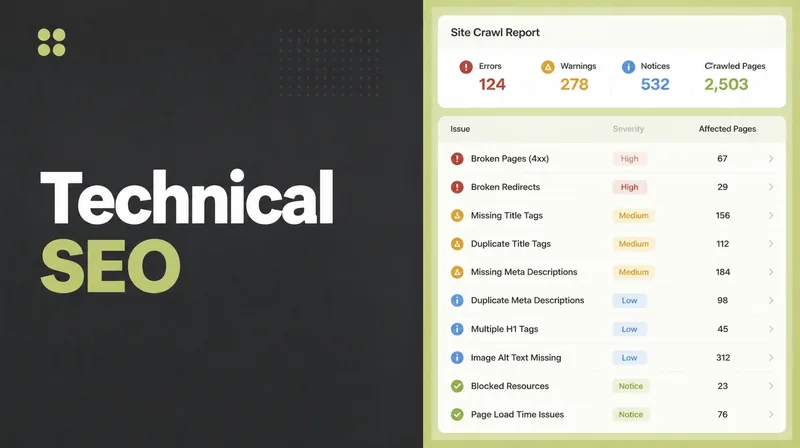
Get the technical basics solid so search engines can crawl, read, and trust your site. None of the steps above matter if Google cannot index your pages or they load slowly. The good news is this is a checklist, not a mystery. Fix it once, then keep an eye on it.
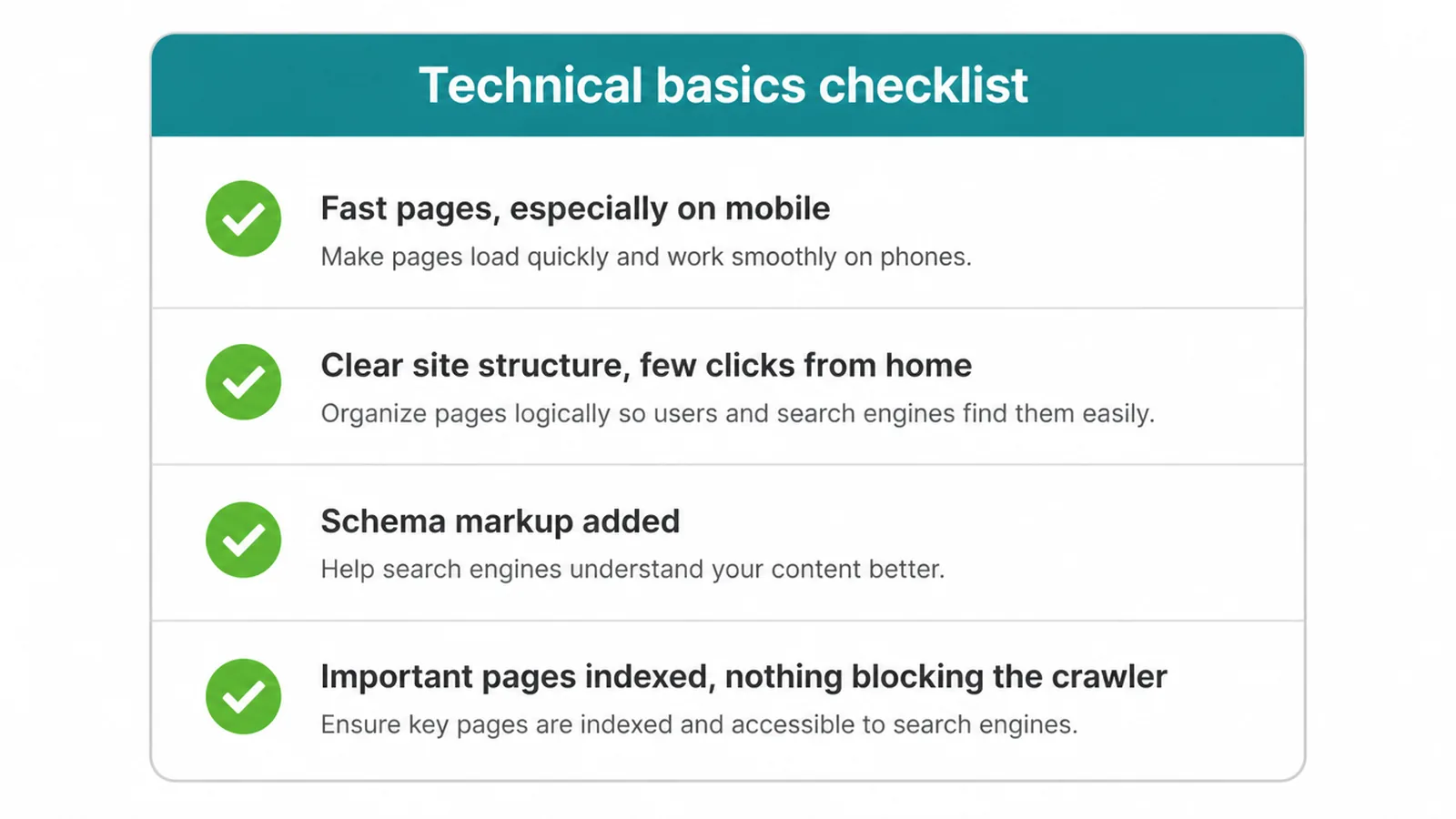
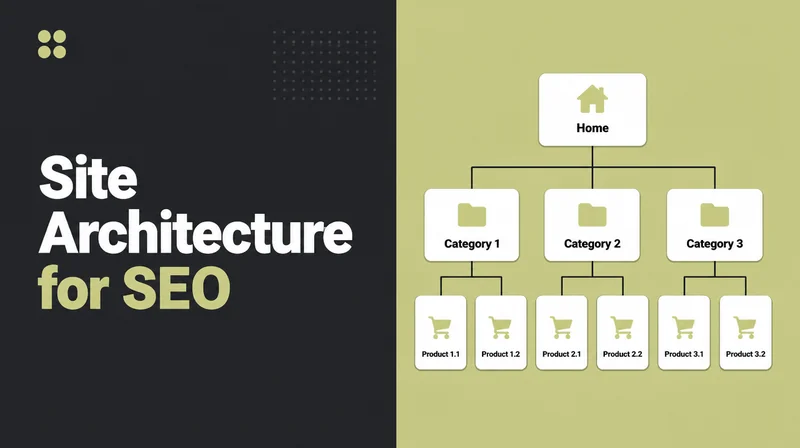
Keep your pages fast, especially on phones, because most buyers will peek on mobile. Use a clear site structure so every page is a few clicks from the home page.
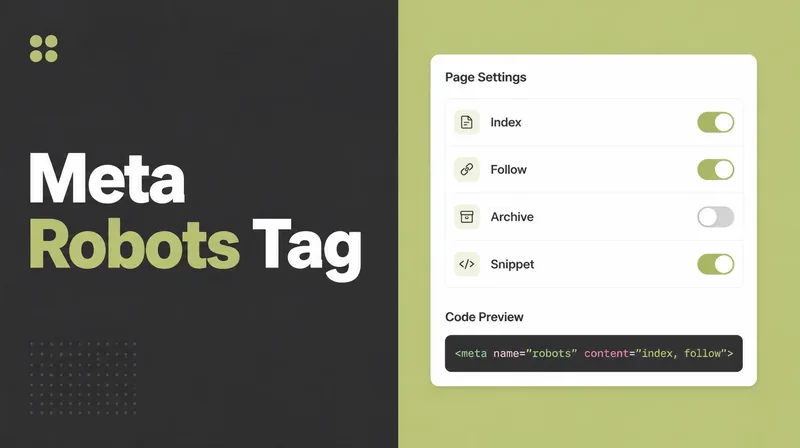
Add schema markup so search engines understand your content. Make sure your important pages are actually indexed, and that nothing blocks the crawler. These basics protect every other thing you build.
8. Step 6: measure pipeline, not traffic
Measure your B2B SEO strategy by pipeline and revenue, not by visits. Traffic feels good, but a busy page that brings no leads is a vanity metric. Track qualified leads, the pipeline your content influenced, and deals closed. That is the only way to prove SEO is paying off.
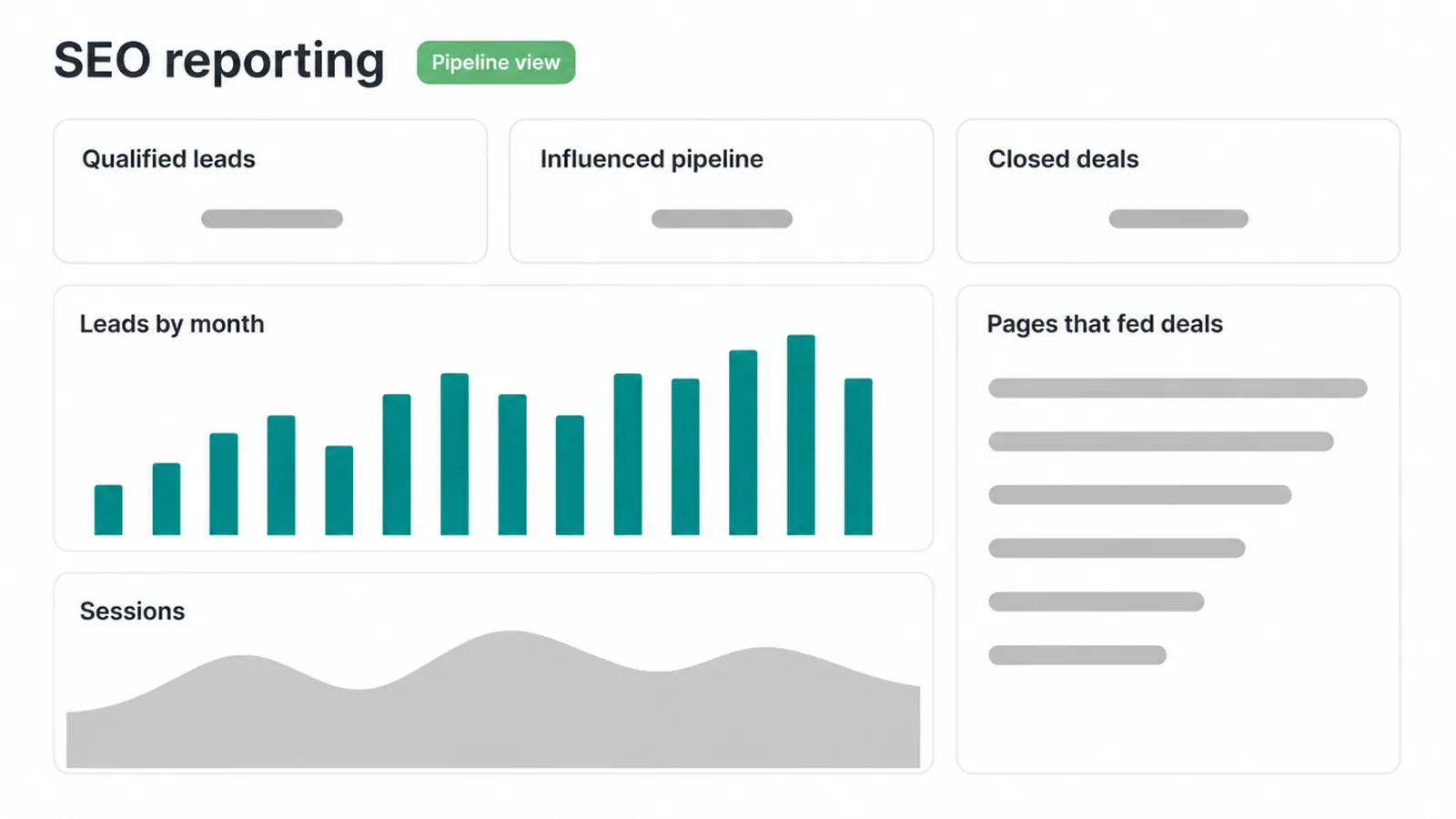
Tie content to outcomes. Which pages did real buyers read before they reached out? Which clusters fed your best deals?
Buyers still want a human in the mix: Gartner found 69% prefer to validate AI-generated insights with sales reps. So your job is to feed both the buyer's research and the sales conversation that follows.
9. Does B2B SEO still work in the AI era?
Yes, B2B SEO still works, but the job has shifted. Buyers now start with AI search, then check what it tells them. Your aim is to be the clear, trusted source that both search engines and AI tools quote back to those buyers. The plan above does exactly that.
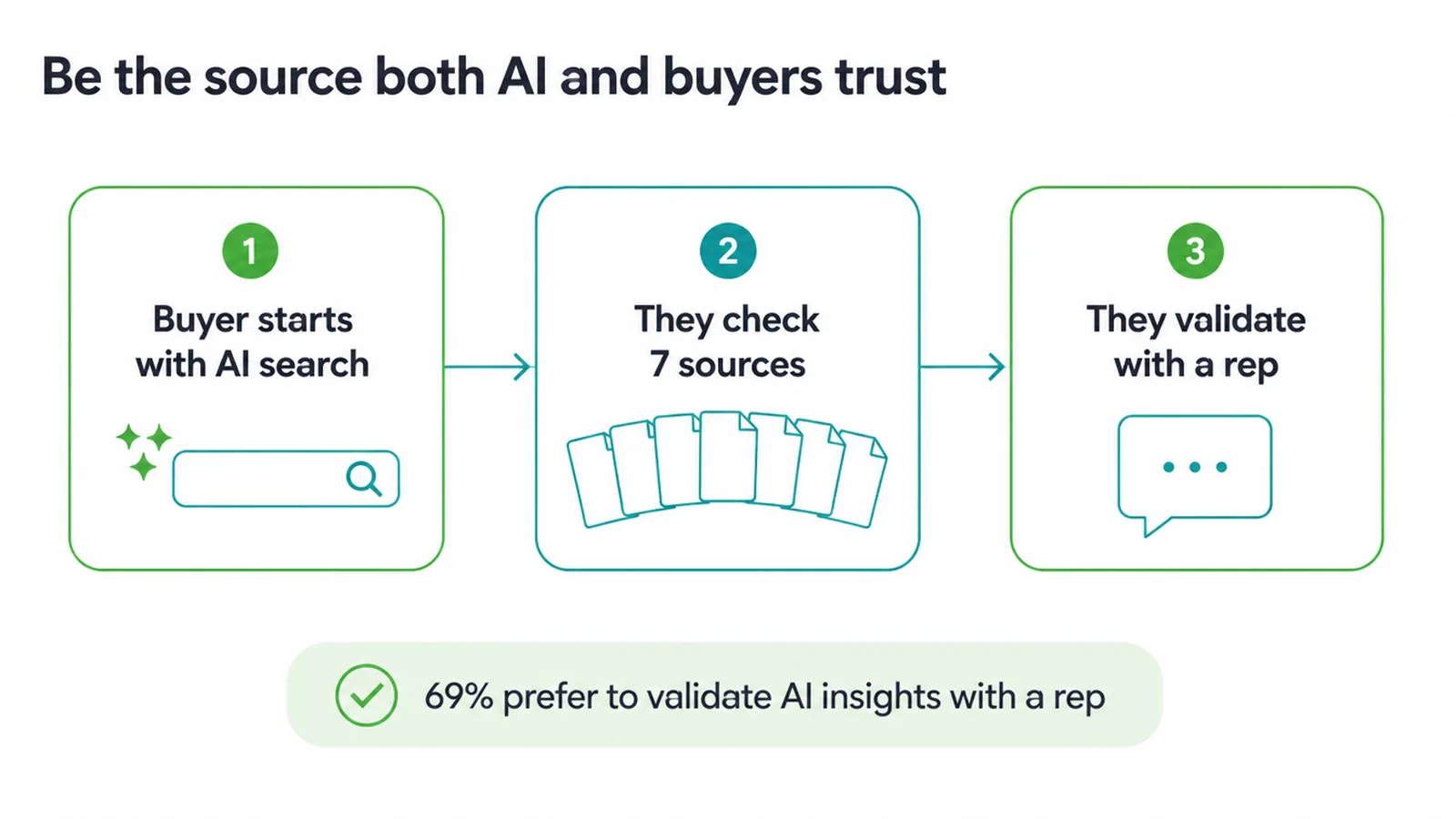
Remember, buyers do not trust AI blindly. 69% prefer to validate AI insights with a rep (Gartner), and they pull from 7 sources on average. Clear, honest, well-structured pages win in this world, the same as before. When you are ready to build it, talk to us.
10. How we built the Better B2C site for B2B search
A worked example from our own client list. Better B2C is a registered non-profit that runs a free online business directory. We built its website with the directory and non-profit mission explained first, clear routes to search the directory, register a business free or support the organisation, and clean page structure with real headings that help search engines read the offer.
B2B SEO frequently asked questions
1. What is B2B SEO?
B2B SEO is the work of getting your business found on search by the people who buy for other companies. It targets buyers researching a purchase for their team, often over months. The goal is qualified leads and pipeline.
2. How is B2B SEO different from B2C SEO?
B2B keywords have lower search volume but each deal is worth far more. The buying cycle is long, and many people weigh in, not one shopper. So B2B SEO leans on bottom-of-funnel pages, proof, and content that answers a whole buying team.
3. How do B2B companies do SEO?
Map the questions each role on the buying team types into search. Build bottom-of-funnel pages first (comparisons, use cases, proof). Then grow topic clusters, earn links through real expertise and data, fix technical basics, and measure pipeline.
4. Is SEO worth it for B2B?
Yes, when each customer is high-value. A handful of qualified leads can pay for the whole programme. Buyers research quietly for months before they talk to sales, so ranking for their questions puts you on the shortlist early.
5. How long does B2B SEO take?
Plan for several months to a year before it pays off. Bottom-of-funnel pages can bring leads sooner because they target buyers close to a decision. Topical authority and links build slower but compound over time.
6. What are BOFU pages?
BOFU means bottom of funnel. These pages target buyers ready to decide: comparison pages, alternatives pages, use-case pages, pricing or ROI explainers, security pages, and proof. They turn quiet research into a real lead.
7. What keywords should a B2B company target?
Target the exact phrases each buying role searches: the problem terms, the comparison terms, the integration and security terms, and your category plus best or top. Volume is low, but intent is high, so a few right keywords drive real pipeline.
8. Does B2B SEO still work in the AI era?
Yes. Buyers now start with AI search, but they still validate answers with their own research and with a sales rep. The job shifts to being the clear, trusted source that both search engines and AI tools quote back to buyers.