SEO Strategy for Small Business 2026: A Practical Roadmap

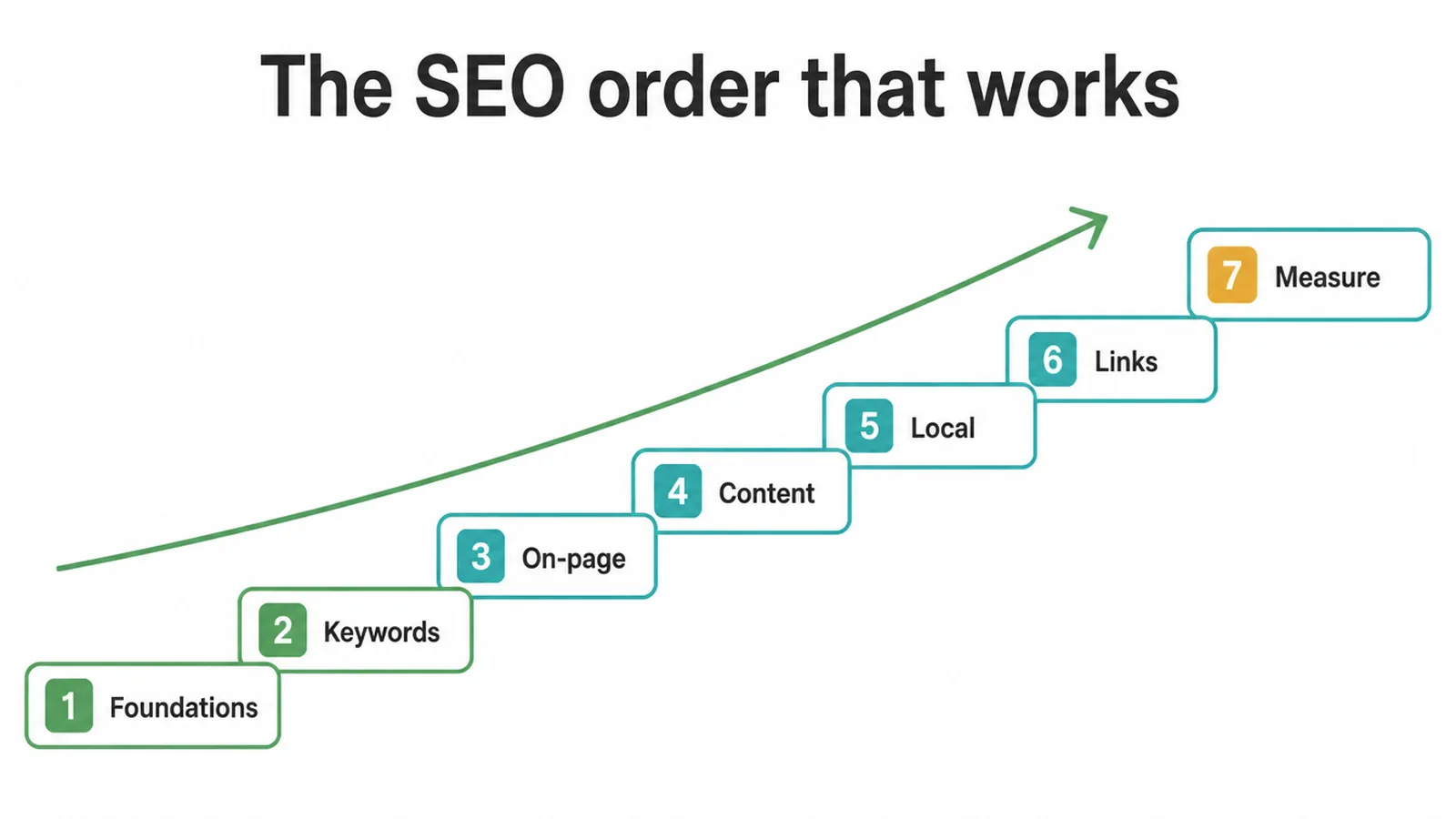
A small business SEO strategy follows an order: foundations, keywords, on-page work, content, local search, links and measurement. The first steps are free. Early movement often shows in three to six months, with fuller results over four to twelve. Seed Light gives owners this same 90-day starting plan.
Key takeaways
- Content pays off big. Content marketing generates three times as many leads as traditional marketing at 62% less cost (Content Marketing Institute), so helpful pages are your best budget tool.
- Order matters. Fix foundations first, then keywords, on-page, content, local, a few links, and measuring. Skip ahead and you waste effort.
- Local is the fastest win. A strong Google Business Profile and good reviews can bring calls before your blog ever ranks.
- It takes time. Early movement often shows in three to six months, with fuller results over four to twelve.
- You can start free. Every first step in this plan costs time, not money.
1. Where do I start with SEO?
The best SEO strategy for small business is to follow a fixed order so you never waste money: foundations first, then keywords, on-page basics, content, local, a few links, and measuring. Most owners skip around and burn time on the wrong thing. You will not, because you have an order.
Here is the surprising part. Only 30% of small businesses use SEO (The Manifest), which means 70% have no plan at all. Yet 74% of small businesses invest in SEO in some form (AIOSEO). The gap is your opening.
Doing the basics well puts you ahead of most of your competitors. If you are starting from zero, the SEO basics every small business should cover is a good first read. Let us walk through the seven steps.
2. Step 1: Get your foundations right
Before anything else, fix the plumbing. Three free things matter most. Set up your Google Business Profile so you appear on Maps. Connect Google Search Console so you can see how Google reads your site. And make sure your site loads fast and works on a phone.
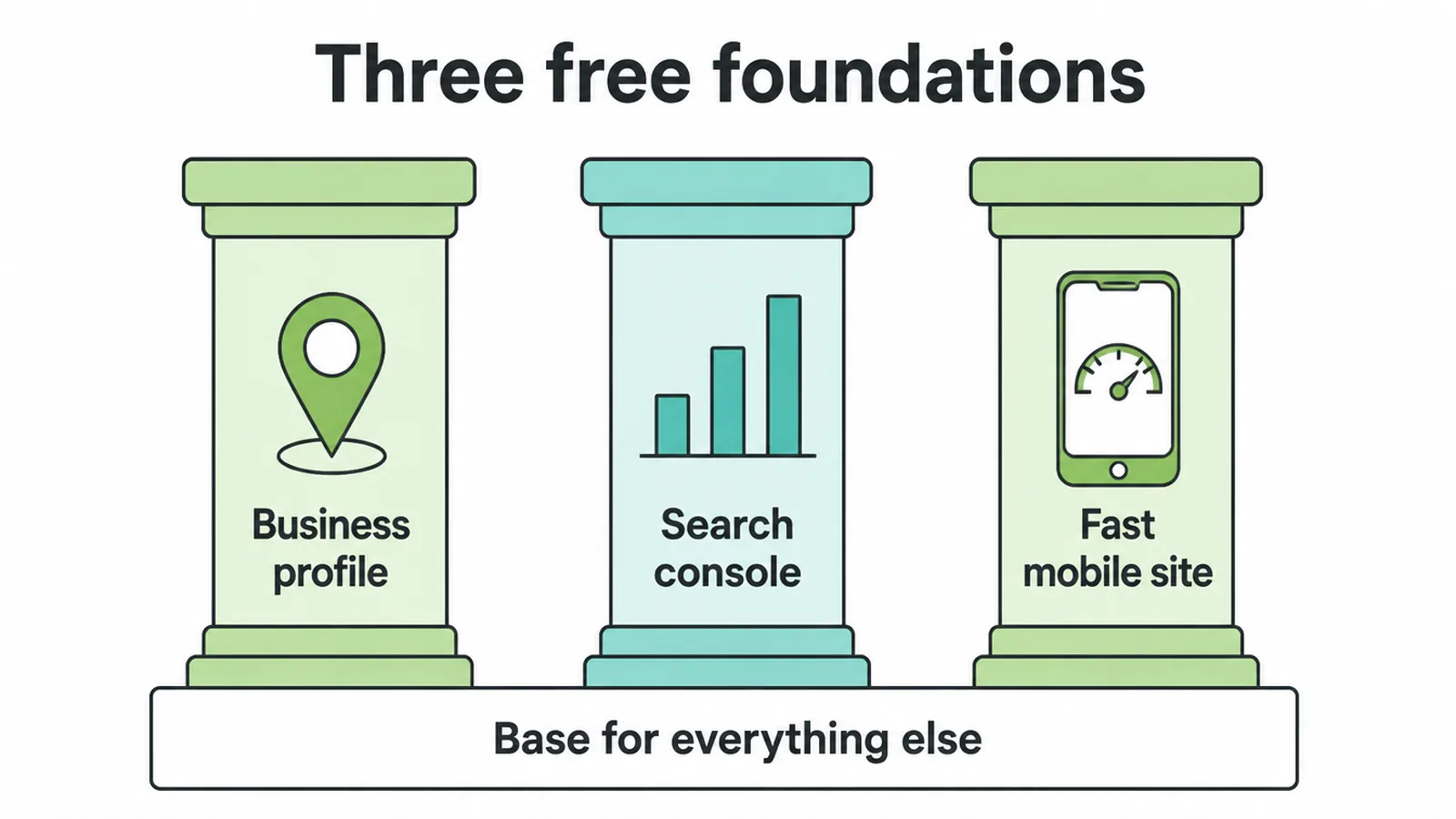
That last one is not optional. About half of web traffic is mobile, so a slow or clunky phone experience can cost you customers. If yours feels heavy, here is how to make a website mobile-friendly.
Get these three right and you have a base that the rest of the plan can build on. If your foundations need a full rebuild, our SEO service can handle the technical side for you.
3. Step 2: Find the right keywords
Keywords are the words people type when they want what you sell. Your job is to find the ones you can actually win. As a small business, you cannot beat big brands on broad terms, so start with low-competition and local phrases that show clear buying intent.
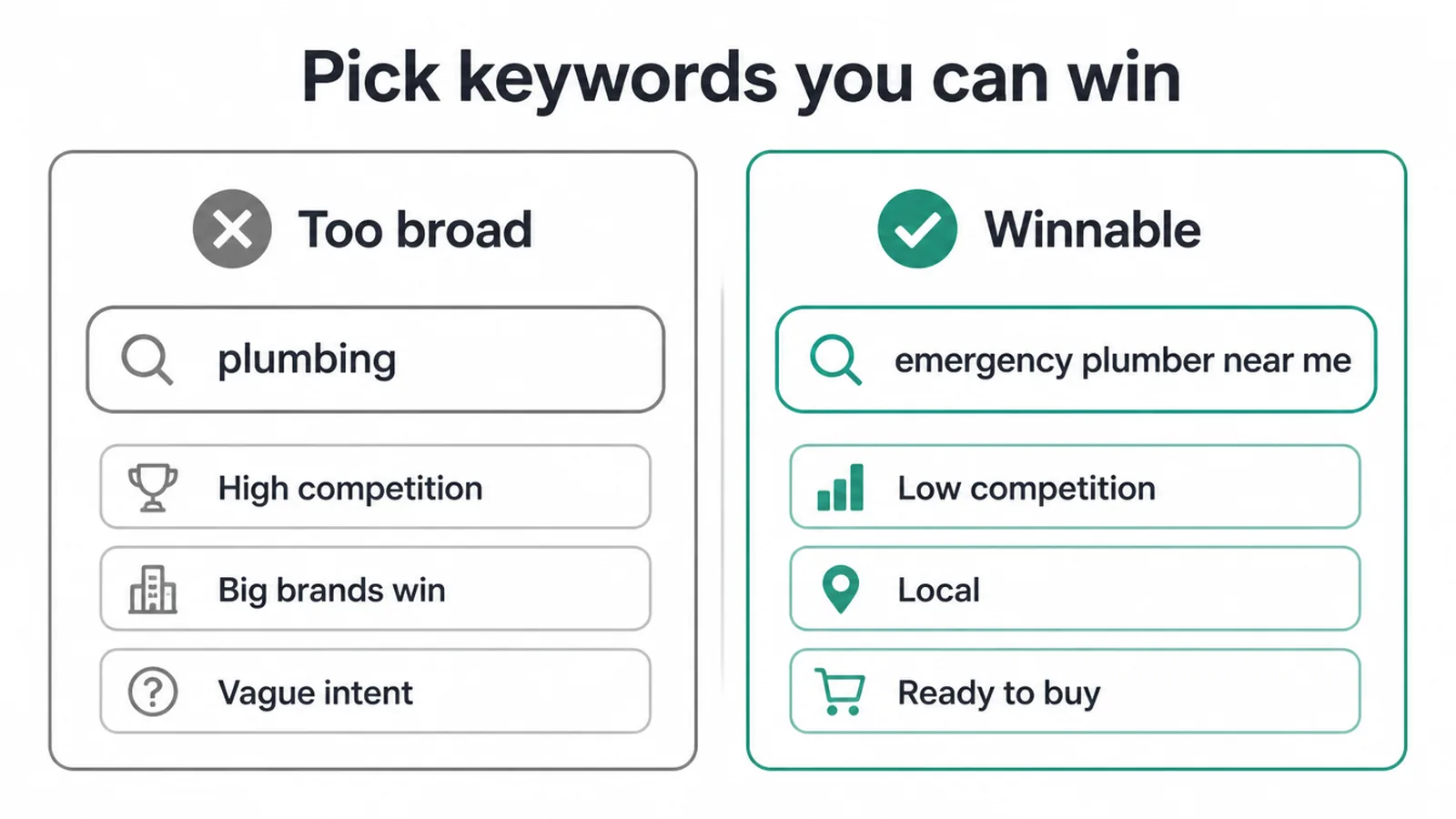
Think about what a ready-to-buy customer would search. "Emergency plumber near me" beats "plumbing" every time, because the searcher wants to act now. Match each keyword to what the person really wants, then build a page around it.
If you have never done this, our guide on how to do keyword research walks you through finding terms with real demand and low difficulty. Pick a short list. You do not need fifty. You need a handful you can win.
4. Step 3: Sort out your on-page basics
On-page SEO is the simple stuff on each page that tells Google what it is about. Give every important page one clear title, a tempting meta description, and a single H1 heading. Then make the page genuinely helpful, not stuffed with keywords.
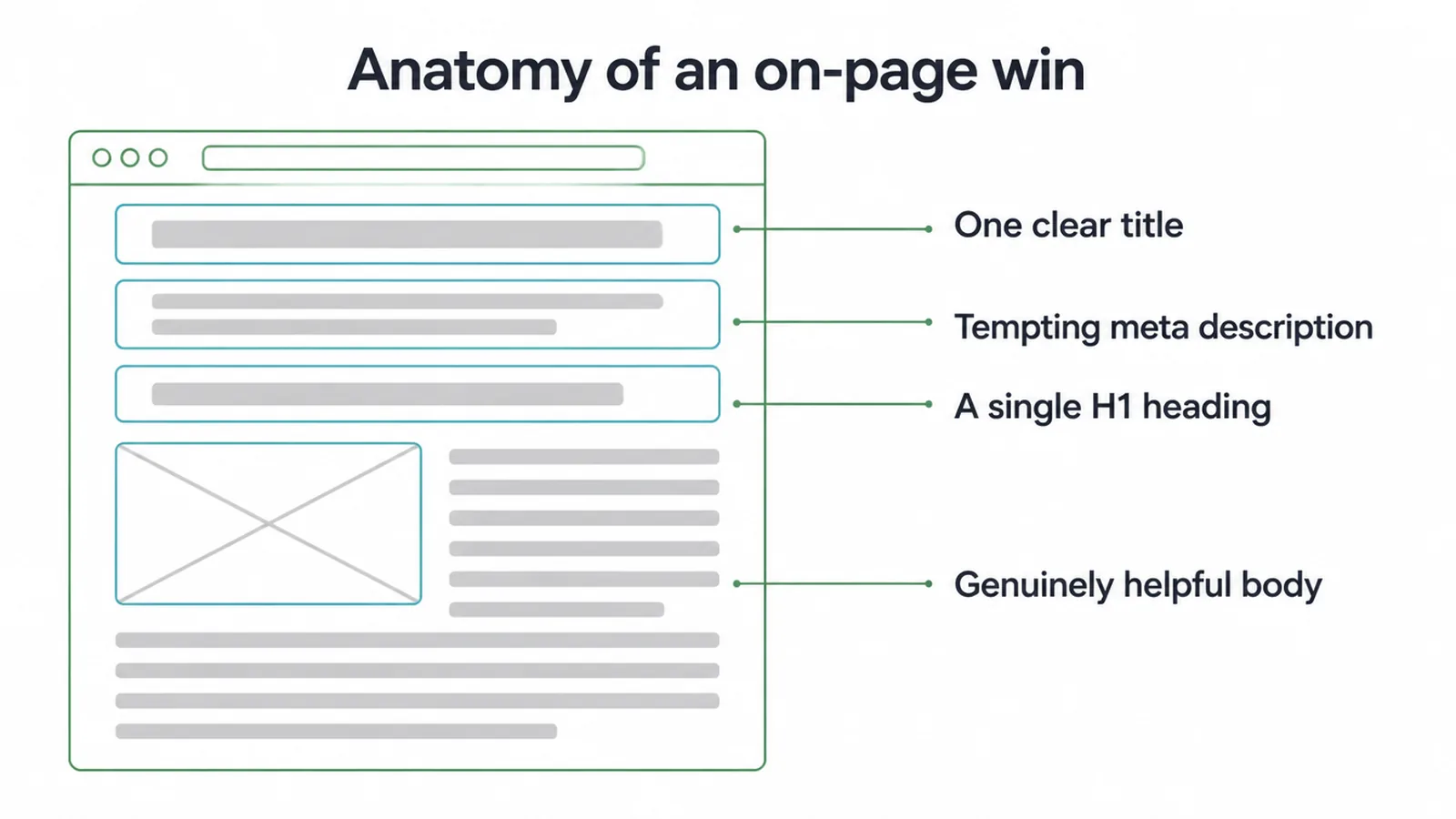
This is the cheapest, highest-payoff work you can do. A clear title and description help your page show up and get clicked. Use our on-page SEO checklist to cover the basics on each page without missing anything.
Write for the person reading, use plain language, and answer their question fully. Google rewards pages that actually help. That is the whole game.
5. Step 4: Publish content at a steady pace
Content is how you rank for more than just your homepage. The trick is consistency, not volume. A little, regularly, beats a burst and then silence. One useful page a month, every month, will quietly grow your reach.
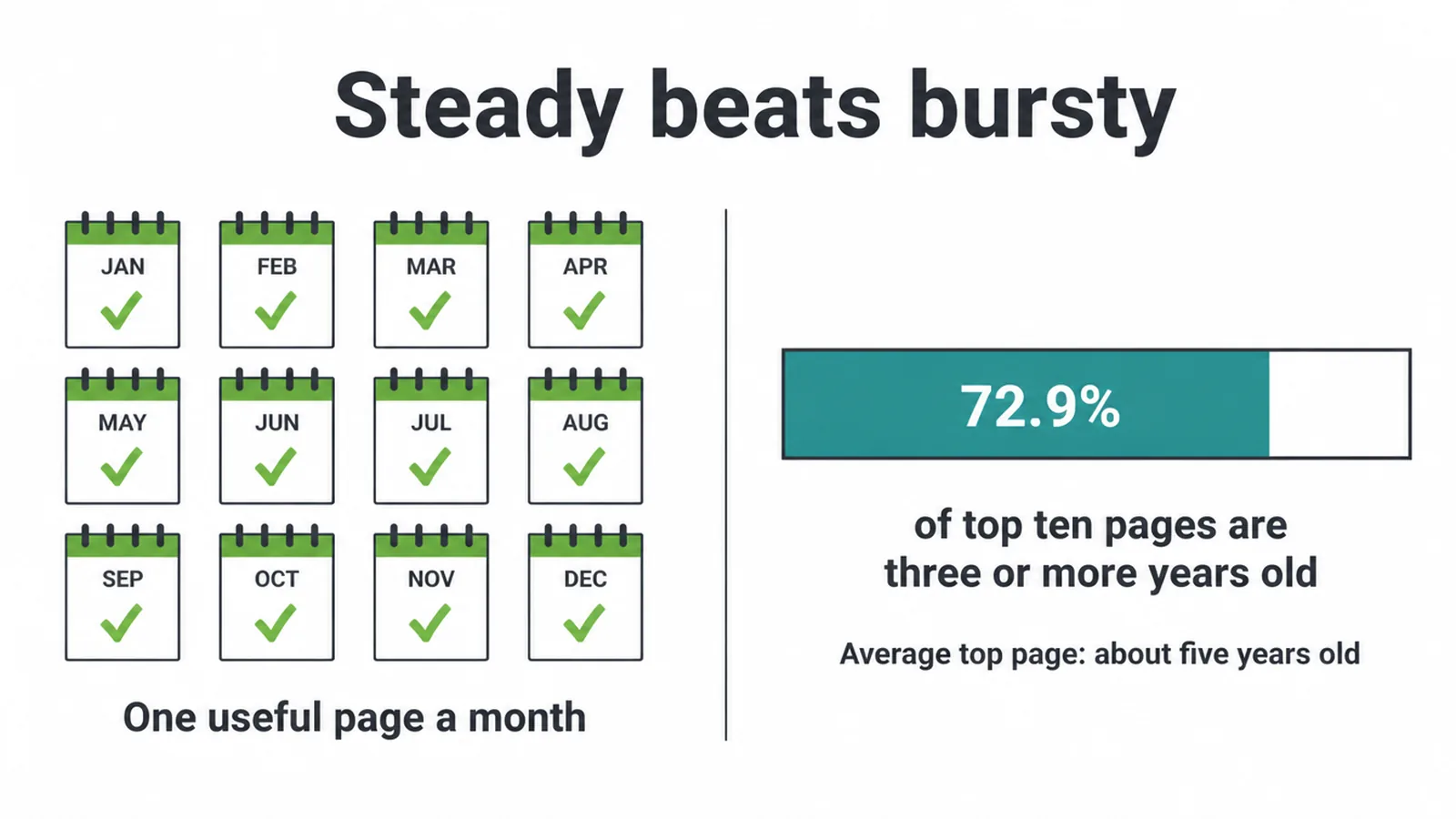
Set realistic expectations here. The average top-ranking page is about five years old, and 72.9% of top-ten pages are three or more years old (Ahrefs). New pages take time to climb, so start now and keep going.
Plan your topics ahead with a content calendar so you never stare at a blank page. Want more ways to climb? See how to rank higher on Google. The owners who win at SEO are simply the ones who did not quit.
6. Step 5: Win local search first
For most small businesses, local SEO is the fastest win, so do it early. Local searchers are ready to act.
76% of people who search for something nearby visit a business within a day (Google via Backlinko), and 46% of all Google searches have local intent. People are searching for businesses like yours right now.
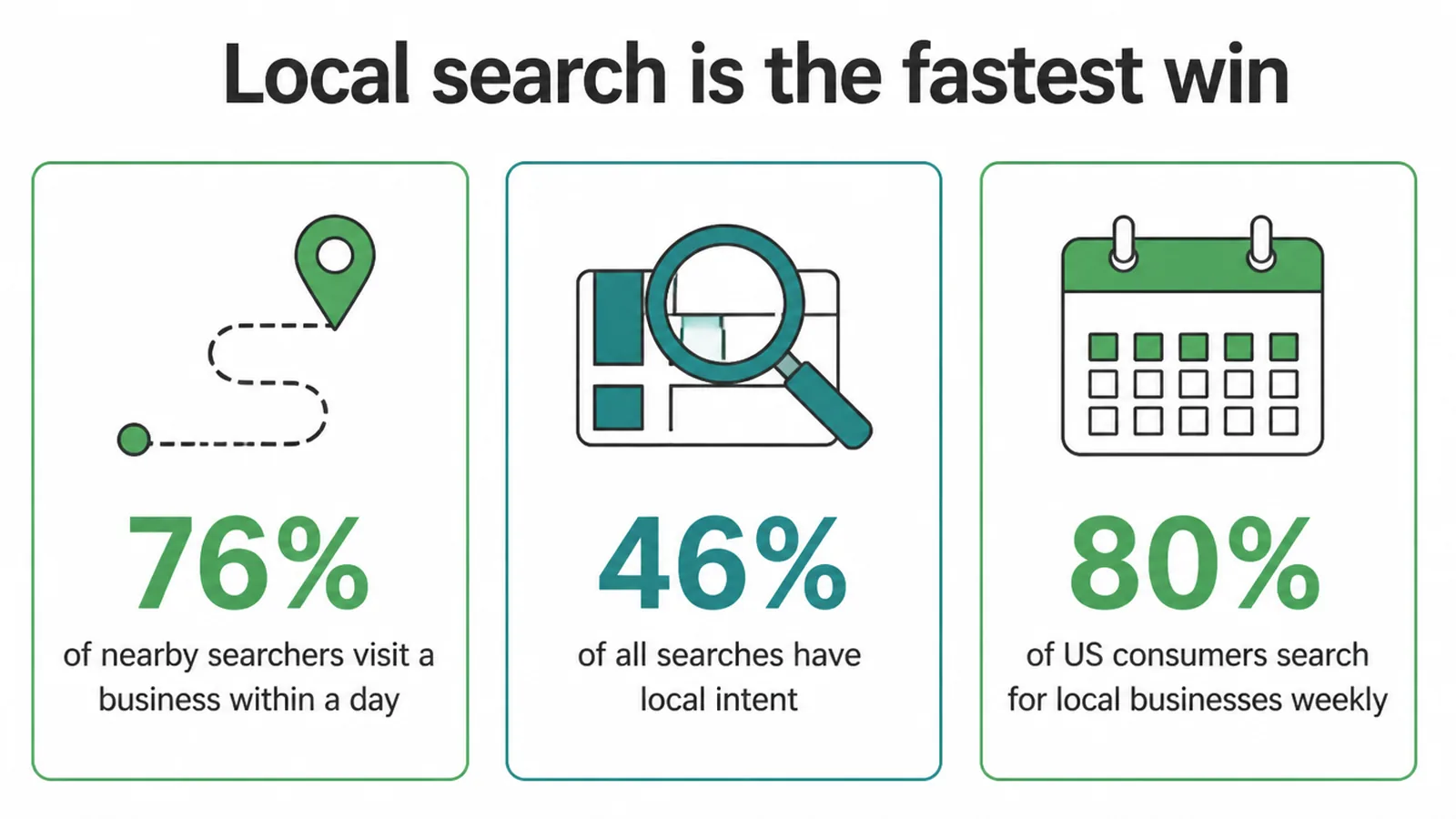
The demand is huge. 80% of US consumers search online for local businesses every week (SOCi via BrightLocal). To capture that, keep your Google Business Profile complete, ask every customer for a review, get your name and address listed correctly across the web, and post updates regularly.
Our full guide on local SEO for small businesses shows you exactly how. This step alone can bring calls before your blog posts ever rank.
7. Step 6: Earn a few good links
Links from other websites tell Google your site is trusted. You do not need hundreds. A few quality links from real, relevant sites beat a pile of junk ones, and chasing cheap spammy links can actually hurt you.
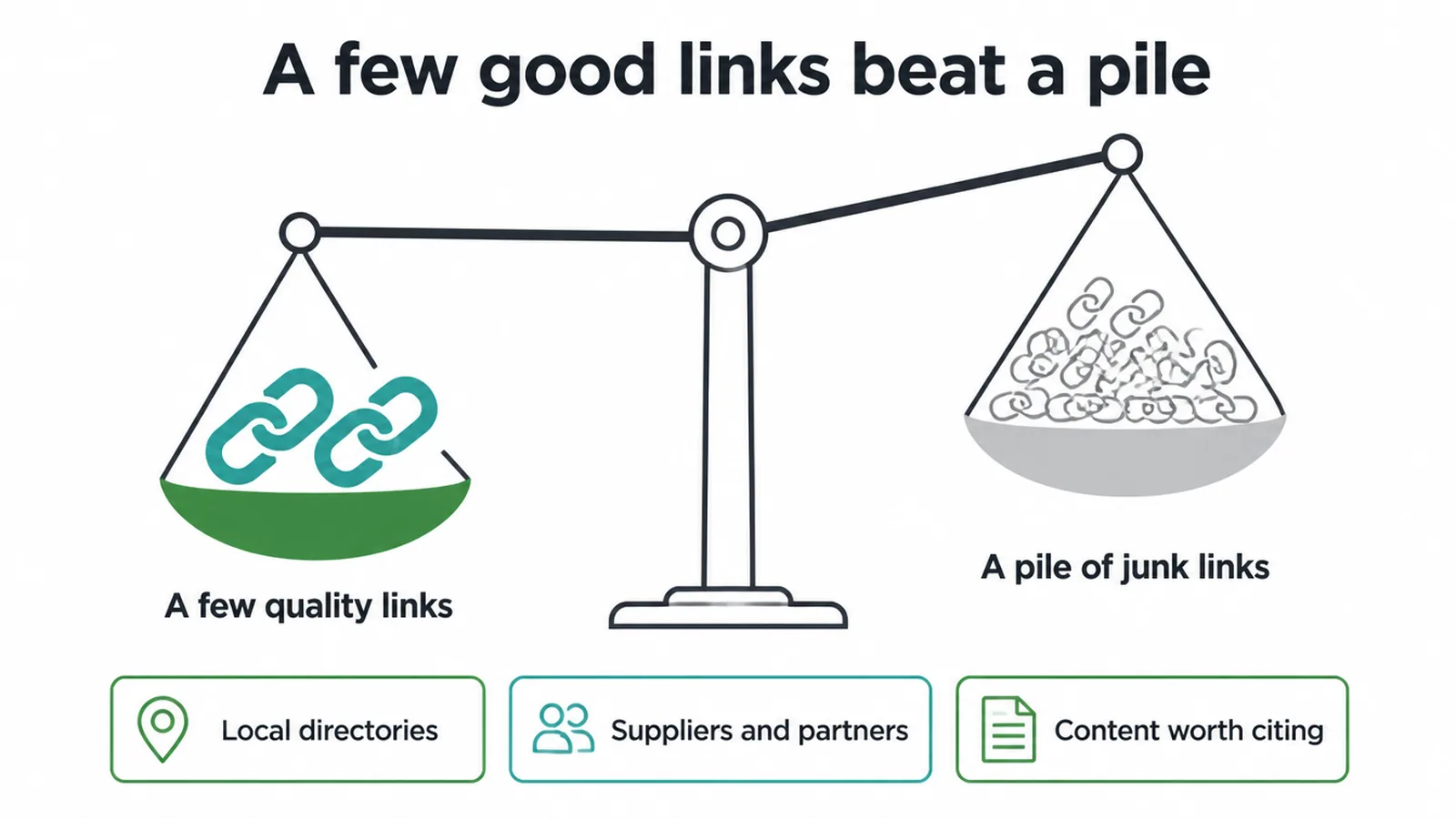
Start with free tactics. List your business in good local directories. Reach out to suppliers, partners, and local groups you already work with. Write something useful enough that people want to point to it.
Our guide on how to get backlinks covers honest ways to earn them without paying for risky shortcuts. Go slow and steady. One good link a month adds up over a year.
8. Step 7: Measure what matters
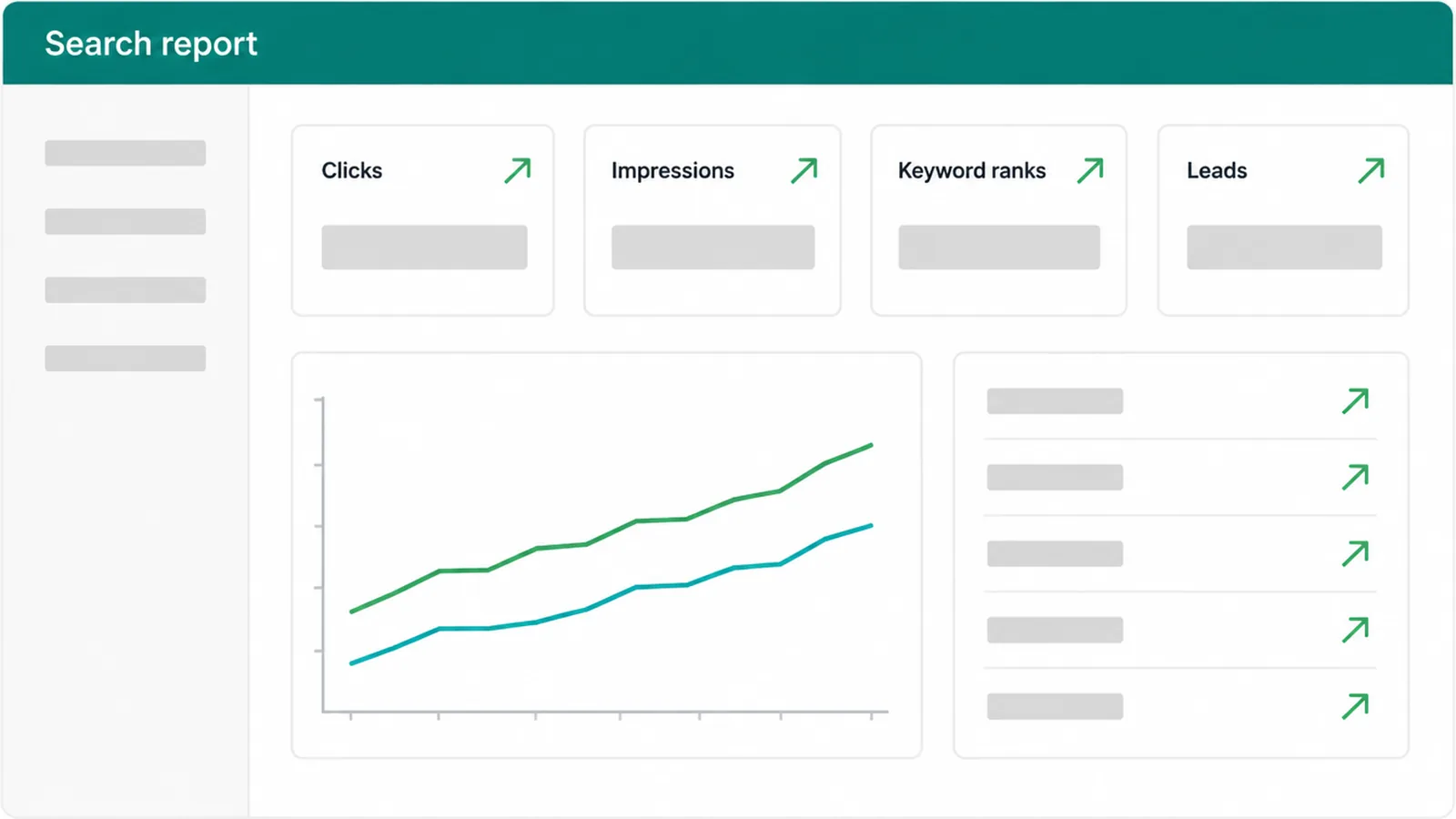
You cannot improve what you do not track, so the last step is to watch a few simple numbers. Open Google Search Console and check your clicks and impressions over time. Note where your main keywords rank. Most of all, count the real leads: calls, messages, and sales from search.
Do not panic at headlines about search changing. One study found classic organic results lost 11 to 23 points of click share year on year while text ads gained 7 to 13 (Similarweb via Search Engine Land).
Search is shifting, but local and helpful content still win. Keep your reports tied to leads, not vanity numbers.
One more thing: this is a general plan. If you sell to other businesses, the priorities shift, so read our B2B SEO strategy guide. If you run an online store, product and category pages change the game, so see our ecommerce SEO strategy instead.
9. How long will this take?
SEO takes steady work. Early movement often shows in three to six months, with fuller results over four to twelve. Local results can move sooner, while competitive terms and blog rankings can sit toward the longer end.
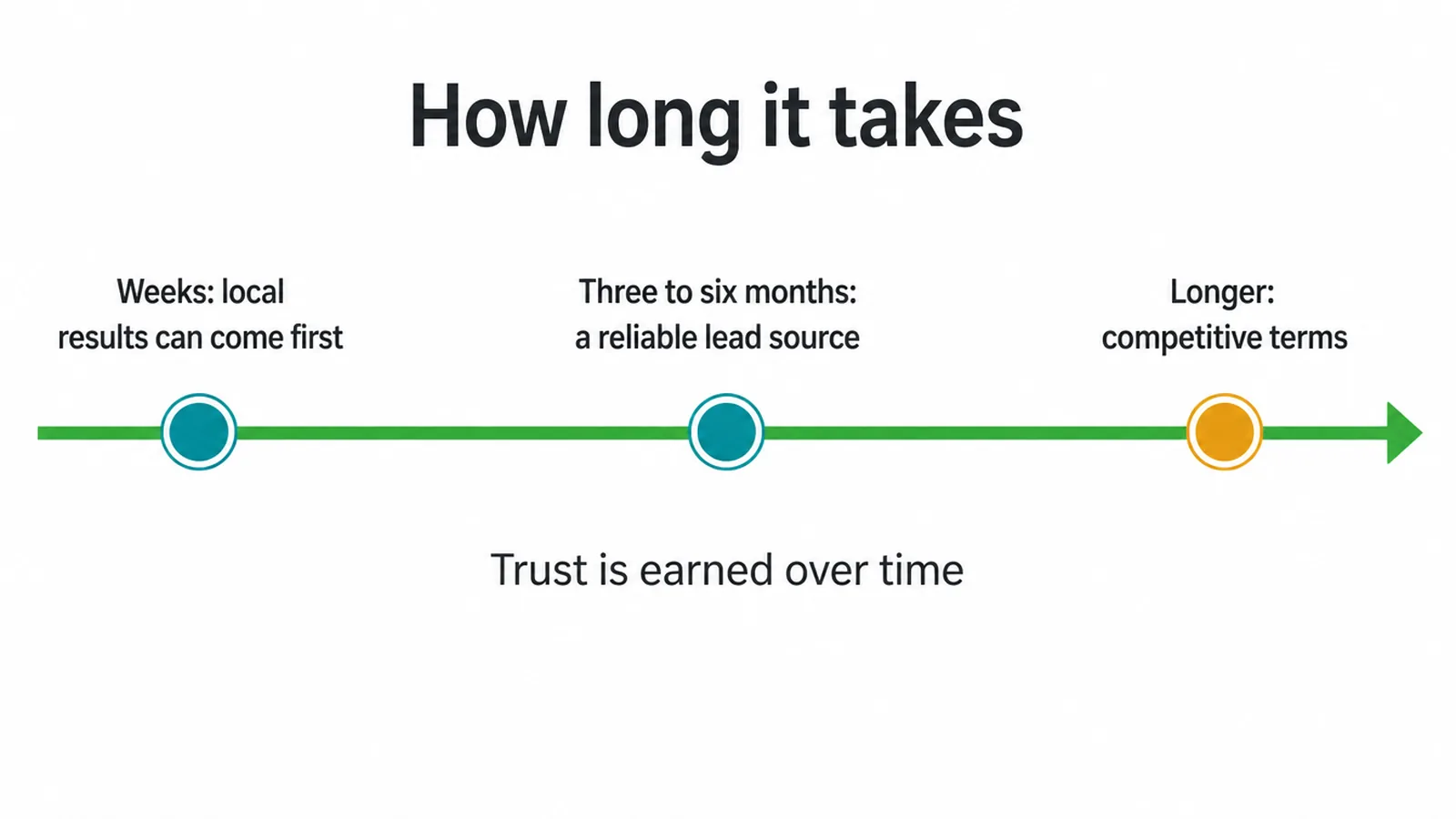
That is not a flaw, it is just how search works. Trust is earned over time, which is why older pages tend to rank. The owners who succeed are the ones who treat SEO as a habit, not a sprint.
For a full breakdown of the timeline and what to expect month by month, read how long does SEO take. Start now and the months pass either way. The difference is whether you have something growing by then.
10. Your free 90-day starter plan
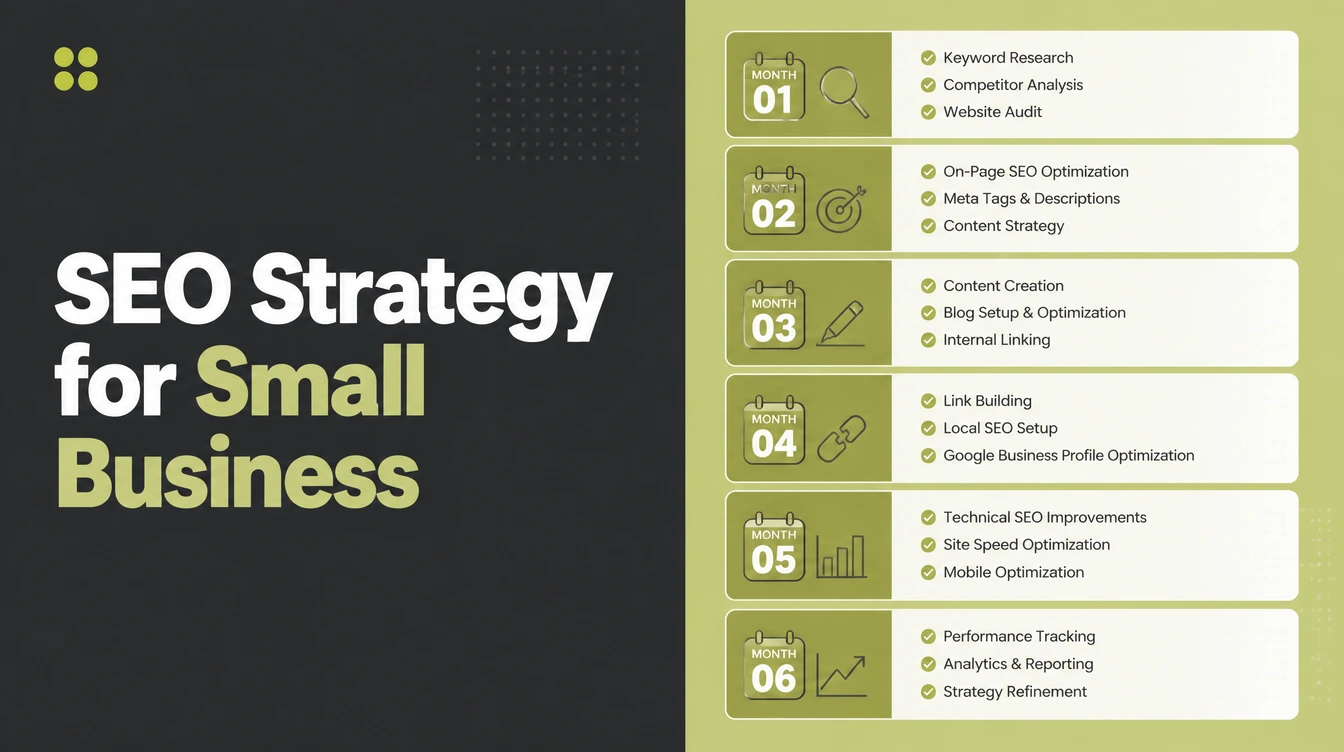
Here is the whole plan as a simple schedule. Everything in this table is free. Work through it in order, a little each week, and you will have a real foundation in three months.
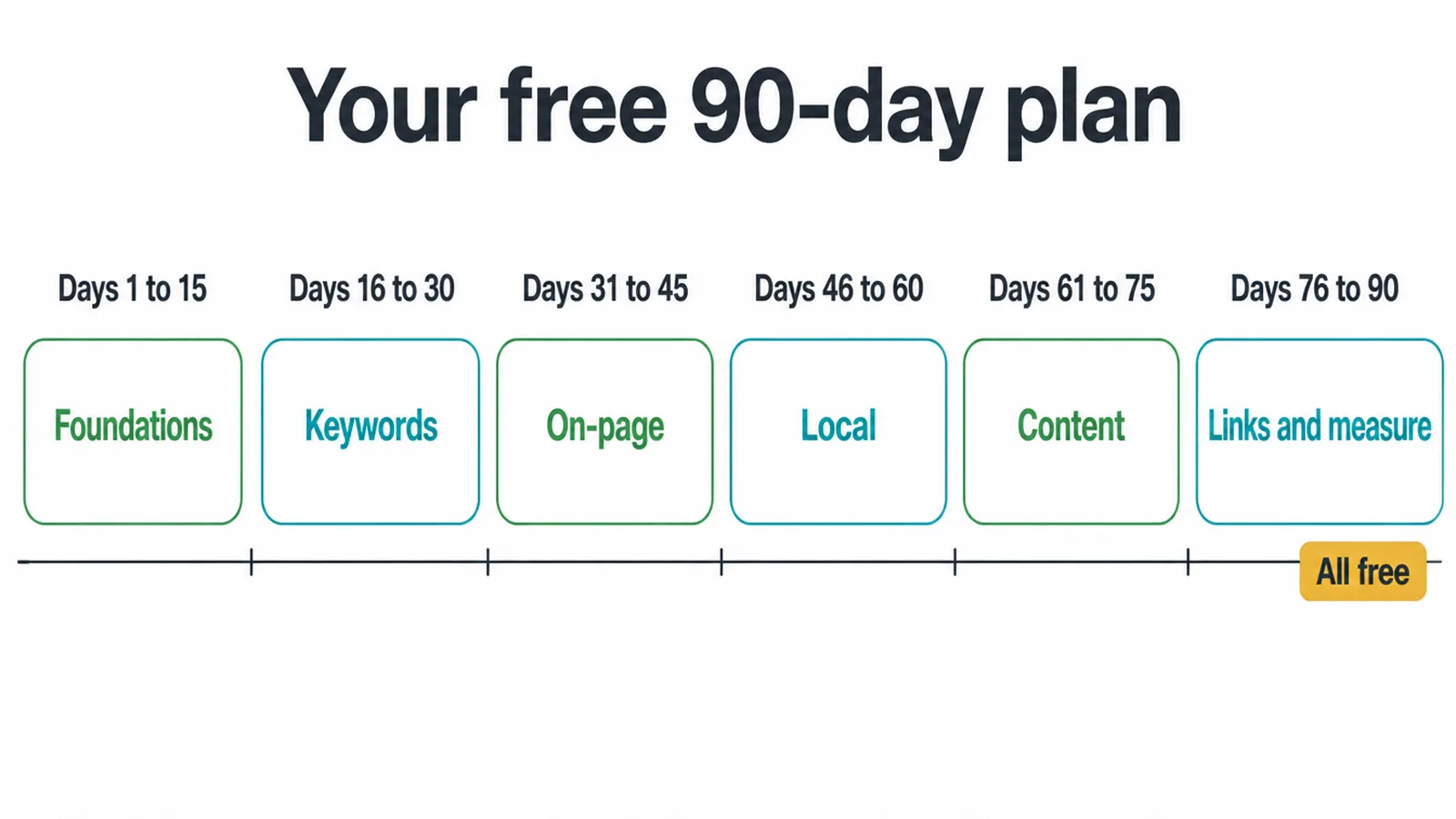
| Days | Focus | Do this free |
|---|---|---|
| 1 to 15 | Foundations | Set up your Google Business Profile, connect Google Search Console, and test your site speed on a phone. |
| 16 to 30 | Keywords | List the questions customers ask. Pick five to ten low-competition, local keywords with clear buying intent. |
| 31 to 45 | On-page | Write one clear title, meta description, and H1 for your top pages. Make each page genuinely helpful. |
| 46 to 60 | Local | Ask every customer for a review. Fix your name and address across directories. Post a profile update. |
| 61 to 75 | Content | Publish one useful page that answers a real customer question. Plan next month's topic. |
| 76 to 90 | Links and measure | Get one or two honest local links. Check clicks and rankings in Search Console. Note your leads. |
Frequently asked questions
1. How do I start SEO with no money?
Start with the free basics. Set up your Google Business Profile, connect Google Search Console, and make sure your site is fast and works on a phone. Then pick a few low-competition keywords and write helpful pages around them. None of that costs money. It only costs time, and it is the same order a paid agency would follow.
2. Is SEO worth it for a small business?
Yes, for most small businesses it is. Once a page ranks, it keeps bringing in visitors without you paying for each click. The traffic compounds over time. The catch is that it is slow, so it works best when you also have another way to get leads in the first few months while SEO builds up.
3. Can I do SEO myself?
Yes. The core work is doable by an owner who is willing to learn. Setting up your profile, picking keywords, writing clear pages, and asking for reviews are all things you can do without a specialist. You might want help later for technical fixes or faster results, but you can start and get real wins on your own.
4. What is the most important first step in SEO?
Get your foundations right first. That means a working Google Business Profile, Google Search Console connected, and a site that loads fast and works on a phone. If those are broken, nothing else you do will pay off, so fix them before you chase keywords or write content.
5. Do I need to blog for SEO?
Not always, but content helps a lot. You do not need to post every day. A few genuinely useful pages that answer the questions your customers ask will beat a pile of thin posts. Quality and consistency beat volume. If you only have time for one new page a month, that is fine.
6. How long does small business SEO take to work?
Early movement often shows in three to six months, with fuller results over four to twelve. Local results can come faster. Pages that rank well tend to be older and trusted, so patience is part of the plan. You should see small signals like more impressions within the first couple of months.
7. Should I do SEO or Google Ads first?
Often both, in different roles. Ads bring leads right away but stop the moment you stop paying. SEO is slow but keeps working after the work is done. A common approach is to run a small amount of ads for quick leads while you build SEO in the background for the long term. Our Google Ads agency page shows what that small campaign involves.
8. How do I know my SEO is working?
Watch a few simple numbers in Google Search Console. Clicks and impressions should trend up over months. Track where your main keywords rank and, most of all, whether you are getting more calls, messages, and sales from search. Leads matter more than rankings, so tie your reports back to real business results.