SEO KPIs 2026: Metrics That Actually Show SEO Progress

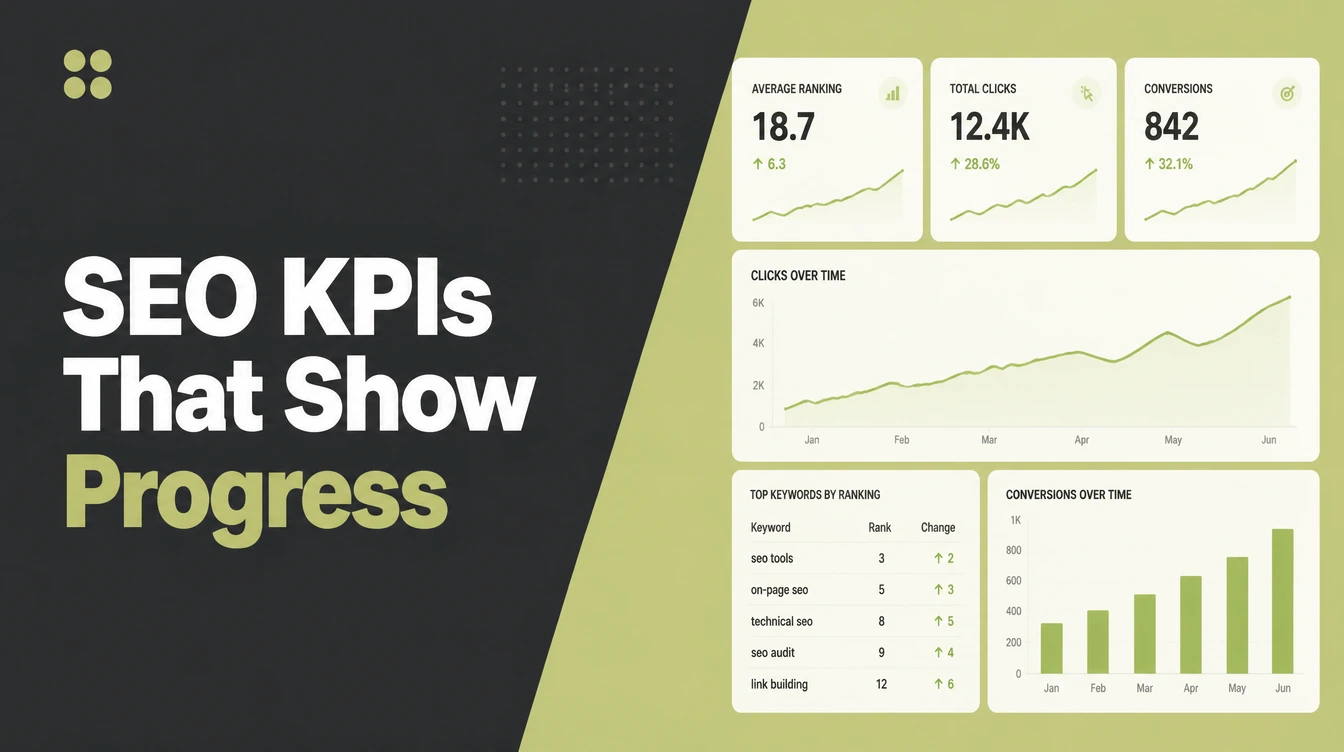
The one SEO KPI that counts is organic leads and sales, the calls, messages and orders that came from search. Traffic, clicks and rankings are signals that explain it. Sort your metrics into traffic, conversions, visibility and site health, and track them free in Search Console and GA4. Seed Light reports it this way.
Key takeaways
- One KPI rules them all: organic leads and sales are the only true SEO KPI. Everything else is a signal that helps explain it.
- SEO is worth measuring well: organic search drives 53% of all trackable website traffic (BrightEdge, 2019), far more than paid ads.
- Group your SEO metrics into 4 buckets: traffic, conversions, visibility, and site health. Pick one or two from each.
- Rankings matter less than they used to. AI Overviews changed how clicks flow, so judge success by leads, not by position alone.
- You can track it all free with Google Search Console and Google Analytics 4. No pricey tools needed to start.
1. The short answer on SEO KPIs and metrics
The SEO metrics small businesses should track are the few that lead to a real result. Your top SEO KPI is organic leads and sales, the calls, messages, and orders that came from search. Track that first. Then track a small set of supporting SEO metrics that explain why the KPI moved.
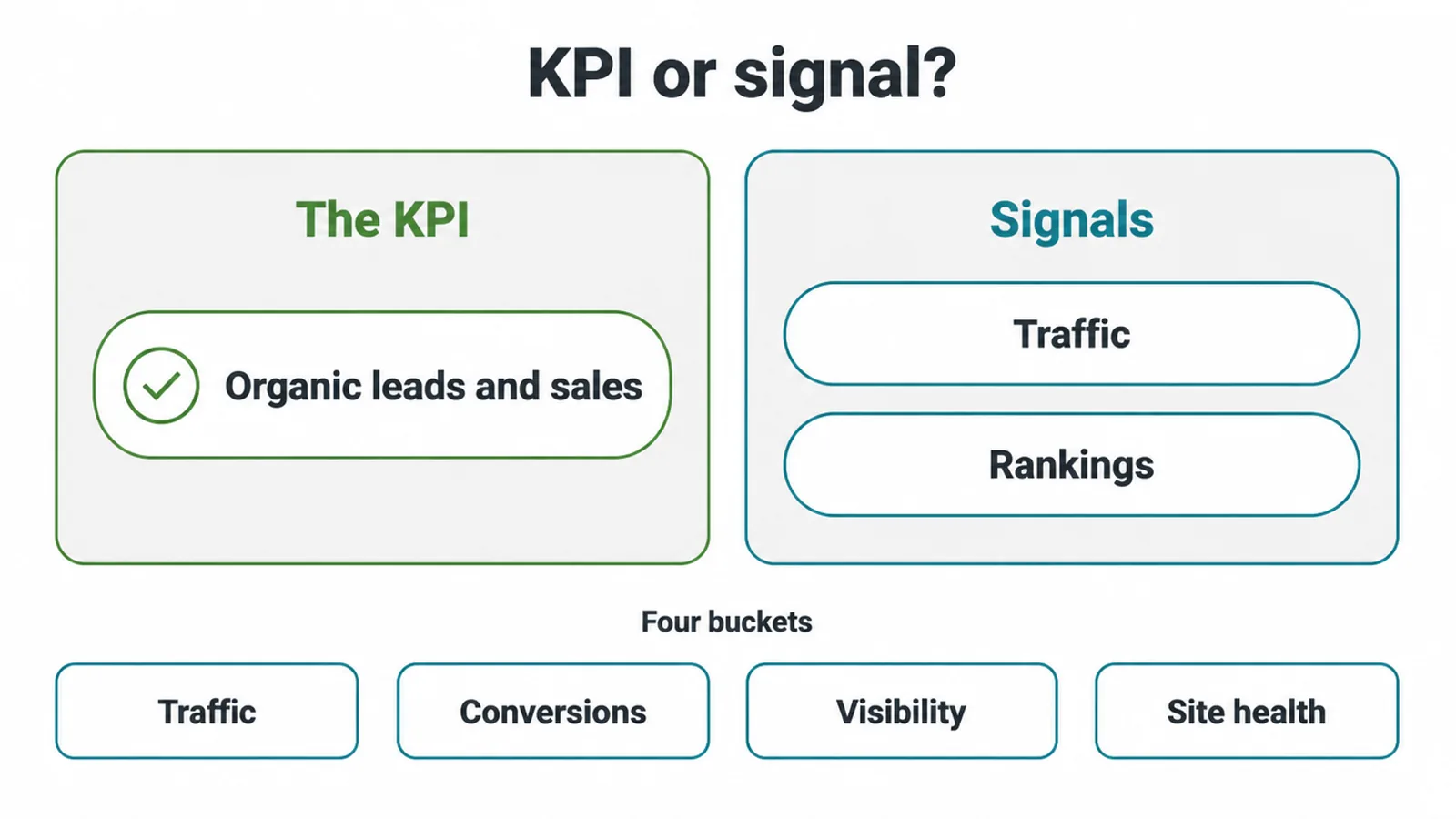
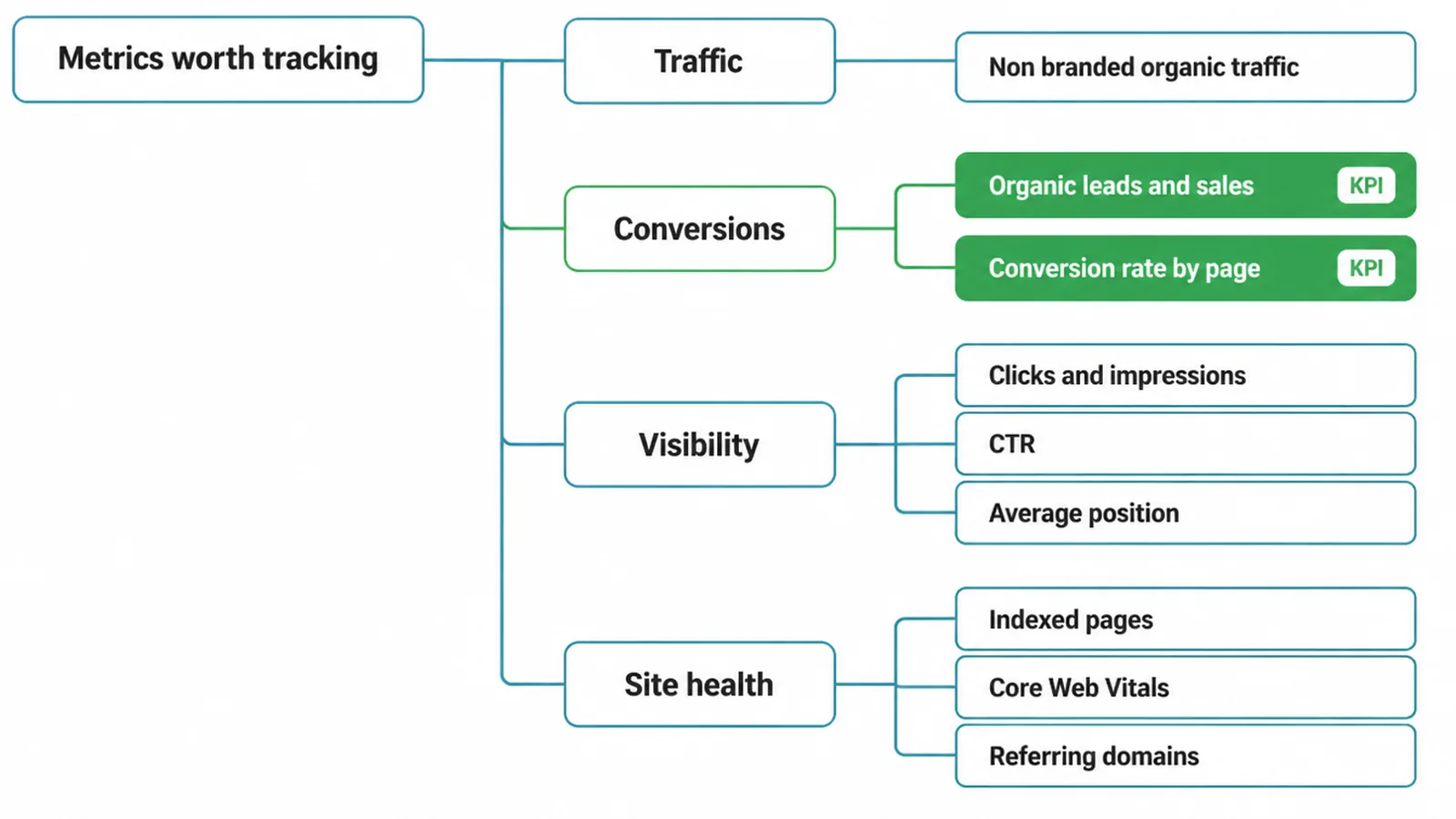
It helps to sort those metrics into four buckets: traffic, conversions, visibility, and site health. Pick one or two from each. That is your whole dashboard. Everything else is noise.
Here is the simple test. A KPI ties to money. A signal helps you understand the KPI. Rankings and traffic are signals. Leads and sales are the KPI.
If you only remember one thing, remember that the number that matters is the one that puts work on your desk. Our free sales funnel calculator shows how visits turn into leads and then into sales, step by step.
SEO is worth measuring properly because the channel is huge. If you are new to all this, our SEO service page walks through how it fits together, and our guide on how long SEO takes sets honest expectations on timing.
2. Bucket 1: traffic (a signal, not the goal)
Traffic tells you whether people are finding you. The metric to watch is non-branded organic traffic, the visits from people searching for what you do rather than for your name. Branded searches were going to find you anyway. Non-branded growth is new demand.
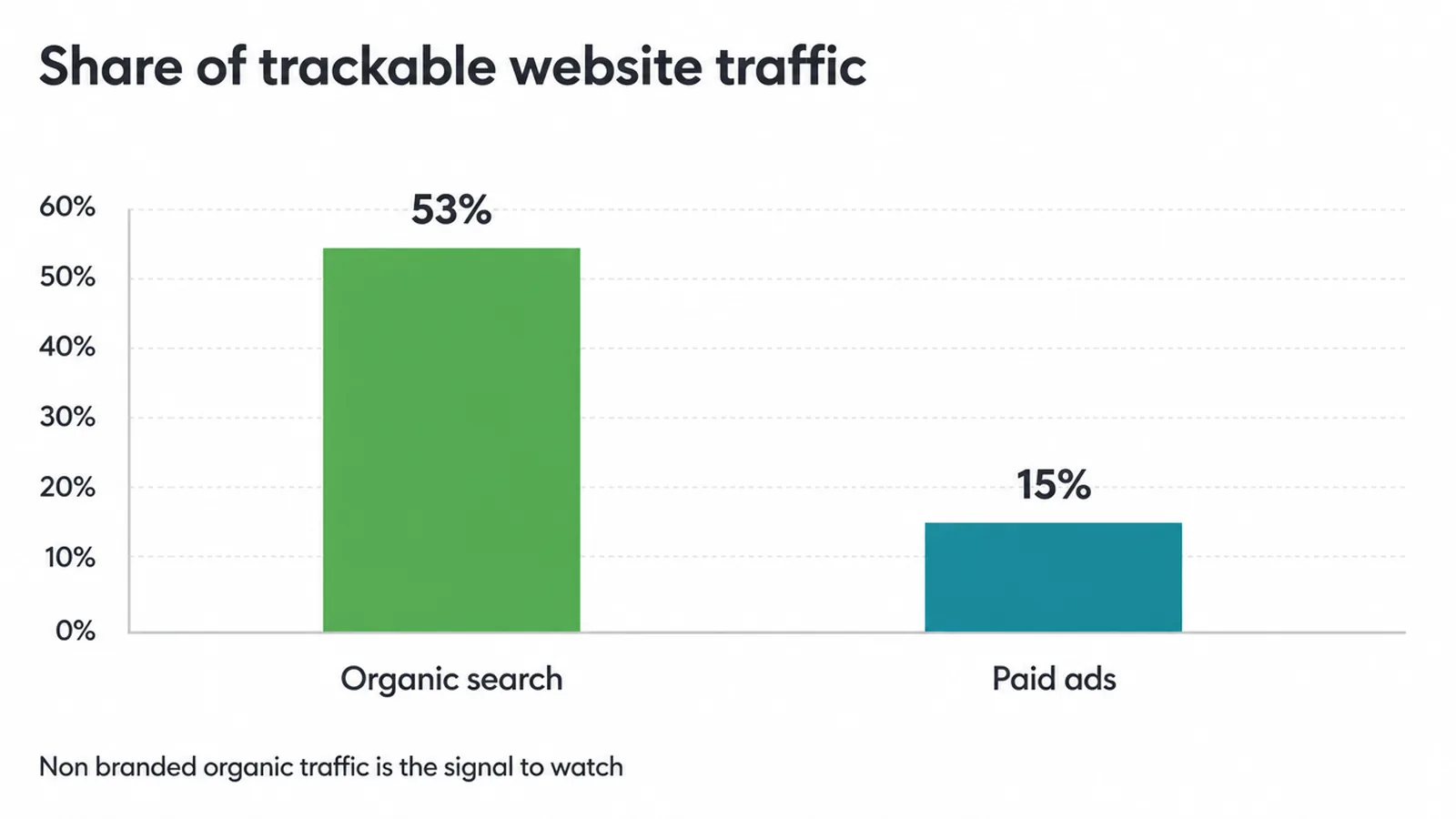
Organic search is a major doorway to websites. It drives 53% of all trackable website traffic, while paid ads sit near 15% (BrightEdge, 2019). When organic visits climb, your reach is growing.
But here is the trap. Traffic is a leading indicator, not the prize. A spike in visits feels great, yet it means nothing if none of those people become customers.
Treat traffic as an early hint that your visibility work is paying off, then check whether it turns into leads. Search Console shows your organic clicks for free, and our Search Console walkthrough shows you where to look.
3. Bucket 2: conversions (the real KPI)
This is the one that matters. Organic conversions are the leads and sales that came from search. A conversion is any action you care about, a form fill, a phone call, a booking, an order. This bucket is your KPI because it maps straight to money.
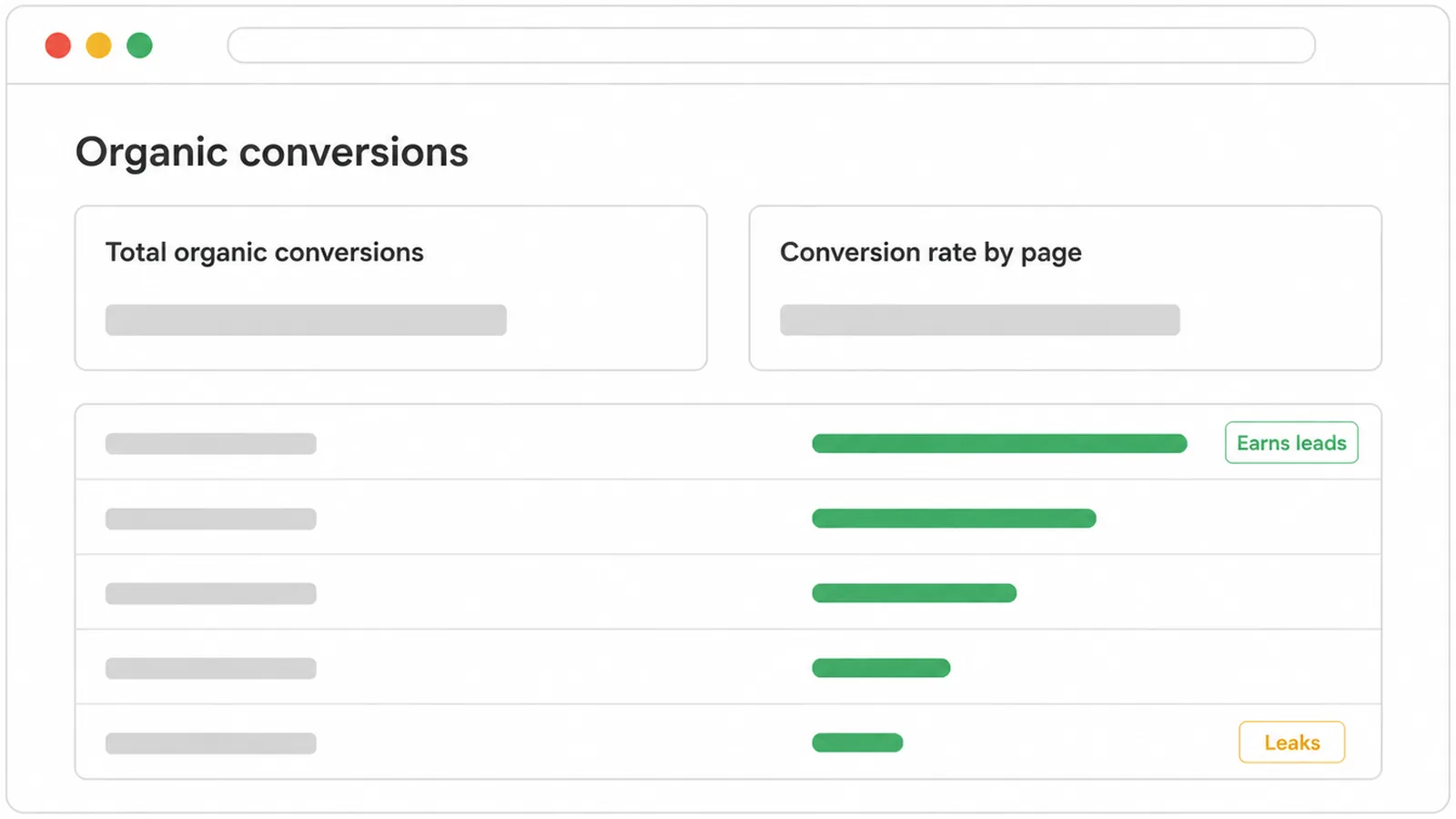
Track two things. First, total organic conversions, the raw count of leads and sales from search each month. Second, conversion rate by page, so you can see which pages turn visitors into customers and which ones leak. Our free conversion rate calculator turns visits and leads into that percentage.
When a page gets traffic but no conversions, it is usually weak, off-intent, or missing a clear next step. A content audit helps you find and fix those pages one by one.
And when it is time to share results, a clean SEO report template keeps the focus on leads and sales instead of busywork numbers.
4. Bucket 3: visibility (clicks, impressions, CTR, position)
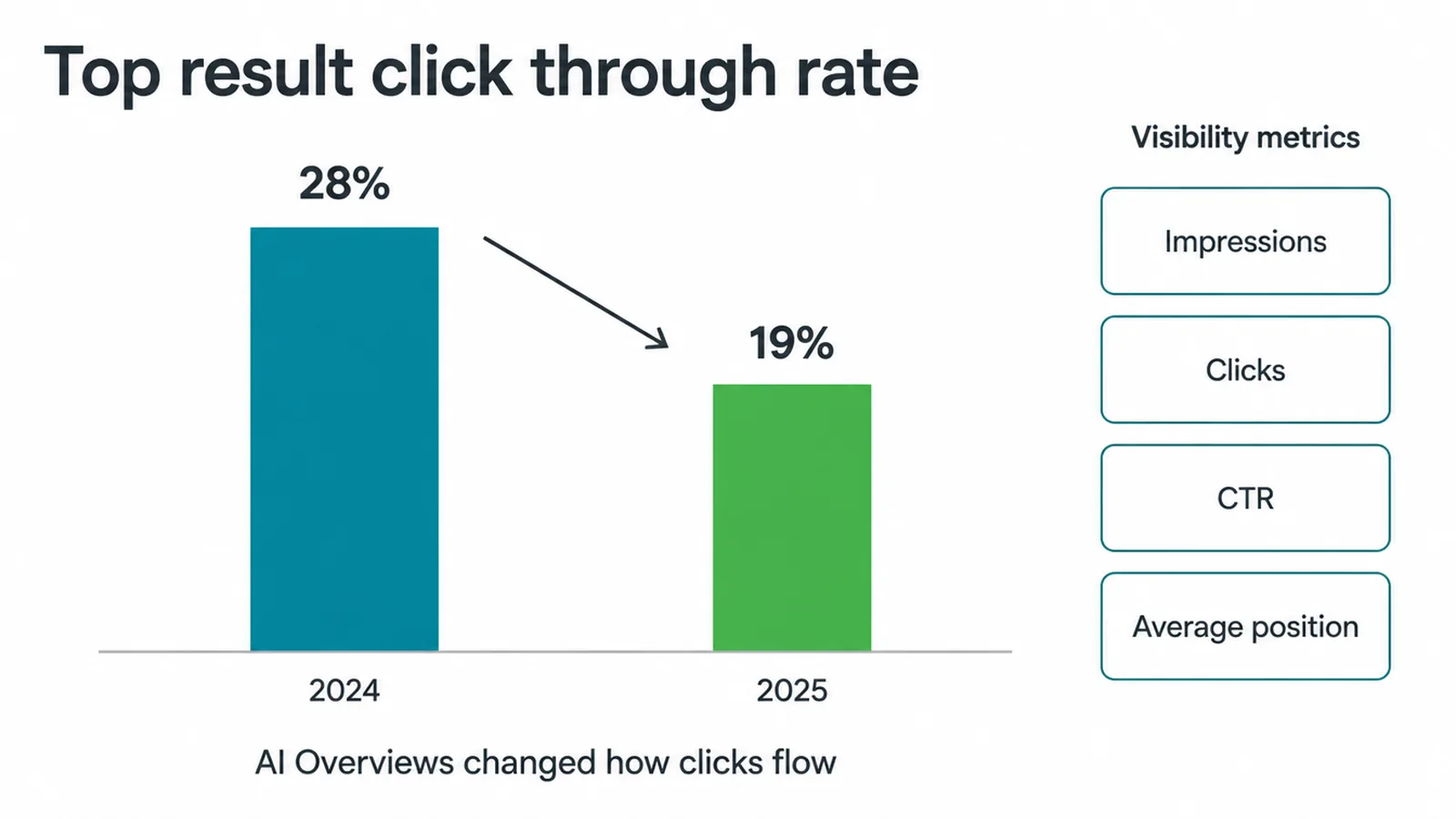
Visibility metrics live in Search Console and tell you how you show up in search. There are four: impressions (you showed up), clicks (someone came), CTR (the share of impressions that became clicks), and average position (roughly where you ranked). Impressions mean you were seen. Clicks mean you were chosen.
Track rankings only for your target keywords, the ones a buyer would type. Now for the honest part. Rankings are not the safe bet they once were.
After AI Overviews rolled out, the click-through rate for the top organic result fell from 28% in 2024 to 19% in 2025, a 32% drop across more than 200,000 keywords.
It goes further. When an AI Overview appears, the top-ranking page sees a 58% lower average click-through rate. One field study found AI Overviews cut organic clicks by 38% on triggered queries, with zero-click searches rising from 54% to 72%.
The lesson is simple. You can rank first and still get fewer clicks, so conversions beat rankings every time. If you do want to climb, our guide on how to rank higher on Google covers the work that still moves you up.
5. Bucket 4: site health (the foundation)
Site health metrics tell you whether your site can even compete. They will not win on their own, but they quietly hold you back when they slip. Watch three.
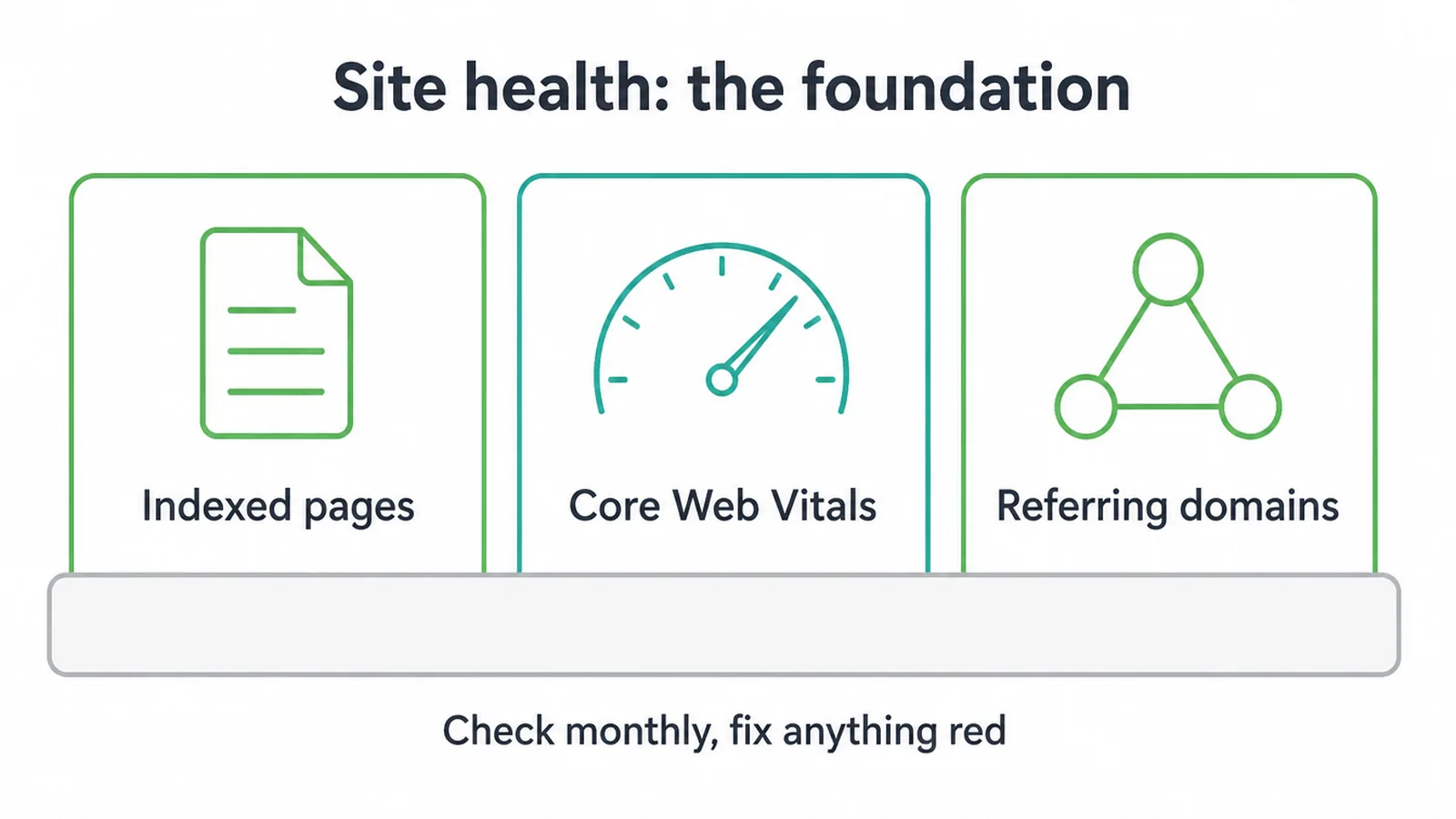
First, indexed pages. If Google has not indexed a page, it cannot rank, full stop. Second, Core Web Vitals, the speed and stability scores. A slow, jumpy page frustrates visitors and drags rankings. Third, referring domains, the number of other sites linking to you. Watch the trend, not the exact count.
You do not need to obsess here. Check site health monthly, fix anything that turns red, and move on. The goal is a clean foundation so the work in the other three buckets actually counts.
6. The SEO metrics table, all four buckets
Here is the whole list in one place. Pick one or two rows from each bucket, track them free, and ignore everything not on this table.
| Bucket | Metric | What it tells you | Where (free) | KPI or signal? |
|---|---|---|---|---|
| Traffic | Non-branded organic traffic | People are finding you for what you do | GA4 + Search Console | Signal |
| Conversions | Organic leads and sales | Search is making you money | GA4 | KPI |
| Conversions | Conversion rate by page | Which pages earn and which leak | GA4 | KPI |
| Visibility | Clicks and impressions | How often you show up and get chosen | Search Console | Signal |
| Visibility | CTR | Whether your title and snippet pull clicks | Search Console | Signal |
| Visibility | Average position (target keywords) | Where you rank for buyer searches | Search Console | Signal |
| Site health | Indexed pages | Whether your pages can rank at all | Search Console | Signal |
| Site health | Core Web Vitals | Speed and stability of your pages | Search Console | Signal |
| Site health | Referring domains (trend) | Whether other sites vouch for you | Paid tools (trend only) | Signal |
7. The vanity-metric trap
A vanity metric is a number that looks good but never leads to money. They are tempting because they go up easily and feel like progress. They are dangerous because they pull your attention off the work that actually grows leads and sales.
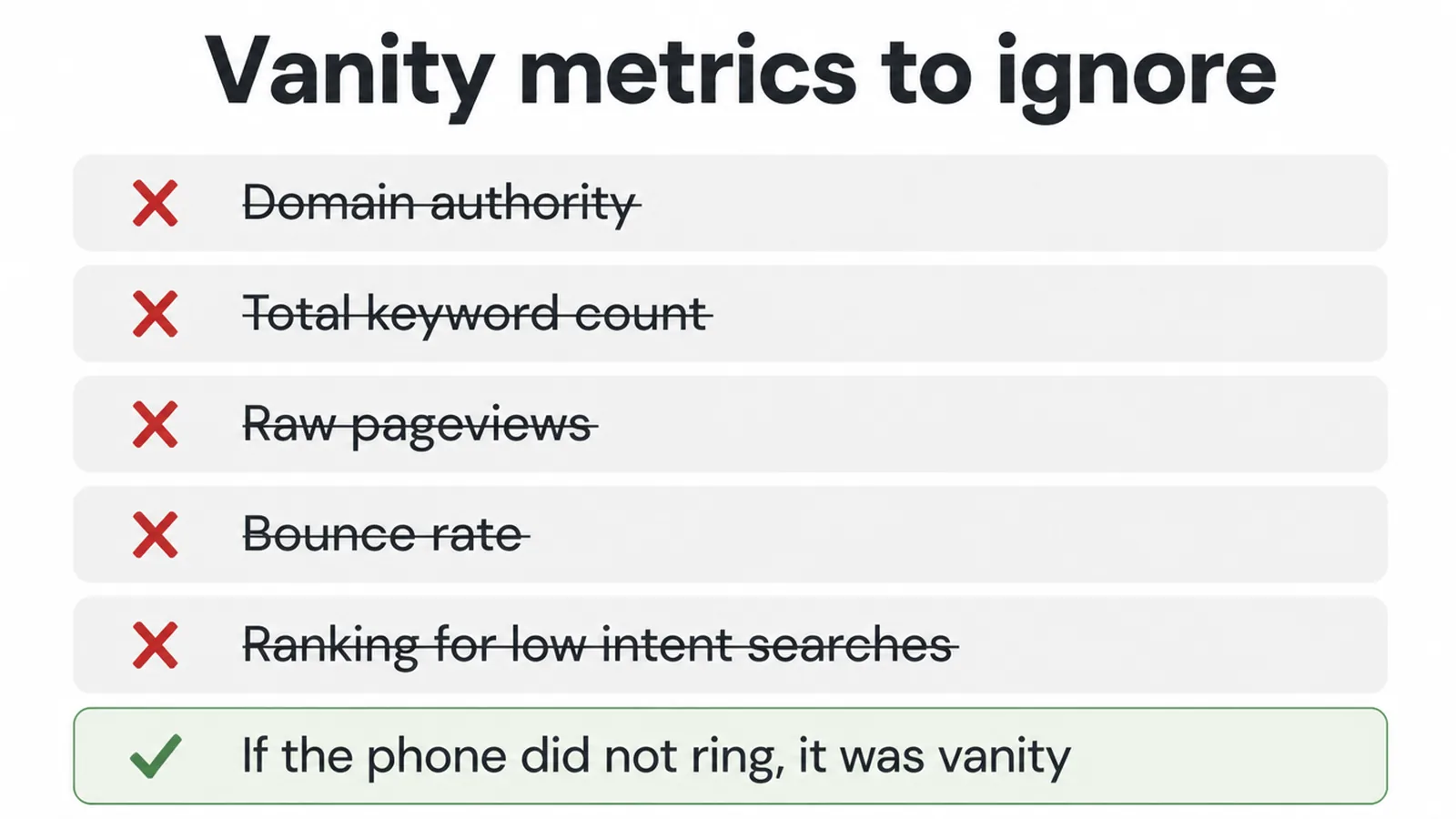
Here are the usual suspects. Domain authority, a third-party score that Google does not use to rank you. Total keyword count, which inflates with junk terms you would never want to win.
Raw pageviews, which can spike from bots or off-topic traffic. Bounce rate, which often means nothing on a page built to answer one quick question. And the sneakiest one, ranking first for low-intent searches that no buyer ever types.
The test is one sentence. If the number went up but your phone did not ring, it was vanity. Chasing these is one of the most common small business SEO mistakes we see. Keep your eyes on leads and sales, and let the vanity numbers fall where they may.
8. How to track your SEO metrics for free
You do not need to spend anything to get started. Two free tools cover almost everything on the table above.
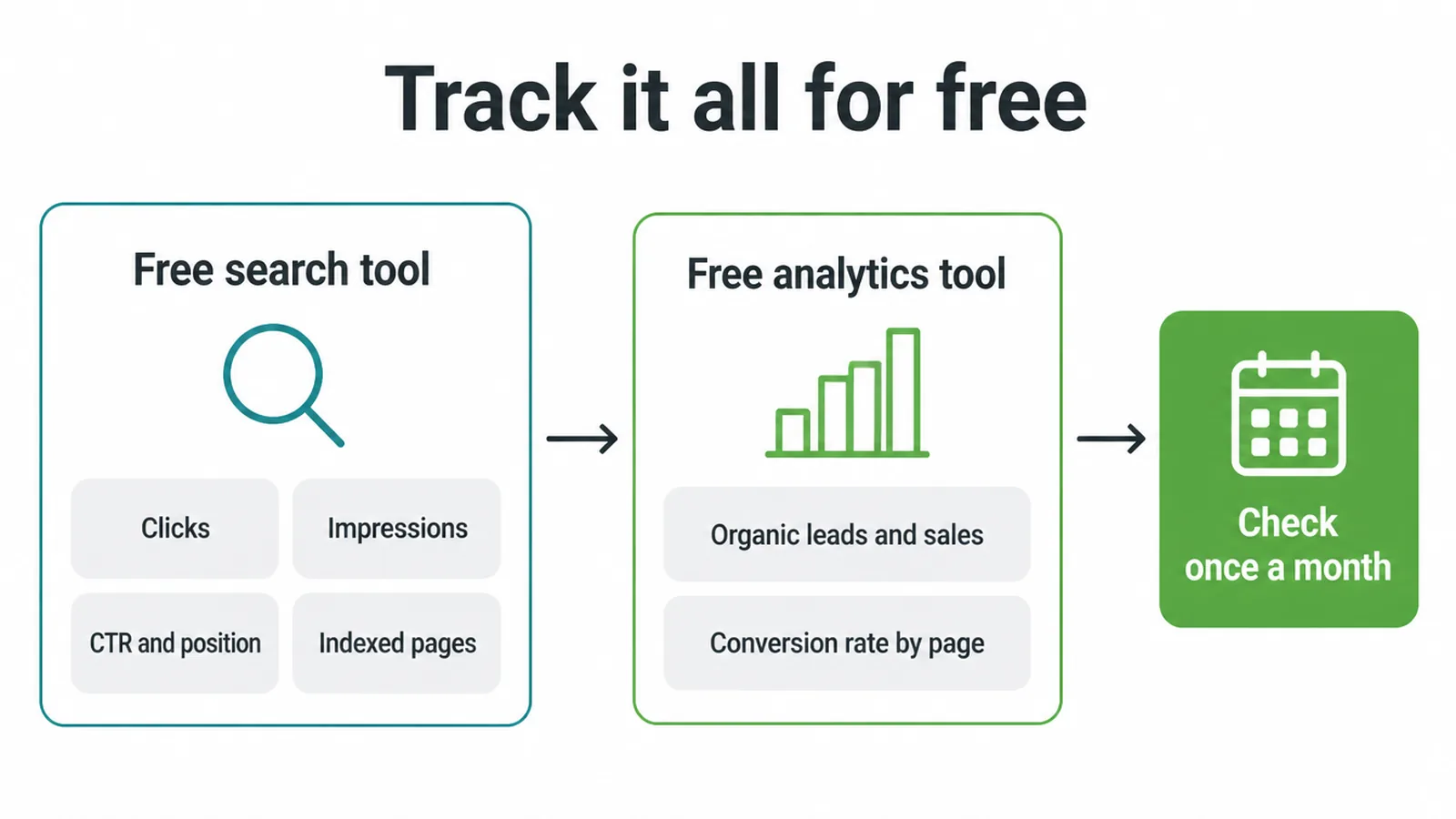
First, set up Google Search Console. It gives you clicks, impressions, CTR, average position, indexed pages, and Core Web Vitals, all the visibility and most of the site-health metrics, no cost.
Second, set up Google Analytics 4 and mark your key actions as conversions. Tell it which actions count as a lead or sale, a form submit, a click-to-call, a booking, an order. Now GA4 can show you organic conversions and conversion rate by page, your actual KPIs.
Then build a habit. Check the same handful of numbers once a month, not once a day. SEO moves slowly, and a monthly review shows the real trend without the stress. Pour your findings into a simple SEO report so the story stays about leads and sales.
If the numbers feel flat early on, that is normal, our guide on how long SEO takes explains why patience pays off. Want a hand setting it all up? Talk to us and we will get your tracking right.
SEO KPIs FAQ
1. What SEO metrics should I track?
Track the few that lead to money. Organic leads and sales come first. Then non-branded organic traffic, organic conversion rate by page, clicks and rankings for your target keywords, and basic site health like indexed pages and Core Web Vitals. Ignore the rest.
2. What is a good SEO KPI?
A good KPI ties to a real business result. The best one is organic leads or sales, the calls, messages, and orders that came from search. Everything else, traffic and rankings included, is a signal that helps explain the KPI, not the KPI itself.
3. How do I measure SEO success?
Set up Google Search Console and Google Analytics 4 for free, mark your key actions like form fills and calls as conversions, and check them monthly. Success looks like more organic leads and sales over time. Visits and rankings are only signals along the way.
4. Are rankings a good metric?
Rankings matter only for keywords that bring buyers. Ranking first for a phrase nobody searches, or one that never leads to a sale, is a vanity number. Track rankings for your target keywords as a signal, but judge success by leads and sales.
5. What is the difference between impressions and clicks?
An impression means your page showed up in search. A click means someone actually came to your site. Lots of impressions with few clicks usually means your title and description need work, or the result sits too low to get noticed.
6. What are vanity metrics in SEO?
Vanity metrics are numbers that look good but do not lead to money. Common ones are domain authority, total keyword count, raw pageviews, and ranking first for low-intent terms. If the number went up but your phone did not ring, it was vanity.
7. Is domain authority a Google ranking factor?
No. Domain authority is a third-party score made by SEO tools, not something Google uses to rank pages. It can be handy for comparing sites at a glance, but chasing the number itself is a waste of time.
8. How often should I check SEO metrics?
Check leads and sales monthly. SEO moves slowly, so daily rank checking just stresses you out and tells you nothing. A monthly look at the same handful of numbers shows the real trend and keeps you focused on what counts.