Best AI SEO Tools 2026: Compare Tools by SEO Task

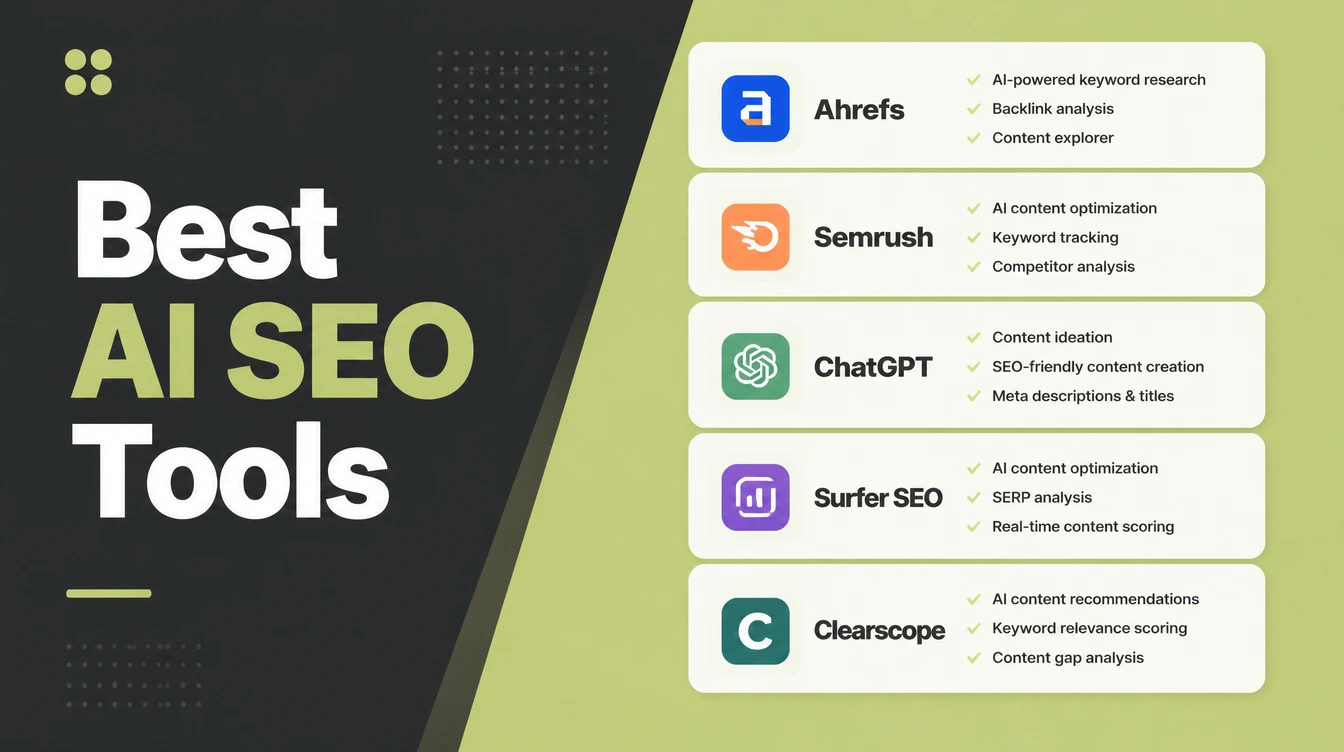
There is no single best AI SEO tool, only the best one for a job. Keyword ideas: ChatGPT, Claude, Semrush AI, AlsoAsked. Briefs: Surfer, Clearscope, Frase. Audits: Semrush, SE Ranking, AIOSEO. Crawls: Screaming Frog, Sitebulb. Pick the job that eats your time first. Seed Light uses these every week.
Key takeaways
- There is no single best AI SEO tool. The right pick depends on the job: keywords, briefs, audits, crawls, rank tracking, or local.
- AI saves real time. AI saves marketers more than five hours every week on average, per CoSchedule, and 85% of marketers use AI for content creation.
- Quality wins, not who typed it. Google says using AI to mass-produce pages with no value may break its spam policy and to focus on accuracy and relevance.
- Watch AI Overviews. They can cut clicks on top pages by nearly 35%, per Ahrefs, so track your visibility inside them.
- Do not buy all of them. Start with one tool for the job that eats your week, learn it, then add more.
1. What are the best AI SEO tools?
The best AI SEO tools depend on the job you need done. For keyword and topic ideas, ChatGPT, Claude, Semrush AI, and AlsoAsked do the work. For content briefs, Surfer, Clearscope, and Frase lead.
For on-page audits, Semrush, SE Ranking, and AIOSEO. For technical crawls, Screaming Frog and Sitebulb. For rank tracking, SE Ranking, Semrush, and Wincher. For local, Localo and BrightLocal.
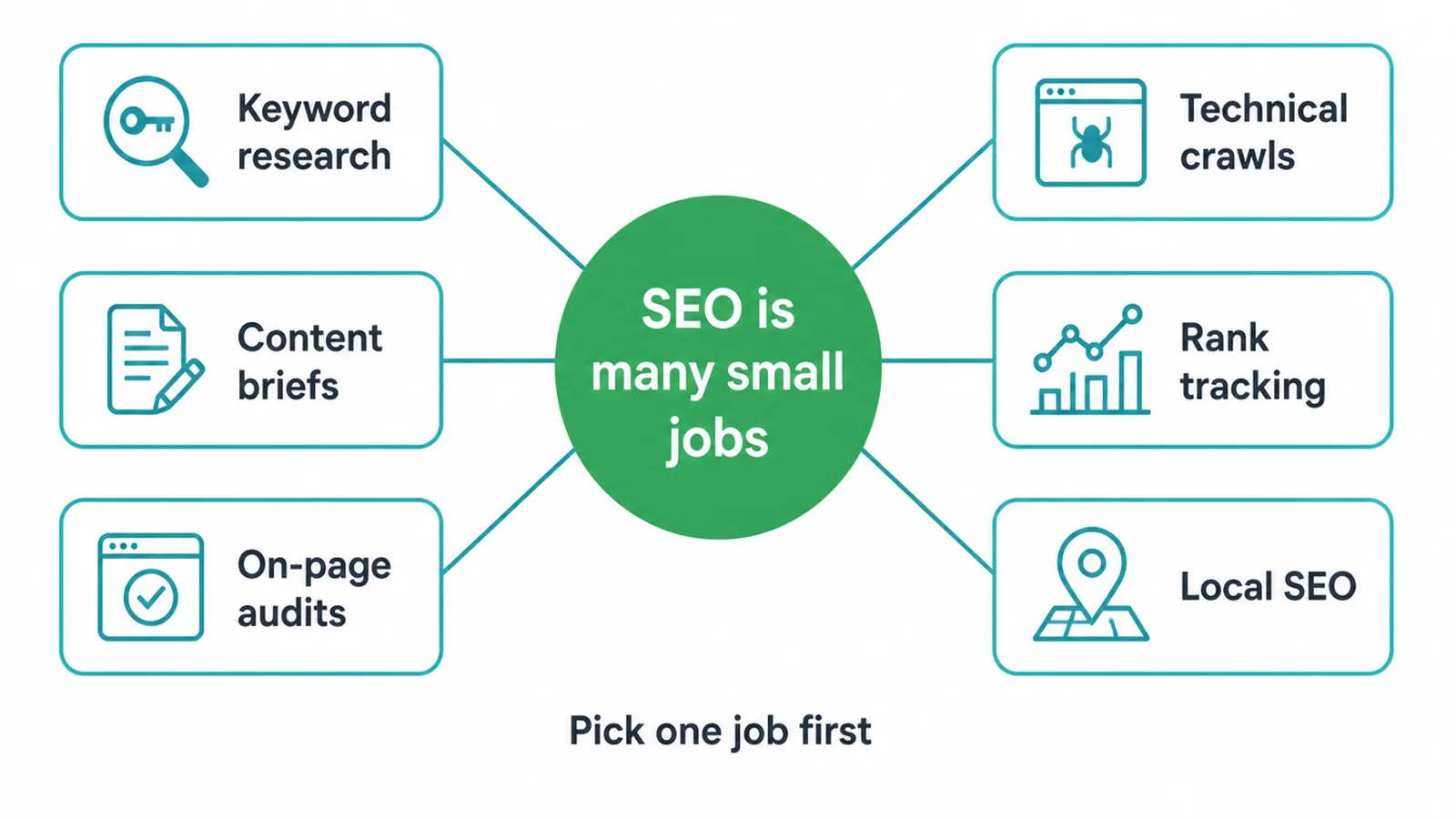
Notice there is no one winner. That is on purpose. SEO is many small jobs, and each job has its own best tool. So the smart move is not to chase one magic app.
Pick the one job that steals the most of your time, add a tool for it, and skip the rest until you actually need them.
If SEO feels like too much to run alone, that is normal. You can also hand it to a team. Our SEO service uses these same tools every day, so you get the speed of AI plus the judgment of people who do this full time.
2. What "AI SEO" actually means
Here is the simple version. AI does the heavy lifting. You keep the judgment. The tool can read a thousand search results, group keywords, draft an outline, and flag broken pages in seconds.
What it cannot do is know your customers, check that a fact is true, or decide what really matters this quarter. That part is still you.
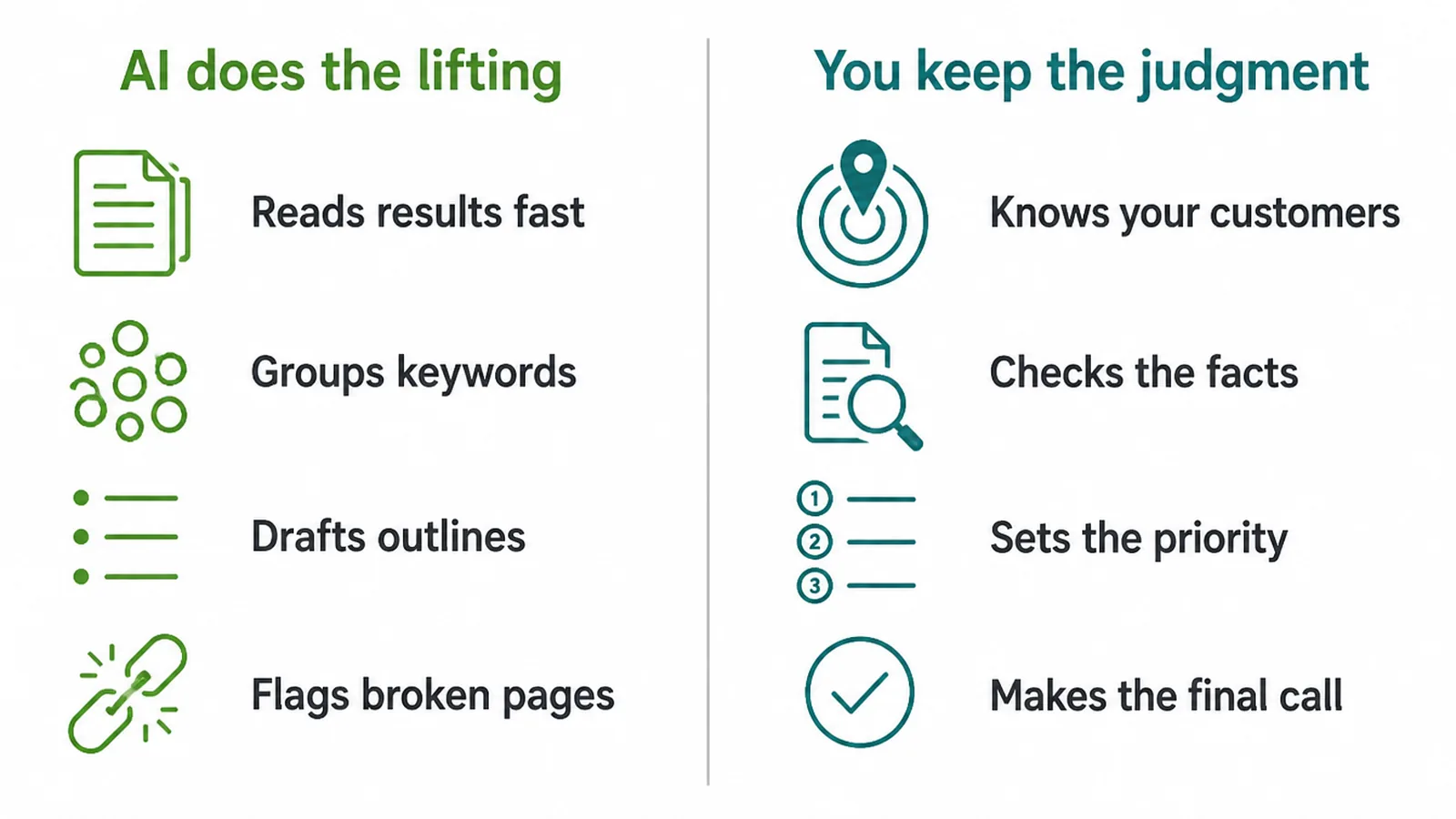
So think of AI as a very fast junior helper. It hands you a draft and a list. You correct it, add the real-world detail, and make the call.
When you keep that line clear, AI SEO is a gift. When you let the tool decide, you ship thin work that ranks for a week and then sinks.
AI SEO tools are a slice of a bigger picture. For the full toolkit by job (some AI, some not), see our guide to SEO tools for small business. And if you want AI help beyond SEO, like email, design, and admin, read our roundup of the best AI tools for small business.
3. AI SEO tools by job, at a glance
This table is the whole post in one view. Find your job in the left column, see the tools that do it, then read the catch. The catch is the part most lists skip, and it is the part that saves you from a costly mistake.
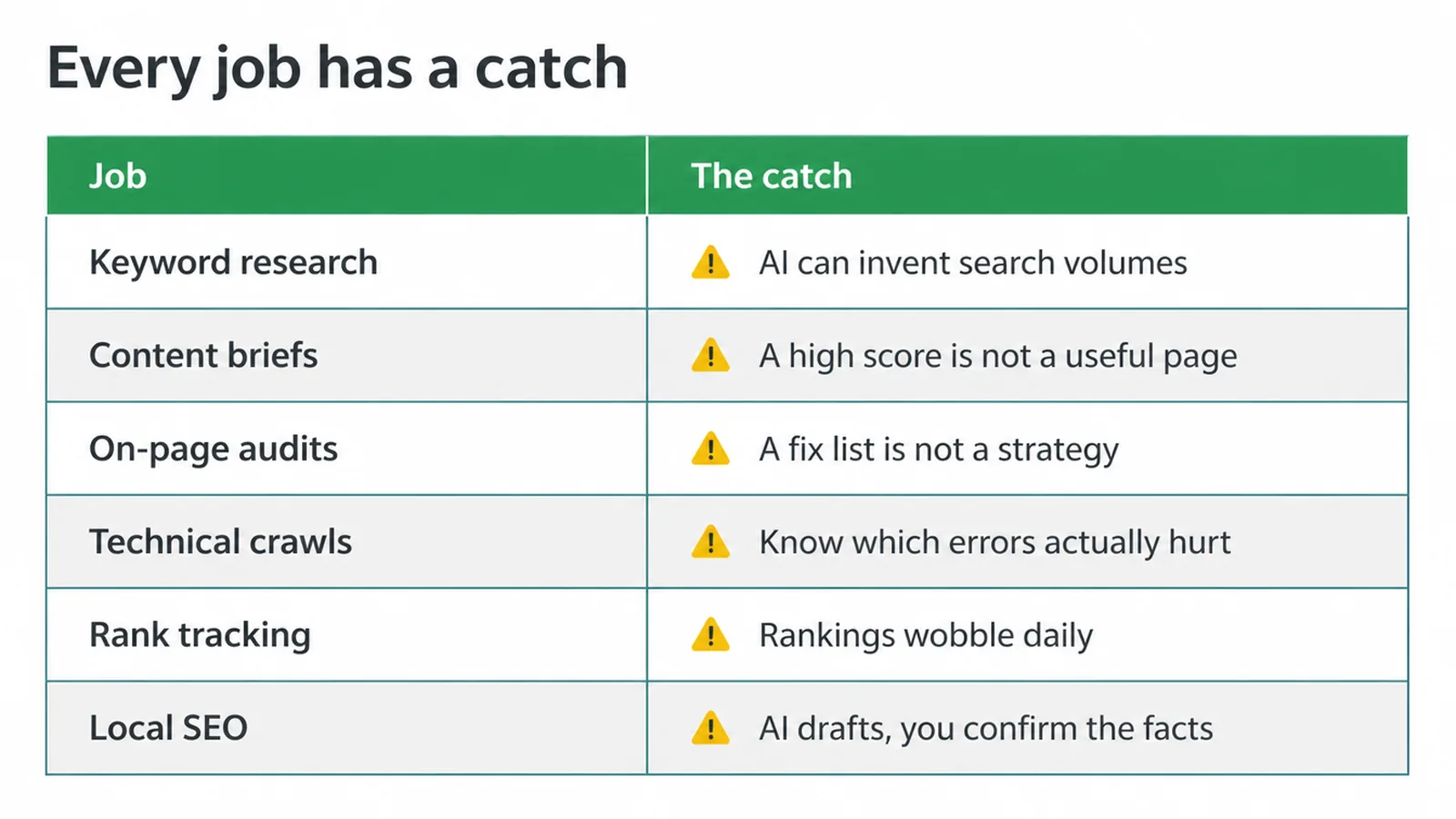
| Job | AI tools that do it | The catch |
|---|---|---|
| Keyword and topic research | ChatGPT, Claude, Semrush AI, AlsoAsked | AI can invent search volumes. Verify real numbers in a proper tool. |
| Content briefs and optimization | Surfer, Clearscope, Frase | A high score is not the same as a useful page. |
| On-page and site audits | Semrush, SE Ranking, AIOSEO | A fix list is not a strategy. You still decide what matters. |
| Technical crawls | Screaming Frog, Sitebulb | Powerful, but you need to know which errors actually hurt. |
| Rank tracking and AI Overviews | SE Ranking, Semrush, Wincher | Rankings wobble daily. Do not panic over one bad morning. |
| Local SEO | Localo, BrightLocal | AI drafts the posts and replies. You confirm the facts. |
4. Keyword and topic research
This is where AI shines first. Open ChatGPT or Claude and ask for keyword ideas around your service, the questions buyers ask, and topics for a month of posts. Semrush AI does the same inside a real keyword database. AlsoAsked maps the questions people search after the first one, which is gold for FAQ sections.
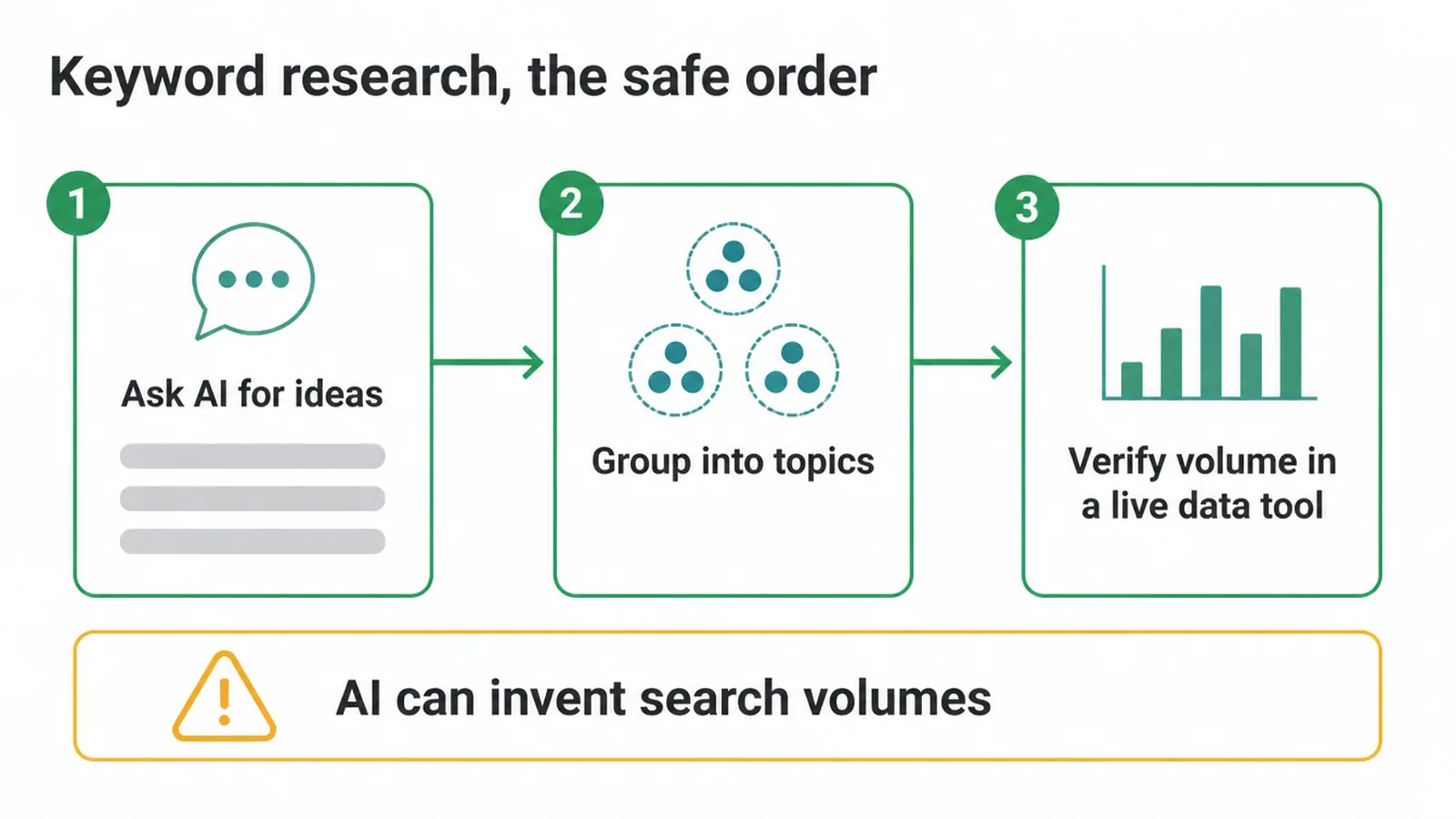
The catch: AI loves to make up numbers. Ask it for search volume and it will hand you a clean figure that may be pure fiction.
So use AI for the ideas and the grouping, then check the actual volume and difficulty in a tool that pulls live data. For the full method, read how to do keyword research. AI shortens the brainstorm. It does not replace the check.
5. Content briefs and optimization
Surfer, Clearscope, and Frase look at the pages already ranking for your keyword and tell you what to cover. They give you headings to include, words to add, and a score that climbs as you match the top results. For a writer staring at a blank page, that brief is a real head start.
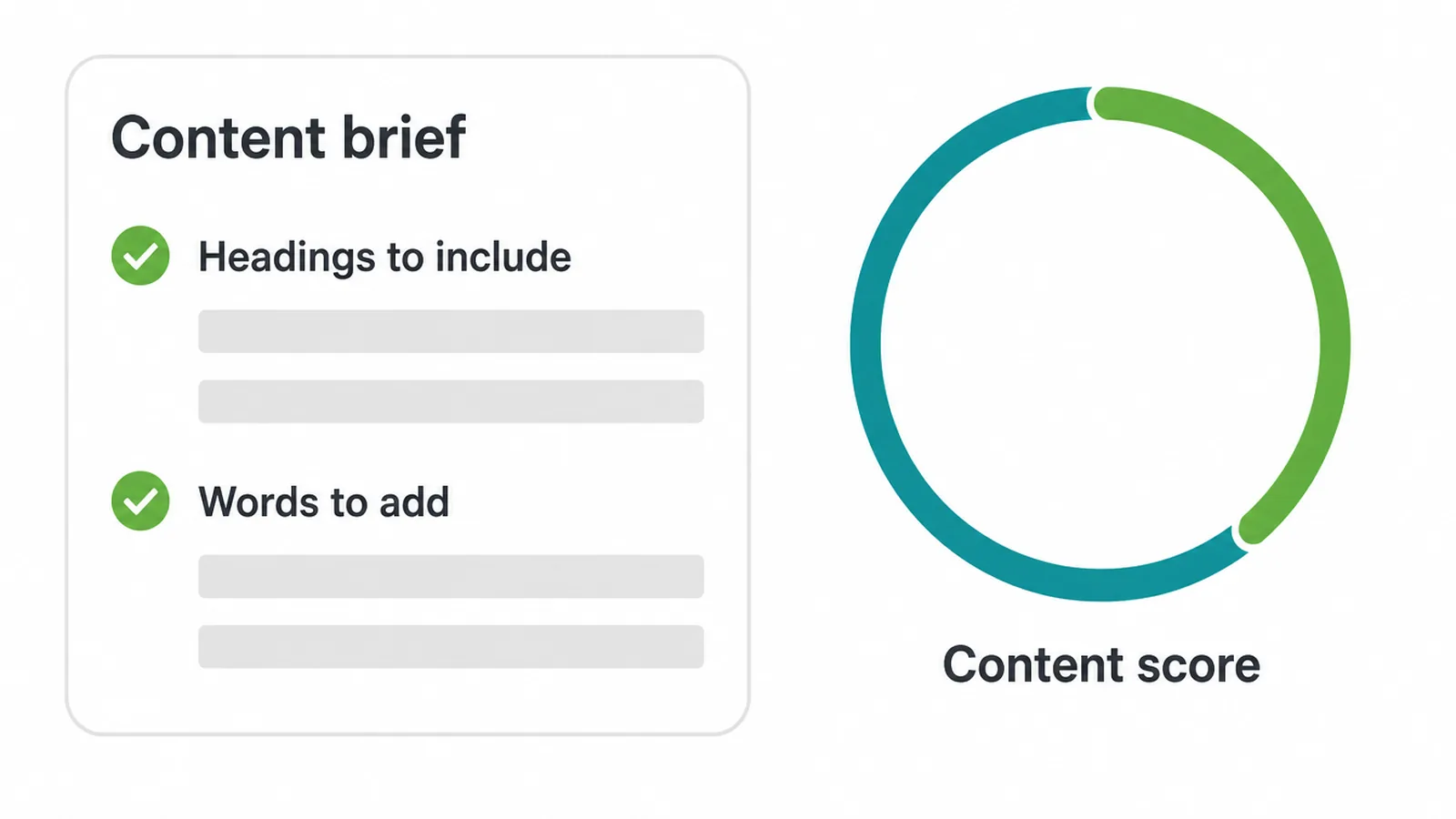
The catch: a high score is not a useful page. These tools measure how much your draft looks like the current winners. They do not know if your advice is right, fresh, or worth a reader's time.
So hit the brief, then add the thing the score cannot see: your real opinion, a true example, a clear answer. That extra value is what makes a page rank and stay there. See how to rank higher on Google for the bigger picture.
6. On-page and site audits
Semrush, SE Ranking, and AIOSEO scan your pages and hand you a list. Missing title tags, slow pages, weak internal links, duplicate content, thin pages. AIOSEO lives inside WordPress, so it is friendly if that is your setup. The newer AI features even write suggested titles and meta descriptions for you.
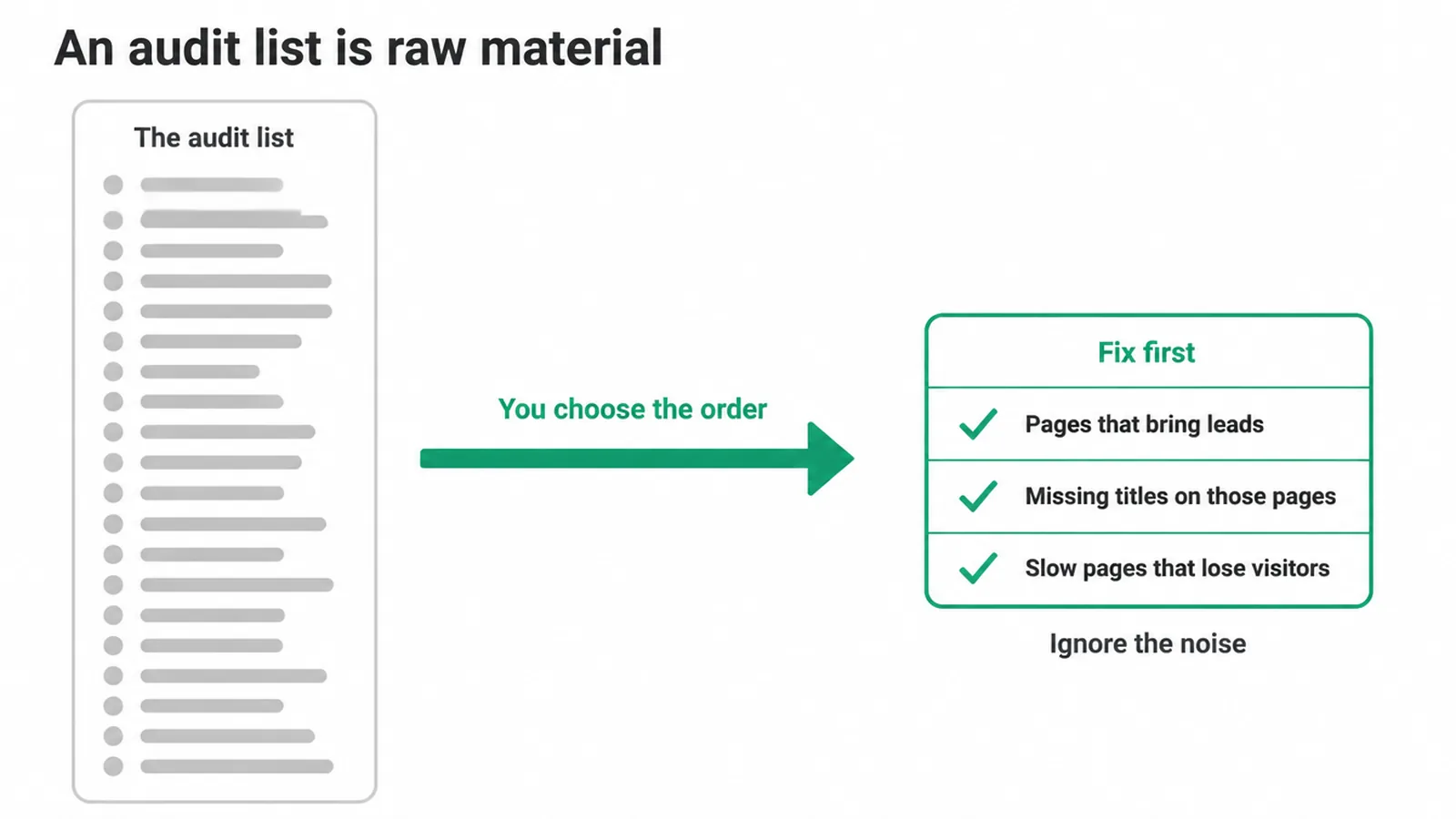
The catch: a fix list is not a strategy. The tool will flag a hundred items and rank them all "important". It cannot tell you that fixing your top three money pages beats fixing ninety blog tags nobody reads.
So treat the audit as raw material. You choose the order. Start with the pages that bring leads, work down, and ignore the noise.
7. Technical crawls
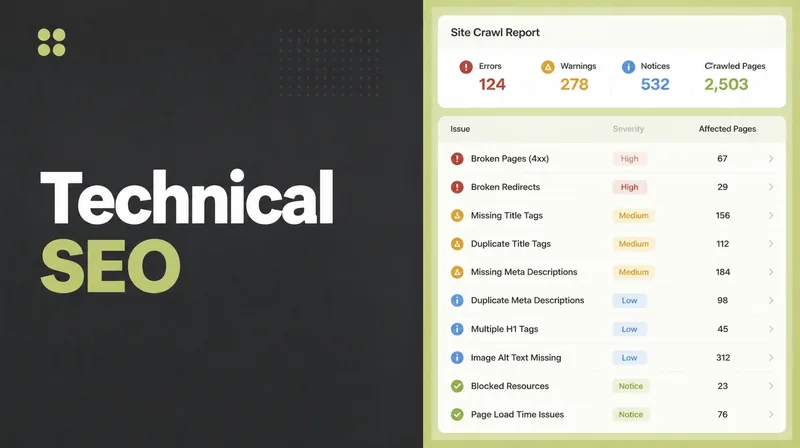
When your site grows, things break in places you never see. Screaming Frog and Sitebulb crawl every page like Google does and surface broken links, redirect chains, orphan pages, and bloated code. Sitebulb adds plain-English explanations, which helps if the words "redirect chain" make your eyes glaze over.
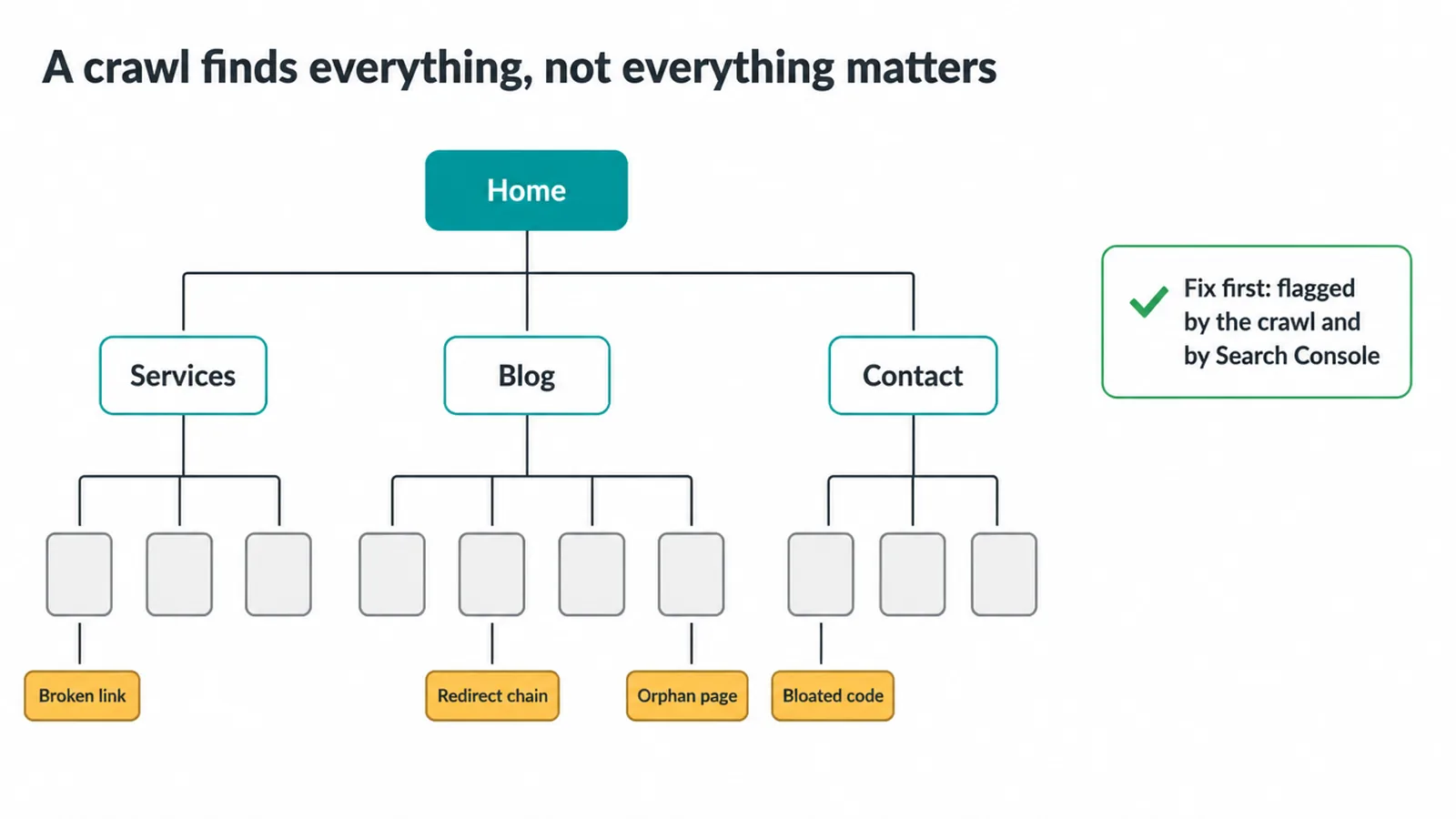
The catch: these tools find everything, and not everything matters. A crawl of a small site can return hundreds of "issues", most of them harmless. You need to know which errors actually hurt rankings and which are noise.
Pair the crawl with Google Search Console, which is free and shows what Google itself thinks of your site. When both flag the same page, fix that one first.
8. Rank tracking and AI Overviews
SE Ranking, Semrush, and Wincher track where you sit in search for the keywords you care about, day by day. Wincher is the simplest if you just want one clean view. The newer job here is tracking AI Overviews, those AI answer boxes Google now shows at the top of many results.
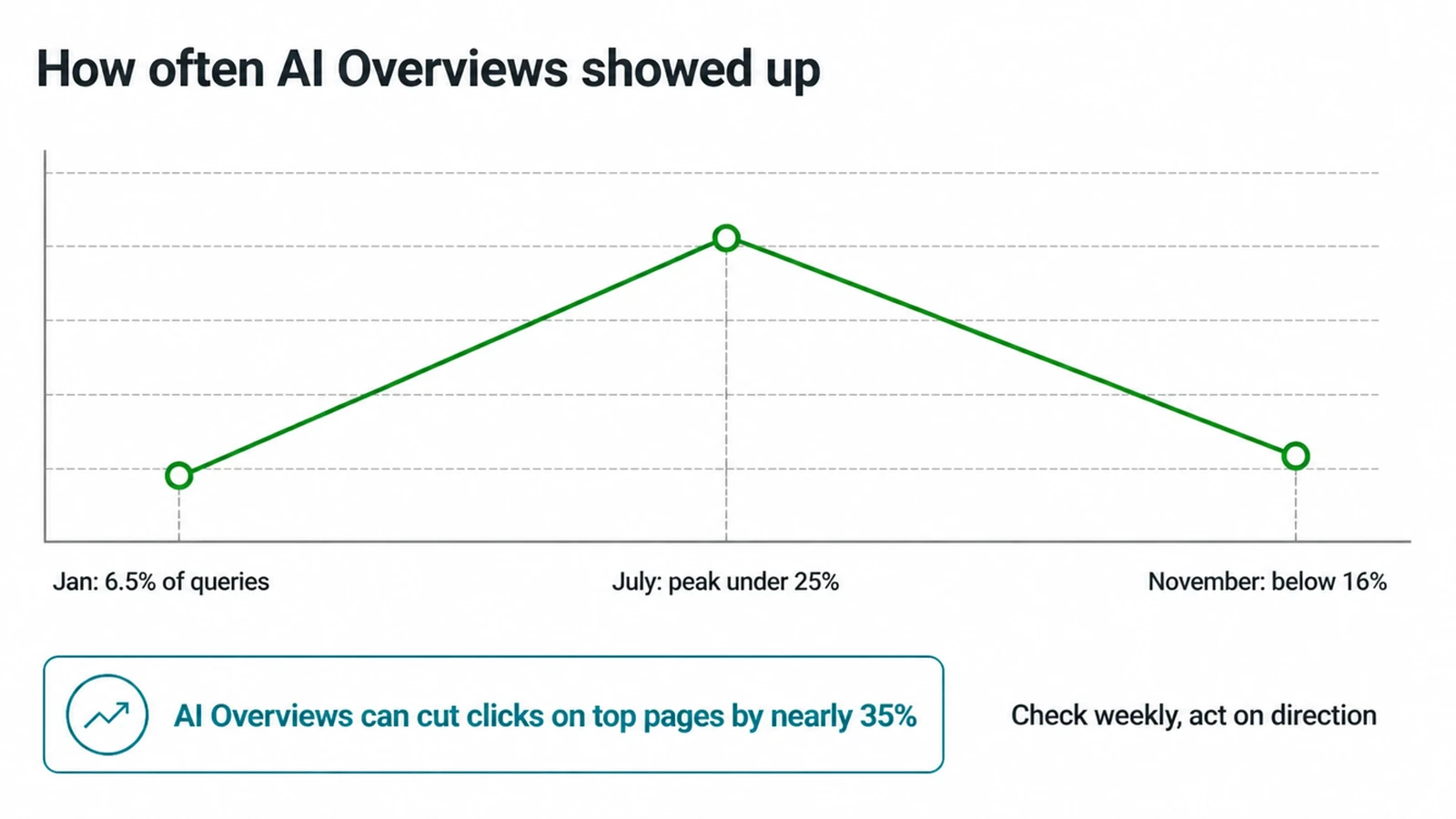
Those boxes matter. AI Overviews appeared for about 6.5% of queries in January 2025, peaked under 25% in July, then settled below 16% by November, per Semrush data across ten million keywords.
And they change behavior: Ahrefs found AI Overviews can cut clicks on top-ranking pages by nearly 35%. So you want to know if you appear inside them, which the better trackers now show.
The catch: rankings wobble every single day. One bad morning is not a trend. Check weekly, look at the four-week shape, and act on direction, not noise. Read our local SEO guide if most of your customers find you on the map rather than in the main list.
9. Local SEO
If you serve a town or a service area, local SEO is your biggest lever, and AI tools here are genuinely handy. Localo and BrightLocal use AI to suggest Google Business Profile posts, spot errors in your listing, draft replies to reviews, and track where you rank on the map for searches near you.
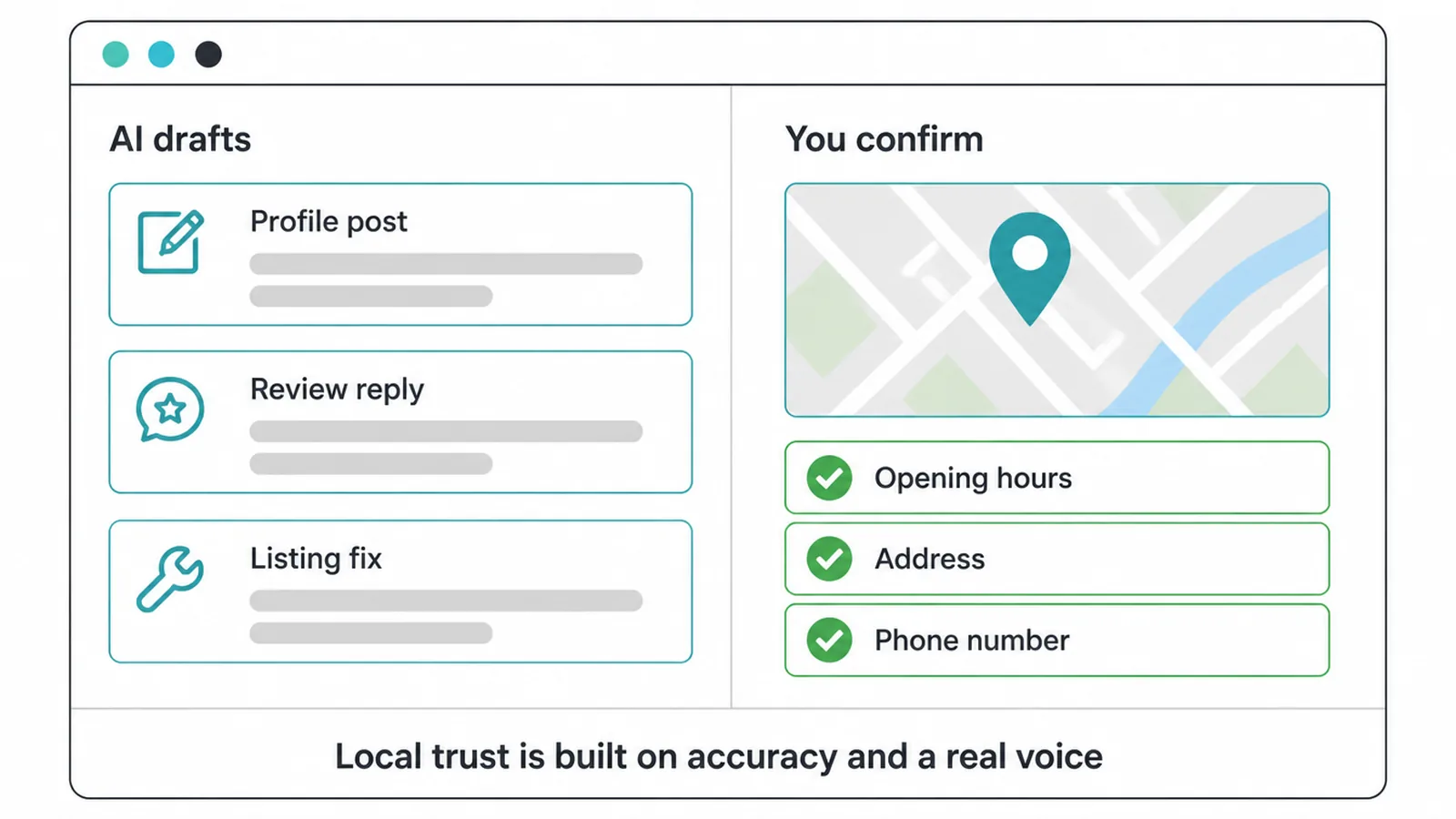
The catch: AI drafts, you confirm. A wrong phone number, a closed-on-Sunday hours error, or a robotic review reply does more harm than no AI at all.
So let the tool write the first version, then check that every fact is right and that your replies sound like a human who cares. Local trust is built on accuracy and a real voice, not speed.
10. Is AI content bad for SEO?
Short answer: no, not if a human edits it and adds value. Google does not ban AI content.
Its own guidance says using AI to make many pages with no added value may break its spam policy, and tells you to focus on accuracy, quality, and relevance. In other words, Google judges the page, not the tool that typed it.
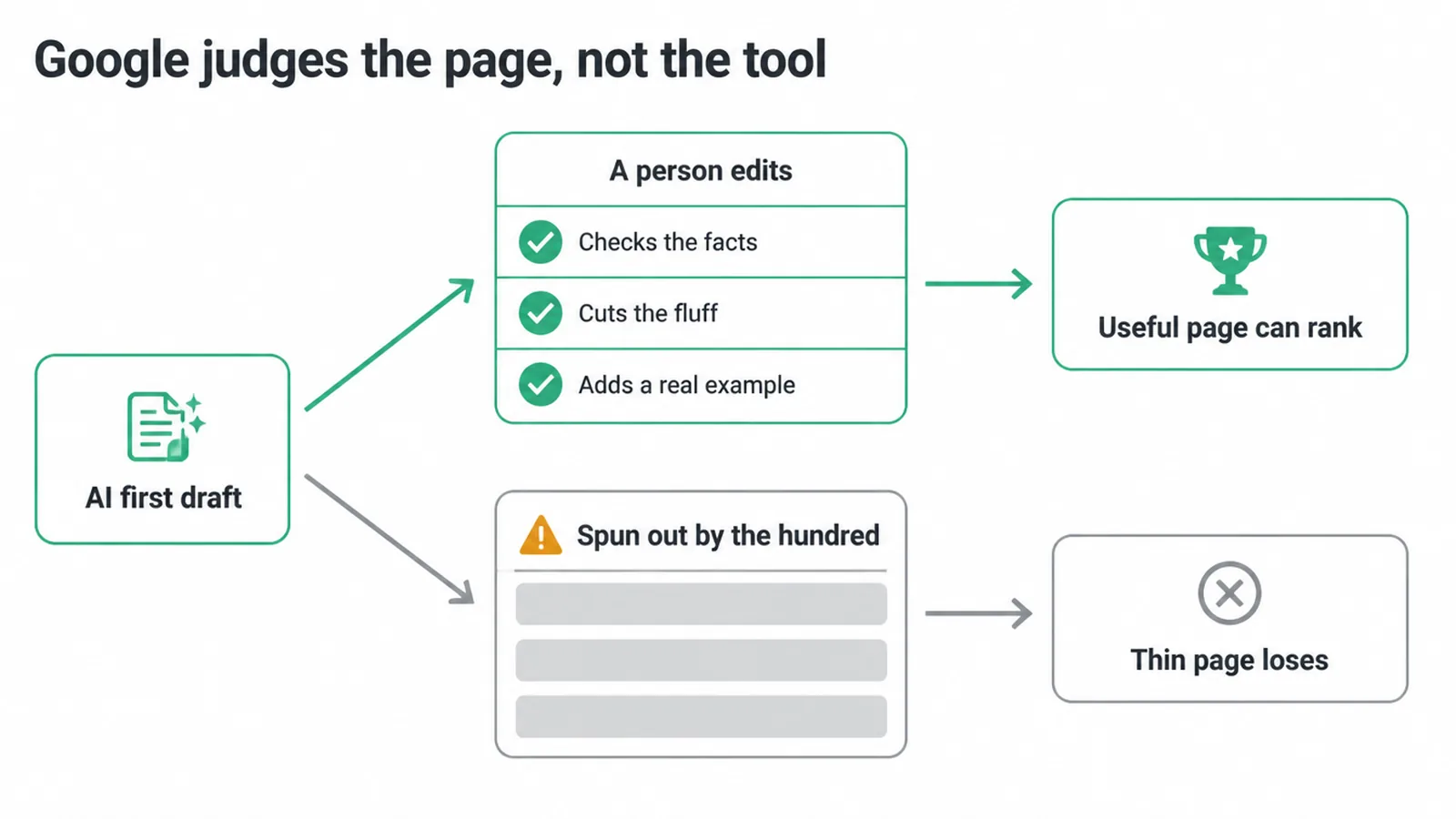
So the rule is simple. AI can write the first draft. A person then checks the facts, cuts the fluff, adds a real example or a clear answer, and makes sure the page actually helps the reader.
That edited, useful page can rank fine. A thin page spun out by the hundred with no human touch loses, exactly as it always did.
11. Do you still need a human?
Yes, and the numbers explain why. AI is now everywhere in marketing: 85% of marketers use it for content and it saves more than five hours a week on average, per CoSchedule.
That saved time is real and worth chasing. But it is time saved on the typing and the sorting, not on the thinking.
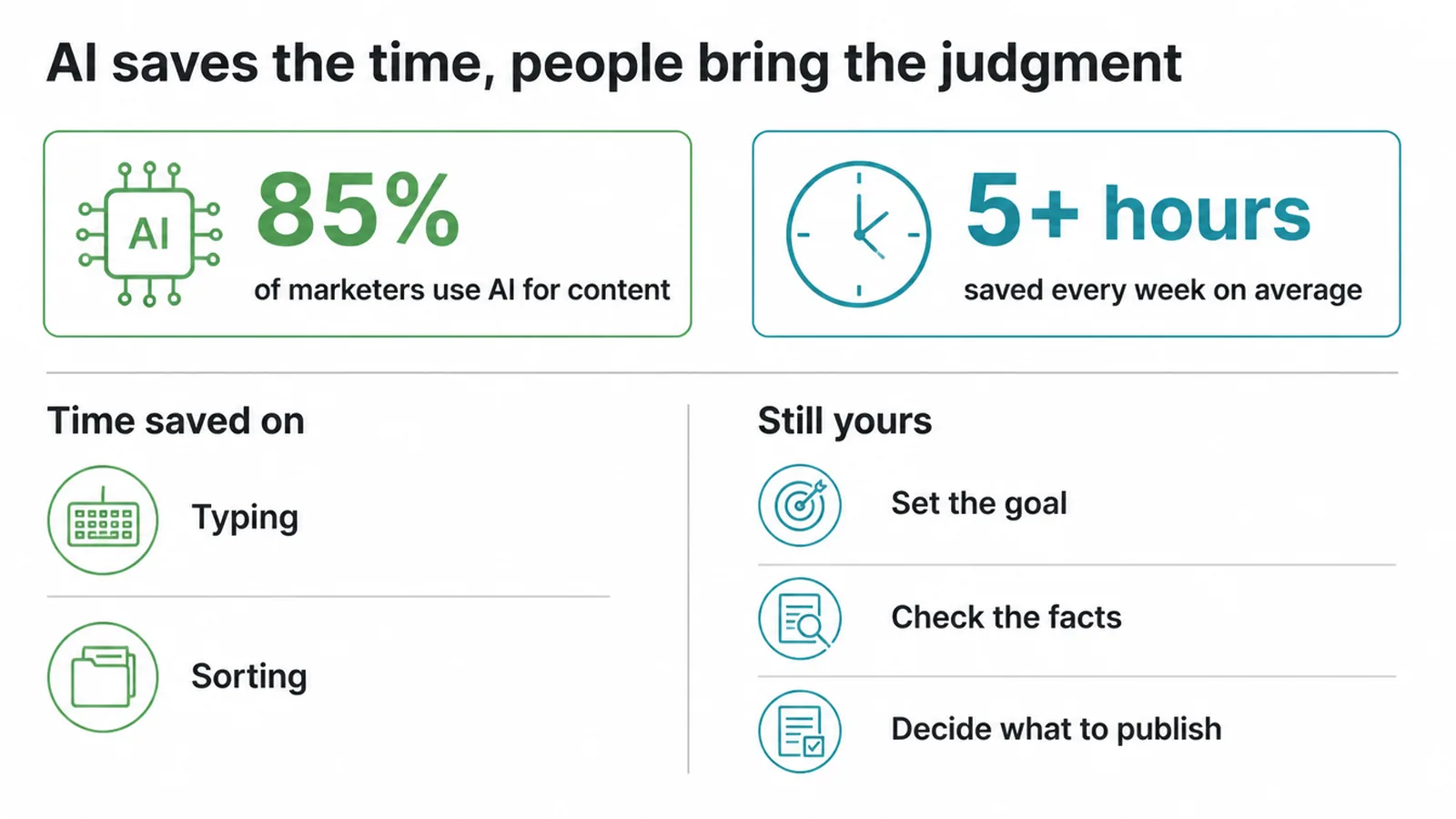
A human still sets the goal, checks the facts, knows the customer, and decides what to publish and what to bin. AI hands you a faster start. You bring the judgment that makes the work true and worth reading. Keep that split and AI SEO tools earn their place.
If you would rather skip the learning curve, we run all of this for small businesses every day. Our SEO service pairs these tools with people who know which catch to watch for.
Want a plain look at where your site stands? Tell us about your business and we will point you at the one job worth fixing first.
Frequently asked questions
1. What are the best AI SEO tools?
There is no single best one. The best AI SEO tool depends on the job. For keyword and topic ideas, try ChatGPT, Claude, Semrush AI, or AlsoAsked. For content briefs, try Surfer, Clearscope, or Frase. For on-page audits, try Semrush, SE Ranking, or AIOSEO. For technical crawls, try Screaming Frog or Sitebulb. For rank tracking, try SE Ranking, Semrush, or Wincher. For local SEO, try Localo or BrightLocal. Pick by task, not by hype.
2. Can AI do SEO by itself?
No. AI does the heavy lifting, like drafting, sorting, and spotting patterns fast. It cannot decide what your customers actually need, check that a claim is true, or know your business. SEO still needs a human to set the goal, verify the facts, and make the final call. Treat AI as a fast helper, not the boss.
3. Are AI SEO tools worth it?
For most small businesses, yes, if you start small. AI saves marketers more than five hours a week on average, according to CoSchedule. The trap is buying five tools at once. Pick one job that eats your time, like keyword research or briefs, add one tool for it, learn it, then decide if you need a second.
4. Is AI content bad for SEO?
Not by itself. Google does not ban AI content. Its guidance says using AI to make many pages with no added value may break its spam policy, and tells you to focus on accuracy, quality, and relevance. So a human needs to edit the draft, check the facts, and add real value. Thin auto-spun pages lose either way.
5. Are there free AI SEO tools?
Yes. ChatGPT and Claude have free tiers that handle keyword ideas, titles, outlines, and meta descriptions. AlsoAsked shows free question maps. Many paid tools like Semrush and SE Ranking offer free trials or limited free accounts. Free is plenty to start. Pay only when one job clearly earns back the cost.
6. Can ChatGPT do SEO?
ChatGPT helps with parts of SEO. It is good for brainstorming keywords, grouping topics, writing first drafts, outlines, titles, and meta descriptions. It is not reliable for exact search volumes or live ranking data, and it can state wrong facts with confidence. Use it for ideas and drafts, then verify the numbers in a real SEO tool and edit with a human.
7. Can AI help with local SEO?
Yes. Tools like Localo and BrightLocal use AI to suggest Google Business Profile posts, spot listing errors, draft review replies, and track your local map ranking. AI speeds up the busywork, but you still confirm your hours, address, and phone are correct and reply to reviews like a real person.