SEO for Real Estate: Turn Local Searches Into Property Leads

Real estate SEO helps a site and Google profile compete for local property searches beside the large portals. Use one detailed page per neighbourhood and gather steady reviews. Early movement often shows in three to six months, with fuller results over four to twelve. Seed Light plans the work around that range.
Key takeaways
- Buyers start online. About 97 percent of homebuyers use the internet in their search (NAR, 2021 figures), so being findable is the whole game.
- Don't fight the portals. You will not beat a giant listing site on broad terms. Win hyperlocal searches like "homes for sale in [your area]" instead.
- Google Business Profile comes first. It is the fastest local win and where buyers check you before they call.
- Reviews are your online referral. Some 47 percent of people won't use a business with fewer than 20 reviews, and steady reviews build the trust that wins listings.
- Be patient. Expect early movement in 3 to 6 months and steadier lead flow in 6 to 12.
1. What is real estate SEO?
Real estate SEO is the work of getting your website and Google profile to show up when local buyers and sellers search, so leads come to you instead of a portal.
That is it. When someone types "homes for sale in [your area]" or looks for a good agent nearby, you want to be on that first screen.
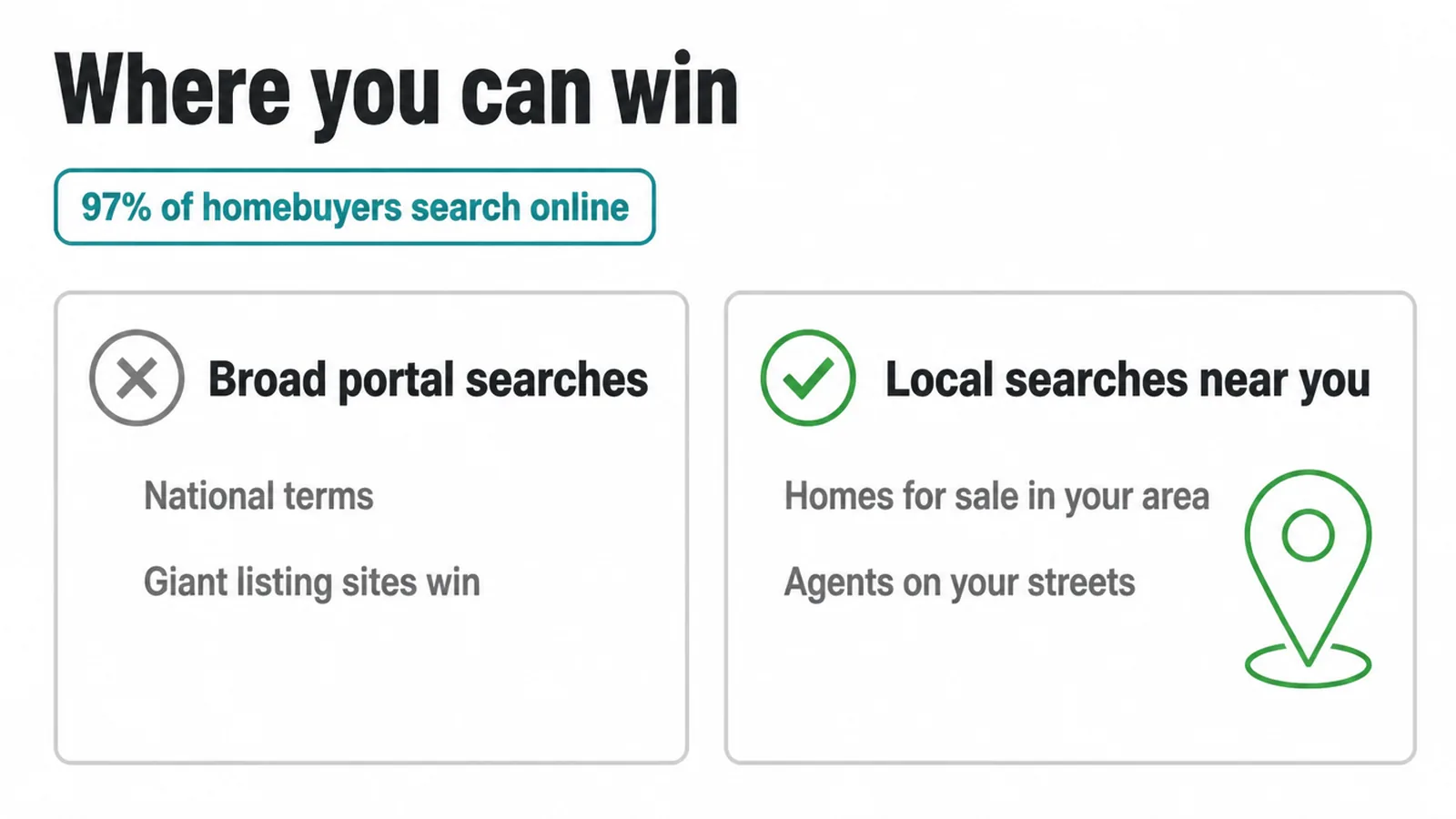
Here is the mindset shift. You are not competing with the big listing sites for broad, national terms. You will lose that fight, and you do not need to win it. Your real competition is the handful of agents working the same streets you do. Beat them on local searches and you get the lead.
The numbers back this up. Around 97 percent of homebuyers use the internet in their search (NAR, 2021 figures), and 43 percent of buyers' first step is looking at properties online (NAR, 2024). The search starts on Google long before anyone calls.
Our job is to make sure the page they find is yours. If you want the bigger picture on how local search works, our guide to local SEO for small businesses sets the foundation, and our SEO service page shows how we put it into practice.
2. The searches people actually type
Before you build anything, learn the exact words buyers and sellers use. They split into two camps, and they need different pages.
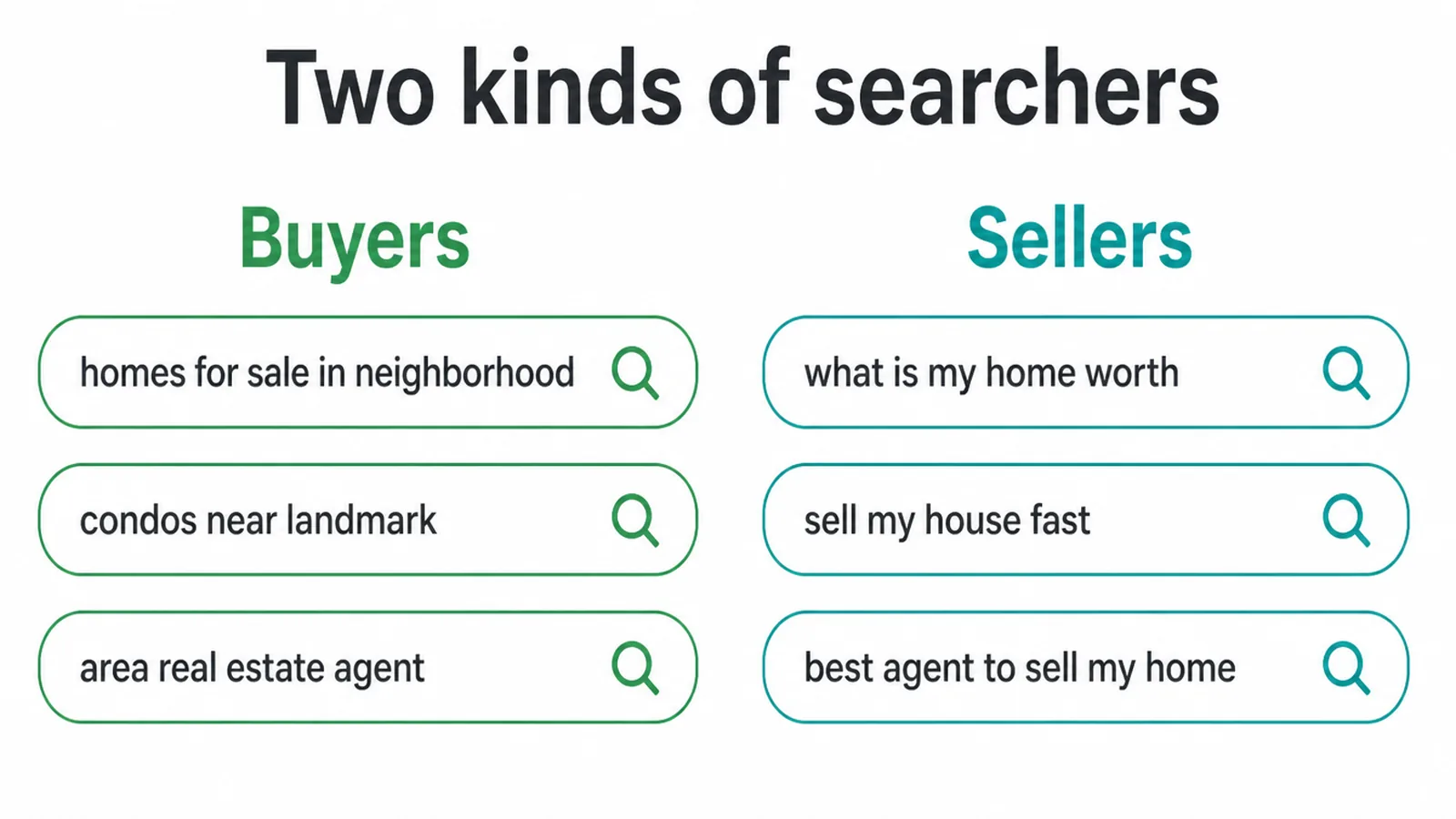
Buyers type things like "homes for sale in [neighborhood]", "condos near [landmark]", or "[area] real estate agent". They are browsing and comparing. Sellers type "what's my home worth in [area]", "sell my house fast", or "best agent to sell my home". They are closer to picking up the phone.
Make a simple list. Put one column for buyer searches and one for seller searches, broken down by every neighborhood you serve. That list becomes your page plan.
For a repeatable way to find and group these phrases, follow our walkthrough on how to do keyword research. You do not need fancy tools to start, just Google's own suggestions and a clear head about what your clients want.
3. Set up your Google Business Profile first
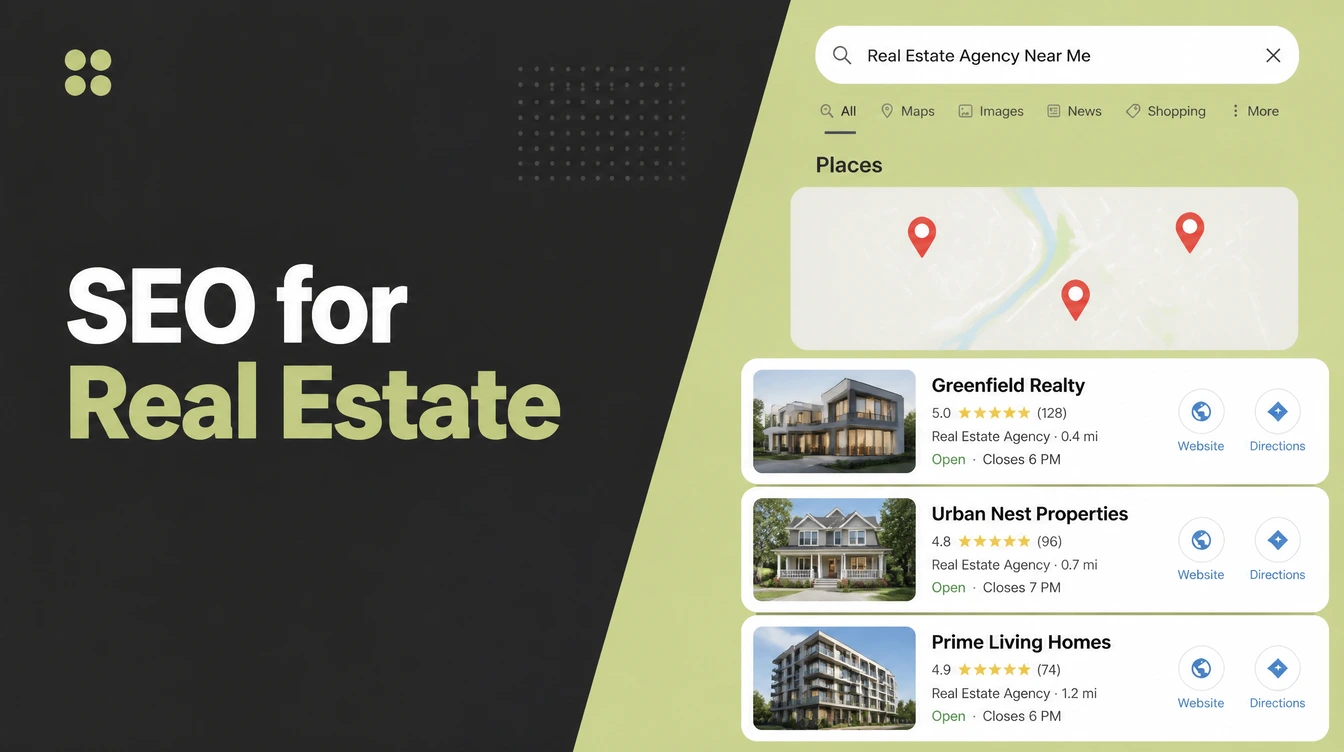
Your Google Business Profile is the fastest local win you have, so do it before anything else. It is the listing that shows in Google Maps and the local pack, with your photo, reviews, and call button. For many buyers, it is the first thing they see when they search your name or area.
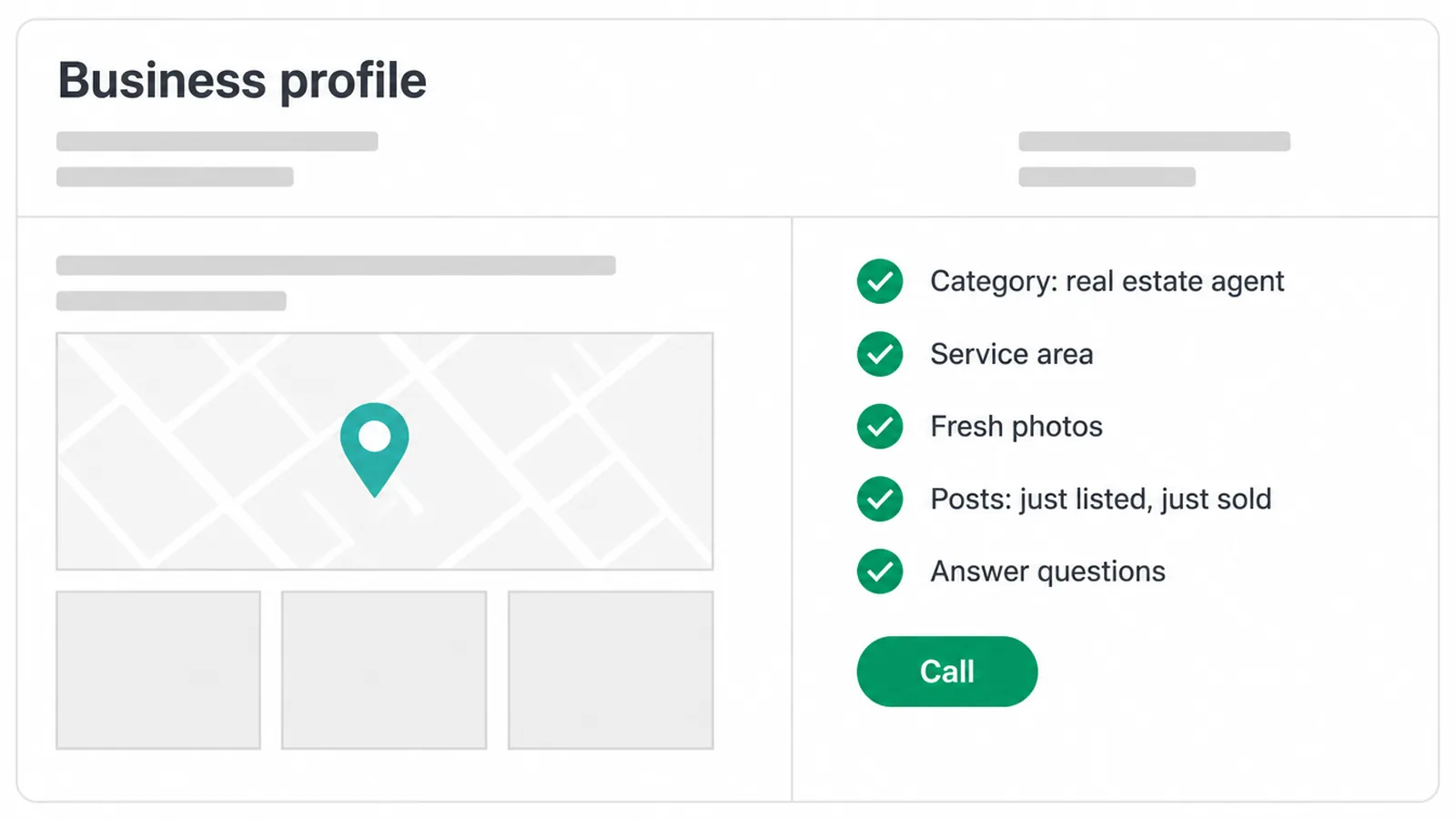
Fill in every field. Pick the right primary category (real estate agent), add your service area, and load fresh photos of your listings and your face.
Post updates, including just listed and just sold, the way you would post on social. Keep your services, description and booking link current.
This is the single highest-return task on the list, so treat it carefully. Work through our Google Business Profile optimization checklist step by step. A complete, active profile beats a half-filled one every time, and it keeps working while your website pages slowly climb.
4. Get reviews, your online referral
Reviews are the modern version of a referral, and referrals run real estate. 40 percent of buyers found their agent through a friend, neighbor, or relative (NAR, 2024). You cannot scale word of mouth, but reviews come close. They show that trust to people who have never met you.
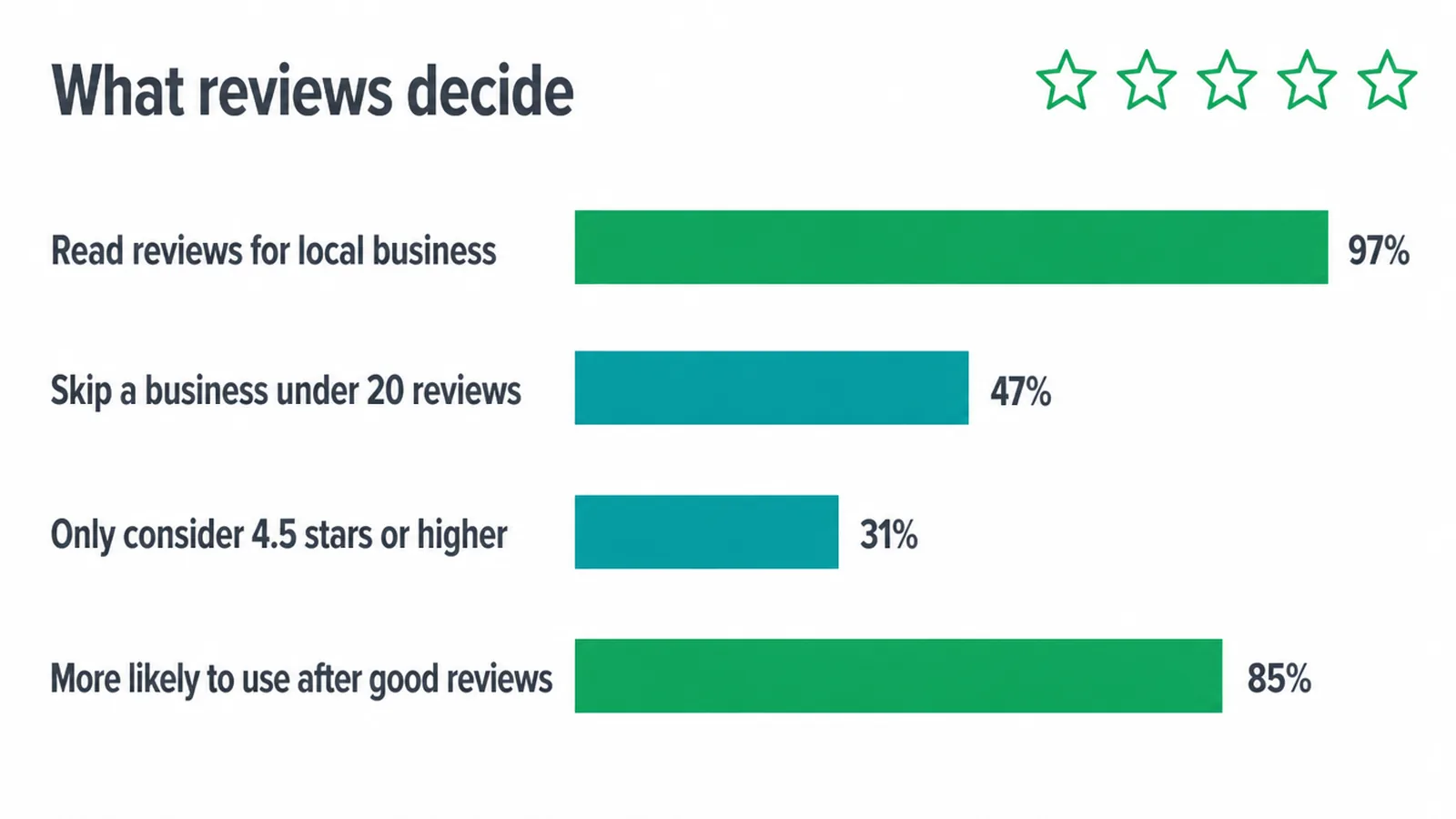
The research is hard to ignore. About 97 percent of people read reviews for local businesses, 71 percent use Google to do it, and 47 percent will not use a business with fewer than 20 reviews (BrightLocal, 2026).
BrightLocal found that 85 percent of consumers said positive reviews made them more likely to use a business.
So ask, every time. The best moment is right after a happy close, when the client is grateful and the keys just changed hands. Send a short message with a direct link to your Google review page.
Make it a habit, not a one-off. If you want scripts and timing that work, see our guide on how to get more Google reviews.
5. Build a page for each neighborhood
This is your unfair advantage. The big portals cannot write with real local feel, but you can. One strong page per neighborhood is how independent agents win searches like "homes for sale in [neighborhood]".
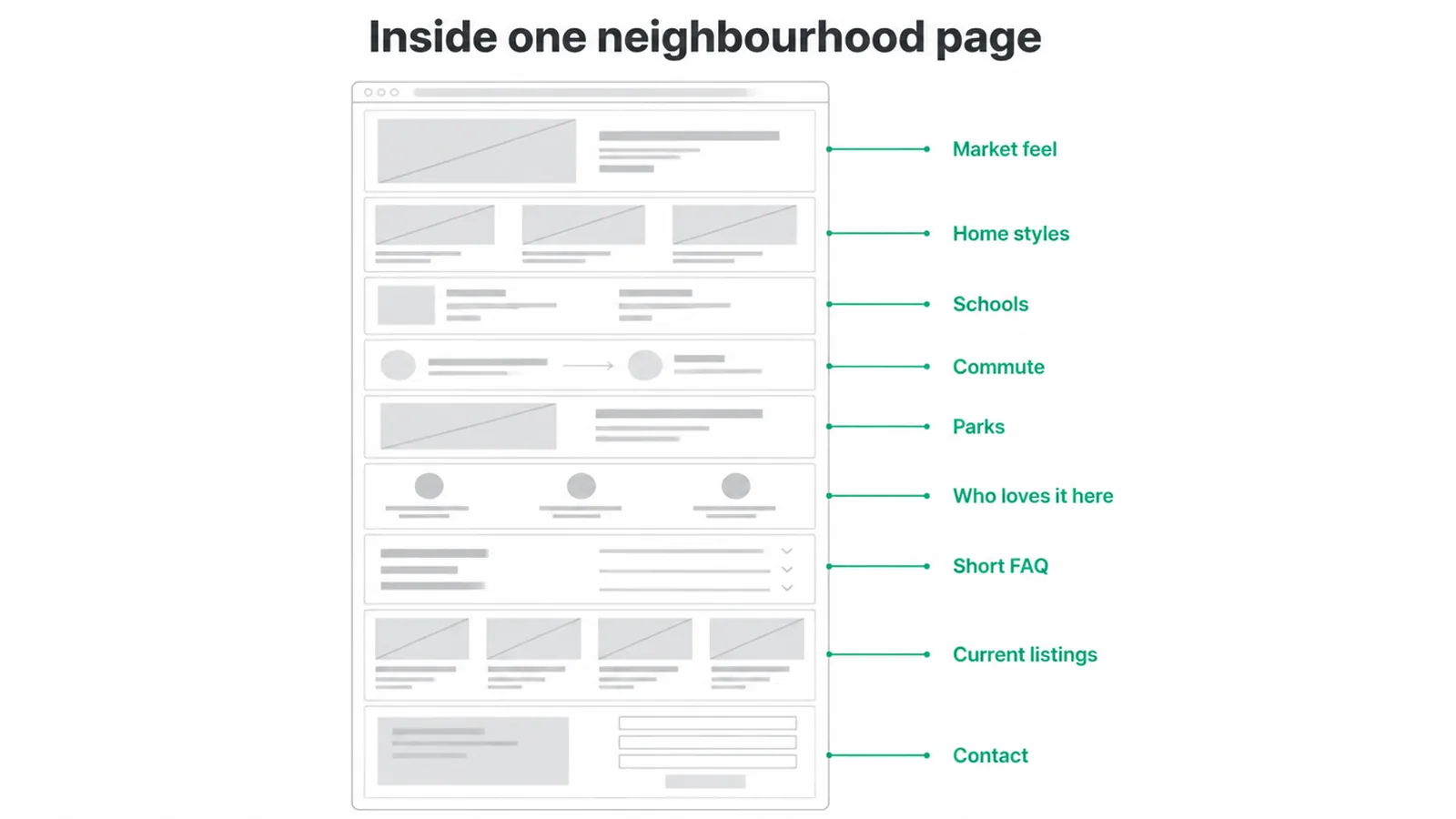
Make each page genuinely useful. Write about the market feel right now, the home styles you see, the schools, the commute, the parks, and the kind of buyer who loves it there.
Add a short FAQ, current listings, and a clear way to contact you. Picture a buyer reading it over coffee and deciding this agent really knows the street.
One warning. Do not crank out thin "doorway" pages that only swap the place name and change nothing else. Google spots that pattern and it can hurt you. Quality over quantity.
Three deep neighborhood pages beat thirty empty ones. If you are starting from scratch, our real estate website design approach is built around these local pages from day one.
6. Fix your listings, speed, and schema
Most agent sites pull live listings through an IDX feed. That feed is great for visitors but weak for SEO, because the same listing copy appears on hundreds of other agent sites.
Google sees duplicate content and rarely ranks it. The fix is to add your own words around it: a short neighborhood intro, local notes, and links to your area pages so the unique value lives in pages only you have.
Two technical basics matter a lot here. First, mobile. 76 percent of homebuyers use a mobile device or tablet in their search (NAR, 2021 figures), so your site must work cleanly on a phone. Second, speed.
A slow page loses visitors and rankings, so keep an eye on your Core Web Vitals. Adding schema markup for your business and listings helps Google understand your pages and can earn richer results.
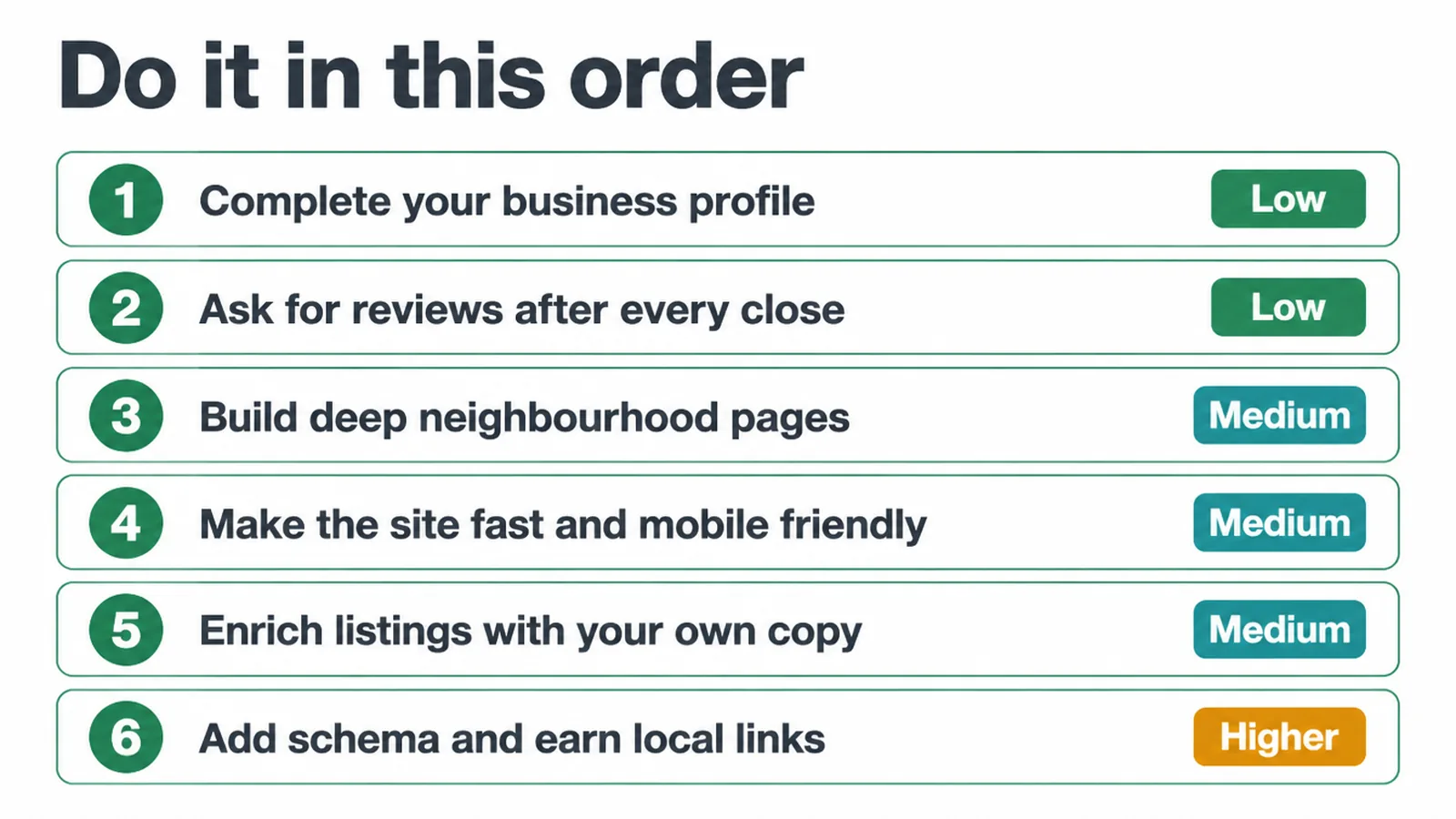
Not sure where to start? Use the priority table below. It sorts the work by what pays off soonest for the effort it takes.
| Priority | What to do | Why it pays | Effort |
|---|---|---|---|
| 1 | Complete your Google Business Profile | Fastest local win, shows in maps and the local pack | Low |
| 2 | Ask for reviews after every close | Builds trust most buyers check before calling | Low |
| 3 | Build deep neighborhood pages | Ranks for hyperlocal buyer searches portals can't match | Medium |
| 4 | Make the site fast and mobile friendly | Keeps visitors and protects rankings | Medium |
| 5 | Enrich IDX listings with your own copy | Turns duplicate pages into unique, rankable ones | Medium |
| 6 | Add schema and earn local links | Helps Google trust and feature your pages | Higher |
7. Earn local links and mentions
Links from other trusted local sites tell Google your business is real and rooted in the community. You do not need hundreds. A handful of strong, genuinely local ones go a long way.
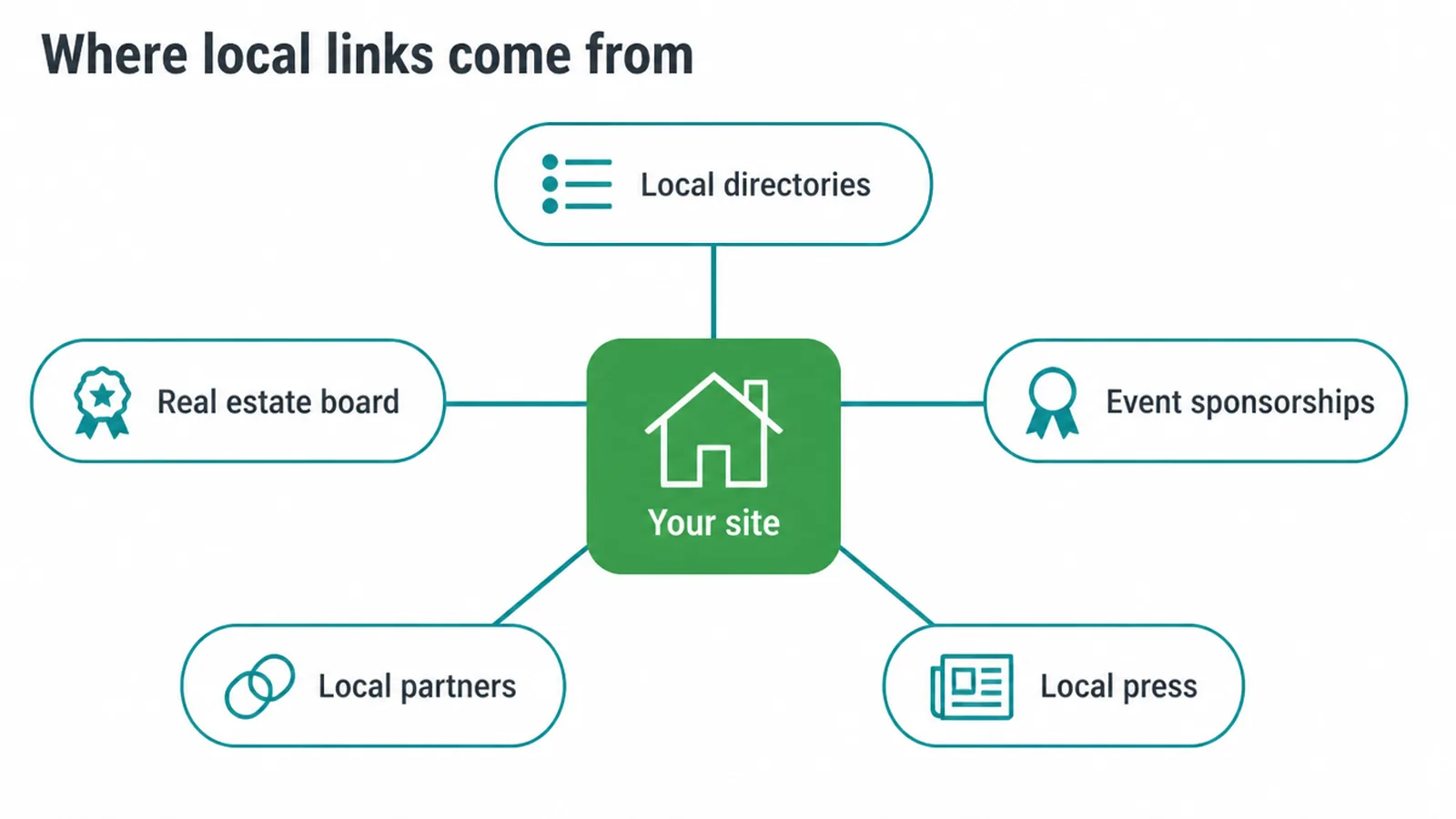
Start with what is around you. Get listed in solid local directories and your local real estate board. Sponsor a school event, a charity run, or a community fair, and most will link to you in return. Partner with a local mortgage broker, stager, or photographer and swap honest mentions.
Pitch a quick market comment to the local paper or a neighborhood blog. Each one is a small trust signal, and they add up. For more ways to do this without spammy tactics, read our guide on how to get backlinks.
8. How long until you see leads?
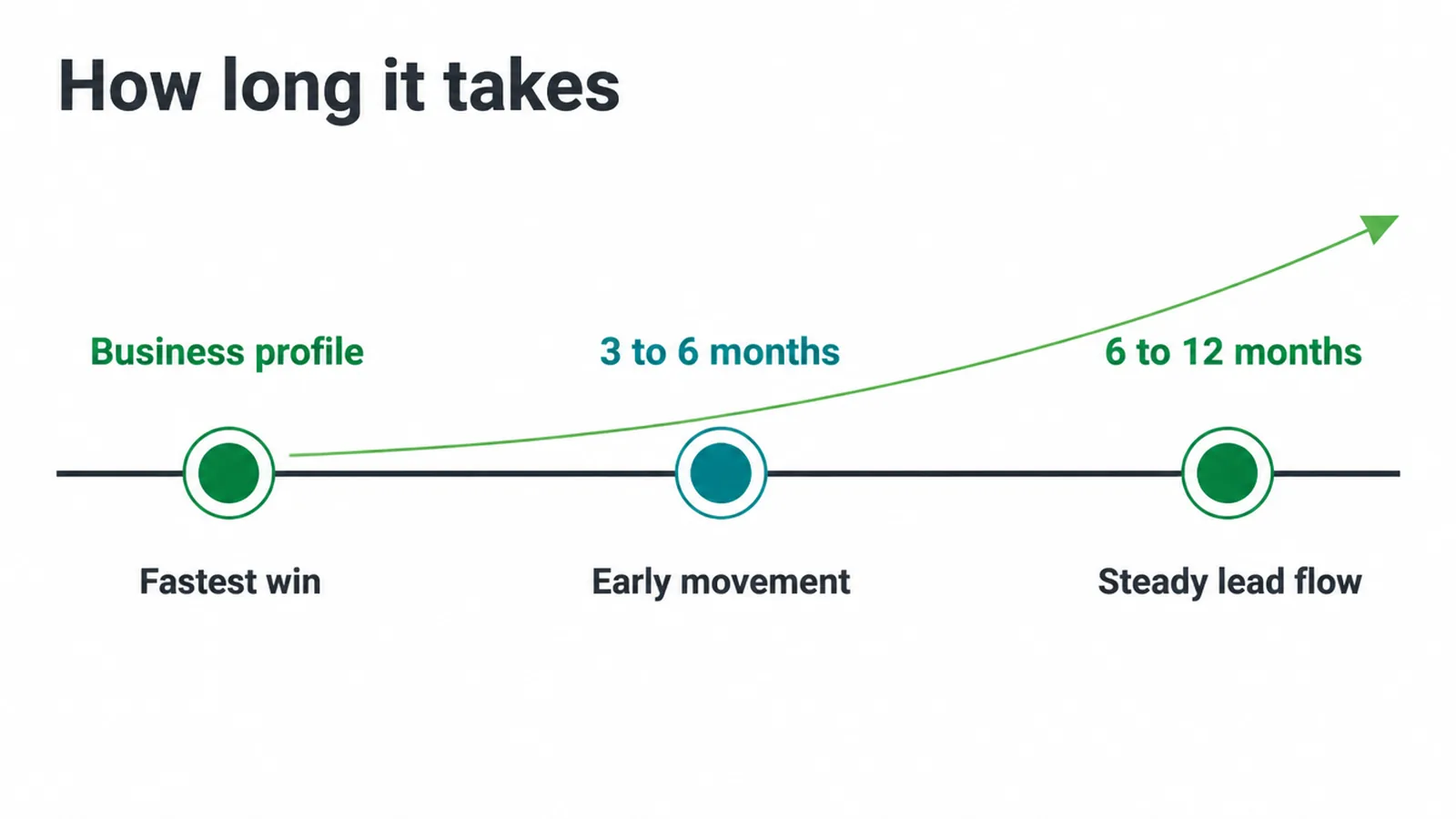
Be honest with yourself about timing. SEO is a build, not a switch. In our experience, you will usually see early movement in 3 to 6 months and steadier, dependable lead flow in 6 to 12.
Your Google Business Profile can show results sooner, which is exactly why it sits at the top of the plan.
That patience is worth it. Most home purchases, 88 percent in fact, are made through an agent or broker (NAR, 2024). The demand is there.
SEO simply makes sure the searcher finds you first and contacts you directly, instead of paying a portal for the same lead over and over. You build an asset you own.
If you would rather hand this to a team that does it every day, that is what we are here for. See how we work on our SEO service page, or get in touch and tell us about your area. We will show you where the quick wins are.
Frequently asked questions
1. What is real estate SEO?
Real estate SEO is the work of getting your website and Google Business Profile to show up when local buyers and sellers search. The goal is simple. When someone looks for homes for sale in your area or a good agent nearby, you appear, so the lead comes to you instead of a big portal.
2. How do agents use SEO to get leads?
Agents use SEO by ranking for searches buyers and sellers already type, like homes for sale in a neighborhood or what is my home worth. You build pages that answer those searches, fill out your Google profile, and earn reviews. When your page ranks and earns trust, the searcher contacts you directly.
3. How do I rank for homes for sale in my area?
Build one strong page for each neighborhood you serve. Write about the market feel, home styles, schools, commute, and answer common buyer questions. Add real listings and helpful local detail. Avoid thin pages that only swap the place name. Depth and usefulness are what move a local page up.
4. Do reviews matter for realtors?
Reviews matter a lot. About 97 percent of people read reviews for local businesses, and 47 percent will not use a business with fewer than 20 reviews. Reviews are the online version of a referral, and 40 percent of buyers found their agent through someone they know. Steady five star reviews build that same trust at scale.
5. How long does real estate SEO take?
Expect early movement in 3 to 6 months and steadier lead flow in 6 to 12 months. Google needs time to trust new pages, and reviews and local links build up slowly. Your Google Business Profile can show results faster, which is why it comes first in any sensible plan.
6. Is SEO better than buying Zillow leads?
SEO and paid portal leads do different jobs. Paid leads arrive quickly but stop when you stop paying, and you compete with other agents for the same contact. SEO is slower to start but builds an asset you own. Many agents use both early, then rely more on SEO as their pages begin producing leads.
7. What is IDX and does it help SEO?
IDX is the feed that pulls active listings onto your website. It helps visitors search, but the listing pages are often duplicated across many agent sites, so they rarely rank on their own. Add original copy, local context, and your own neighborhood pages around the IDX feed so the SEO value lives in pages only you have.
8. What is the most important first step?
Claim and complete your Google Business Profile. It is the fastest local win, it shows in maps and the local pack, and it collects the reviews that buyers check before they call. Get that right first, then build neighborhood pages and earn local links.